(adsbygoogle = window.adsbygoogle || []).push({});Executive Summary:
Sweden has awarded Saab a contract worth approximately 1.2 billion Swedish kronor to deliver sensor and command systems for brigade level ground based air defense. The systems will be delivered between 2029 and 2030 under a procurement managed by Swedish Defence Materiel Administration. The upgrade strengthens Sweden’s ability to detect, track, and engage evolving aerial threats at the tactical level.
Sweden Advances Brigade Level Air Defense With Saab GBAD Order
Sweden has expanded its ground based air defense capabilities through a new procurement of sensor and command and control systems from Saab. The contract, awarded by Swedish Defence Materiel Administration, is valued at approximately 1.2 billion Swedish kronor and supports the Swedish Army’s brigade level air defense architecture.
- Sweden Advances Brigade Level Air Defense With Saab GBAD Order
- System Scope and Capability Focus
- Role of Giraffe AMB in Swedish Air Defense
- Technical and Operational Context
- Strategic Context for Sweden and NATO
- Analysis: What This Means for Modern Air Defense Doctrine
- Program Timeline and Delivery
- Conclusion
The order focuses on integrating radar surveillance and command systems designed to improve detection speed and response coordination against modern aerial threats. Deliveries are scheduled between 2029 and 2030, reflecting long term modernization planning for Sweden’s layered air defense network.
System Scope and Capability Focus
The procurement centers on two core components, sensors and command and control systems. These elements are designed to operate as a unified ground based air defense framework, improving situational awareness and engagement efficiency at brigade level.
(adsbygoogle = window.adsbygoogle || []).push({});Key capability areas include
- Expanded air picture generation for brigade commanders
- Faster target detection and classification
- Integrated engagement coordination across units
- Improved response to low altitude and fast moving aerial threats
The system builds on earlier deliveries to Sweden, reinforcing continuity in national air defense modernization rather than introducing a standalone capability.
Role of Giraffe AMB in Swedish Air Defense
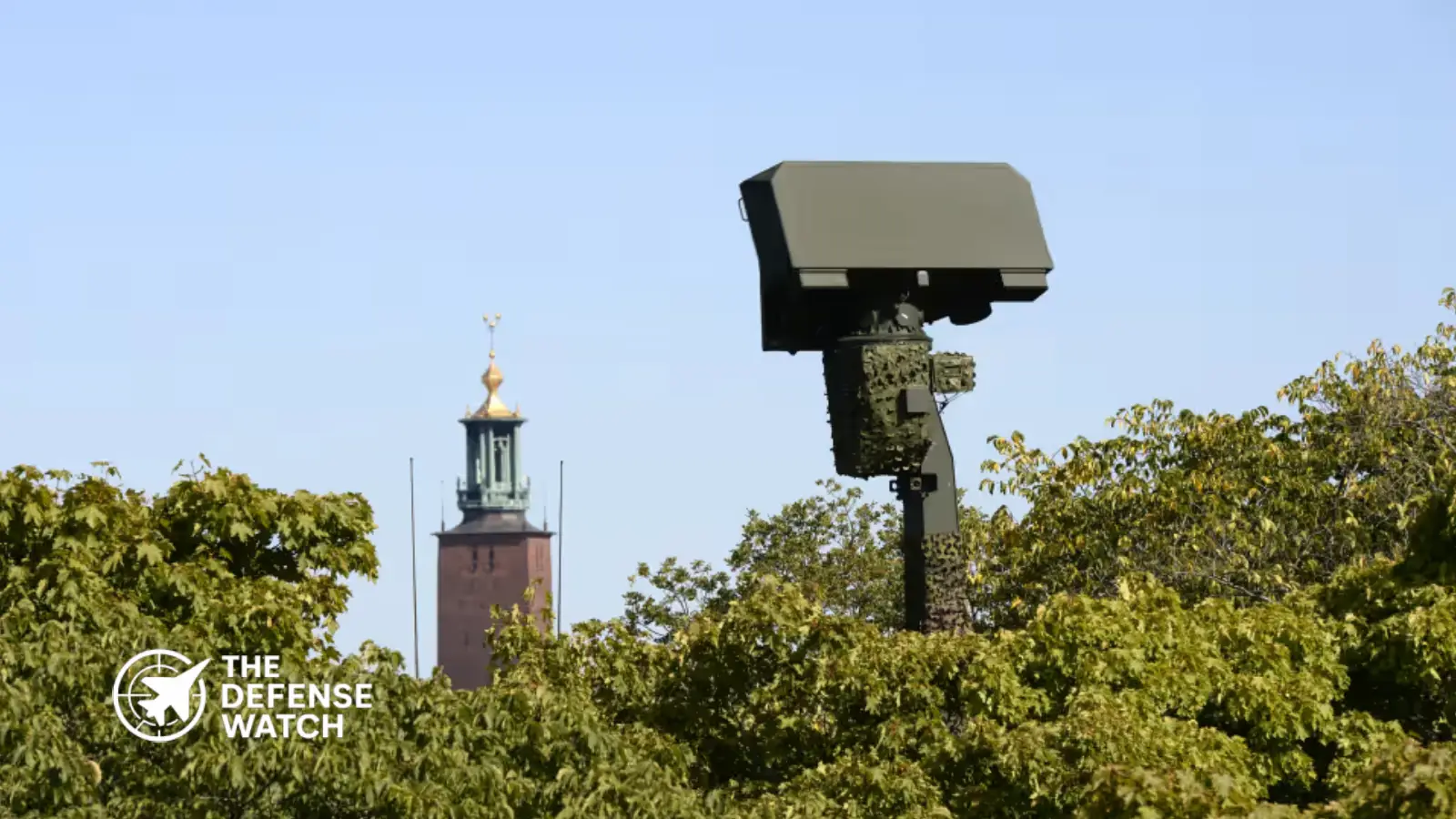
A central element of the system is Saab’s Giraffe AMB radar, a mobile surveillance platform designed for short to medium range air defense operations. The radar is paired with integrated command and control functionality, allowing operators to rapidly process airspace data and coordinate responses.
Giraffe AMB radar provides continuous airspace monitoring and supports identification of a wide range of aerial targets, including low flying aircraft and unmanned systems.
The integration of radar and command systems allows brigade level units to shorten decision cycles. This is increasingly important as modern air threats rely on speed, low observability, and coordinated multi axis approaches.
Technical and Operational Context
Ground based air defense systems are shifting toward networked architectures that combine sensors, command nodes, and firing units into a single operational picture. Sweden’s approach reflects this trend by strengthening the intermediate brigade layer rather than relying solely on strategic level systems.
Operational benefits include
- Reduced detection to engagement timelines
- Improved coordination between dispersed air defense units
- Greater resilience against electronic interference
- Enhanced tracking of unmanned aerial systems and cruise missiles
From an operational standpoint, brigade level GBAD systems are critical for protecting maneuver forces. They provide a protective envelope that enables ground forces to operate with reduced exposure to aerial threats.
Strategic Context for Sweden and NATO
Sweden’s investment in brigade level air defense aligns with broader European defense modernization efforts following increased concern over airspace security and contested electromagnetic environments.
The integration of Saab systems into Swedish Army brigades enhances interoperability with NATO air defense frameworks, particularly as Sweden deepens its defense integration following accession.
This procurement also highlights a shift toward distributed air defense rather than centralized systems. Instead of relying on a small number of high value platforms, modern doctrine emphasizes layered coverage across multiple mobile units.
Analysis: What This Means for Modern Air Defense Doctrine
The Saab contract reflects three broader shifts in air defense development.
(adsbygoogle = window.adsbygoogle || []).push({});First, detection speed is becoming as important as interceptor performance. Modern aerial threats, including drones and low observable cruise missiles, compress reaction windows. Systems like Giraffe AMB prioritize early detection and tracking stability under cluttered conditions.
Second, command and control integration is now a primary capability rather than a support function. The ability to fuse sensor inputs and distribute targeting data in real time determines whether air defense units can respond effectively in fast moving scenarios.
Third, brigade level autonomy is increasing. Instead of relying on centralized air defense headquarters, frontline units are being equipped with their own sensor and engagement coordination tools. This reduces vulnerability to communication disruption and improves survivability in dispersed battlefield conditions.
For Sweden, this procurement is less about introducing new technology and more about scaling an existing architecture into wider brigade coverage. That continuity reduces training burden and improves operational consistency across units.
Program Timeline and Delivery
The contract timeline extends from 2029 to 2030, indicating a phased rollout aligned with broader Swedish Army modernization cycles. This schedule allows for integration testing, training, and incremental deployment across multiple brigades.
Long lead times are common in air defense procurement due to system integration complexity and the need to synchronize sensors, command systems, and kinetic interceptors across multiple platforms.
Conclusion
Sweden’s latest GBAD procurement underscores a steady shift toward networked, brigade level air defense systems built around integrated radar and command architectures. By expanding the role of Saab’s sensor and control technologies, the Swedish Army is reinforcing its ability to respond to rapidly evolving aerial threats within a layered defense framework.
The program highlights a broader European trend toward distributed, mobile air defense systems designed to operate in contested and high tempo environments.