Australia Declares JASSM-ER and LRASM Operational on F/A-18F Super Hornets
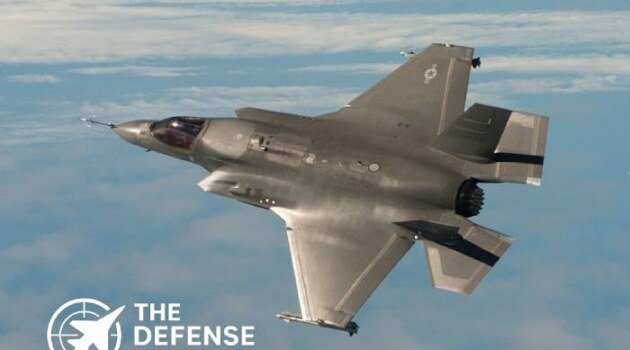
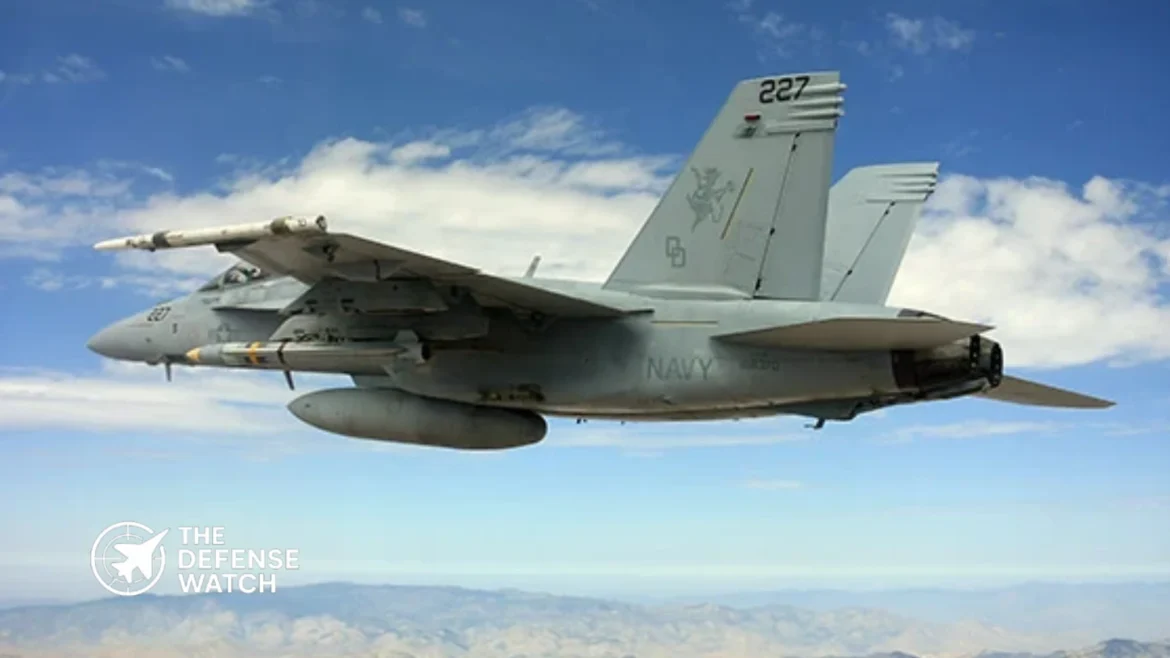
Australia has declared initial operational capability for the AGM-158B Joint Air-to-Surface Standoff Missile Extended Range (JASSM-ER) and AGM-158C Long Range Anti-Ship Missile (LRASM) on Royal Australian Air Force F/A-18F Super Hornets, marking a significant expansion of the country’s air-launched long-range strike capability. The Australian Department of Defence announced the milestone on September 11, 2026.
Takeaways
Australia has reached an important long-range strike milestone by declaring initial operational capability for JASSM-ER and LRASM on its F/A-18F Super Hornet fleet.
The two weapons give the F/A-18F a broader standoff strike role. JASSM-ER is intended for long-range attacks against land targets, while LRASM is optimized for maritime strike against high-value surface targets.
Australia’s Defence Department says the JASSM-ER can engage targets at ranges of up to 900 kilometers from the launch aircraft, while LRASM is designed to operate at ranges exceeding 370 kilometers.
Two Missiles, Two Distinct Strike Missions
The AGM-158B and AGM-158C belong to the same broader U.S.-developed missile family, but they address different operational problems.
Missile Primary mission Australian launch platform Stated range AGM-158B JASSM-ER Long-range land attack F/A-18F Super Hornet Up to 900 km AGM-158C LRASM Long-range maritime strike F/A-18F Super Hornet More than 370 km JASSM-ER is a precision-guided cruise missile intended to attack fixed or relocatable land targets from outside the immediate engagement envelope of many air-defense systems.
LRASM uses a different mission focus. The weapon is designed to locate and engage high-value maritime targets and incorporates specialized sensing, communications and guidance technologies intended to support operations in contested environments.
The U.S. Department of Defense describes LRASM as derived from JASSM-ER but equipped with a multimode sensor suite, weapons datalink, enhanced anti-jam GPS capabilities and a 1,000-pound penetrator and blast-fragmentation warhead.
Operational Testing Established the Australian Capability
Australia’s declaration follows a series of operational tests designed to demonstrate that the missiles could be prepared, loaded, targeted and employed by Australian crews.
In February 2025, two LRASM missiles were successfully test-fired from RAAF F/A-18F Super Hornets at the Point Mugu Sea Range in California. Two JASSM-ER missiles were subsequently test-fired at the Woomera Test Range in South Australia in November 2025.
The Australian government had already announced in March 2025 that LRASM was ready for operational use following a successful live firing from an RAAF F/A-18F off the California coast. The government said the LRASM acquisition was valued at $895.5 million and would increase Australia’s maritime strike range beyond 370 kilometers.
Operational testing has also continued through multinational activities. During Exercise RIMPAC 2026, an Australian P-8A Poseidon successfully fired an LRASM and struck its target, providing another demonstration of the country’s expanding maritime strike architecture.
Why the F/A-18F Matters
The Australian F/A-18F Super Hornet remains an important component of the RAAF’s combat-aircraft fleet despite the introduction of the F-35A Lightning II.
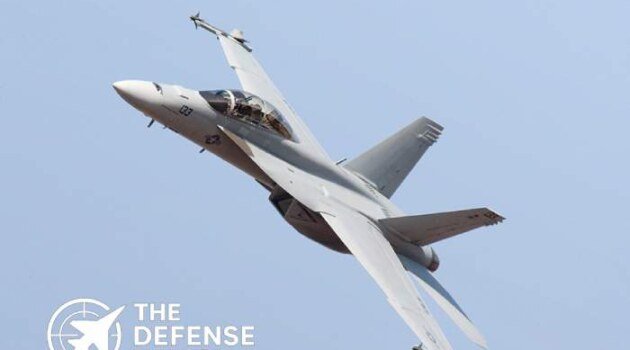
Australia operates 24 F/A-18F Super Hornets, based at RAAF Base Amberley. The aircraft reached full operational capability in December 2012 and continues to perform air combat, interception and strike missions.
Adding JASSM-ER and LRASM changes the aircraft’s role in an important way. Instead of relying primarily on shorter-range weapons that require the aircraft to operate closer to the target area, the Super Hornet can now deliver long-range land or maritime effects while remaining farther from the defended target.
This is particularly relevant to Australia’s geography. The country operates across an exceptionally large area of responsibility, where distance is a central factor in air operations. A missile’s range can therefore influence not only the aircraft’s ability to reach a target, but also how commanders position aircraft, tankers, intelligence assets and supporting electronic-warfare platforms.
JASSM-ER Extends Australia’s Land-Strike Reach
The JASSM-ER provides Australia with a substantially longer-range air-launched land-attack option than the country’s earlier strike weapons.
According to the Australian Defence Department, the missile is designed to locate, identify and defeat targets at ranges of up to 900 kilometers from the launching aircraft.
The operational significance is not simply the distance represented by the missile’s published range. Standoff weapons can allow an aircraft to launch from outside portions of an adversary’s integrated air-defense engagement area, although actual survivability depends on factors including launch geometry, target location, intelligence quality, electronic warfare, missile routing and the composition of the opposing air-defense network.
That distinction is important. A longer-range missile does not make an aircraft invulnerable, but it gives commanders more options for separating the launch platform from the defended target.
LRASM Adds a Dedicated Maritime Strike Option
LRASM addresses a different operational problem.
The missile is intended to attack high-value maritime targets and is designed to operate in environments where conventional navigation and targeting methods may be challenged by electronic warfare and other defensive measures. The U.S. defense budget describes LRASM as incorporating a multimode sensor suite, weapons datalink and enhanced anti-jam GPS capabilities.
For Australia, that capability is particularly relevant because maritime strike is closely connected to the country’s wider defense strategy.
The RAAF identifies maritime strike from the air as one of the missions performed by its Air Combat Group. The group also operates EA-18G Growlers, which provide electronic attack capabilities alongside the F/A-18F fleet.
The combination matters because long-range strike effectiveness depends on more than the missile itself. Finding a target, maintaining an accurate target picture, generating a viable launch solution and managing the electromagnetic environment are all part of the broader kill chain.
Australia’s Long-Range Strike Architecture Is Expanding
The new IOC declaration forms part of a wider Australian effort to expand guided-weapons capacity.
The Australian Guided Weapons and Explosive Ordnance Plan identifies LRASM and JASSM-ER as major air-launched strike capabilities. The plan states that both AGM-158 variants would initially be integrated with F/A-18F Super Hornets, followed by integration with F-35A Lightning II aircraft.
That creates a pathway toward a more distributed strike force.
The F/A-18F provides a mature and operationally established launch platform, while the F-35A can eventually add its own combination of sensors, low-observable characteristics and networked targeting capabilities.
The future force therefore does not depend on one aircraft type carrying the entire long-range strike mission. Instead, Australia is building a larger family of platforms and weapons that can contribute different parts of the overall mission.
The U.S. Connection Is Central
Australia’s AGM-158 capability also demonstrates the depth of U.S.-Australian defense integration.
The two countries have long worked together on weapons development, acquisition, testing and interoperability. The Australian Defence Department said the introduction of JASSM-ER and LRASM required cooperation among the Royal Australian Air Force, Defence Delivery Group, Joint Capabilities Group, other government organizations and U.S. military and industry partners.
The relationship is continuing into the next generation of Australian air combat weapons.
In August 2026, Australia announced an investment of almost $736 million to acquire the U.S.-developed AIM-260 Joint Advanced Tactical Missile. The weapon is planned for initial integration with the F/A-18F, followed by the F-35A and EA-18G Growler.
Taken together, these acquisitions show that the Super Hornet is becoming an important launch platform for multiple classes of long-range weapons rather than simply serving as a transitional aircraft between older Australian fighters and the F-35A.
What the IOC Declaration Changes
The most important distinction is between a weapon being acquired or test-fired and a capability being formally declared operational.
Australia’s September 2026 announcement confirms that the RAAF has completed enough operational testing and integration work to declare initial operational capability for both missiles on the F/A-18F.
IOC does not mean that every planned capability or future integration milestone has been completed. It establishes an operational baseline from which Australia can continue expanding the system, building experience, increasing readiness and integrating the weapons with additional platforms.
For Australia’s air force, the immediate result is greater flexibility in planning long-range strike missions.
Strategic Significance for the Indo-Pacific
Australia’s long-range strike expansion is relevant to the broader Indo-Pacific security environment because geography places substantial emphasis on maritime access, airbase survivability and the ability to operate over long distances.
Long-range air-launched missiles allow combat aircraft to contribute to strike operations without necessarily penetrating as deeply into defended airspace. They can also complicate an opponent’s planning by increasing the number of potential launch locations and attack axes that must be considered.
That is particularly significant when combined with Australia’s broader investments in air combat, electronic warfare, maritime surveillance, guided weapons and allied interoperability.
The capability also fits Australia’s stated approach of strengthening deterrence through the ability to hold military forces and infrastructure at risk from greater distances. Australia’s Chief of Air Force said the new long-range maritime and land strike capabilities are intended to increase aircraft lethality and help avoid increasingly sophisticated air defenses.
What Comes Next
The September 2026 IOC declaration is therefore best understood as a milestone rather than the endpoint of Australia’s long-range strike program.
Australia is continuing to develop a broader network of aircraft, sensors, electronic-warfare systems and long-range weapons. The F/A-18F now provides an operational launch platform for both JASSM-ER and LRASM, while future integration with the F-35A is intended to extend the AGM-158 family’s role across Australia’s air combat fleet.
For the RAAF, the immediate significance is clear: the F/A-18F Super Hornet can now deliver both long-range land attack and maritime strike with operationally declared AGM-158 weapons.
That gives Australia greater standoff strike flexibility and adds depth to its broader air and maritime deterrence architecture.


GCAP Electronics Contract Advances Sixth Generation Fighter Development
GCAP Electronics Evolution has received an 18-month contract to further develop the integrated sensing, communications and non-kinetic effects architecture of the Global Combat Air Programme, marking another step in the development of the Japan, Italy and UK sixth generation fighter. The contract was awarded by Edgewing, the industrial joint venture responsible for designing and developing the aircraft.
Takeaways
A new 18-month contract moves GCAP’s integrated electronics architecture into another development phase as Japan, Italy and the UK work toward a 2035 next-generation fighter.
The agreement covers the Integrated Sensing And Non-Kinetic Effects and Integrated Communications Systems, known as ISANKE & ICS. The architecture is intended to combine information from multiple sensing and communications functions and give the aircraft an integrated view of the battlespace.
The development is important because GCAP is not being designed around an aircraft in which individual avionics systems operate largely as separate functions. The programme’s stated approach is to build sensing, communications and non-kinetic effects into an integrated architecture from the beginning.
Edgewing Awards Contract To GCAP Electronics Evolution
Edgewing is the joint venture established by BAE Systems of the UK, Leonardo of Italy and Japan Aircraft Industrial Enhancement Co. Ltd., or JAIEC, to lead industrial development of the GCAP fighter.
G2E operates as a strategic electronics partner within that wider structure. Its consortium consists of ELT Group and Leonardo in Italy, Mitsubishi Electric in Japan, and Leonardo UK.
The latest award follows the broader government and industry contracting framework established for GCAP. In July 2026, the GCAP International Government Organisation and Edgewing signed a major contract covering work through the end of 2027. Japan’s Ministry of Defense said that agreement was intended to strengthen the programme foundation and accelerate development.
The UK government separately announced a £4.6 billion contract in July for the next stage of GCAP development. That agreement was designed to advance the aircraft’s design and support the programme’s target of bringing the sixth generation fighter into service from 2035.
What ISANKE & ICS Means For GCAP
The central technical feature of the new contract is the integration of sensing, communications and non-kinetic effects.
In a conventional fighter architecture, radar, electronic warfare equipment, communications systems and other sensors can be developed as distinct subsystems. Integration still occurs, but the aircraft’s information architecture can remain constrained by interfaces between those systems.
GCAP is taking a different approach.
The programme describes ISANKE & ICS as an integrated architecture that will combine large volumes of information and provide pilots with the data required to operate in complex and contested airspace.
Area GCAP Approach Operational Relevance Sensing Integrated sensing architecture Builds a broader picture of the battlespace Communications Integrated communications systems Supports information exchange across the force Non-kinetic effects Included within the wider electronics architecture Supports operations involving the electromagnetic spectrum Data integration Fusion of information from multiple sources Reduces dependence on isolated sensor displays System architecture Designed into the aircraft from the outset Allows electronics requirements to influence the aircraft design The significance is less about a single new sensor and more about how the aircraft processes and distributes information.
For a future fighter operating against modern air defenses, the ability to collect information is only one part of the problem. The aircraft also needs to determine what information matters, share relevant information with other assets and operate effectively when communications or sensors are degraded or contested.
Why The Electronics Architecture Matters
Sixth generation combat aircraft are increasingly being designed as nodes within a larger combat network rather than as standalone platforms.
That means the aircraft’s value depends not only on aerodynamic performance, weapons or low observability, but also on its ability to function within a wider system of sensors, communications links, weapons and other aircraft.
The GCAP approach reflects this shift.
The programme’s electronics architecture is intended to make the aircraft a major airborne sensing and information platform. G2E has described its role as delivering information superiority for future congested and contested airspace.
This also creates a demanding engineering problem. Sensor fusion requires common data structures, high-speed processing, carefully managed interfaces and software that can combine information without creating additional workload for the pilot.
Communications introduce another challenge. A future combat aircraft must exchange information with other platforms while dealing with electromagnetic interference, hostile electronic warfare and the possibility that some communication paths may be unavailable.
The inclusion of non-kinetic effects in the same architecture makes the problem more complex because electromagnetic operations can involve both sensing and effects. The aircraft therefore needs an architecture capable of supporting multiple functions without creating unnecessary conflicts between them.
GCAP Moves Into A More Integrated Development Phase
The latest contract comes as GCAP moves deeper into joint industrial development.
Japan, Italy and the UK established GCAP to develop a common next-generation fighter, with the three governments targeting 2035 for the aircraft. The partners have repeatedly reaffirmed that schedule.
Japan’s defense planning also connects the aircraft to future unmanned capabilities. Its 2026 defense budget documents include funding for GCAP development and separate research into UAVs intended to collaborate with the next-generation fighter.
That broader direction matters for the electronics architecture.
If a future fighter operates alongside uncrewed aircraft, ships, ground-based sensors and other combat aircraft, the value of its sensing and communications systems extends beyond the aircraft itself. The fighter can become part of a distributed network in which information is collected by one platform and used by another.
GCAP’s integrated architecture is therefore closely connected to the programme’s wider concept of a future combat air system.
Implications For The U.S. And Allied Air Forces
For the United States and other allied air forces, GCAP is significant beyond the aircraft itself.
The programme brings together three major U.S. security partners and creates an independent multinational pathway toward a sixth generation combat aircraft. The UK, Japan and Italy are developing technologies across areas including aircraft design, propulsion, sensors, data systems and digital engineering.
The electronics work is particularly relevant because the same broad operational problem exists across future U.S. combat aircraft programmes: how to maintain an information advantage when adversaries can challenge aircraft sensors, communications and command networks.
The U.S. is pursuing its own sixth generation systems under the Next Generation Air Dominance effort, including the Air Force’s F-47 programme and the Navy’s F/A-XX effort. The parallel development of GCAP means allied nations are also building expertise in advanced sensing, networking and electromagnetic operations.
For Washington, this could create opportunities for closer interoperability with Japan, the UK and Italy, while also highlighting the importance of common data standards, secure communications and cross-domain information sharing.
However, GCAP remains a separate multinational programme, and the details of its classified electronics architecture, sensor performance and communications capabilities have not been publicly disclosed.
The Industrial Challenge Behind GCAP’s Electronics
The formation of G2E is also significant from an industrial perspective.
Rather than leaving the electronics work divided permanently among national companies, the consortium is attempting to operate the participating companies as a single strategic partner. G2E said the latest contract reflects progress in moving from national companies toward a unified international organization.
That model could help reduce duplication and improve integration, but it also requires the partners to align engineering processes, intellectual property arrangements, software development practices and national requirements.
GCAP’s multinational structure makes those issues central to programme execution.
The UK has also updated its export-control framework for GCAP. A new open general licence published in September 2026 reflects the programme’s move into its next phase and allows specified military and dual-use goods, software and technology to move among approved GCAP partner and supply-chain nations under defined conditions.
This is an important supporting element because advanced electronics development depends on the ability to exchange technology, components, software and engineering information across national industrial bases.
What Comes Next
The new G2E contract covers 18 months, making it part of the near-term development cycle rather than a final production agreement.
The immediate focus is further development of ISANKE & ICS and continued integration with the wider GCAP aircraft architecture.
The larger objective remains the same: deliver a sixth generation combat aircraft for Japan, Italy and the UK around 2035.
The key measure of progress will therefore not simply be the maturity of individual sensors or communications components. It will be whether the programme can combine those technologies into a reliable architecture that provides useful information to the pilot, supports other platforms and remains effective in a heavily contested electromagnetic environment.
GCAP’s latest electronics contract represents progress toward that goal, while the difficult work of integrating those capabilities into a production-ready combat aircraft remains ahead.


B-21 Raider Production Expands With New Utah Manufacturing Facility
B-21 Raider production is expanding in Utah as Northrop Grumman opened its East Gate 3 manufacturing facility in Layton on September 9, adding capacity for key components of the U.S. Air Force’s next-generation stealth bomber.
Takeaways
Northrop Grumman’s new East Gate 3 facility expands the U.S. industrial base supporting B-21 Raider production as the Air Force accelerates the program toward operational fielding.
Northrop Grumman said the East Gate campus will encompass approximately 845,000 square feet and support up to 1,500 engineering and manufacturing positions by 2032. The expansion comes as the company and the Department of the Air Force accelerate the B-21 production program and prepare for the aircraft’s transition from flight testing into operational service.
The development is significant because the B-21 program is no longer focused only on demonstrating the aircraft’s design. Manufacturing capacity, supply-chain depth, sustainment infrastructure and production stability are increasingly important as the Air Force moves toward fielding the bomber at scale.
East Gate 3 Expands Utah’s Role in B-21 Manufacturing
East Gate 3 is part of Northrop Grumman’s broader manufacturing presence between Layton and nearby Clearfield, Utah.
The company said the combined manufacturing footprint in the area will exceed 2 million square feet. Northrop Grumman describes East Gate 3 as an expansion supporting next-generation aircraft manufacturing and the production scale-up of the B-21 Raider.
Company officials said key B-21 components will be manufactured in Utah, but they have not publicly disclosed the complete list of components or the detailed production processes assigned to the facility.
That distinction matters. East Gate 3 should be viewed as part of a distributed industrial network rather than as a standalone B-21 final-assembly plant.
Northrop Grumman’s B-21 work is spread across multiple locations and suppliers. The Air Force’s established B-21 industrial base includes companies such as Pratt & Whitney, Janicki Industries, Collins Aerospace, GKN Aerospace, BAE Systems and Spirit AeroSystems.
The Utah expansion therefore adds capacity to an existing production architecture rather than creating the program’s industrial base from scratch.
Air Force and Northrop Grumman Accelerate Production
The East Gate 3 opening follows a major B-21 production decision announced by the Department of the Air Force in February 2026.
The department and Northrop Grumman reached an agreement using $4.5 billion in previously authorized and appropriated funding to increase annual B-21 production capacity by 25 percent.
The Air Force said the decision was intended to compress delivery timelines while maintaining cost and performance discipline.
That production increase provides the strategic context for the Utah expansion. Building additional manufacturing space before the program reaches higher production rates allows Northrop Grumman to expand facilities, workforce and manufacturing processes ahead of demand rather than waiting for production pressure to expose industrial bottlenecks.
The company has also said it has invested more than $5 billion in digital engineering and manufacturing infrastructure associated with its advanced aircraft production efforts.
B-21 Raider Program Status in 2026
The B-21 remains in flight testing and low-rate initial production, with operational fielding approaching.
The Department of the Air Force said in February that B-21 aircraft were delivered on schedule in 2025 and that aircraft remain on track to be on the ramp at Ellsworth Air Force Base, South Dakota, in 2027.
Ellsworth was selected as the B-21’s first main operating base and formal training unit. The Air Force is simultaneously preparing facilities, personnel and security infrastructure to receive the aircraft.
The transition involves more than aircraft delivery.
Ellsworth has been accepting new B-21 infrastructure, including facilities designed to support the aircraft’s low-observable characteristics and maintenance requirements. In September 2026, the Air Force also activated a B-21 Integration Detachment at Ellsworth to coordinate the complex process of bringing the new bomber into the base’s operational structure.
The parallel investment in manufacturing and operational infrastructure illustrates the scale of the transition now underway.
B-21 Program Element Current Status Aircraft type Nuclear-capable penetrating stealth bomber Manufacturer Northrop Grumman Production status Low-rate initial production Flight testing Ongoing First main operating base Ellsworth AFB, South Dakota Planned first operational fielding 2027 Minimum planned inventory 100 aircraft East Gate campus Approximately 845,000 square feet Planned East Gate workforce Up to 1,500 by 2032 Production-capacity increase 25 percent Why the Utah Expansion Matters to U.S. Long-Range Strike
The B-21 is designed to provide the Air Force with a penetrating strike capability able to operate against advanced air defenses and other contested environments.
Unlike a conventional procurement program focused primarily on replacing individual aircraft, the B-21 is being developed as part of a wider family of systems. The Air Force describes the aircraft as a component of a broader long-range strike architecture involving intelligence, surveillance and reconnaissance, electronic attack, communications and other capabilities.
The bomber is also intended to carry both conventional and nuclear weapons.
That combination makes production capacity strategically important. A stealth bomber cannot provide its intended force-level effect if development succeeds but the industrial base cannot deliver aircraft at the required rate.
The 2026 production expansion therefore addresses a central acquisition problem: converting a successful development and flight-test program into a repeatable manufacturing process.
Manufacturing Scale Is a Strategic Requirement
The most important implication of East Gate 3 is not simply the size of the building.
The facility demonstrates that B-21 production is moving toward a larger industrial operation in which manufacturing capacity becomes an explicit program priority.
A stealth aircraft requires specialized materials, manufacturing processes, quality controls and low-observable treatments. Increasing production rates can therefore be more complicated than simply adding assembly workers or extending factory operating hours.
The industrial system must maintain consistency as output increases.
That makes additional floor space, skilled labor, supplier capacity and manufacturing engineering important elements of the B-21’s schedule.
Northrop Grumman’s expansion in Utah also provides geographic depth within the company’s wider aircraft manufacturing network. Nearby Clearfield already supports composite structures for several aerospace programs, including the B-21.
The proximity between manufacturing operations can potentially simplify movement of components and specialized work between facilities, although the company has not publicly quantified any specific schedule or cost benefit from the arrangement.
B-21 and the Future U.S. Bomber Force
The Air Force describes the B-21 as the future backbone of its bomber force alongside the B-52 Stratofortress.
The B-21 is intended to provide a penetrating platform for environments where older aircraft face increasing challenges from modern integrated air defense systems, long-range sensors and advanced weapons.
The aircraft also incorporates an open-systems architecture intended to make future upgrades easier to integrate.
That approach is particularly important for a strategic aircraft expected to remain in service for decades. The threat environment, communications systems, electronic warfare techniques and weapons available to potential adversaries will change over the B-21’s service life.
The ability to upgrade software, sensors, communications and weapons without redesigning the entire aircraft is therefore a major part of the program’s long-term value.
The China and Russia Context
The B-21’s development is taking place as the United States faces a more demanding strategic environment involving China and Russia.
China is expanding its nuclear arsenal, modernizing long-range strike capabilities and developing increasingly sophisticated air and missile defense systems. Russia continues to maintain a large strategic nuclear force while fielding advanced long-range air-defense and strike systems.
The B-21 is not simply intended to provide another bomber aircraft. Its purpose is to give U.S. commanders a survivable long-range option within a broader force that includes submarines, intercontinental ballistic missiles, conventional long-range weapons, fighters, tankers, intelligence systems and space-based capabilities.
The industrial base supporting the aircraft is consequently part of the deterrence equation.
A larger manufacturing capacity gives the Air Force greater flexibility to increase production, sustain the fleet and respond to future requirements, although the actual number of aircraft ultimately procured remains a policy and budget decision.
The 100-Aircraft Requirement and Future Growth
The Air Force’s official B-21 fact sheet continues to identify a minimum inventory of 100 aircraft.
The service also lists an Average Unit Procurement Cost of $692 million in fiscal year 2022 dollars. That figure is an average procurement measure covering aircraft flyaway costs, support equipment, training, spares and engineering change orders divided across a minimum fleet of 100 aircraft. It should not be interpreted as the simple flyaway price of an individual B-21.
The distinction is important when assessing future B-21 procurement.
A larger fleet could spread some program costs across more aircraft, while additional aircraft would also require additional procurement, maintenance, personnel, infrastructure and weapons spending.
For now, the confirmed policy baseline remains at least 100 aircraft.
From Development to Operational Capability
East Gate 3 arrives at a critical point in the B-21 program.
The aircraft is flying, production is underway, manufacturing capacity is expanding and Ellsworth is preparing for the first operational aircraft. These activities are progressing in parallel rather than sequentially.
That parallel approach can reduce the time between development and operational fielding, but it also places greater demands on the industrial base.
The Air Force’s February decision to increase production capacity by 25 percent shows that the service considers manufacturing throughput an important constraint on how quickly the B-21 can become an operational capability.
The new Utah facility is one part of that response.
Northrop Grumman’s East Gate 3 expansion does not itself change the B-21’s published specifications or operational role. Its significance is industrial: it provides additional manufacturing capacity at a time when the Air Force is preparing to move from flight-test production toward a larger operational fleet.
For the B-21 program, that transition may ultimately be as important as the aircraft’s performance in testing because strategic effect depends not only on designing a survivable bomber, but also on producing, sustaining and upgrading enough aircraft to support U.S. long-range strike requirements.
Conclusion
Northrop Grumman’s opening of East Gate 3 in Layton marks another step in the expansion of the U.S. industrial base behind the B-21 Raider.
The approximately 845,000-square-foot East Gate campus and planned workforce of up to 1,500 employees by 2032 add capacity as the Air Force accelerates B-21 production.
The development comes alongside the Air Force’s decision to increase annual production capacity by 25 percent and its continuing preparations for the first operational B-21 aircraft at Ellsworth Air Force Base in 2027.
The central issue now is no longer only whether the B-21 can complete development and flight testing. The program must demonstrate that the United States can manufacture the aircraft at the required rate, sustain its low-observable design, maintain a resilient supplier network and continue modernizing the platform throughout its service life.
East Gate 3 is therefore best understood as an industrial-base investment supporting that broader transition from an aircraft development program to a long-term U.S. strategic capability.
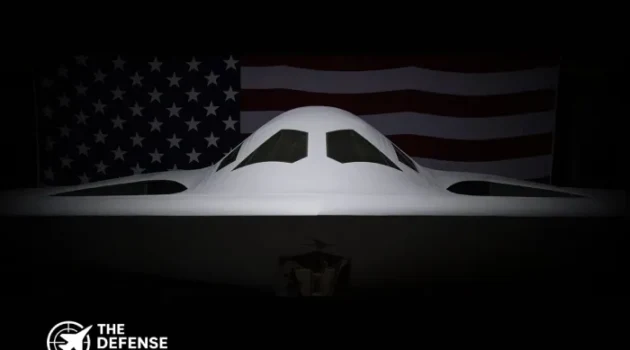

Why the J-50 Technology Road Map Matters
The J-50 is an unofficial designation used by analysts for a Shenyang next-generation combat aircraft prototype that appeared in flight-test imagery in December 2024. Chinese authorities have not publicly confirmed the J-50 designation, and the aircraft’s exact role and specifications remain undisclosed.
The latest development is therefore less about confirming what is already installed on the aircraft and more about understanding where Chinese fighter design is heading.
Researchers from the Shenyang Aircraft Design & Research Institute, part of state-owned Aviation Industry Corporation of China, have described a future flight-control architecture built around autonomous operation, satellite-independent navigation and coordinated manned-unmanned combat formations.
The research paper does not identify the J-50 by name, and it does not establish that every technology described has been integrated into the aircraft. Instead, it provides a rare public look at the engineering direction being considered for China’s next-generation combat aircraft.
That distinction is important. The J-50 remains a developmental aircraft, while the published research represents a technology road map rather than a confirmed equipment list.
Takeaways
Research associated with the Shenyang Aircraft Design & Research Institute points toward a next-generation combat architecture built around autonomous flight control, resilient navigation and large-scale manned-unmanned teaming.
J-50 and the Shift Toward Cognitive Maneuverability
Traditional fighter flight-control systems are primarily designed to keep an aircraft stable, controllable and responsive to pilot inputs.
Modern fifth-generation aircraft expanded that role by connecting flight control with sensors, propulsion and mission systems.
The Shenyang researchers describe another transition, from what they characterize as energy maneuverability, through information maneuverability, toward cognitive maneuverability.
The concept is significant because it changes the aircraft from an independently operated platform into a node within a wider combat system.
Under this approach, a fighter’s flight-control system would not simply respond to the pilot’s stick and throttle movements. It could receive higher-level tactical instructions, calculate an appropriate flight path, coordinate with other aircraft and continuously adapt its behavior to changing conditions.

An image of what appears to be one of China’s sixth-generation fighters, sometimes referred to as the J-50 and consistent with designs developed by Shenyang Aircraft Corporation, surfaced on Chinese social media late last year. Chinese authorities did not confirm the authenticity of the images. Photo: Handout This resembles the broader systems approach now being pursued by the United States and other advanced air forces.
The U.S. Air Force describes the F-47 as the central fighter platform of its Next Generation Air Dominance family of systems. The Air Force awarded Boeing the Engineering and Manufacturing Development contract in March 2025.
The difference is that China is publicly revealing some of the engineering concepts being considered for its next-generation aircraft, while many technical details of the F-47 remain classified. Boeing has also described the F-47 within a wider architecture involving advanced autonomy and collaborative combat aircraft.
J-50 Autonomous Flight and Pilot Backup
One of the most consequential concepts in the Shenyang research is autonomous control during pilot incapacitation or extreme workload.
The proposed system would continuously monitor aircraft condition using data from multiple sources, potentially including:
- Inertial navigation sensors
- Airspeed measurements
- Control-surface positions
- Engine performance data
- Aircraft health monitoring systems
- Flight-state estimates
- Mission and navigation information
The objective is not simply to make the aircraft fly without a pilot.
Instead, the system would establish a human-machine control hierarchy in which the pilot remains responsible for high-level decisions while automated systems handle increasingly complex portions of aircraft control.
During routine operations, autonomy could reduce pilot workload. During a high-workload engagement, the system could execute portions of a maneuver or trajectory. In a serious emergency, it could assume control to maintain aircraft stability and potentially continue the mission or prioritize safe recovery.
That creates an important distinction between autonomous flight and fully autonomous combat.
The research does not establish that a J-50 prototype can independently conduct combat missions today. It describes a future flight-control architecture that Chinese researchers believe could support those functions.
Why the Inner and Outer Control Loops Matter
A major strength of the research is its recognition that AI introduces a difficult engineering problem in aviation.
AI systems can identify patterns and optimize complex decisions, but they can also behave unpredictably outside the conditions represented in their training or validation data.
That is particularly dangerous in flight control.
An aircraft cannot afford an uncertain AI response at the level of basic attitude stabilization, control-surface actuation or flight-envelope protection.
The researchers therefore propose a layered architecture.
The inner control layer would remain highly deterministic and safety-focused. Conventional control laws would continue to manage essential aircraft functions.
AI-based systems would operate further out from the core, supporting tasks such as:
- Trajectory optimization
- Tactical decision support
- Multi-aircraft coordination
- Mission planning
- Payload adaptation
- Higher-level maneuver decisions
This architecture is important because it addresses one of the central problems facing autonomous combat aircraft: how to obtain the advantages of AI without allowing an opaque algorithm to become the final authority over safety-critical flight functions.
Satellite-Denied Navigation and Quantum Inertial Systems
The second major technology area is navigation without satellite positioning.
Modern military aircraft can use inertial navigation systems, satellite navigation, terrain databases and other sensors to determine position. In a major conflict, however, satellite navigation can be disrupted by jamming, spoofing or physical attacks against space infrastructure.
China’s researchers therefore identify multiple passive navigation technologies.
Quantum Inertial Navigation
Quantum inertial navigation uses quantum sensing principles to improve the measurement of acceleration and rotation.
In theory, better inertial measurements can reduce navigation drift over time.
The important point is that the Shenyang research does not establish that an operational quantum navigation system has already been installed on the J-50.
Instead, it identifies quantum inertial navigation as part of a future approach to maintaining navigation resilience.
Visual Navigation
Electro-optical sensors and computer vision can compare observed terrain and objects with known reference data.
This can provide another source of position information without depending on satellite signals.
Geomagnetic Navigation
Variations in Earth’s magnetic field can also provide geographic reference information. A sufficiently detailed magnetic map can be matched against sensor measurements to estimate an aircraft’s position.
Terrain Matching
Terrain-referenced navigation compares measured terrain features with stored terrain information.
Using several methods together creates a form of sensor fusion.
If one navigation source becomes unreliable, other systems can continue contributing information.
This is particularly important in an environment where electronic warfare is expected to be a central part of air combat.
Large-Scale Drone Wingmen and Reconfigurable Formations
The most strategically significant part of the research may be its treatment of unmanned aircraft.
The concept goes beyond a simple fighter controlling a small number of drones.
The researchers describe a reconfigurable combat formation in which crewed and uncrewed aircraft can share tasks, coordinate movement and reorganize when the composition of the force changes.
Potential roles include:
- Reconnaissance
- Attack
- Electronic or electromagnetic support
- Protection
- Sensor extension
- Communications support
- Decoy or penetration missions
The critical feature is dynamic task allocation.
If one aircraft is damaged or removed from the formation, remaining platforms could redistribute its responsibilities.
The proposed virtual-leader mechanism is also significant. Instead of depending permanently on one aircraft as the central command node, another aircraft could assume leadership when necessary.
This is closer to a distributed combat network than a conventional fighter formation.
What This Means for Chinese Airpower
China already operates a large fifth-generation fighter fleet centered on the J-20 and is developing other advanced aircraft.
The emergence of the J-36 and the Shenyang aircraft commonly called the J-50 indicates that China is testing more than one configuration for its next-generation combat aircraft.
Open-source imagery has shown the two aircraft undergoing development, while satellite imagery has also placed both designs at China’s Lop Nur test area. Air & Space Forces Magazine reported that satellite imagery in 2025 showed the J-36 and J-50 at the remote Chinese test and evaluation facility.
Janes previously assessed the two aircraft as possible new-generation Chinese stealth platforms, while cautioning that their precise missions and technical characteristics remained uncertain.
The simultaneous development of different airframes could provide China with options for different missions.
A smaller, fighter-oriented platform could emphasize air dominance, sensing and command of unmanned aircraft.
A larger platform could emphasize long-range penetration, strike, sensing and command-and-control functions.
These roles remain analytical possibilities, not confirmed Chinese specifications.
J-50 vs F-47: A Comparison of Development Approaches
The comparison between the J-50 and F-47 should be treated carefully because neither aircraft has a complete public specification set.
The more useful comparison concerns architecture and development direction, rather than speed, range or payload.
Metric J-50 F-47 Country China United States Developer Associated with Shenyang Aircraft Corporation Boeing Program status Flight testing, exact designation unofficial Engineering and Manufacturing Development Generation Widely assessed as sixth-generation candidate U.S. sixth-generation fighter First public flight imagery December 2024 Development program publicly announced in 2025 Crew Appears to be crewed based on later imagery Crewed Autonomous functions Proposed in Shenyang research Planned as part of NGAD architecture Drone teaming Proposed large-scale manned-unmanned formations Collaborative Combat Aircraft integration Satellite-independent navigation Quantum, visual, geomagnetic and terrain navigation identified as research areas Detailed technical capability not publicly disclosed Speed Not publicly disclosed Not publicly disclosed Combat radius Not publicly disclosed Not publicly disclosed Payload Not publicly disclosed Not publicly disclosed Unit cost Not publicly disclosed Not publicly disclosed Current status Development and flight testing EMD and future testing The U.S. Air Force says the F-47 is intended to provide greater range, stealth, adaptability and availability than existing fifth-generation fighters, while Boeing describes it as the central node in the NGAD family of systems.
That creates a notable convergence in design philosophy.
Both programs point toward aircraft that are more than conventional fighters. They are intended to function as networked command, sensing and combat nodes.
China’s J-50 and the Future of Collaborative Combat Aircraft
The Chinese concept also fits into the global movement toward Collaborative Combat Aircraft.
The United States is developing autonomous aircraft intended to operate alongside crewed fighters. Boeing, for example, describes CCAs as systems designed to operate with both manned and unmanned platforms.
The central military logic is straightforward.
A crewed fighter is expensive, technically complex and limited by the need to protect the pilot. An unmanned aircraft can potentially accept greater risk.
That allows commanders to distribute missions across a larger number of platforms.
Instead of asking one fighter to perform sensing, electronic warfare, air combat and strike simultaneously, a network could divide those functions among several aircraft.
The result could be greater geographic coverage and more options during an engagement.
China’s research suggests that its planners are considering this problem at the flight-control level rather than treating drone cooperation only as an external command-and-control issue.
That could make autonomous formation management an integral part of future Chinese fighter design.
The Critical Problem: Communications and Electronic Warfare
A large drone formation is only useful if its members can communicate and coordinate under combat conditions.
A sophisticated adversary will attempt to:
- Jam communications
- Degrade navigation
- Disrupt data links
- Spoof sensors
- Attack command nodes
- Inject false information
- Separate unmanned aircraft from their controlling force
This makes distributed autonomy especially important.
If every drone depends on one fighter or ground station, destroying that node could disrupt the entire formation.
A system capable of local decision-making and dynamic leadership replacement could be harder to defeat.
The concept therefore has direct relevance to the broader electronic warfare competition between China and the United States.
It also increases the importance of low-probability-of-intercept communications, secure networking, onboard processing and resilient navigation.
Why China Is Emphasizing Flight-Control Architecture
The research reveals an important change in the meaning of flight control.
For decades, flight control was primarily about making an aircraft respond predictably.
For a sixth-generation combat aircraft, flight control may become a bridge between the aircraft’s physical performance and its broader mission system.
That means the flight-control system could eventually help determine:
Where the aircraft flies.
How it cooperates with other aircraft.
How it responds to threats.
How it reallocates tasks.
How it maintains control after damage.
How it responds when the pilot is overloaded.
This is why the Shenyang researchers describe the transition as moving from basic flight stability toward combat effectiveness.
The aircraft becomes an adaptive participant in a wider combat system.
What the Research Does Not Prove
Several claims should not be overstated.
First, the paper does not confirm that the J-50 currently has all of these capabilities.
Second, the J-50 designation itself remains unofficial.
Third, the research describes technologies that require additional engineering, simulation and flight testing.
Fourth, the paper does not establish the operational size of any future Chinese drone formation.
Finally, public imagery cannot provide reliable information about classified radar performance, electronic warfare systems, infrared sensors, engine performance, weapons capacity or combat radius.
These limitations matter because sixth-generation aircraft programs remain highly classified.
The strongest conclusion is therefore not that China has already deployed a fully autonomous J-50 combat system.
The stronger conclusion is that Chinese aircraft researchers are publicly describing the technical architecture needed to build one.
Challenges for China’s Next-Generation Fighters
The proposed architecture faces significant engineering challenges.
AI Verification
AI-based control and mission systems need extensive testing before they can be trusted in unpredictable combat environments.
Sensor Fusion
Combining inertial, visual, magnetic and terrain data requires accurate timing, calibration and fault detection.
Communications
Large autonomous formations require resilient communications that can survive jamming and physical attacks.
Thermal and Computing Demands
Advanced autonomy requires substantial onboard computing power. Processing large quantities of sensor data also creates electrical and thermal management requirements.
Human-Machine Control
The aircraft must determine when to follow the pilot, when to recommend an action and when to intervene automatically.
Cybersecurity
A highly networked aircraft can gain combat power through connectivity while also creating additional attack surfaces.
Flight-Test Validation
A proposed algorithm is not an operational capability until it has been demonstrated across a sufficiently broad range of flight conditions and failure scenarios.
The researchers’ emphasis on layered control and extensive simulation suggests that Chinese engineers recognize these problems.
Strategic Implications for the United States and Allies
The implications extend beyond the J-50 itself.
If China succeeds in integrating autonomous flight, resilient navigation and large-scale manned-unmanned coordination, the competitive issue will not simply be which fighter has the better radar or missile.
It will become a question of which side can generate the most effective combat network.
For the United States and its allies, that increases the importance of:
- Collaborative Combat Aircraft
- Counter-autonomy capabilities
- Electronic warfare
- Resilient communications
- GPS alternatives
- Distributed sensors
- AI assurance and verification
- Long-range air-to-air weapons
- Advanced data links
- Autonomous mission management
It also strengthens the argument for treating future air combat as a system-of-systems problem.
The U.S. F-47 program already follows this broad approach. The Air Force describes the aircraft as part of the NGAD family of systems, while Boeing identifies collaborative combat aircraft as a complementary element of future airpower.
The strategic competition is therefore developing on similar conceptual ground, even though the actual technical solutions remain largely classified.
Future Outlook
The J-50’s importance will ultimately depend less on its appearance and more on what China can integrate into the aircraft and its supporting network.
The most important milestones to watch will be:
- Official Chinese identification of the aircraft and program.
- Evidence of advanced sensor and electronic warfare integration.
- Testing with unmanned wingmen.
- Demonstrations of autonomous or optionally autonomous flight.
- Evidence of resilient navigation during satellite-denied operations.
- Testing of distributed formation control.
- Integration with China’s wider airborne and space-based surveillance network.
China’s researchers have already outlined the architecture.
The harder task is turning that architecture into a reliable operational system.
The United States faces the same basic challenge with the F-47 and Collaborative Combat Aircraft programs.
Conclusion
The latest J-50-related research offers an unusually useful look at how China is thinking about next-generation air combat.
Its significance is not that the J-50 has suddenly been confirmed as an autonomous fighter with quantum navigation and large drone swarms.
Those claims would go beyond the available evidence.
The important development is that researchers from the Shenyang Aircraft Design & Research Institute are describing a flight-control architecture built around autonomy, resilient navigation and distributed manned-unmanned combat.
That points toward a fundamental change in fighter design.
The next generation of combat aircraft will increasingly be judged not only by speed, stealth, radar or weapons capacity, but by how effectively they can command, cooperate with and survive alongside other autonomous systems.
For China, the J-50 and J-36 programs provide visible evidence that this transition is already being explored through flight testing. For the United States, the F-47 and CCA programs show a parallel movement toward networked airpower.
The long-term competition will therefore be about much more than two aircraft.
It will be about which nation can build the more resilient, intelligent and scalable combat aviation network.


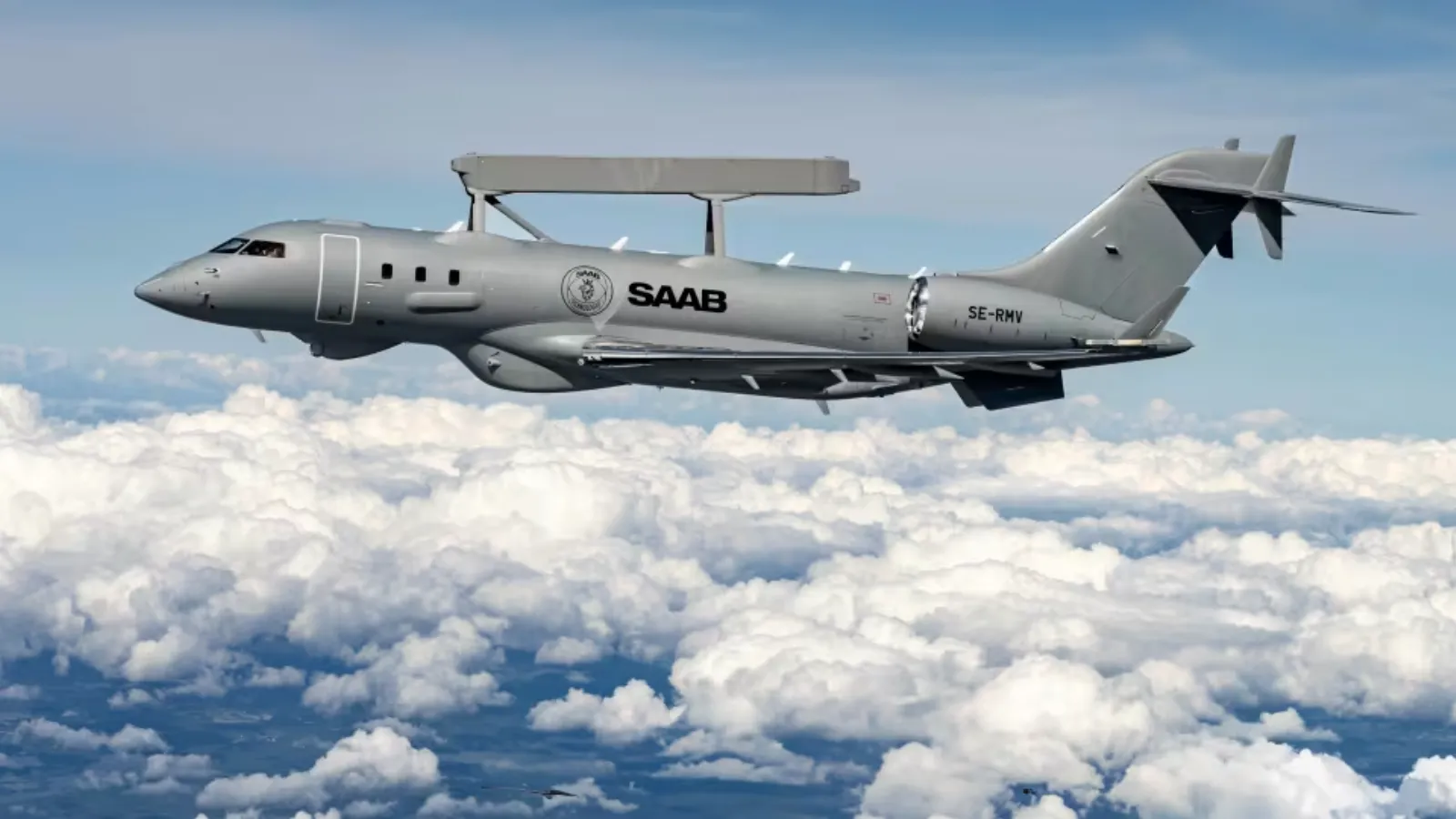
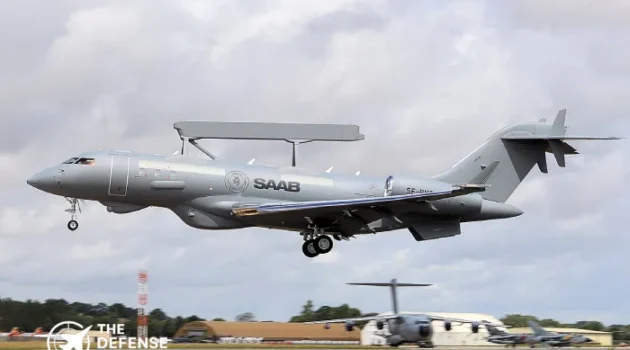
The Netherlands is moving toward acquiring a Saab GlobalEye aircraft as European NATO members expand airborne surveillance capabilities and prepare to replace aging warning and control platforms.
Takeaways
The Netherlands has taken a formal step toward acquiring Saab’s GlobalEye airborne early warning and control aircraft, although no procurement contract has yet been signed.
Netherlands GlobalEye Procurement Moves Forward
The Netherlands GlobalEye procurement has entered a formal planning stage after the Dutch government signed a Letter of Intent with Sweden for the intended acquisition of a Saab GlobalEye Airborne Early Warning and Control aircraft.
The announcement marks an important step, but it is not yet a completed defense contract. Saab confirmed that the Netherlands and Sweden have not entered into a purchase agreement and that the Swedish defense company has not received an order.
Saab said it is prepared to support the next stages of the Dutch procurement process. The company described GlobalEye as a multi-domain AEW&C system designed to provide long-range detection and identification across air, maritime and land environments.
The announcement did not disclose the procurement value, delivery schedule or specific configuration of the Dutch aircraft.
What The GlobalEye Adds
GlobalEye is built around Saab’s airborne surveillance and command-and-control architecture. The platform combines an Erieye Extended Range radar with additional active and passive sensors and a multi-domain command-and-control system.
The aircraft is based on Bombardier’s Global 6500 business jet platform. Saab says GlobalEye can provide long-range surveillance while sharing information with air, land and maritime forces in real time.
That architecture is significant because an AEW&C aircraft is not simply an airborne radar platform. Its operational value comes from combining sensor information, processing it into a common operational picture and distributing that information to other forces.
For the Netherlands, such a capability can support airspace surveillance, maritime awareness and wider command-and-control functions. It can also provide commanders with a higher-level view of activity across several operational domains than individual tactical sensors normally can provide.
The distinction matters in modern European air operations, where aircraft, drones, cruise missiles, ballistic missiles, naval forces and ground-based systems can operate within the same battlespace.
Dutch Move Comes Amid Wider NATO GlobalEye Program
The Netherlands’ latest announcement comes shortly after a much larger NATO decision involving the same aircraft.
On July 7, NATO Secretary General Mark Rutte announced that the alliance would begin formal negotiations with Saab over the acquisition of up to 10 GlobalEye AEW&C systems. The initiative involves Belgium, Canada, Denmark, Germany, Latvia, Lithuania, Luxembourg, the Netherlands, Norway, Romania and Sweden.
The multinational program is intended to replace NATO’s aging fleet of Boeing E-3A Airborne Warning and Control System aircraft based at Geilenkirchen, Germany. The Dutch Ministry of Defence said the existing E-3A aircraft are scheduled to reach the end of their permitted service life from 2035.
The NATO initiative and the new Dutch-Swedish Letter of Intent should therefore be viewed within a broader European effort to strengthen airborne surveillance.
However, the latest Dutch announcement does not establish that the intended national aircraft is part of the NATO fleet acquisition. The two initiatives involve different procurement arrangements, and the latest Dutch-Swedish announcement has not disclosed its final contractual structure.
Why Airborne Early Warning Matters
Airborne early warning and control aircraft provide a perspective that ground-based radars cannot fully replicate.
Operating at altitude allows an AEW&C aircraft to extend the radar horizon and maintain surveillance over large areas. The aircraft can also move its surveillance coverage as operational requirements change.
This becomes particularly relevant in Europe’s northern and eastern regions, where NATO forces must monitor large air and maritime areas while dealing with increasingly complex electronic warfare and low-observable threats.
Saab states that GlobalEye is designed to detect and identify objects across air, sea and land domains. The company has also highlighted its ability to operate in environments containing clutter and electronic jamming.
The platform’s value therefore extends beyond detecting aircraft. Its multi-domain architecture is intended to support a broader surveillance and command function.
GlobalEye’s Growing European Customer Base
The Dutch decision adds to growing European interest in Saab’s AEW&C platform.
France signed a Letter of Intent with Saab in June 2025 for two GlobalEye aircraft, with an option for two additional aircraft. France subsequently signed a contract for two aircraft in December 2025, valued at approximately SEK 12.3 billion, with deliveries planned from 2029 through 2032.
Sweden is also expanding its own GlobalEye fleet. Saab has received orders from the Swedish Defence Materiel Administration for three aircraft, while NATO has selected the platform as the basis for its future alliance-level AEW&C capability.
In July 2026, Saab also announced an order for two GlobalEye aircraft from an unidentified Middle Eastern customer. The order was valued at SEK 10.1 billion, with deliveries scheduled for 2030.
Canada has separately entered discussions with Saab after selecting GlobalEye as the preferred solution for its future AEW&C capability. Saab said in May that Canada had not yet signed a contract or placed an order at that stage.
What Happens Next
The immediate issue for the Netherlands GlobalEye program is the transition from political intent to a binding procurement contract.
The Letter of Intent establishes the direction of the Dutch acquisition, but it does not by itself create a completed purchase. Saab has explicitly stated that it has not yet received an order.
The next steps are therefore expected to involve the Dutch procurement process, including final requirements, contractual arrangements and associated support considerations.
The absence of a disclosed price or delivery schedule also means that the financial scale and operational entry date of the Dutch aircraft cannot yet be confirmed.
From a broader NATO perspective, the development is significant because airborne surveillance is becoming a central part of Europe’s effort to improve independent situational awareness. NATO’s selection of GlobalEye, combined with national interest from countries such as the Netherlands, France and Canada, gives Saab’s platform an expanding role in Western airborne surveillance planning.
For the Netherlands, the key change is straightforward: the country has moved from interest in GlobalEye to a formal Letter of Intent. A final contract, however, remains to be concluded.
Bottom line: The Netherlands has taken a concrete procurement step toward acquiring a Saab GlobalEye AEW&C aircraft, but the aircraft is not yet under contract. The decision comes as NATO and European allies seek to expand airborne surveillance and replace aging warning and control capabilities.
Germany’s First F-35A Completes Maiden Flight
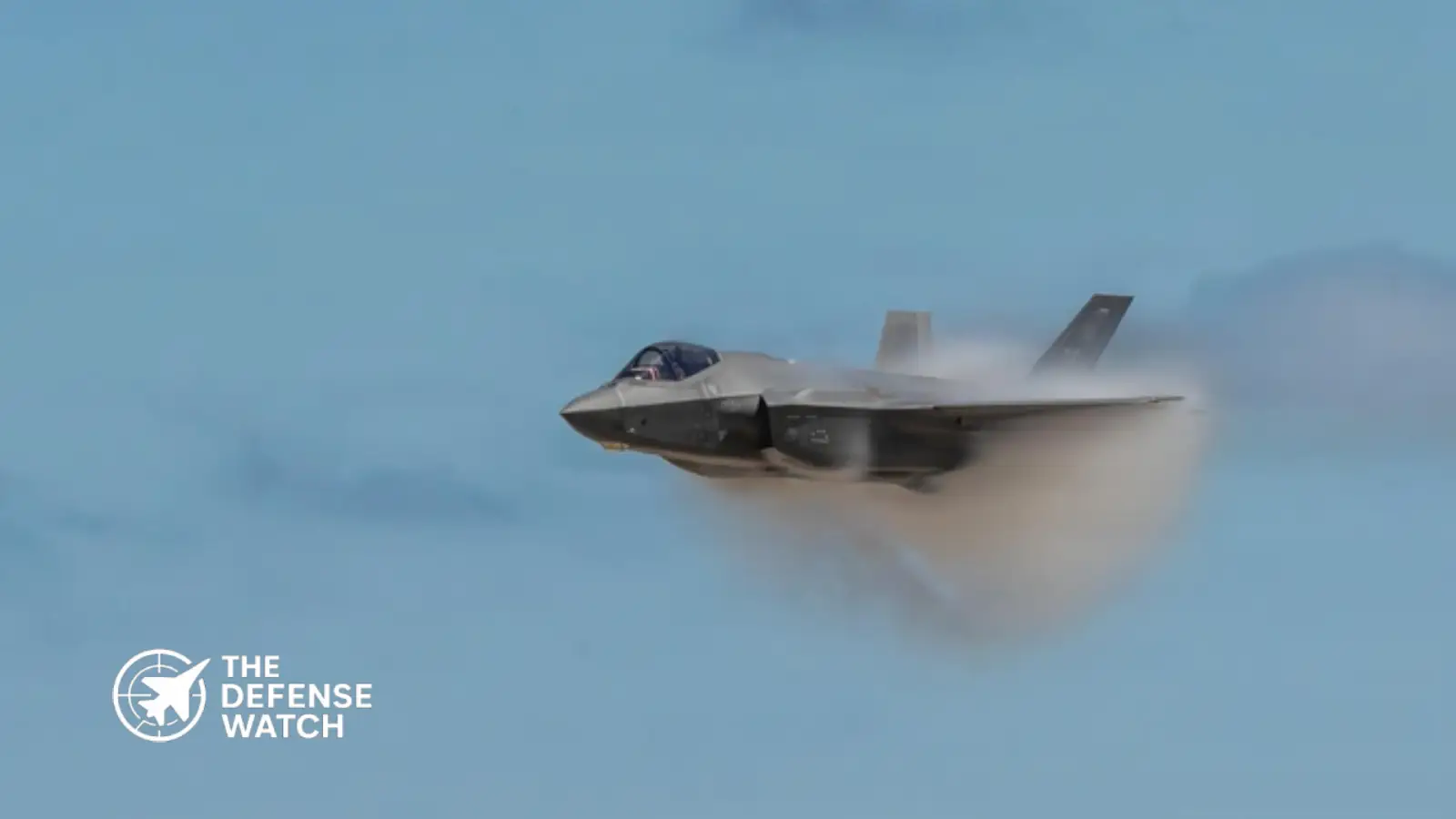
Germany’s first F-35A Lightning II has completed its maiden flight, marking a major milestone in the Luftwaffe’s transition to fifth-generation combat aviation. Lockheed Martin confirmed the flight after the aircraft completed final assembly and finishing work at the company’s Fort Worth, Texas, production facility.
Takeaways
Germany’s first F-35A has completed its maiden flight, marking a major production milestone before the aircraft enters the U.S.-based training phase of the Luftwaffe’s 35-aircraft program.
The aircraft, identified as MG-01, is the first of 35 F-35A fighters Germany is acquiring to replace its aging Panavia Tornado fleet. The German government selected the F-35A in 2022 and signed the procurement agreement in July 2023.
The maiden flight moves the program from production and acceptance activity into a more operationally focused phase. The next major step is delivery for German training in the United States before the aircraft begin arriving at Büchel Air Base in Germany.
A 35-Aircraft Replacement for the Tornado
Germany’s F-35 program is centered on 35 F-35A conventional takeoff and landing aircraft.
Program Element Germany F-35A Aircraft Lockheed Martin F-35A Lightning II Quantity 35 aircraft First German aircraft MG-01 Production site Fort Worth, Texas First flight September 8, 2026 U.S. training location Ebbing Air National Guard Base, Arkansas German operating base Büchel Air Base Tornado replacement Yes Planned German deliveries Beginning in 2027 Planned Tornado retirement 2030 The Bundeswehr says the F-35A acquisition is intended to strengthen Germany’s combat-air capability and improve interoperability with NATO partners. The aircraft will also take over missions currently performed by the Tornado, including Germany’s role in NATO nuclear sharing.
The transition is important because the Tornado fleet is approaching the end of its planned service life. Germany has stated that the remaining Tornado aircraft are expected to be retired by 2030.
Why the Maiden Flight Matters
A first flight does not mean the aircraft is operational with the Luftwaffe. It does, however, confirm that the first German production aircraft has progressed beyond assembly and ground preparation into flight testing.
That distinction matters for a program involving a sophisticated fifth-generation aircraft. Before a new F-35 can enter regular service, the aircraft must complete acceptance activity, support documentation, training arrangements and the broader infrastructure required to operate and maintain the platform.
Lockheed Martin completed final assembly of Germany’s first aircraft in August 2026. The company had previously moved the aircraft into its Aircraft Final Finishes stage, following the integration of its major structural components.
The successful maiden flight therefore represents one step in a much longer introduction process rather than an immediate change in Germany’s operational fighter force.
German F-35 Training Moves Through Arkansas
A key feature of Germany’s F-35 introduction is that the initial training pipeline will be based in the United States.
German pilots and maintenance personnel are expected to train at Ebbing Air National Guard Base in Arkansas. The U.S. Air Force has established Ebbing as a major international F-35 training location under the Foreign Military Sales program.
The training infrastructure became operationally relevant in 2024, when the U.S. Air Force completed new facilities supporting international F-35 pilot training. The 33rd Fighter Wing has also conducted exercises at Ebbing focused on dispersed operations and readiness in contested environments.
Germany is one of the first international customers scheduled to use the Ebbing training system alongside other F-35 operators. This arrangement gives Berlin access to an established U.S. training framework rather than requiring the entire initial training architecture to be built in Germany.
For the United States, the arrangement also reinforces the role of Ebbing as a central hub for training allied F-35 crews and maintainers.
Büchel Infrastructure Is Being Upgraded
While initial training takes place in Arkansas, Germany is preparing its own infrastructure for the F-35.
Büchel Air Base in western Germany is being upgraded through what the Bundeswehr describes as an F-35 campus. The work includes facilities for aircraft maintenance, flight preparation, logistics, operations and security.
The infrastructure requirement is particularly important because the F-35 is not simply a direct replacement for the Tornado in terms of airframe dimensions and performance. Its support system also includes specialized maintenance, information systems, secure communications and facilities designed around the aircraft’s low-observable characteristics.
The Bundeswehr has said the new infrastructure is also intended to meet the cybersecurity requirements associated with the aircraft.
F-35 Adds Fifth-Generation Capabilities
The German F-35A introduces capabilities that were not available to the Luftwaffe through the Tornado fleet.
The aircraft combines low-observable design, advanced sensors, onboard data processing and networked communications. The Bundeswehr specifically identifies sensor fusion, networking and reduced detectability as core characteristics of the F-35.
The operational significance goes beyond the aircraft’s ability to penetrate defended airspace. The F-35 is designed to collect and distribute information across a wider force, allowing it to function as both a strike aircraft and a sensor and communications node.
That characteristic is particularly relevant to NATO operations, where German aircraft may operate alongside F-35s from other European countries and U.S. forces.
Lockheed Martin has said more than 550 F-35 aircraft are expected to operate from more than 10 European countries by the 2030s. The growing European fleet is creating a common fifth-generation aircraft ecosystem across NATO.
NATO Interoperability Is a Central Part of the Program
Germany’s decision to acquire the F-35 also fits into a broader European shift toward common fifth-generation combat-air capabilities.
Denmark, Italy, Norway, the Netherlands and other European NATO members already operate or are introducing F-35 aircraft. The aircraft are increasingly appearing together in multinational exercises and air operations.
During Ramstein Flag 2026, F-35s from Denmark, Italy, Norway and the United States operated across northern Europe, demonstrating the integration of fifth-generation aircraft with allied air forces and supporting systems.
Germany’s entry expands this network. Once the Luftwaffe reaches operational capability, its F-35s will be able to participate in a much broader ecosystem of common training, logistics, tactics and operational data exchange.
For NATO, that commonality can reduce some of the interoperability challenges created by fleets built around different aircraft types and national support structures.
Nuclear Sharing Remains a Major Driver
Germany’s F-35 purchase also has a strategic dimension beyond conventional air combat.
The Bundeswehr explicitly links the acquisition to Germany’s NATO nuclear-sharing role. The F-35A will replace the Tornado in the German nuclear-sharing mission, subject to the applicable NATO and national arrangements.
This makes the F-35 transition particularly important for the Alliance. The aircraft provides Germany with a modern platform capable of operating in environments where survivability, electronic warfare resilience, sensor awareness and secure communications are increasingly important.
The F-35 is therefore not simply another fighter acquisition for Berlin. It is part of the broader effort to maintain Germany’s contribution to NATO airpower while replacing an aircraft design that dates to the Cold War era.
What Happens Next
The maiden flight is followed by a sequence of milestones leading toward German training and eventual deployment.
The first German aircraft are scheduled to remain in the United States for training, with the Bundeswehr previously identifying the initial group as part of the U.S.-based pilot and ground personnel training effort.
Germany is simultaneously completing the infrastructure required at Büchel. The Bundeswehr has stated that the first aircraft are planned to reach the German base from 2027, while the Tornado fleet is scheduled to reach the end of its planned service life in 2030.
This creates a multi-year transition period in which Germany must build experience with the F-35 while maintaining sufficient Tornado capability until the new fleet can assume its assigned missions.
The key challenge is therefore not the maiden flight itself. It is the successful integration of aircraft, pilots, maintainers, infrastructure, weapons, logistics and secure information systems into a functioning German combat-air system.
A Significant Milestone for German Airpower
Germany’s first F-35A maiden flight marks the aircraft’s transition from an industrial production program into the next stage of German military integration.
The 35-aircraft purchase gives the Luftwaffe a fifth-generation fighter built around stealth, sensor fusion and networked operations. It also brings Germany deeper into the growing European F-35 community and strengthens the common aircraft base available to NATO air forces.
The immediate focus now shifts toward acceptance, U.S.-based training and preparations for the aircraft’s eventual arrival at Büchel.
For Germany, the program represents the replacement of a Cold War-era strike and nuclear-sharing aircraft with a modern fifth-generation platform. For NATO, it adds another major European operator to an expanding F-35 network.
Britain Expands F-35 Long-Range Weapons Plans
Britain is expanding the planned long-range weapons options for its F-35 Lightning II force while allocating £460 million to the SPEAR Capability 3 program through the 2029/30 financial year, according to the UK government’s 2026 Defence Investment Plan. The plan places greater emphasis on stand-off strike, larger weapons inventories and the ability to attack targets without requiring combat aircraft to penetrate the most heavily defended areas.
Takeaways
Britain is expanding the planned weapons options for its F-35 force while continuing the integration and procurement of SPEAR Capability 3.
The announcement is significant because the UK is not treating the F-35 simply as a stealth fighter acquisition. Instead, Britain is developing a broader combat-air architecture in which the F-35B, future F-35A aircraft, long-range weapons and autonomous aircraft are intended to operate as parts of the same force.
The government has not yet identified the additional weapons covered by the wider F-35 package. It has also not released quantities, individual program values or firm integration dates, making the £460 million SPEAR allocation the clearest publicly identified weapons investment associated with the current plan.
£460 Million Allocated To SPEAR Capability 3
SPEAR Capability 3 is intended to provide the UK F-35 force with a network-enabled, air-launched stand-off strike weapon. MBDA describes SPEAR as a miniature cruise missile designed to engage a broad range of land and maritime targets while allowing the launch aircraft to remain beyond the effective reach of hostile air defenses.
The weapon is less than 2 meters long, has a diameter of 180 millimeters and weighs less than 100 kilograms, according to MBDA. Its turbojet propulsion, networked architecture and multi-sensor seeker are designed to support precision engagement in complex operating environments.
The British Ministry of Defence previously described SPEAR3 as a weapon intended to attack targets at more than 140 kilometers. The 2021 production contract was valued at £550 million and was intended to establish SPEAR as a major air-to-ground weapon for British F-35B aircraft.
The newer £460 million allocation should not be treated as a replacement for that earlier contract. It represents funding identified in the 2026 Defence Investment Plan for SPEAR Capability 3 during 2026/27 through 2029/30.
Program Current publicly identified figure Relevance SPEAR Capability 3 £460 million F-35 stand-off strike capability Broader F-35 program £2.2 billion Aircraft and wider program investment through 2029/30 UK weapons and munitions £11.1 billion Broader weapons and stockpile investment Collaborative Combat Aircraft £300 million Autonomous combat-air development Project PANTHEON Almost £240 million Uncrewed systems and F-35B integration work The figures above cover different parts of the UK defense program and should not be combined as if they represent a single F-35 weapons contract.
SPEAR Moves Closer To Operational Service
SPEAR has progressed significantly during 2026. MBDA reported in May that four SPEAR missiles were loaded into the weapons bay of an F-35B test aircraft during a flight from Naval Air Station Patuxent River in Maryland. The test involved the F-35 Integrated Test Force, MBDA, Lockheed Martin, BAE Systems, the UK Ministry of Defence and British Royal Navy and Royal Air Force personnel.
MBDA subsequently said at the 2026 Farnborough International Airshow that SPEAR had entered low-rate initial production, with manufacturing beginning during 2026 and first operational missile deliveries expected in early 2027.
That progression matters because a stand-off missile only provides meaningful combat capability once the weapon, aircraft software, mission systems, targeting process and operational support chain are all integrated.
The integration challenge is particularly important for the F-35B. Its short-takeoff and vertical-landing configuration imposes tight limits on aircraft weight, internal volume and thermal management, while the requirement to carry weapons internally places additional constraints on missile dimensions and launch interfaces.
Why Stand-Off Weapons Matter For the F-35
The principal operational value of a weapon such as SPEAR is not simply its nominal range. It is the ability to shift the engagement point away from the launch aircraft.
Modern integrated air defense systems combine long-range surveillance radars, mobile surface-to-air missiles, electronic warfare, short-range defenses and command networks. A penetrating fighter may still be able to enter such an environment, but the risk rises as the density and sophistication of those defenses increase.
A stand-off weapon allows the F-35 to use its sensors and network connections to contribute to an engagement without necessarily flying directly over the target area.
This is particularly relevant to the F-35 because the aircraft is designed around sensor fusion and low observability. Combining those attributes with longer-range weapons can create a layered strike system in which the aircraft searches, identifies and shares information while the weapon provides the physical reach needed to attack the target.
SPEAR is also designed for targets that may move or change position. MBDA says the weapon can engage targets across land and sea and uses an advanced multi-sensor seeker.
That makes it different from a simple fixed-target glide bomb. Its design is aimed at a more complicated battlefield where targets can relocate, air defenses can maneuver and weather or electronic interference can affect the engagement.
The Broader British Shift Toward Long-Range Strike
The F-35 weapons investment is part of a much larger British effort to rebuild and expand long-range strike capacity.
In February 2026, the Ministry of Defence said Britain expected to spend more than £400 million during the financial year on hypersonic and long-range weapons, including cooperative projects with France, Germany and Italy. The government identified long-range strike as a growing priority within European defense cooperation.
In June, Britain and other European states also moved forward with the European Long-range Strike Approach, covering air-launched, ground-launched and low-cost long-range strike capabilities.
The shift reflects a broader change in how European air forces are approaching contested operations. Instead of relying primarily on a relatively small number of highly capable combat aircraft, planners are increasingly looking at combinations of aircraft, stand-off missiles, autonomous systems, electronic warfare and networked sensors.
For Britain, that approach is especially important because the F-35B provides a carrier-based stealth combat capability. Its ability to operate from the Royal Navy’s Queen Elizabeth-class carriers gives Britain a mobile airpower option, but the effectiveness of that force depends heavily on the weapons available to the aircraft.
F-35B, F-35A and Autonomous Aircraft
Britain’s F-35 force is also changing in composition.
The UK plans to bring its first F-35A aircraft into Royal Air Force service in the early 2030s. Unlike the F-35B, the F-35A is designed for conventional runway operations and will allow Britain to participate in NATO’s Dual Capable Aircraft mission.
The UK is simultaneously developing autonomous combat aircraft. Its Collaborative Combat Aircraft program has a planned £300 million allocation and is intended to produce a demonstrator by 2030.
These aircraft are expected to operate alongside crewed fighters, carrying additional weapons and extending sensor coverage. The stated concept is to place autonomous systems farther forward in contested airspace, potentially allowing crewed aircraft to operate from positions with greater survivability.
Project PANTHEON represents another part of this effort, with almost £240 million allocated to trials involving jet-powered uncrewed aircraft intended to work with the F-35B force.
The resulting architecture could give Britain several layers of combat power: F-35s for stealth, sensing and command functions, stand-off missiles for long-range precision effects, autonomous aircraft for additional sensors and weapons, and Typhoon fighters for complementary air defense and strike missions.
Stockpiles Are Becoming As Important As Aircraft
One of the most important elements of the British plan is the emphasis on munitions depth.
The UK government has allocated £11.1 billion through its Defence Investment Plan for weapons and munitions. The stated objective is to rebuild stockpiles and create a mix of high-end and lower-cost weapons capable of addressing different target sets.
This is a significant lesson from recent conflicts. A small inventory of expensive precision weapons can provide exceptional capability, but it cannot support sustained operations indefinitely.
For an F-35 force, this means the number of available missiles can become almost as important as the number of aircraft. A fighter cannot generate sustained strike effects if its weapons inventory is too small to support repeated operations.
SPEAR’s relatively compact design is relevant here because MBDA emphasizes its high aircraft loadout and the ability to carry multiple weapons while retaining stand-off capability.
The combination of weapon size, range and network connectivity is therefore central to its intended role.
What Remains Unclear
The most important limitation in the current announcement is that Britain has not publicly identified the full list of additional stand-off and long-range weapons planned for the F-35 force.
The Defence Investment Plan does not provide a detailed breakdown of weapon quantities, individual procurement values or integration schedules. The wider program should therefore be viewed as a policy and investment direction rather than a completed procurement package.
The same caution applies to the £460 million SPEAR allocation. Funding does not automatically translate into an immediate operational capability. Aircraft integration, software certification, testing, production capacity, training and logistics all affect when a weapon can be fielded at scale.
Previous UK government reporting also shows that SPEAR Capability 3 has experienced program and integration challenges. The 2024/25 NISTA assessment identified uncertainty surrounding the F-35B integration timeline, although the program had achieved a successful guided firing trial in November 2024.
The latest flight and production milestones indicate that the program has continued to progress, but operational availability remains dependent on the completion of the remaining integration and acceptance process.
Strategic Implications For Britain
For Britain, the significance of the current investment goes beyond adding another missile to the F-35 inventory.
The country is moving toward a combat-air model that combines stealth aircraft, longer-range weapons, autonomous systems and deeper munitions inventories. That approach is designed to preserve the ability to conduct operations when adversaries can threaten aircraft with increasingly sophisticated air defense networks.
The approach also has implications for NATO.
Britain operates one of Europe’s most capable F-35 fleets and remains a major contributor to NATO airpower. Adding a mature stand-off strike capability to that fleet can increase the number of missions British aircraft can conduct without relying exclusively on direct penetration of defended airspace.
The UK government has also committed to broader European long-range strike cooperation, while NATO allies are increasing their emphasis on deep precision strike capabilities. In July 2026, a group of NATO countries, including Britain, committed to collectively invest $50.66 billion in deep precision strike capabilities over the next decade.
The British F-35 weapons effort therefore fits into a wider European effort to restore depth in long-range conventional strike.
Bottom Line
Britain is expanding the role of its F-35 Lightning II force from a stealth combat aircraft fleet into a broader long-range strike component of the Royal Air Force and Royal Navy.
The £460 million SPEAR Capability 3 allocation provides a defined financial commitment, while the wider plan for additional stand-off and long-range weapons signals a broader change in British strike planning. The specific weapons, quantities and schedules remain undisclosed.
SPEAR itself is further along than the broader weapons package. Its F-35B flight integration milestone, low-rate production and planned early 2027 operational deliveries indicate that Britain is moving toward a practical stand-off strike capability rather than simply outlining a future requirement.
For the F-35 force, the strategic value will ultimately depend on the combination of aircraft availability, weapon stockpiles, network connectivity and the ability to sustain operations against modern integrated air defenses. Britain’s current investment plan shows that London is attempting to address all four elements together.

U.S. Navy F/A-XX Fighter Decision Moves Toward Public Announcement
The U.S. Navy F/A-XX fighter program has reached a decisive stage, with the Pentagon having selected a preferred contractor for the next-generation carrier-based stealth aircraft, according to Reuters. The two companies competing for the contract are Boeing and Northrop Grumman, and the Pentagon said it expects to award the program in the near future.
Takeaways
The Pentagon has selected a preferred contractor for the U.S. Navy’s F/A-XX next-generation carrier fighter, according to Reuters, with an announcement expected soon.
Reuters reported Sept. 8 that two people briefed on the matter said the contractor selection had already been made, although the Pentagon has not publicly disclosed the winner. The department said only that it continues to work toward an F/A-XX award in the near future.
The decision is significant because F/A-XX is intended to become the Navy’s principal next-generation carrier fighter and the strike-fighter component of the service’s broader Next Generation Air Dominance architecture.
Boeing And Northrop Grumman Compete For The Program
The final competition has narrowed to Boeing and Northrop Grumman.
Both companies have substantial experience with U.S. military aircraft, but the Navy’s requirement represents a major shift from the design philosophy of the F/A-18E/F Super Hornet. The future aircraft is expected to emphasize survivability, range, endurance, advanced sensors and networking rather than simply improving the performance of an existing airframe.
The Navy’s 2025 aviation planning documents describe F/A-XX as a sixth-generation fighter intended to replace the F/A-18E/F Super Hornet and EA-18G Growler, while incorporating greater range, speed and sensor capability and increased integration with manned and unmanned systems.
The final contract could be worth tens of billions of dollars over the life of the program, according to Reuters. That figure would encompass more than initial engineering and development work, potentially extending into production, sustainment and future modernization.
Why F/A-XX Matters To The Carrier Air Wing
The F/A-XX is not simply a one-for-one replacement for the Super Hornet.
The Navy is designing its future carrier air wing around a wider network of aircraft, weapons and sensors. The F/A-XX is expected to provide a highly survivable crewed platform that can operate alongside uncrewed aircraft and contribute to a distributed combat network.
That approach reflects a central problem facing carrier aviation: modern air-defense systems increasingly allow adversaries to detect, track and engage aircraft at greater distances.
A future carrier fighter therefore needs to do more than carry weapons. It must be able to operate in heavily contested electromagnetic and air-defense environments while exchanging information with other aircraft, ships, satellites and unmanned platforms.
The Navy’s own planning material identifies manned and unmanned integration as an important part of the F/A-XX concept.
Range Is Becoming A More Important Requirement
One of the most important differences between the F/A-XX and the current Super Hornet is expected to be operational reach.
The F/A-18E/F entered fleet service in 1999 and remains a major component of the carrier air wing. The Navy is extending the aircraft’s useful life through Block III modernization, including structural improvements, upgraded systems, networking and an expected 10,000-flight-hour service life.
Those upgrades are intended to keep the Super Hornet relevant while the Navy develops its successor.
The challenge is that extending the life of the existing aircraft does not eliminate the underlying requirement for a new platform. In a high-end conflict, a carrier aircraft may need to operate farther from the carrier because the threat environment makes close access increasingly difficult.
F/A-XX is therefore expected to combine greater range and endurance with low observability and advanced sensing.
Capability Area F/A-XX Requirement Current Super Hornet Primary role Next-generation carrier strike fighter Multirole carrier strike fighter Stealth Advanced stealth expected Reduced radar signature on Block III Range Expected to exceed current fighter requirements Improved through Super Hornet design and upgrades Sensors Advanced integrated sensors expected AESA radar and upgraded avionics Uncrewed integration Core part of future concept Increasingly networked, but not designed around CCA operations Service era Expected operational entry in the 2030s Entered fleet service in 1999 Future role Next-generation carrier air dominance Bridge to future carrier aviation The table separates publicly described program goals from established Super Hornet capabilities. Precise F/A-XX performance specifications remain classified or undisclosed. GAO has previously noted that important details concerning F/A-XX were withheld because of classification.
Program Delays Created A Strategic Problem
The F/A-XX program has faced significant uncertainty.
The Pentagon previously considered slowing the program because of concerns over engineering resources, industrial capacity and competing development priorities. The FY2026 defense budget nevertheless retained funding for F/A-XX design work.
During a 2025 Pentagon budget briefing, a senior defense official said the administration was still considering the future of F/A-XX but requested $74 million to continue design work. The official also said the department was evaluating how to achieve sixth-generation tactical air capability while moving forward with the Air Force’s F-47 program.
Congress subsequently provided stronger financial support for the Navy effort.
Reuters reports that lawmakers allocated $750 million for F/A-XX in the 2025 spending legislation and another $1.4 billion in fiscal 2026.
That funding matters because a lengthy pause would not simply delay an aircraft. It could create a gap between the retirement or reduction of older aircraft and the arrival of their replacement.
F/A-XX And The F-47 Are Related, But Not The Same Aircraft
The Navy and Air Force are pursuing separate sixth-generation fighter programs.
The Air Force’s F-47 is being developed by Boeing as the crewed fighter component of the Air Force’s Next Generation Air Dominance effort. The Navy’s F/A-XX is designed around carrier operations and the requirements of a naval air wing.
The Pentagon has acknowledged that technology sharing and coordination between the services could be useful, while also making clear that the services have different operational requirements. In the FY2026 budget briefing, officials said the department was focused on sixth-generation capability but had not ruled out different approaches to achieving it.
For the Navy, carrier suitability creates requirements that do not apply in the same way to a land-based fighter.
The aircraft must be capable of repeated carrier launches and arrested landings, tolerate the structural stresses associated with carrier operations and fit within the operational and maintenance constraints of a carrier air wing.
That makes simply adapting another sixth-generation aircraft to naval service a difficult proposition.
The Uncrewed Component Could Be Equally Important
F/A-XX is being developed at a time when the Navy is expanding its use of uncrewed aircraft.
The future carrier air wing is expected to combine crewed fighters with autonomous and remotely operated systems that can extend sensing, electronic warfare and strike capacity.
The concept is particularly important because an uncrewed aircraft can potentially be assigned to missions that would expose a human pilot to greater risk. It can also provide additional sensors or weapons without requiring every capability to reside inside a crewed fighter.
The Navy’s published F/A-XX planning material specifically identifies autonomous drones as potential force multipliers and electronic warfare assets.
This means the value of F/A-XX may ultimately depend as much on how well it controls and coordinates other systems as on the aircraft’s own speed or weapons load.
The Super Hornet Will Remain Important During The Transition
The Navy will not replace the Super Hornet overnight.
NAVAIR says the F/A-18E/F entered fleet service in 1999 and remains a major multirole aircraft. Its Block III modernization includes a longer service life, reduced radar signature, improved cockpit systems and enhanced networking.
The Navy also continues to add weapons and capabilities to the aircraft. In February 2026, the service declared initial operational capability for the Small Diameter Bomb II on the Super Hornet, expanding its ability to engage moving and stationary targets in adverse conditions.
Reuters reports that F/A-18 aircraft are expected to remain in service into the 2040s, creating a transition period in which legacy and next-generation systems will operate together.
That transition will allow the Navy to introduce F/A-XX gradually rather than relying on a single procurement cycle to replace the existing carrier fighter fleet.
China Adds Pressure To The Timeline
The strategic backdrop is the rapid modernization of China’s military aviation capabilities.
Reuters reported that China’s development of advanced combat aircraft, including aircraft Beijing describes as sixth-generation systems, has increased the pressure on the United States to maintain a credible next-generation carrier aviation capability.
For the Navy, the issue is particularly important in the Indo-Pacific.
A carrier air wing must be able to generate combat power at increasing distances while operating against sophisticated sensors, long-range missiles, electronic warfare systems and integrated air defenses.
The implication is straightforward: the Navy’s future fighter needs to provide useful combat power without requiring the carrier itself to move unnecessarily close to the threat.
That places range, survivability, sensing and networking at the center of the F/A-XX requirement.
What The Contractor Decision Will Mean
The upcoming award will answer the immediate question of who will lead development of the Navy’s next-generation carrier fighter.
It will not, however, immediately resolve the larger challenge facing naval aviation.
The winning company will have to turn a demanding set of requirements into an aircraft that can be produced in sufficient numbers, maintained aboard carriers and upgraded throughout a service life likely to extend for decades.
The industrial-base question will also remain important. Earlier Pentagon concerns about engineering and supply-chain capacity show that developing the aircraft is only one part of the problem. Building it at the required scale will require sustained access to skilled workers, suppliers, manufacturing capacity and advanced components.
The F/A-XX decision therefore represents the beginning of the most consequential phase of the program rather than its conclusion.
If the Pentagon proceeds with the expected award, the Navy will move from years of concept development and program uncertainty toward detailed engineering, testing and eventual production.
For the carrier air wing, the objective is clear: field a survivable, long-range and networked fighter capable of operating with crewed and uncrewed systems in the contested environments expected during the 2030s and beyond.
F-35 Global Fleet Reaches 1,355 Deliveries Milestone
F-35 Global Fleet Reaches a New Scale Milestone
The F-35 global fleet has surpassed 1,355 aircraft deliveries and one million flight hours, marking another major expansion point for the U.S.-led fifth-generation fighter program. Lockheed Martin lists more than 1,355 aircraft delivered, more than one million flight hours, 55 operating locations, more than 3,560 trained pilots and more than 21,680 maintainers.
Takeaways
The F-35 program has reached another major scale milestone, with more than 1,355 aircraft delivered and the global fleet surpassing one million flight hours.
The latest figures, reported by Defence Industry Europe on September 8, show that the program had accumulated more than 807,820 sorties and more than 810 detachments and deployments as of August 27. Seventeen military services are now flying the aircraft, while 12 countries operate F-35s from their own territory.
The milestone matters because the F-35 is no longer simply a U.S. fighter acquisition program. It has developed into a multinational combat aviation network involving production, training, maintenance, basing, weapons integration and operational deployments across several regions.
F-35 Program Expands Across Allied Air Forces
The F-35 program now includes the United States and 19 allied nations. Lockheed Martin identifies Australia, Belgium, Canada, the Czech Republic, Denmark, Finland, Germany, Greece, Israel, Italy, Japan, the Netherlands, Norway, Poland, Romania, Singapore, South Korea, Switzerland and the United Kingdom alongside the United States.
The United States remains by far the largest planned operator. Current plans cited in the latest program data include 1,763 F-35As for the U.S. Air Force, 280 F-35Bs and 140 F-35Cs for the Marine Corps, and 273 F-35Cs for the Navy.
Japan represents the largest planned F-35 fleet among the Foreign Military Sales customers, with plans for 105 F-35As and 42 F-35Bs. That combination gives Tokyo both conventional runway operations and short takeoff and vertical landing capability for its maritime aviation force.
The expanding customer base also creates greater interoperability among U.S. and allied air forces. Common aircraft, software architectures, training arrangements and support infrastructure can reduce some of the barriers that normally exist between national combat aircraft fleets.
Recent Allied Milestones Show Increasing Operational Maturity
Several recent developments demonstrate how the aircraft is moving deeper into routine operations among international users.
A British pilot flew an F-35C for the first time on August 21, while Belgian pilots conducted the first GBU-12 laser-guided bomb release from a Belgian F-35 on August 20. Germany also completed final assembly of its first F-35 in August.
Denmark declared a new deployable F-35 operations facility fully operational on August 14. The facility expands the country’s ability to support F-35 operations away from its permanent operating infrastructure.
These developments are important because operating a fifth-generation fighter at scale requires substantially more than aircraft deliveries. Countries must build maintenance capacity, train pilots and technicians, establish secure communications and data networks, integrate weapons and develop the infrastructure needed to deploy the aircraft from dispersed locations.
The growing network therefore represents an expansion in military infrastructure as well as aircraft numbers.
The F-35 Has Passed One Million Flight Hours
The one million flight-hour milestone was originally reached in 2025. Lockheed Martin announced in March 2025 that the worldwide fleet had surpassed one million hours with more than 1,000 aircraft then in the fleet.
Since then, the number of delivered aircraft has continued to rise. Lockheed Martin reported delivering 191 F-35s during 2025, a record annual total for the program, bringing the fleet close to 1,300 aircraft at the beginning of 2026.
The accumulation of flight hours provides an important measure of program maturity. A large operational fleet generates more data on aircraft reliability, maintenance requirements, software performance, pilot training and operational employment than a small developmental fleet.
At the same time, flight-hour growth also increases the pressure on the sustainment system. Every additional aircraft creates demand for engines, spare parts, depot capacity, technical support, maintenance personnel and infrastructure.
Sustainment Remains the F-35 Programs Major Challenge
The scale of the F-35 fleet should not be confused with the absence of operational problems.
A June 2026 Government Accountability Office assessment found that F-35 sustainment performance had deteriorated between fiscal years 2021 and 2025. Across the fleet, the mission capable rate declined from 67 percent to 44 percent, while the full mission capable rate fell from 38 percent to 25 percent.
The GAO reported that the Department of Defense had introduced a new sustainment approach known as the Global Support Solution Reset. The strategy requires an estimated additional $13.7 billion through fiscal year 2031 and is intended to address persistent problems including spare-parts shortages and heavy reliance on contractors.
For fiscal year 2026, the F-35 Joint Program Office reported about $6.7 billion in approved sustainment funding for the U.S. military services, while estimating a requirement of roughly $9.8 billion. The JPO also estimated that sustainment requirements for fiscal years 2027 through 2031 would total about $50.8 billion.
This creates an important strategic distinction. The program has demonstrated that it can produce and operate a large multinational fleet, but sustaining that fleet at the required readiness level is a separate challenge.
Why the Milestone Matters for U.S. Airpower
For the United States, the growing F-35 fleet has implications well beyond the number of aircraft in inventory.
The aircraft is designed around sensor integration, low observability, advanced mission systems and secure information sharing. Its value increasingly comes from its ability to contribute information to a wider force rather than simply conduct traditional fighter missions.
A large international F-35 community can strengthen that model by creating common operating procedures and increasing opportunities for allied forces to train and deploy together.
The distribution of F-35 bases also has operational significance. Lockheed Martin currently counts 55 active locations across 42 land bases and 13 ships, and projects that the network could expand to 58 bases and 24 ships by 2030, subject to customer decisions.
A broader basing network can provide additional options for training, reinforcement and distributed operations. It also creates a larger logistics footprint that must be protected and supplied during a major conflict.
Production Scale Is Becoming a Strategic Advantage
The F-35 program has now moved into full-rate production. The Department of Defense approved Milestone C and full-rate production in March 2024 after reviewing testing, production readiness and sustainment considerations.
Lockheed Martin’s 2025 delivery record demonstrates the production capacity that has emerged around the program. The company delivered 191 aircraft that year, compared with the previous annual record of 142.
That production scale gives the United States and participating allies a significant ability to replace aging fourth-generation fighters while building a common fifth-generation fleet.
However, production volume alone does not determine combat effectiveness. The ability to keep aircraft available, maintain software and mission systems, supply spare parts and provide trained personnel will increasingly determine whether the growing fleet can deliver the expected operational capacity.
F-35 Fleet Growth Creates a New Sustainment Test
The next phase of the F-35 program will therefore be measured less by whether more aircraft can be delivered and more by whether those aircraft can be maintained at useful readiness levels.
This is particularly important as the fleet moves from roughly 1,355 delivered aircraft toward a much larger long-term population. The U.S. Department of Defense expects the American fleet alone to remain the largest component of the global F-35 enterprise, while allied customers continue to establish new bases and operational units.
The GAO has warned that industry capacity, spare-parts availability and contractor dependence could threaten the implementation of the Pentagon’s sustainment reforms.
That makes sustainment a strategic issue rather than simply a maintenance problem. A fighter fleet that is technologically advanced but frequently unavailable cannot provide the same operational value as a slightly less capable fleet with consistently high availability.
What Comes Next for the F-35
The F-35 program enters its next phase with three developments moving simultaneously: continued international deliveries, expansion of operating infrastructure and efforts to improve sustainment performance.
Lockheed Martin’s current figures show a program with more than 1,355 aircraft delivered, more than one million flight hours, 55 operating locations and thousands of trained personnel worldwide.
For the United States and its allies, the expanding fleet provides a common fifth-generation aviation platform across Europe, the Indo-Pacific and the Middle East.
The central challenge now is converting that growing numerical scale into sustained operational availability. The next major measure of F-35 program performance will therefore be not only how many aircraft are delivered, but how effectively the United States and its partners can keep those aircraft flying, deployed and combat ready.
Key F-35 Program Figures
Metric Current Figure Aircraft delivered 1,355+ Global flight hours 1 million+ Program countries 20 Military services flying F-35 17 Countries operating from home territory 12 Active operating locations 55 Land bases 42 Ships 13 Trained pilots 3,560+ Trained maintainers 21,680+ Sorties 807,820+ Detachments and deployments 810+ 2025 aircraft deliveries 191 The latest fleet figures are from Lockheed Martin and program data reported as of August 27, 2026.
UK F-35 Fighter Purchase Expands Britain’s Fifth-Generation Airpower
The UK is expanding its F-35 fighter force through a £2.2 billion investment that will add new aircraft and introduce the first F-35A variant into British service. The commitment forms part of the government’s Defence Investment Plan, which links combat-air modernization with NATO obligations and the UK’s defense industrial strategy.
Takeaways
Britain is expanding its F-35 force as part of a wider airpower and nuclear modernization program, with the first UK F-35A aircraft adding a new NATO mission to the existing F-35B fleet.
The British government previously confirmed its intention to purchase 12 F-35A fighters and assign them to NATO’s Dual Capable Aircraft nuclear mission. The new aircraft will complement the Royal Air Force’s existing F-35B fleet, which provides both land-based combat capability and the ability to operate from the Royal Navy’s Queen Elizabeth class aircraft carriers.
The distinction between the two variants is strategically important.
The F-35B uses short takeoff and vertical landing technology and is central to Britain’s carrier strike capability. The F-35A uses conventional takeoff and landing and offers greater internal fuel and weapons capacity than the F-35B, while also providing the configuration Britain selected for its NATO nuclear role.
£2.2 Billion F-35 Commitment
The Defence Investment Plan allocates £2.2 billion to purchasing additional F-35 aircraft. The figure should not be interpreted as a simple unit price for the 12 F-35As.
The British government has specifically noted that individual aircraft figures can exclude cross-cutting expenditure such as support and munitions. The £2.2 billion commitment therefore represents a broader procurement allocation within the UK’s combat-air investment program.
UK F-35 investment Details Program allocation £2.2 billion New F-35A commitment 12 aircraft Existing UK variant F-35B F-35A mission Conventional and NATO nuclear roles Primary UK F-35 operating base RAF Marham UK global F-35 workshare About 15% by value UK F-35-related employment About 20,000 jobs The government has said the F-35A purchase forms part of a wider £64 billion investment in the UK’s nuclear deterrent over the next four years. That package includes the Dreadnought submarine program, a new sovereign warhead effort and other nuclear capabilities.
F-35A Adds a New NATO Role for the RAF
The most consequential difference between Britain’s existing F-35B force and the incoming F-35As is not simply the aircraft’s configuration. It is the mission assigned to the new fleet.
Britain plans to use the F-35A as a dual-capable aircraft within NATO’s nuclear mission. The aircraft will therefore provide the UK with a contribution to the Alliance’s nuclear deterrence structure in addition to Britain’s independent strategic nuclear deterrent.
The move gives the Royal Air Force a role in NATO’s nuclear air mission that it has not maintained since the retirement of Britain’s sovereign air-launched nuclear capability after the Cold War.
NATO’s nuclear posture combines the strategic nuclear forces of the United States, United Kingdom and France with US nuclear weapons deployed in Europe and the supporting aircraft, infrastructure and forces provided by other allies.
Britain’s F-35A commitment therefore has implications beyond the size of the RAF fighter inventory. It strengthens the conventional and nuclear components of the UK’s contribution to NATO.
Why Britain Is Retaining the F-35B
The purchase of F-35As does not represent a replacement for Britain’s F-35B fleet.
The F-35B remains central to the UK’s carrier strike concept because its short takeoff and vertical landing capability allows it to operate from the Royal Navy’s two Queen Elizabeth class aircraft carriers.
That gives Britain two distinct F-35 operating models.
The F-35B provides a carrier-based combat-air capability, while the F-35A will provide a land-based fighter force optimized for conventional operations and NATO’s dual-capable aircraft mission.
This combination also gives Britain greater flexibility in allocating F-35 aircraft to different operational requirements. Carrier aviation, NATO air operations and the nuclear mission can be supported through different force elements rather than relying on a single aircraft variant for every task.
UK F-35 Workshare Remains a Major Industrial Benefit
The F-35 program is also significant because Britain’s participation extends well beyond purchasing completed aircraft.
The UK government says more than 100 British companies contribute to the F-35 program and that approximately 15% of the global F-35 supply chain by value is based in Britain. The program supports about 20,000 jobs across the country.
British companies involved in the program include BAE Systems, Rolls-Royce, Leonardo UK, MBDA, Martin-Baker, QinetiQ, GE Aerospace, Honeywell and other suppliers.
This industrial position is important because the UK is not simply buying a finite number of aircraft. British companies participate in production for the wider international F-35 fleet.
The economic effect is therefore linked to global production volumes rather than only the number of aircraft operated by the RAF.
The 2025 Strategic Defence Review said approximately 15% of the value of each F-35 is produced in the UK. That makes the F-35 one of the country’s most significant international defense-industrial programs.
F-35 Expansion Fits Into a Larger Combat-Air Strategy
The UK is not treating the F-35 as a standalone modernization program.
The Defence Investment Plan places the aircraft alongside upgrades to the Eurofighter Typhoon, the Global Combat Air Programme and new autonomous combat-air systems.
The government has committed £8.6 billion over four years to GCAP, the UK, Italian and Japanese program intended to deliver a sixth-generation combat aircraft from 2035.
The same plan commits £300 million to begin development of a new autonomous combat aircraft. Britain has also allocated nearly £240 million to develop a Hybrid Carrier Air Wing, including jet-powered uncrewed aircraft intended to operate alongside F-35B fighters.
This creates a layered future combat-air structure:
- F-35B for carrier-based fifth-generation operations
- F-35A for land-based operations and NATO’s nuclear mission
- Typhoon for fourth-generation-plus air combat and modernization
- Autonomous combat aircraft for future crewed-uncrewed operations
- GCAP for the UK’s planned sixth-generation combat-air capability
The significance is that the UK is building an air force based on several complementary aircraft classes rather than expecting one platform to cover every mission.
The Operational Challenge Will Be Sustainment
Increasing the number of F-35s is only one part of the modernization problem.
The UK will also need sufficient pilots, maintainers, spare parts, weapons, training capacity, infrastructure and software support to generate combat power from the additional aircraft.
This is particularly relevant because the F-35 is a global program with a shared logistics and sustainment architecture. Britain benefits from the scale of that international fleet, but it also depends on multinational supply chains and the broader F-35 support system.
The additional aircraft therefore have to be considered in terms of availability rather than simply fleet size.
For the RAF, the practical measure of the investment will be how many F-35s can be generated for combat operations at the same time, how quickly the force can surge, and how effectively the aircraft can be supported during sustained operations.
What the F-35A Means for UK and US Defense Cooperation
The F-35 expansion also reinforces the longstanding US-UK defense relationship.
Britain’s F-35 program was built around international cooperation, with British industry participating in the global supply chain and the US providing the aircraft, mission systems and broader program infrastructure.
The relationship is particularly important as Britain moves toward a future force combining US-origin fifth-generation aircraft with the UK, Italy and Japan’s GCAP sixth-generation program.
That means the Royal Air Force will operate US-designed fifth-generation fighters while simultaneously developing a separate next-generation combat-air ecosystem with European and Indo-Pacific partners.
The arrangement gives Britain access to an established fifth-generation combat system while maintaining a role in developing future sovereign combat-air technologies.
F-35 Purchase Supports a Broader UK Defense Reset
The F-35 expansion comes as Britain increases defense spending and attempts to rebuild military readiness.
The Defence Investment Plan provides almost £300 billion in defense funding over four years and adds £15 billion of new investment. The government says the plan is intended to move the armed forces toward greater warfighting readiness while supporting British defense industry and advanced manufacturing.
For combat aviation, that means investing simultaneously in current-generation readiness, fifth-generation capability and future autonomous and sixth-generation systems.
The F-35A purchase is therefore best understood as one part of a broader transition.
Britain is maintaining the F-35B for carrier operations, expanding its land-based F-35 capability with the F-35A, modernizing Typhoon, developing autonomous combat aircraft and continuing GCAP.
That approach provides the RAF with a bridge between today’s combat-air requirements and the sixth-generation force Britain expects to field from the mid-2030s.
What Happens Next
The £2.2 billion F-35 allocation is subject to the UK’s procurement and contracting processes. The Defence Investment Plan itself describes its figures as indicative and notes that programs remain subject to approvals, affordability and contracting decisions.
The immediate milestone is the procurement of the 12 F-35A aircraft announced by the British government.
Their eventual arrival will create a second F-35 variant within the RAF and establish Britain’s planned contribution to NATO’s Dual Capable Aircraft mission.
Over the longer term, the effectiveness of the investment will depend on how the F-35A fleet is integrated with Britain’s F-35Bs, Typhoons, autonomous aircraft, long-range weapons and the future GCAP system.
For the United Kingdom, the objective is not simply to own more fifth-generation fighters. It is to build a combat-air force capable of operating across NATO missions today while transitioning toward a more distributed, autonomous and networked force in the 2030s.
Bottom Line
Britain’s £2.2 billion F-35 investment marks a significant expansion of its fifth-generation combat-air capability and introduces the F-35A into Royal Air Force service.
The 12 F-35As will add a land-based aircraft optimized for Britain’s NATO nuclear mission, while the existing F-35B fleet remains central to carrier strike operations.
The industrial dimension is equally important. With roughly 15% of the global F-35 supply chain by value based in Britain and about 20,000 UK jobs connected to the program, the procurement reinforces both military capability and the country’s position in the global F-35 production network.
The investment also fits into a wider British combat-air strategy involving Typhoon modernization, autonomous aircraft and GCAP. The result will be a mixed force designed to connect today’s fifth-generation capability with Britain’s planned sixth-generation combat-air architecture.