Australia Declares NASAMS Fully Operational
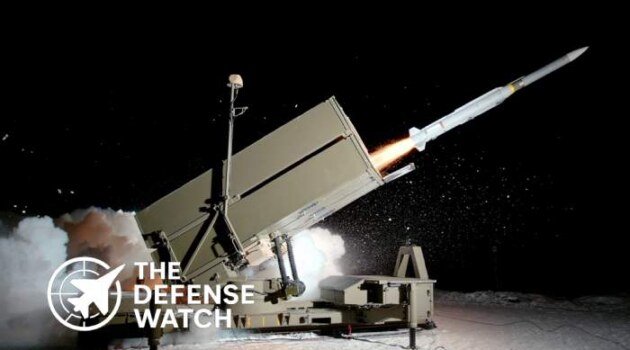
Australia has declared its Army NASAMS air defense capability fully operational, with the Department of Defence confirming Final Operational Capability on September 9, 2026. The milestone means the Australian Defence Force can now employ the system as an operational part of its integrated air and missile defense architecture.
- Australia Declares NASAMS Fully Operational
- Takeaways
- What NASAMS Adds to the Australian Army
- From Acquisition to Final Operational Capability
- Mobility Is a Major Requirement
- Why the Networked Architecture Matters
- NASAMS and Australia’s Layered Air Defense
- The Drone Threat Changes the Air Defense Equation
- Relevance to the Indo-Pacific
- Interoperability With U.S. and Allied Forces
- What the Milestone Means
Takeaways
Australia has declared its Army NASAMS capability fully operational, adding a mobile and networked layer to the country’s integrated air and missile defense architecture.
The Australian government said NASAMS is intended to detect, track and defeat a range of airborne threats, including aircraft, helicopters, cruise missiles and drones. The system provides the Army with a mobile, networked ground-based air defense capability for protecting personnel, critical infrastructure and other high-value assets.
The declaration follows several years of acquisition, integration, live-fire testing and field training under Australia’s LAND 19 Phase 7B Short Range Ground Based Air Defence program.
What NASAMS Adds to the Australian Army
NASAMS, or National Advanced Surface to Air Missile System, is a distributed air defense architecture developed by Kongsberg Defence & Aerospace and Raytheon. Rather than relying on a single vehicle to perform every function, the system connects sensors, command and control elements and missile launchers through a network.
Kongsberg’s current system documentation identifies aircraft, helicopters, unmanned aerial vehicles and cruise missiles among NASAMS’ intended target set. The architecture can employ effectors including the AIM-120 AMRAAM family and AIM-9X, depending on configuration.
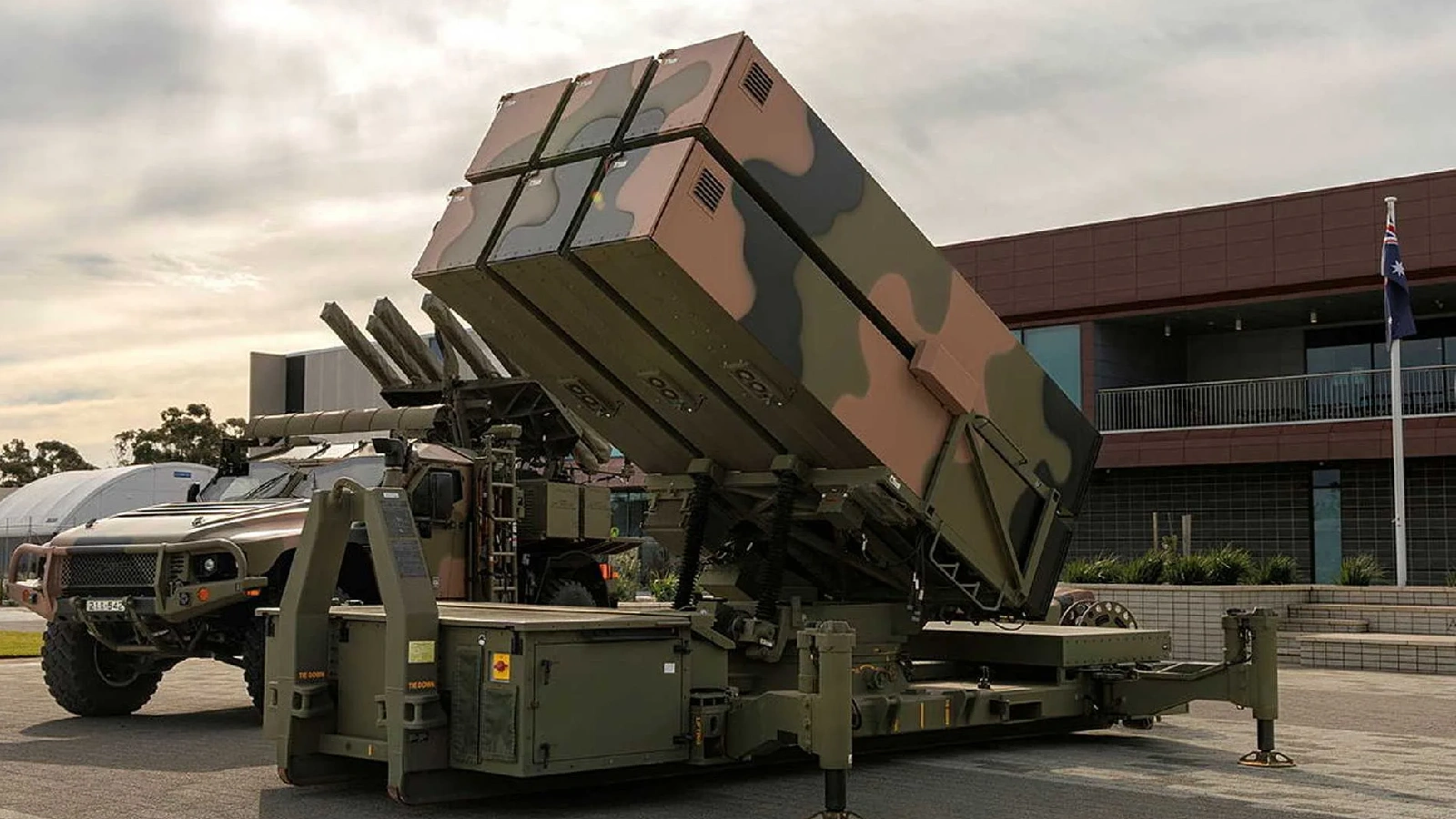
Australia has adapted the system for its own operational requirements. Its configuration includes CEA Technologies radar technology, Kongsberg Fire Distribution Centers, electro-optical and infrared sensors, and different launcher configurations.
Key Elements of Australia’s NASAMS Configuration
Component Australian Capability System NASAMS Program LAND 19 Phase 7B Primary operator 16th Regiment, Royal Australian Artillery Radar CEA Technologies AESA radar Command and control Kongsberg Fire Distribution Center Mobile launcher Hawkei-based High Mobility Launcher Additional launcher Kongsberg canister launcher Interceptors AIM-120 family and Sidewinder variants Main target types Aircraft, helicopters, cruise missiles and UAVs Industrial partners CEA Technologies, Kongsberg Defence Australia, Raytheon Australia From Acquisition to Final Operational Capability
Australia approved its enhanced NASAMS configuration in 2019 and signed the acquisition contract with Raytheon Australia that year. The program was valued at about A$1.5 billion at the time of the acquisition.
The first major Australian live-fire milestone came in November 2023 at the Woomera Range Complex. The Australian Army successfully demonstrated the engagement chain using a CEA radar, Kongsberg command-and-control equipment and an AIM-120 missile.
The Australian Defence Department had earlier stated that the Army’s 16th Regiment would operate two NASAMS batteries once full operational capability was reached.
Operational development continued beyond the initial missile firing. Australian personnel subsequently demonstrated the use of a Sidewinder from a Hawkei-mounted High Mobility Launcher, while training activities tested movement, deployment, sustainment and relocation of the system under field conditions.
That distinction matters. For a mobile ground-based air defense unit, operational readiness is not simply the ability to launch an interceptor.
The unit must also maintain sensor coverage, communications and command links, move launchers and support equipment, replenish missiles, protect radar and command elements, and continue functioning after being exposed to enemy surveillance and targeting.
Mobility Is a Major Requirement
Australia’s NASAMS configuration reflects the country’s emphasis on mobility and support to maneuver forces.
The Army has integrated High Mobility Launchers with Hawkei protected vehicles. This gives air defense units an option for moving with supported formations rather than remaining tied to fixed defensive positions.
The Australian Army has also demonstrated the importance of logistics in sustaining NASAMS operations. In August 2026, Army personnel from 9th Force Support Battalion moved NASAMS equipment over long distances in support of Exercise Pozieres Run, highlighting the transportation and sustainment requirements associated with mobile air defense.
This is strategically important for Australia because its forces operate across very large distances. A ground-based air defense system that cannot move with maneuver forces or relocate between threatened sites would have limited utility in a dispersed operating environment.
Why the Networked Architecture Matters
NASAMS’ most important feature is arguably not the launcher itself, but the network connecting sensors, command systems and interceptors.
A distributed architecture allows sensors and launchers to be separated geographically while remaining connected through command and control. That creates more flexibility in positioning defensive assets and can make it harder for an adversary to neutralize an entire battery with a single attack.
Australia’s use of locally developed CEA radar technology also gives the system a significant domestic component. The country’s Guided Weapons and Explosive Ordnance Plan identifies NASAMS as an example of Australian industry participating in the production and integration of air defense subsystems.
Kongsberg Australia has also developed manufacturing and support capabilities around the broader Kongsberg architecture. The company says Australian-made command-and-control consoles produced for NASAMS are based on common hardware that also supports other Kongsberg systems.
That industrial base has implications beyond the initial acquisition. Air defense systems require sustained maintenance, software support, electronics repair, communications equipment and missile handling throughout their service lives.
NASAMS and Australia’s Layered Air Defense
NASAMS does not represent Australia’s entire missile defense architecture.
The system occupies a lower layer intended primarily to protect forces and critical assets from airborne threats that fall within its engagement envelope. Australia is simultaneously developing other capabilities intended to address longer-range and more demanding missile threats.
The Australian government has said it is increasing investment in active missile defense, while the Navy’s air warfare destroyers and other future capabilities form part of the country’s broader integrated approach. Defence Minister Pat Conroy said in July that Australia was investing about A$30 billion in missile defense, including a major increase in active missile defense investment and future medium-range ground-based air defense.
Australia is also developing the Joint Air Battle Management System under AIR 6500. The objective is to improve integration between aircraft, naval systems, ground-based air defense and other elements of the country’s wider air and missile defense network.
The result is intended to be a layered architecture rather than reliance on one interceptor or one weapons system.
The Drone Threat Changes the Air Defense Equation
The growing use of unmanned systems gives NASAMS an important mission in modern warfare.
Drones can be employed for reconnaissance, targeting, attack and saturation operations. Cruise missiles and aircraft create additional demands on air defense units, particularly when several threat types appear in the same engagement.
NASAMS’ ability to use different interceptor types gives commanders more options when allocating missiles against different targets. This becomes important when expensive interceptors must be conserved for more demanding threats while less capable or lower-cost threats are handled by other defensive measures.
At the same time, NASAMS should not be portrayed as a universal counter to every emerging airborne threat. Australia’s own defense modernization program recognizes the need for multiple layers because higher-end ballistic and long-range missile threats require different capabilities.
Relevance to the Indo-Pacific
The operationalization of NASAMS comes as Australia is restructuring the Australian Defence Force around a more demanding regional security environment.
The 2026 Australian Army contribution to the National Defence Strategy emphasizes long-range strike, littoral operations, land combat and integration with allies, partners and Australian industry.
Those priorities increase the importance of protecting forward operating locations, command posts, logistics nodes, missile units and other high-value assets.
Australia’s recent decision to acquire HIMARS and Precision Strike Missile systems, with A$2.3 billion allocated over the decade for that capability, further illustrates the shift toward longer-range fires.
Mobile air defense becomes increasingly relevant in such an operating environment because long-range fires units themselves can become priority targets. NASAMS can provide an additional defensive layer around selected forces and infrastructure without requiring fighter aircraft to perform every local air defense mission.
Interoperability With U.S. and Allied Forces
NASAMS also gives Australia a significant interoperability advantage.
The system uses a combination of Norwegian and U.S. technology, while its missile family includes the U.S.-origin AIM-120. NASAMS is already operated by multiple allied and partner nations, providing a common technological and operational foundation.
For Australia, this is relevant to coalition operations across the Indo-Pacific, where air defense networks may need to operate alongside U.S. and allied aircraft, naval forces, sensors and command systems.
The broader direction of Australian defense policy is toward greater integration across domains and with partner forces. NASAMS fits that model because its networked architecture is designed to exchange information and integrate with higher-level and adjacent command systems.
What the Milestone Means
Australia’s September 9 declaration does not mark the completion of the country’s air and missile defense modernization.
It does, however, close an important capability gap in the Australian Army by replacing the legacy RBS-70 ground-based air defense capability with a more networked and mobile system.
The significance of Final Operational Capability is therefore broader than the arrival of another missile launcher. Australia now has an operational Army air defense system that combines domestic radar technology, mobile launchers, distributed command and control, multiple interceptor options and established U.S. and allied technologies.
For the Australian Defence Force, the immediate value is a stronger inner layer for protecting forces and critical assets. The longer-term value will depend on how effectively NASAMS is integrated into Australia’s wider air and missile defense network as the ADF prepares for increasingly dispersed and contested operations across the Indo-Pacific.