Executive Summary: Boeing and Rheinmetall are positioning the MQ-28 Ghost Bat as a mature option for Germany’s planned Collaborative Combat Aircraft capability targeted for 2029. The German industry team has expanded to include Diehl Defence and Rohde & Schwarz, creating a framework for integrating German weapons, communications and mission systems into the Australian-developed aircraft.
MQ-28 Ghost Bat Emerges As A German CCA Contender
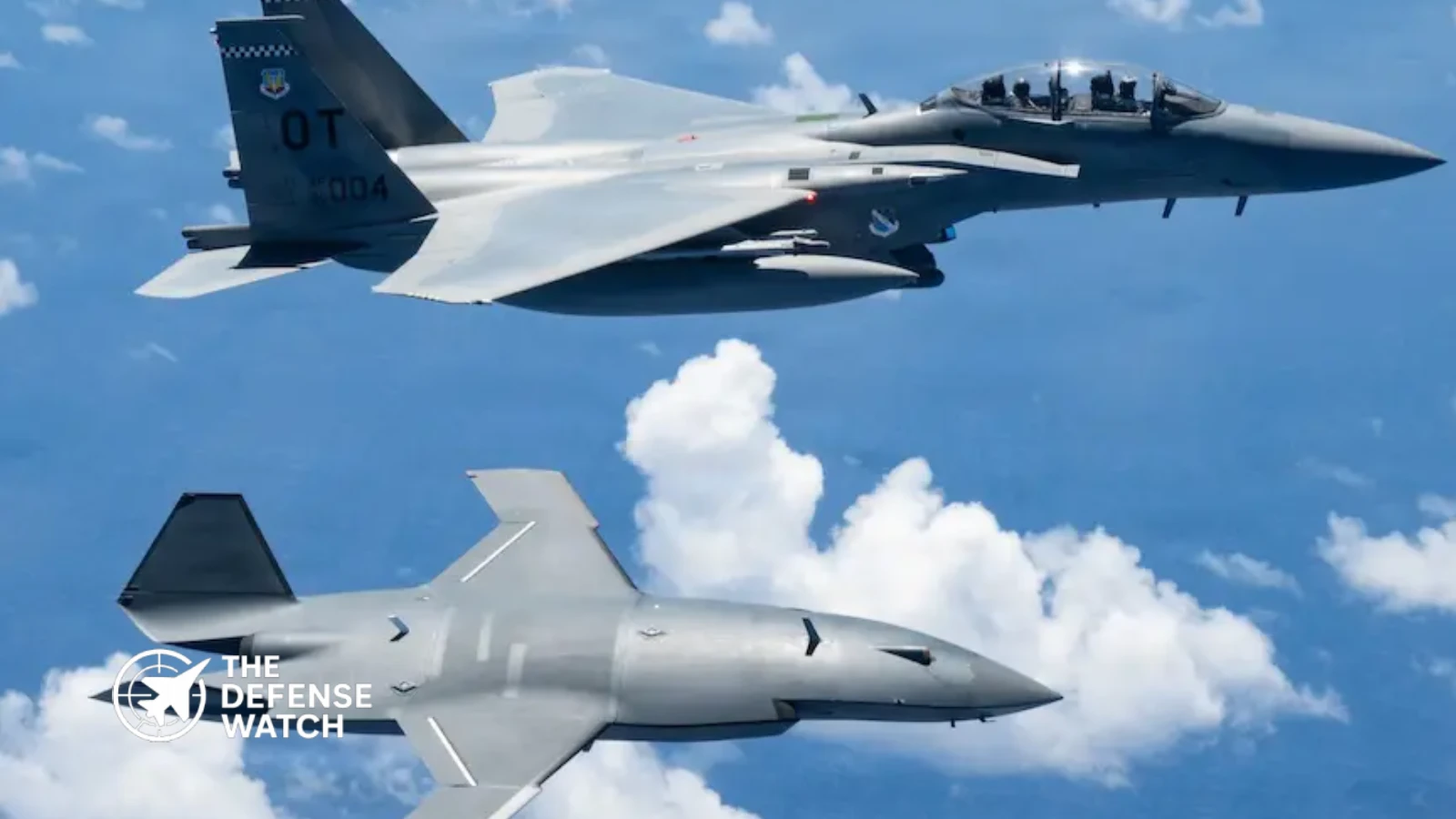
The MQ-28 Ghost Bat Germany proposal is gaining industrial depth as Boeing and Rheinmetall seek to provide the German Air Force with a Collaborative Combat Aircraft capability by 2029. The companies presented the Australian-developed uncrewed aircraft at ILA Berlin 2026 and are offering to adapt it to German operational and sovereignty requirements.
The partnership is important because Germany is seeking a CCA capability on a relatively compressed timeline. Rather than waiting for a completely new aircraft to mature, Boeing and Rheinmetall are emphasizing a platform that has already accumulated more than 150 test flights and has undergone development with the Royal Australian Air Force.
Rheinmetall would serve as the national system manager if the proposal is selected. Its responsibilities would include German-specific modifications, integration with Bundeswehr systems, and operational, maintenance and logistics support inside Germany.
German Industry Team Expands Around Ghost Bat
The proposal became more substantial in June when Boeing announced that Diehl Defence and Rohde & Schwarz had joined Rheinmetall on its German MQ-28 industry team.
Diehl Defence is focused on weapons integration. The company has identified the IRIS-T air-to-air missile as one possible German weapon for integration, although any operational weapon selection remains a matter for the German customer.
Rohde & Schwarz is expected to contribute communications and mission-system integration expertise. Its role is intended to help connect the aircraft with German command, control and weapons networks while meeting national requirements.
This approach changes the proposition from simply purchasing an Australian aircraft into a broader German systems-integration program.
That distinction matters for Berlin because control over software, communications, weapons integration, maintenance and future upgrades can be as important as ownership of the airframe itself.
What The MQ-28 Brings To The Competition
The MQ-28 was developed by Boeing Defence Australia for manned-unmanned teaming. Its intended role is to operate alongside crewed combat aircraft, extending sensing, electronic warfare, weapons or other mission capabilities without placing another pilot at risk.
Rheinmetall describes the aircraft’s architecture as modular, allowing it to be adapted for missions including reconnaissance, electronic warfare and use as an effector or weapons carrier.
At ILA Berlin, Boeing also presented the Block 3 configuration that is being offered to Germany. According to Janes, the version includes a larger wing, increased thrust, beyond-line-of-sight communications and internal weapons bays. The configuration has been described as capable of carrying two AIM-120 AMRAAMs or combinations of small precision weapons in its internal bays.
MQ-28 Ghost Bat At A Glance
Feature Reported Capability Platform Uncrewed Collaborative Combat Aircraft Developer Boeing Defence Australia Development customer Royal Australian Air Force German target CCA capability by 2029 Flight testing More than 150 test flights Block 3 wing About 25% larger Thrust Up to 12,000 pounds Communications Beyond-line-of-sight capability Weapons Internal bays for air-to-air and precision weapons German system manager proposal Rheinmetall German weapons integration Diehl Defence Communications integration Rohde & Schwarz The specifications above refer to the configuration presented for the German market and should not be interpreted as confirmation of a final German production standard.
Why Sovereign Integration Is Central To Germany’s Proposal
The strongest part of the Boeing-Rheinmetall offer is not simply the aircraft. It is the proposed division of responsibility around the aircraft.
Germany wants greater control over the systems that determine how autonomous aircraft communicate, receive mission instructions, share sensor information and interact with crewed platforms. Local integration could also reduce dependence on an external supplier for every software or configuration change.
Rheinmetall says engineers in Germany and Australia can use a digital engineering environment to develop and test software and hardware changes. This could provide a framework for adapting the aircraft to German requirements without creating an entirely separate aircraft design.
That model also addresses one of the major challenges of CCA procurement: the aircraft must function as part of a larger combat network rather than as an isolated drone.
A CCA connected to a Eurofighter, ground command center or other aircraft must exchange information reliably in a contested electromagnetic environment. Communications resilience, cybersecurity, autonomy behavior and rules for human control therefore become central engineering requirements.
Germany’s CCA Competition Is Not Settled
The MQ-28 is not the only option being developed for Germany.
Airbus is preparing two Kratos XQ-58A Valkyries in Germany and plans to equip them with its European MARS mission system. Airbus says the objective is to offer the German Air Force an operational uncrewed collaborative combat aircraft system by 2029.
Other concepts are also entering the broader European competition, including systems being developed by German and international companies.
This creates a key procurement tradeoff for Berlin.
A mature aircraft such as the Ghost Bat offers the advantage of an established flight-test program and an existing operational pathway in Australia. A newer European design could offer greater control over the aircraft’s technology and industrial base but would carry more development risk.
Germany therefore has to balance speed, technical maturity, industrial sovereignty and long-term upgrade control.
The Operational Question Goes Beyond The Airframe
The significance of the MQ-28 proposal extends beyond Germany’s drone inventory.
CCA programs are changing the traditional fighter force model by allowing one crewed aircraft to operate with additional uncrewed platforms. The concept can potentially increase the number of sensors, weapons and electronic warfare systems available to a formation without requiring an equivalent increase in pilots.
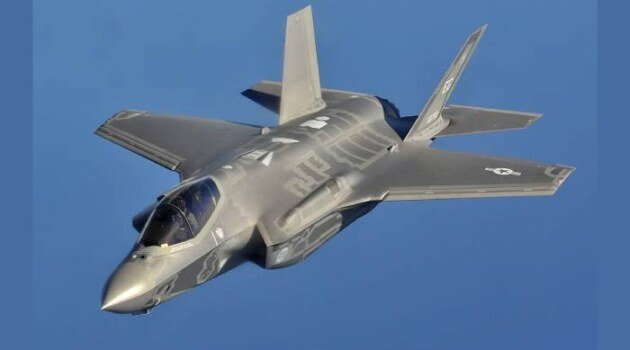
For Germany, this could become particularly relevant as the Luftwaffe modernizes its combat fleet around Eurofighter and F-35A aircraft while Europe works toward future sixth-generation combat-air capabilities.
The MQ-28’s value would therefore depend heavily on how effectively it can operate inside those existing and future networks.
The difficult part is not simply autonomous flight. It is making autonomy, communications, sensor fusion, electronic warfare and weapons employment work together under realistic operational conditions.
2029 Target Creates A Tight Development Window
Boeing and Rheinmetall are targeting 2029, but the proposal remains a bid rather than a confirmed German procurement contract.
That distinction is important.
The aircraft has demonstrated substantial development progress, but adapting an existing CCA for another nation’s weapons, communications architecture, cybersecurity standards and command-and-control systems still requires engineering, testing and qualification.
The addition of Diehl Defence and Rohde & Schwarz is intended to address exactly those areas. Their involvement gives the proposal a stronger German industrial component and potentially reduces the amount of national integration work that would otherwise have to be developed later.
For Germany, the central question will be whether the 2029 requirement is best served by a mature foreign-developed platform with extensive German integration or by a European system that offers greater technological sovereignty but requires more development.
Why The MQ-28 Matters To U.S. And Allied Airpower
The German competition also has implications beyond Europe.
The United States and its allies are increasingly examining CCA concepts as a way to expand combat-air capacity while managing the cost and risk associated with crewed aircraft. Australia’s MQ-28 program provides an allied example of how a CCA can progress from technology development toward operational service.
For the United States, Germany’s decision will also provide another indicator of how allied air forces approach autonomy, weapons integration and control of mission software.
A German MQ-28 fleet would not automatically create a common NATO CCA standard, but shared communications and weapons integration could improve interoperability if designed around alliance requirements.
The broader trend is clear: future air forces are increasingly treating uncrewed aircraft as part of the combat-air architecture rather than as separate drone fleets.
What Happens Next
Boeing and Rheinmetall have established a credible industrial proposal, but the final German decision remains the key milestone.
The next stages will likely focus on technical evaluation, German requirements, weapons and communications integration, industrial participation and the ability to meet the 2029 timeline.
For the MQ-28, the central advantage is maturity. For Germany, the central issue is whether that maturity can be combined with enough national control over the systems that make a CCA operationally useful.
The outcome will help determine not only which aircraft Germany operates, but also how Europe’s largest defense economies approach autonomous combat aircraft as a component of future airpower.