
U.S. Navy F/A-XX Fighter Decision Moves Toward Public Announcement
The U.S. Navy F/A-XX fighter program has reached a decisive stage, with the Pentagon having selected a preferred contractor for the next-generation carrier-based stealth aircraft, according to Reuters. The two companies competing for the contract are Boeing and Northrop Grumman, and the Pentagon said it expects to award the program in the near future.
- U.S. Navy F/A-XX Fighter Decision Moves Toward Public Announcement
- Takeaways
- Boeing And Northrop Grumman Compete For The Program
- Why F/A-XX Matters To The Carrier Air Wing
- Range Is Becoming A More Important Requirement
- Program Delays Created A Strategic Problem
- F/A-XX And The F-47 Are Related, But Not The Same Aircraft
- The Uncrewed Component Could Be Equally Important
- The Super Hornet Will Remain Important During The Transition
- China Adds Pressure To The Timeline
- What The Contractor Decision Will Mean
Takeaways
The Pentagon has selected a preferred contractor for the U.S. Navy’s F/A-XX next-generation carrier fighter, according to Reuters, with an announcement expected soon.
Reuters reported Sept. 8 that two people briefed on the matter said the contractor selection had already been made, although the Pentagon has not publicly disclosed the winner. The department said only that it continues to work toward an F/A-XX award in the near future.
The decision is significant because F/A-XX is intended to become the Navy’s principal next-generation carrier fighter and the strike-fighter component of the service’s broader Next Generation Air Dominance architecture.
Boeing And Northrop Grumman Compete For The Program
The final competition has narrowed to Boeing and Northrop Grumman.
Both companies have substantial experience with U.S. military aircraft, but the Navy’s requirement represents a major shift from the design philosophy of the F/A-18E/F Super Hornet. The future aircraft is expected to emphasize survivability, range, endurance, advanced sensors and networking rather than simply improving the performance of an existing airframe.
The Navy’s 2025 aviation planning documents describe F/A-XX as a sixth-generation fighter intended to replace the F/A-18E/F Super Hornet and EA-18G Growler, while incorporating greater range, speed and sensor capability and increased integration with manned and unmanned systems.
The final contract could be worth tens of billions of dollars over the life of the program, according to Reuters. That figure would encompass more than initial engineering and development work, potentially extending into production, sustainment and future modernization.
Why F/A-XX Matters To The Carrier Air Wing
The F/A-XX is not simply a one-for-one replacement for the Super Hornet.
The Navy is designing its future carrier air wing around a wider network of aircraft, weapons and sensors. The F/A-XX is expected to provide a highly survivable crewed platform that can operate alongside uncrewed aircraft and contribute to a distributed combat network.
That approach reflects a central problem facing carrier aviation: modern air-defense systems increasingly allow adversaries to detect, track and engage aircraft at greater distances.
A future carrier fighter therefore needs to do more than carry weapons. It must be able to operate in heavily contested electromagnetic and air-defense environments while exchanging information with other aircraft, ships, satellites and unmanned platforms.
The Navy’s own planning material identifies manned and unmanned integration as an important part of the F/A-XX concept.
Range Is Becoming A More Important Requirement
One of the most important differences between the F/A-XX and the current Super Hornet is expected to be operational reach.
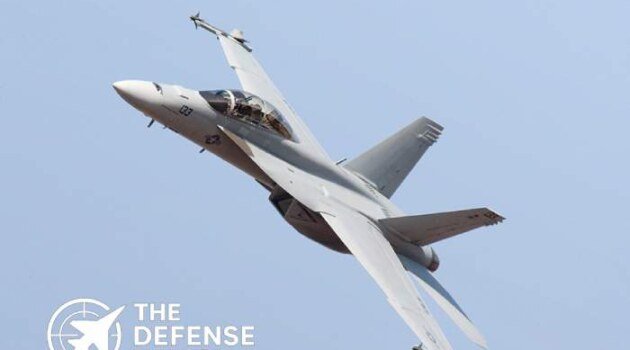
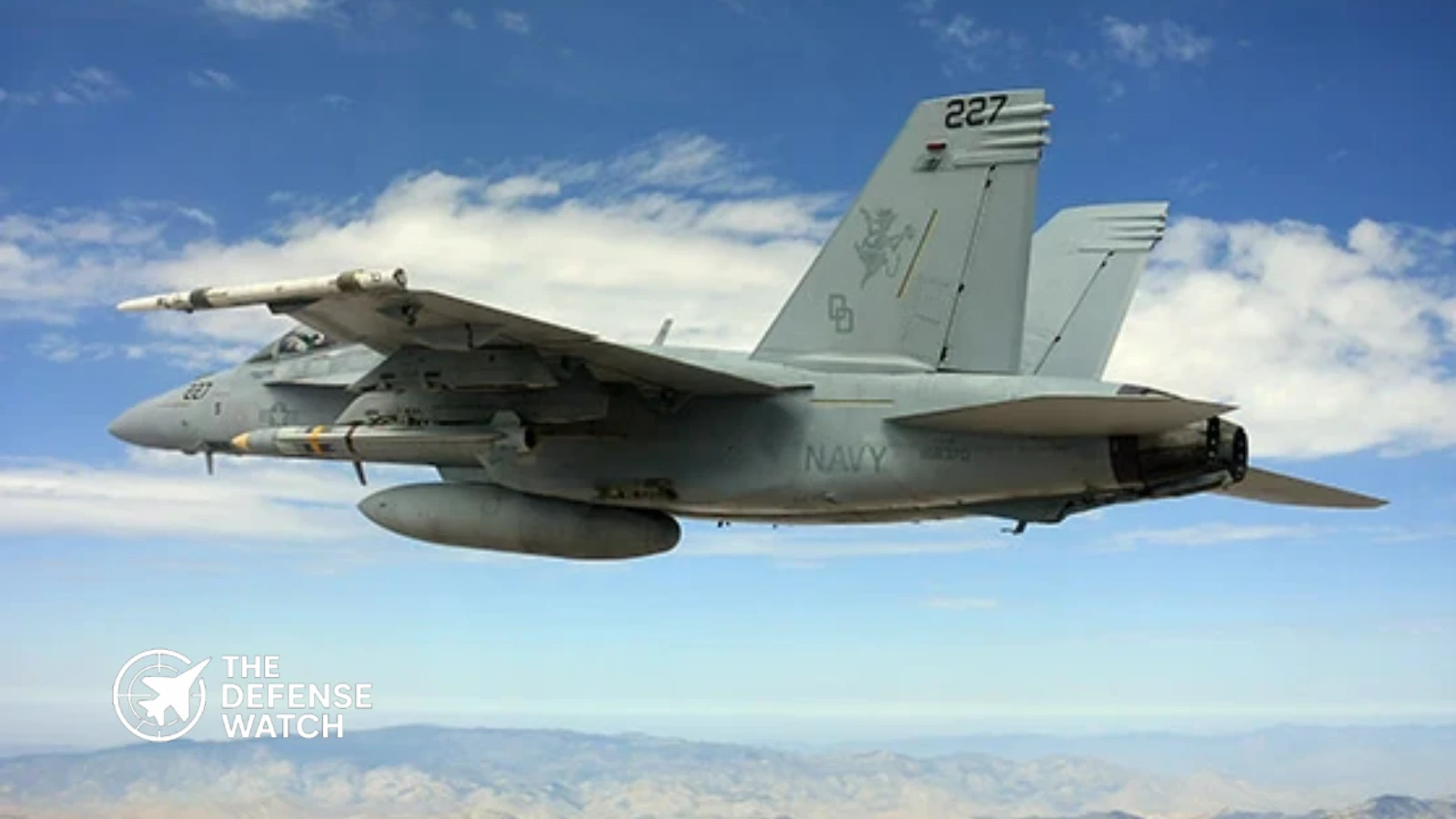
The F/A-18E/F entered fleet service in 1999 and remains a major component of the carrier air wing. The Navy is extending the aircraft’s useful life through Block III modernization, including structural improvements, upgraded systems, networking and an expected 10,000-flight-hour service life.
Those upgrades are intended to keep the Super Hornet relevant while the Navy develops its successor.
The challenge is that extending the life of the existing aircraft does not eliminate the underlying requirement for a new platform. In a high-end conflict, a carrier aircraft may need to operate farther from the carrier because the threat environment makes close access increasingly difficult.
F/A-XX is therefore expected to combine greater range and endurance with low observability and advanced sensing.
Capability Area F/A-XX Requirement Current Super Hornet Primary role Next-generation carrier strike fighter Multirole carrier strike fighter Stealth Advanced stealth expected Reduced radar signature on Block III Range Expected to exceed current fighter requirements Improved through Super Hornet design and upgrades Sensors Advanced integrated sensors expected AESA radar and upgraded avionics Uncrewed integration Core part of future concept Increasingly networked, but not designed around CCA operations Service era Expected operational entry in the 2030s Entered fleet service in 1999 Future role Next-generation carrier air dominance Bridge to future carrier aviation The table separates publicly described program goals from established Super Hornet capabilities. Precise F/A-XX performance specifications remain classified or undisclosed. GAO has previously noted that important details concerning F/A-XX were withheld because of classification.
Program Delays Created A Strategic Problem
The F/A-XX program has faced significant uncertainty.
The Pentagon previously considered slowing the program because of concerns over engineering resources, industrial capacity and competing development priorities. The FY2026 defense budget nevertheless retained funding for F/A-XX design work.
During a 2025 Pentagon budget briefing, a senior defense official said the administration was still considering the future of F/A-XX but requested $74 million to continue design work. The official also said the department was evaluating how to achieve sixth-generation tactical air capability while moving forward with the Air Force’s F-47 program.
Congress subsequently provided stronger financial support for the Navy effort.
Reuters reports that lawmakers allocated $750 million for F/A-XX in the 2025 spending legislation and another $1.4 billion in fiscal 2026.
That funding matters because a lengthy pause would not simply delay an aircraft. It could create a gap between the retirement or reduction of older aircraft and the arrival of their replacement.
F/A-XX And The F-47 Are Related, But Not The Same Aircraft
The Navy and Air Force are pursuing separate sixth-generation fighter programs.
The Air Force’s F-47 is being developed by Boeing as the crewed fighter component of the Air Force’s Next Generation Air Dominance effort. The Navy’s F/A-XX is designed around carrier operations and the requirements of a naval air wing.
The Pentagon has acknowledged that technology sharing and coordination between the services could be useful, while also making clear that the services have different operational requirements. In the FY2026 budget briefing, officials said the department was focused on sixth-generation capability but had not ruled out different approaches to achieving it.
For the Navy, carrier suitability creates requirements that do not apply in the same way to a land-based fighter.
The aircraft must be capable of repeated carrier launches and arrested landings, tolerate the structural stresses associated with carrier operations and fit within the operational and maintenance constraints of a carrier air wing.
That makes simply adapting another sixth-generation aircraft to naval service a difficult proposition.
The Uncrewed Component Could Be Equally Important
F/A-XX is being developed at a time when the Navy is expanding its use of uncrewed aircraft.
The future carrier air wing is expected to combine crewed fighters with autonomous and remotely operated systems that can extend sensing, electronic warfare and strike capacity.
The concept is particularly important because an uncrewed aircraft can potentially be assigned to missions that would expose a human pilot to greater risk. It can also provide additional sensors or weapons without requiring every capability to reside inside a crewed fighter.
The Navy’s published F/A-XX planning material specifically identifies autonomous drones as potential force multipliers and electronic warfare assets.
This means the value of F/A-XX may ultimately depend as much on how well it controls and coordinates other systems as on the aircraft’s own speed or weapons load.
The Super Hornet Will Remain Important During The Transition
The Navy will not replace the Super Hornet overnight.
NAVAIR says the F/A-18E/F entered fleet service in 1999 and remains a major multirole aircraft. Its Block III modernization includes a longer service life, reduced radar signature, improved cockpit systems and enhanced networking.
The Navy also continues to add weapons and capabilities to the aircraft. In February 2026, the service declared initial operational capability for the Small Diameter Bomb II on the Super Hornet, expanding its ability to engage moving and stationary targets in adverse conditions.
Reuters reports that F/A-18 aircraft are expected to remain in service into the 2040s, creating a transition period in which legacy and next-generation systems will operate together.
That transition will allow the Navy to introduce F/A-XX gradually rather than relying on a single procurement cycle to replace the existing carrier fighter fleet.
China Adds Pressure To The Timeline
The strategic backdrop is the rapid modernization of China’s military aviation capabilities.
Reuters reported that China’s development of advanced combat aircraft, including aircraft Beijing describes as sixth-generation systems, has increased the pressure on the United States to maintain a credible next-generation carrier aviation capability.
For the Navy, the issue is particularly important in the Indo-Pacific.
A carrier air wing must be able to generate combat power at increasing distances while operating against sophisticated sensors, long-range missiles, electronic warfare systems and integrated air defenses.
The implication is straightforward: the Navy’s future fighter needs to provide useful combat power without requiring the carrier itself to move unnecessarily close to the threat.
That places range, survivability, sensing and networking at the center of the F/A-XX requirement.
What The Contractor Decision Will Mean
The upcoming award will answer the immediate question of who will lead development of the Navy’s next-generation carrier fighter.
It will not, however, immediately resolve the larger challenge facing naval aviation.
The winning company will have to turn a demanding set of requirements into an aircraft that can be produced in sufficient numbers, maintained aboard carriers and upgraded throughout a service life likely to extend for decades.
The industrial-base question will also remain important. Earlier Pentagon concerns about engineering and supply-chain capacity show that developing the aircraft is only one part of the problem. Building it at the required scale will require sustained access to skilled workers, suppliers, manufacturing capacity and advanced components.
The F/A-XX decision therefore represents the beginning of the most consequential phase of the program rather than its conclusion.
If the Pentagon proceeds with the expected award, the Navy will move from years of concept development and program uncertainty toward detailed engineering, testing and eventual production.
For the carrier air wing, the objective is clear: field a survivable, long-range and networked fighter capable of operating with crewed and uncrewed systems in the contested environments expected during the 2030s and beyond.