

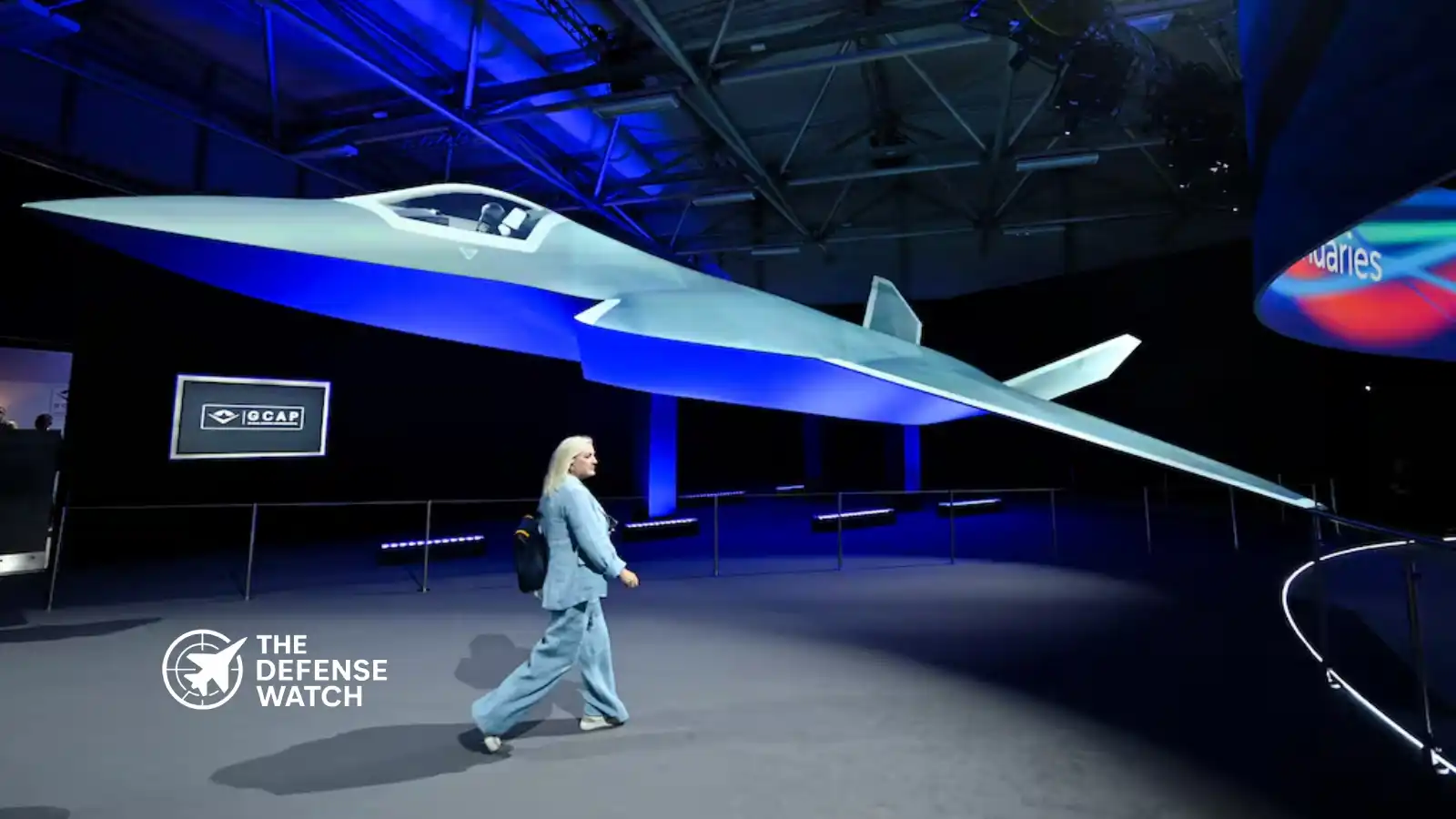
Executive Summary:
Britain, Italy, and Japan awarded a £4.6 billion ($6.14 billion) contract to the Edgewing joint venture on July 3, 2026, to advance the Global Combat Air Programme (GCAP) fighter jet. The 18-month deal funds the advanced concept, assessment, and detailed design phases following the United Kingdom’s recent commitment of £8.6 billion over four years. The program aims to deliver a sixth-generation stealth fighter for service entry in 2035, enabling the partners to share development costs and maintain sovereign combat air capabilities.
GCAP Program Advances with Major Contract Award
The United Kingdom, Italy, and Japan have taken a significant step forward in their collaborative effort to develop a next-generation combat aircraft. The tri-national Global Combat Air Programme (GCAP) received a £4.6 billion contract to industry joint venture Edgewing, the UK government announced on July 3, 2026.
This contract follows months of budget-related delays in the UK and marks the transition to more substantial detailed design and development work. UK Minister for Defence Readiness Luke Pollard described the award as “a major step forward towards delivery” of a cutting-edge stealth fighter for partner nations’ pilots.
Program Background and Industrial Structure
GCAP merges the UK’s Tempest program with Japan’s F-X initiative and Italian participation. The three nations established the GCAP International Government Organisation (GIGO) to oversee the effort. Edgewing, the prime industrial partner, is a joint venture equally owned by BAE Systems (UK), Leonardo (Italy), and Japan Aircraft Industrial Enhancement Co. Ltd. (linked to Mitsubishi Heavy Industries).
Edgewing will subcontract manufacturing and final assembly to the national champions: BAE Systems, Leonardo, and Mitsubishi Heavy Industries. The joint venture’s headquarters are in the UK, with initial leadership from Italy.
Key Program Milestones (as of 2026):
- Demonstrator aircraft first flight targeted for 2027.
- Production aircraft service entry: 2035.
- Contract scope: 18-month advanced concept, assessment, and detailed design phase.
Technical Ambitions and Capabilities
GCAP is designed as a “system of systems” capable of operating across air, land, sea, space, and cyber domains. The crewed fighter will serve as the core platform, integrated with uncrewed assets through advanced AI, supercomputing, combat cloud architecture, and resilient datalinks.
Anticipated features, based on partner statements and conceptual designs, include:
- Significant size increase over the Eurofighter Typhoon (estimated 3-4 meters longer).
- Advanced stealth characteristics with internal weapons bays.
- Adaptive cycle engines for extended range and performance.
- Sophisticated sensor fusion, electronic warfare capabilities, and potential directed energy weapons integration.
- Interoperability with existing platforms like the F-35 and Typhoon.
The program emphasizes upgradability and adaptability to evolving threats through modular design and digital engineering approaches.
Strategic and Geopolitical Context
For the United Kingdom, GCAP supports post-Brexit defense industrial strategy and sovereign capability in combat air. Italy seeks to sustain its aerospace expertise alongside participation in other European efforts. Japan views the program as critical for replacing aging fleets while building domestic industrial capacity under its evolving defense posture.
The contract award coincides with the collapse of the rival Franco-German FCAS program, potentially opening doors for additional partners. Italy has highlighted interest from nations including Germany, while Saudi Arabia and Canada have also been linked to discussions. Any expansion requires consensus among the founding three members.
Implications for U.S. Defense Strategy and Industry
From a U.S. perspective, GCAP represents both collaboration opportunity and competitive dynamic in the global fighter market. The program operates independently of U.S. platforms like the F-35 and the Next Generation Air Dominance (NGAD) initiative. However, its emphasis on interoperability suggests potential for future joint operations in NATO or Indo-Pacific theaters.
Comparative Context (High-Level):
- GCAP: Trilateral (UK/IT/JP), target 2035 IOC, focus on export potential and sovereign control.
- U.S. NGAD/F-47: Domestic focus with Collaborative Combat Aircraft, earlier prototype activity but facing its own budgetary and requirement reviews.
- F-35: Established fifth-generation backbone with extensive international participation, providing proven interoperability baseline.
GCAP’s success could influence global supply chains, technology standards, and export markets for advanced combat aircraft. For the U.S., it underscores the value of allied innovation while highlighting the need to maintain technological edges in areas like propulsion, sensors, and manned-unmanned teaming.
Challenges and Path Forward
The program has faced funding hurdles, notably in the UK, where budget constraints delayed progress. The recent £8.6 billion UK commitment over four years addresses immediate needs but represents only a portion of the multi-decade, tens-of-billions cost expected for full development and production.
Technical challenges typical of sixth-generation programs include integrating advanced propulsion, achieving required stealth and range, and managing the complexity of AI-driven systems. Industrial integration across three nations with different procurement cultures and priorities adds another layer of complexity.
Analysis: The contract award stabilizes short-term momentum, but long-term success will depend on sustained political commitment through potential economic cycles and evolving threat environments. For the U.S., monitoring GCAP’s progress offers insights into allied priorities and potential areas for technology exchange or burden-sharing in contested regions like the Indo-Pacific.
The 2035 target remains ambitious. Achieving it while delivering promised capabilities will test the partners’ ability to execute complex multinational development efficiently—lessons that could inform broader transatlantic and Pacific defense cooperation.

