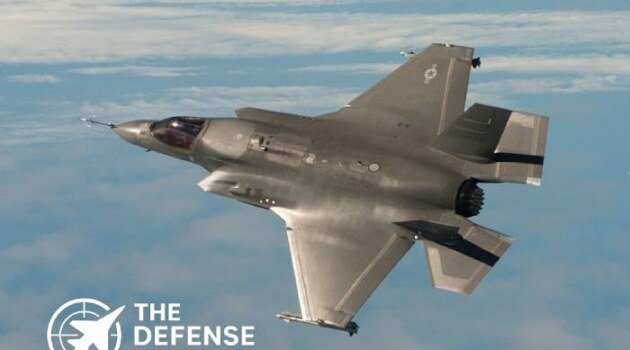
Britain’s combat air fleet spent much of 2025 defined by delay and uncertainty — a slipping F-35B delivery schedule, an unresolved Typhoon retirement debate, and open questions about how much of the original 138-aircraft F-35 ambition would survive contact with budget reality. Several of those threads have now resolved, at least for the moment. Here’s where things actually stand as of August 2026.
The Typhoon Fleet: A Bigger Upgrade Than Planned
The headline shift this year is on the Typhoon side. The UK’s latest Defence Investment Plan commits to upgrading all 107 of the RAF’s Tranche 2 and Tranche 3 Eurofighter Typhoons — a significant expansion from the 40 aircraft originally announced as recently as January 2026. The upgrade package, worth £5.4 billion, covers radar, communications, and software improvements, a new defensive aids system, and enhancements to weapons integration, funded across FY 2026/27 through FY 2029/30. A further £1.1 billion is earmarked to sustain the fleet into the 2040s through the Long Term Evolution programme.
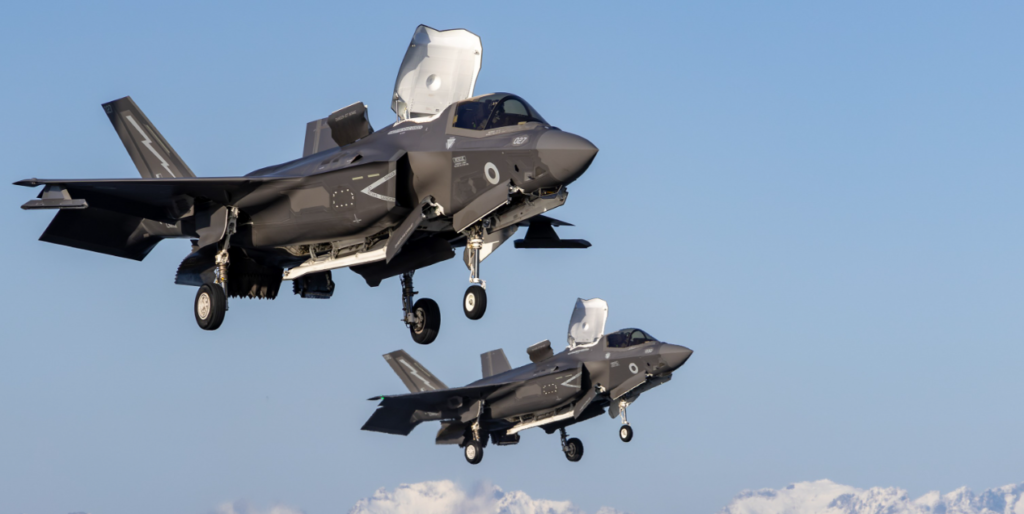
That investment confirms what UK defense officials have signaled for some time: the Typhoon isn’t a bridge aircraft waiting to be replaced, but the core of RAF combat air capability for roughly another 15 years, alongside the F-35B and, eventually, the GCAP/Tempest sixth-generation fighter.
The RAF’s oldest Typhoons haven’t been as fortunate. Of the original 30 Tranche 1 airframes, 26 have been scrapped, stripped for spares, or placed in storage pending disposal. Four remain in active service — but only in the Falkland Islands, flying Quick Reaction Alert duty out of Mount Pleasant Complex, where they’re scheduled to serve until 2027 before final retirement. Unlike the Tranche 2/3 fleet, the Tranche 1 jets lacked the avionics and structural provisions needed for the newer upgrade package, making retention uneconomical despite some earlier industry suggestions that BAE Systems could modernize them.
The F-35B: First Tranche Complete, Long Road Still Ahead
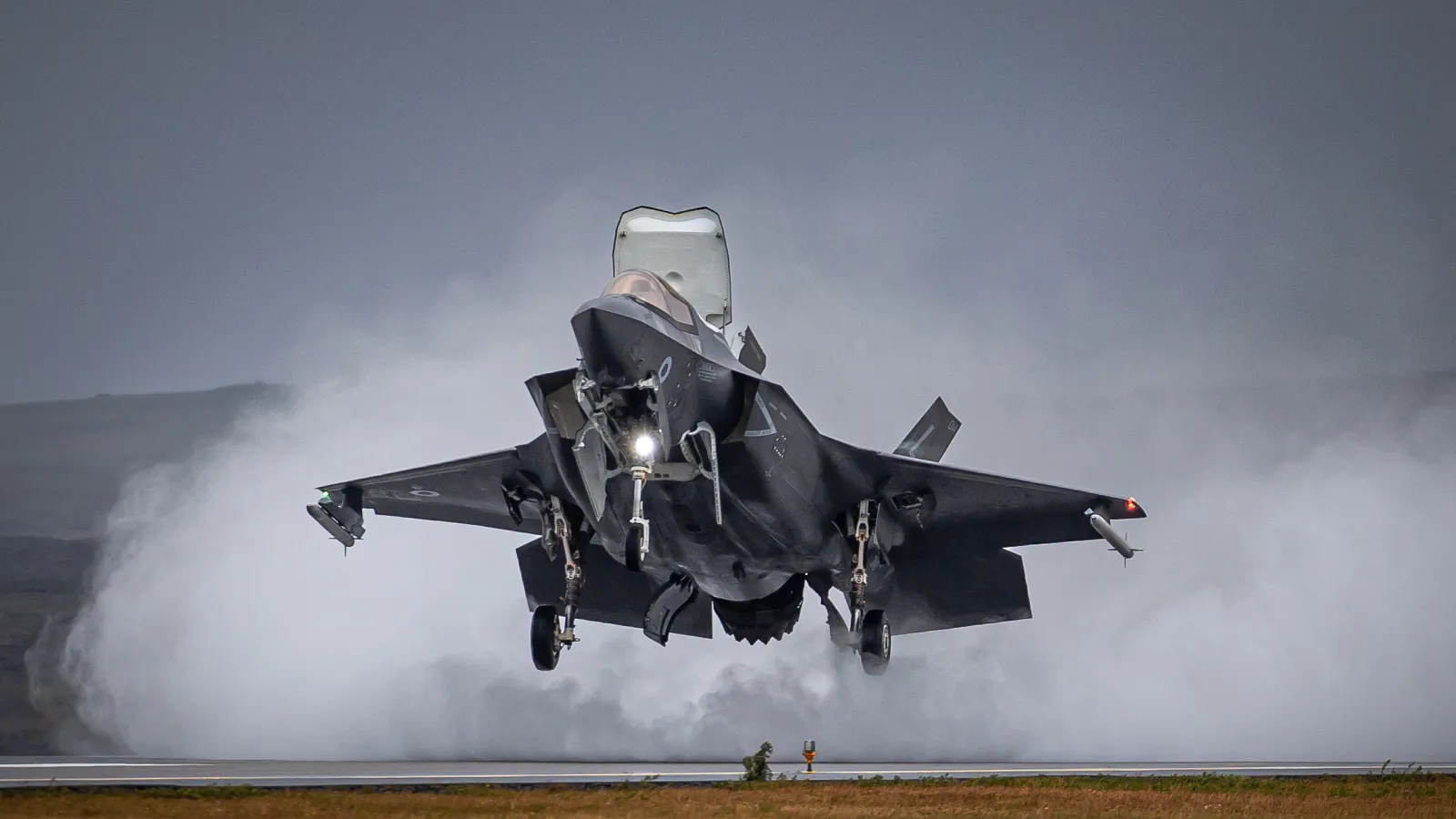
On the Lightning Force side, the UK Ministry of Defence confirmed in late March 2026 that it had received the last of its first 48 contracted F-35B Lightning IIs — a milestone reached roughly 14 years after the first STOVL F-35B was delivered to the MoD in 2012, and eight years after the type’s arrival at RAF Marham in 2018.
That completion came later than planned. Lot 17 aircraft that were originally due by the end of 2025 slipped into early 2026, with the final deliveries landing by April 2026 — a three-to-four month delay attributable to the Joint Program Office’s shared production-lot structure, under which the UK, as sole Tier One international partner, has no contractual mechanism to impose delay penalties on Lockheed Martin.
As of the completed first tranche, the RAF and Royal Navy’s joint Lightning Force — comprising 617 Squadron and 809 Naval Air Squadron, both based at RAF Marham — operates 47 F-35Bs, following the loss of one airframe. The government has confirmed a long-term delivery plan extending well beyond that first batch: a written parliamentary answer in January 2026 set expectations for the UK’s 75th F-35 to arrive by the end of 2033, with deliveries continuing steadily through the 2030s.
That trajectory still falls well short of the UK’s original ambition of 138 F-35Bs, first set out in the 2015 Strategic Defence and Security Review. Analysts and reporting have increasingly described that full order as unaffordable, with some commentary suggesting future purchases may lean toward the cheaper F-35A variant at the B model’s expense — though the UK’s carrier-based, STOVL-dependent force structure makes a wholesale pivot away from the B model operationally complicated.
What the F-35B Still Can’t Do
Delivery numbers are only part of the readiness picture. The RAF’s F-35Bs remain constrained by weapons integration timelines tied to the aircraft’s Block 4 software upgrade. Until Block 4 arrives, UK F-35Bs will continue operating with a more limited weapons set than originally envisioned: SPEAR 3 integration is now targeted for financial year 2028-29, and Meteor beyond-visual-range missile integration isn’t expected until the early 2030s. In the meantime, the aircraft’s stealth, sensor fusion, and electronic-attack capability are doing most of the operational work — its RAF nickname, “the assassin,” reflects that role, working alongside the Typhoon (“the thug”) in a high-low mix where the F-35B clears the way and the Typhoon brings the heavier ordnance load.
Comparing the Two Fleets
Eurofighter Typhoon F-35B Lightning II Current fleet size 111 total (107 Tranche 2/3 active + 4 Tranche 1 in Falklands) 47 operational 2026 development £5.4B upgrade covering all 107 Tranche 2/3 jets First 48-aircraft tranche completed (delayed to April 2026) Out-of-service date Tranche 1: 2027; Tranche 2/3: 2040 Deliveries continuing through the 2030s; 75th aircraft expected by end of 2033 Key limitation Tranche 1 lacked upgrade-compatible avionics Full weapons set (SPEAR 3, Meteor) awaiting Block 4, not expected until 2028-early 2030s Role Heavy ordnance, air defense, core fast-jet mass Stealth, sensor fusion, carrier operations, first-in strike FAQ
How many F-35Bs does the UK have as of 2026?The RAF and Royal Navy’s Lightning Force operates 47 F-35Bs following completion of the first 48-aircraft contracted tranche in March/April 2026, with one airframe lost. The government expects to reach 75 total F-35s by the end of 2033.
Why was the UK’s F-35B delivery delayed?Lot 17 aircraft due by the end of 2025 slipped into early 2026 due to production issues within the Joint Program Office’s shared-lot structure. Because the UK buys through annual international production lots rather than a bespoke bilateral contract, it has no financial remedy or delay penalty available against Lockheed Martin.
Is the RAF still planning to buy 138 F-35Bs?The original 2015 target of 138 F-35Bs is now widely viewed as unaffordable. Current confirmed government planning extends only to a 75th aircraft by 2033, with the long-term fleet size beyond that still unresolved.
What happened to the RAF’s Tranche 1 Typhoons?Of the original 30 Tranche 1 Typhoons, 26 have been scrapped, stripped for parts, or placed in storage. Four remain in service on Quick Reaction Alert duty in the Falkland Islands until 2027, after which the type will be fully retired from RAF service.
When will RAF F-35Bs get their full weapons package?SPEAR 3 integration is targeted for financial year 2028-29, and Meteor missile integration isn’t expected until the early 2030s, both tied to the aircraft’s Block 4 software upgrade.
How much is the UK spending to upgrade the Typhoon fleet?£5.4 billion to upgrade and sustain all 107 Tranche 2 and 3 Typhoons, spread across FY 2026/27 to FY 2029/30, plus a further £1.1 billion for long-term sustainment into the 2040s.
The Loadout Problem, In Gaming Terms
Any player who’s grinded through a live-service shooter’s weapon-unlock tree will recognize the RAF’s current F-35B situation instantly: you’ve got the platform, you’ve got the base kit, but half your loadout is still locked behind a content update that keeps slipping right. SPEAR 3 and Meteor are effectively the F-35B’s endgame weapon unlocks — available on the roadmap, promised for a future patch, but not yet in the loadout menu. Until Block 4 ships, RAF pilots are running a stealth platform that’s already lethal in its current build, but still waiting on the DLC that unlocks its full kit.