Executive Summary:
The U.S. Air Force plans to procure at least 150 Collaborative Combat Aircraft (CCA) by 2031 as part of its broader effort to expand manned-unmanned teaming capabilities. The autonomous aircraft are expected to operate alongside the F-35 and future F-47 fighter, improving survivability, combat reach, and operational flexibility in contested environments.
US Air Force Expands Collaborative Combat Aircraft Program
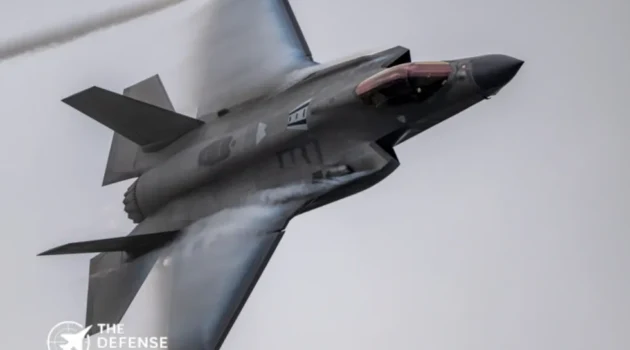
The U.S. Air Force’s Collaborative Combat Aircraft program is moving from concept development toward operational planning, with the service now targeting the acquisition of at least 150 autonomous aircraft by fiscal year 2031. The initiative is intended to support both current fifth-generation fighters such as the F-35 and the future sixth-generation F-47 platform under the Next Generation Air Dominance (NGAD) framework.
The Air Force’s latest procurement projections reflect growing confidence in autonomous combat aviation as a key component of future air warfare.
The Collaborative Combat Aircraft program represents one of the most significant shifts in U.S. tactical aviation strategy in decades. Rather than relying solely on expensive manned fighters, the Air Force intends to pair crewed aircraft with lower-cost autonomous systems capable of carrying sensors, electronic warfare payloads, and weapons.
Autonomous Wingmen Designed For High-Threat Environments
The planned Collaborative Combat Aircraft fleet is expected to operate as force multipliers during high-end conflicts, particularly in contested regions such as the Indo-Pacific. Air Force officials have repeatedly emphasized that future operations against near-peer adversaries will require larger and more distributed air formations capable of surviving advanced air defense systems.
Under the current concept, a single pilot could coordinate multiple unmanned aircraft during combat missions. These autonomous systems could conduct forward sensing, electronic attack, decoy operations, or strike missions while reducing risk to human pilots.
The program aligns with broader Pentagon efforts to integrate artificial intelligence and autonomous technologies into operational planning. Senior defense officials have argued that collaborative drones can increase combat mass at lower cost compared to traditional fighter procurement.
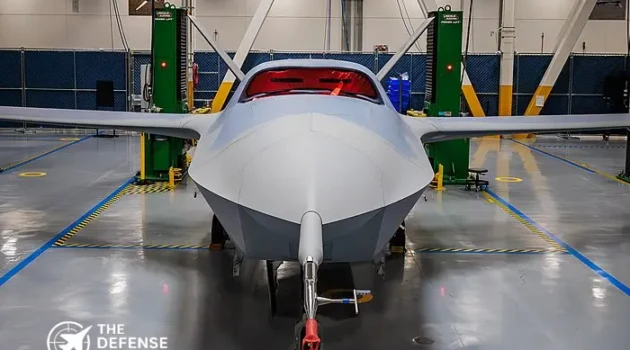
The Air Force previously selected two industry teams for the Increment 1 phase of the program. Anduril Industries is developing its Fury drone design, while General Atomics is advancing the YFQ-42A platform derived from the XQ-67A concept.
Support Role For F-35 And Future F-47 Fighters
The Air Force views the Collaborative Combat Aircraft initiative as critical to enabling future operations centered around the F-35 and the forthcoming F-47 fighter aircraft.
While the F-35 remains a cornerstone of U.S. and allied tactical aviation, the aircraft’s operational effectiveness increasingly depends on networked warfare and sensor integration. Autonomous wingmen could extend sensor coverage, carry additional weapons, and absorb attrition in contested environments where survivability remains a concern.
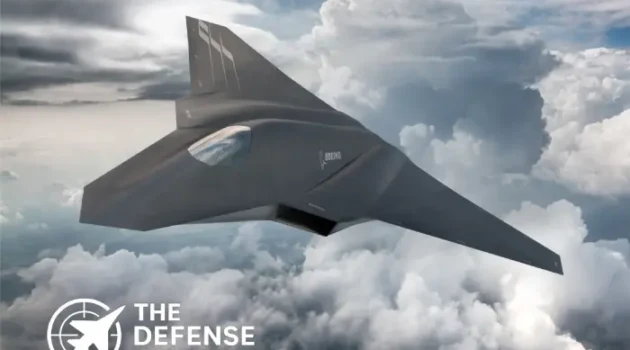
The future F-47, expected to serve as the Air Force’s next-generation air superiority fighter, is also being designed around manned-unmanned teaming concepts. Although many details surrounding the platform remain classified, Air Force leadership has consistently linked NGAD development with autonomous support aircraft.
This shift reflects a broader evolution in air combat doctrine. Rather than viewing unmanned systems as separate assets, the Pentagon increasingly sees them as integrated components of a single combat ecosystem.
Strategic Importance Amid Rising Competition With China
The Air Force’s accelerated interest in Collaborative Combat Aircraft comes amid intensifying strategic competition with China. U.S. defense planners continue to assess that future conflicts could involve highly contested airspace defended by advanced integrated air defense systems, long-range missiles, and electronic warfare capabilities.
Autonomous aircraft are viewed as a potential solution to operational challenges posed by long distances and attrition risks in the Pacific theater. Lower-cost drones operating alongside crewed fighters may allow commanders to generate larger combat formations without dramatically increasing procurement costs.
The initiative also reflects concerns about sustaining aircraft inventories during prolonged conflicts. Modern stealth fighters remain expensive and time-consuming to produce, making attritable autonomous systems increasingly attractive from both operational and budgetary perspectives.
In recent years, the Pentagon has accelerated experimentation with autonomous aviation through programs linked to the Defense Advanced Research Projects Agency (DARPA), the Air Force Research Laboratory, and private industry partners.
Procurement Timeline And Future Expansion
Current Air Force planning reportedly envisions the first operational Collaborative Combat Aircraft entering service before the end of the decade. The initial objective of 150 aircraft by 2031 may represent only the beginning of a larger procurement effort.
Air Force leaders have previously suggested that future combat squadrons could deploy with multiple autonomous aircraft assigned to each manned fighter. If operational testing validates the concept, procurement numbers could expand substantially during the 2030s.
The program’s success will depend on several factors, including autonomous flight reliability, secure communications, artificial intelligence integration, and the ability to operate effectively in electronically contested environments.
Industry competition is also expected to remain intense as defense firms seek to secure positions in what could become one of the Pentagon’s largest future aviation programs.
Analysis: A Fundamental Shift In Air Warfare
The Collaborative Combat Aircraft initiative signals more than just a new drone procurement effort. It reflects a deeper transformation in how the U.S. Air Force intends to fight future wars.
For decades, air superiority relied primarily on increasingly sophisticated manned fighters. However, rising aircraft costs, evolving missile threats, and advances in autonomy are pushing military planners toward distributed force structures built around human-machine collaboration.
The Air Force appears to be pursuing a model that combines the decision-making strengths of human pilots with the scalability and survivability advantages of autonomous systems. If successful, the program could reshape tactical aviation doctrine not only for the United States, but also for allied air forces likely to adopt similar concepts.
At the same time, integrating autonomous combat aircraft into frontline operations introduces technical and doctrinal challenges that remain unresolved. Questions surrounding command authority, AI reliability, electronic warfare resilience, and operational coordination will likely shape the program’s future trajectory.