(adsbygoogle = window.adsbygoogle || []).push({});Executive Summary:
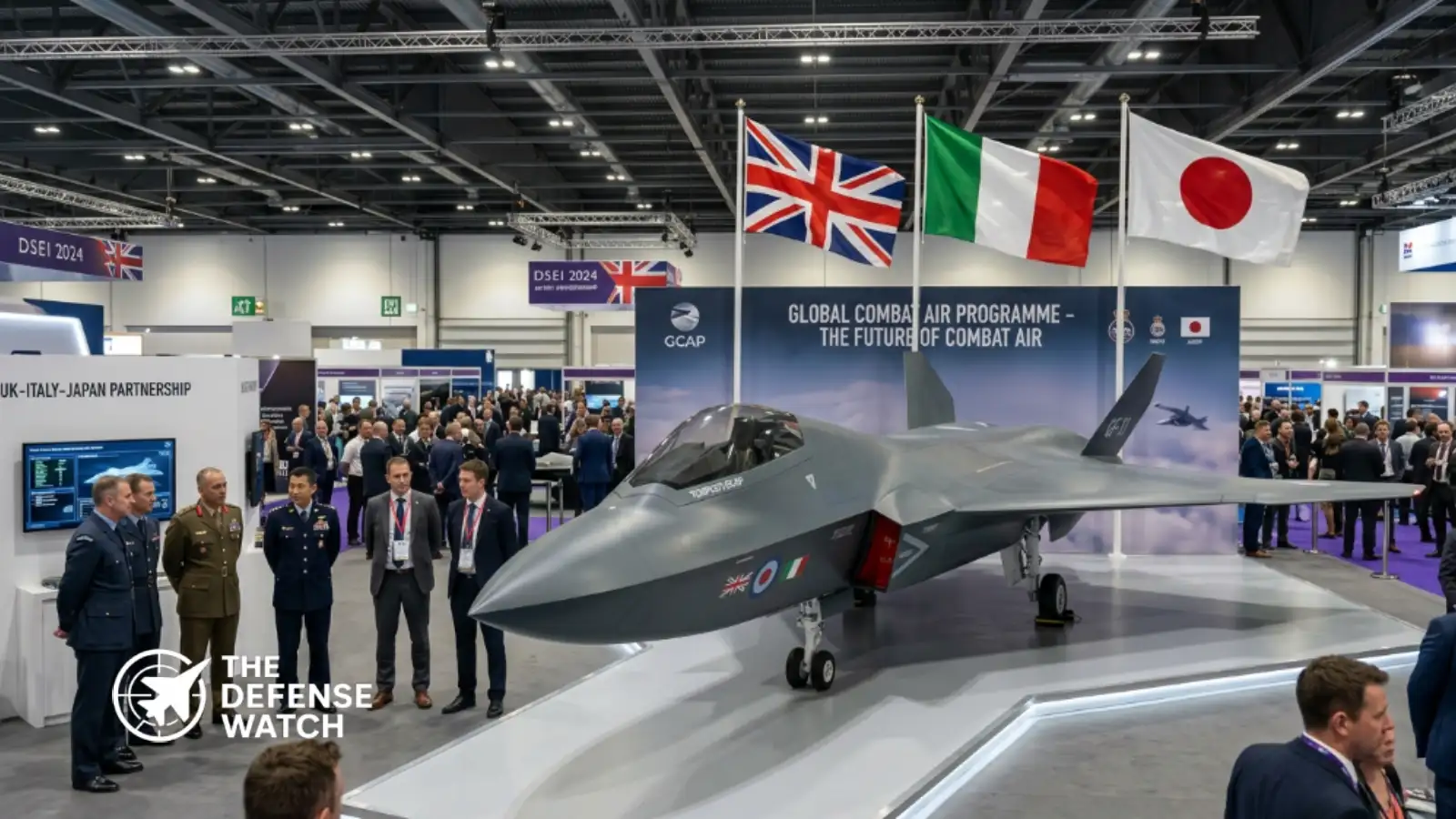
The United Kingdom has committed more than £6 billion (over US$8 billion) to the Global Combat Air Programme (GCAP), reinforcing its long term investment in developing a sixth generation combat aircraft alongside Italy and Japan. The funding supports research, technology development, and industrial capacity as the three nations work toward fielding the aircraft by 2035.
UK Commits More Than $8 Billion To Advance GCAP Sixth Generation Fighter
The UK GCAP fighter program received a major financial boost after the British government confirmed it will invest more than £6 billion (approximately US$8 billion) over the next four years to accelerate development of the Global Combat Air Programme (GCAP). The announcement was made as part of the government’s broader defense spending plans and reinforces Britain’s commitment to one of the world’s most ambitious future combat aviation projects.
GCAP is a trilateral initiative involving the United Kingdom, Italy, and Japan. It aims to develop a sixth generation combat aircraft capable of replacing the Royal Air Force’s Eurofighter Typhoon fleet while delivering advanced air superiority capabilities well into the second half of the century.
The funding demonstrates London’s intention to maintain sovereign combat aircraft design expertise while strengthening defense industrial cooperation with key allies in Europe and the Indo Pacific.
Major Investment Supports Long Term Fighter Development
The latest funding package will finance research, engineering, testing, and industrial infrastructure needed to mature technologies required for a sixth generation fighter.
According to the UK government, the investment forms part of a wider defense modernization strategy intended to maintain technological superiority amid increasingly contested security environments.
(adsbygoogle = window.adsbygoogle || []).push({});Key objectives include:
Program Element Details Investment More than £6 billion (over US$8 billion) Timeframe Next four years Partner Nations United Kingdom, Italy, Japan Planned Entry Into Service 2035 Primary Mission Air superiority and multi domain operations The program is managed through the GCAP International Government Organisation (GIGO), which coordinates government requirements while industry partners jointly develop the aircraft.
GCAP Brings Together Leading Aerospace Companies
The industrial partnership combines some of the world’s most experienced combat aircraft manufacturers.
Principal industry participants include:
- BAE Systems (United Kingdom)
- Leonardo (Italy)
- Japan Aircraft Industrial Enhancement Company (JAIEC)
- Rolls Royce
- Mitsubishi Heavy Industries
- Avio Aero
- IHI Corporation
- MBDA
- Mitsubishi Electric
- Leonardo Electronics
Each company contributes specialized expertise spanning aircraft design, propulsion, sensors, electronic warfare, mission systems, advanced manufacturing, and weapons integration.
The collaborative approach distributes development costs while enabling each nation to retain critical aerospace capabilities.
Sixth Generation Capabilities Extend Beyond Traditional Fighters
Unlike previous fighter development programs, GCAP is designed around highly networked operations rather than standalone aircraft performance.
Although final specifications remain under development, officials have consistently outlined several core capability areas:
- Advanced stealth across multiple threat spectrums
- Artificial intelligence assisted mission management
- Long range operations
- Secure multi domain data sharing
- Open mission systems architecture
- Integration with autonomous collaborative combat aircraft
- Advanced electronic warfare capabilities
- Increased onboard power generation for future sensors and directed energy technologies
The aircraft is expected to function as a command node capable of coordinating unmanned systems, space based assets, and joint force operations simultaneously.
Strategic Importance For The United Kingdom
The latest investment underscores Britain’s determination to preserve an independent combat aircraft design capability after decades of participation in multinational fighter programs.
The UK defense industrial base employs tens of thousands of workers across aerospace manufacturing, propulsion systems, avionics, software engineering, and weapons integration. Sustained investment in GCAP helps retain highly specialized engineering skills that might otherwise erode between major aircraft programs.
Government officials have also emphasized the program’s anticipated contribution to economic growth through exports, high value manufacturing, and technological innovation extending beyond defense applications.
Why GCAP Matters For Global Defense
Beyond replacing legacy fighter fleets, GCAP reflects broader shifts in international defense cooperation.
Unlike traditional alliance structures centered primarily on NATO, the program establishes a long term strategic partnership linking Europe with the Indo Pacific. The United Kingdom, Italy, and Japan face increasingly similar challenges involving advanced air defense systems, long range precision weapons, electronic warfare, and rapidly evolving military technologies.
For the United States, GCAP represents an important complementary capability rather than direct competition. While the U.S. Air Force continues development of its Next Generation Air Dominance (NGAD) family of systems, allied sixth generation platforms can improve burden sharing and interoperability across future coalition operations.
The program also diversifies the global market for advanced combat aircraft. Instead of relying exclusively on American or domestic designs, partner nations are pooling technological expertise to create an alternative high end fighter platform capable of supporting allied air forces for decades.
atOptions = { ‘key’ : ‘e7d18db8b7513fb2a224cf4c3f18bbf0’, ‘format’ : ‘iframe’, ‘height’ : 90, ‘width’ : 728, ‘params’ : {} };From an industrial perspective, GCAP demonstrates a new model for multinational defense acquisition. Rather than one nation leading development with others joining later, Britain, Italy, and Japan are jointly defining operational requirements, governance, technology development, and industrial participation from the outset. This approach could reduce duplication while improving interoperability among partner militaries.
Development Timeline Remains Focused On 2035
The three governments continue targeting operational service entry by 2035, an ambitious schedule given the technological complexity involved.
Major milestones expected over the coming years include:
- Continued digital design validation
- Prototype development
- Flight testing
- Sensor integration
- Engine maturation
- Mission systems testing
- Autonomous systems integration
Maintaining schedule discipline will be critical as participating nations seek to replace aging combat aircraft before capability gaps emerge during the 2030s.
(adsbygoogle = window.adsbygoogle || []).push({});Outlook
The UK’s commitment of more than £6 billion marks one of the largest investments yet in the Global Combat Air Programme and signals continued political support for sixth generation fighter development.
As GCAP progresses from technology maturation toward prototype production, the program is expected to become a cornerstone of British, Italian, and Japanese airpower modernization. Its success will depend not only on delivering an advanced aircraft, but also on integrating emerging technologies such as artificial intelligence, collaborative autonomous systems, and next generation electronic warfare into a coherent operational capability.