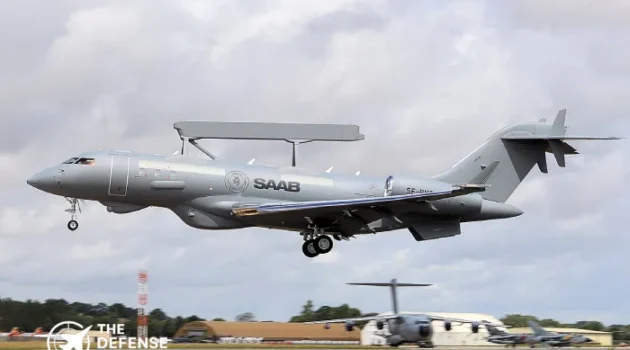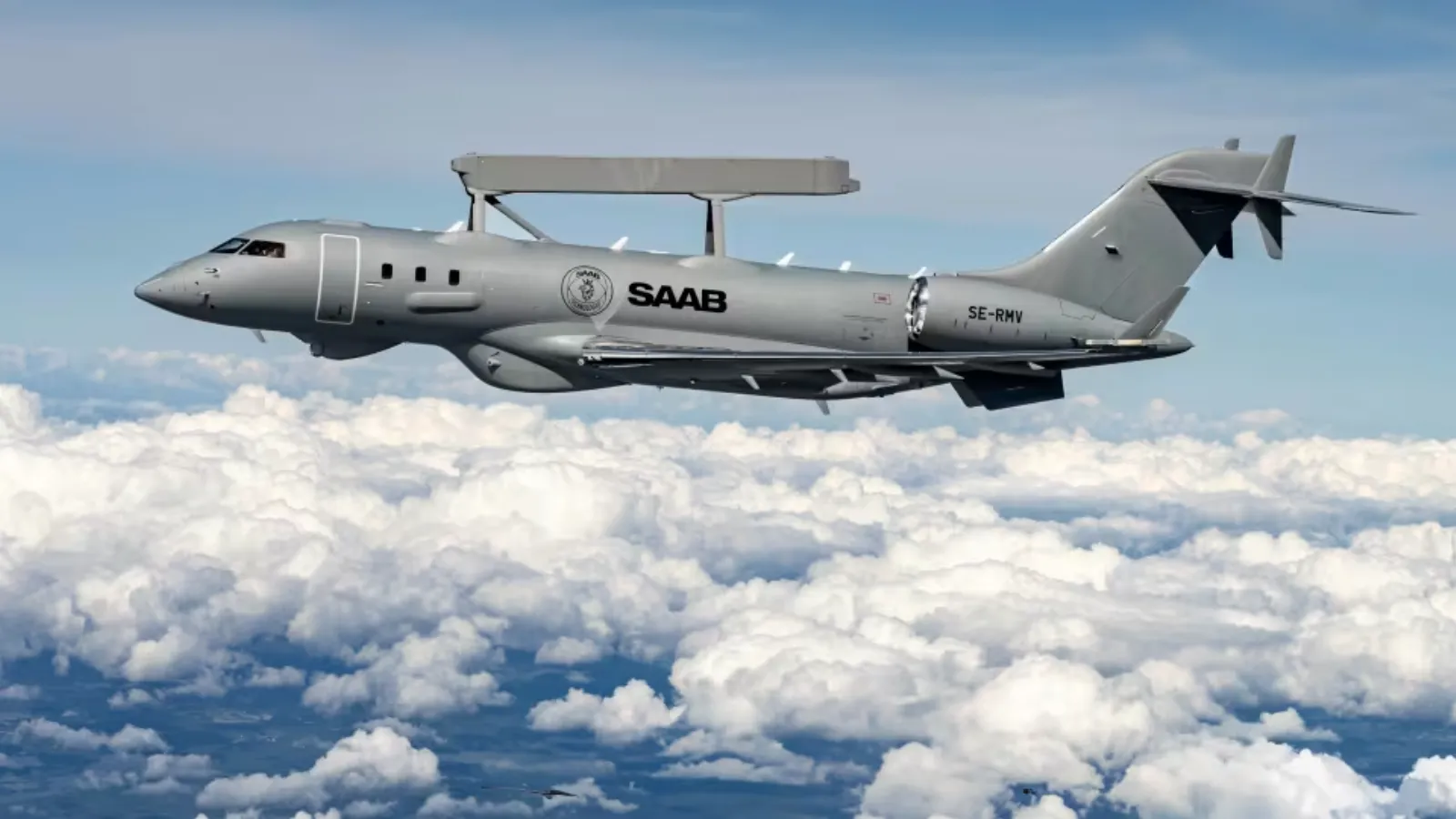
The Netherlands is moving toward acquiring a Saab GlobalEye aircraft as European NATO members expand airborne surveillance capabilities and prepare to replace aging warning and control platforms.
Takeaways
The Netherlands has taken a formal step toward acquiring Saab’s GlobalEye airborne early warning and control aircraft, although no procurement contract has yet been signed.
Netherlands GlobalEye Procurement Moves Forward
The Netherlands GlobalEye procurement has entered a formal planning stage after the Dutch government signed a Letter of Intent with Sweden for the intended acquisition of a Saab GlobalEye Airborne Early Warning and Control aircraft.
The announcement marks an important step, but it is not yet a completed defense contract. Saab confirmed that the Netherlands and Sweden have not entered into a purchase agreement and that the Swedish defense company has not received an order.
Saab said it is prepared to support the next stages of the Dutch procurement process. The company described GlobalEye as a multi-domain AEW&C system designed to provide long-range detection and identification across air, maritime and land environments.
The announcement did not disclose the procurement value, delivery schedule or specific configuration of the Dutch aircraft.
What The GlobalEye Adds
GlobalEye is built around Saab’s airborne surveillance and command-and-control architecture. The platform combines an Erieye Extended Range radar with additional active and passive sensors and a multi-domain command-and-control system.
The aircraft is based on Bombardier’s Global 6500 business jet platform. Saab says GlobalEye can provide long-range surveillance while sharing information with air, land and maritime forces in real time.
That architecture is significant because an AEW&C aircraft is not simply an airborne radar platform. Its operational value comes from combining sensor information, processing it into a common operational picture and distributing that information to other forces.
For the Netherlands, such a capability can support airspace surveillance, maritime awareness and wider command-and-control functions. It can also provide commanders with a higher-level view of activity across several operational domains than individual tactical sensors normally can provide.
The distinction matters in modern European air operations, where aircraft, drones, cruise missiles, ballistic missiles, naval forces and ground-based systems can operate within the same battlespace.
Dutch Move Comes Amid Wider NATO GlobalEye Program
The Netherlands’ latest announcement comes shortly after a much larger NATO decision involving the same aircraft.
On July 7, NATO Secretary General Mark Rutte announced that the alliance would begin formal negotiations with Saab over the acquisition of up to 10 GlobalEye AEW&C systems. The initiative involves Belgium, Canada, Denmark, Germany, Latvia, Lithuania, Luxembourg, the Netherlands, Norway, Romania and Sweden.
The multinational program is intended to replace NATO’s aging fleet of Boeing E-3A Airborne Warning and Control System aircraft based at Geilenkirchen, Germany. The Dutch Ministry of Defence said the existing E-3A aircraft are scheduled to reach the end of their permitted service life from 2035.
The NATO initiative and the new Dutch-Swedish Letter of Intent should therefore be viewed within a broader European effort to strengthen airborne surveillance.
However, the latest Dutch announcement does not establish that the intended national aircraft is part of the NATO fleet acquisition. The two initiatives involve different procurement arrangements, and the latest Dutch-Swedish announcement has not disclosed its final contractual structure.
Why Airborne Early Warning Matters
Airborne early warning and control aircraft provide a perspective that ground-based radars cannot fully replicate.
Operating at altitude allows an AEW&C aircraft to extend the radar horizon and maintain surveillance over large areas. The aircraft can also move its surveillance coverage as operational requirements change.
This becomes particularly relevant in Europe’s northern and eastern regions, where NATO forces must monitor large air and maritime areas while dealing with increasingly complex electronic warfare and low-observable threats.
Saab states that GlobalEye is designed to detect and identify objects across air, sea and land domains. The company has also highlighted its ability to operate in environments containing clutter and electronic jamming.
The platform’s value therefore extends beyond detecting aircraft. Its multi-domain architecture is intended to support a broader surveillance and command function.
GlobalEye’s Growing European Customer Base
The Dutch decision adds to growing European interest in Saab’s AEW&C platform.
France signed a Letter of Intent with Saab in June 2025 for two GlobalEye aircraft, with an option for two additional aircraft. France subsequently signed a contract for two aircraft in December 2025, valued at approximately SEK 12.3 billion, with deliveries planned from 2029 through 2032.
Sweden is also expanding its own GlobalEye fleet. Saab has received orders from the Swedish Defence Materiel Administration for three aircraft, while NATO has selected the platform as the basis for its future alliance-level AEW&C capability.
In July 2026, Saab also announced an order for two GlobalEye aircraft from an unidentified Middle Eastern customer. The order was valued at SEK 10.1 billion, with deliveries scheduled for 2030.
Canada has separately entered discussions with Saab after selecting GlobalEye as the preferred solution for its future AEW&C capability. Saab said in May that Canada had not yet signed a contract or placed an order at that stage.
What Happens Next
The immediate issue for the Netherlands GlobalEye program is the transition from political intent to a binding procurement contract.
The Letter of Intent establishes the direction of the Dutch acquisition, but it does not by itself create a completed purchase. Saab has explicitly stated that it has not yet received an order.
The next steps are therefore expected to involve the Dutch procurement process, including final requirements, contractual arrangements and associated support considerations.
The absence of a disclosed price or delivery schedule also means that the financial scale and operational entry date of the Dutch aircraft cannot yet be confirmed.
From a broader NATO perspective, the development is significant because airborne surveillance is becoming a central part of Europe’s effort to improve independent situational awareness. NATO’s selection of GlobalEye, combined with national interest from countries such as the Netherlands, France and Canada, gives Saab’s platform an expanding role in Western airborne surveillance planning.
For the Netherlands, the key change is straightforward: the country has moved from interest in GlobalEye to a formal Letter of Intent. A final contract, however, remains to be concluded.
Bottom line: The Netherlands has taken a concrete procurement step toward acquiring a Saab GlobalEye AEW&C aircraft, but the aircraft is not yet under contract. The decision comes as NATO and European allies seek to expand airborne surveillance and replace aging warning and control capabilities.