












@2026 – All Right Reserved. TheDefenseWatch.com
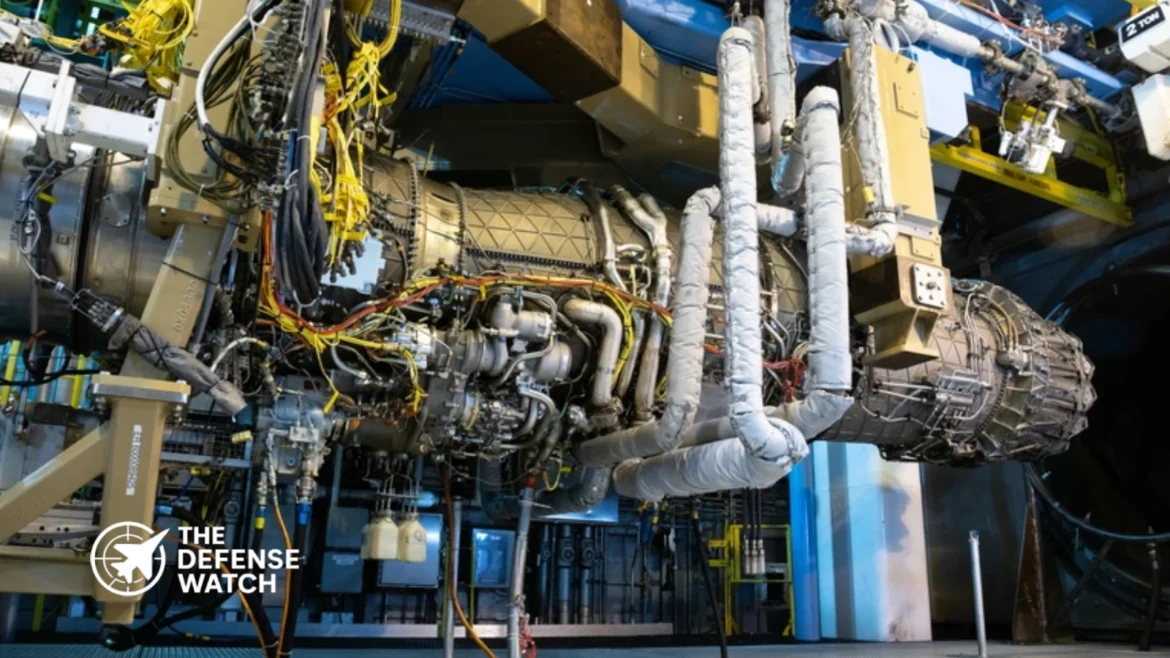
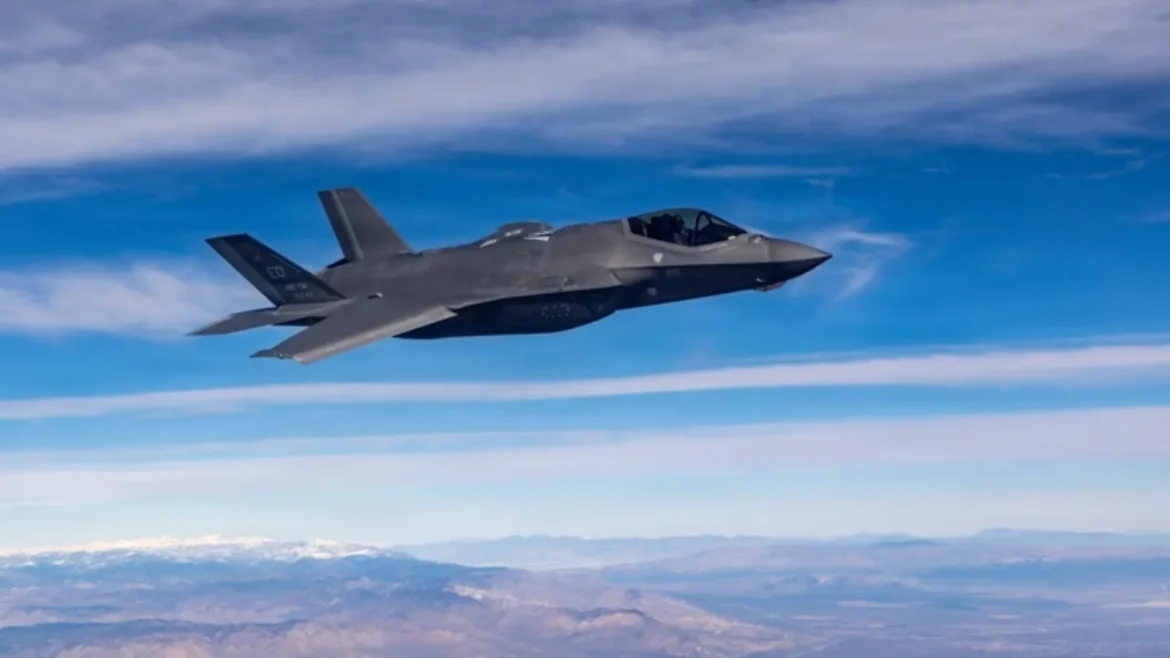
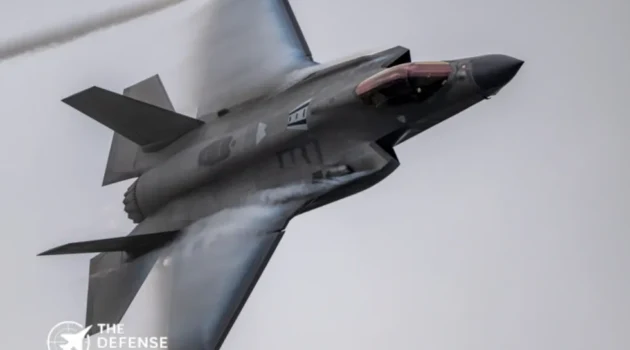
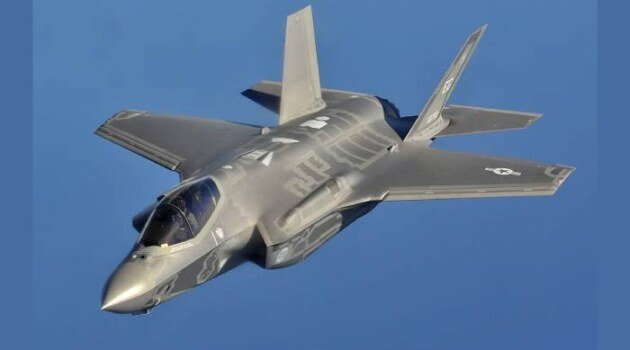
Finland has completed its first locally assembled F135 engine, giving Patria an operational production capability ahead of the arrival of the country’s first F-35A Lightning II fighters. Patria announced September 3 that the engine was completed at its new Linnavuori assembly and maintenance facility in Nokia, Finland.
Finland has completed its first locally assembled F135 engine as Patria establishes the industrial base needed to support the country’s incoming F-35A fleet.
The milestone is significant because the Linnavuori facility is being established not simply as an assembly site, but as part of Finland’s long-term F-35 propulsion support infrastructure. Patria is responsible for initial engine assembly and is expected to take on maintenance, repair, overhaul and upgrade work later in the program.
Production began following a February 2026 agreement between Patria and Pratt & Whitney, an RTX business. The initial assembly phase is scheduled to continue through 2030, after which the facility will transition toward broader F135 sustainment activities.
The Finnish approach is closely tied to the country’s emphasis on security of supply.
When Finland selected the F-35A in 2021, its procurement decision placed substantial weight on domestic industrial participation and the ability to maintain critical defense capabilities during exceptional circumstances. The government’s plan calls for critical maintenance capacity to be established within Finland while also connecting the fleet to the wider multinational F-35 support network.
That requirement is particularly important for propulsion.
The F135 is the sole engine used across all three F-35 variants and represents one of the aircraft’s most technically demanding sustainment areas. Pratt & Whitney has described its global F135 support system as a distributed network involving depot facilities, operating bases and other support infrastructure serving F-35 users worldwide.
For Finland, having trained personnel and dedicated infrastructure inside the country provides an additional layer of control over an essential part of fighter readiness.
The capability does not mean Finland will operate independently of the international F-35 sustainment system. Instead, the Linnavuori facility adds Finnish capacity within that wider network, allowing national and multinational support arrangements to work together.
The timing of the engine milestone is closely aligned with Finland’s aircraft introduction schedule.
Finland ordered 64 F-35A Block 4 fighters to replace its aging F/A-18C/D Hornet fleet. The aircraft are scheduled for delivery between 2026 and 2030, with the first Finnish F-35As arriving at the Lapland Air Wing in Rovaniemi during autumn 2026.
Eight Finnish F-35 aircraft are also part of the U.S.-based training effort, allowing Finnish pilots and maintainers to build experience before the fleet becomes fully established at home. The broader program is therefore progressing on several tracks at once, including aircraft production, personnel training, infrastructure construction and domestic industrial participation.
The engine assembly milestone adds another piece to that transition.
| Area | Finland’s Program |
|---|---|
| Aircraft | F-35A Lightning II |
| Quantity | 64 aircraft |
| Configuration | Block 4 |
| Engine | Pratt & Whitney F135 |
| Finnish engine facility | Patria Linnavuori, Nokia |
| Engine assembly | Planned through 2030 |
| Future engine support | Maintenance, repair, overhaul and upgrade |
| First aircraft arrival in Finland | Autumn 2026 |
| Main operating location | Lapland Air Wing, Rovaniemi |
Finland’s Ministry of Defence says the F-35 procurement also includes training, sustainment solutions, spare parts, maintenance services and related infrastructure. The aircraft are intended to replace the Hornet fleet and provide the Finnish Air Force with a fighter system designed for service into the 2060s.
The most important aspect of the Patria milestone is not the assembly of a single engine. It is the development of industrial knowledge that can support the propulsion system over decades.
Modern fighter sustainment depends on specialized equipment, certified processes, trained technicians, engineering support and access to replacement components. Establishing these capabilities before a fleet reaches full operational scale gives Finland time to build the workforce and technical processes required for long-term support.
Patria says the F135 program is expected to create approximately 50 direct jobs between 2025 and 2030. The company has also described Linnavuori as a long-term location for F135 maintenance and sustainment activities after the initial production phase.
This creates an industrial capability with value beyond the initial aircraft delivery schedule.
Finland’s F-35 industrial participation also includes production of aircraft structures. Lockheed Martin identifies Patria as a Finnish F-35 partner responsible for front fuselage manufacturing as well as F135 engine assembly and sustainment. The company says the broader F-35 industrial effort involves more than 30 Finnish companies and academic institutions.
The result is a more distributed Finnish industrial base around the aircraft rather than a procurement model focused solely on buying completed fighters.
Domestic capability is only one part of the F135 sustainment model.
The F-35 program is designed around a multinational industrial and logistics structure. Pratt & Whitney has supplied more than 1,400 production F135 engines, supporting a global F-35 enterprise that includes 20 allied nations, according to company figures released in 2026.
That scale matters because engine maintenance and supply-chain resilience depend on common standards and access to a wider pool of technical expertise.
Finland’s Linnavuori capability therefore adds a national node to a larger system. This approach is consistent with Finland’s NATO membership and its emphasis on maintaining national defense capabilities while participating in collective defense arrangements.
For NATO, the broader value is interoperability. Finland’s F-35 fleet will operate alongside other European F-35 fleets, including those of Norway and Denmark, while benefiting from common aircraft, propulsion and support architecture. Finland’s Ministry of Defence has specifically identified NATO interoperability and participation in the Alliance’s collective defense structure as important elements of its post-accession defense posture.
The F135 provides propulsion for every F-35A, F-35B and F-35C aircraft. For Finland, which is procuring the conventional takeoff and landing F-35A, the engine is a central component of aircraft availability and operational readiness.
The Finnish F-35A uses the F135-PW-100 configuration. Finnish Ministry of Defence technical data lists a maximum afterburning thrust of approximately 191 kilonewtons for the engine.
Pratt & Whitney is also developing the F135 Engine Core Upgrade, intended to improve the engine’s durability and provide additional thermal and performance capacity for future F-35 capabilities. The company says the upgrade will use the existing F135 sustainment infrastructure and provide a pathway for continued propulsion support as the aircraft evolves.
That makes Finland’s investment in engine expertise relevant beyond the initial production period.
A workforce trained during assembly can provide a foundation for later maintenance and potentially more advanced sustainment activities as the Finnish F-35 fleet matures.
The first Finnish-assembled F135 is therefore best understood as part of a much larger industrial strategy.
Finland’s original F-35 decision included an industrial participation package designed to strengthen domestic production, maintenance and security of supply. The government estimated thousands of direct and indirect person-years of employment from the industrial participation arrangements.
The Linnavuori facility turns one part of that strategy into an operational capability.
With engine assembly now underway, aircraft deliveries approaching and future maintenance planned at the same site, Finland is building the industrial infrastructure required to support its F-35 fleet over a service life expected to extend for decades.
For Finland, the immediate objective is straightforward: ensure that the arrival of the F-35A is matched by the technical infrastructure needed to keep the aircraft available. For the wider F-35 program, the development adds another European location to the aircraft’s growing global propulsion sustainment network.
The next major milestones will be the arrival of Finland’s first F-35As at Rovaniemi, continued F135 assembly at Linnavuori and the gradual development of the Finnish maintenance workforce.
Patria’s current production phase is scheduled to run through 2030. The company then plans to adapt the facility for F135 maintenance and overhaul activities that will continue throughout the lifecycle of Finland’s F-35 fleet.
The first completed engine is therefore an early indicator that Finland’s F-35 transition is moving beyond aircraft procurement and into the more demanding phase of establishing a sustainable national operating and maintenance system.
For a country preparing to operate advanced fifth-generation fighters in NATO’s northern flank, that support infrastructure will be as important to long-term readiness as the aircraft themselves.
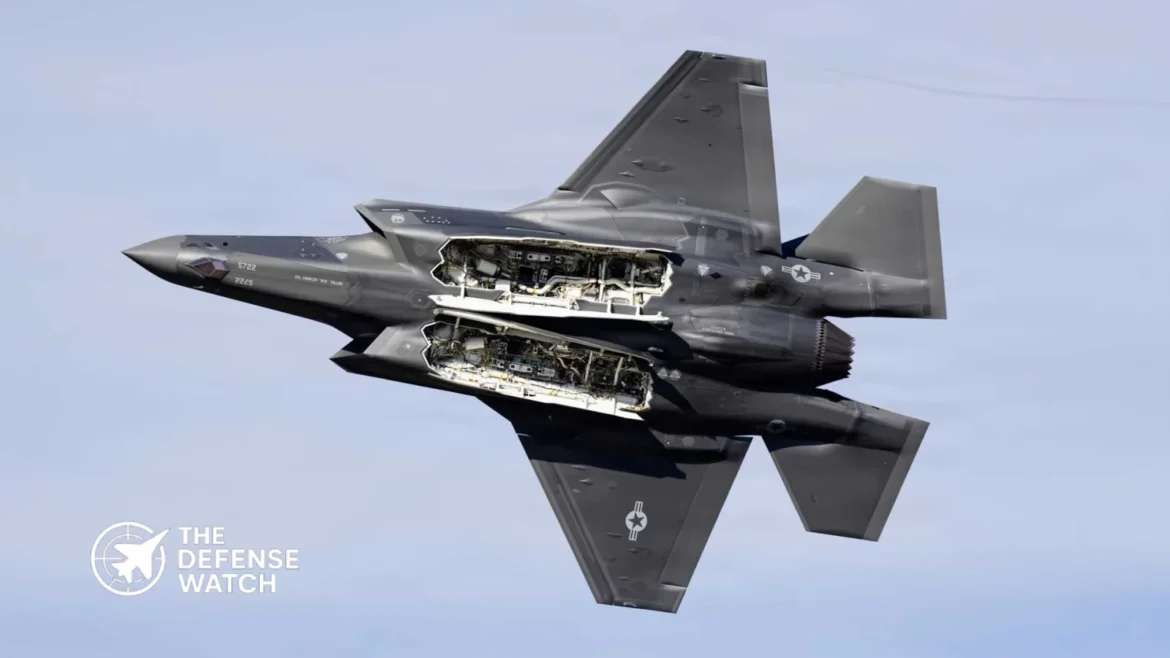
The F-35 six internal missiles upgrade is moving toward a planned September 2030 milestone as the Pentagon seeks to increase the aircraft’s internal missile capacity from four to six while preserving its low observable configuration. The latest F-35 Modernized Selected Acquisition Report identifies the Six in the Bay, or SITB, effort as part of the aircraft’s broader modernization program.
The Pentagon’s Six in the Bay program is intended to increase the F-35’s internal missile capacity from four to six by September 2030, strengthening air combat capacity while retaining internal weapons carriage.
The planned change addresses a basic limitation of stealth fighters. Carrying weapons externally can increase the aircraft’s radar signature, while internal carriage preserves the configuration designed for operations in heavily defended airspace.
For the F-35, the objective is therefore not simply to carry more weapons. It is to increase the number of air combat engagements an aircraft can support without giving up the survivability benefits associated with internal carriage.
Current F-35 internal air-to-air configurations can accommodate up to four AIM-120-class missiles when the aircraft is configured for an air-to-air mission. The F-35’s two internal weapons bays were designed around a mixture of larger and smaller weapons, giving the aircraft flexibility between air-to-air and air-to-ground missions. U.S. Air Force material has previously described the aircraft as having four internal weapon stations.
The planned Six in the Bay configuration represents a 50 percent increase in internal missile capacity.
| Capability | Current Configuration | Six In The Bay |
|---|---|---|
| Internal missile capacity | Up to 4 | Up to 6 |
| Increase | Baseline | 50 percent |
| External weapons required for additional internal capacity | Not applicable | No |
| Planned milestone | Existing capability | September 2030 |
| Exact missile configuration | Varies by integration | Not publicly specified |
The latest acquisition documentation is important because it confirms the capability increase while avoiding a claim about the exact missile type. The report does not establish that all six weapons will necessarily be AIM-120Ds.
That distinction matters because the F-35 weapons portfolio is changing at the same time.
The Six in the Bay effort has also been associated with the Sidekick weapons adapter concept. Earlier reporting on the program described Sidekick as a weapons bay adapter designed to allow two additional AIM-120-sized missiles to be carried internally on F-35A and F-35C aircraft.
The F-35B presents a different engineering challenge. Its short takeoff and vertical landing architecture requires a lift fan behind the cockpit, contributing to a smaller internal weapons bay than those of the F-35A and F-35C. Earlier reporting therefore identified Sidekick as an F-35A and F-35C capability rather than an F-35B modification.
The latest acquisition material, however, does not publicly assign SITB to a specific F-35 variant. The safest description is therefore that the Pentagon is developing a six-missile internal carriage capability and that earlier Sidekick work provides important technical context.
The operational value of Six in the Bay is closely tied to the F-35’s low observable design.
An F-35 carrying additional missiles on external pylons can increase its weapons inventory, but external stores can compromise some of the aircraft’s signature-management advantages. Internal carriage allows the aircraft to maintain a cleaner external configuration.
That creates a tradeoff between magazine depth and survivability that has become increasingly important as air forces prepare for operations against sophisticated integrated air defense and fighter forces.
Six internal missiles do not make the F-35 an air-superiority fighter in the traditional sense. Instead, the upgrade gives the aircraft more opportunities to employ its sensors, network connections and air-to-air weapons before it must return to base, rendezvous with a tanker or operate in a different weapons configuration.
The improvement is particularly significant for distributed operations. A formation of F-35s carrying six internal missiles each would have substantially more collective internal air-to-air capacity than the same number of aircraft limited to four missiles apiece.
For example, a four-aircraft flight would move from a theoretical 16 internally carried air-to-air missiles to 24. That is a 50 percent increase before considering any external weapons.
The missile-capacity increase is being pursued alongside a much wider modernization effort.
The F-35 Block 4 program is designed to introduce new weapons, improved sensors, electronic warfare capabilities and expanded processing capacity. Technology Refresh 3, or TR-3, provides the computing and memory architecture needed to support these capabilities. The Government Accountability Office has identified Block 4 and TR-3 as major components of the F-35 modernization effort.
The Pentagon’s roadmap also includes improvements to the Multifunction Advanced Data Link, Link 16 and infrared sensing capabilities. These changes are significant because the value of additional missiles depends partly on the aircraft’s ability to detect, identify, track and prioritize targets before weapons employment.
In other words, Six in the Bay increases the aircraft’s magazine, while other Block 4 improvements are intended to strengthen the information and engagement chain around that magazine.
The F-35 modernization roadmap separately includes an AIM-120D two-way data link capability. The latest reporting on the acquisition documentation places that capability in the same general modernization timeframe as Six in the Bay.
The two efforts should not be treated as one confirmed upgrade, however. The documentation identifies them as separate capabilities.
That distinction is particularly important for reporting on future F-35 armament. The fact that the aircraft is being prepared for six internal missiles does not, by itself, establish the exact six-weapon loadout that will eventually be certified.
The F-35’s future missile mix could also evolve as newer air-to-air weapons enter development and integration. The U.S. is separately pursuing the AIM-260 Joint Advanced Tactical Missile as a successor to the AIM-120 family, although publicly available information does not establish that Six in the Bay will automatically translate into a six-AIM-260 operational loadout.
Increasing internal weapons capacity requires more than adding two attachment points.
The weapons bay, launcher mechanisms, aircraft structure, software, weapons interfaces and store-separation characteristics all have to work together. Missile release must remain safe across the aircraft’s relevant flight envelope, including high-speed and maneuvering conditions.
The F-35 program has extensive experience with internal weapons separation testing. Earlier Air Force testing evaluated the aerodynamic effects and store separation characteristics of internal and external weapons configurations, including AIM-120 and AIM-9X missiles.
Six in the Bay therefore represents an integration and certification challenge as much as a hardware change.
The program’s wider modernization schedule also carries technical risk. The Government Accountability Office has repeatedly highlighted delays, development challenges and rising F-35 costs, while the Pentagon continues to work through the large number of capabilities associated with Block 4.
The most important effect of Six in the Bay is the combination of stealth, sensing and magazine depth.
Earlier F-35 employment concepts often emphasized the aircraft’s ability to penetrate defended airspace, collect information and contribute to networked operations. As the air combat environment becomes more dependent on long-range sensing and weapons, the ability to carry enough missiles internally becomes increasingly important.
An aircraft that detects several threats but carries only a small number of internally stored weapons faces a magazine constraint. Six missiles do not eliminate that constraint, but they provide more capacity without requiring an external weapons load.
This also gives commanders another option between two extremes: a highly stealthy internal weapons configuration with limited missile capacity, or a larger external weapons load with a potentially less favorable signature.
The significance extends beyond individual aircraft. F-35s operate as part of larger formations and joint networks, where one aircraft can contribute sensor information to another platform that performs the engagement. More internal weapons allow F-35s performing air-to-air missions to remain armed for longer while continuing to provide sensing and targeting functions.
The September 2030 target places Six in the Bay within the broader period in which the F-35 is expected to receive substantial improvements in weapons, sensors, communications and electronic warfare.
That timeline also illustrates how the F-35 is evolving from its original design baseline. The aircraft’s airframe remains largely unchanged, but its combat capability is being expanded through new computing hardware, software, weapons integration and modifications to the internal weapons system.
The Pentagon’s approach reflects the central challenge of maintaining a fifth-generation aircraft against increasingly capable air and missile threats without sacrificing the characteristics that made the F-35 valuable in the first place.
Six in the Bay is consequently a relatively small physical modification with potentially important operational consequences. Increasing internal missile capacity from four to six gives the F-35 more air-to-air weapons while preserving the option to operate without external stores.
The Pentagon’s current documentation confirms the capability target, but the final weapon configuration, variant applicability and detailed implementation remain matters for further testing and certification.
The F-35 Six in the Bay upgrade is intended to increase internal missile carriage by 50 percent, from four to six weapons, with a September 2030 milestone identified in the latest modernization roadmap.
Its importance goes beyond the additional two missiles. By increasing internal magazine capacity, the program aims to improve the F-35’s persistence and flexibility in high-threat air combat without forcing the aircraft to rely on external weapons for the added capacity.
The upgrade is also part of a much broader Block 4 modernization effort involving computing, sensors, networking, electronic warfare and new weapons. Together, those changes are intended to keep the F-35 relevant as the U.S. Air Force, Navy and Marine Corps prepare for increasingly contested air operations.
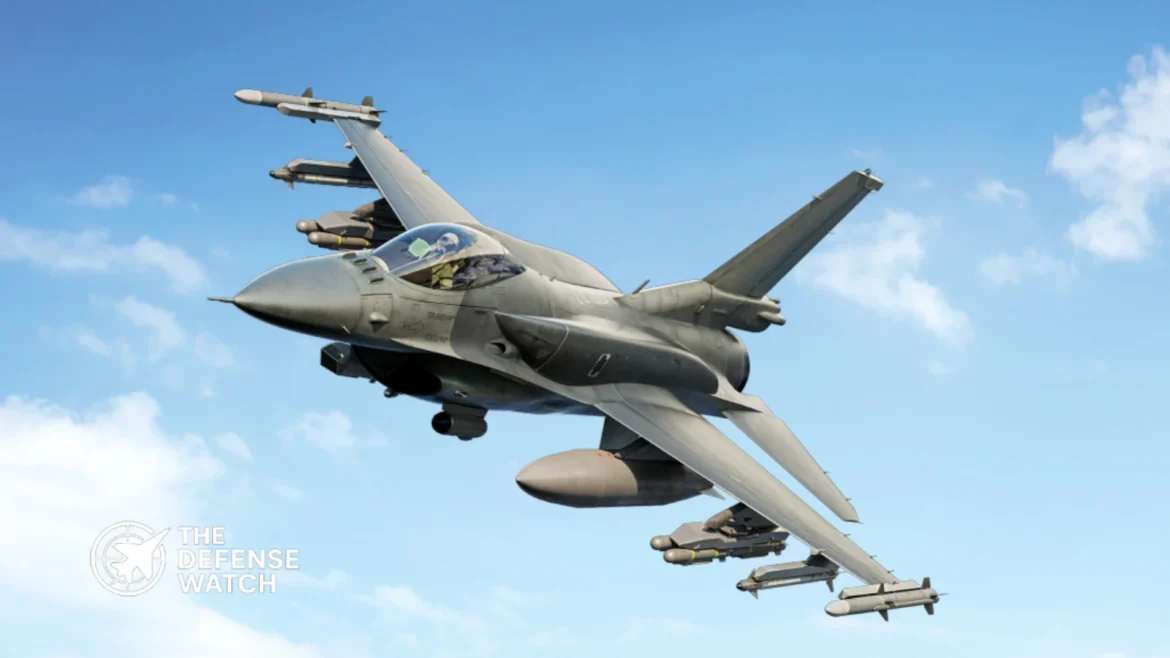
The F-16 Block 70/72 is being positioned by Lockheed Martin as a modernized fourth-generation fighter built around an advanced radar, upgraded mission systems, improved cockpit displays and extensive weapons integration. The company says its current Block 70/72 backlog stands at 119 aircraft, with 41 fighters delivered to customers across seven countries.
The F-16 Block 70/72 combines a proven fourth-generation airframe with modern sensors, avionics, safety systems and weapons integration intended to keep the fighter relevant for decades.
The latest production standard does not turn the F-16 into a stealth aircraft or change its fundamental fourth-generation design. Instead, the modernization focuses on the systems that determine how effectively a fighter can detect, identify, track and engage targets in a networked combat environment.
Lockheed Martin says the wider F-16 fleet now includes about 2,800 aircraft operating across 29 countries, with more than 14 million sorties and 21 million flight hours.
The most important sensor upgrade is Northrop Grumman’s AN/APG-83 Scalable Agile Beam Radar, or SABR.
The APG-83 is an active electronically scanned array, or AESA, fire-control radar. Northrop Grumman says the system brings modern AESA technology associated with the F-22 and F-35 to the F-16 while fitting within the aircraft’s existing physical, power and cooling constraints.
Lockheed Martin describes the radar as providing fifth-generation fighter radar capabilities. That description refers to radar technology and processing rather than the F-16 itself becoming a fifth-generation fighter. The aircraft remains a fourth-generation design without the low-observable characteristics associated with platforms such as the F-35 and F-22.
The radar upgrade matters because modern air combat increasingly depends on the quality and speed of information available to the pilot. AESA technology supports functions including air-to-air search and tracking, air-to-ground mapping and targeting in a single integrated radar architecture.
The Block 70/72 also introduces a high-resolution Center Pedestal Display, giving pilots a larger digital interface for tactical information.
Lockheed Martin says the display can present radar and targeting-pod information, color moving maps and enlarged air-to-air situation displays. It also supports digital flight instrument information and helmet-mounted display integration.
This is an important part of the modernization because sensor performance alone does not determine combat effectiveness. A fighter can collect large volumes of information, but the pilot still needs to interpret that information quickly enough to make decisions.
The Block 70/72 architecture therefore combines radar improvements with cockpit displays, mission computing, navigation and networking rather than treating each upgrade as a separate capability.
The fighter can also incorporate the Sniper Advanced Targeting Pod and Legion-ES infrared search and track system.
These systems provide additional means of detecting and identifying targets beyond the primary radar. Infrared search and track is particularly relevant because it gives the aircraft a passive sensing option that does not rely on radar emissions.
Lockheed Martin also identifies an advanced data link, precision GPS and inertial navigation, and upgraded mission computing as elements of the Block 70/72 architecture.
The result is a fighter that can combine information from multiple sensors and present it through a substantially more modern cockpit than earlier F-16 configurations.
Weapons flexibility is another major element of the Block 70/72 package.
Lockheed Martin says the F-16 program has certified more than 3,300 carriage and release configurations covering more than 180 weapon and store types.
That integration history gives the aircraft access to a broad range of air-to-air and air-to-ground weapons, depending on the customer configuration and applicable U.S. export approvals.
Recent Foreign Military Sales packages demonstrate how broad that ecosystem can be. For example, the U.S. government approved a possible $5.58 billion F-16 package for the Philippines in April 2025 that included Block 70/72 aircraft, APG-83 radars, AIM-120C-8 AMRAAMs, AIM-9X Block II missiles, GBU-39/B Small Diameter Bombs and JDAM-related equipment.
The significance is not simply the number of weapons available. A modern multirole fighter must integrate weapons with its radar, mission computer, navigation system, targeting sensors and data links. That systems-level integration determines how effectively the aircraft can transition between air-to-air and air-to-ground missions.
The Block 70/72 also addresses one of the central challenges facing mature fighter fleets: structural age.
Lockheed Martin gives the aircraft a 12,000-hour structural service life, more than 50 percent beyond previous production F-16 aircraft according to the company.
The extended life is important for operators that want to retain a relatively large fighter fleet while gradually introducing newer platforms. It can also reduce the pressure to replace every aircraft solely because of accumulated airframe fatigue.
The modernization approach therefore combines a new-production airframe with a significantly revised electronic architecture. That distinction is important because many existing F-16 operators are simultaneously pursuing modernization programs for older aircraft.
Another standard Block 70/72 feature is Lockheed Martin’s Automatic Ground Collision Avoidance System, or Auto GCAS.
The system is designed to detect situations in which an aircraft is at risk of controlled flight into terrain and automatically initiate a recovery when required. Lockheed Martin says Auto GCAS entered U.S. Air Force F-16 service in 2014 and has saved pilots and aircraft in multiple incidents.
For a high-performance fighter, this type of system has operational significance beyond routine safety. Pilots can become spatially disoriented, lose situational awareness or become overloaded while concentrating on tactical tasks.
Reducing the likelihood of a catastrophic ground collision can therefore protect both trained personnel and expensive aircraft.
The central value of the F-16 Block 70/72 is not a single new sensor. It is the combination of mature airframe design, modern computing, AESA radar, networking, targeting systems, weapons integration and extended structural life.
For many air forces, that combination offers a path to fielding a modern multirole fighter without moving entirely to a fifth-generation fleet.
The F-16 also benefits from a large international support ecosystem. Lockheed Martin’s current program information identifies roughly 530 suppliers worldwide, while more than 700 F-16s operate in Europe according to company data.
That existing ecosystem can matter to operators because training, maintenance, spare parts, weapons integration and interoperability are increasingly important factors in determining the practical value of a fighter fleet.
The Block 70/72 illustrates how an established fighter can remain relevant through changes to its sensors, computers, displays, networking and weapons rather than through a completely new airframe.
The aircraft still lacks the low-observable design and other characteristics that define fifth-generation fighters. Its value instead comes from improving the information, targeting and weapons systems carried by a proven fourth-generation platform.
That distinction is important as air forces balance the cost and availability of fifth-generation aircraft with the need to maintain sufficient numbers of capable multirole fighters.
For the F-16, the modernization path now extends well beyond the original Cold War-era configuration. The Block 70/72 is designed around a 12,000-hour airframe, APG-83 AESA radar, modern mission computing, improved cockpit displays, advanced targeting and broad weapons integration, giving the platform a long runway for continued service.
| Feature | F-16 Block 70/72 |
|---|---|
| Aircraft type | Multirole fighter |
| Generation | Fourth-generation |
| Primary radar | Northrop Grumman AN/APG-83 SABR AESA |
| Structural service life | 12,000 hours |
| Maximum speed | More than Mach 2 |
| Maximum takeoff gross weight | 48,000 lb |
| Design load factor | 9 g |
| Targeting systems | Sniper Advanced Targeting Pod, optional IRST |
| Navigation | GPS/INS |
| Safety system | Automatic Ground Collision Avoidance System |
| Weapons integration | More than 180 weapon and store types across certified configurations |
| Production location | Greenville, South Carolina |
Specifications are based on Lockheed Martin’s published Block 70/72 product information.
Lockheed Martin’s current production figures show that international demand for the F-16 has not ended with the arrival of newer fighter designs. The company reported 122 aircraft in its June 2026 fast-facts document, although its September 2026 update cited a 119-aircraft backlog and 41 deliveries, reflecting the changing production status as aircraft are delivered and orders are updated.
The continuing production line also provides operators with a route to acquire new aircraft while maintaining compatibility with a large global F-16 community.
For countries that already operate the F-16, the Block 70/72 architecture also provides a reference point for modernization. Radar, mission computing, cockpit displays and other systems can extend the operational usefulness of existing fleets, although the exact equipment available depends on aircraft configuration, customer requirements and applicable export approvals.
The result is a fighter that retains the familiar F-16 aerodynamic and operational architecture while replacing much of the electronic foundation with systems designed for contemporary networked combat.
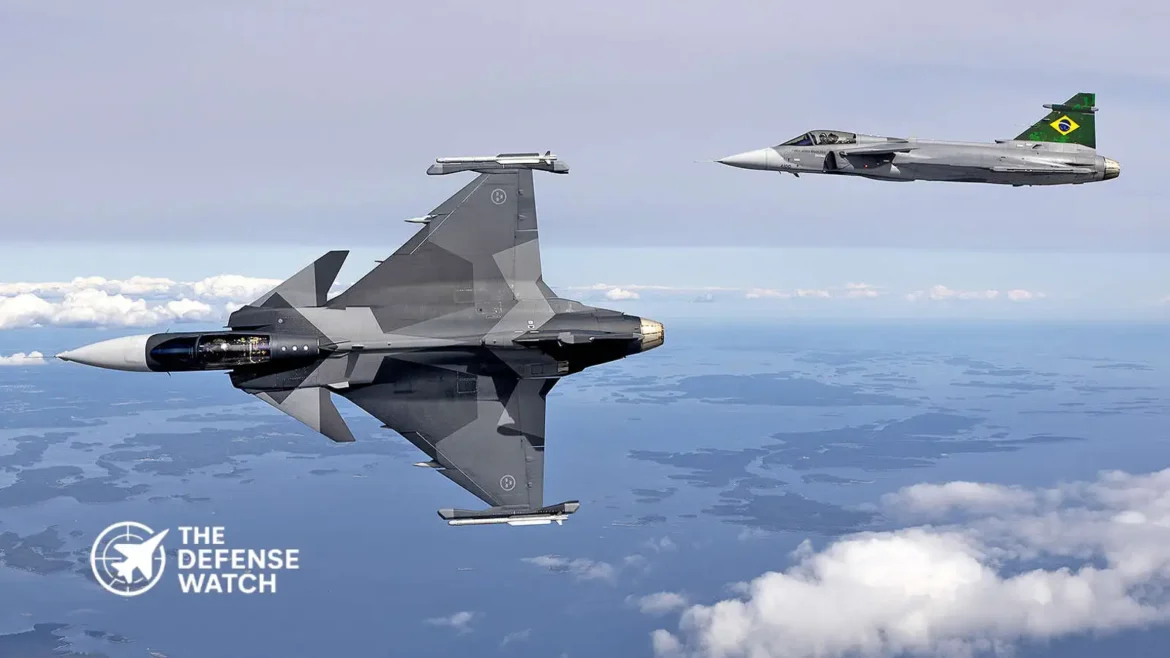
Europe’s combat air sector is in the middle of its most consequential upgrade cycle since the Cold War. Legacy platforms are receiving fifth-generation-grade sensors, next-generation fighters are moving from concept to metal, and export order books are the fullest they have been in decades. This list ranks the European military aircraft setting the pace in 2026 — spanning frontline fighters, tankers, transports, and the sixth-generation programs now taking shape on the factory floor.
| Aircraft | Manufacturer | Generation | Max Speed | Combat Radius | Key Sensor | Primary Armament |
|---|---|---|---|---|---|---|
| Dassault Rafale F5 | Dassault Aviation (FR) | 4.5+ Gen | Mach 1.8 | ~1,850 km | RBE2-AESA / SPECTRA EW | Meteor, MICA NG, SCALP |
| Eurofighter Typhoon (ECRS Mk2) | BAE Systems / Leonardo / Airbus | 4.5 Gen | Mach 2.0 | ~1,390 km | ECRS Mk2 AESA (GaN) | Meteor, IRIS-T, Storm Shadow |
| Saab Gripen E/F | Saab AB (SE) | 4.5+ Gen | Mach 2.0 | ~1,500 km | Raven ES-05 AESA | Meteor, IRIS-T, RBS15 |
| GCAP/Tempest Demonstrator | Edgewing (BAE/Leonardo/JAIEC) | 6th Gen (dev.) | Classified | Classified | Distributed sensor fusion suite | Next-gen BVR + CCA control |
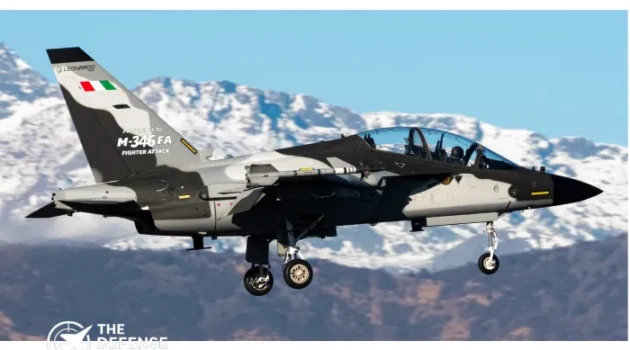
| Leonardo M-346FA | Leonardo (IT) | Light Combat | Mach 0.95 | ~556 km | Grifo-M AESA (opt.) | AIM-9, laser-guided bombs |
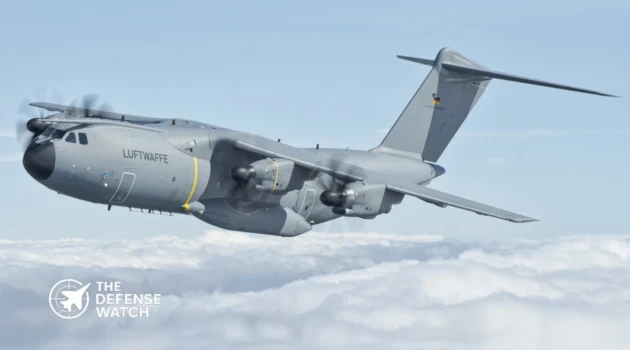
| Airbus A400M Atlas | Airbus Defence & Space | Strategic Airlift | Mach 0.72 | ~3,300 km (with load) | Defensive Aids Sub-System | N/A (airlift/tanker role) |
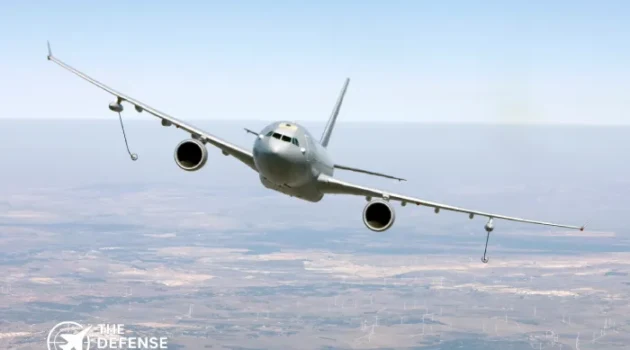
| Airbus A330 MRTT | Airbus Defence & Space | Tanker/Transport | Mach 0.86 | ~7,400 km ferry | ARBS boom + hose-drogue | N/A (refueling platform) |
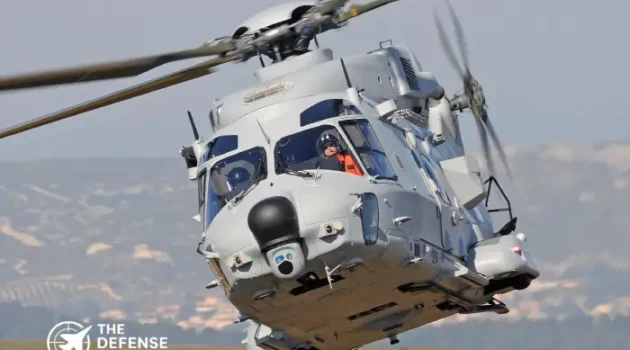
| NHIndustries NH90 | Airbus/Leonardo/Fokker | Multirole Helicopter | 300 km/h | ~450 km | FLIR/EO turret, dipping sonar (NFH) | Torpedoes, ATGMs (variant-dependent) |
| Eurodrone (Airbus/Dassault/Leonardo) | Airbus DS-led consortium | MALE RPAS | 165+ km/h | 24-hr endurance | Multi-sensor EO/IR + SAR | Precision-guided munitions |
| TAI KAAN (Turkey/NATO partner) | Turkish Aerospace | 5th Gen (dev.) | Mach 2.0 (proj.) | Classified | AESA radar (dev.) | Meteor-class BVR (planned) |
2026 has been a milestone year for European military aircraft. Dassault formally launched the Rafale F5 standard, pairing a new AESA radar and uprated Safran M88 engines with a stealthy unmanned combat air vehicle derived from the nEUROn demonstrator. The Eurofighter consortium secured a £453.5 million production contract for 40 ECRS Mk2 AESA radars, closing Typhoon’s longest-standing capability gap. Saab’s Gripen E/F line is scaling toward 30+ aircraft annually as Brazil, Thailand, Colombia, and Ukraine join the customer list. Most notably, the UK-Italy-Japan GCAP/Tempest program awarded a £4.6 billion detailed-design contract to Edgewing in July 2026, with a crewed demonstrator now in final assembly — cementing Europe’s arrival in sixth-generation development.
1. Dassault Rafale F5 (France) — The Rafale has evolved from an “omnirole” 4.5-gen fighter into what Dassault now markets as a 2026-era digital combat hub. The F5 standard, formally launched in October 2025, adds a next-generation radar, 20%-more-thrust M88 engines, hardened data architecture for nuclear-mission assurance, and control of a stealthy Unmanned Combat Air System derived from the nEUROn program. With France’s FCAS partnership with Germany and Spain stalled, Dassault is now charting an independent roadmap toward a “Super-Rafale” and beyond, targeting F5 entry into service between 2033 and 2035.
2. Eurofighter Typhoon — ECRS Mk2 (UK/Germany/Italy/Spain) — Nine air forces now fly the Typhoon, and its biggest weakness — the aging mechanically scanned Captor-M radar — is finally being retired. The ECRS Mk2, built by Leonardo UK and integrated by BAE Systems, uses gallium-nitride AESA modules across roughly 200 degrees of field of regard, fusing air-to-air search, ground targeting, and offensive electronic-attack jamming into a single aperture. Full-rate production of 40 units for RAF Tranche 3 jets began following a January 2026 contract award, with first flight already completed.
3. Saab Gripen E/F (Sweden/Brazil) — The Gripen E/F backlog has grown to 117+ firm orders across Sweden, Brazil, Colombia, and Thailand, with a Ukraine order for 16 aircraft also on the books. Brazil’s Embraer-built assembly line delivered its first locally produced Gripen E in March 2026 and rolled out the first two-seat Gripen F in June, which completed its maiden flight in August. Saab is doubling production capacity to 25–30 jets a year, powered throughout by the GE F414G engine.
4. GCAP/Tempest Demonstrator (UK, Italy, Japan) — The Global Combat Air Programme is the West’s most advanced sixth-generation effort outside the U.S. F-47. The July 2026 £4.6 billion Edgewing contract funds an 18-month detailed-design phase, and the crewed Tempest demonstrator is now in final assembly, with a flight-test aircraft targeted for 2026 and a Combat Air Demonstrator for 2027. Canada joined as the program’s first observer nation in July 2026, and entry into service remains targeted for 2035, though UK funding timelines have slipped toward the late 2030s.
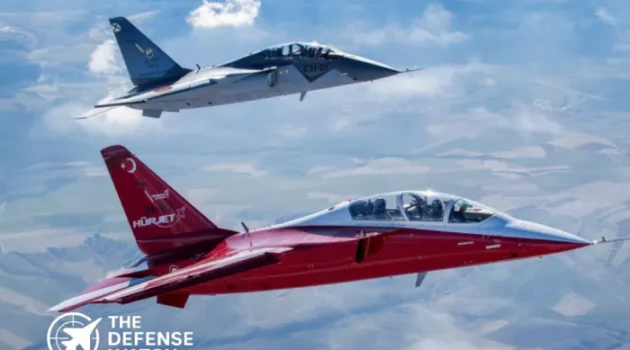
5. Leonardo M-346FA (Italy) — A light combat variant of the widely exported M-346 trainer, the FA model adds an optional Grifo-M AESA radar, an integrated self-defense suite, and combat wiring for AIM-9 missiles and precision-guided munitions — making it a cost-effective bridge for air forces needing 4th-gen-adjacent capability without a full fighter budget.
6. Airbus A400M Atlas (Multinational) — Europe’s flagship strategic/tactical airlifter combines a 37-tonne payload with rough-field and low-level tactical capability, plus an air-to-air refueling role that few competitors match.
7. Airbus A330 MRTT (Multinational) — The backbone of NATO’s Multinational MRTT Fleet, offering both boom and hose-drogue refueling alongside strategic transport and medevac configurations.
8. NHIndustries NH90 (France/Germany/Italy/Netherlands) — A fly-by-wire, composite-airframe multirole helicopter fielded in naval (NFH) and tactical transport (TTH) variants across more than a dozen European air arms and navies.
9. Eurodrone (Airbus/Dassault/Leonardo) — Europe’s sovereign MALE RPAS answer to the Reaper and Bayraktar TB2, combining twin-turboprop endurance with a certifiable design for flight in unsegregated European airspace.
10. TAI KAAN (Turkey, NATO-integrated program) — Turkey’s twin-engine fifth-generation fighter, developed with European industrial input, rounds out the list as the platform to watch as it moves toward low-rate production and its first export discussions.
Among frontline European fighters, true low-observable shaping remains limited to the developmental GCAP/Tempest and KAAN airframes, which use faceted, blended-wing designs, internal weapons bays, and advanced RAM (radar-absorbent material) coatings to minimize frontal RCS. The Rafale and Typhoon instead rely on a “reduced-signature, not stealth” philosophy — semi-recessed weapon carriage, radar-absorbent edge treatments, and composite structures — while leaning on electronic warfare to offset a higher baseline RCS. The Gripen E takes the smallest-signature approach among legacy-generation jets, prioritizing a compact frontal cross-section and canted vertical stabilizers.
This is where 2026’s upgrades matter most. The Typhoon’s ECRS Mk2 and Rafale’s F5-standard radar both move to gallium-nitride AESA modules for greater power efficiency and jamming resistance, paired with wide-band IRST search-and-track and comprehensive EW suites (SPECTRA on Rafale, Praetorian DASS on Typhoon). Gripen E’s Raven ES-05 AESA and its data-link-centric “smart” avionics architecture emphasize networked situational awareness over raw radar power. GCAP’s demonstrator introduces a distributed, AI-assisted sensor-fusion backbone designed from inception to command Collaborative Combat Aircraft (CCA) drone wingmen.
The Rafale’s Safran M88 is being uprated for roughly 20% more thrust under F5 without airframe modification. Typhoon retains its twin EJ200 engines, while Gripen E/F relies on a single GE F414G producing around 98 kN of thrust — the same engine family powering South Korea’s KF-21. GCAP’s next-generation engine core, under development by a UK-Italy-Japan consortium, is progressing toward ground testing as part of the program’s detailed-design phase.
Export momentum favors platforms offering sovereignty without US ITAR entanglement. Rafale’s order backlog exceeds 220 aircraft, including a landmark 80-jet UAE deal, ongoing Indonesian deliveries, and advancing negotiations with India for 114 more. Gripen E/F has become the preferred choice for buyers wary of both cost and political strings, with Brazil, Colombia, Thailand, and Ukraine all committed. Typhoon’s future exports likely hinge on Turkey, the Philippines, and Gulf state fleet expansions. GCAP, meanwhile, has already attracted India and Canada as dialogue/observer partners — a sign that Europe’s next-generation fighter ecosystem is positioning itself as a genuine alternative to US programs like the F-47.
No single European military aircraft dominates every category in 2026 — but collectively, the continent’s combat air industry has never been more competitive. The Rafale F5 and Typhoon’s ECRS Mk2 keep 4.5-generation platforms relevant against emerging threats, Gripen E/F proves that affordability and capability aren’t mutually exclusive, and GCAP/Tempest’s rapid progress from bridging contract to demonstrator assembly shows Europe is serious about sixth-generation air dominance. The regional air balance — and NATO’s collective posture toward Russia and beyond — will be shaped as much by these programs as by any single airframe.
In terms of pure development stage, the GCAP/Tempest demonstrator represents Europe’s most advanced sixth-generation effort. Among fielded fighters, the Eurofighter Typhoon with ECRS Mk2 and the Rafale F5 standard are the most capable in service or entering service.
No — the F5 is officially a 4.5+ generation upgrade, though Dassault markets its sensor fusion, AI tools, and UCAV-teaming as approaching fifth-generation functionality.
The stated target is 2035, though UK funding timelines disclosed in 2026 suggest a possible slip toward the late 2030s or early 2040s.
The Dassault Rafale, with a firm order backlog exceeding 220 aircraft as of mid-2026.
What defense professionals need to remember about Europe’s 2026 combat air fleet
ECRS Mk2 and Rafale’s next-gen AESA are the single biggest capability jumps of 2026 — not new airframes.
A 117+ aircraft backlog across four export customers proves affordability still sells in 2026.
France is now pursuing a national Rafale F5-to-Super-Rafale path instead of the Franco-German-Spanish FCAS.
From a bridging contract to a £4.6B detailed-design award and demonstrator assembly in a single year.
Buyers wary of US ITAR restrictions are driving Rafale, Gripen, and GCAP interest from India, Canada, and the Gulf.
From the Cockpit to the Console: For strategy-gaming and esports fans, this leaderboard shift will feel familiar — it’s the defense-industry equivalent of a mid-season balance patch. The Rafale and Typhoon are the “buffed legacy units” getting stat boosts (new radar, better EW) rather than being replaced outright, while GCAP/Tempest is the new S-tier unit still in the testing server, not yet live but already reshaping how everyone else plans their loadout. Just as competitive players track patch notes to stay ahead of the meta, defense planners are now tracking radar contracts and demonstrator milestones to judge who holds the regional air-power advantage.
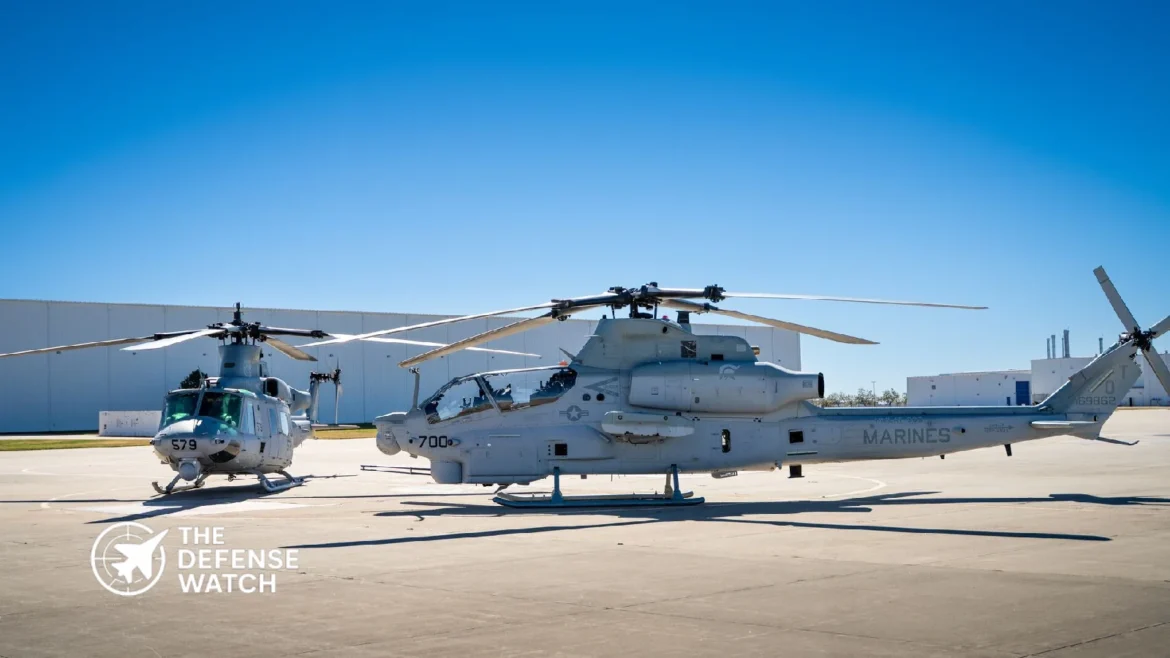
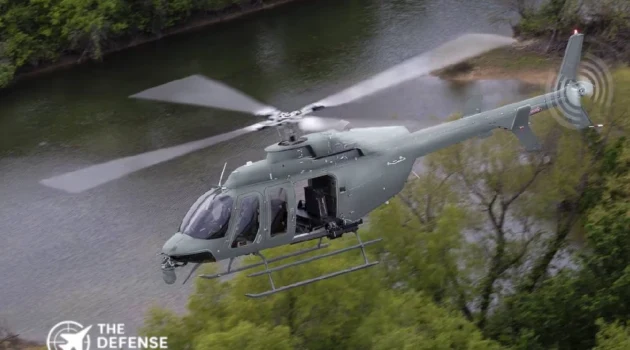
The U.S. State Department has approved a possible $800 million helicopter sale to Iraq, covering Bell 412EPX and Bell 407M aircraft along with weapons, sensors, communications equipment, training and logistical support. Reuters reported that Bell Textron of Fort Worth, Texas, has been identified as the principal contractor.
The proposed $800 million U.S. helicopter package would give Iraq a combination of transport, reconnaissance, targeting and armed rotary-wing capabilities.
The proposed transaction is part of the U.S. Foreign Military Sales system and should be treated as an authorization for a possible sale, rather than a completed procurement contract. The final quantity, configuration, schedule and value can change as the case moves through the acquisition process.
The proposed package combines two different helicopter classes.
The Bell 412EPX is a twin-engine, medium utility helicopter designed around transport and multi-mission requirements. Bell lists seating for up to 14 passengers, a 5,000-pound cargo-hook capability and a maximum internal gross weight of 12,200 pounds. The aircraft also incorporates upgraded avionics and flight-control improvements intended to support operations in demanding environments.
The Bell 407M is a lighter military multi-role helicopter. Bell describes the platform as incorporating an integrated glass cockpit and weapons-management architecture, with missions including light attack and close air support. Bell lists a maximum cruise speed of 133 knots and a range of 337 nautical miles at its specified long-range cruise condition.
The proposed Iraqi fleet therefore appears designed around complementary missions rather than a single helicopter requirement. The 412EPX provides greater cabin and payload capacity, while the 407M offers a smaller platform suited to armed reconnaissance and tactical missions.
The publicly reported notification does not specify how many aircraft Iraq would receive of either type.
The proposed sale is significant because the helicopters are not being considered simply as transport aircraft.
The package includes GAU-19 three-barrel machine-gun systems and M260 seven-tube rocket launchers for 2.75-inch rockets. These systems would provide the Iraqi aircraft with an armed capability for missions requiring direct fire or rocket engagement.
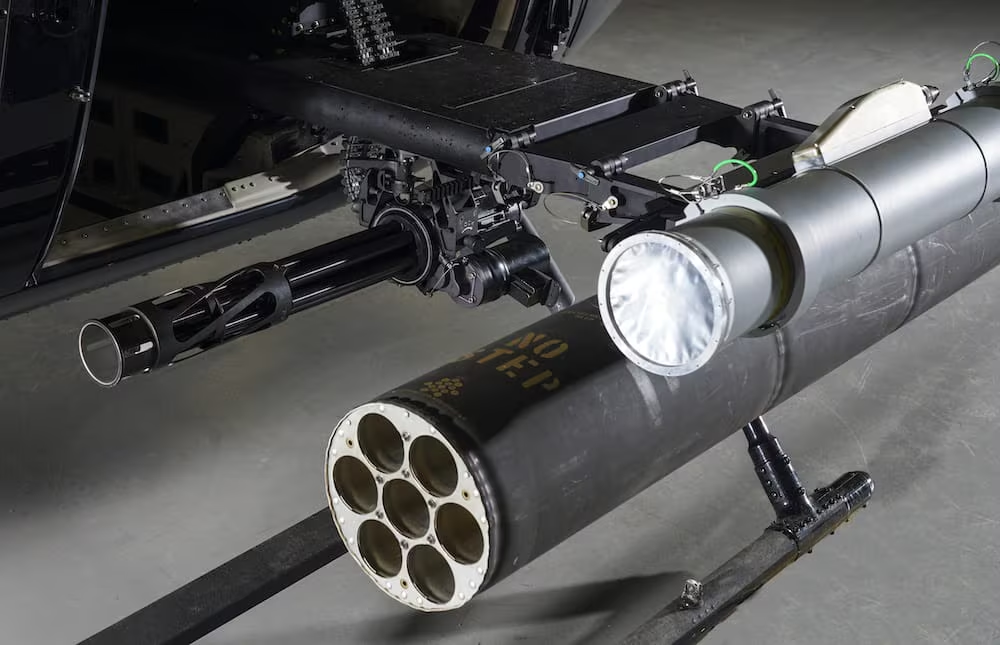
The proposed sensor suite includes the L3Harris WESCAM MX-15HDI electro-optical and infrared system. Such a sensor provides an aircraft with day and night observation and target-detection functions, allowing crews to identify and track ground activity before an engagement or during surveillance missions.
The inclusion of the MX-15HDI is particularly relevant to the air-to-surface targeting role identified by the State Department. A helicopter equipped with a stabilized electro-optical and infrared sensor can combine observation, identification and targeting functions without relying entirely on separate ground surveillance assets.
The package also includes AN/AAR-60 Block 2 missile launch detection systems, which are intended to provide warning of missile threats to the aircraft. This is an important distinction from a basic utility helicopter configuration because it addresses survivability in environments where aircraft may face man-portable or other missile threats.
The proposed sale extends beyond aircraft and weapons.
Iraq has requested very high frequency radios, spare parts, ground-support equipment, technical publications and data. The package also includes new-equipment training for pilots and maintenance personnel, together with U.S. government and contractor engineering, technical and logistics support.
That support structure matters because introducing a new military helicopter fleet requires more than delivering airframes.
Iraq would need trained aircrews, maintainers, spare-parts inventories, ground equipment, technical documentation and procedures for operating the aircraft alongside its existing rotary-wing fleet. The sustainment portion of the proposed package is therefore central to whether the aircraft can generate useful operational availability over time.
For Iraq, this could also reduce the risk of acquiring aircraft without the supporting infrastructure needed to keep them flying at meaningful rates.
The proposed combination gives Iraq two different rotary-wing capabilities within the same broader acquisition.
The Bell 412EPX is suited to missions where cabin space, payload and endurance are more important. Its utility configuration can support personnel movement, equipment transport and other missions requiring a larger cabin.
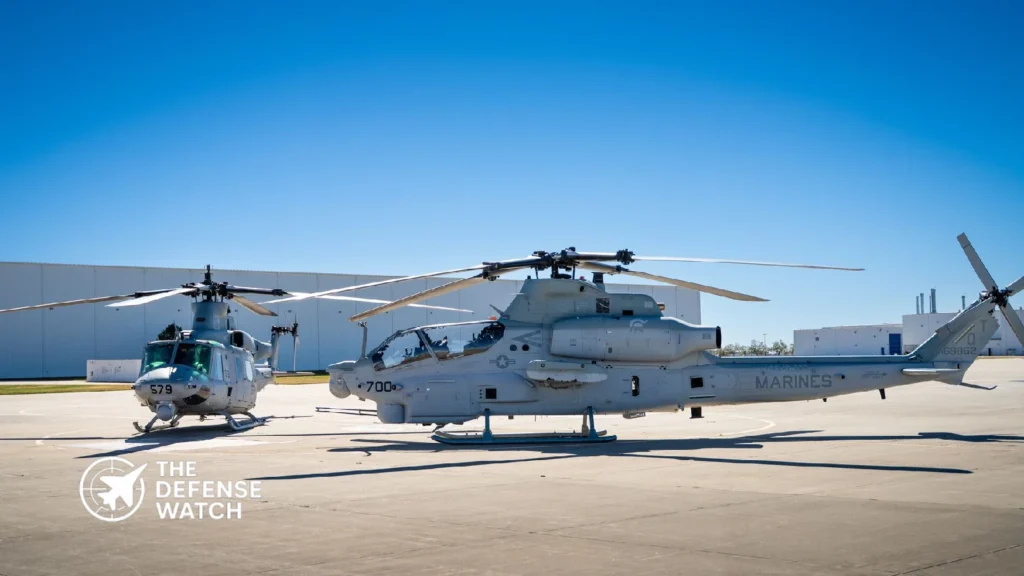
The Bell 407M moves in the opposite direction. It is smaller and lighter, with a configuration centered on tactical operations and integrated weapons employment. Bell specifically positions the aircraft for light attack and close air support missions.
That division could allow Iraq to assign aircraft according to mission requirements rather than using a single helicopter type for every task.
The combination also illustrates an important feature of modern rotary-wing operations: mission effectiveness depends increasingly on the integration of sensors, communications, weapons and survivability systems rather than on the airframe alone.
The State Department said the proposed sale would strengthen Iraq’s ability to address current and future threats, with particular emphasis on rotary-wing transportation, reconnaissance and air-to-surface targeting. Washington also described Iraq as a strategic partner whose security capabilities support U.S. foreign-policy and national-security interests.
For Iraq, the potential benefit is a broader set of options for missions that fall between conventional ground operations and high-end fixed-wing airpower.
Helicopters can move personnel and equipment without requiring conventional runways, provide persistent observation over localized areas and support ground forces with relatively short response times. Armed reconnaissance aircraft can also combine surveillance and engagement capabilities when the mission requires both.
The value of the proposed fleet will therefore depend not only on aircraft numbers, but also on availability, training, maintenance capacity, sensor integration and the ability of Iraqi forces to coordinate rotary-wing assets with ground units.
The $800 million figure should not be interpreted as the price of the helicopters alone.
Foreign Military Sale notifications commonly combine aircraft with weapons, sensors, spare parts, training, technical assistance, support equipment and other services. The estimated value represents the potential scope of the case rather than a guaranteed final contract value.
The proposed Iraqi package follows that broader model. In addition to the aircraft, it includes weapons, mission systems, communications equipment, training and long-term technical and logistics support.
That distinction is important when comparing the announcement with eventual procurement figures. The final agreement can contain fewer items or a different configuration, and its value can differ from the initial estimate.
The State Department authorization is an important step, but it does not by itself complete the transaction.
The Foreign Military Sales process requires congressional notification and review. If the case proceeds, the U.S. and Iraqi governments would then work through the details of the eventual agreement, including aircraft configuration, quantities, equipment, delivery schedules and support arrangements.
The next significant indicators will therefore be whether the case advances through the FMS process and whether a final agreement identifies the number of Bell 412EPX and Bell 407M helicopters Iraq intends to acquire.
Until those details are finalized, the most accurate description is a possible $800 million U.S. Foreign Military Sale to Iraq, not an $800 million completed helicopter contract.
For the U.S. defense industry, Bell Textron’s designation as principal contractor places the company at the center of a potential program covering aircraft, mission integration and associated support.
Bell has continued to expand the international military market for the 412EPX. In June 2025, the company announced an agreement for 12 412EPX aircraft for the Tunisian Air Force, describing the aircraft as a multi-role military and security platform.
The 407M similarly gives Bell a product positioned between conventional utility helicopters and larger dedicated attack platforms. Its integrated weapons and cockpit architecture allows customers to configure the aircraft for tactical missions without acquiring a much heavier attack helicopter.
If the Iraqi case moves forward, it would add another Middle Eastern military customer to Bell’s growing international rotorcraft portfolio.
The proposed $800 million U.S. helicopter sale to Iraq is broader than a conventional aircraft purchase. It combines Bell 412EPX utility helicopters, Bell 407M military helicopters, weapons, targeting sensors, missile warning equipment, communications systems, training and sustainment.
Its strategic significance lies in the combination of transport and armed reconnaissance capabilities. The proposed fleet would give Iraq additional options for moving forces, conducting surveillance and supporting ground operations from the air.
For now, however, the transaction remains a possible Foreign Military Sale. The final aircraft quantities, configuration, delivery schedule and contract value have yet to be established publicly.
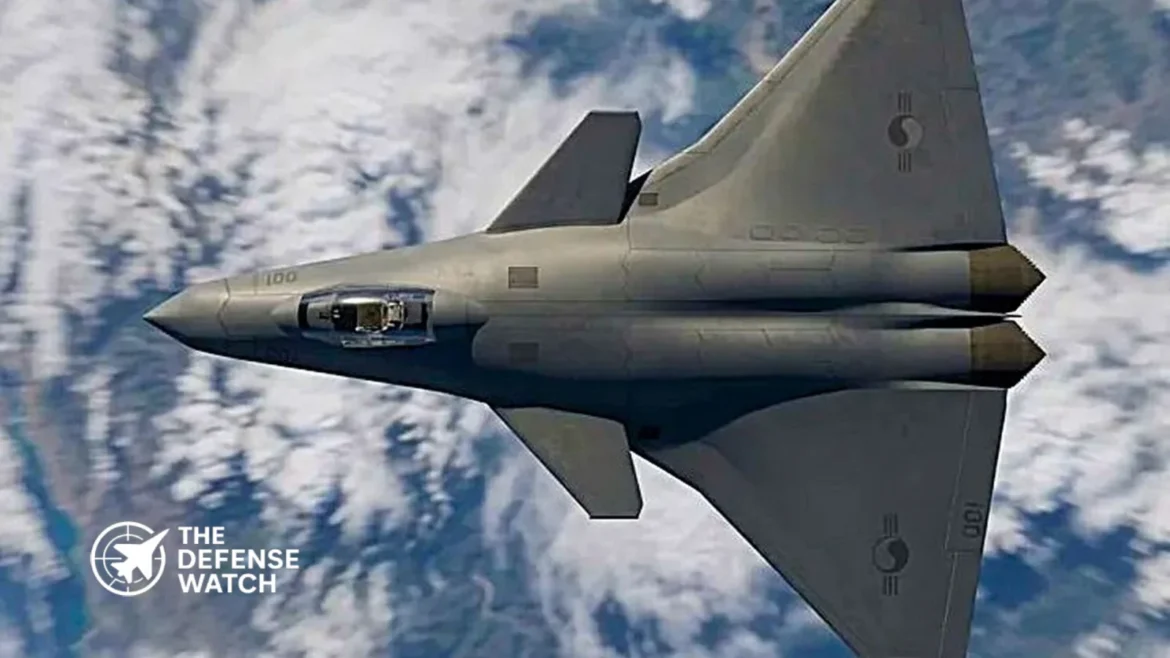
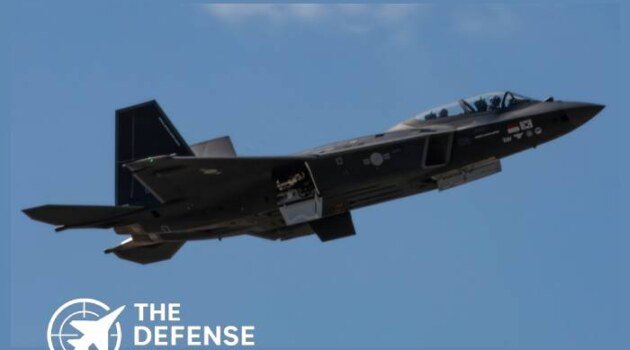
South Korea’s sixth generation fighter effort has entered a formal concept phase after the Defense Acquisition Program Administration, or DAPA, issued a request for proposals on August 21 for a Korean Next Generation Fighter Concept Study. The 14-month effort is intended to define future operational requirements, examine aircraft configurations and establish a technology roadmap for a possible next generation combat aircraft.
South Korea has started a formal concept study for a future fighter beyond the KF-21, but no sixth generation aircraft acquisition program has yet been approved.
The initiative comes only weeks after South Korea formally completed development of the KF-21 Boramae. DAPA said the KF-21 passed its final combat suitability assessment in May after more than 1,600 flight tests, while the first production aircraft are scheduled for delivery to the Republic of Korea Air Force during the second half of 2026.
The new study should not be confused with an approved aircraft acquisition program. At this stage, Seoul is defining what a future fighter would need to accomplish and which technologies would be necessary to support those requirements.
The reported study has a budget of KRW 900 million, approximately $650,000, and is scheduled to run for 14 months. Its purpose is to develop operational concepts, examine competing aircraft configurations and establish technology development priorities before any potential full-scale fighter program.
Available reporting indicates that the study is considering both conventional and tailless aircraft configurations.
Reported areas of investigation include:
| Area | Reported Direction |
|---|---|
| Aircraft configuration | Conventional and tailless designs |
| Crew | Single-seat configuration under study |
| Low observability | Broadband stealth |
| Radar bands | L, S and X bands |
| Weapons | Internal weapons carriage |
| Propulsion | Twin adaptive-cycle engines under study |
| Flight performance | Supersonic cruise capability |
| Combat architecture | Manned-unmanned teaming |
| Mission systems | AI-enabled capabilities |
These characteristics remain study requirements and concepts, not confirmed specifications for an operational South Korean fighter.
That distinction is important. The current effort is intended to provide technical and operational evidence that could later support formal requirements, preliminary studies and a possible acquisition decision.
The timing of the study is significant because South Korea has just demonstrated that it can complete a domestically led fighter development program.
The KF-21 began system development in 2015. In May 2026, DAPA announced that the aircraft had received a combat suitability determination after completing more than 1,600 flight tests and validating more than 13,000 test conditions.
The aircraft subsequently received its initial type certification after South Korean authorities determined that it met all 745 applicable airworthiness requirements across 14 areas.
Those achievements matter beyond the KF-21 itself. Developing a modern combat aircraft requires expertise in aerodynamic design, flight controls, avionics, radar integration, weapons integration, structural testing, certification and large-scale industrial production.
South Korea now has experience in each of those areas that it did not possess at the same level before the KF-21 program.
The next challenge is significantly more demanding.
One of the most technically important elements reported in the new study is the examination of tailless configurations.
Conventional fighters use vertical and horizontal tail surfaces to provide aerodynamic stability and control. Removing those surfaces can reduce radar reflections and potentially improve low observability, but it also creates difficult flight-control problems.
A tailless fighter must maintain adequate control authority through alternative aerodynamic surfaces, thrust management and sophisticated flight-control software.
The challenge becomes greater as the aircraft is optimized for multiple radar-frequency bands. Low observability is not simply a matter of shaping the aircraft. Designers must account for the interaction among the airframe, materials, apertures, sensors, weapons carriage, propulsion system and antennas.
South Korea’s decision to study these issues at the concept stage indicates that the country is evaluating a clean-sheet architecture rather than simply adding individual stealth features to the KF-21.
Aircraft propulsion represents one of the largest remaining gaps between South Korea’s current fighter capability and a fully sovereign future combat-air system.
The KF-21 uses foreign propulsion, while Seoul has started work on indigenous aviation engines for future aircraft.
In July, DAPA and the Agency for Defense Development publicly displayed a 5,500-pound-class turbofan prototype intended for possible use on collaborative unmanned combat aircraft. DAPA also said South Korea plans to develop an indigenous engine for a future crewed fighter, with the effort extending to 2041.
A separate advanced aviation-engine program approved by South Korea calls for development of a 16,000-pound-force-class turbofan, rising to approximately 24,000 pounds-force with afterburning. The program is scheduled to run from 2027 through 2040 and has a reported total cost of about KRW 3.35 trillion.
These engine efforts are strategically important because propulsion affects almost every major aircraft characteristic, including acceleration, range, thermal management, electrical power generation and sustained high-speed performance.
For a future stealth aircraft using high-powered sensors and electronic warfare systems, thermal and electrical management can be almost as important as raw engine thrust.
Another major change under consideration is the relationship between the future crewed aircraft and uncrewed platforms.
South Korea is increasingly developing technology for manned-unmanned teaming, in which a crewed fighter operates alongside collaborative combat aircraft or other autonomous systems.
This approach changes the role of the fighter. Instead of treating the aircraft as an isolated weapons platform, the crewed aircraft becomes part of a wider network involving sensors, autonomous aircraft, communications and other combat systems.
That architecture could allow uncrewed aircraft to perform missions such as sensing, electronic warfare or weapons delivery while the crewed aircraft retains responsibility for higher-level decisions.
The technology is still developing, and the precise level of autonomy that South Korea would ultimately authorize remains a requirements question rather than an established capability.
Nevertheless, DAPA’s simultaneous investment in uncrewed aircraft engines and future crewed fighter technology suggests that Seoul is approaching future airpower as an interconnected system rather than as a single aircraft project.
The sixth generation study also runs alongside continued interest in more advanced KF-21 configurations.
Future KF-21 development has been associated with greater low observability, internal weapons carriage, improved sensors, mission computing and the ability to control collaborative aircraft. These capabilities could provide a technology bridge between the current aircraft and a clean-sheet future fighter.
That distinction could become important for South Korea’s force planning.
A clean-sheet sixth generation fighter would require decades of technology development and testing. Developing selected technologies through the KF-21 family could allow engineers to mature systems before integrating them into a new airframe.
South Korea is already pursuing additional KF-21 sensor capabilities. The Agency for Defense Development began a three-year effort in January to validate the aircraft’s AESA radar for air-to-ground and air-to-sea modes, with testing scheduled through December 2028.
This creates a potential technology progression from the current KF-21, through more advanced derivatives, toward a future aircraft architecture.
South Korea’s move has significance for the wider Indo-Pacific defense environment.
The Republic of Korea Air Force operates in a region where advanced fighters, long-range missiles, increasingly capable air defenses and uncrewed systems are reshaping the air domain. A future South Korean fighter would therefore need to address more than traditional fighter-versus-fighter combat.
Survivability against integrated air defenses, electronic warfare resistance, sensor networking, long-range weapons employment and coordination with autonomous aircraft are likely to be central design considerations.
For the United States, the development of a stronger South Korean combat-air industrial base could also have implications for alliance interoperability.
The United States and South Korea already operate closely integrated air forces, including U.S. F-35A and South Korean F-35A fleets. A future Korean aircraft designed around advanced networking and collaborative systems could eventually add another indigenous layer to the alliance’s air combat architecture.
At the same time, an indigenous fighter program does not automatically mean South Korea will become independent of foreign suppliers. Engines, weapons, electronic components and other critical technologies can remain internationally sourced even when an aircraft is domestically designed.
The more meaningful measure of sovereignty will therefore be how much of the aircraft’s design, software, propulsion, sensors and upgrade cycle South Korea can control.
South Korea’s study is beginning as other major powers pursue their own next generation combat-air programs.
The U.S. Air Force’s F-47 is being developed under the Next Generation Air Dominance effort. The United Kingdom, Japan and Italy are pursuing the Global Combat Air Programme, while China is developing advanced future combat-aircraft designs.
These programs do not share identical requirements.
The emerging sixth generation category is therefore unlikely to produce one standard aircraft configuration. Some countries may prioritize range and weapons capacity, while others may place greater emphasis on affordability, distributed operations, autonomous systems or operating from geographically constrained bases.
South Korea’s geography makes those trade-offs particularly important. A future aircraft must provide high survivability and advanced sensing while remaining compatible with the country’s force structure, industrial capacity and operating environment.
That could make the Korean program distinct from much larger aircraft being studied elsewhere.
The most important point is that South Korea has not yet committed to building a sixth generation fighter.
The 14-month study is intended to establish the operational concepts, performance requirements, configuration options and technology roadmaps that could support a future decision. The aircraft’s final design, propulsion system, development schedule, production quantity and acquisition budget remain unresolved.
For Seoul, however, the timing provides an opportunity to build on the KF-21 while its engineering workforce, suppliers, testing infrastructure and institutional knowledge remain active.
That may ultimately be the most important strategic feature of the new study.
South Korea’s fighter ambitions are moving from proving that it can build a modern combat aircraft toward determining whether it can sustain an indigenous combat-air ecosystem spanning aircraft design, stealth, sensors, propulsion, autonomy, weapons integration and continuous upgrades.
The current study is only an early step, but it provides the framework for answering that larger question.
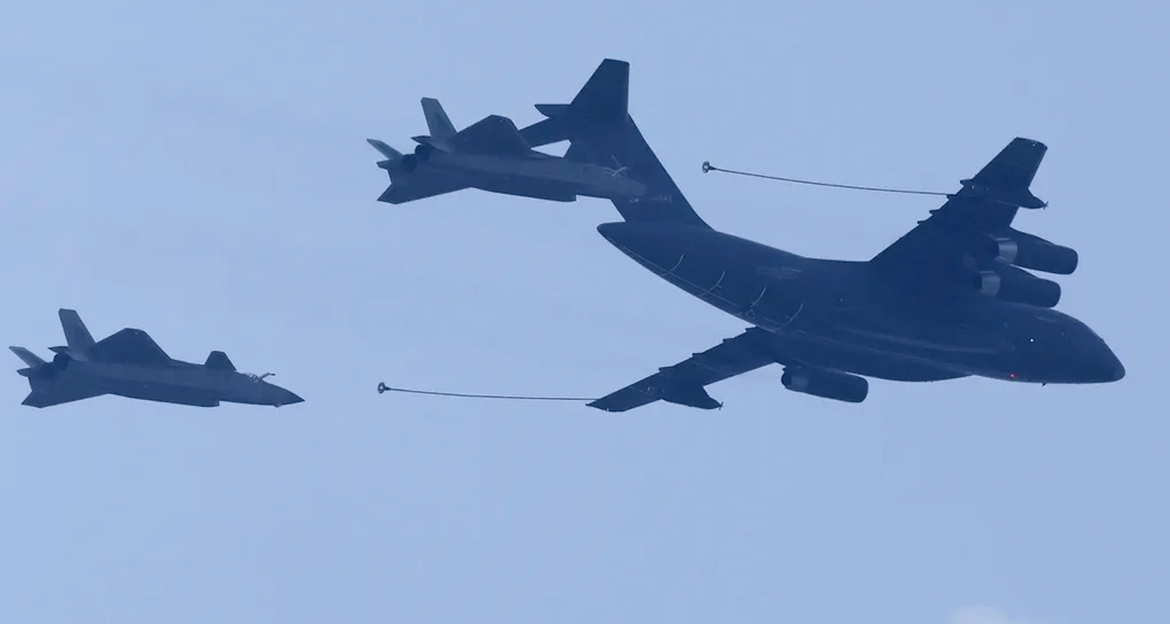
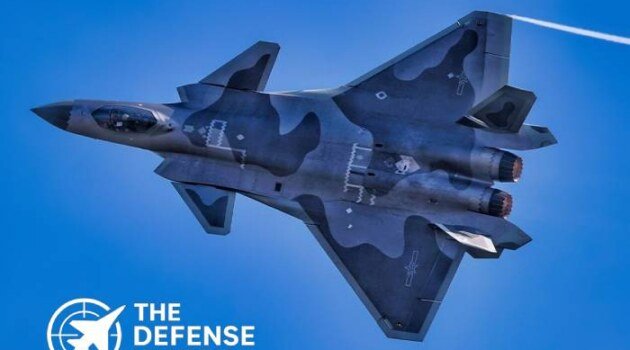
China’s sixth-generation fighter program has reached another visible flight-test milestone, with footage reportedly showing two next-generation prototypes conducting aerial refueling from a YY-20 tanker aircraft on August 28. Reported the footage on August 29, while subsequent reporting identified the aircraft as prototypes associated with China’s emerging sixth-generation combat aircraft effort.
New footage reportedly shows Chinese sixth-generation fighter prototypes conducting aerial refueling from a YY-20 tanker, providing a new indication of progress in long-range flight testing.
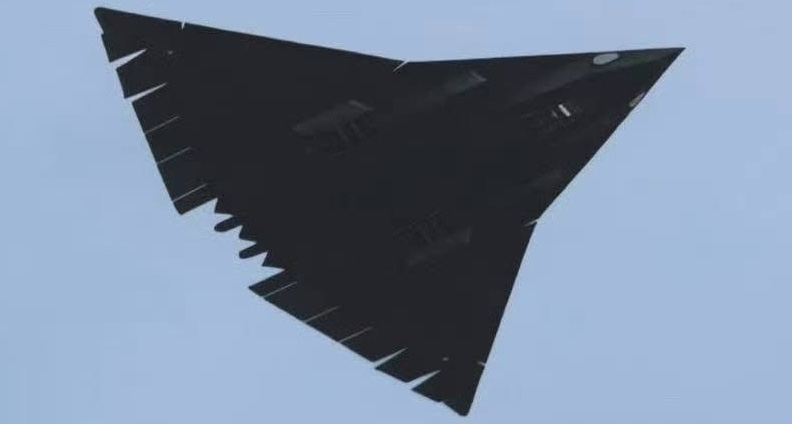
The aircraft shown remain officially unidentified. Open-source analysts have generally used the provisional J-36 designation for the large Chengdu prototype first observed in December 2024, while the separate Shenyang design is commonly referred to as the J-50. Those names should not be treated as confirmed People’s Liberation Army designations.
The latest footage is significant primarily because aerial refueling is an important step in integrating a new combat aircraft with the wider air force. It indicates that testing is moving beyond basic flight operations toward procedures required for longer-range missions and sustained operations.
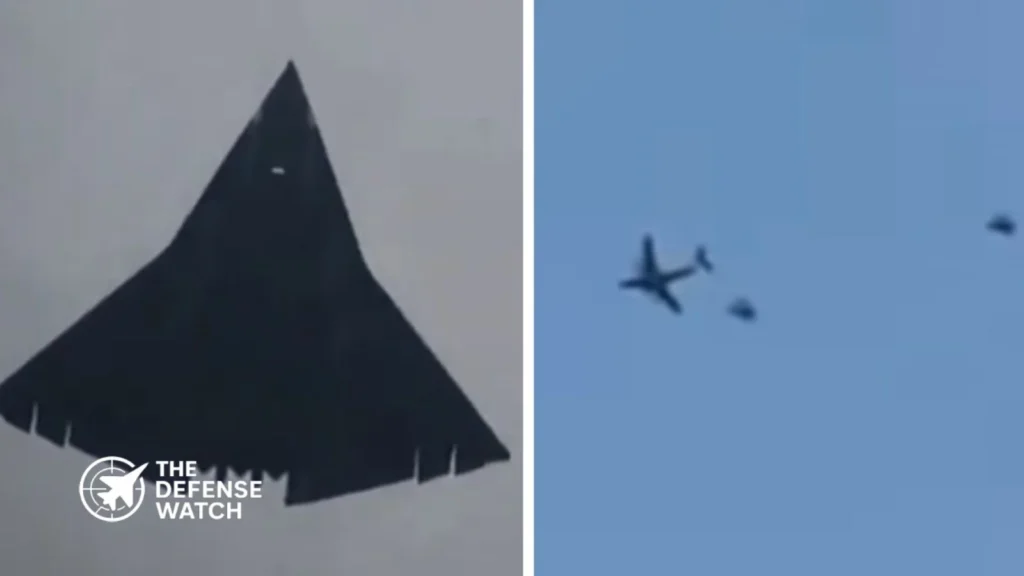
According to reporting on the August 28 footage, two Chinese next-generation fighter prototypes can be seen operating with a YY-20 tanker. The available imagery does not provide enough information to establish the exact aircraft variant, test location, mission profile or quantity of fuel transferred.
That distinction matters. The aircraft have been publicly observed since late 2024, but many of their most important characteristics remain undisclosed.
| Feature | Current Open-Source Assessment |
|---|---|
| Aircraft type | Chinese next-generation fighter prototypes |
| Common analyst designation | Chengdu J-36, Shenyang J-50 |
| Official designation | Not publicly confirmed |
| Configuration | Tailless designs have been observed |
| Refueling aircraft | YY-20 tanker |
| Latest reported event | Aerial refueling footage, August 28, 2026 |
| Development status | Flight testing |
| Operational entry | Not officially announced |
| Radar, weapons and combat radius | Not publicly confirmed |
The large Chengdu aircraft is notable for its tailless configuration and three-engine arrangement. Its size has led analysts to associate it with missions requiring substantial internal fuel, sensor capacity and weapons carriage, although the exact design objectives remain classified.
The Shenyang aircraft has a different configuration and is considerably smaller. Because both programs remain under development, it is premature to assume that either aircraft represents the final production configuration of a future Chinese sixth-generation fighter.

For a long-range combat aircraft, aerial refueling is more than a method of adding fuel. It is part of the operational system required to generate persistent combat power at extended distances.
A tanker can allow a fighter to depart its base with a different fuel and weapons balance, extend its time in a patrol area, or recover after conducting a long-range mission without consuming the fuel needed for contingencies.
For China, this capability has particular relevance in the Indo-Pacific, where distances between mainland bases, maritime operating areas and potential targets can be substantial.
The U.S. Department of Defense has previously assessed that China is developing its aerial refueling fleet to extend the operating range of fighter and bomber aircraft. The Pentagon’s 2024 China Military Power Report specifically identified the Y-20-based tanker as an important improvement to the PLA Air Force’s ability to conduct operations beyond the First Island Chain.
The emergence of the YY-20 therefore has to be considered alongside China’s longer-range fighter designs rather than as an independent capability.
China historically relied on a relatively limited tanker fleet compared with the United States. The introduction and expansion of Y-20-based tankers changes that equation by providing a larger domestic platform capable of supporting a broader range of aircraft.
The Y-20 family is based on China’s heavy transport aircraft, providing substantially greater capacity than older tanker conversions derived from the H-6 bomber.
Recent Chinese military imagery has already shown YY-20 tankers supporting J-20 stealth fighters. That provides an important precedent for integrating the tanker with China’s fifth-generation force before the appearance of the newer prototypes.
The reported sixth-generation refueling footage therefore fits into a broader development pattern. China is not simply testing a new fighter airframe. It is also developing the support aircraft, sensors, command-and-control architecture and aerial refueling infrastructure needed to operate advanced combat aircraft at greater distances.
Refueling a new aircraft in flight requires more than installing a compatible refueling system.
The aircraft must maintain precise relative position and speed with the tanker while pilots or automated flight-control systems manage the aircraft during the transfer. The process must work reliably under different weather, turbulence and lighting conditions.
For a stealth aircraft, the design challenge is also more complicated. Designers must incorporate refueling equipment without creating unnecessary radar-signature compromises.
The aircraft’s refueling system must therefore be integrated with the broader low-observable architecture rather than treated as an isolated component.
The latest footage does not reveal how China has solved those problems. It does, however, show that the program has reached a stage where tanker compatibility is being evaluated in flight.
The Chengdu prototype first became publicly visible in December 2024, alongside a separate aircraft associated with Shenyang. The emergence of two different designs indicated that China was exploring multiple approaches to its next-generation combat aircraft requirements.
The large Chengdu aircraft has attracted particular attention because of its unusual tailless configuration, very large airframe and three-engine layout.
Its physical dimensions suggest that designers have prioritized internal volume. That could support substantial fuel capacity, large sensors, weapons storage or other mission equipment, although no official specifications have been released.
The absence of published specifications is important when evaluating claims about performance. Public estimates of range, payload, radar capability and weapons integration remain uncertain and should not be presented as established specifications.
The development has direct relevance for the United States because the Pentagon considers China its primary pacing challenge and has focused increasing attention on long-range airpower in the Indo-Pacific.
The U.S. response includes the Next Generation Air Dominance program and the F-47, which the Department of the Air Force selected Boeing to develop under an Engineering and Manufacturing Development contract in March 2025. The Air Force describes the F-47 as its sixth-generation crewed fighter and says the program is intended to preserve air superiority against advanced threats.
The important comparison is therefore not simply whether China or the United States has a sixth-generation aircraft flying first.
A more meaningful measure is whether either country can transition a prototype into a reliable operational system with mature engines, sensors, weapons, communications, electronic warfare systems, maintenance processes, trained crews and sufficient production capacity.
China’s latest refueling footage is evidence of progress in one part of that process. It is not evidence that the aircraft has completed development or achieved operational capability.
The Indo-Pacific places unusual demands on tactical aviation because distances can quickly exceed the unrefueled operating limits of many fighter aircraft.
A force that can combine long-range fighters with tankers can distribute aircraft across a wider operating area and reduce dependence on individual forward bases.
For China, this could support operations farther from the mainland while allowing aircraft to remain within a broader network of Chinese air-defense, surveillance and command systems.
For the United States and its allies, the same development reinforces the importance of tanker survivability, distributed basing, long-range weapons and persistent intelligence, surveillance and reconnaissance.
Aerial tankers are high-value support assets. Their loss or forced withdrawal can reduce the effectiveness of fighters that depend on them for extended-range missions.
That creates an operational problem for both sides. China must protect its tanker fleet while using it close enough to support combat aircraft. The United States and its allies must account for increasingly capable Chinese aircraft and weapons that could threaten tankers operating inside contested airspace.
Despite the significance of the footage, there is still no public Chinese announcement confirming when a sixth-generation fighter will enter operational service.
Flight testing can continue for years after an aircraft demonstrates basic aerial refueling. Engine maturity, mission systems, weapons integration, software, electronic warfare, low-observable durability and production readiness all have to be resolved before a prototype becomes an operational combat aircraft.
China’s ability to produce multiple prototypes relatively quickly is nevertheless an important factor to watch.
The United States has also emphasized accelerated development for the F-47. The Air Force said its NGAD contract covers maturation, integration and testing of the complete system, with a small number of test aircraft to be produced before low-rate initial production.
This makes the coming years important for both programs.
The latest Chinese footage is best understood as a system-integration milestone rather than proof of a completed sixth-generation fighter.
The appearance of the aircraft alongside a YY-20 tanker shows that China is testing how its next-generation combat aircraft will interact with one of the supporting elements required for long-range operations.
That matters because future air combat will depend less on individual aircraft and more on connected systems involving fighters, unmanned aircraft, tankers, airborne early-warning platforms, satellites, electronic warfare assets and long-range weapons.
China’s sixth-generation fighter program remains opaque, but its progression from initial public flight observations to aerial refueling testing provides another measurable indication of development.
For U.S. and allied planners, the immediate lesson is not that a new Chinese fighter has suddenly become operational. It is that China’s next-generation airpower effort is progressing across multiple elements of the force, including the tanker infrastructure needed to extend the reach of advanced combat aircraft.
The central question now is whether Beijing can convert that rapid prototype activity into a dependable, scalable and combat-ready system.
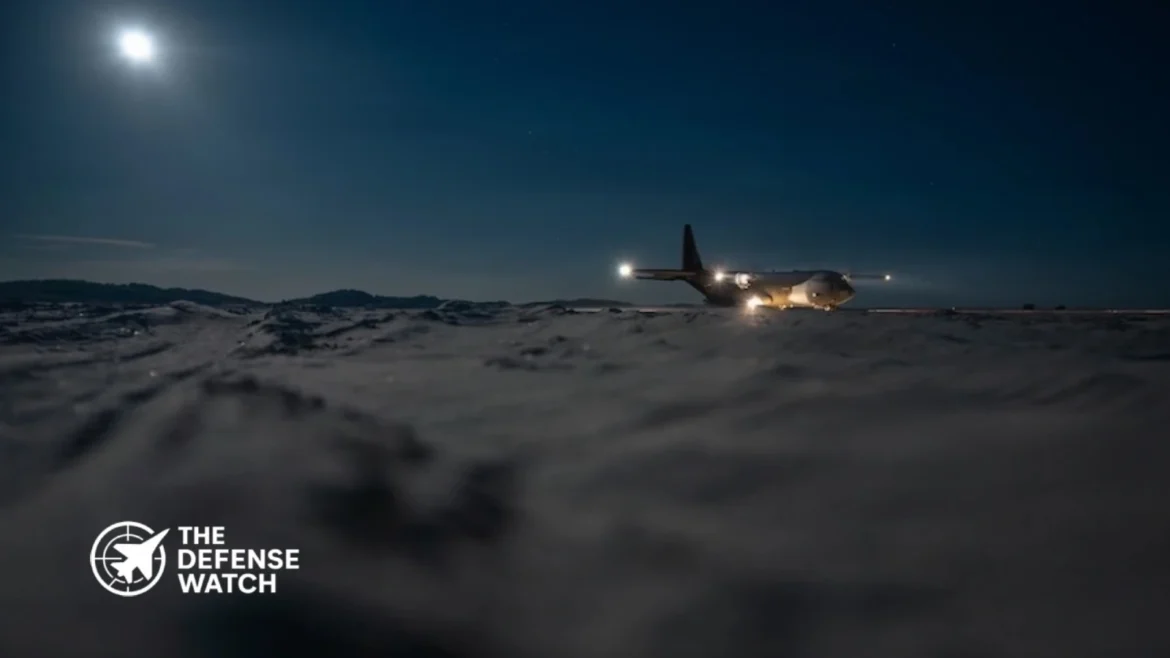
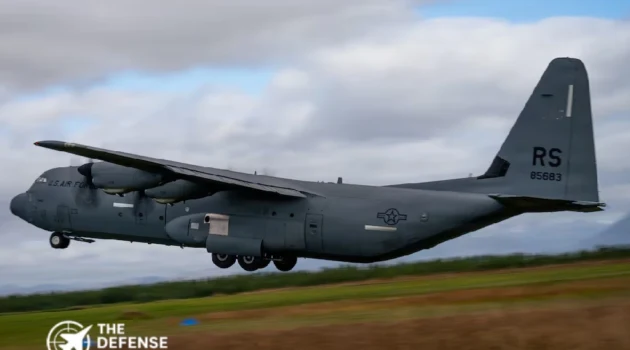
The U.S. Air Force is testing the C-130J Super Hercules at unconventional landing sites in Iceland, including grass fields and beaches, during Exercise Northern Viking 26. The 37th Airlift Squadron, based at Ramstein Air Base in Germany, arrived in Iceland on Aug. 21 and is using the exercise to test airlift operations in the High North’s austere environment.
The U.S. Air Force is using Northern Viking 26 to test C-130J Super Hercules operations from austere landing zones in Iceland, reducing reliance on conventional runways.
The U.S. Air Force said the C-130J crews practiced landing at locations that differed from conventional airports. Capt. Jill Ruane, a C-130J pilot, said the squadron landed on both a beach and a grass field during the exercise.
The training is significant because it tests more than the aircraft itself. It combines the C-130J’s short-field capabilities with the ability of contingency response personnel to identify, survey and prepare temporary landing zones.
Northern Viking 26 is a biennial exercise hosted by Iceland and led by U.S. Naval Forces Europe and U.S. Sixth Fleet. The 2026 iteration brings together the United States, Iceland and NATO allies including Belgium, Canada, Denmark, Finland, France, Germany, Lithuania, Norway and Poland.
The exercise runs from Aug. 22 to Sept. 3 and is designed to improve interoperability, readiness and command and control across the air, maritime and land domains. U.S. officials have specifically linked the exercise to the defense of Iceland and sea lines of communication through the Greenland-Iceland-United Kingdom, or GIUK, gap.
Iceland’s location gives it an important position between North America and Europe. For U.S. and NATO forces, the ability to move personnel and supplies through the country is therefore closely connected to broader North Atlantic mobility.
The exercise also marks 75 years of the U.S.-Iceland defense relationship established by the 1951 Bilateral Defense Agreement.
The C-130J is designed as a tactical airlifter rather than simply a point-to-point cargo aircraft. Its four turboprop engines, high-wing configuration and landing gear arrangement support operations from relatively short and austere airfields.
Lockheed Martin lists a maximum allowable payload of about 44,000 pounds for the C-130J-30 and a maximum normal-payload range of approximately 2,417 miles. The company also lists capacity for combinations of pallets, litters, combat troops and paratroopers.
| C-130J-30 characteristic | Published figure |
|---|---|
| Maximum allowable payload | 44,000 lb |
| Maximum normal-payload range | 2,417 miles |
| Speed | 410 mph at 22,000 ft |
| Maximum listed load | 8 pallets, or up to 128 combat troops |
| Engines | Four AE2100D3 turboprops |
These figures describe the aircraft’s published capabilities under specified conditions. Actual operations from an unimproved surface depend on factors including aircraft weight, surface condition, weather, runway dimensions and other operational restrictions.
That distinction matters in Iceland. A published aircraft capability does not automatically mean that any beach or grass field can be used as a runway. The landing zone must first be evaluated and prepared for the specific aircraft and mission.
The exercise therefore places considerable emphasis on personnel operating on the ground.
U.S. Air Force personnel from the 435th Contingency Response Group surveyed and marked the grass landing zone used by the C-130J in Iceland. The Air Force’s official imagery shows the aircraft approaching the prepared strip on Aug. 23.
This is an important part of expeditionary air mobility. A transport aircraft cannot simply arrive at an unknown field and assume that it is suitable for landing.
Personnel must assess the surface and operating area, establish markings and coordinate aircraft movements. These activities connect airlift operations with the broader concept of distributed and expeditionary operations.
The training also provides an opportunity to practice the coordination required to establish temporary access points without relying exclusively on permanent aviation infrastructure.
The operational value of this capability becomes clearer when considered from a resilience perspective.
Permanent military and civilian airfields provide significant advantages, including established runways, fuel systems, maintenance infrastructure, communications and air traffic services. They are also predictable locations that can become critical nodes for military mobility.
A C-130J that can use suitable austere landing zones gives commanders additional options for moving personnel and supplies. The U.S. Air Force explicitly described the training as a way to expand operational access and reduce dependence on permanent runways.
That does not mean conventional airfields become unnecessary. Instead, austere operations provide another layer of access that can complement established bases.
For North Atlantic operations, this can matter when forces need to support dispersed locations or reach personnel operating away from major bases.
The training also has applications beyond routine logistics.
According to the U.S. Air Force, the ability to operate independently of established infrastructure is relevant to both combat and personnel recovery missions. The same C-130J operating flexibility can support the movement of personnel, equipment and supplies to locations where conventional airport infrastructure is limited.
The exercise also involves specialized airlift and recovery capabilities. Separately, the 352nd Special Operations Wing is using an MC-130J Commando II during Northern Viking 26 to train long-range resupply missions in contested environments. The unit said it plans to demonstrate delivery of supplies to personnel operating beyond friendly supply lines.
This broader activity shows that Northern Viking 26 is not simply an aircraft exercise. It is testing different methods for sustaining forces across difficult terrain and large distances.
Iceland provides a particularly relevant environment for this type of training.
The country combines mountainous terrain, exposed coastal areas and rapidly changing weather conditions. U.S. Air Force personnel involved in Northern Viking 26 have highlighted the challenges posed by Icelandic weather, while the exercise is intended to improve readiness in the High North.
The Air Force has also deployed other aircraft to Iceland during the exercise. A U.S. MQ-9 Reaper from the Texas Air National Guard’s 147th Attack Wing arrived at Keflavík, while Belgian F-16s conducted formation operations with the C-130J over Icelandic terrain.
The combination of airlift, surveillance and fighter activity provides a broader test of Allied operations in the region.
The austere-airfield training is not confined to Iceland.
On Aug. 25, a 37th Airlift Squadron C-130J landed on a sand landing zone at Rømø in Denmark during Northern Viking 26. U.S. Air Force officials said the use of austere landing zones gives Allied forces additional access points for moving personnel, equipment and supplies across the region.
This demonstrates the wider objective of the training. The goal is not simply to prove that a C-130J can land on grass or sand, but to train aircrews and ground teams to operate as a coordinated system across nontraditional locations.
That distinction is important for expeditionary air mobility. Aircraft performance, landing-zone preparation, aircrew procedures and command coordination all have to work together.
The Iceland training highlights a broader shift in how air mobility forces prepare for operations in geographically demanding theaters.
For decades, the C-130 family has provided the U.S. military with an ability to move personnel and cargo into locations that are inaccessible to larger strategic transports. The C-130J builds on that role with modern avionics, propulsion and improved performance.
Lockheed Martin describes the C-130J as capable of operating from austere strips, with the aircraft’s design supporting tactical airlift missions where runway infrastructure is limited.
Northern Viking 26 puts that capability into a specific operational setting. Rather than testing the aircraft only at a prepared military airfield, U.S. forces are combining the aircraft with expeditionary ground teams and Allied forces across Iceland and Denmark.
The result is a more realistic assessment of how tactical airlift can contribute to distributed operations in the North Atlantic.
The C-130J activity in Iceland is therefore best understood as a test of the complete air mobility chain.
The aircraft provides the lift. Contingency response personnel prepare and manage the landing zone. Aircrews execute operations from surfaces that differ substantially from conventional runways. Allied forces provide the wider operational framework.
For the United States and NATO, that combination can provide greater flexibility when operating across the High North.
Northern Viking 26 continues through Sept. 3, with participating forces conducting activities across Iceland and the surrounding region. The exercise is part of the broader effort by the United States and its NATO allies to strengthen readiness, interoperability and access around the North Atlantic and Arctic approaches.
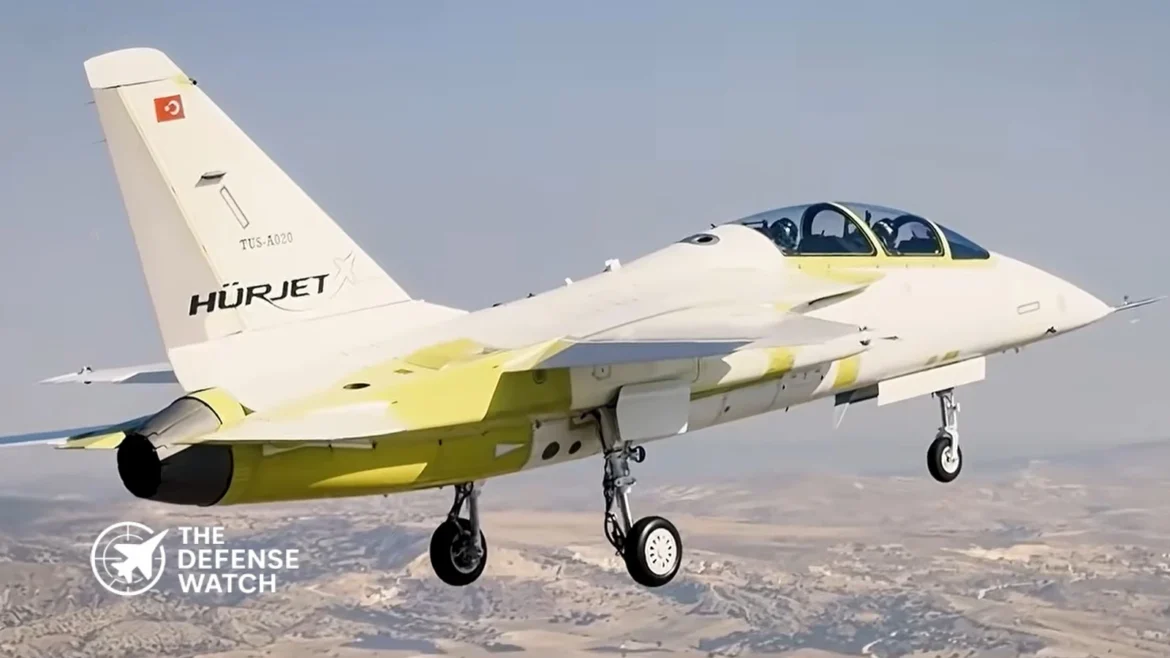
The first production-configured HÜRJET Turkish Air Force aircraft completed its maiden flight on August 30, marking a significant transition for Turkish Aerospace’s advanced jet trainer program from prototype development toward aircraft intended for military service. The aircraft flew for 18 minutes after completing final assembly, ground checks and taxi testing, according to reporting on the milestone and statements from Türkiye’s Presidency of Defense Industries.
atOptions = { ‘key’ : ‘e7d18db8b7513fb2a224cf4c3f18bbf0’, ‘format’ : ‘iframe’, ‘height’ : 90, ‘width’ : 728, ‘params’ : {} };The first production HÜRJET destined for the Turkish Air Force has flown for the first time, marking the transition from prototype development toward testing aircraft built for operational service.
The flight was deliberately timed to coincide with Türkiye’s Victory Day. The production aircraft was accompanied by HÜRJET’s first development prototype during the sortie, providing a visible demonstration of the program’s progression from test aircraft to production-standard platforms.
The event is important because this was not HÜRJET’s original maiden flight. The first prototype flew on April 25, 2023, while a second prototype subsequently joined the flight-test campaign. Turkish Aerospace says the two development aircraft have now completed more than 500 test flights.
The latest flight represents a different phase of the program. Development prototypes are primarily used to expand the aircraft’s flight envelope, validate systems and support certification work, while the new aircraft is being prepared for eventual delivery to the Turkish Air Force.
That distinction matters for a military aircraft program. Once customer-configured production aircraft begin flying, testing can increasingly focus on the configuration that the operator will actually receive, including production processes, maintainability and acceptance requirements.
The HÜRJET program was initiated in 2017 under the coordination of Türkiye’s Presidency of Defense Industries to address the Turkish Air Force’s advanced jet-training requirement. Turkish Aerospace describes the aircraft as a replacement for the service’s T-38 fleet and the F-5 aircraft used for aerobatic duties.
The aircraft is intended to bridge the gap between basic jet training and frontline fighter conversion. That role becomes particularly important as air forces transition pilots toward increasingly complex combat aircraft with digital cockpits, advanced sensors and high-performance flight characteristics.
HÜRJET is a single-engine, tandem-seat aircraft with a modern avionics suite and a design optimized for advanced jet training. Turkish Aerospace also describes it as capable of light combat missions, giving the platform utility beyond the training role.
| Specification | HÜRJET |
|---|---|
| Length | 13.6 m |
| Wingspan | 9.5 m |
| Height | 4.1 m |
| Wing area | 25 m² |
| Maximum speed | Mach 1.4 |
| Service ceiling | 45,000 ft |
| Range | 1,060 nm |
| Payload capacity | 7,500 lb |
| Engine | GE F404-GE-104 |
| Engine thrust | 17,700 lb |
| G limits | +8g / -3g |
The aircraft’s stated Mach 1.4 maximum speed places it firmly in the supersonic trainer category. Turkish Aerospace also reports that the first development aircraft exceeded 45,000 feet and passed the sound barrier during testing.
The use of a GE Aerospace F404 family engine also gives HÜRJET a proven propulsion architecture, although the overall aircraft’s military value depends on the integration of its flight-control system, avionics, cockpit, training systems and other mission equipment.
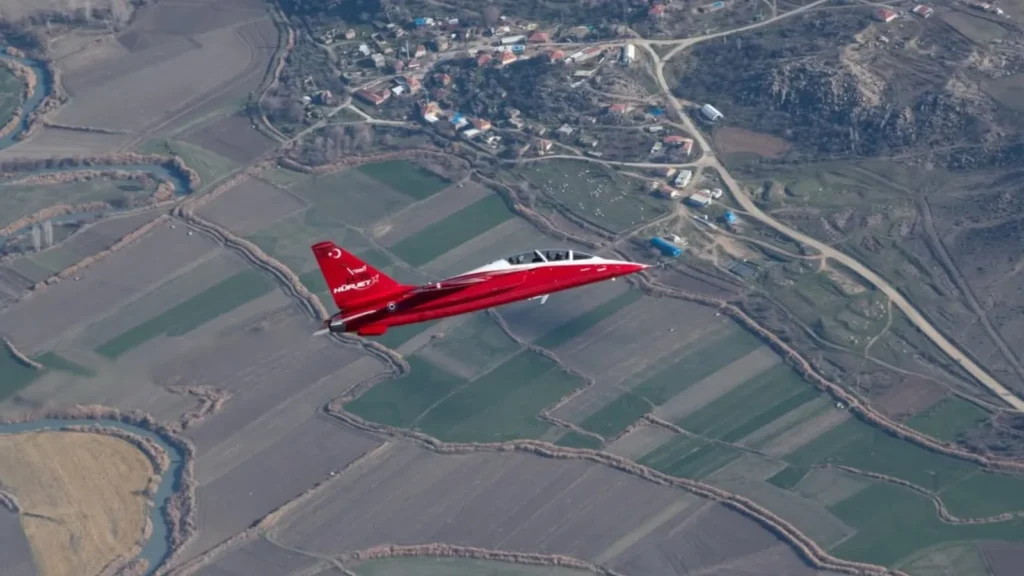
For the Turkish Air Force, HÜRJET is more than a replacement for an aging trainer. It provides a domestically developed platform that can support the progression of pilots toward modern fighter aircraft.
This has particular relevance as Türkiye expands its indigenous combat-aircraft portfolio. A domestic advanced trainer provides greater control over training-system development, aircraft configuration and long-term support than relying entirely on imported platforms.
The production flight also demonstrates that the program is moving beyond the limited number of development aircraft. Turkish Aerospace’s official HÜRJET data says series production is continuing, with deliveries to the Air Force scheduled for 2026.
However, official planning documents have previously provided a more detailed production schedule. Türkiye’s 2024-2028 defense industry strategy document identified deliveries of four Block 0 aircraft in 2027 and 12 Block 1 aircraft during 2028 and 2029 under the then-existing contract.
The different dates illustrate why a maiden flight should not automatically be treated as an operational entry date. The aircraft must still progress through additional flight testing, qualification, acceptance and delivery activities before becoming an established training asset.
The aircraft’s most important contribution may ultimately be in pilot preparation.
Modern fighter pilots require training that extends well beyond basic aircraft handling. Advanced trainers must provide an environment in which pilots can develop skills associated with high-performance flight, tactical maneuvering, instrument procedures and transition toward frontline fighter systems.
HÜRJET’s performance allows it to provide a more demanding training environment than conventional subsonic trainers. Its tandem cockpit also preserves the instructor-student arrangement commonly used during advanced flight instruction.
For Türkiye, that capability can support the broader modernization of its combat aviation force. The country operates F-16 fighters and is developing the KAAN fighter, making an indigenous advanced training aircraft strategically relevant to the long-term pilot pipeline.
The value is therefore not simply measured by how many HÜRJET aircraft enter service. It also depends on how effectively the aircraft, simulators, instructors, maintenance infrastructure and training syllabus operate as one system.
HÜRJET has also moved into a significant export phase.
Spain selected HÜRJET as part of its new Integrated Combat Training System, known as ITS-C, which is led by Airbus with Turkish Aerospace as the aircraft manufacturer. The program covers 30 HÜRJET aircraft intended to replace Spain’s remaining F-5 advanced trainers.
Turkish Aerospace puts the value of the Spanish procurement at €2.6 billion and says deliveries are planned to begin in the fourth quarter of 2028 and continue through 2036.
The Spanish program is strategically important because it places HÜRJET within a NATO member’s military training architecture. It also introduces Airbus and Spanish industry into the wider program, including aircraft customization, training infrastructure and sustainment.
That gives HÜRJET a potential path into a broader European training market, although future opportunities will depend on cost, certification, industrial arrangements, availability and the aircraft’s performance against competing trainer platforms.
The Turkish Air Force aircraft’s maiden flight comes at a point when HÜRJET is no longer solely a domestic development effort.
Türkiye now has to demonstrate that the aircraft can move from prototype production to repeatable manufacturing while maintaining quality, configuration control and supportability. That is a more demanding industrial challenge than producing a small number of prototypes.
The Spanish order increases that pressure because the program must eventually support different customer requirements while retaining a common aircraft architecture.
For Turkish Aerospace, successful production and delivery of the domestic aircraft will therefore be as important as the original flight-test achievements. A reliable production system is essential if HÜRJET is to develop into a sustainable export product.
The August 30 sortie begins another important stage of the program rather than completing it.
The first Turkish Air Force production aircraft will need to continue flight testing and move through the remaining acceptance process before delivery. At the same time, Turkish Aerospace is expected to continue series production and development work on later aircraft.
The company has also been examining additional HÜRJET configurations. Turkish Aerospace CEO Mehmet Demiroğlu said in August that the company had begun work on a navalized HÜRJET concept and was pursuing additional NATO export opportunities.
For now, the central milestone is more straightforward: the first HÜRJET built for the Turkish Air Force has left the ground.
The 18 minute flight marks the point at which Türkiye’s indigenous supersonic trainer begins proving not only the aircraft design, but also the production configuration that will eventually support the country’s military pilot training system.
The first production HÜRJET’s maiden flight is a significant industrial and operational milestone for Türkiye. It confirms that the program has progressed beyond its two principal development prototypes and into flight testing of aircraft intended for actual Turkish Air Force service.
The larger test will be completing acceptance, sustaining production and translating the aircraft’s advanced training capabilities into a dependable pilot-training system. The Spanish export program adds another demanding benchmark, giving HÜRJET a chance to establish itself beyond Türkiye as a NATO-compatible advanced trainer.
For the Turkish Air Force, the immediate objective is clear: turn the production aircraft now flying into a reliable training asset for the next generation of fighter pilots.