(adsbygoogle = window.adsbygoogle || []).push({});Executive Summary:
Boeing has completed a major design milestone for a new external weapons carriage system intended for the U.S. Air Force’s B-1B Lancer bomber. The Load Adaptable Modular (LAM) pylon is designed to enable the aircraft to carry larger standoff weapons, including future hypersonic missiles, as the Air Force seeks to maintain long-range strike capacity during the transition to next-generation bomber fleets.
Boeing Advances B-1B Hypersonic Missile Integration Effort
Boeing has completed the preliminary design review for integrating its Load Adaptable Modular pylon onto the U.S. Air Force B-1B Lancer, marking an important step toward expanding the bomber’s ability to carry hypersonic weapons and future long-range standoff munitions.
- Boeing Advances B-1B Hypersonic Missile Integration Effort
- What Is The Load Adaptable Modular Pylon?
- Why The Upgrade Matters
- Potential Hypersonic Missile Applications
- Strategic Implications For The U.S. Bomber Force
- Indo-Pacific Relevance
- Technical And Operational Challenges Ahead
- A Bridge To The Future Bomber Fleet
The design review was conducted by Boeing’s bomber modernization team in Oklahoma City in coordination with Air Force Materiel Command and industry partners. According to Boeing, the upgrade is intended to increase mission flexibility by restoring and modernizing external carriage options that have remained largely unused for decades.
The development comes as the U.S. Air Force continues investing in legacy bomber modernization programs while fielding the next-generation B-21 Raider.
(adsbygoogle = window.adsbygoogle || []).push({});What Is The Load Adaptable Modular Pylon?
The Load Adaptable Modular, or LAM, pylon is an external weapons carriage system designed to mount beneath the B-1B using six existing hardpoints originally built for the AGM-86 Air-Launched Cruise Missile program.
Those external attachment points became inactive after the B-1’s nuclear mission was eliminated under Strategic Arms Reduction Treaty requirements. Boeing’s new approach repurposes that dormant infrastructure to support modern conventional strike missions.
According to company officials, the system was initially developed through Boeing-funded independent research and development efforts before transitioning into a more formal modernization program.
Key Characteristics Of The LAM System
Capability Details Mounting Points Six existing B-1B external hardpoints Primary Purpose External carriage of large weapons Target Payloads Hypersonic missiles, standoff weapons, cruise missiles Development Status Preliminary Design Review completed Next Phase Critical Design Review, aircraft modification and testing The approach allows the Air Force to add new weapon capacity without requiring a major structural redesign of the aircraft.
Why The Upgrade Matters
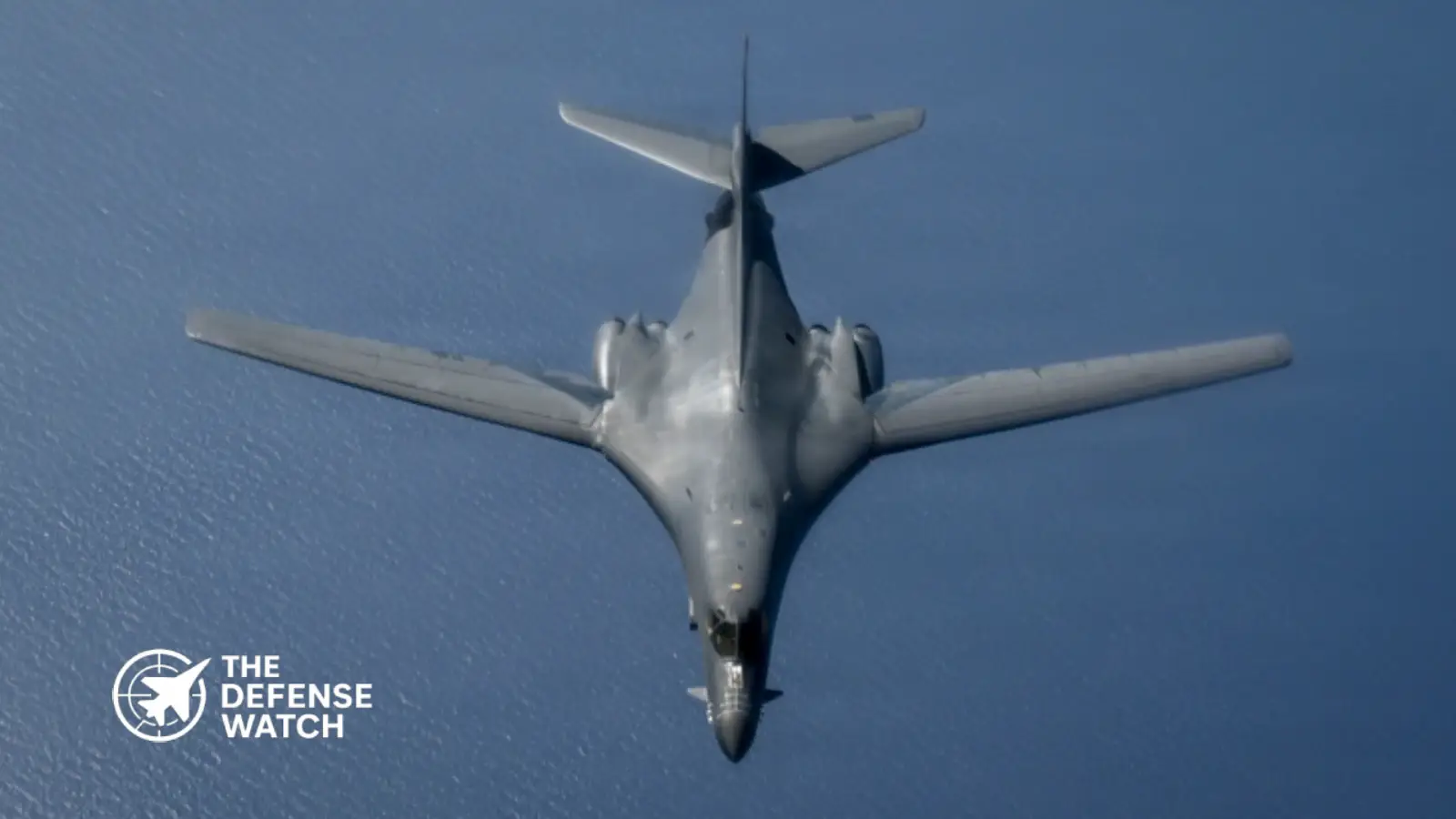
The B-1B remains one of the most capable conventional bombers in the U.S. inventory due to its combination of speed, range, and payload capacity.
(adsbygoogle = window.adsbygoogle || []).push({});While the aircraft’s internal weapons bays can already carry large quantities of precision-guided munitions, emerging hypersonic systems and next-generation standoff weapons are becoming larger and heavier. Some of these weapons cannot be carried efficiently within existing internal bays.
The LAM pylon directly addresses that limitation.
Operationally, the upgrade transforms the B-1B into a larger missile carrier capable of launching long-range weapons from outside heavily defended airspace. That approach aligns with evolving U.S. military doctrine emphasizing stand-off attacks against advanced integrated air defense systems.
Potential Hypersonic Missile Applications
Although Boeing has not publicly identified every weapon planned for integration, defense analysts and Air Force reporting have repeatedly linked the LAM concept to future hypersonic strike systems.
Potential candidates include:
- AGM-183 Air-Launched Rapid Response Weapon (ARRW)
- Hypersonic Attack Cruise Missile (HACM)
- Extended-range AGM-158 Joint Air-to-Surface Standoff Missile variants
- AGM-158C Long Range Anti-Ship Missile (LRASM)
- Future classified long-range strike weapons
Recent Air Force imagery has already shown B-1B aircraft operating with ARRW-related test configurations, highlighting the platform’s growing role in hypersonic weapons development. The bomber has increasingly become a testbed for advanced strike concepts because of its payload capacity and high-speed performance envelope.
Strategic Implications For The U.S. Bomber Force
(adsbygoogle = window.adsbygoogle || []).push({});The timing of the LAM program is significant.
The Air Force is currently managing one of the most complex bomber transitions in its history. The B-21 Raider is entering service while the B-52J modernization effort continues and the B-2 Spirit remains operational.
Despite those modernization programs, the Air Force still relies heavily on the B-1B fleet for conventional strike missions.
Rather than waiting for complete fleet replacement, the Pentagon appears focused on extracting additional combat value from existing platforms. The LAM program fits that strategy by delivering new capability through a relatively low-risk modification.
This approach offers several advantages:
- Faster fielding timelines compared with new aircraft procurement
- Lower development costs
- Increased weapon capacity
- Greater flexibility for Indo-Pacific operations
- Expanded options for maritime strike missions
For combatant commanders, additional external carriage capability means more weapons can be launched from a single aircraft during the opening stages of a conflict.
Indo-Pacific Relevance
The modernization effort carries particular importance for potential operations in the Indo-Pacific theater.
Long distances, limited forward basing options, and increasingly sophisticated Chinese air defense networks are forcing U.S. planners to emphasize long-range strike capabilities.
A B-1B carrying hypersonic missiles or long-range standoff weapons could launch attacks from significantly greater distances than aircraft relying on shorter-range munitions.
(adsbygoogle = window.adsbygoogle || []).push({});The concept also complicates adversary planning.
Instead of defending against a limited number of launch platforms, potential opponents must account for a larger force of aircraft capable of carrying advanced strike weapons across broad operational areas.
This is especially relevant as China continues expanding its anti-access and area-denial capabilities, including long-range missile systems designed to threaten U.S. bases and naval forces across the Western Pacific.
Technical And Operational Challenges Ahead
While the preliminary design review represents an important milestone, substantial work remains before the capability enters operational service.
The program must still complete:
- Critical Design Review
- Structural integration activities
- Ground testing
- Flight testing
- Weapons certification
- Operational evaluation
External carriage also introduces aerodynamic and performance considerations.
Large hypersonic weapons can affect drag, fuel efficiency, aircraft handling, and overall mission range. Engineers must ensure that new payloads do not compromise the aircraft’s operational effectiveness.
The B-1B’s variable-sweep wing design and high-speed flight profile create additional engineering challenges when integrating large external stores.
A Bridge To The Future Bomber Fleet
The broader significance of the LAM initiative extends beyond the B-1B itself.
The program demonstrates how the Air Force is pursuing incremental modernization to maintain credible long-range strike capability while next-generation systems mature.
Rather than viewing legacy bombers as temporary stopgaps, the Pentagon is increasingly treating them as adaptable launch platforms capable of carrying advanced weapons developed decades after the aircraft first entered service.
For the B-1B, the new pylon system could substantially extend operational relevance well into the next phase of U.S. bomber modernization.
As hypersonic weapons, long-range cruise missiles, and advanced maritime strike systems become central components of American deterrence strategy, the ability to rapidly field additional launch capacity may prove as important as developing the weapons themselves. The LAM pylon program positions the B-1B to play that role.