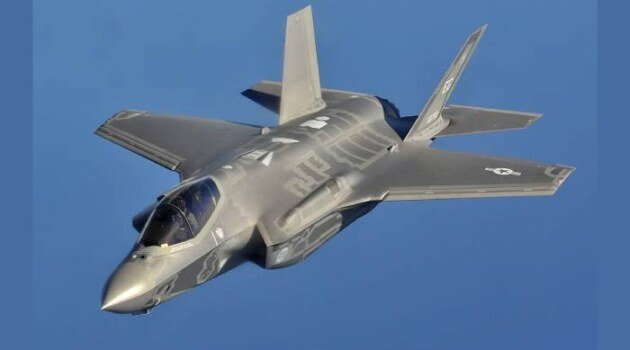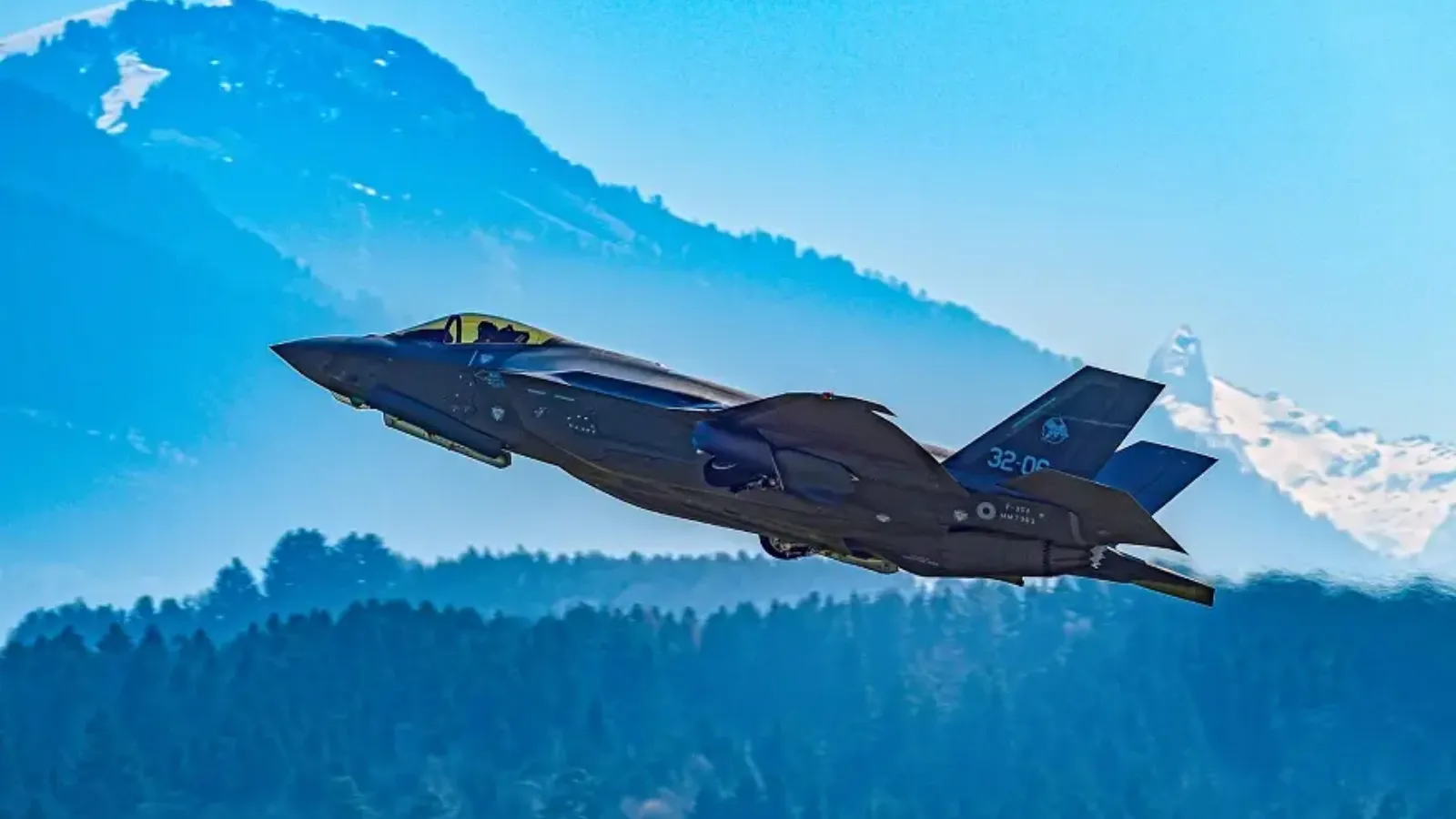
Executive Summary: Switzerland’s F-35A program is moving through production milestones as Leonardo’s Cameri facility in northern Italy prepares to deliver Swiss-configured aircraft beginning in 2028. The first eight Swiss F-35As are being produced in the United States for pilot training, while the remaining aircraft were originally scheduled to come from Cameri, although Switzerland is now reassessing the final fleet size because of higher program costs.
Swiss F-35A Production Moves Into the Next Phase
Swiss F-35A production is advancing as the international F-35 industrial network prepares aircraft for Switzerland, with Leonardo’s Cameri facility serving as the European final assembly location for most of the Swiss fleet.
The Swiss government said in May 2026 that main assembly of the first F-35A destined for Switzerland had begun at Lockheed Martin’s facility in Marietta, Georgia. The milestone follows the production of initial components and puts the first Swiss aircraft deeper into the manufacturing process.
The first eight aircraft are scheduled to be delivered to Ebbing Air National Guard Base in Arkansas from mid-2027. They will initially remain in the United States to support Swiss pilot training before the aircraft are transferred to Switzerland.
Swiss authorities expect the first aircraft to arrive in Switzerland from mid-2028, with subsequent aircraft supplied from Leonardo’s final assembly facility at Cameri.
Cameri Provides Europe’s F-35 Final Assembly Capability
Cameri is a critical part of the F-35 international production network. Leonardo operates the facility in cooperation with Lockheed Martin, producing F-35 aircraft and supporting other activities connected with the program.
The facility manufactures major structural components, including wing assemblies, and performs final assembly and checkout work. Leonardo has also developed Cameri as an important European center for F-35 maintenance, repair, overhaul and upgrade activities.
For Switzerland, the arrangement reduces the need to establish a separate national final assembly line while retaining an industrial connection to the European F-35 production and sustainment network.
Switzerland announced in 2022 that at least 24 of its planned 36 aircraft would be manufactured at Cameri. The original production arrangement allowed up to 28 of the 36 aircraft to be produced in Italy, while the first eight would be manufactured in the United States for training purposes.
Original Swiss F-35A Production Plan
Item Original plan Aircraft selected 36 F-35A Manufacturer Lockheed Martin European final assembly Leonardo Cameri, Italy U.S.-built training aircraft 8 Cameri-built aircraft At least 24, with up to 28 originally planned Initial delivery period 2027 to 2030 First Cameri deliveries 2028 Aircraft planned from Cameri in 2028 8 Aircraft planned from Cameri in 2029 10 Aircraft planned from Cameri in 2030 10 The schedule above reflects Switzerland’s established F-35A delivery plan. However, the final number of aircraft Switzerland will receive is now subject to a major funding decision.
Switzerland Is Reassessing the Size of Its F-35 Fleet
The production milestone comes against a significant change in Switzerland’s procurement position.
In March 2026, the Swiss Federal Council confirmed that it would not seek the additional funding required to acquire all 36 F-35As originally planned. The government said approximately 1.1 billion Swiss francs in additional funding would be required to reach the full fleet because of higher costs linked to inflation, raw materials and other factors.
Instead, Switzerland intends to acquire the maximum number of F-35As possible within the 6 billion Swiss franc funding framework approved by voters.
The government has proposed an additional 394 million Swiss francs to absorb certain cost increases and allow Switzerland to establish the final production quantity with the U.S. government by the second quarter of 2027.
This creates an important distinction for reporting on the program. The original contract covers 36 aircraft, but Switzerland’s current policy is not to provide additional funding to restore the fleet to that original number.
As a result, the number of Swiss F-35As ultimately entering service could be lower than the 36 aircraft initially planned.
Why Cameri Matters to the Swiss Program
The Cameri connection is more significant than simply being an assembly location.
The F-35 program relies on a distributed industrial base involving thousands of suppliers across multiple countries. Switzerland is therefore entering an established multinational manufacturing and sustainment ecosystem rather than creating an independent fighter production capability.
Swiss authorities said the broader F-35 program involves more than 2,100 suppliers worldwide. Switzerland is also pursuing industrial cooperation with domestic companies through offset arrangements involving research, development, production and maintenance activities.
One example is cooperation between Lockheed Martin and Pilatus on a pilot training technology project designed around the requirements of fifth-generation air forces.
For Switzerland, this industrial participation provides a way to connect its aerospace sector with a much larger international defense supply chain while the Swiss Air Force transitions to a new fighter architecture.
F-35A Will Replace Switzerland’s Aging Fighter Fleet
The F-35A was selected by Switzerland in 2021 following an evaluation that compared it with competing aircraft, including the Eurofighter Typhoon, Dassault Rafale and Boeing F/A-18 Super Hornet.
The Swiss government selected 36 F-35As as part of the Air2030 modernization program. The procurement contract was signed in September 2022, with a value of approximately 6.035 billion Swiss francs for the aircraft and associated equipment, weapons, logistics, training and mission systems.
The aircraft are intended to replace Switzerland’s F/A-18 Hornets and F-5 Tigers.
The transition represents a major change in Swiss air-defense architecture. The F-35A combines low-observable design with an integrated sensor and mission system intended to provide pilots with a broader picture of the battlespace.
That capability is particularly relevant to Switzerland because its fighter force has historically been focused heavily on air policing and national airspace protection. The F-35A adds a significantly more networked platform to that mission set.
Production and Delivery Schedule Remains a Key Milestone
The first Swiss F-35A has already entered main assembly in the United States, demonstrating that the procurement is progressing beyond the early component-production stage.
The first eight aircraft have a distinct role in the program. Rather than immediately moving to Switzerland, they are scheduled to operate from Ebbing Air National Guard Base in Arkansas, where Swiss pilots will receive initial training.
The remaining aircraft are tied to the European production system, with Cameri expected to become the principal source of Swiss F-35 deliveries from 2028.
The established schedule calls for eight Cameri-built aircraft in 2028, followed by ten in 2029 and another ten in 2030. That schedule corresponds to the original 36-aircraft requirement and should therefore be treated as the baseline plan rather than a guarantee of the final fleet size after Switzerland’s 2026 funding decision.
Broader European Significance
Switzerland’s F-35 program adds another European operator to a growing network of countries using the same fifth-generation fighter.
The aircraft’s value to European operators extends beyond individual fleet performance. Common platforms can support shared training, logistics, maintenance infrastructure and exchange of operational information.
Switzerland is not a NATO member, but its acquisition of the F-35 places its future air force within a broader European ecosystem centered on the aircraft.
That interoperability factor was explicitly identified by the Swiss government as one of the reasons it considers abandoning the F-35 program unacceptable, despite the financial pressure surrounding the procurement.
For the United States and its European partners, the Swiss purchase therefore has implications beyond the number of aircraft ultimately delivered. It strengthens the geographic reach of the F-35 support network and gives Switzerland access to a common fighter ecosystem already used by numerous European air forces.
What Happens Next
The immediate priority is production of the initial Swiss aircraft and preparation for pilot training in the United States.
The more consequential issue is the final size of the Swiss fleet. The Federal Council plans to use the available funding envelope to acquire as many F-35As as possible and expects to establish the definitive production quantity by 2027.
Cameri will remain central to the program regardless of the final number because the facility is the designated European production point for Swiss aircraft after the initial U.S.-built training batch.
The production activity therefore marks two developments at once: Switzerland is moving toward its first fifth-generation fighter capability, while the country is simultaneously adjusting the scale of that capability to remain within its approved defense spending limits.