
- Home
- Defense Systems
- Compare
- F-35A Lightning II vs. KF-21 Boramae: Complete Comparison of Stealth, Performance, Sensors, and Combat Capability
F-35A Lightning II vs. KF-21 Boramae: Complete Comparison of Stealth, Performance, Sensors, and Combat Capability
F-35A Lightning II vs. KF-21 Boramae: High-Level Comparison
1. Executive Summary / Tactical Overview
The F-35A Lightning II and the KF-21 Boramae represent two different approaches to modern tactical air power. The F-35A was designed from the ground up as a fully operational fifth generation stealth fighter optimized for penetrating heavily defended airspace using advanced sensor fusion and low observability.
The KF-21 Boramae is South Korea’s next generation multirole fighter that bridges advanced fourth generation and fifth generation capabilities. While it incorporates reduced radar signature, an AESA radar, and modern avionics, its current production configuration prioritizes affordability, export potential, and multirole flexibility over all aspect stealth.
2. Technical Specifications
| Metric | F-35A Lightning II | KF-21 Boramae |
|---|---|---|
| Country | United States | South Korea |
| Manufacturer | Lockheed Martin | Korea Aerospace Industries (KAI) |
| Generation | Fifth Generation | 4.5+ Generation (Transitioning toward Fifth Generation) |
| Crew | 1 | 1 |
| Length | 15.7 m | 16.9 m |
| Wingspan | 10.7 m | 11.2 m |
| Height | 4.4 m | 4.7 m |
| Maximum Speed | Mach 1.6 | Mach 1.8 |
| Combat Radius | Approximately 1,239 km | Approximately 1,000 km |
| Ferry Range | Approximately 2,200 km | Approximately 2,900 km |
| Maximum Takeoff Weight | 31,800 kg | 25,600 kg |
| Engine | Pratt & Whitney F135 | 2 × General Electric F414-GE-400K |
| Total Thrust | 43,000 lbf | 44,000 lbf combined |
| Internal Weapons Bay | Yes | Planned in future variants |
| External Hardpoints | 10 | 10 |
| Maximum Payload | Approximately 8,160 kg | Approximately 7,700 kg |
| Primary Radar | AN/APG-81 AESA | Hanwha Systems AESA Radar |
| Electro-Optical System | EOTS + DAS | IRST + EO Targeting System |
| Electronic Warfare Suite | AN/ASQ-239 | Indigenous EW Suite |
| Stealth Level | Very Low Observable | Reduced Radar Signature |
3. Key Capability Pillars
Stealth & Survivability
The F-35A remains one of the world’s most survivable tactical aircraft because stealth was integrated into every aspect of its design. Carefully aligned airframe geometry, radar absorbent materials, serpentine engine intakes, internal weapon bays, and advanced electronic warfare systems significantly reduce its radar signature from every angle.
The KF-21 incorporates stealth shaping, edge alignment, and radar absorbing materials, but its initial production models retain external weapons and fuel tanks that increase radar visibility. Future Block III variants are expected to introduce internal weapon bays, bringing the aircraft closer to true fifth generation standards.
Advantage: F-35A Lightning II
Avionics & Sensor Fusion
One of the defining strengths of the F-35A is its unmatched sensor fusion capability. The aircraft combines data from the AN/APG-81 AESA radar, Distributed Aperture System (DAS), Electro-Optical Targeting System (EOTS), electronic support measures, and off-board assets into a single tactical picture presented to the pilot.
The KF-21 features a modern indigenous AESA radar, infrared search and track (IRST), advanced cockpit displays, and datalink capabilities. However, its sensor fusion architecture is still evolving and does not yet reach the integration level demonstrated by the F-35.
Advantage: F-35A Lightning II
Air-to-Air Performance
Powered by two General Electric F414 engines, the KF-21 enjoys strong acceleration, higher top speed, and greater energy retention during air combat maneuvers. Twin engines also provide additional survivability during long-range missions.
The F-35A sacrifices some aerodynamic performance in exchange for stealth and sensor superiority. Rather than relying solely on maneuverability, it is designed to detect, identify, and engage enemy aircraft before being detected itself.
Advantage:
- Beyond Visual Range: F-35A
- Close Range Dogfight: Slight edge to KF-21
Payload & Mission Profiles
The F-35A can operate in two primary configurations.
Stealth Configuration
- Internal AIM-120 AMRAAM missiles
- Internal precision guided bombs
- Maximum survivability
Beast Mode
- External bombs and missiles
- Payload exceeding 18,000 pounds
- Reduced stealth but massive strike capability
The KF-21 carries all weapons externally during its current production phase, allowing it to employ a wide variety of air-to-air and air-to-ground weapons, including Meteor, AIM-120 AMRAAM, IRIS-T, and precision guided bombs.
Advantage
- Stealth Strike Missions: F-35A
- Conventional Multirole Operations: KF-21
Cost and Export Potential
One of the KF-21’s greatest strengths is affordability.
| Category | F-35A | KF-21 |
|---|---|---|
| Unit Cost | Approximately US$80 to 90 million | Estimated US$65 to 70 million |
| Operating Cost | High | Lower |
| Export Restrictions | Strict US approval | More flexible export strategy |
For nations seeking advanced capabilities without the political and operational constraints associated with the F-35 program, the KF-21 could become an attractive alternative.
4. Strategic Verdict
The F-35A Lightning II remains the benchmark for fifth generation combat aircraft. Its exceptional stealth, sensor fusion, electronic warfare capabilities, and network centric operations make it the preferred choice for penetrating advanced integrated air defense systems and conducting high end coalition warfare.
The KF-21 Boramae is not intended to replace the F-35 directly. Instead, it offers an advanced, cost effective multirole fighter that delivers modern avionics, strong air combat performance, and significant growth potential. As future blocks introduce internal weapons bays and additional stealth enhancements, the KF-21 will narrow the capability gap while remaining more affordable for many air forces.
Which Aircraft Is Better?
Choose the F-35A if you need:
- Deep strike in contested airspace
- Maximum stealth
- Best available sensor fusion
- Advanced electronic warfare
- NATO interoperability
Choose the KF-21 if you need:
- Lower acquisition and operating costs
- Excellent multirole performance
- Higher top speed
- Easier maintenance
- Strong export flexibility and future growth
For air forces facing sophisticated anti access and area denial environments, the F-35A remains the superior platform. For nations seeking a highly capable next generation fighter with lower lifecycle costs and room for future upgrades, the KF-21 Boramae offers one of the most promising alternatives currently entering service.
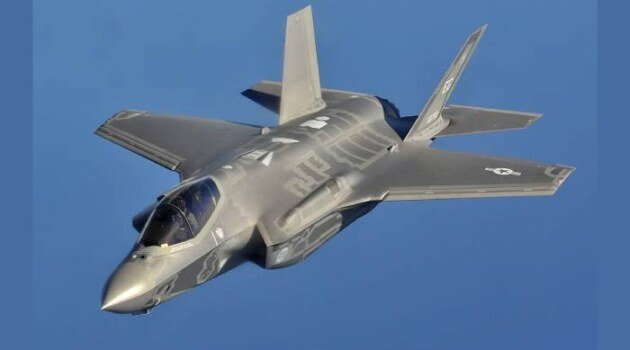
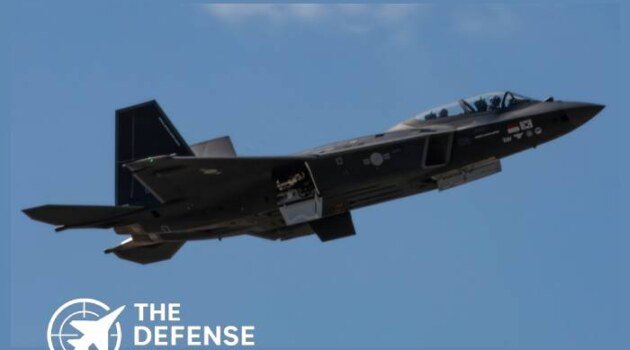
| |
| Price | |
| Our Rating | |
| Manufacturer | Lockheed Martin KAI (Korea Aerospace Industries) |
| Category | Fighter Jets Fighter Jets |
General Information
| Name | F-35A Lightning II KF-21 Boramae |
| Manufacturer | Lockheed Martin Korea Aerospace Industries (KAI) |
| Country of Origin | United States South Korea |
| Type / Role | Stealth Multirole Fighter Multirole fighter |
| Generation | 5th Generation 4.5 (evolving to 5th-gen) |
| Status | In Service In serial production (since 2024) |
| First Flight | December 15, 2006 19 July 2022 |
| Introduction / In Service Since | 2016 Planned 2026 |
| Number Built | 1,200+ (all variants) 6 prototypes; 40+ on order |
| Operators | USAF, UK, Italy, Japan, Australia, Israel, and others ROKAF (planned); Indonesia (planned) |
Dimensions & Structure
| Length | 51.4 ft (15.67 m) 16.9 m (55 ft 5 in) |
| Wingspan | 35 ft (10.7 m) 11.2 m (36 ft 9 in) |
| Height | 14.4 ft (4.38 m) 4.7 m (15 ft 5 in) |
| Wing Area | 460 sq ft (42.7 m²) 46.5 m² (500 sq ft) |
| Empty Weight | 29,300 lb (13,290 kg) 11,800 kg (26,000 lb) |
| Maximum Takeoff Weight (MTOW) | 0,000 lb (31,800 kg) 25,600 kg (56,400 lb) |
| Internal Weapons Bay | 2 bays (4 hardpoints) Planned (Block III) |
| External Hardpoints | 6 10 |
Performance
| Maximum Speed | Mach 1.6 Mach 1.81 (2,200 km/h) |
| Range | 1,380 miles (2,220 km) 2,900 km (ferry) |
| Combat Radius | 670 nmi (1,240 km) ~1,000 km |
| Service Ceiling | 50,000 ft (15,240 m) 16,764 m (55,000 ft) |
| Rate of Climb | 45,000 ft/min 304 m/s (60,000 ft/min) |
| Thrust-to-Weight Ratio | 1.07 0.76 |
| G Limits | +9 +9 / -3.6 |
Powerplant
| Engine Type | Pratt & Whitney F135-PW-100 General Electric F414-GE-400K turbofan |
| No. of Engines | 1 2 |
| Thrust (each) | 43,000 lbf (191 kN) with afterburner 97.9 kN (22,000 lbf) with afterburner |
| Thrust Vectoring | No No |
| Fuel Capacity | 18,498 lb (8,382 kg) internal 5,400-6,000 kg internal |
Armament
| Gun | GAU-22/A 25mm cannon 20 mm cannon |
| Missiles (Air-to-Air) | AIM-120 AMRAAM, AIM-9X Sidewinder Meteor, IRIS-T, AIM-120 (planned) |
| Missiles (Air-to-Ground) | AGM-154 JSOW, AGM-158 JASSM AGM-84 Harpoon, various (planned) |
| Bombs | JDAM, Paveway II/III, SDB JDAM, precision-guided munitions |
| Hardpoints | 10 (4 internal, 6 external) 10 |
| Payload Capacity | 18,000 lb (8,160 kg) 7,700 kg (17,000 lb) |
Avionics & Systems
| Radar | AN/APG-81 AESA Hanwha Systems APY-016K AESA |
| Radar Range | 150+ miles 150-200 km |
| Electronic Warfare (EW) System | AN/ASQ-239 Barracuda LIG Nex1 integrated suite |
| Targeting System | EOTS (Electro-Optical Targeting System) Hanwha EO TGP |
| Helmet Display | Gen III HMDS Integrated HMD |
| Navigation | GPS/INS with Terrain Following INS/GPS with terrain-following |
| Autopilot / AI Assistance | Autonomous mission management AI mission computer (planned Block III) |
| Communication | Multifunction Advanced Datalink (MADL), Link 16 Secure data link for network-centric ops |
Stealth & Technology
| Radar Cross Section (RCS) | ~0.001 m² ~1 m² (semi-stealth) |
| Stealth Features | RAM coatings, internal weapons, edge alignment RAM, partially recessed weapons |
| Infrared Signature Reduction | Yes Engine exhaust shaping |
| Sensor Fusion | Full 360° situational integration Integrated multi-sensor processing |
| Networking Capabilities | C4ISR-enabled with allied interoperability Data link for coalition interoperability |
Variants
| Special Export Versions | F-35I (Israel), F-35A (Japan), F-35A (Finland) Customized avionics and weapons fit |
Operational History
| Major Conflicts / Deployments | Syria, Middle East operations None (testing phase) |
| Notable Operators | USAF, RAF, RAAF, IAF South Korea |
| Combat Proven? | Yes No |
| Mission Types | Air superiority, strike, ISR, SEAD Air defense, strike, multirole |
Cost & Program
| Unit Cost | $82.5 million (Lot 18) $65–70 million (estimated) |
| Development Cost | Over $400 billion (program total) ~$8 billion |
| Program Name | Joint Strike Fighter (JSF) KF-X Program |
| Funding Countries | USA, UK, Italy, Netherlands, Australia, others South Korea, Indonesia |
Additional Information
| Upgrades Planned | Block 4 software/hardware upgrade Thrust vectoring, internal bay (Block II/III) |
| Future Replacement | None (expected to serve beyond 2070) F-4E/F-5 fleet |
| Export Restrictions | Limited to U.S. allies Subject to U.S. tech export controls |
| Notable Achievements | Widest deployed 5th-gen jet South Korea’s first indigenous fighter |
| Competitors | Su-57, J-20, FC-31 Gripen E, Rafale, F-16V |


|
Disclaimer Note
The information provided on TheDefenseWatch.com is for general informational purposes only. While we strive to ensure the accuracy, completeness, and timeliness of our content regarding defense and aerospace products, technologies, and specifications, we cannot guarantee that all information is 100% accurate or up-to-date due to the evolving nature of military technology and classified data.TheDefenseWatch.com does not warrant the reliability, suitability, or availability of the information for any specific purpose. Users are advised to consult official sources, such as manufacturers, government publications, or defense agencies, for precise and verified data before making decisions based on our content.We are not affiliated with any defense manufacturers, governments, or military organizations mentioned. Opinions, reviews, and ratings reflect expert analysis but are subjective and should not be considered endorsements. TheDefenseWatch.com is not responsible for any errors, omissions, or consequences arising from the use of this website’s content.External links are provided for convenience and do not imply endorsement. TheDefenseWatch.com reserves the right to update or modify content without prior notice. By using this website, you agree to our Privacy & Cookies Policy.
New Arrivals


Popular Comparisons
-
 Tejas vs Gripen: Key Differences and Capabilities
View Comparison →
Tejas vs Gripen: Key Differences and Capabilities
View Comparison → -
Tejas vs MiG-21 Bison: How India Replaced Its Iconic Supersonic Fighter
View Comparison →
-
F-35 vs F-16: Stealth, Sensors and Combat Roles
View Comparison →
-
Tejas Fighter Jet vs F-16 Fighting Falcon: Capability Compared
View Comparison →
-
Rafale Fighter Jet vs F-16 Fighting Falcon : Which Fighter Has the Edge?
View Comparison →
-
Su-57 Fighter Jet vs J-20 Fighter Jet: Stealth and Air Combat Compared
View Comparison →
-
Mirage 2000 vs Tejas Mk1A: Legacy Combat Power vs Indigenous Modernization
View Comparison →
-
Rafale Fighter Jet vs F-22 Raptor: Which Air Dominance Fighter Has the Edge?
View Comparison →
-
Tejas Fighter Jet vs. Rafale Fighter Jet: India’s Indigenous Fighter Meets France’s Proven Multirole Combat Aircraft
View Comparison →
-
F-22 Raptor vs. F-35 Joint Strike Fighter: Which Fifth Generation Fighter Has the Edge?
View Comparison →


- CSG Acquires 9.5% Stake in MDA Space, Expanding Into Space Technology

- RAF Voyager Completes 14 Missions During Saudi Arabia Deployment
- L3Harris Wins $250 Million GMLRS Rocket Motor Contract
- L3Harris Wins $55 Million U.S. Army Contract for NOVA Night-Vision Goggles
- Lockheed Martin Outlines Layered Air Defense Plans, Debuts PAC-3 Edge
- China-Egypt Air Drills Highlight J-16, KJ-500 Teaming Against Rafale Fighters
- China’s Airshow China 2026 to Feature New PLA Aircraft and Naval Equipment
- Raytheon Tests Faster Coyote Interceptor With New Rocket Motor
- Raytheon to Develop Software Upgrades for U.S. Navy Radar Detection
- Kim Jong Un Opens North Korea Weapons Museum as Pyongyang Claims Missile Test Success



Fighter Jets
-
 MIG-31 Fighter Jet
-
J-10CE Fighter Jet
-
Chengdu J-10 Fighter Jet
-
Chengdu J-10C Fighter Jet
-
Gripen E Fighter Jet
-
Tejas Mk1A Fighter Jet
-
Tejas Mk‑2 Fighter Jet
-
F-16V Viper Block 70 Fighter Jet
-
F-15EX Eagle II Fighter
-
Boeing F/A-XX Fighter
-
F-15E Strike Eagle Fighter
-
F/A-18E/F Super Hornet Fighter Jet
-
Saab Gripen F Fighter Jet
-
JAS 39E/F Gripen Fighter Jet
-
JAS 39 Gripen Fighter Jet
-
F-35A Lightning II Fighter Jet
-
F/A-18F Super Hornet
-
J-50 Fighter Jet
-
Spanish EF-18 Hornet Fighter
-
F-47 Fighter Jet
-
F-35i Adir Fighter Jet
-
F-16 Fighting Falcon
-
AIDC T-5 Brave Eagle
-
F-CK-1 Ching-Kuo Fighter








Recent Compares
-
Tejas vs Gripen: Key Differences and Capabilities
View Comparison →
-
Tejas vs MiG-21 Bison: How India Replaced Its Iconic Supersonic Fighter
View Comparison →
-
F-35 vs F-16: Stealth, Sensors and Combat Roles
View Comparison →
-
Tejas Fighter Jet vs F-16 Fighting Falcon: Capability Compared
View Comparison →
-
Rafale Fighter Jet vs F-16 Fighting Falcon : Which Fighter Has the Edge?
View Comparison →
Latest Defense Systems
10 Compares Defense Systems
-
Tejas vs Gripen: Key Differences and Capabilities
View Comparison →
-
Tejas vs MiG-21 Bison: How India Replaced Its Iconic Supersonic Fighter
View Comparison →
-
F-35 vs F-16: Stealth, Sensors and Combat Roles
View Comparison →
-
Tejas Fighter Jet vs F-16 Fighting Falcon: Capability Compared
View Comparison →
-
Rafale Fighter Jet vs F-16 Fighting Falcon : Which Fighter Has the Edge?
View Comparison →
-
Su-57 Fighter Jet vs J-20 Fighter Jet: Stealth and Air Combat Compared
View Comparison →
-
Mirage 2000 vs Tejas Mk1A: Legacy Combat Power vs Indigenous Modernization
View Comparison →
-
Rafale Fighter Jet vs F-22 Raptor: Which Air Dominance Fighter Has the Edge?
View Comparison →
-
Tejas Fighter Jet vs. Rafale Fighter Jet: India’s Indigenous Fighter Meets France’s Proven Multirole Combat Aircraft
View Comparison →
-
F-22 Raptor vs. F-35 Joint Strike Fighter: Which Fifth Generation Fighter Has the Edge?
View Comparison →
- CSG Acquires 9.5% Stake in MDA Space, Expanding Into Space Technology
- RAF Voyager Completes 14 Missions During Saudi Arabia Deployment
- L3Harris Wins $250 Million GMLRS Rocket Motor Contract
- L3Harris Wins $55 Million U.S. Army Contract for NOVA Night-Vision Goggles
- Lockheed Martin Outlines Layered Air Defense Plans, Debuts PAC-3 Edge