

Table of Contents
The Dawn of Sixth-Generation Air Power
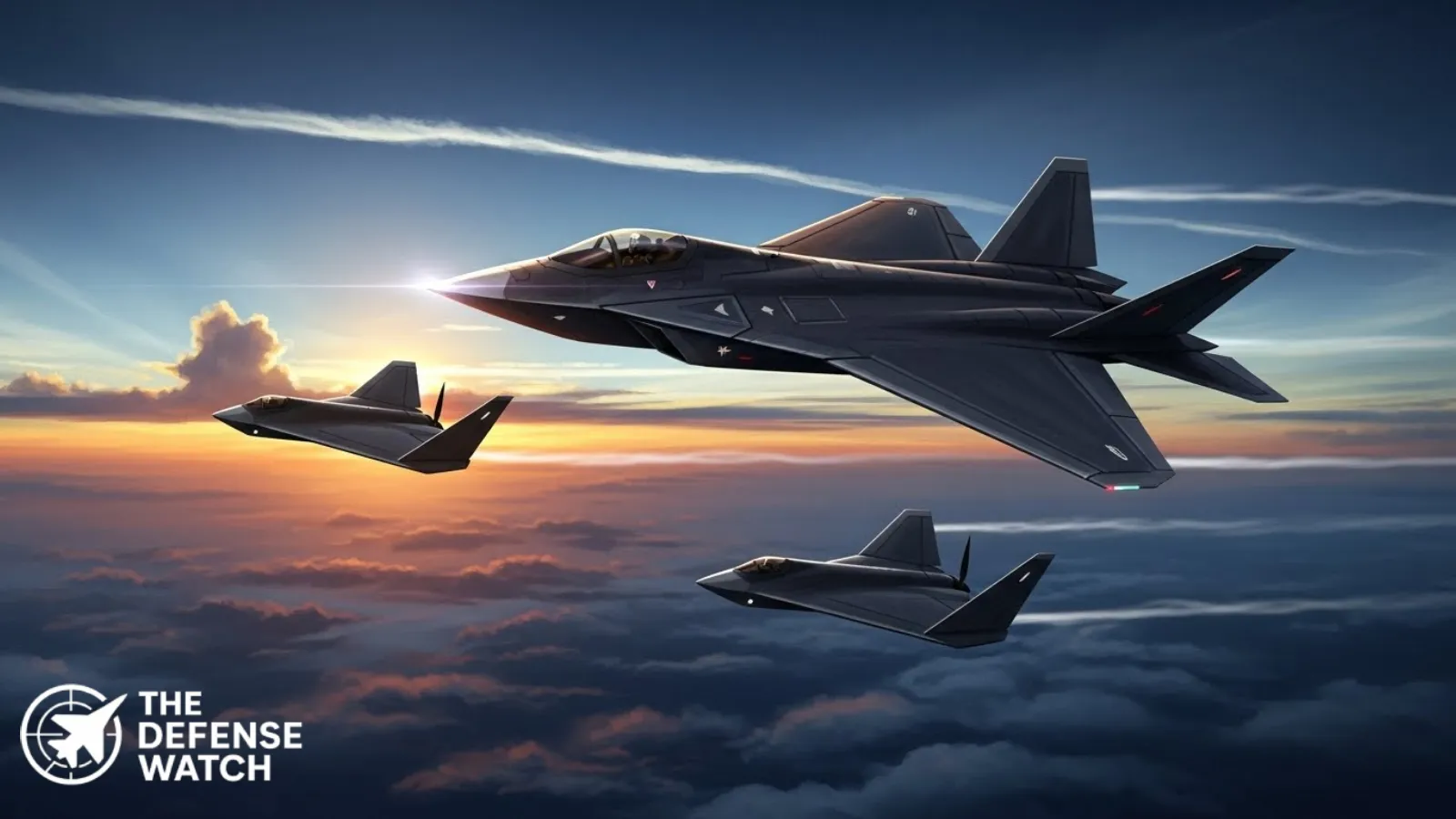
The global defense landscape is witnessing a transformational shift as 6th generation fighter jets emerge from concept to reality. Unlike their predecessors, these next-generation aircraft represent a quantum leap in capability, integrating artificial intelligence, directed energy weapons, optionally manned systems, and unparalleled stealth characteristics. As geopolitical tensions intensify and near-peer adversaries develop advanced anti-access/area denial (A2/AD) systems, nations including the United States, United Kingdom, Japan, and European powers are racing to field fighters that will define air dominance through 2050 and beyond.
The 6th generation fighter jets are not merely incremental upgrades to fifth-generation platforms like the F-22 Raptor or F-35 Lightning II. These revolutionary aircraft incorporate paradigm-shifting technologies: collaborative combat aircraft (loyal wingman drones), open mission systems architecture, advanced thermal management for directed energy weapons, and cognitive electronic warfare suites capable of autonomous decision-making in contested electromagnetic environments.
Defining Characteristics of 6th Generation Fighter Jets
Sixth-generation aircraft distinguish themselves through several breakthrough capabilities that transcend current airpower limitations.
Artificial Intelligence and Machine Learning Integration
Modern 6th generation fighter jets leverage AI algorithms to process sensor data at speeds impossible for human pilots. These systems enable real-time threat assessment, autonomous target prioritization, and predictive maintenance analytics. AI co-pilots assist human operators during high-stress combat scenarios, managing sensor fusion from distributed platforms while recommending optimal engagement tactics.

Conceptual illustration – Cockpit display showing AI-assisted pilot interface According to defense analysts at the Mitchell Institute for Aerospace Studies, AI integration reduces pilot cognitive load by approximately 40 percent during complex multi-domain operations, allowing aviators to focus on strategic decision-making rather than tactical execution.
Optionally Manned and Unmanned Variants
Unlike previous generations that required human pilots for all missions, sixth-generation platforms embrace optionally manned configurations. This flexibility allows commanders to deploy these aircraft in extremely high-threat environments without risking pilot lives, or with human operators when strategic judgment proves essential.
The U.S. Air Force’s Next Generation Air Dominance (NGAD) program explicitly incorporates this capability, with senior officials confirming that manned and unmanned variants will operate seamlessly within the same combat air patrols.
Advanced Stealth and Thermal Signature Management
While fifth-generation fighters pioneered low-observable technology, 6th generation fighter jets achieve unprecedented stealth through advanced materials, adaptive camouflage systems, and sophisticated thermal management. These aircraft mask infrared signatures that betray conventional stealth platforms, particularly during afterburner use or when employing directed energy weapons generating significant heat.
Researchers at the Air Force Research Laboratory have developed thermal dissipation systems using advanced heat exchangers and cryogenic cooling, enabling sustained operation of high-energy laser weapons without compromising stealth characteristics.
Directed Energy Weapons Systems
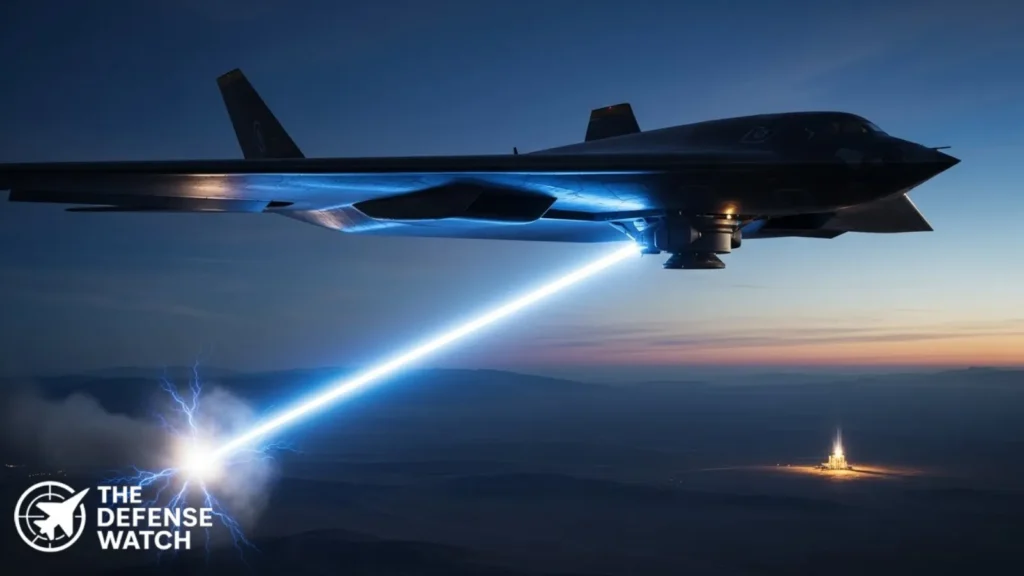
Sixth-generation platforms integrate laser and high-powered microwave weapons, providing near-instantaneous engagement of incoming missiles, drones, and aircraft at the speed of light. These weapons offer effectively unlimited magazines—constrained only by available electrical power—dramatically altering engagement calculations in protracted air battles.
The U.S. Defense Advanced Research Projects Agency (DARPA) recently concluded testing of a 300-kilowatt solid-state laser system compact enough for fighter integration, capable of defeating air-to-air missiles at ranges exceeding 15 kilometers.
Network-Centric Warfare and Sensor Fusion
Modern air combat demands seamless information sharing across distributed platforms. Sixth-generation aircraft serve as aerial battle management nodes, fusing data from satellites, ground-based radars, naval vessels, loyal wingman drones, and allied fighters into unified operational pictures. Advanced datalinks operating across multiple frequency bands ensure communications resilience even in heavily jammed electromagnetic environments.
Global 6th Generation Fighter Programs
Multiple nations are investing billions in developing next-generation air superiority platforms, each reflecting distinct operational requirements and technological priorities.
United States: Next Generation Air Dominance (NGAD)
The U.S. Air Force’s NGAD program represents the most ambitious sixth-generation initiative globally. Originally scheduled to achieve initial operating capability in the early 2030s, NGAD encompasses both a manned fighter platform and a family of collaborative combat aircraft (CCAs)—autonomous loyal wingman drones designed to accompany crewed fighters into contested airspace.
Secretary of the Air Force Frank Kendall announced in September 2024 that the service is reassessing NGAD’s acquisition strategy amid budget pressures and evolving threat assessments. The program faces scrutiny over projected costs exceeding $300 million per aircraft—approximately three times the expense of an F-35A. Air Force leadership is evaluating whether incremental upgrades to existing platforms combined with larger CCA fleets might deliver superior cost-effectiveness compared to highly expensive manned fighters.
Despite budgetary uncertainties, NGAD’s technological demonstrations have validated critical capabilities including adaptive cycle engines providing 30 percent greater fuel efficiency, advanced radar systems detecting stealth targets at extended ranges, and AI-enabled mission planning reducing preparation time from hours to minutes.
The U.S. Navy pursues a parallel initiative known as F/A-XX, designed to replace the F/A-18E/F Super Hornet in the carrier air wing. While sharing technological commonality with Air Force NGAD, F/A-XX emphasizes longer range and maritime strike capabilities essential for Pacific Theater operations against adversaries fielding increasingly sophisticated anti-ship missiles.
United Kingdom, Italy, and Japan: Global Combat Air Program (GCAP)
The Global Combat Air Program merges the UK’s Tempest initiative with Japan’s F-X program, adding Italy as a core partner. This trilateral collaboration aims to field operational fighters by 2035, combining British expertise in sensor fusion and electronic warfare, Japanese manufacturing precision and materials science, and Italian experience in modular mission systems.
GCAP aircraft will feature open systems architecture enabling rapid software updates and hardware modifications throughout their service lives—a critical capability given the accelerating pace of technological advancement. The program emphasizes interoperability with NATO systems while accommodating Japan’s unique Indo-Pacific operational requirements.
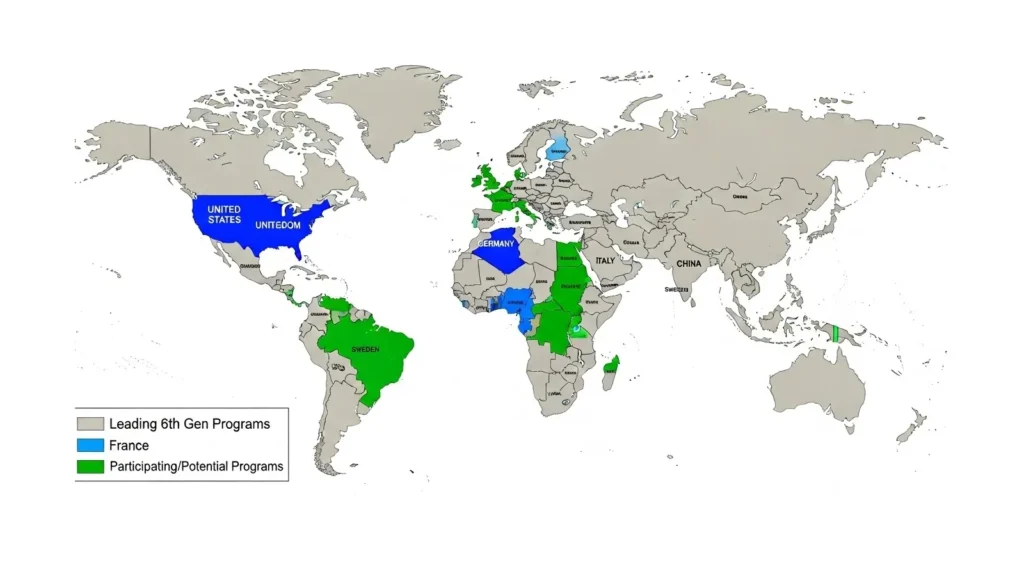
World map highlighting countries Recent reports indicate GCAP partners are exploring collaboration with additional nations including Saudi Arabia, which has expressed interest in both investment participation and potential procurement. This expanded partnership could distribute development costs while providing participating nations with cutting-edge air combat capabilities.
European Union: Future Combat Air System (FCAS)
France, Germany, and Spain lead the Future Combat Air System, a comprehensive system-of-systems approach encompassing manned fighters, unmanned loyal wingman platforms, advanced weapons, and supporting infrastructure. FCAS represents Europe’s most ambitious defense collaboration, though the program has experienced delays stemming from industrial work-share disputes and divergent national requirements.
Dassault Aviation serves as the prime contractor for the manned fighter component, while Airbus Defense and Space leads development of unmanned platforms and mission systems. Current timelines project initial operational capability around 2040, though defense analysts question whether geopolitical pressures might accelerate development.
FCAS incorporates lessons learned from operational experiences in Mali, Syria, and Libya, emphasizing adaptability for both high-intensity conventional warfare and counterinsurgency operations. The system’s modular architecture allows configuration changes between missions without extensive depot-level maintenance.
China and Russia: Classified Development Programs
China’s People’s Liberation Army Air Force is believed to be developing a sixth-generation fighter under highly classified programs. Satellite imagery and open-source intelligence suggest test flights of advanced demonstrator aircraft incorporating serpentine engine inlets, extensive use of composite materials, and unconventional control surfaces indicative of all-aspect stealth optimization.
Chinese aerospace publications have referenced technologies consistent with sixth-generation capabilities, including AI-assisted electronic warfare systems, plasma stealth applications, and variable-cycle engine research. However, verifiable details remain scarce given China’s opacity regarding military aviation programs.
Russia’s Sukhoi Design Bureau has publicized conceptual designs for a sixth-generation fighter dubbed “MiG-41” or PAK DP (Prospective Aviation Complex for Long-Range Interception), though economic sanctions and industrial capacity constraints cast doubt on near-term development prospects. Russian aerospace officials claim research focuses on hypersonic flight capabilities and extended operational altitudes approaching near-space environments.
Revolutionary Technologies Enabling 6th Generation Fighter Jets
The leap from fifth to sixth-generation capabilities relies on breakthrough technologies that have matured sufficiently for operational integration.
Adaptive Cycle Engines
Traditional turbofan engines optimize for either fuel efficiency during cruise or maximum thrust during combat maneuvers—but not both simultaneously. Adaptive cycle engines employ variable geometry to adjust bypass ratios in flight, delivering superior fuel economy for extended range while maintaining thrust advantages when required.
The U.S. Air Force’s Adaptive Engine Transition Program (AETP) has demonstrated engines providing 25-30 percent greater fuel efficiency and 10 percent more thrust compared to F-35 powerplants. General Electric’s XA100 and Pratt & Whitney’s XA101 engines completed flight testing aboard modified F-35 airframes, validating thermal management capabilities essential for directed energy weapons.
Cognitive Electronic Warfare Systems
Sixth-generation platforms incorporate cognitive electronic warfare suites employing machine learning to identify, classify, and jam adversary radars and communications in real-time. Unlike earlier systems requiring human operators to manually select countermeasures, cognitive EW autonomously analyzes electromagnetic spectrum activity and deploys optimal responses within milliseconds.
Conceptual illustration – Directed energy weapon test firing These systems continuously learn from encountered threats, updating tactics libraries and sharing information across friendly networks. During Red Flag exercises, prototype cognitive EW systems demonstrated 300 percent improvement in jamming effectiveness compared to legacy electronic attack pods.
Advanced Materials and Manufacturing
Sixth-generation aircraft extensively utilize ceramic matrix composites (CMCs) capable of withstanding temperatures exceeding 2,500 degrees Fahrenheit—critical for sustained hypersonic flight and directed energy weapon operation. CMCs reduce weight while improving durability compared to traditional titanium alloys.
Additive manufacturing (3D printing) enables production of complex geometries impossible through conventional machining, reducing part counts and assembly time. The F-35 program already incorporates over 900 additively manufactured components; sixth-generation platforms will extend this approach to primary structural elements.
Distributed Aperture Systems and Photonic Radars
Advanced sensors abandon traditional mechanically-scanned radars in favor of distributed aperture systems integrating thousands of transmit/receive modules across the aircraft’s surface. This configuration provides 360-degree situational awareness without vulnerable rotating antennas.
Emerging photonic radar technology promises orders-of-magnitude improvements in resolution and power efficiency by using optical components rather than traditional radio-frequency electronics. Early prototypes demonstrate capability to track multiple hypersonic weapons simultaneously—a critical requirement given projected threat environments.
Strategic Implications and Air Dominance Doctrine
The emergence of 6th generation fighter jets fundamentally alters air warfare doctrine and force structure considerations.
Manned-Unmanned Teaming Concepts
Future air combat will feature human pilots commanding multiple loyal wingman drones, distributing risk while multiplying combat power. A single crewed fighter might control 4-6 collaborative combat aircraft, positioning them as sensor platforms, missile trucks, or expendable decoys depending on tactical requirements.
This approach leverages human judgment for strategic decisions while exploiting machine speed and risk tolerance for tactical execution. During wargames conducted by the U.S. Air Force’s Air Combat Command, manned-unmanned teams achieved 4:1 kill ratios against peer adversary forces—double the effectiveness of traditional formations.
Attrition Mathematics and Cost Considerations
At projected costs approaching $300 million per aircraft, losing even a handful of sixth-generation fighters in combat could prove strategically catastrophic. This reality drives emphasis on standoff engagement capabilities, expendable loyal wingman escorts, and overwhelming first-strike capacity to neutralize adversary air defenses before exposing high-value assets.
Defense economists debate whether smaller fleets of exquisite sixth-generation platforms or larger numbers of upgraded fifth-generation aircraft optimally balance capability and affordability. This calculus varies by nation based on threat perceptions, defense industrial capacity, and budgetary constraints.
Multi-Domain Integration
Sixth-generation fighters operate as nodes within joint all-domain command and control (JADC2) architectures, enabling synchronized operations with land-based missile systems, naval task forces, cyber warfare units, and space-based assets. This integration demands unprecedented interoperability standards and secure communications networks resistant to adversary disruption.
The concept envisions scenarios where a sixth-generation fighter detects adversary targets but cues ground-based hypersonic missiles for engagement, preserving the aircraft’s stealth while prosecuting threats. Such distributed lethality complicates adversary targeting while maximizing friendly force survivability.
Challenges and Controversies
Despite technological promise, sixth-generation fighter programs face significant obstacles.
Budgetary Pressures and Affordability
Declining defense budgets across Western nations collide with escalating development costs. The U.S. Air Force must balance NGAD investment against requirements to modernize tanker fleets, upgrade ICBMs, expand space capabilities, and sustain existing fighter inventories. Similar tensions affect European programs where national defense spending remains below NATO commitments.
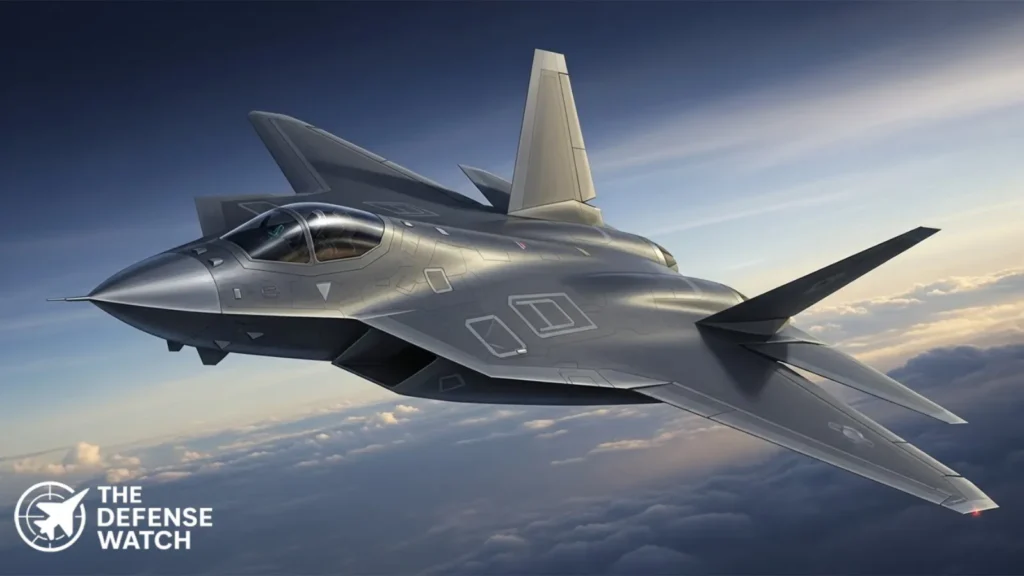
NGAD concept art Some defense analysts advocate for “good enough” solutions—incremental upgrades to proven platforms rather than revolutionary new aircraft. This approach reduces risk and accelerates fielding timelines but potentially concedes technological advantage to adversaries willing to pursue breakthrough capabilities.
Technology Maturation and Integration Risk
Sixth-generation programs integrate numerous immature technologies simultaneously, magnifying development risk. Directed energy weapons, cognitive electronic warfare systems, and AI co-pilots require extensive testing to validate operational effectiveness and safety. The F-35’s troubled development—resulting from excessive concurrent development and production—serves as a cautionary tale for overly ambitious timelines.
International Collaboration Complexities
Multinational programs like GCAP and FCAS promise cost-sharing benefits but introduce coordination challenges. Partner nations often maintain divergent operational requirements, industrial participation expectations, and export control restrictions. Harmonizing these competing priorities while maintaining schedule discipline proves extraordinarily difficult, as evidenced by Eurofighter Typhoon’s protracted development.
Expert Analysis: Balancing Innovation and Pragmatism
The sixth-generation fighter debate ultimately reflects broader questions about defense acquisition strategy in an era of rapid technological change and constrained resources. Pursuing revolutionary capabilities risks programs becoming unaffordable white elephants that deliver capabilities too late to address emergent threats. Conversely, incremental improvements to existing platforms may preserve force structure numbers but concede qualitative advantages to adversaries making bolder technology investments.
Defense planners must carefully assess whether highly capable but expensive sixth-generation fighters represent optimal force structure solutions or whether alternative approaches—larger fleets of upgraded legacy aircraft supplemented by unmanned systems—deliver superior combat power per dollar invested. This calculus varies significantly across different threat scenarios, geographic theaters, and industrial base considerations unique to each nation.
The United States faces particular challenges given its global security commitments and requirement to maintain simultaneous technological overmatch against both Chinese and Russian forces. European nations must decide whether continental defense demands independent sixth-generation capabilities or whether collaborative programs with extended timelines adequately address realistic threat timelines. Pacific powers including Japan and Australia prioritize capabilities addressing Chinese military modernization, potentially driving different requirement sets than European partners focused on Russian contingencies.
The Road Ahead: Timelines and Milestones
Current projections indicate the first sixth-generation fighters entering squadron service between 2030-2040, though specific timelines remain subject to budgetary decisions and technology maturation progress.
The U.S. NGAD program’s ongoing acquisition strategy review will likely conclude in 2025, providing clarity on whether the Air Force proceeds with the originally envisioned platform or pursues modified approaches emphasizing affordability and earlier operational availability. Industry sources suggest potential alternatives including competition between multiple vendors rather than single-source selection, potentially accelerating development while controlling costs through industrial competition.
GCAP partners target 2035 for initial operational capability, requiring critical design reviews and technology demonstrations throughout the late 2020s. Saudi Arabia’s potential participation could inject additional funding while expanding the program’s industrial base, though technology transfer concerns and political considerations complicate such arrangements.
FCAS faces the longest timeline, with 2040 IOC projections reflecting both technological ambition and coordination complexities inherent in three-nation programs. German parliamentary budget authorities have indicated concerns about program costs and workshare arrangements, potentially delaying full funding commitment.
Conclusion: The High-Stakes Future of Air Power
The development of 6th generation fighter jets represents one of the most consequential defense programs of the 21st century. These aircraft will determine air superiority outcomes for decades, shaping strategic balances across multiple potential conflict theaters. Success requires not only technological innovation but also disciplined program management, international collaboration, and difficult tradeoff decisions between capability, cost, and schedule.
As great power competition intensifies and the character of warfare continues evolving, nations investing successfully in sixth-generation capabilities will secure decisive advantages in future conflicts. Those failing to field these systems risk strategic irrelevance in an increasingly contested global security environment. The decisions made in the next several years regarding program structures, technology investments, and acquisition strategies will echo across the defense landscape through mid-century and beyond.
FAQs
What makes 6th generation fighter jets different from 5th generation aircraft like the F-35?Sixth-generation fighters incorporate AI co-pilots, directed energy weapons, optionally manned configurations, loyal wingman drone integration, and advanced thermal management systems. They operate as network nodes within multi-domain command structures rather than as standalone platforms, representing a fundamental shift in air combat doctrine.
When will 6th generation fighter jets enter service?The United States aims for initial operational capability in the early 2030s with the NGAD program, though timeline reviews are ongoing. The UK-Italy-Japan GCAP targets 2035, while Europe’s FCAS projects 2040 IOC. These timelines remain subject to budgetary decisions and technology maturation progress.
How much do 6th generation fighter jets cost?Projected costs for platforms like the U.S. NGAD exceed $300 million per aircraft—approximately three times the price of an F-35A. Total program costs including research, development, and production easily reach hundreds of billions of dollars, driving significant debate about affordability and optimal force structure.
Will 6th generation fighters be unmanned?Sixth-generation platforms embrace optionally manned designs, allowing operation with or without onboard pilots depending on mission requirements. This flexibility enables deployment in extreme high-threat environments without risking aviator lives while preserving human judgment when strategically necessary.
Which countries are developing 6th generation fighter jets?The United States (NGAD/F/A-XX), United Kingdom-Italy-Japan (GCAP/Tempest), France-Germany-Spain (FCAS), China (classified programs), and Russia (conceptual MiG-41/PAK DP) are actively pursuing sixth-generation capabilities, though development maturity and timelines vary significantly across programs.



6 comments
[…] on sustaining proven platforms while integrating incremental upgrades. Despite the development of next generation rotorcraft under the Future Vertical Lift initiative, Black Hawk helicopters are […]
[…] the same time, investment is shifting toward next generation air dominance programs. Lessons from the F 22 program strongly influence these efforts, especially in cost control, […]
[…] training took place at the Pentagon’s Joint Simulation Environment (JSE) at the Naval Air Warfare Center Aircraft Division in Maryland. The JSE uses advanced modeling and simulation to give pilots realistic […]
[…] defense planners closely watch such developments, particularly as Washington advances its own Next Generation Air Dominance […]
[…] Hobart class destroyers serve as Australia’s principal air warfare destroyers. Each ship integrates the Aegis combat system paired with AN/SPY-1D(V) phased-array […]
[…] CCA platforms are designed to operate alongside crewed fighters under the Next Generation Air Dominance […]