Executive Summary:
The U.S. Air Force has expanded operational testing of its Collaborative Combat Aircraft (CCA) program at Creech Air Force Base, Nevada, marking another step toward fielding autonomous combat aircraft alongside crewed fighters. The exercise focused on developing operational tactics, maintenance procedures, and command and control concepts needed before the aircraft enters frontline service.
U.S. Air Force Expands Collaborative Combat Aircraft Operational Testing
The U.S. Air Force Collaborative Combat Aircraft (CCA) program has entered another important phase as the service conducts operational flight testing at Creech Air Force Base, Nevada, moving the autonomous aircraft closer to routine military use.
According to the U.S. Air Force Warfare Center, the recent exercise was designed to evaluate how semi-autonomous aircraft can operate within realistic expeditionary conditions while refining the tactics, techniques, and procedures that will eventually support operational deployment.
Unlike earlier developmental flights that primarily evaluated airworthiness and autonomous flight performance, the Creech activities emphasize how CCAs will integrate into day-to-day Air Force operations.
Building The Foundations For Human Machine Teaming
The testing is being conducted by the Collaborative Combat Aircraft Experimental Operations Unit, which is responsible for translating technical capabilities into operational doctrine.
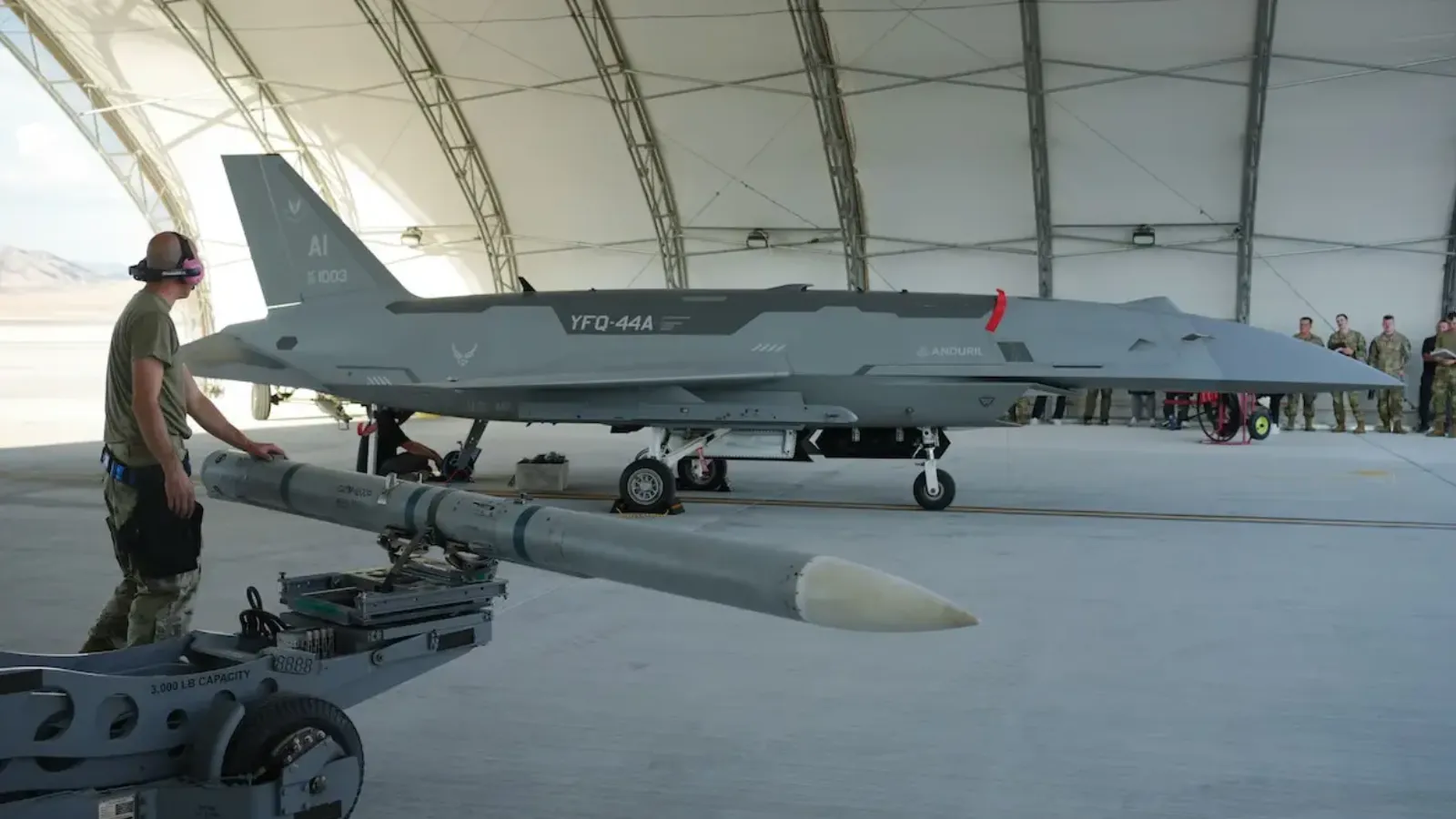
During the exercise, Air Force personnel evaluated how autonomous aircraft can be supported, armed, maintained, and commanded alongside conventional fighter forces.
Officials said the objective is not simply to prove the aircraft can fly autonomously but to determine how pilots, maintainers, intelligence specialists, and command centers will employ the aircraft during future combat operations.
Air Force Chief of Staff Gen. Ken Wilsbach has repeatedly described affordable autonomous aircraft as a critical component of future air superiority, particularly in highly contested environments where additional combat mass and survivability are essential.
Operational Testing Follows Rapid Program Progress
The Creech testing follows an unusually fast development timeline.
During the past year, the Department of the Air Force has steadily advanced the CCA program through several major milestones:
| Program Milestone | Status |
|---|---|
| First prototype flight | Completed in 2025 |
| Open architecture autonomy validation | Completed in early 2026 |
| Weapons integration testing | Completed |
| Captive carry evaluations | Completed |
| AIM-120 live-fire demonstration | Completed July 2026 |
| Operational experimentation at Creech | Ongoing |
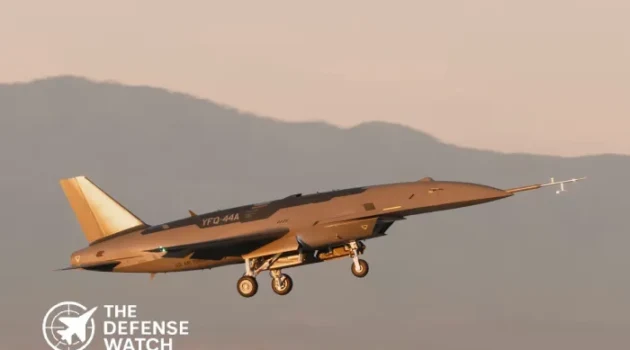
The latest operational testing comes only weeks after the Air Force successfully conducted its first live AIM-120 missile launch from a YFQ-44A aircraft over the Mojave Desert. That demonstration verified the aircraft’s ability to safely employ weapons while maintaining human authorization for weapons release.
Why Creech Air Force Base Matters
Creech Air Force Base has become one of the Air Force’s principal centers for remotely piloted aircraft operations.
Its existing infrastructure, experienced operators, and expertise in remotely operated missions make it a logical location to develop concepts for Collaborative Combat Aircraft.
Rather than focusing solely on aircraft performance, the recent exercise examined broader operational questions, including:
- Aircraft generation and turnaround procedures
- Weapons loading operations
- Mission planning workflows
- Command and control integration
- Agile Combat Employment support
- Logistics and maintenance under expeditionary conditions
These factors ultimately determine whether an advanced platform can be deployed effectively during combat operations.
Open Architecture Remains A Core Design Principle
One distinguishing feature of the CCA program is the Air Force’s decision to separate autonomy software from aircraft manufacturing.
Instead of locking operators into proprietary software tied to a single manufacturer, the Department of the Air Force is implementing the government-owned Autonomy Government Reference Architecture (A-GRA).
This modular approach allows different autonomy software developers to compete while enabling future upgrades without redesigning the aircraft itself. Officials believe the strategy will shorten upgrade cycles, reduce costs, and encourage greater innovation across the defense industrial base.
Strategic Importance For Future Air Combat
The Collaborative Combat Aircraft program represents one of the most significant changes in U.S. tactical aviation since the introduction of fifth-generation fighters.
Instead of replacing aircraft such as the F-35A or future Next Generation Air Dominance platforms, CCAs are intended to expand combat capacity by operating as force multipliers.
Potential missions include:
- Air-to-air missile carriage
- Electronic warfare
- Intelligence, surveillance and reconnaissance
- Decoy operations
- Long-range strike support
- Escort missions for crewed fighters
By assigning higher-risk missions to autonomous aircraft, commanders can preserve expensive crewed platforms while increasing the number of combat assets available during large-scale operations.
This concept is particularly relevant in the Indo-Pacific, where long engagement distances and sophisticated integrated air defense systems demand larger, more distributed air forces.
Challenges Still Ahead
Although recent progress has been rapid, several hurdles remain before the aircraft enter operational service.
Among the remaining priorities are:
- Expanding autonomous mission complexity
- Verifying secure communications in contested environments
- Integrating CCAs with multiple fighter platforms
- Refining operator training requirements
- Establishing long-term sustainment concepts
- Scaling production for operational units
The Air Force has consistently emphasized that human operators will remain responsible for weapon release decisions, ensuring compliance with existing command authorities and rules of engagement.
Industry Competition Continues
The CCA program also remains one of the Pentagon’s largest autonomous aviation initiatives.
General Atomics and Anduril have emerged as the initial production partners following competitive prototype development, while several companies continue developing autonomy software under separate contracts. The broader objective is to field more than 150 Collaborative Combat Aircraft by the end of the decade, with significantly larger procurement planned thereafter.
Outlook
The operational testing underway at Creech Air Force Base marks an important transition from technology demonstration to practical military employment.
While flight testing, weapons integration, and software development remain ongoing, the Air Force is increasingly focused on how autonomous aircraft will function within operational squadrons rather than whether the technology itself is viable.
As testing expands through 2026, the lessons learned at Creech will help shape future doctrine for crewed-uncrewed teaming, influencing how the Air Force integrates autonomous combat aircraft into its next generation of air operations.
Get real time update about this post category directly on your device, subscribe now.