Executive Summary:
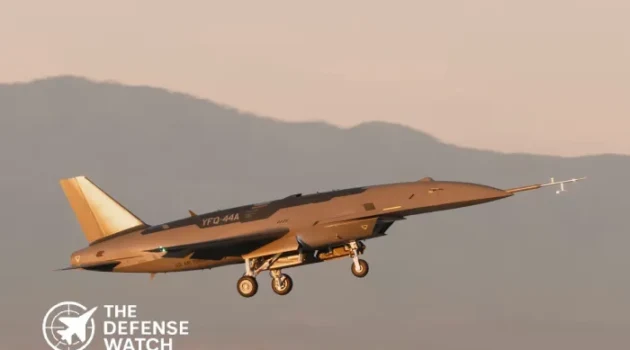
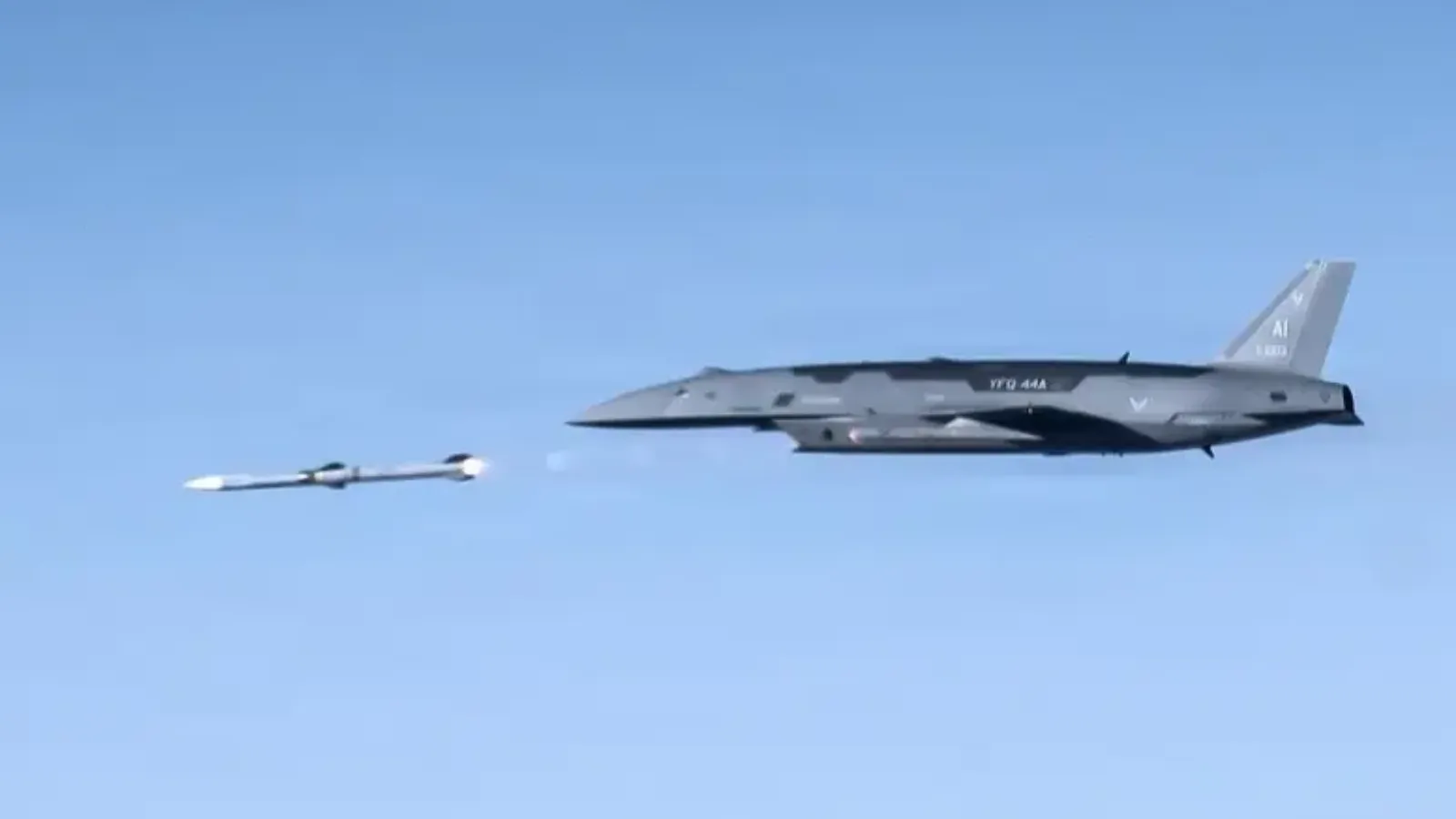
The U.S. Air Force has completed the first live fire missile test of Anduril’s YFQ-44A Collaborative Combat Aircraft, successfully launching an AIM 120 AMRAAM during flight testing. The event represents a significant milestone in validating the semi autonomous fighter drone’s combat capability as the Air Force accelerates development of its next generation human machine teaming concept.
U.S. Air Force Advances YFQ-44A Collaborative Combat Aircraft Through First Live Fire Missile Test
The U.S. Air Force YFQ-44A Collaborative Combat Aircraft (CCA) has achieved another major development milestone after successfully conducting its first live fire launch of an AIM 120 Advanced Medium Range Air to Air Missile (AMRAAM). The test, announced by the U.S. Air Force and Anduril Industries, demonstrates continued progress toward integrating semi autonomous combat drones alongside crewed fighter aircraft under the Collaborative Combat Aircraft initiative.
- U.S. Air Force Advances YFQ-44A Collaborative Combat Aircraft Through First Live Fire Missile Test
- First Weapons Test Demonstrates Growing Maturity
- What Is the YFQ-44A?
- Collaborative Combat Aircraft Strategy
- Why the AIM-120 Launch Matters
- Technical Significance Beyond a Missile Launch
- Implications for Future Air Combat
- Looking Ahead
The live fire event follows the YFQ-44A’s first flight earlier in 2026 and marks the program’s transition from basic flight validation toward operational weapons integration. According to official statements, the missile launch verified the aircraft’s ability to safely employ advanced air to air weapons while collecting extensive flight and telemetry data for further evaluation.
First Weapons Test Demonstrates Growing Maturity
The live fire exercise centered on validating the aircraft’s weapons integration architecture rather than evaluating missile performance itself.
Engineers monitored multiple mission systems throughout the event, including:
- Aircraft flight stability
- Fire control software
- Missile release sequencing
- Weapons bay operation
- Command and control links
- Telemetry and safety systems
Successfully completing these objectives indicates that the aircraft is progressing beyond experimental flight demonstrations toward becoming a viable operational combat platform.
Unlike traditional fighter development programs, the CCA effort emphasizes rapid testing and iterative software improvements, allowing new capabilities to be introduced significantly faster than legacy acquisition timelines.
What Is the YFQ-44A?
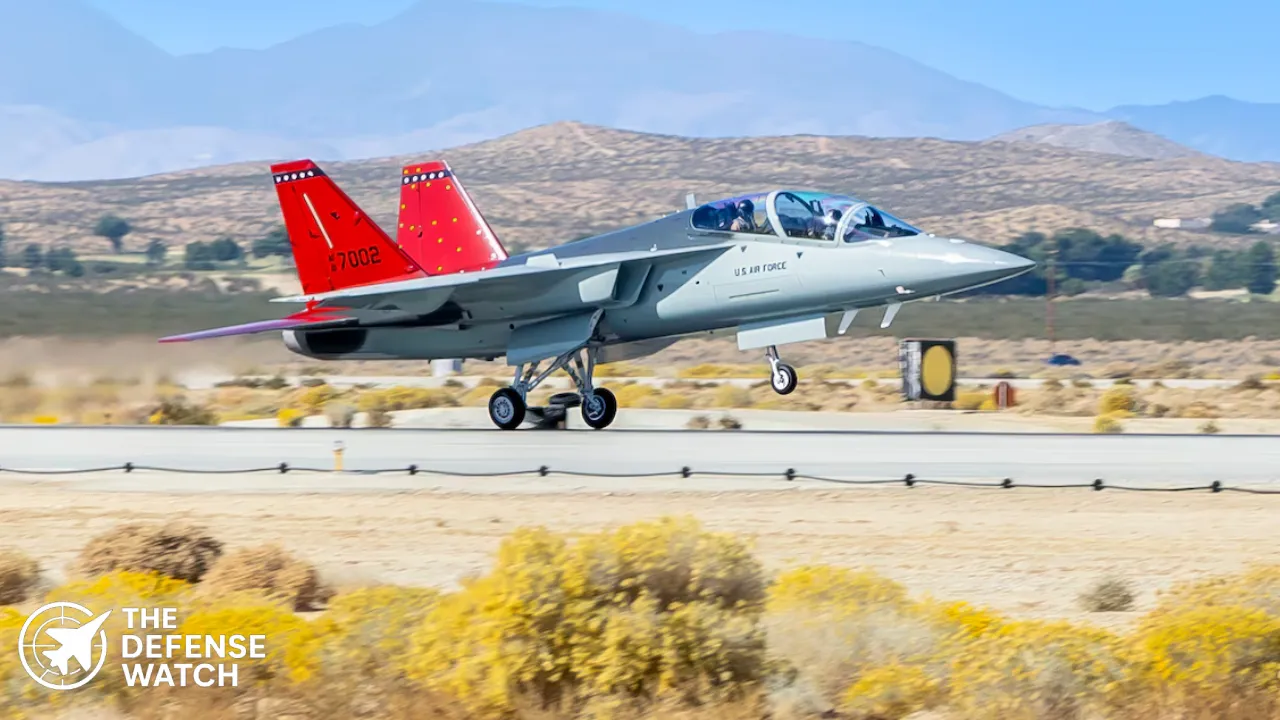
The YFQ-44A developed by Anduril Industries, is one of two aircraft selected under Increment 1 of the U.S. Air Force’s Collaborative Combat Aircraft program.
Designed as an affordable, highly survivable unmanned combat aircraft, the platform is intended to operate alongside fighters such as the:
- F 35A Lightning II
- F 22 Raptor
- Future Next Generation Air Dominance (NGAD) platform
Rather than replacing crewed aircraft, the drone functions as an intelligent force multiplier capable of carrying weapons, sensors, electronic warfare payloads, or reconnaissance equipment while remaining under varying levels of human supervision.
Its open architecture software enables rapid upgrades, allowing mission systems to evolve as new threats emerge.
Collaborative Combat Aircraft Strategy
The Collaborative Combat Aircraft program represents one of the Air Force’s most ambitious modernization initiatives.
Instead of relying exclusively on expensive fifth and sixth generation fighters, future combat formations are expected to include multiple autonomous or semi autonomous aircraft supporting each crewed fighter.
Potential missions include:
Mission Operational Benefit Air to air combat Expands missile capacity for fighter formations Electronic warfare Jams enemy radar and communications Intelligence collection Extends sensor coverage Decoy operations Forces adversaries to reveal air defenses Strike missions Delivers precision weapons while reducing pilot risk Escort operations Protects high value airborne assets The Air Force has stated that deploying multiple lower cost CCAs alongside advanced fighters could significantly increase combat mass while reducing operational risk during high intensity conflicts.
Why the AIM-120 Launch Matters
The AIM 120 AMRAAM remains the U.S. military’s primary beyond visual range air to air missile.
Integrating the missile onto the YFQ-44A demonstrates that autonomous aircraft can employ the same frontline weapons used by manned fighters, potentially allowing commanders to distribute offensive capability across a larger number of platforms.
Although the missile itself has long been operational, integrating it with a new autonomous aircraft requires validation across several complex systems, including:
- Fire control software
- Flight management computers
- Secure communications
- Weapons separation characteristics
- Safety certification
- Mission planning integration
Successfully completing these steps substantially reduces technical risk for future operational testing.
Technical Significance Beyond a Missile Launch
The missile release represents more than simply proving that the aircraft can fire a weapon.
Modern autonomous combat aircraft must coordinate numerous software driven functions simultaneously, including sensor fusion, navigation, weapons authorization, threat recognition, and secure communication with nearby aircraft.
Every successful weapons test generates valuable engineering data that improves:
- Artificial intelligence decision support
- Mission autonomy
- Network resilience
- Aircraft survivability
- Human machine interface
- Multi aircraft coordination
These capabilities are central to the Air Force’s long term vision of distributed combat operations across contested environments.
Implications for Future Air Combat
The YFQ-44A is part of a broader transformation in how the U.S. Air Force intends to conduct air warfare over the coming decades.
Potential adversaries continue expanding integrated air defense systems, long range missiles, and advanced fighter fleets. Operating only small numbers of expensive crewed aircraft in such environments presents growing operational challenges.
Collaborative Combat Aircraft seek to address this by increasing force size without proportionally increasing acquisition or personnel costs.
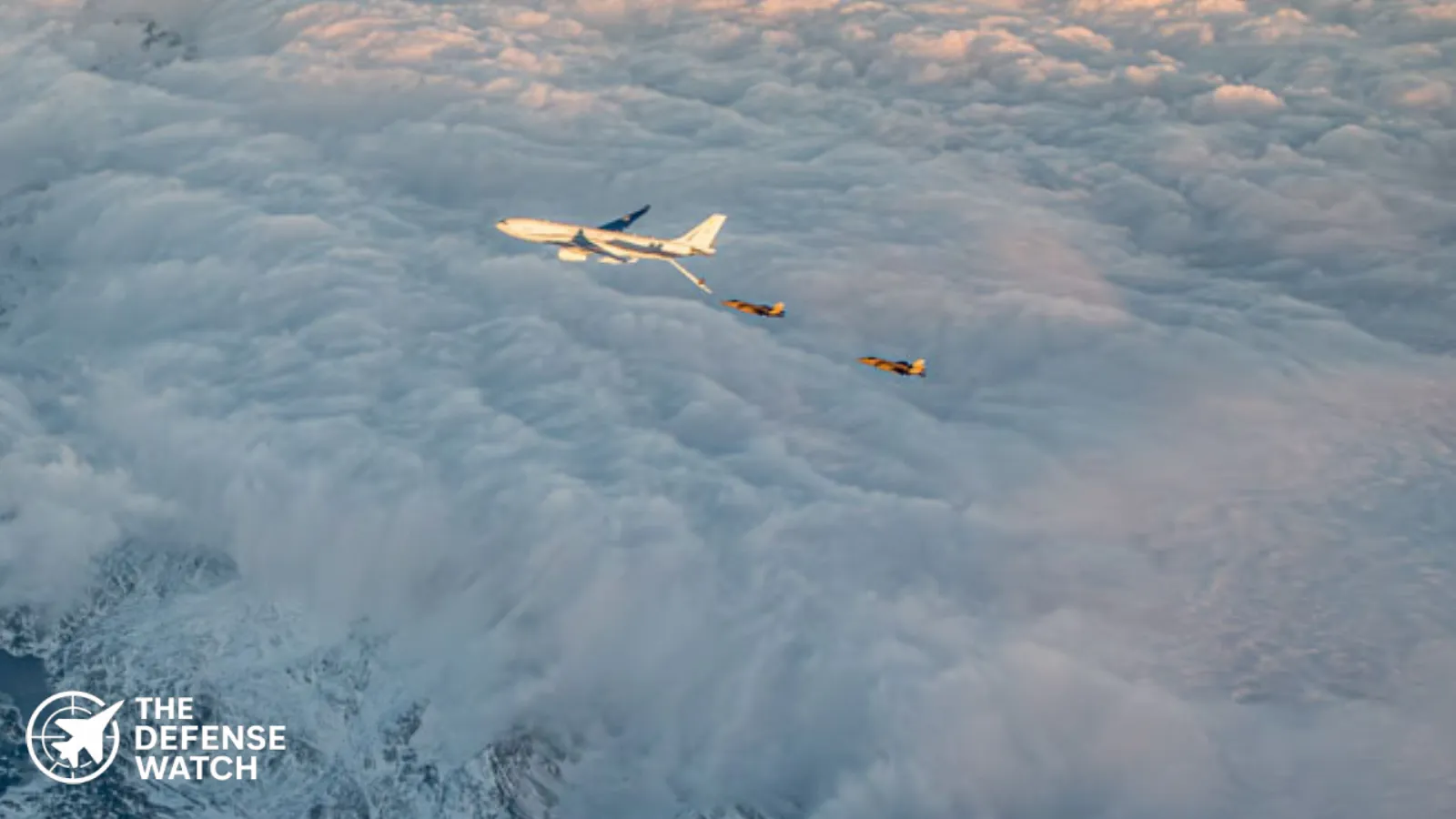
If fielded successfully, formations could include one crewed fighter directing several unmanned aircraft carrying additional missiles, sensors, or electronic warfare payloads. This approach increases operational flexibility while complicating an adversary’s targeting decisions.
The successful live fire event therefore serves as an important demonstration that autonomous combat aircraft are moving beyond technology demonstrations toward practical combat capability. Although further developmental testing, software refinement, and operational evaluation remain ahead, the program continues advancing on an accelerated timeline compared with many previous tactical aircraft developments.
Looking Ahead
The U.S. Air Force is expected to continue expanding flight testing of both Collaborative Combat Aircraft designs throughout 2026 and beyond. Future evaluations will likely examine increasingly complex operational scenarios involving manned and unmanned teaming, autonomous mission execution, sensor integration, and networked combat operations.
As additional weapons, sensors, and mission software are integrated, the YFQ-44A will play an important role in shaping how the Air Force fields affordable autonomous aircraft capable of supporting next generation air superiority missions.
Its first successful AIM 120 live fire test represents an important step toward translating the Collaborative Combat Aircraft concept into an operational capability for future U.S. air combat.