Executive Summary:
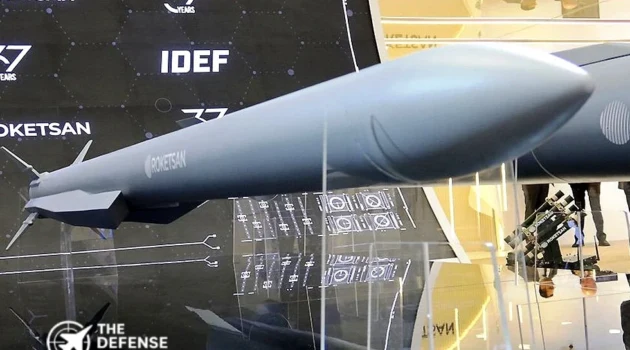
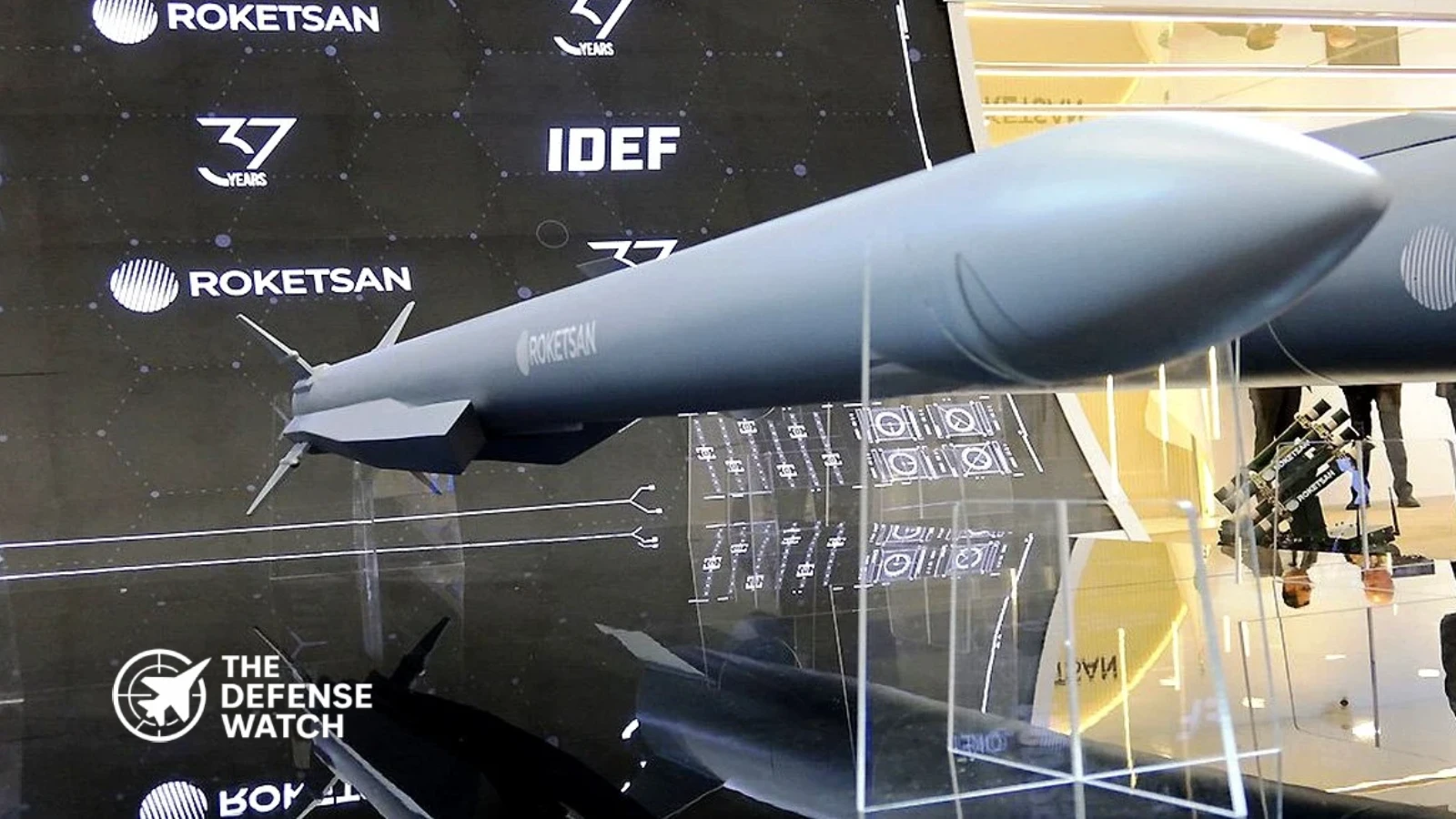
Türkiye is developing GÖKHAN as a national ramjet-powered beyond-visual-range air-to-air missile for long-range air combat. Developed by TÜBİTAK SAGE under a program launched in 2021, GÖKHAN has moved through conceptual and preliminary design, with ground testing underway and additional range and capability development contracts signed in 2025.
The GÖKHAN missile is Türkiye’s indigenous ramjet-powered air-to-air missile program, developed by TÜBİTAK SAGE to provide the Turkish defense industry with a strategic long-range beyond-visual-range air combat weapon. The development contract between Türkiye’s Ministry of National Defense and TÜBİTAK SAGE was signed on May 21, 2021.
The program is intended to engage air targets at long distances while supporting air superiority, protecting high-value aircraft and allowing strike aircraft to contribute to their own survivability.
TÜBİTAK SAGE says the conceptual design and preliminary design phases have been completed, while ground trial activities are being conducted. The next stages include subsystem and system verification, followed by flight and firing tests.
GÖKHAN Represents a New Class of Turkish Air-to-Air Weapon
The central technological feature of GÖKHAN is its ramjet propulsion system.
Unlike a conventional rocket motor, a ramjet uses atmospheric oxygen during powered flight. This allows the propulsion system to sustain thrust over a longer portion of the missile’s flight, subject to the missile’s flight regime and propulsion design.
For a long-range air-to-air weapon, maintaining energy during the engagement is particularly important. A missile that retains sufficient speed and maneuverability during the terminal phase can have greater opportunity to respond to a maneuvering target.
However, propulsion alone does not determine an air-to-air missile’s effectiveness. Seeker performance, guidance algorithms, electronic counter-countermeasures, data links, navigation, flight-control systems, warhead and fuze technology all contribute to the overall weapon capability.
GÖKHAN Builds on Türkiye’s GÖKDOĞAN and BOZDOĞAN Programs
GÖKHAN is not being developed independently of Türkiye’s earlier air-to-air missile work.
TÜBİTAK SAGE says the program benefits from knowledge gained through the GÖKDOĞAN and BOZDOĞAN projects. At IDEF 2025, the institute identified GÖKHAN as Türkiye’s first national ramjet-powered air-to-air missile and highlighted its ramjet propulsion, high maneuverability and two-way data-link capability.
GÖKDOĞAN is already established as Türkiye’s beyond-visual-range air-to-air missile. TÜBİTAK SAGE lists the missile with an active radar seeker, solid-fuel rocket propulsion, a published range of more than 65 kilometers, target-update capability through a data link and advanced counter-countermeasure features.
GÖKHAN is intended to move the Turkish air-to-air missile family toward a longer-range ramjet-powered capability.
Türkiye Expands the GÖKHAN Program
A significant development came during IDEF 2025 in Istanbul.
TÜBİTAK SAGE announced an amendment to the existing GÖKHAN development contract for increased range and capability. It also signed a separate contract for the development of a long-range GÖKHAN configuration.
The institute said these agreements are intended to increase GÖKHAN’s range performance and maneuverability, with the long-term objective of making it one of the longest-range air-to-air missiles in the NATO inventory.
This is an important distinction from simply describing GÖKHAN as a missile with a fixed publicly confirmed maximum range. TÜBİTAK SAGE has not released a complete official specification table establishing a final maximum range, terminal speed or warhead weight.
Consequently, numerical performance figures circulating in secondary reporting should not be treated as confirmed specifications unless Türkiye’s defense authorities or TÜBİTAK SAGE officially release them.
What Makes the Ramjet Approach Important?
The primary advantage sought through ramjet propulsion is sustained energy.
In a long-range engagement, a missile may travel a substantial distance before reaching the target’s vicinity. During that time, aerodynamic drag reduces speed and maneuvering can consume additional energy.
A ramjet-powered design is intended to continue producing thrust during the appropriate portion of the flight. This can support higher retained energy and potentially improve the missile’s ability to maneuver during the terminal engagement.
The actual operational advantage, however, will only become clear through flight and firing trials.
GÖKHAN must demonstrate reliable propulsion, guidance, seeker performance, control and target engagement under realistic conditions before its full capability can be assessed.
GÖKHAN and Türkiye’s Broader Air Combat Modernization
The missile forms part of a wider Turkish effort to develop an increasingly independent air combat ecosystem.
Türkiye is simultaneously developing advanced aircraft, unmanned combat aircraft, sensors, electronic warfare capabilities and domestic weapons. An indigenous long-range air-to-air missile gives the country greater control over the development and integration of its air combat weapons.
This also has implications for Türkiye’s future fighter fleet.
As Turkish combat aircraft programs mature, an indigenous air-to-air missile can be developed alongside the aircraft rather than being dependent entirely on foreign weapons integration schedules.
The approach also gives Turkish defense companies and research institutions experience in areas such as ramjet propulsion, active guidance, data links, flight control and weapons integration.
GÖKHAN’s Current Development Status
The missile remains a development program rather than an operationally deployed weapon.
Feature Publicly Confirmed Information Missile GÖKHAN Country Türkiye Developer TÜBİTAK SAGE Weapon type Beyond-visual-range air-to-air missile Propulsion Ramjet Development contract May 21, 2021 Design status Conceptual and preliminary design completed Current testing Ground trials Future testing Flight and firing tests Data link Two-way data link publicly identified Range Final official figure not publicly disclosed TÜBİTAK SAGE’s official program page confirms that ground trials are underway and that future flight and firing tests will be used for subsystem and system verification.
Why GÖKHAN Matters to Türkiye
The significance of GÖKHAN extends beyond the missile itself.
Türkiye is seeking to build greater domestic control over critical air combat technologies. Developing a ramjet-powered air-to-air missile requires expertise in propulsion, aerodynamics, guidance, seeker technology, flight control and systems integration.
The program therefore represents another step in the development of Türkiye’s indigenous precision-weapons industry.
TÜBİTAK SAGE has also stated that GÖKHAN is intended to place Türkiye among NATO member states capable of producing ramjet-powered air-to-air missiles.
That makes the program relevant not only to Türkiye’s air force modernization but also to the broader evolution of NATO’s domestic missile technology base.
What Comes Next for GÖKHAN
The next major milestone will be testing.
Ground trials must establish the reliability of the missile’s propulsion, guidance, control and other subsystems before the program progresses through flight testing and live firing.
The outcome of those trials will provide the first substantial evidence of GÖKHAN’s real-world performance.
For now, the most defensible assessment is that Türkiye is developing a national ramjet-powered beyond-visual-range air-to-air missile with an expanded range and capability effort underway.
GÖKHAN should therefore be viewed as part of Türkiye’s long-term effort to build an indigenous, networked air combat capability rather than as an already operational missile with publicly established performance figures.