• Home
  • About
  • Defense Systems
  • Manufacturer
  • Comparisons
  • Compare 
  • Tools
TheDefenseWatch.com
  • Aerospace & Aviation
  • Military & Ordnance
  • Naval & Maritime
  • Cyber & Space Defense
  • Policy & Strategy
  • Global News
  • Tools Library
    • Smart Calculator
    • Drone Flight Time Calculator
    • Drone Range Calculator
    • Counter-Drone Jammer Effective Range Calculator
    • Counter-Battery Radar Detection Calculator
    • Artillery Fire Correction Calculator
    • Thermal Camera Detection Range Calculator
    • Missile Range & Time-of-Flight Calculator
    • Radar Detection Range Calculator
    • FPV Strike Drone Payload vs Range Calculator
    • Loitering Munition Endurance Calculator
    • Sniper Ballistic Drop & Windage Calculator
    • Bullet Drop Calculator
    • U.S. Army Combat Fitness Test (ACFT) Calculator
    • Military Pension Calculator
    • Military Retirement Calculator
    • Military Pension Calculator
    • Large Number Calculator
Font ResizerAa

TheDefenseWatch.com

The Defense Watch | U.S. & Global Defense News, Analysis & Military Updates

Search
  • Home
  • About
  • Defense Systems
  • Manufacturer
  • Comparisons
  • Compare 
  • Tools

Stay Updated

Get the latest update

Subscribe

Explore

  • Drone
  • Fighter Jets & Military Aircraft
  • Hypersonic Weapons
  • Aircraft Carriers
  • Strategic History & Missions
  • Tools Library
Home » Italy Moves To Restrict US Military Aircraft Stopovers As Middle East Tensions Rise
Geopolitical & Strategic DoctrinesPolicy & Strategy

Italy Moves To Restrict US Military Aircraft Stopovers As Middle East Tensions Rise

Samuel Drake | Defense Analyst
Last updated: September 7, 2026 4:00 pm
Samuel Drake | Defense Analyst
Share
2 Min Read
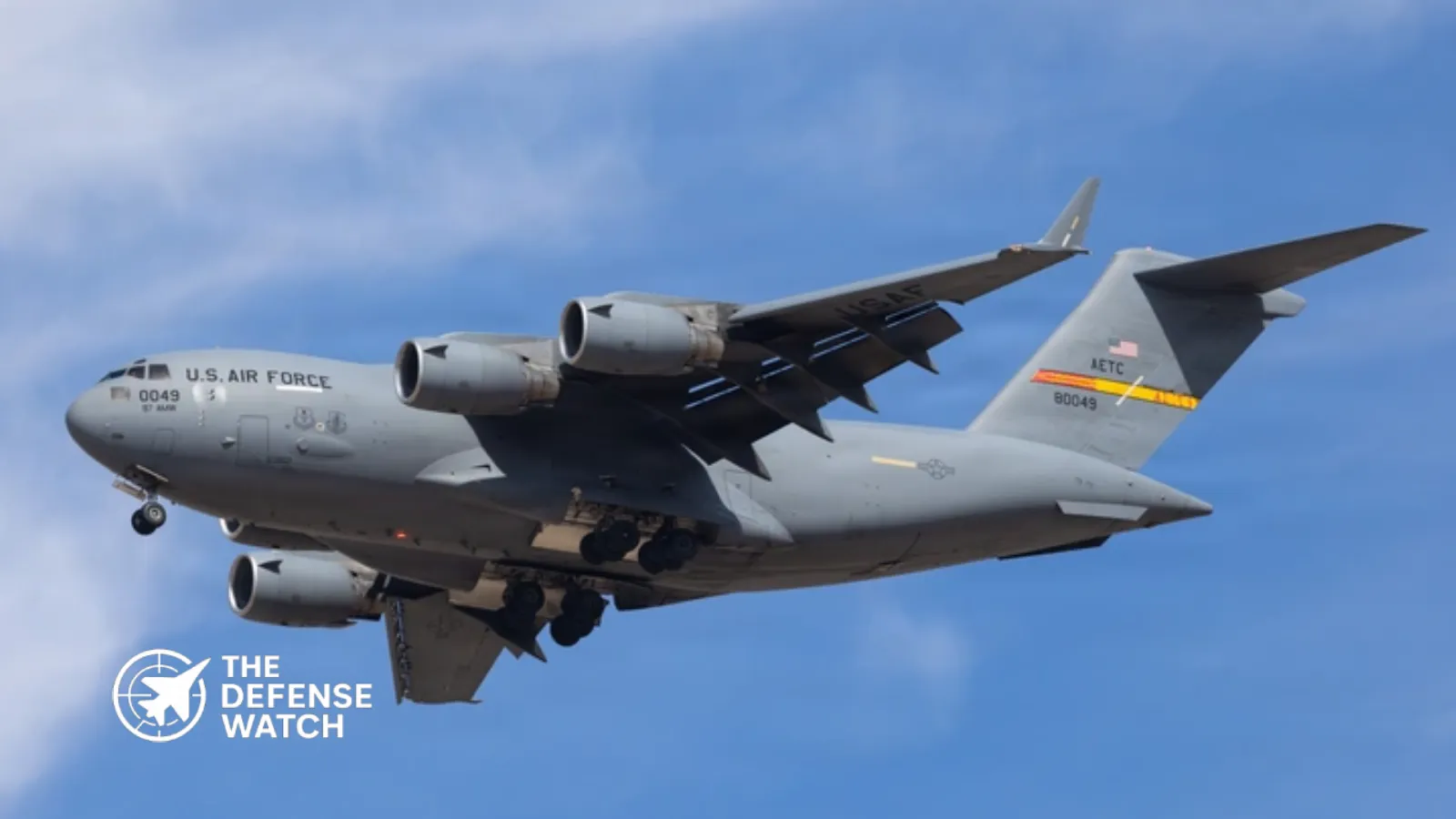
Italy US military aircraft stopover
Image : U.S. Air Force
SHARE
¦ KEY FACTS AT A GLANCE
  • Italy has denied stopovers for some US military aircraft transiting through Sicily toward the Middle East.
  • The decision affects operations at Naval Air Station Sigonella, a key NATO logistics hub.
  • The move reflects political sensitivity over escalating Middle East military activity.
  • US airlift and refueling routes may require adjustments or alternative basing options.
  • The development signals friction within allied coordination despite ongoing NATO commitments.

Italy US Military Aircraft Stopover Restrictions Highlight Operational Friction

Italy US military aircraft stopover restrictions are reshaping air mobility planning as Rome declines to support certain US flights transiting through Sicily en route to the Middle East. The decision affects operations at Naval Air Station Sigonella, a critical hub for US and NATO logistics in the Mediterranean.

Contents
Italy US Military Aircraft Stopover Restrictions Highlight Operational FrictionThe Big PictureWhat’s HappeningWhy It MattersStrategic ImplicationsCompetitor ViewWhat To Watch NextCapability GapThe Bottom Line

The Big Picture

US military air mobility depends on a network of allied bases across Europe to sustain operations in the Middle East. Italy plays a central role in that network, particularly through Sigonella, which supports surveillance aircraft, tankers, and strategic airlift platforms.

Rising tensions and sustained US air operations in the Middle East have increased the tempo of flights passing through Southern Europe. This places political and operational pressure on host nations that must balance alliance commitments with domestic and regional concerns.

Italy’s decision reflects a broader trend where European allies exercise tighter control over how their territory supports expeditionary military operations.

- Advertisement -

What’s Happening

Italian authorities recently denied permission for certain US military aircraft to stop over in Sicily while en route to the Middle East. The restriction specifically impacts flights that would typically use Sigonella for refueling, crew rest, or logistical staging.

The move does not represent a full closure of the base to US forces. Instead, it introduces case by case limitations tied to mission type and political considerations.

US officials continue to operate from Sigonella, but the denial of select stopovers forces planners to reroute or adjust flight profiles.

Defense News first reported the development, citing officials familiar with the situation.

Why It Matters

Air mobility underpins US global military reach. Even limited restrictions at key nodes can disrupt efficiency, increase flight times, and strain tanker support.

Sigonella serves as a forward logistics platform for intelligence, surveillance, reconnaissance missions, as well as transport aircraft supporting operations across the Middle East and North Africa.

Restricting stopovers creates friction in an already complex air bridge. Aircraft may need to divert to alternative bases in Spain, Greece, or other NATO locations, adding operational cost and reducing responsiveness.

The decision also highlights how political considerations can directly affect military logistics, even among close allies.

- Advertisement -

Strategic Implications

Italy’s move introduces uncertainty into NATO’s southern logistics corridor. While the alliance remains cohesive, operational flexibility depends on predictable access to infrastructure.

Reduced access to Sigonella could slow surge operations or complicate sustained air campaigns. It also places greater reliance on fewer alternative bases, which may face capacity constraints.

From a deterrence perspective, any perceived friction in allied coordination could be noted by adversaries. However, the limited scope of the restriction suggests Italy aims to signal political caution without undermining NATO commitments.

The development underscores the importance of distributed basing strategies. The US has increasingly emphasized flexible basing and dispersed logistics to mitigate such risks.

Competitor View

Russia and Iran are likely to interpret the restrictions as evidence of political sensitivity within NATO regarding Middle East operations.

Moscow has long highlighted divisions within Western alliances. Even limited constraints on US operations can reinforce that narrative.

Tehran may view the decision as a sign that sustained US air campaigns carry political costs for regional partners. This could factor into its assessment of US operational endurance.

China, while less directly involved in the region, continues to study alliance cohesion as part of its broader strategic analysis.

What To Watch Next

US planners will likely adjust routing for aircraft supporting Middle East operations. Increased use of alternative bases in Southern Europe is expected.

Diplomatic engagement between Washington and Rome may clarify the scope of restrictions. Future decisions will indicate whether this is a temporary measure or part of a longer term policy shift.

Monitoring flight patterns and tanker deployments will provide insight into how the US adapts its air mobility network.

Any expansion of restrictions to other NATO bases would signal a broader shift in alliance dynamics.

Capability Gap

The Italy US military aircraft stopover issue highlights a vulnerability in reliance on fixed allied infrastructure.

US forces depend heavily on predictable access to overseas bases. When access becomes conditional, operational tempo and flexibility can suffer.

The situation reinforces the need for greater investment in long range airlift, aerial refueling capacity, and expeditionary basing concepts.

However, alternatives are not without limits. Longer routes increase fuel consumption and reduce payload efficiency. Dispersed basing requires additional logistical coordination and infrastructure investment.

The Bottom Line

Italy’s restriction on US military aircraft stopovers introduces operational friction in a critical logistics corridor, underscoring the strategic importance of allied access in sustaining global air operations.


TAGGED:ItalyMiddle EastMilitary AviationNATOUS military
Share This Article
Facebook Copy Link Print
BySamuel Drake | Defense Analyst
Follow:
Samuel Drake is a defense analyst at TheDefenseWatch.com covering naval warfare, military ordnance, maritime technology, fleet modernization, and defense procurement. His reporting focuses on documented capabilities, procurement programs, and military technology.
Leave a Comment

Leave a Reply Cancel reply

Your email address will not be published. Required fields are marked *

Search Defense Systems

Latest Defense Systems

  • TRML-4D Radar TRML-4D Radar
  • F-47A Fighter Jet F-47A Fighter Jet
  • China DF-61 Missile China DF-61 Missile
  • B61 Nuclear Bomb B61 Nuclear Bomb
  • Japan E-767 Airborne Japan E-767 Airborne
  • Remington 870 Shotgun Remington 870 Shotgun
  • RUTA B1 Cruise Missile RUTA B1 Cruise Missile
  • XQ-67A Drone XQ-67A Drone
  • B-25 Mitchell Bomber B-25 Mitchell Bomber

Recent Compares

  • J-10C vs JF-17 Thunder: Which Fighter Is More Capable? J-10C vs JF-17 Thunder: Which Fighter Is More Capable? View Comparison →
  • Tejas vs Gripen: Key Differences and Capabilities Tejas vs Gripen: Key Differences and Capabilities View Comparison →
  • Tejas vs MiG-21 Bison: How India Replaced Its Iconic Supersonic Fighter Tejas vs MiG-21 Bison: How India Replaced Its Iconic Supersonic Fighter View Comparison →
  • F-35 vs F-16: Stealth, Sensors and Combat Roles F-35 vs F-16: Stealth, Sensors and Combat Roles View Comparison →
  • Tejas Fighter Jet vs F-16 Fighting Falcon: Capability Compared Tejas Fighter Jet vs F-16 Fighting Falcon: Capability Compared View Comparison →
  • Rafale Fighter Jet vs F-16 Fighting Falcon : Which Fighter Has the Edge? Rafale Fighter Jet vs F-16 Fighting Falcon : Which Fighter Has the Edge? View Comparison →
  • Su-57 Fighter Jet vs J-20 Fighter Jet: Stealth and Air Combat Compared Su-57 Fighter Jet vs J-20 Fighter Jet: Stealth and Air Combat Compared View Comparison →
  • Mirage 2000 vs Tejas Mk1A: Legacy Combat Power vs Indigenous Modernization Mirage 2000 vs Tejas Mk1A: Legacy Combat Power vs Indigenous Modernization View Comparison →
  • Rafale Fighter Jet vs F-22 Raptor: Which Air Dominance Fighter Has the Edge? Rafale Fighter Jet vs F-22 Raptor: Which Air Dominance Fighter Has the Edge? View Comparison →
  • Tejas Fighter Jet vs. Rafale Fighter Jet: India’s Indigenous Fighter Meets France’s Proven Multirole Combat Aircraft Tejas Fighter Jet vs. Rafale Fighter Jet: India’s Indigenous Fighter Meets France’s Proven Multirole Combat Aircraft View Comparison →

Recent Posts

  • US Military vs Indian Military: How Their Armed Forces Compare
  • USA Army vs Pakistan Army: Troops, Tanks and Military Capabilities
  • SpaceX Targets First Starship Spacecraft Recovery After Booster Catch Failure
  • Zelensky Escalates Criticism of SpaceX Over Starshield Speed Restrictions
  • Jensen Huang’s Nvidia Exit Raises New Questions for U.S.-China AI Competition

You Might Also Like

Thales TopOwl digital display
Global News

Thales Awarded NAHEMA Contract to Fit NH90 Helicopter Pilots With TopOwl Digital Display Helmet

January 15, 2026
UH-60M Black Hawk avionics
Defense Contracts

US Army Awards $95.7M UH-60M Black Hawk Multi-Functional Display Avionics Suite Contract To Rockwell Collins

September 7, 2026
FCAS fighter jet project
Defense Budgets & PolicyPolicy & Strategy

EU Defense Commissioner Calls FCAS Fighter Jet Project A Failure Amid Mounting Delays

September 12, 2026
LGM-35A Sentinel nuclear missile program
Defense Budgets & PolicyPolicy & Strategy

U.S. Air Force Targets Early 2030s For Revamped LGM-35A Sentinel Nuclear Missile Rollout

September 9, 2026

Logo

Copyright © 2026 TheDefenseWatch.com

Helpful Links

  • Home
  • About Us
  • Privacy Policy
  • Terms of Use / Disclaimer
  • U.S. Privacy Notice – CCPA Compliance

Defense Systems

  • Defense Systems
  • Comparisons 
  • Manufacturer
  • Tactical Calculators

Popuplar

Which 5 Air Forces Possess the Costliest Fighter Jet Fleets in the World
Evolving Strategic Value: Carrier Strike Groups in the Indo-Pacific’s Future Security Architecture
Autonomous Weapon Systems Spark U.S. Ethics Debate Amid Rapid Military AI Integration

We report on developments involving military forces, governments, defense companies, research organizations, and security institutions around the world. 

Welcome Back!

Sign in to your account

Username or Email Address
Password

Lost your password?