(adsbygoogle = window.adsbygoogle || []).push({});Executive Summary:
In 2026, the global naval balance is undergoing its most significant realignment since the Cold War. The United States Navy retains unmatched qualitative supremacy with 7.168 million tonnes of aggregate displacement and 11 nuclear-powered carriers. China’s People’s Liberation Army Navy, now operating three carriers and over 370 major combat vessels, is closing the gap faster than any Western intelligence estimate predicted five years ago. Below is The Defense Watch’s definitive ranking of the ten most powerful navies on Earth — assessed by fleet size, tonnage, carrier aviation, submarine force, power-projection reach, and 2026 modernization trajectory.
Why Fleet Metrics Matter More Than Ever in 2026
Measuring naval power has never been straightforward. Raw ship counts flatter navies that rely on coastal patrol craft — North Korea, for example, operates one of the numerically largest fleets on Earth but falls well outside any credible top-ten by combat power. The most analytically rigorous assessments — including the World Directory of Modern Military Warships (WDMMW) TrueValueRating (TvR), the Global Firepower index, and aggregate displacement tonnage — all weight factors such as carrier aviation, blue-water range, submarine force quality, missile payloads, and logistics sustainability.
The rankings below integrate all of those dimensions. The result is a picture of the most powerful navies in the world in 2026 that goes well beyond counting hulls in harbor.
Quick Comparison
| Rank | Navy | Total Vessels (approx.) | Aircraft Carriers | Submarines | Destroyers/Frigates | Total Displacement (est.) | Primary Strength |
|---|---|---|---|---|---|---|---|
| 1 | United States | ~296 battle force | 11 | 68 | ~76 / 1+ | ~7.17M tonnes | Global blue-water projection |
| 2 | China (PLAN) | ~370+ major (~1,000 total) | 3 (+1 U/C) | 73 | 31+ / 32+ | ~3.5M tonnes (major) | Rapid expansion & A2/AD |
| 3 | Russia | ~477 total | 1 (limited) | 81 | 10 / 19 | ~1.5M tonnes | Submarines & hypersonics |
| 4 | India | ~145-297 total | 2 | 18 | 9 / 15+ | ~632K tonnes | Indian Ocean dominance |
| 5 | Japan (JMSDF) | ~155 | 0* (4 light) | 22 | 28 / 6 | ~798K tonnes | Quiet submarines & Aegis |
| 6 | United Kingdom | ~63-75 commissioned | 2 | 10 | 6 / 9 | ~600K tonnes | High-end carrier strike |
| 7 | France | ~100+ | 1 (nuclear) | 10 | 2 / 13 | ~487K tonnes | Independent global reach |
| 8 | South Korea | ~155 | 0* (CVX planned) | 22 | 12 / 12 | ~428K tonnes | Aegis destroyers & domestic build |
| 9 | Italy | ~185-285 | 2 (STOVL) | 8 | 2 / 6 | ~300K+ tonnes | Balanced Mediterranean force |
| 10 | Indonesia | ~280+ | 0 | 5 | 0 / 10+ | ~200K-325K tonnes | Archipelagic choke-point control |
- › The U.S. Navy leads with 7.168 million tonnes of aggregate displacement and 11 nuclear-powered aircraft carriers — the largest carrier fleet in history.
- › China’s PLAN commissioned its third carrier, CNS Fujian (Type 003 CATOBAR), in November 2025, cementing its status as the world’s second-largest carrier operator.
- › The PLAN launched at least 21 major combatants in 2025 alone — roughly a quarter million tonnes of new steel — and plans a 7% PLA budget increase in 2026.
- › Russia’s navy remains a credible deterrent force anchored on its submarine fleet, though Western sanctions and the Ukraine war have strained surface fleet readiness.
- › India, Japan, and South Korea are consolidating a counter-axis of Indo-Pacific naval power, with India’s INS Vikrant, Japan’s F-35B-equipped Izumo-class, and South Korea’s Aegis destroyer fleet all reaching new operational milestones in 2025–2026.
Why Fleet Metrics Matter: Blue-Water vs. Green/Brown-Water Navies in 2026
Raw ship counts can mislead. A true assessment of the most powerful navies in the world 2026 prioritizes blue-water capabilities (global reach beyond coastal waters), total tonnage/displacement, carrier aviation for power projection, advanced submarines (SSNs/SSBNs), missile payloads, and logistics. Coastal-focused (brown-water/green-water) fleets excel in regional A2/AD zones but lack sustained high-seas dominance.
#1 — United States Navy (USN)
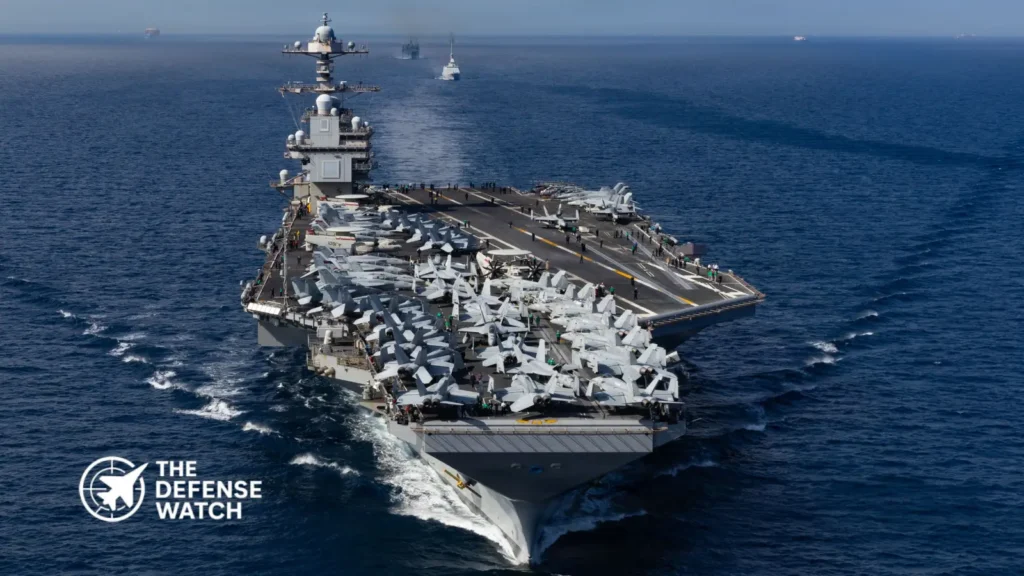
Fleet Size: ~296 commissioned warships | Displacement: 7.168 million tonnes | Carriers: 11 nuclear-powered CVNs | Submarines: 68 (14 SSBNs, 54 SSNs)
No navy on Earth comes close to matching the breadth, depth, and global reach of the United States Navy. Its 11 Nimitz- and Ford-class carriers — each displacing over 100,000 tonnes and capable of operating 75-plus aircraft — give Washington a mobile airpower network that no adversary can replicate on a realistic budget timeline. The Arleigh Burke-class destroyer fleet, now exceeding 70 hulls and incorporating the latest Flight III Aegis Baseline 10 combat management system, anchors the surface escort layer. The Virginia-class attack submarine program continues its steady drumbeat of commissioning, strengthening undersea dominance.
(adsbygoogle = window.adsbygoogle || []).push({});The U.S. Navy’s WDMMW TvR score of 323.9 is the highest achievable under the current methodology — a reflection not merely of numbers but of breadth across every warship category, combined with unmatched logistical infrastructure spanning Diego Garcia, Yokosuka, Bahrain, and Rota.
Analysis: The USN’s principal vulnerability heading into the late 2020s is not adversarial but industrial. Shipyard throughput, a persistent recruitment shortfall, and the delayed Constellation-class frigate program (first ship not expected until 2028) suggest the fleet could contract modestly in overall hull count even as individual platforms grow more capable. For now, qualitative supremacy remains overwhelming.
#2 — People’s Liberation Army Navy (PLAN), China
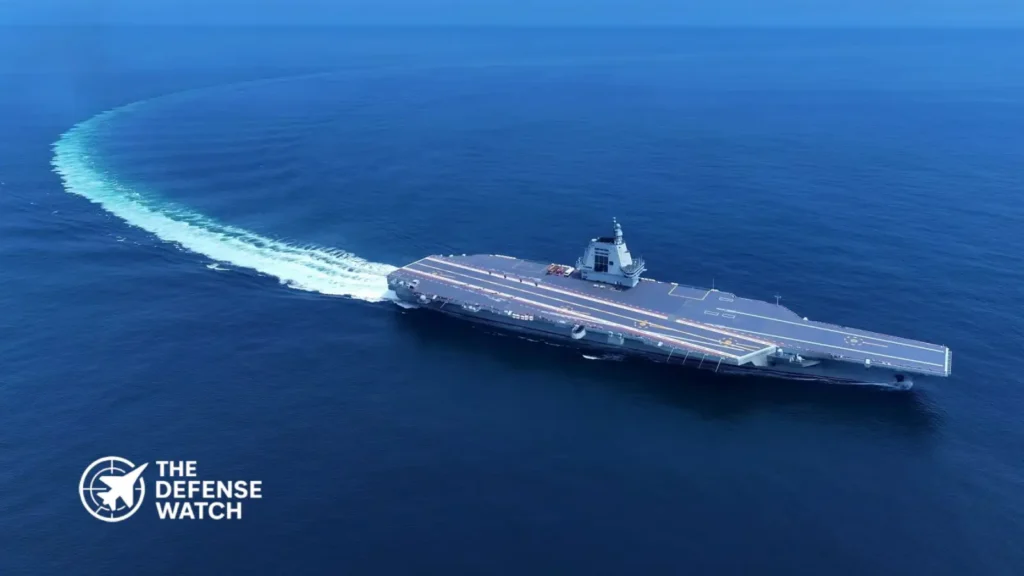
Fleet Size: ~370+ major combat vessels (1,000+ including auxiliaries) | Carriers: 3 operational (Liaoning, Shandong, Fujian) + Type 004 under construction | Submarines: 73 (including 6–10 SSNs, 6–8 SSBNs)
The PLAN’s trajectory is the defining naval story of this decade. The commissioning of CNS Fujian — China’s first electromagnetic catapult (CATOBAR) carrier — at Yulin Naval Base on November 5, 2025 marked a genuine strategic inflection point. Beijing is now a three-carrier nation capable of sustaining concurrent carrier task force deployments across the Western Pacific. The Pentagon’s December 2025 annual report warned that China is targeting a nine-carrier fleet by 2035, with construction of the nuclear-powered Type 004 already underway at Dalian. In 2025 alone, the PLAN commissioned at least 21 major combatants, including five Type 055 Renhai-class cruisers (10 now in service, four more fitting out), eight destroyers, and five Type 054B stealth frigates. The submarine force is in rapid transition toward nuclear primacy: the Office of Naval Intelligence estimated in March 2026 that between six and eight Type 093B SSGNs are now operational, each equipped with 24-cell vertical launch systems for YJ-18 and YJ-20 hypersonic anti-ship missiles.
Analysis: The PLAN’s Achilles’ heel remains operational experience. It has never fought a peer naval battle, and crew proficiency gaps — particularly in carrier air wing integration and anti-submarine warfare — are genuine limiting factors. Yet the speed of China’s shipbuilding output, estimated at roughly 200 times U.S. capacity by some assessments, means those gaps could narrow faster than Western planners prefer to acknowledge.
| Category | Details |
|---|---|
| Rank | #2 |
| Fleet Size | ~370+ major combat vessels (1,000+ with auxiliaries) |
| Carriers | 3 operational + Type 004 under construction |
| Submarines | 73 (6–10 SSNs, 6–8 SSBNs) |
| Key Assets | 10+ Type 055 cruisers, rapid shipbuilding |
| Notes | Targeting 9 carriers by 2035 |
#3 — Russian Navy
Fleet Size: ~747 vessels (including coastal and reserve) | Key Assets: Ballistic missile submarines (SSBNs), Kilo-class SSKs, Admiral Gorshkov-class frigates | Carriers: 1 (Admiral Kuznetsov — repeatedly under repair)
Russia’s naval power in 2026 sits at an uncomfortable junction: its submarine force, particularly the Borei-A SSBN class and Yasen-M SSGNs, remains a credible strategic deterrent and a genuine operational threat. However, the prolonged war in Ukraine, Western sanctions on dual-use microelectronics, and the chronic non-readiness of Admiral Kuznetsov have degraded the surface fleet’s blue-water credibility. New Admiral Gorshkov-class frigates armed with Kalibr cruise missiles and Zircon hypersonic anti-ship missiles give the Russian Navy asymmetric strike reach that outpaces its platform tonnage. Russia retains roughly eight SSBNs, preserving its second-strike nuclear role at sea.
| Category | Details |
|---|---|
| Rank | #3 |
| Fleet Size | ~747 vessels (incl. coastal & reserve) |
| Carriers | 1 (Admiral Kuznetsov – often under repair) |
| Submarines | Significant SSBN/SSGN force (Borei-A, Yasen-M) |
| Key Assets | Admiral Gorshkov frigates with Kalibr & Zircon |
| Notes | Focus on asymmetric sea denial |
Analysis: Russia’s naval strategy has deliberately pivoted toward asymmetric sea denial rather than fleet-on-fleet power projection. In the near term, this makes its submarine force a disproportionate threat relative to overall fleet size, particularly in the North Atlantic and Arctic — theaters where acoustic conditions favor Russian SSNs operating closer to their home waters.
#4 — Indian Navy
Fleet Size: ~140+ commissioned vessels | Carriers: 2 (INS Vikramaditya + INS Vikrant, India’s first indigenous carrier) | Submarines: 16–18 (including 2 Arihant-class SSBNs)
India is the undisputed dominant naval power in the Indian Ocean Region (IOR) in 2026, and INS Vikrant — commissioned in 2022 and now fully operational — has significantly expanded New Delhi’s carrier strike capability. India operates two aircraft carriers, nuclear-powered ballistic missile submarines, and a growing fleet of P-8I maritime patrol aircraft for long-range anti-submarine coverage. The indigenous Advanced Medium Combat Aircraft (AMCA) program, alongside continued inductions of MH-60R Romeo helicopters, is expanding naval aviation depth. India’s strategic geography — flanking critical choke points including the Strait of Hormuz, the Strait of Malacca, and the Nine Degree Channel — gives its navy outsized influence relative to its aggregate tonnage.
| Category | Details |
|---|---|
| Rank | #4 |
| Fleet Size | ~140+ commissioned vessels |
| Carriers | 2 (Vikramaditya + indigenous Vikrant) |
| Submarines | 16–18 (incl. 2 Arihant SSBNs) |
| Key Assets | P-8I aircraft, MH-60R helicopters |
| Notes | Dominant in Indian Ocean Region |
#5 — Japan Maritime Self-Defense Force (JMSDF)
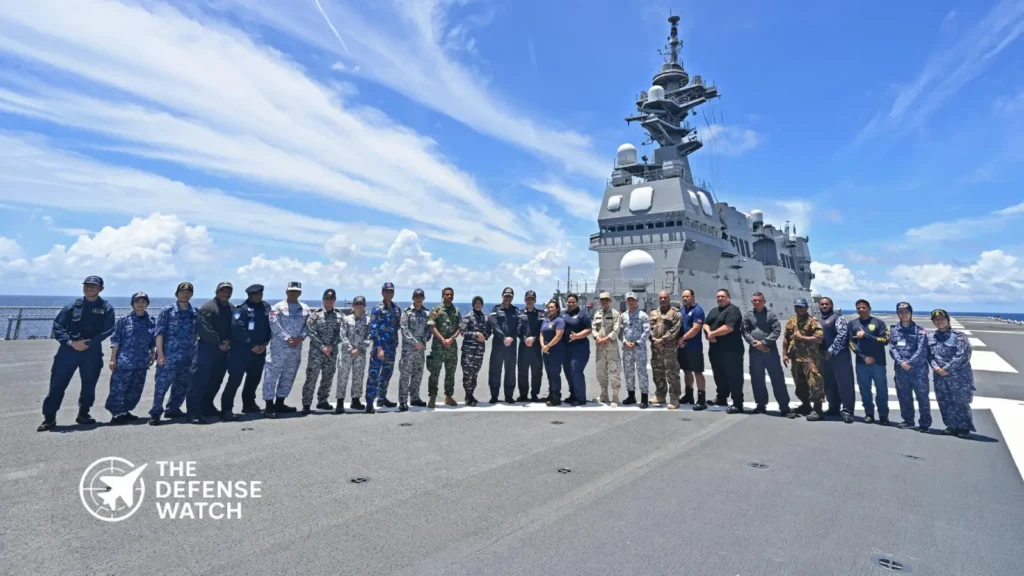
Fleet Size: ~155 vessels | Carriers (de facto): 2 Izumo-class helicopter destroyers, now F-35B capable | Submarines: 22 advanced diesel-electric (Sōryū and Taigei-class)
Japan’s navy has undergone a quiet but consequential transformation. The Izumo-class vessels, redesignated as multi-purpose destroyers but functionally operating as light STOVL carriers through their F-35B integration, give the JMSDF a fixed-wing carrier capability for the first time since World War II. The JMSDF’s diesel-electric submarine fleet is widely regarded as among the most acoustically quiet in the world, providing unparalleled anti-submarine warfare potential in the contested waters of the East China Sea and Western Pacific. Japan’s participation in the Quad alliance and its emerging security agreements with Australia and the United Kingdom amplify its effective naval reach beyond its own hulls.
| Category | Details |
|---|---|
| Rank | #5 |
| Fleet Size | ~155 vessels |
| Carriers | 2 Izumo-class (F-35B capable) |
| Submarines | 22 (Sōryū & Taigei-class diesel-electric) |
| Key Assets | World-class quiet submarines |
| Notes | Strong ASW & Quad alliance partner |
#6 — Royal Navy (United Kingdom)
Fleet Size: ~75 commissioned warships | Carriers: 2 (HMS Queen Elizabeth, HMS Prince of Wales) | Submarines: 10 (4 Vanguard-class SSBNs, 6 Astute-class SSNs)
The Royal Navy’s strength is almost entirely about quality. Its two Queen Elizabeth-class carriers — each displacing 65,000 tonnes and operating F-35B Lightning II jets — give Britain a genuine carrier strike capability that most NATO allies cannot match. The Astute-class SSN fleet is regarded as one of the most capable attack submarine platforms in operation, and the UK’s AUKUS partnership with the U.S. and Australia will eventually see British submarine technology underpin the Australian SSN program. The Type 26 City-class frigate program is now in production, with HMS Glasgow fitting out ahead of commissioning. The Royal Navy’s global basing footprint — from Gibraltar to Cyprus to the Falklands — extends operational reach disproportionately to fleet size.
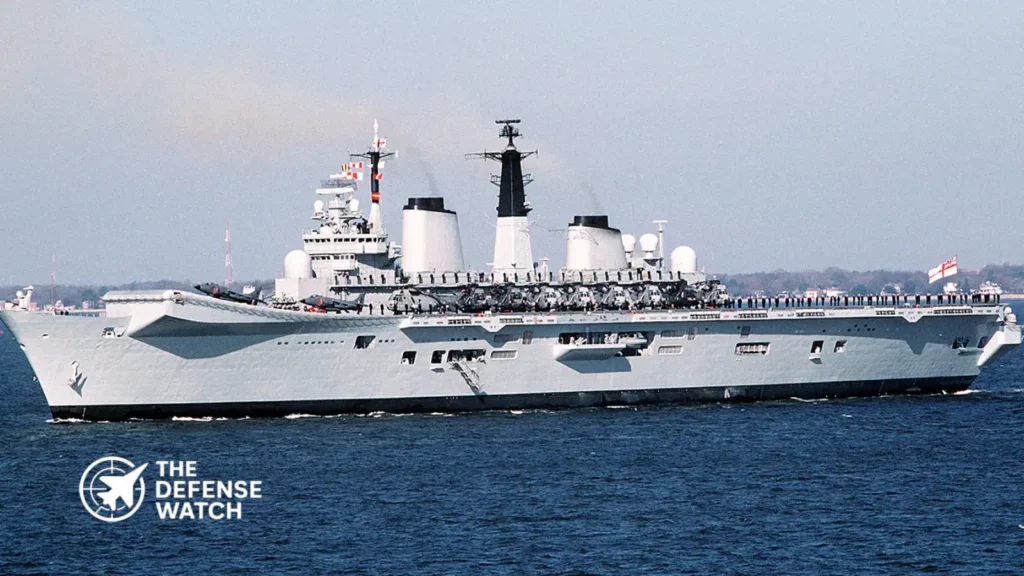
Analysis: The Royal Navy’s persistent structural challenge is numbers. With fewer than 20 deployable surface combatants, it struggles to sustain concurrent commitments across multiple theaters without allied support. Budget pressure and an ongoing competition for defense spending against Army and RAF requirements remain long-term risks to fleet regeneration.
| Category | Details |
|---|---|
| Rank | #6 |
| Fleet Size | ~75 commissioned warships |
| Carriers | 2 (Queen Elizabeth & Prince of Wales) |
| Submarines | 10 (4 Vanguard SSBNs, 6 Astute SSNs) |
| Key Assets | F-35B carriers, Type 26 frigates |
| Notes | High quality, limited numbers |
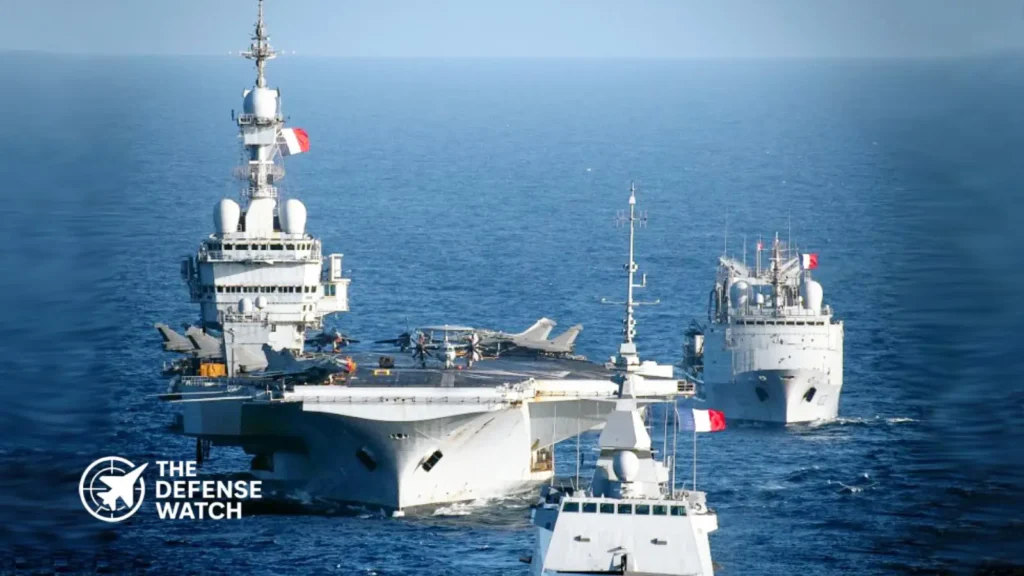
#7 — French Navy (Marine Nationale)
Fleet Size: ~100+ vessels | Carriers: 1 (Charles de Gaulle — nuclear-powered, Europe’s only CATOBAR carrier) | Submarines: 10 (4 Triomphant-class SSBNs, 6 Barracuda-class SSNs)
France operates Europe’s only nuclear-powered aircraft carrier, and the Charles de Gaulle remains the continent’s most capable power-projection platform. The Marine Nationale is purpose-built for independent global deployability, supporting France’s overseas territories across the Pacific, Indian Ocean, and Caribbean. The recently commissioned Barracuda-class SSNs — the Suffren, Duguay-Trouin, and follow-on hulls — represent a generational upgrade in French undersea capability. France is also a key participant in the FCAS sixth-generation combat aircraft program, which will eventually redefine its naval aviation wing.
| Category | Details |
|---|---|
| Rank | #7 |
| Fleet Size | ~100+ vessels |
| Carriers | 1 (Charles de Gaulle – nuclear CATOBAR) |
| Submarines | 10 (4 Triomphant SSBNs, 6 Barracuda SSNs) |
| Key Assets | Independent global deployment |
| Notes | Europe’s only nuclear carrier |
#8 — Republic of Korea Navy (ROKN)
Fleet Size: ~155+ vessels | Key Assets: KDX-III Aegis destroyers, KSS-III ballistic missile submarines | Carrier Program: CVX carrier program advancing toward 40,000–70,000 tonnes
South Korea’s navy punches well above its weight class in 2026. Its KDX-III Sejong the Great-class Aegis destroyers field radar and combat management systems broadly comparable to the U.S. Arleigh Burke. The KSS-III submarine — South Korea’s first domestically designed and built submarine class — incorporates air-independent propulsion (AIP) for extended submerged endurance and can launch submarine-launched ballistic missiles, giving Seoul a nascent second-strike deterrent capability. The CVX carrier program, currently in the design refinement phase with a target displacement of up to 70,000 tonnes, would elevate the ROKN into elite carrier-operating status if funded to completion. South Korea’s world-class domestic shipbuilding industry — producing the same vessels it operates — is a strategic advantage few navies can claim.
| Category | Details |
|---|---|
| Rank | #8 |
| Fleet Size | ~155+ vessels |
| Carriers | CVX program (in design, 40k–70k tonnes) |
| Submarines | KSS-III class (AIP + SLBM capable) |
| Key Assets | KDX-III Aegis destroyers |
| Notes | Advanced domestic shipbuilding |
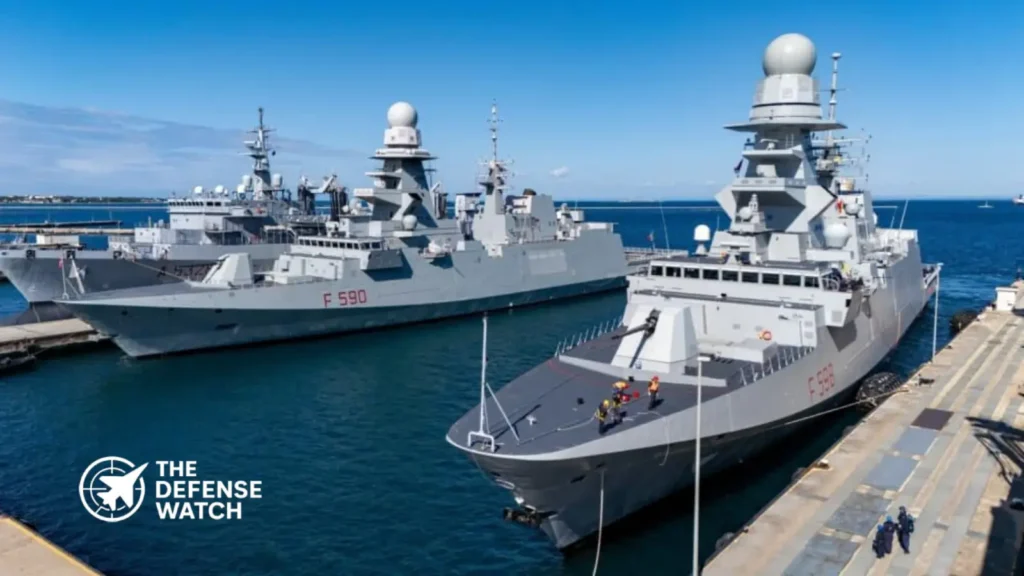
#9 — Italian Navy (Marina Militare)
Fleet Size: ~285 vessels | Carriers: 2 (ITS Cavour + ITS Giuseppe Garibaldi, both F-35B compatible) | Key Assets: FREMM multi-mission frigates
Italy’s Marina Militare is one of the most balanced and deployable medium-sized navies on Earth. Operating two carriers capable of F-35B operations and a fleet of advanced FREMM frigates shared with France, Italy sustains meaningful blue-water presence in the Mediterranean, Red Sea, and beyond. The FREMM platform, integrating Aster 30 surface-to-air missiles and MU-90 torpedoes, is widely considered one of the finest multi-role frigate designs currently in production. Italy’s consistent participation in EU and NATO maritime operations gives the Marina Militare real-world interoperability experience that is strategically valuable beyond raw ship counts.
| Category | Details |
|---|---|
| Rank | #9 |
| Fleet Size | ~285 vessels |
| Carriers | 2 (Cavour & Giuseppe Garibaldi – F-35B) |
| Submarines | Not detailed |
| Key Assets | FREMM multi-mission frigates |
| Notes | Strong Mediterranean & NATO presence |
#10 — Indonesian Navy (Tentara Nasional Indonesia Angkatan Laut — TNI-AL)
Fleet Size: ~280+ vessels | Key Assets: Scorpène-class submarines on order, Arrowhead 140-derived frigates, SIGMA-class corvettes
Indonesia’s inclusion in this ranking reflects geography as much as hardware. As the world’s largest archipelagic state, controlling choke points including the Strait of Malacca, Lombok Strait, and Sunda Strait, Indonesia commands maritime corridors through which roughly 40% of global seaborne trade transits annually. The TNI-AL’s “Minimum Essential Force” modernization plan has accelerated fleet recapitalization, with locally built frigates based on the Arrowhead 140 design supplementing the Scorpène-class submarine acquisition. While Indonesia is not a blue-water power in the USN or PLAN sense, its strategic chokepoint presence gives it an outsized role in the global naval calculus — particularly in any Indo-Pacific conflict scenario.
| Category | Details |
|---|---|
| Rank | #10 |
| Fleet Size | ~280+ vessels |
| Carriers | None |
| Submarines | Scorpène-class on order |
| Key Assets | Arrowhead 140 frigates, SIGMA corvettes |
| Notes | Key chokepoint control in archipelagic waters |
The Bigger Picture: What 2026 Naval Rankings Actually Tell Us
Three structural dynamics define the 2026 naval environment in ways that a simple ranking cannot fully capture.
The Bipolar Race Is Accelerating. The U.S.-China naval competition is now the central organizing fact of global maritime security. Washington retains decisive qualitative advantages in carrier mass, nuclear submarine proficiency, and battle-tested logistics networks. Beijing is closing the quantitative gap at a pace that Western shipyards, currently struggling with workforce and supply chain constraints, cannot mirror. The U.S. Constellation-class frigate program’s repeated delays are a symptom of a deeper industrial challenge.
The Indo-Pacific Axis Is Consolidating. Japan, India, South Korea, and Australia are quietly forming the architecture of a counter-weight maritime coalition. Their individual naval investments are increasingly complementary — Japan’s anti-submarine excellence pairs with India’s IOR dominance, South Korea’s Aegis surface layer, and Australia’s incoming SSN capability under AUKUS. The combined tonnage and reach of these four navies represents a credible, if informal, balancing force against PLAN expansion.
Unmanned and Undersea Are the New Frontier. Every top-ten navy is investing heavily in unmanned surface and underwater vehicles. China’s Type 095 guided-missile submarine, the ONI-assessed threat of Chinese unmanned underwater vehicles for mining and surveillance, and the U.S. Navy’s own Large Unmanned Surface Vessel (LUSV) program signal that the next decade’s naval competition will be won or lost as much below the surface as above it.
Frequently Asked Questions (FAQs)
By raw hull count, China’s PLAN leads with over 370 major combat vessels and more than 1,000 total naval units including auxiliaries. The U.S. Navy leads on aggregate tonnage and qualitative combat capability.
China operates three active aircraft carriers — Liaoning (Type 001), Shandong (Type 002), and Fujian (Type 003, commissioned November 2025). A fourth nuclear-powered Type 004 carrier is under construction.
Yes. By every composite metric — aggregate displacement, carrier aviation, nuclear submarine force, logistics reach, and combat experience — the U.S. Navy remains the world’s preeminent naval force in 2026. China is the only credible long-term challenger.
The Royal Navy, by combined capability of its carrier strike groups, Astute SSNs, and AUKUS alliance leverage. France’s Marine Nationale is a close second, particularly given its possession of the continent’s only nuclear-powered CATOBAR carrier.
China’s PLAN is universally assessed as the world’s fastest-growing navy by both ship count and tonnage, commissioning 21 major combatants in 2025 alone.