Executive Summary:
The U.S. Air Force is aiming to field cargo-launched cruise missiles by 2027 under its Rapid Dragon program. The initiative seeks to transform transport aircraft into stand-off missile carriers, expanding operational flexibility and long-range strike capacity in contested environments, particularly in the Indo-Pacific.
U.S. Air Force Accelerates Cargo-Launched Cruise Missile Program
The U.S. Air Force is moving aggressively to deploy cargo-launched cruise missiles by 2027 as part of its broader effort to strengthen long-range strike capabilities against increasingly sophisticated threats.
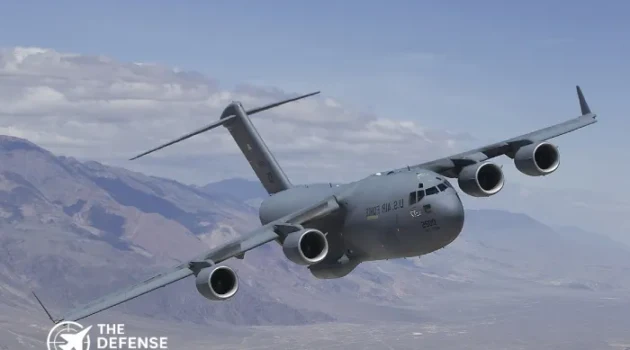
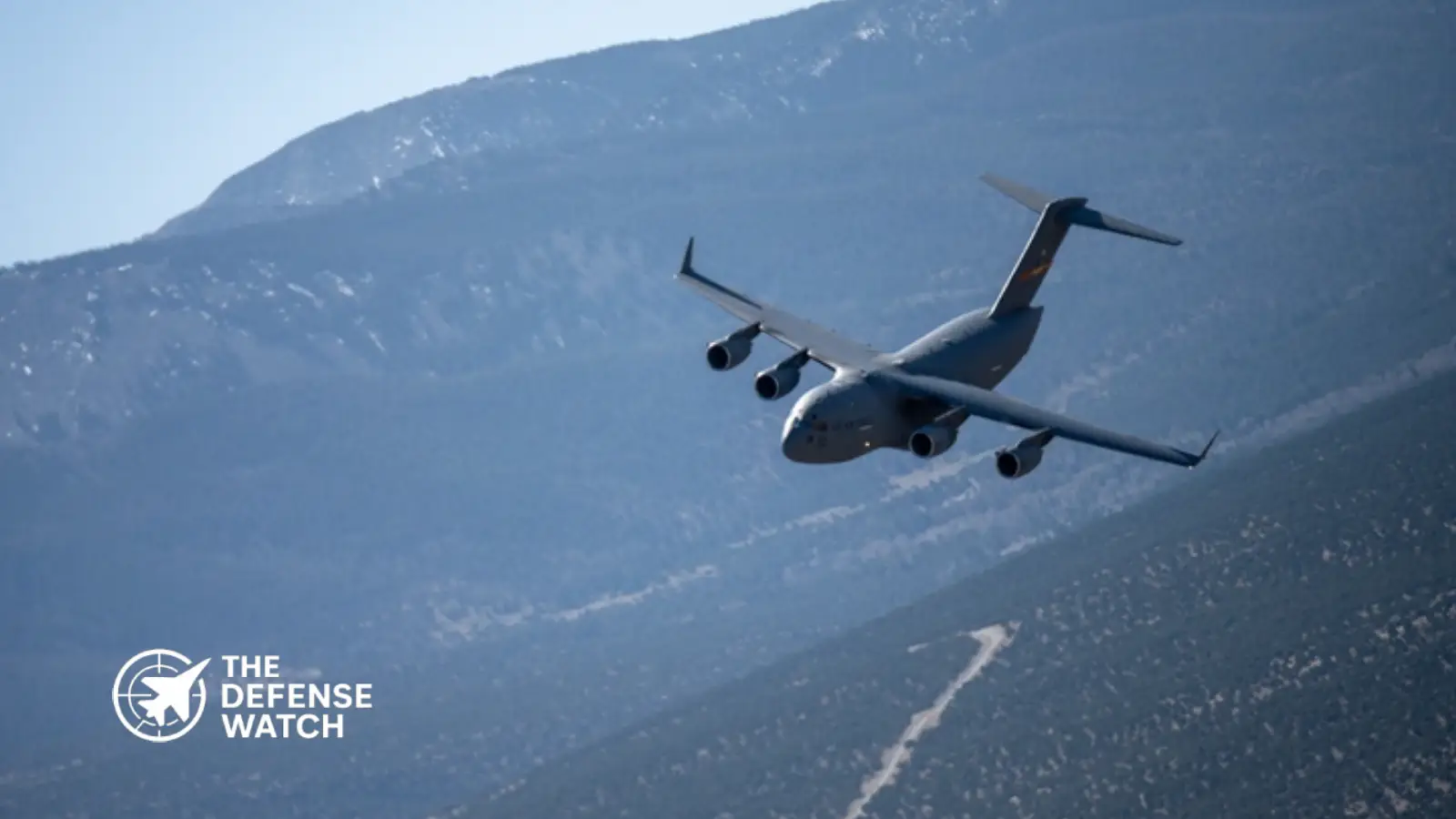
The initiative centers on the Rapid Dragon program, which enables transport aircraft such as the Lockheed Martin C-130J Super Hercules and Boeing C-17 Globemaster III to launch palletized cruise missiles from cargo bays without requiring permanent aircraft modifications.
The concept represents a significant shift in how the U.S. military could conduct stand-off strikes in future conflicts. Instead of relying solely on traditional bombers or fighter aircraft, the system allows mobility aircraft to serve as missile carriers capable of launching large salvos from outside heavily defended airspace.
The Air Force Research Laboratory, working alongside the Pentagon and industry partners, has already demonstrated successful live-fire tests involving palletized missile deployments.
Rapid Dragon Expands Operational Flexibility
The Rapid Dragon system was initially designed to provide a low-cost and rapidly scalable strike capability using existing cargo aircraft fleets.
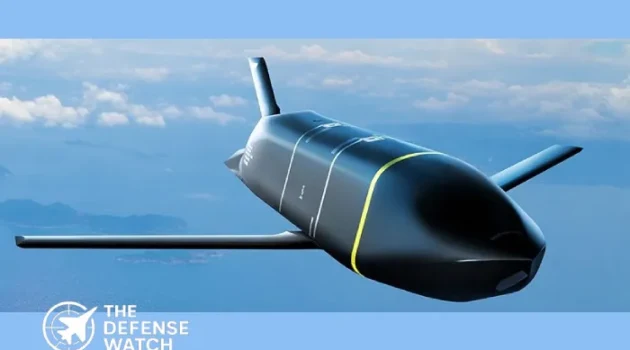
Under the concept, cruise missiles are loaded onto pallets and dropped from the rear cargo ramp of an aircraft. Once released, parachutes stabilize the pallet before individual missiles separate, ignite, and proceed toward assigned targets.
Previous demonstrations have included launches of the AGM-158B Joint Air-to-Surface Standoff Missile Extended Range, commonly known as JASSM-ER. The missile offers long-range precision strike capability against high-value targets while allowing launch aircraft to remain outside hostile air defense coverage.
The operational advantage is substantial. The U.S. Air Force maintains a far larger fleet of transport aircraft than dedicated bombers. Converting cargo aircraft into temporary missile launch platforms could dramatically increase available strike capacity during a major conflict.
Military planners increasingly view this flexibility as essential for operations across the Indo-Pacific, where long distances and growing anti-access and area-denial networks present major challenges for conventional air operations.
Indo-Pacific Strategy Driving Development
The cargo-launched cruise missile effort aligns closely with evolving U.S. defense strategy focused on the Indo-Pacific region.
Chinese investments in advanced integrated air defenses, anti-ship ballistic missiles, and long-range sensors have forced the Pentagon to rethink traditional airpower deployment concepts. Distributed operations and survivable strike platforms are now central to American military planning.
By dispersing launch capability across multiple cargo aircraft, the Rapid Dragon system complicates enemy targeting calculations. Transport aircraft can also operate from a wider network of airfields than large bomber fleets, increasing operational resilience.
This approach supports the Pentagon’s broader Agile Combat Employment strategy, which emphasizes mobility, dispersion, and unpredictability in contested theaters.
The system could also offer strategic benefits beyond the Pacific. In Europe or the Middle East, palletized cruise missile launch capability would provide commanders with additional options during high-intensity operations without requiring forward deployment of specialized strike aircraft.
Air Force Seeks Faster Fielding Timeline
The U.S. Air Force’s reported goal of achieving operational deployment by 2027 reflects growing urgency within the Pentagon to accelerate modernization programs.
Defense officials have repeatedly warned that future conflicts could involve massed missile exchanges and rapidly contested airspace. Expanding launch capacity using existing aircraft inventories offers a comparatively affordable way to increase combat power without waiting for entirely new aircraft programs.
Unlike traditional weapons integration efforts, the Rapid Dragon concept minimizes structural aircraft modifications, reducing certification timelines and logistical complexity.
The system may also strengthen allied interoperability. Several partner nations already operate C-130 aircraft, potentially allowing compatible missile deployment concepts across coalition forces in future joint operations.
While the program remains in development, its progress underscores how the Pentagon is prioritizing adaptable and scalable strike solutions as geopolitical competition intensifies.
Strategic Analysis
The cargo-launched cruise missile program reflects a broader transformation in modern air warfare, where survivability and distributed lethality increasingly outweigh traditional force structure models.
For decades, strategic strike missions depended heavily on expensive bomber fleets and forward-based tactical aircraft. Rapid Dragon challenges that framework by converting support aircraft into operational strike assets with minimal preparation.
The concept also addresses a growing concern within the U.S. defense community: missile inventory depth. In a prolonged conflict against a near-peer adversary, sustaining large-scale precision strike operations may require far more launch platforms than current bomber numbers can provide.
Another key advantage lies in operational ambiguity. Cargo aircraft conducting routine transport missions are less predictable than dedicated strike aircraft, potentially complicating adversary intelligence and targeting efforts.
However, vulnerabilities remain. Transport aircraft are slower and less survivable than stealth bombers in highly contested environments. Their effectiveness would still depend heavily on stand-off launch distances, escort support, electronic warfare protection, and access to secure operating locations.
Even so, the Rapid Dragon initiative demonstrates how the Pentagon is seeking practical methods to expand combat capacity rapidly while controlling procurement costs.