Executive Summary: Northrop Grumman and the Australian Government have finalized a strategic engagement to establish a sovereign Solid Rocket Motor (SRM) manufacturing capability. Supported by an initial $126.9 million investment, the partnership aims to bolster the Guided Weapons and Explosive Ordnance (GWEO) Enterprise by fast-tracking domestic production at the Mulwala munitions factory to secure critical missile supply chains.
Strategic Deepening of the GWEO Enterprise
The formalization of this agreement marks a pivotal shift in Australia’s defense industrial base. By integrating Northrop Grumman’s propulsion expertise with the Australian Government’s GWEO Enterprise, the Commonwealth seeks to mitigate supply chain vulnerabilities exposed by global strategic competition.
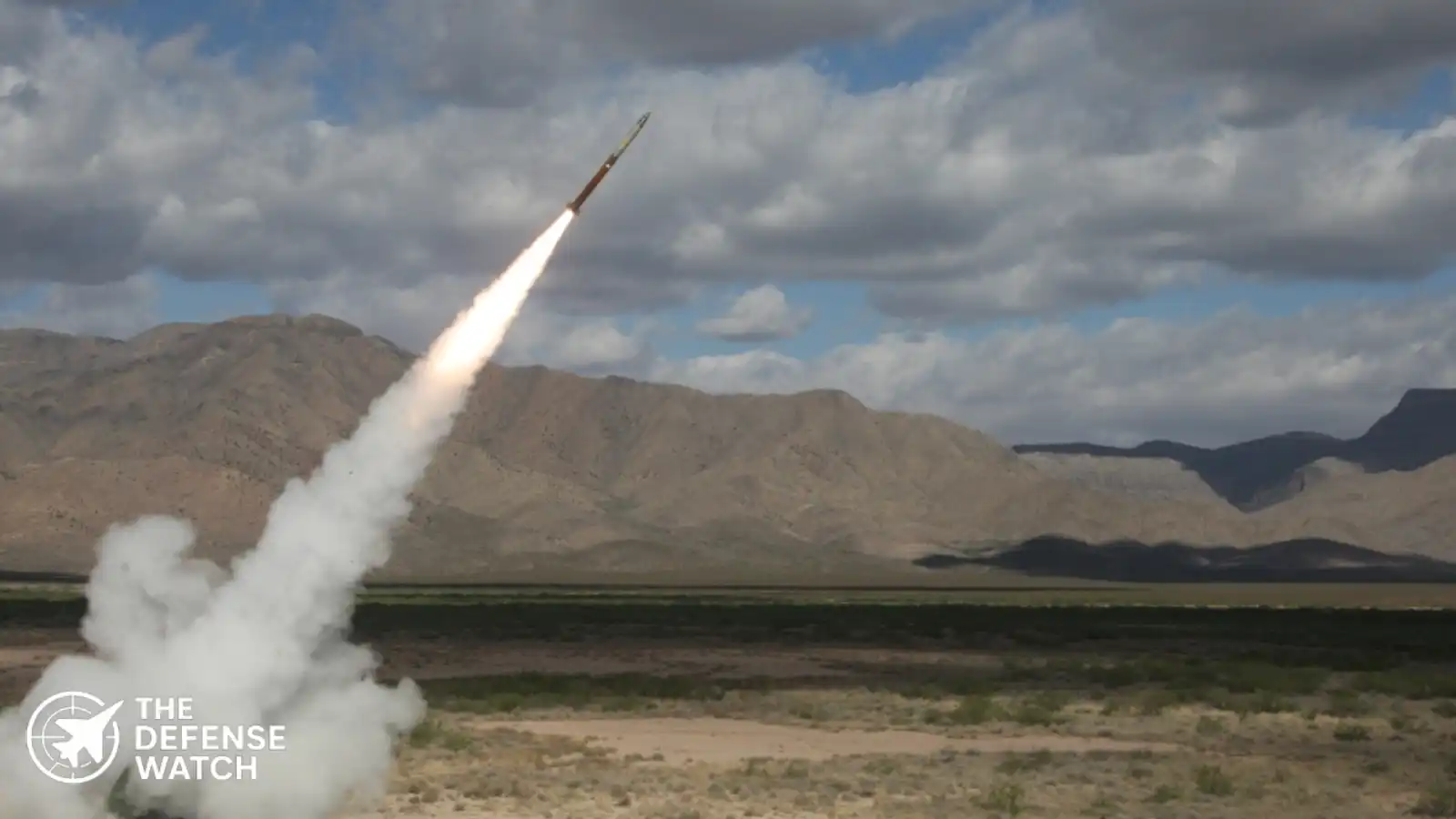
The initiative focuses on the domestic production of high-performance SRMs at the government-owned Mulwala munitions factory in New South Wales. This decision leverages recently completed facility upgrades to accelerate the timeline for Australian-produced components, with initial production of rocket motors for the Guided Multiple Launch Rocket System (GMLRS) scheduled to commence by 2030.
Technical Specifications: Transition to Sovereign Production
The following table outlines the projected advancements of localized SRM production compared to legacy imported systems.
| Feature | Legacy Imported SRMs | Australian Sovereign SRM (Projected) |
| Range | System Dependent (Fixed) | Extended via High-Energy Propellants |
| Payload | Standard HE/Fragmenting | Modular Warhead Integration |
| Status | Procurement-based / Vulnerable | Operational Readiness / Sovereign |
| Key Technology | Traditional Composite Propellant | Advanced Cast-Cure / Case-Bonding |
Operational Advantages and Technological Innovation
The shift toward domestic SRM production provides several technical and tactical advantages for the Australian Defence Force (ADF):
- Advanced Energetics: Utilization of high-energy propellants to increase specific impulse, allowing for extended engagement ranges—critical for the ADF’s long-range strike posture.
- Manufacturing Resilience: A dedicated Rocket Motor Manufacturing Complex is planned to be operational by 2033, designed for high-rate production of multiple SRM types.
- Allied Integration: Designed to meet AUKUS and NATO standards, ensuring Australian-made motors can supplement the United States’ overstretched industrial base for platforms like HIMARS.
- Local Innovation: The program builds on the successful static firing of the DRACO motor in early 2026, an Australian-designed propulsion system that proves domestic maturity in energetics.
Geopolitical Context and Regional Security
The Indo-Pacific region is currently witnessing an unprecedented missile modernization effort. Australia’s investment in sovereign SRM production is a direct response to the “Impactful Deterrence” mandate of the National Defence Strategy.
By establishing a “second line of supply” for the United States and other regional partners, Australia positions itself as a critical industrial hub. This move is vital as the U.S. defense industrial base faces capacity constraints due to the simultaneous demands of the Indo-Pacific, Eastern Europe, and the Middle East.
Industrial and Strategic Implications
The partnership signals a fundamental shift toward decentralized defense manufacturing among the “Quad” and AUKUS nations. For Northrop Grumman, the agreement strengthens its role as a primary supplier within the global allied missile ecosystem. For Australia, it represents a definitive step toward defense industrial autonomy, ensuring the ADF can maintain its Guided Weapons inventory independent of external logistics during high-intensity contingencies.