China’s J-35 Stealth Fighter Draws Attention Over Reflective Surface
The J-35 stealth fighter has appeared in recent imagery with an unusually bright, mirror-like surface, prompting renewed interest in China’s efforts to develop and sustain low-observable aircraft. The photographs, which circulated during August 2026, show a carrier-based J-35 with a finish that appears significantly more reflective than the subdued gray surfaces normally associated with stealth aircraft.
Takeaways
New imagery highlights an unusual surface treatment on China’s carrier-based stealth fighter
1. Unusual Reflective Surface
Recent photographs appear to show a highly reflective, silver-like surface across portions of a Chinese J-35 carrier-based fighter.
2. Purpose Remains Unconfirmed
Chinese authorities have not publicly identified the material or confirmed that the finish represents a new radar-absorbing or infrared-signature technology.
3. U.S. Test Aircraft Provide A Comparison
Similar mirror-like treatments have previously been observed on U.S. F-22A Raptor and F-35C Lightning II test aircraft, although the objectives of those treatments have not been publicly established.
4. J-35 Is Already A Carrier-Based Stealth Platform
The J-35 has conducted catapult launches and arrested landings aboard China’s Fujian aircraft carrier, demonstrating its integration with the ship’s electromagnetic launch system.
5. Appearance Alone Cannot Prove Stealth Performance
Visible reflectivity does not establish radar cross-section reduction or improved infrared concealment. The material’s electromagnetic and thermal properties would require testing to determine its actual purpose.
The appearance has attracted particular attention because U.S. Air Force F-22A Raptor and U.S. Navy F-35C Lightning II aircraft have previously been photographed with experimental mirror-like treatments. Those American examples were associated with flight-test activity, but their precise purposes have not been publicly disclosed.
For the J-35, however, there is currently no public Chinese statement identifying the material or confirming that it represents a new stealth coating.
What The New J-35 Imagery Shows
Photographs circulating since mid-August appear to show a J-35 with a strongly reflective surface across parts of its fuselage, wings and tail. The aircraft can appear almost metallic when viewed under direct sunlight.
That visual effect is notable, but it should not be treated as proof of a new low-observable technology.
Several factors can affect how an aircraft surface appears in photographs. Sun angle, viewing geometry, camera exposure, image processing and compression can all increase apparent reflectivity. The surface could also represent an experimental treatment, protective film, revised topcoat, manufacturing-stage finish or another temporary application.
The distinction matters because visible appearance and radar signature are not the same thing.
A Mirror-Like Finish Does Not Automatically Mean Better Stealth
The effectiveness of a stealth aircraft depends on far more than what its surface looks like to the human eye.
Radar signature is affected by aircraft geometry, surface continuity, material properties, panel joints, access doors, antennas, sensor apertures and the electromagnetic behavior of coatings. A surface that looks reflective in visible light can interact with electromagnetic energy differently at radar frequencies.
The U.S. Air Force has described the F-22’s low-observable system as a multilayered coating system that requires continuous inspection and maintenance. The service has also noted that low-observable coatings are an important part of maintaining the aircraft’s stealth characteristics.
This provides useful context for interpreting the J-35 photographs. A visible change in the outer surface does not necessarily indicate that the aircraft has received a completely new stealth architecture.
Why The F-22 And F-35C Comparison Matters
The comparison with American aircraft comes from several earlier U.S. test aircraft.
In 2021 and afterward, F-22 Raptors were photographed with highly reflective, chrome-like surface treatments. Similar treatments were later observed on F-35C aircraft operated by the U.S. Navy’s VX-9 test squadron. The F-35C examples displayed distinctive geometric panels across portions of the aircraft.
The Aviationist reported that these treatments were applied around, rather than indiscriminately across, areas such as access panels, weapon bays, sensors and antennas. The exact purpose has not been officially confirmed. Various possibilities have been discussed publicly, including research into infrared signatures and other aspects of signature management.
That history makes the new J-35 imagery worth monitoring, but it does not demonstrate that China is using the same materials or pursuing the same test objectives.
J-35 Already Has A Major Naval Role
The reflective finish is appearing at an important stage in the development of China’s carrier aviation.
China has already demonstrated J-35 operations from the Fujian aircraft carrier. In September 2025, Chinese authorities reported that the J-35, J-15T and KJ-600 had conducted electromagnetic catapult launches and arrested recoveries from the carrier. The Fujian was subsequently commissioned in November 2025.
Janes has also reported that the J-35 has become part of the emerging air wing associated with the Fujian, alongside the J-15T and KJ-600.
That carrier environment creates a particularly demanding materials problem.
A naval stealth fighter must operate in salt-laden air, humidity, ultraviolet exposure and repeated cycles of launch, recovery, maintenance and flight. Surface treatments must also tolerate servicing and environmental stresses without creating excessive maintenance requirements.
For that reason, if the reflective J-35 finish is an experimental material, its long-term durability could be as important as its signature characteristics.
What Analysts Should Watch Next
The most useful evidence will come from repeated observations rather than a single photograph.
If the same treatment appears on multiple J-35 aircraft, particularly with consistent panel shapes and carefully defined areas around sensors, antennas and access points, that would provide stronger evidence of a deliberate engineering program.
Further evidence could also come from photographs after extended flight operations. Wear, peeling, repairs or changes in the treatment could reveal whether the surface is a temporary test application or a more durable material system.
Carrier operations would be particularly informative. Repeated catapult launches, arrested landings and maritime deployments would provide a much better indication of whether the treatment is intended for operational use.
The Larger Stealth Competition
The J-35 development reflects China’s broader effort to expand fifth-generation airpower and carrier aviation. The aircraft is designed around a low-observable configuration and is now associated with China’s increasingly capable carrier force. Chinese official reporting has highlighted its carrier integration and electromagnetic catapult compatibility.
For the United States, the development is relevant because carrier-based stealth aircraft are central to future operations in heavily defended environments. The U.S. Navy’s F-35C provides a mature example of a carrier-capable fifth-generation fighter, while the J-35 represents China’s effort to field a comparable category of naval combat aircraft.
The new reflective finish therefore deserves attention, but it should be viewed as an observation rather than a confirmed technological breakthrough.
At present, the strongest conclusion is straightforward: the J-35 has been photographed with an unusual mirror-like surface, but there is insufficient evidence to determine exactly what the treatment is designed to accomplish.
That distinction is important. The aircraft’s visible appearance can generate useful questions about Chinese signature-management research, but only additional imagery, official disclosures or technical testing can establish whether the treatment changes radar, infrared or other observable signatures.
North Korea Launches Ballistic Missiles During Joint Drills
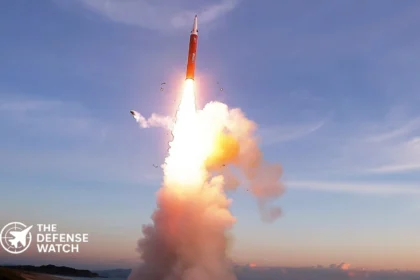
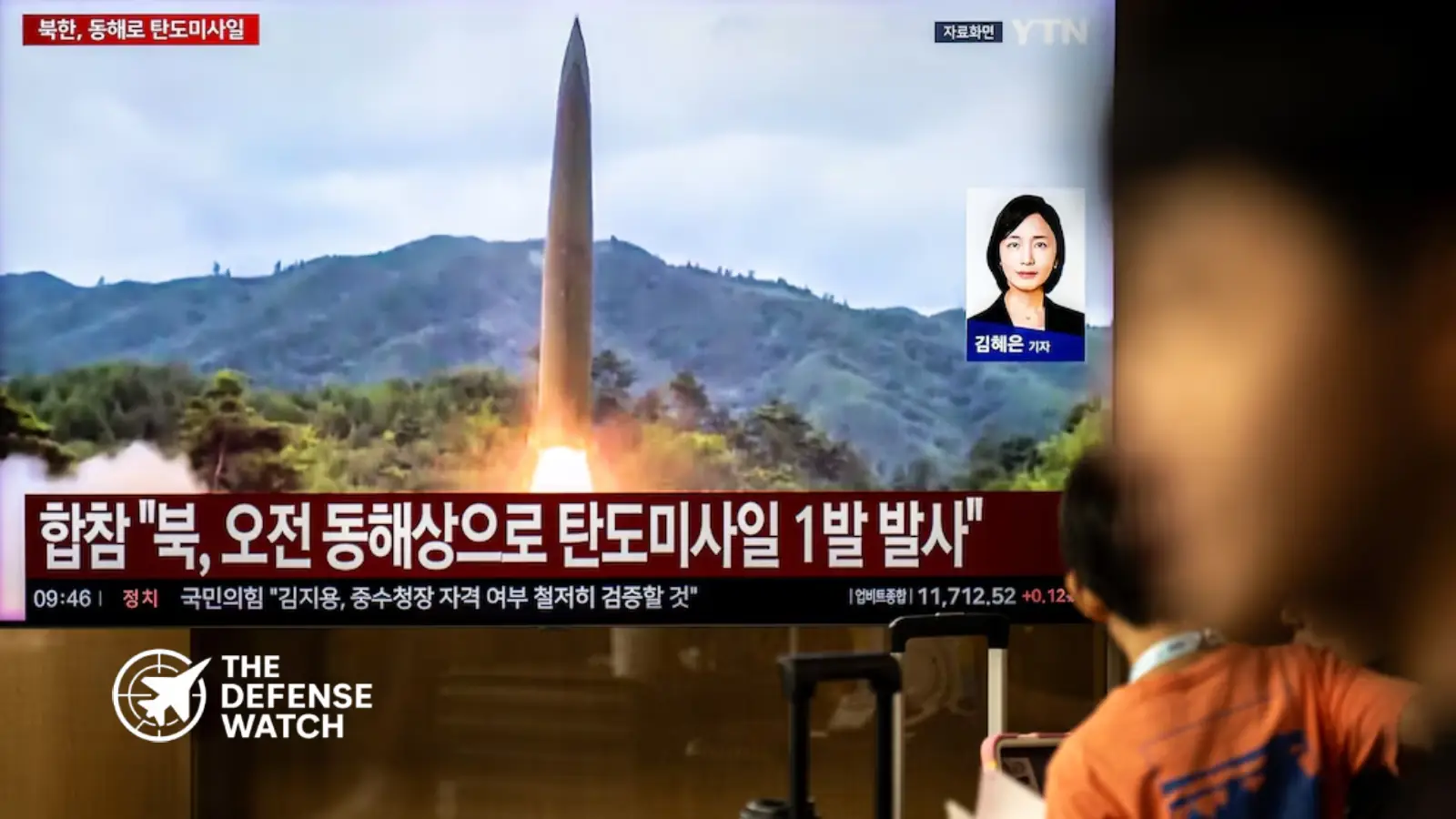
North Korea launched about 10 short range ballistic missiles toward the East Sea on August 20, according to South Korean military authorities, in the latest missile activity on the Korean Peninsula. The launches occurred while U.S. and South Korean forces were conducting the annual Ulchi Freedom Shield exercise.
Takeaways
North Korea launched a new barrage of short range ballistic missiles toward the East Sea on August 20.
1. About 10 Short Range Missiles
South Korea said North Korea launched about 10 short range ballistic missiles from the capital region toward waters off the country’s east coast.
2. Missiles Flew About 300 Kilometers
South Korean authorities reported that the missiles traveled approximately 300 kilometers before falling into the East Sea, also known as the Sea of Japan.
3. Japan Detected the Launch
Japan’s government and coast guard also reported the launch. The projectile was assessed as a ballistic missile and was reported to have fallen outside Japan’s exclusive economic zone.
4. Launch Came During U.S. South Korea Drills
The launch occurred while the annual Ulchi Freedom Shield exercise was underway. The exercise was shortened following a U.S. decision to reduce its participation.
5. Seoul Maintains Military Readiness
South Korea’s presidential security council held an emergency meeting and ordered continued military readiness while authorities coordinated information with the United States and Japan.
South Korea’s Joint Chiefs of Staff said the launches were detected from the Pyongyang area at approximately 5 p.m. local time. The missiles traveled about 300 kilometers toward North Korea’s eastern waters, according to reporting by Reuters and other international news organizations.
Japan also detected the activity. Japanese authorities said at least one projectile appeared to be a ballistic missile and had already fallen. Reporting cited by Reuters said the projectile landed outside Japan’s exclusive economic zone.
The launch did not result in any immediate reports of damage to aircraft or vessels.
Launch Comes During U.S. South Korea Military Exercise
The North Korea ballistic missile launch came during Ulchi Freedom Shield, the major annual combined exercise involving U.S. and South Korean forces.
The timing is significant because Pyongyang has repeatedly criticized U.S. South Korea military exercises, describing them as preparations for conflict. The latest launch also followed a decision by the Trump administration to substantially reduce U.S. participation in the current exercise.
The exercise was scheduled to end earlier than originally planned. North Korea’s leadership had rejected the reduction as insufficient to change what it considers a hostile U.S. policy.
Reuters reported that Kim Yo Jong, the sister of North Korean leader Kim Jong Un, criticized the U.S. and South Korean military activity even after Washington moved to reduce its participation.
The sequence highlights the difficulty of separating military readiness from diplomatic signaling on the Korean Peninsula. Washington has indicated interest in renewed engagement with Pyongyang, while North Korea continues to maintain and demonstrate its conventional and nuclear capabilities.
South Korea Orders Continued Readiness
Following the launches, South Korea’s presidential office condemned the missile activity and directed the military to maintain full readiness.
South Korean authorities also coordinated information on the launches with the United States and Japan. The three countries routinely exchange missile warning information as part of their efforts to monitor North Korean weapons activity.
The latest launch was North Korea’s third reported missile launch of August, following ballistic missile activity earlier in the month. On August 12, Japan’s Defense Ministry assessed that North Korea had launched at least one ballistic missile that traveled approximately 690 kilometers before falling outside Japan’s exclusive economic zone.
That earlier launch demonstrated the continued pace of North Korean missile activity around the period of the U.S. South Korean exercise.
What The Missile Launches Show
The North Korea ballistic missile launches demonstrate the continuing importance of short range missile forces to Pyongyang’s military posture.
Short range ballistic missiles can provide North Korea with a means of threatening military facilities, logistics hubs and other targets across South Korea. The systems are also relevant to the broader evolution of North Korea’s conventional strike capabilities.
Previous North Korean tests have included systems that South Korean authorities and defense analysts have associated with maneuverable short range ballistic missile technology. Yonhap has reported that North Korea operates the KN-23 family, a short range system commonly compared with Russia’s Iskander missile because of its general role and flight characteristics.
However, the available reporting on the August 20 launch does not establish the specific missile type used. It is therefore important not to identify the missiles as KN-23 systems without additional official confirmation.
The reported flight distance of roughly 300 kilometers is consistent with the short range category, but range alone is not enough to determine the exact missile model or configuration.
Regional Security Implications
The latest North Korea ballistic missile activity adds another layer of tension to an already complicated security environment in Northeast Asia.
For South Korea, the immediate concern is maintaining sufficient warning and response capability against short range missile attacks. For Japan, launches toward the East Sea require continued monitoring because North Korean missiles can potentially pass through or approach areas near Japanese air and maritime routes.
Japan’s Defense Ministry has repeatedly emphasized cooperation with the United States and South Korea in gathering and analyzing information on North Korean missile launches. Following an August 12 launch, Tokyo said its forces would continue surveillance and coordination with Washington and Seoul.
The United Nations has also maintained that North Korean ballistic missile launches violate relevant Security Council resolutions. Japan has similarly described repeated ballistic missile activity as a threat to regional and international security.
For the United States, the launches underscore the continuing requirement for missile warning, intelligence sharing and integrated air and missile defense cooperation with South Korea and Japan.
Diplomacy And Military Pressure Continue At The Same Time
The missile launches also illustrate the difficult balance between diplomacy and deterrence.
Washington’s decision to reduce participation in the U.S. South Korea exercise was followed by North Korean criticism rather than an immediate reduction in military signaling. At the same time, U.S. policy has included efforts to keep channels for engagement with Kim Jong Un open.
That combination creates a complex environment for regional defense planners. Lowering the scale of military exercises may support diplomatic objectives, but the allies still need to preserve the ability to detect and respond to a fast moving missile threat.
For South Korea and Japan, the latest launch therefore remains primarily a military readiness issue even as diplomatic discussions remain possible.
What Happens Next
The immediate focus will be on technical analysis of the missiles, including their launch location, trajectory, flight characteristics and precise impact areas.
South Korean, U.S. and Japanese authorities are expected to continue sharing information as they assess the launch. The specific missile types involved may become clearer if additional military data or imagery is released.
The broader pattern is also likely to remain under close observation. North Korea has continued to conduct missile tests around major allied military exercises, while Washington, Seoul and Tokyo maintain efforts to strengthen coordinated warning and defense capabilities.
The latest North Korea ballistic missile launch does not by itself establish a change in Pyongyang’s broader strategy. It does, however, reinforce the continuing military challenge posed by North Korea’s expanding missile forces and the need for close coordination among the United States, South Korea and Japan.
Takeaways
What the DGMO-level communication reveals about the May 2025 India-Pakistan confrontation
1. Pakistan Initiated The May 10 Contact
India said Pakistan’s DGMO, Maj. Gen. Kashif Abdullah, contacted Indian DGMO Lt. Gen. Rajiv Ghai at about 3:35 p.m. on May 10, 2025, proposing that the two sides cease hostilities.
2. Fighting Halted At 5 P.M.
The two sides agreed to stop cross-border firing and air intrusions, with the arrangement taking effect at 5 p.m. Indian Standard Time on May 10.
3. The Exact Plea Came Later From Modi
Lt. Gen. Ghai publicly described the Pakistani proposal as a request to cease hostilities. The more dramatic wording that Pakistan allegedly said, “Please stop, we’ve had enough,” was later used by Prime Minister Narendra Modi in Parliament.
4. The Confrontation Involved Multiple Domains
The escalation included missile and drone attacks, air-defense engagements, artillery fire and strikes against military infrastructure. Indian and Pakistani accounts differ substantially over the damage inflicted.
5. The Ceasefire Was Not An End To Tensions
The May 10 understanding halted military action, but both countries subsequently reported violations and maintained heightened military readiness along the border.
Operation Sindoor Put DGMO Communications At The Center Of The Ceasefire
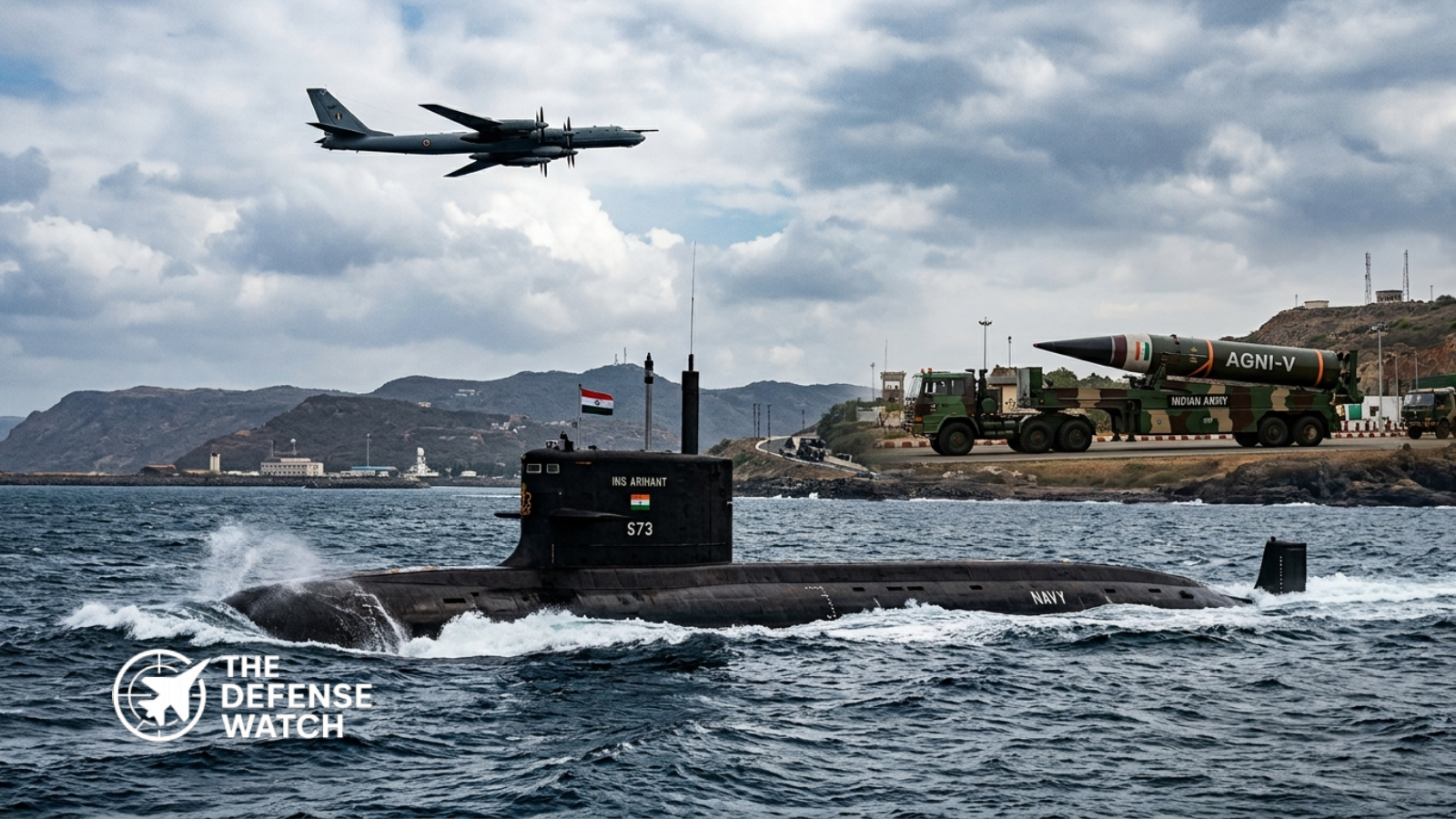
Operation Sindoor ended its most intense phase on May 10, 2025, after Pakistan’s Director General of Military Operations contacted India’s Lt. Gen. Rajiv Ghai and proposed an end to hostilities.
The communication provided a direct military channel between the two nuclear-armed neighbors at a point when missile, drone and artillery exchanges had created a serious risk of further escalation.
According to Ghai’s account, the Pakistani DGMO contacted him at approximately 3:35 p.m. on May 10. The call resulted in an understanding that cross-border firing and air intrusions would cease from 5 p.m. that day. Indian media reports identified Pakistan’s DGMO at the time as Maj. Gen. Kashif Abdullah.
The Indian government has subsequently described the contact as the mechanism through which Pakistan sought to halt the fighting.
However, an important distinction is needed when reporting the often-repeated quote that Pakistan allegedly told India, “Sir, having hit so many BrahMos missiles at us, you should now be satisfied, and we can bring this to a stop.””
That wording was not the wording publicly attributed to Lt. Gen. Ghai in his May 11 briefing. Ghai said his Pakistani counterpart had proposed that the two sides “cease hostilities.” The more detailed wording was later publicly presented by Prime Minister Narendra Modi during a parliamentary discussion on Operation Sindoor.
That distinction matters for accurate reporting.
What Lt. Gen. Rajiv Ghai Revealed
During the May 11 military briefing, Ghai outlined the sequence of communications that led to the cessation of military activity.
He said the Pakistani DGMO contacted him on May 10 and proposed that hostilities be stopped. The understanding took effect at 5 p.m., covering cross-border firing and air intrusions. The two sides also agreed to communicate again to discuss arrangements supporting the understanding.
The following day, the Indian and Pakistani DGMOs held another conversation. Indian authorities said the discussion focused on maintaining the commitment that neither side would fire or initiate aggressive action and on measures to reduce troop alert levels along the border.
The sequence illustrates the role of military-to-military communication in controlling escalation. Rather than relying exclusively on political channels, the DGMOs were able to establish an immediate mechanism for stopping battlefield activity.
Operation Sindoor Escalated Beyond The Initial Strikes
India launched Operation Sindoor during the night of May 6-7, 2025, following the April 22 terrorist attack in Pahalgam, Jammu and Kashmir, in which 26 people were killed.
India’s Ministry of Defence said the initial operation targeted nine locations associated with terrorist infrastructure in Pakistan and Pakistan-administered territory. The government initially characterized the strikes as focused, measured and non-escalatory and said Pakistani military facilities were not targeted in that opening phase.
The conflict subsequently expanded.
India reported Pakistani drone and missile attacks against military locations and responded with strikes against air-defense systems and other military targets. Indian authorities said an integrated counter-UAS and air-defense network was used to defeat incoming threats.
By May 10, the confrontation had moved well beyond the initial counterterrorism strikes. Both countries were conducting attacks against military infrastructure, while artillery exchanges and unmanned aerial activity continued along the frontier.
Pakistan’s government presented a substantially different account of the conflict, including its own claims regarding Indian missile attacks and Pakistani retaliation. Pakistan’s official statement on May 10 described the confrontation as a response to Indian strikes and said Islamabad had agreed to a ceasefire understanding.
For that reason, claims concerning the scale of damage or the relative battlefield performance of either side should be treated carefully unless supported by independently verifiable evidence.
Where BrahMos Fits Into The Story
The confrontation also drew attention to India’s long-range precision-strike capabilities, including BrahMos.
Pakistan’s government specifically referred to BrahMos missile fire in its May 10 statement. Indian defense reporting and later Indian government material also highlighted the broader use of indigenous precision weapons during Operation Sindoor.
A Defense Research and Development Organisation compilation later reported claims that BrahMos missiles were used during the operation, including strikes associated with the May 10 attacks. However, the precise weapons used against individual targets remain an area where public evidence and competing official narratives do not always align.
The wider significance is that Operation Sindoor demonstrated how India is attempting to integrate long-range precision weapons, combat aircraft, drones, intelligence and layered air defenses into a broader operational framework.
Why The DGMO Call Matters
The May 10 call is significant not simply because one side requested a halt to fighting. It demonstrates how quickly a military hotline can become critical during a rapidly escalating confrontation.
India and Pakistan have fought several wars and remain separated by one of the world’s most heavily militarized borders. Both possess nuclear weapons, making escalation management a central concern whenever conventional fighting intensifies.
The DGMO channel provided a direct link between operational commanders while political leaders and diplomatic officials continued managing the broader crisis.
India’s official account says Pakistan initiated the May 10 contact and that the resulting agreement stopped military action at 5 p.m. The Pakistani government also confirmed that the two countries reached a ceasefire understanding that day, although its description of the events leading to the agreement differs sharply from India’s narrative.
The distinction between those narratives is important.
There is strong evidence that the DGMO-level communication occurred and that it produced the May 10 cessation of military action. There is also official Indian evidence that Prime Minister Modi later characterized the Pakistani request in much stronger language.
What remains less certain is the exact wording used during the private hotline conversation because the full transcript has not been publicly released.
A Military Hotline Became The Final Escalation Control Mechanism
Operation Sindoor therefore offers an important case study in crisis management between nuclear-armed states.
The initial strikes were followed by a wider exchange involving aircraft, missiles, drones, air defenses and artillery. As the confrontation intensified, military commanders used an established communication channel to establish a halt to active combat.
Lt. Gen. Ghai’s account provides the clearest publicly reported timeline: Pakistan’s DGMO called on May 10, proposed ending hostilities, and the resulting understanding took effect at 5 p.m.
The later political description of the conversation adds context but should not be presented as a direct quotation from Ghai.
For defense analysts, the episode underscores the importance of reliable command channels, escalation control and military-to-military communication when conventional conflict occurs between nuclear-armed rivals.
The ceasefire did not resolve the underlying India-Pakistan dispute. It instead stopped the immediate military confrontation and created space for both sides to reduce the risk of further escalation.
South Korea Delivers First Geomdoksuri-B Batch-II Patrol Craft
South Korea has delivered the first Geomdoksuri-B Batch-II fast patrol craft to the Republic of Korea Navy, marking the start of a new phase in the country’s replacement of aging coastal combatants. South Korea’s Defense Acquisition Program Administration, or DAPA, handed over the vessel at HJ Heavy Industries’ Yeongdo shipyard in Busan on 14 August 2026 after the first Batch-II craft completed sea trials.
The Geomdoksuri-B, also designated Patrol Killer Medium Rocket, or PKMR, forms part of South Korea’s broader Patrol Killer Experimental program. The platform is intended primarily for littoral operations and rapid-response missions, with particular relevance to the waters surrounding the Northern Limit Line, where the Republic of Korea Navy maintains a persistent maritime security presence.
Takeaways
South Korea has begun receiving the second batch of its Geomdoksuri-B fast patrol craft.
1. First Batch-II Craft Delivered
South Korea’s Defense Acquisition Program Administration handed over the first Geomdoksuri-B Batch-II fast patrol craft to the Republic of Korea Navy on 14 August 2026 at HJ Heavy Industries’ Yeongdo shipyard in Busan.
2. Built For Littoral Combat
The approximately 230-ton craft is designed for rapid-response missions in coastal waters, including operations around the Northern Limit Line, the maritime boundary separating North and South Korea in the Yellow Sea.
3. 40-Knot Performance
The 44-meter-long vessel uses waterjet propulsion and can reach approximately 40 knots, giving the Navy a fast platform for interception, patrol and coastal security missions.
4. Rocket And Gun Armament
The class carries a 76 mm Hyundai WIA naval gun, a 12-cell 130 mm Biryong guided rocket launcher and remotely operated 12.7 mm weapon stations.
5. Replaces Older Chamsuri Craft
The Batch-II program continues South Korea’s effort to replace aging Chamsuri-class patrol boats with faster vessels offering greater firepower, modern combat systems and improved survivability.
Geomdoksuri-B Batch-II Program
The Batch-II program began in 2022 after completion of the earlier Batch-I program, which ran from 2017 through 2022. The first Batch-II vessels were launched in 2025 before undergoing testing and evaluation ahead of delivery to the Navy.
HJ Heavy Industries has become the principal shipbuilder for the program. The company completed all 16 Geomdoksuri-B Batch-I vessels and subsequently won contracts covering the Batch-II fleet. By December 2025, HJ Heavy Industries had secured contracts for all 16 Batch-II vessels, bringing its total production responsibility across the two programs to 32 craft.
The latest four-ship Batch-II contract, covering hulls 13 through 16, was valued at KRW 312.5 billion. Earlier contracts covered the first four vessels and the following four, while another four-ship order in December 2024 brought the Batch-II program to 12 contracted vessels before the final four were ordered in 2025.
Compact Platform Built For High-Speed Coastal Operations
The Geomdoksuri-B is a relatively small combatant, measuring approximately 44 meters in length and 7 meters in beam, with a displacement of about 230 tons. Its waterjet propulsion system enables a top speed of approximately 40 knots. The vessel is operated by a crew of roughly 20 to 23 personnel.
| Specification | Geomdoksuri-B Batch-II |
|---|---|
| Type | Fast patrol craft |
| Naval designation | Patrol Killer Medium Rocket, PKMR |
| Length | Approximately 44 m |
| Beam | Approximately 7 m |
| Displacement | Approximately 230 tons |
| Propulsion | Waterjets |
| Maximum speed | Approximately 40 knots |
| Crew | Approximately 20 to 23 |
| Main gun | 76 mm Hyundai WIA naval gun |
| Rocket system | 12-cell 130 mm Biryong guided rocket launcher |
| Secondary weapons | Remote 12.7 mm weapon stations |
The combination of small size, high speed and guided rocket armament reflects a design optimized for coastal combat rather than sustained blue-water operations. This distinction is important because the Republic of Korea Navy operates a layered fleet in which large surface combatants provide area air defense, anti-submarine warfare and long-range strike capabilities, while smaller craft provide localized surveillance, interception and rapid-response functions.
The Geomdoksuri-B therefore fills a specific tactical role. Its value lies less in endurance or sensor reach than in the ability to move quickly through restricted coastal waters and bring significant short-range firepower to a relatively small platform.
Weapons Configuration Supports Littoral Missions
The primary weapon fit includes a 76 mm Hyundai WIA naval gun. The gun provides a flexible weapon for surface engagements and other naval fire-support requirements, while the vessel’s 12-cell 130 mm Biryong guided rocket launcher gives it a more substantial strike capability against surface targets.
The Biryong system is particularly significant in the context of South Korea’s coastal defense requirements. Earlier descriptions of the Geomdoksuri-B family identified guided rockets, remote fire control and electronic warfare equipment among the capabilities intended to improve the class over older patrol boats.
Remote 12.7 mm weapon stations provide additional close-range defensive and engagement capability. The overall configuration gives the craft multiple weapon layers without requiring the displacement or crew size of a conventional corvette or frigate.
Northern Limit Line Remains A Key Operational Context
The Geomdoksuri-B program is closely linked to South Korea’s requirement to maintain capable patrol forces around the Northern Limit Line in the Yellow Sea.
The maritime boundary has been the site of serious confrontations between North and South Korean naval forces. South Korean officials have therefore placed particular emphasis on replacing older 170-ton Chamsuri-class vessels with newer patrol craft capable of responding quickly to incidents in the area.
The Geomdoksuri-B offers a larger and more heavily armed successor to the legacy patrol craft. Its approximately 40-knot speed allows it to rapidly reposition within coastal sectors, while its guided rockets provide greater reach and precision than conventional unguided small-caliber weapons.
This is also where the platform’s compact design becomes operationally relevant. A large warship can provide greater endurance, sensors and weapons capacity, but a fast patrol craft can operate closer to shore, respond rapidly to contacts and maintain a distributed presence across multiple coastal sectors.
Batch-II Extends An Established South Korean Design
The Batch-II program is not a completely new ship class. Instead, it builds on the operational experience of the 16-ship Batch-I fleet.
HJ Heavy Industries previously completed all 16 Batch-I vessels, while the Batch-II program introduces the next production group under the same broader Geomdoksuri-B family. The company has described the vessels as replacements for the aging Chamsuri fleet and as rapid-response assets for Northern Limit Line and coastal defense missions.
The use of an established hull and production base can also reduce some acquisition risks compared with developing an entirely new patrol craft. South Korea can retain an existing industrial and logistics structure while introducing newer equipment and maintaining a common operational concept.
That approach is consistent with broader South Korean naval modernization, which combines new high-end surface combatants with a continuing effort to renew smaller vessels used for coastal security and tactical response.
Implications For South Korean Naval Modernization
The delivery is significant because it strengthens the lower end of the Republic of Korea Navy’s surface combatant structure at a time when South Korea is simultaneously investing in larger warships, submarines, missile defense and advanced unmanned systems.
DAPA’s broader 2026 defense planning calls for continued investment in advanced military capabilities, including maritime systems, while emphasizing improvements across South Korea’s wider defense architecture.
For the Navy, the Geomdoksuri-B provides a practical means of maintaining a modern coastal force without assigning larger and more expensive ships to every routine patrol or rapid-response mission.
The platform also demonstrates the importance of speed and distributed firepower in waters where reaction time can be more important than endurance. A fleet of small, fast combatants can complicate an adversary’s targeting problem by distributing weapons across multiple mobile platforms rather than concentrating all capability aboard a small number of large ships.
A Complement To South Korea’s Larger Warships
The Geomdoksuri-B should not be viewed as a substitute for South Korea’s frigates, destroyers or submarines. Its operational role is narrower.
Large surface combatants provide capabilities such as air defense, long-range precision strike, anti-submarine warfare and fleet command. The Geomdoksuri-B instead provides high-speed coastal presence, local surface combat capability and rapid reaction.
This division of roles allows the Republic of Korea Navy to use different platforms according to the threat and geography. In the confined waters around the Korean Peninsula, that layered approach can be particularly relevant.
The Batch-II delivery therefore represents more than another patrol boat entering service. It continues the replacement of an aging coastal fleet while maintaining a specialized capability for one of the most sensitive maritime environments in East Asia.
What Comes Next
The first Geomdoksuri-B Batch-II craft has now completed the transition from shipyard construction and trials into operational naval service. The remaining Batch-II vessels will follow as HJ Heavy Industries completes production under the existing contracts.
With all 16 Batch-II craft contracted, the program gives the Republic of Korea Navy a substantial follow-on fleet built around a common high-speed patrol craft design. Combined with the 16 Batch-I vessels already delivered, the two batches represent a 32-ship modernization effort centered on the PKMR mission.
For South Korea, the immediate benefit is a larger pool of modern fast patrol craft capable of operating in coastal waters and supporting maritime security around the Korean Peninsula. For the wider regional security environment, the program illustrates Seoul’s continued focus on maintaining a layered naval force capable of responding across both high-end and localized maritime threats.
Executive Summary: German defense technology company Helsing has partnered with Japan’s Rakuten to help finalize a potential military sale of its HX-2 strike drone to Japan’s Ground Self-Defense Force. The move comes as Tokyo accelerates investment in unmanned systems amid growing regional security concerns and places greater emphasis on autonomous capabilities.
Helsing HX-2 Drone Deal Moves Closer In Japan
The Helsing HX-2 drone Japan effort has gained momentum after German defense technology company Helsing enlisted Japanese conglomerate Rakuten to help broker a military deal, according to Reuters. The Japanese Ground Self-Defense Force is already testing Helsing’s HX-2 strike drone, while Rakuten is expected to help bridge the commercial and procurement requirements involved in completing a potential agreement.
Reuters reported that an initial agreement has already been reached, with Rakuten’s role focused on helping Helsing navigate Japan’s defense procurement process. The development is notable because Rakuten has extensive commercial and financial operations in Japan but comparatively limited experience as a traditional defense-sector intermediary.
For Helsing, the Japanese opportunity represents another step in the company’s expansion from European battlefield AI software into autonomous and unmanned weapons.
Japan Tests Helsing’s HX-2 Strike Drone
The HX-2 is an electrically powered strike drone designed around onboard artificial intelligence and software-defined functions. Helsing says the system has a range of up to 100 kilometers and is designed to operate in environments where satellite navigation and communications may be disrupted by electronic warfare.
The company also says the HX-2 can operate as part of a swarm and can be integrated with its Altra reconnaissance and strike software. The system is intended to allow multiple drones to be coordinated while keeping a human operator involved in critical actions.
That combination is relevant to Japan’s growing interest in unmanned capabilities. Tokyo’s defense planning identifies unmanned defense capabilities as one of seven priority areas for strengthening the country’s military posture. Japan’s Defense Ministry has also highlighted the ability of unmanned systems to operate in dangerous environments and remain airborne or deployed for extended periods.
Japan has already decided to introduce the MQ-9B SeaGuardian for long-endurance unmanned operations and is developing unmanned aircraft intended to support its next-generation fighter program.
Why Japan Is Looking At Autonomous Strike Drones
Japan’s interest in systems such as the HX-2 comes against a broader effort to strengthen its ability to operate across a large geographic area while dealing with increasingly complex air and maritime threats.
Japan’s Ministry of Defense has identified China’s expanding military capabilities and increased activity around the East China Sea and the western Pacific as major security concerns. The ministry’s latest defense white paper also points to China’s expanding use and development of unmanned aircraft, including reconnaissance and strike systems.
This environment increases the importance of systems that can provide persistent surveillance, precision effects and distributed operations without relying exclusively on traditional crewed aircraft.
The Helsing Japan military drone deal therefore fits into a wider Japanese effort to build a more diverse force structure in which unmanned platforms complement conventional aircraft, ships and ground forces.
The potential procurement also illustrates how the Ukraine war has influenced defense requirements. Helsing’s HX-2 has been developed with battlefield experience in Ukraine in mind, while the company says its AI and electronic-warfare-resistant functions have been tested through operational use.
Rakuten Takes An Unusual Role In Defense Procurement
Rakuten’s involvement is one of the more unusual elements of the deal.
The company has a large domestic business network and experience operating across Japanese commercial and financial markets. Reuters reported that Rakuten intends to use this network to assist defense startups seeking access to Japan’s procurement system.
The company has also previously supported a demonstration involving Ukrainian drone software company Swarmer and AI-controlled drone swarms. Rakuten founder Hiroshi Mikitani has been an outspoken supporter of Ukraine, adding another connection between the company’s technology interests and the rapidly evolving defense-drone sector.
For smaller defense technology companies, entering a major foreign military market can involve requirements that extend well beyond the technical performance of the equipment. Local partnerships, government relationships, regulatory compliance, sustainment and procurement procedures can all influence whether a system progresses from testing to an actual contract.
Rakuten’s involvement could therefore be important not because the company manufactures the drone, but because it can help Helsing navigate the Japanese market.
Helsing Expands Beyond Europe
The Helsing HX-2 drone Japan initiative comes as the Munich-based company rapidly expands its defense portfolio and financial base.
Founded in 2021, Helsing initially focused on artificial intelligence software for analyzing battlefield data before expanding into autonomous strike drones, underwater surveillance and military aircraft applications.
In July, Helsing announced a $1.8 billion Series E funding round that valued the company at approximately $18 billion. The funding included major U.S. and Canadian financial investors while Helsing emphasized that the company remained majority European-owned.
The company has also secured European government and defense-industry contracts and has supplied drones to Ukraine through German government-backed programs.
Its international expansion is significant because the defense-drone market is increasingly moving toward systems that combine relatively low-cost airframes with software, artificial intelligence, electronic-warfare resilience and networked operations.
What The Japan Deal Could Mean
The immediate question is whether the current Japanese testing and agreement will result in a formal procurement contract.
The Reuters report indicates that Rakuten’s involvement is intended to help finalize the deal rather than announce a completed large-scale purchase. That distinction is important. Testing and preliminary agreements can establish a pathway to procurement, but they do not necessarily represent a finalized operational order.
If completed, however, a Japanese procurement would give Helsing another major customer outside its European base and could provide a further demonstration of demand for AI-enabled strike drones.
It would also reinforce Japan’s broader move toward unmanned systems as a component of its defense modernization strategy. Tokyo is already investing in long-endurance UAVs, unmanned aircraft for future fighter operations and other autonomous capabilities.
From an industry perspective, the development also highlights a changing defense procurement model. Companies such as Helsing are bringing software-driven systems into markets traditionally dominated by large prime contractors. At the same time, local commercial companies can play an increasingly important role in connecting emerging defense firms with established government procurement structures.
For Japan, the HX-2 represents another potential tool for expanding unmanned strike capacity. For Helsing, the proposed agreement could mark an important entry into the Indo-Pacific defense market.
Executive Summary: Reliance Industries and Rolls-Royce announced on August 14, 2026, that they intend to work together on the design, development and manufacture of a sovereign combat engine for India’s Advanced Medium Combat Aircraft program. The companies also plan to explore an Aerospace Gas Turbine Complex in India, potentially creating a domestic industrial base for advanced military propulsion.
Reliance and Rolls-Royce Target AMCA Fighter Engine
The AMCA fighter engine has become the focus of a new proposed partnership between Reliance Industries and Rolls-Royce, as the two companies seek to combine British propulsion expertise with Indian industrial capacity. The announcement follows India’s decision to open the AMCA development program to competitive participation from Indian private and public-sector companies.
Reliance and Rolls-Royce said their strategic intent covers the design, development, manufacturing and delivery of an indigenous combat engine for the AMCA. The companies also intend to explore a dedicated Aerospace Gas Turbine Complex that would serve as a center for advanced power and propulsion technologies in India.
The announcement does not itself represent a completed production contract for the engine. Rather, it establishes an industrial partnership intended to compete for and support India’s AMCA propulsion requirement.
Why The AMCA Engine Is Strategically Important
India has developed significant capabilities in airframe design, aircraft manufacturing and systems integration, but high-performance fighter propulsion remains one of its most difficult aerospace technology challenges.
The AMCA is intended to be a fifth-generation fighter aircraft, making its propulsion requirements substantially more demanding than those of earlier Indian combat aircraft. Engine performance affects acceleration, range, payload, thermal management and the aircraft’s ability to sustain demanding flight profiles.
The propulsion system must also integrate with the aircraft’s inlet, exhaust, flight-control architecture and thermal-management systems. For a stealth-oriented aircraft, the engine and exhaust arrangement additionally have implications for infrared and radar signatures.
That makes an indigenous engine more than a manufacturing objective. It is a strategic capability involving design authority, materials science, testing infrastructure, production engineering and long-term sustainment.
Proposed Aerospace Gas Turbine Complex
A central element of the Reliance-Rolls-Royce proposal is the possible establishment of an Aerospace Gas Turbine Complex in India.
Such a facility could provide an industrial framework for activities extending beyond final engine assembly. Depending on the final structure and technology-transfer arrangements, a domestic complex could support engineering, component manufacturing, testing, integration and maintenance.
Rolls-Royce has previously said it sees India as an important location for expanding aerospace engineering and manufacturing capabilities. The company has also highlighted its long history of working with Indian industry and the Indian armed forces.
Rolls-Royce says more than 750 of its engines across 10 types power Indian military aircraft. The company has also transferred whole-engine manufacturing capability to India through previous industrial arrangements.
The proposed AMCA initiative would move that relationship toward a much more demanding area: development of a modern fighter engine rather than licensed production or support of an existing design.
AMCA Development Is Moving Toward Industry-Led Execution
India’s Ministry of Defence approved the AMCA Programme Execution Model in May 2025, allowing Indian companies to participate through independent bids, joint ventures or consortia. The government said the approach was designed to provide equal opportunities to private and public-sector companies while expanding India’s domestic aerospace industrial capacity.
The government has also stated that the AMCA program plans to develop five prototypes before series production.
In May 2026, India’s Ministry of Defence announced the foundation stone for an AMCA Core Integration and Flight Testing Centre in Andhra Pradesh. The facility is intended to support aircraft integration, testing, validation and certification.
These developments indicate that the program is progressing beyond conceptual design toward a broader industrial and test infrastructure.
Engine Development Remains The Critical Technology Challenge
Developing a modern fighter engine is considerably more difficult than manufacturing an existing powerplant under license.
A new engine requires expertise in areas such as:
Technology Area Importance To AMCA High-pressure compressor Produces the pressure ratio required for efficient high-performance operation Turbine technology Converts hot gas energy into mechanical power Advanced materials Allows components to withstand extreme temperatures and stresses Combustion system Balances efficiency, stability and emissions Digital engine control Manages engine operation across demanding flight conditions Thermal management Controls heat generated by the engine and aircraft systems Afterburner Provides additional thrust when required for combat operations Testing infrastructure Validates performance, reliability and safety before flight The most difficult areas include high-temperature materials, turbine cooling, compressor efficiency and manufacturing tolerances. These technologies determine whether an engine can deliver high thrust while maintaining acceptable weight, fuel consumption and durability.
For India, gaining deeper control over these technologies would have implications beyond AMCA. It could provide a foundation for future combat aircraft, unmanned aircraft and other advanced aerospace propulsion programs.
Rolls-Royce Brings Existing Fighter-Engine Experience
Rolls-Royce has extensive experience in military propulsion and has participated in multinational combat-aircraft engine programs. Its broader defense aerospace portfolio includes propulsion systems for aircraft, naval platforms and other military applications.
The company has also been pursuing a larger role in India’s domestic engine-development ambitions.
In June 2026, Rolls-Royce said it was proposing an aerospace gas turbine complex in India with technology transfer to support indigenous engine development. At that stage, the company indicated that an AMCA engine could potentially undergo ground testing in the early 2030s, followed by flight testing later in the decade.
Earlier reporting indicated that Rolls-Royce had proposed a next-generation engine in the 120-kilonewton-plus class, with an engine-core test targeted for 2030, first flight in 2034 and production potentially beginning in 2036 if an agreement were finalized by the end of 2026.
Those timelines should be treated as company proposals rather than confirmed Indian government program milestones.
Competition With Safran Adds A Second Path
The Reliance-Rolls-Royce proposal comes as India evaluates competing approaches to the AMCA engine requirement.
French aerospace company Safran has also offered to work with India on a high-thrust fighter engine, including local development and technology transfer. Rolls-Royce’s proposal therefore enters an already competitive field for one of India’s most strategically important aerospace programs.
The central issue for India is not simply which company can supply an engine. It is how much design authority, intellectual property, manufacturing capability and technology access can be established inside the country.
That distinction matters because a sovereign engine capability is built over decades. The ability to manufacture an imported design domestically is valuable, but it does not provide the same level of strategic independence as the ability to design, modify, test and produce a future engine without external approval.
What The Partnership Could Mean For India’s Defense Industry
The proposed Reliance-Rolls-Royce arrangement would also mark a significant expansion of private-sector participation in Indian military aerospace.
India has traditionally relied heavily on state-owned organizations for major combat-aircraft development and production. The AMCA execution model was specifically designed to broaden that industrial base and encourage private companies to participate in large defense programs.
Reliance’s role could therefore extend beyond the AMCA itself if the partnership develops into a sustained propulsion manufacturing and engineering capability.
A successful engine program would require a network of specialized suppliers producing precision components, advanced materials, electronic systems and testing equipment. That could create a wider industrial ecosystem rather than a single assembly facility.
For Rolls-Royce, India offers access to a large defense market and an expanding engineering workforce. For India, the value lies in gaining deeper propulsion expertise and reducing dependence on imported fighter engines.
Implications For The AMCA Program
The engine decision will have a direct effect on the broader AMCA development schedule because propulsion development and airframe development must progress in coordination.
The aircraft’s inlet design, internal volume, cooling architecture, center of gravity, fuel system and exhaust arrangement all depend on the selected engine’s physical and performance characteristics.
A mature engine solution could therefore reduce integration risks later in the aircraft program. Conversely, delays in engine development could affect prototype construction, ground testing and flight testing.
India’s establishment of dedicated AMCA integration and flight-test infrastructure provides part of the required foundation, but engine development remains a separate and highly specialized challenge.
A Long-Term Test Of India’s Aerospace Ambitions
The Reliance-Rolls-Royce proposal is significant because it addresses one of the hardest remaining gaps in India’s combat-aircraft industrial base.
India already has experience producing military aircraft and increasingly complex defense systems domestically. The AMCA engine program, however, requires progress from assembly and licensed production toward indigenous design and development of a high-performance propulsion system.
If the proposed partnership advances into a formal development agreement, its most important measure will not be the establishment of an Indian manufacturing site alone. The critical indicators will be the extent of technology transfer, Indian ownership of relevant intellectual property, domestic engineering responsibility, test capability and the ability to evolve the engine for future aircraft.
For the United States and its allies, the development is also relevant to the broader evolution of India’s defense-industrial base. A stronger Indian propulsion sector could eventually support a more independent Indian aerospace industry and create additional opportunities for international defense cooperation and supply-chain partnerships.
At present, Reliance and Rolls-Royce have announced an intent to pursue the capability, not a finalized production program. The next milestones will be the structure of the industrial arrangement, India’s selection process for the AMCA engine and the technical and commercial terms governing development and technology transfer.
Key Facts
Item Current Status Aircraft Advanced Medium Combat Aircraft Engine initiative Reliance-Rolls-Royce strategic partnership Proposed capability Indigenous combat aircraft engine Industrial proposal Aerospace Gas Turbine Complex in India Indian program authority Aeronautical Development Agency AMCA execution model Competitive industry partnership Prototype plan Five prototypes before series production Engine timeline previously proposed by Rolls-Royce Core testing around 2030, flight testing around 2034 Production timeline previously proposed Around 2036, subject to agreement and development progress Bottom Line
The Reliance-Rolls-Royce initiative places advanced fighter propulsion at the center of India’s broader effort to establish a more self-reliant aerospace industry. Its significance will ultimately depend on whether the partnership can convert foreign propulsion expertise and Indian manufacturing capacity into a genuine domestic engine-development capability.
For the AMCA program, the propulsion decision remains one of the most consequential industrial choices ahead. The outcome could shape not only the aircraft’s development schedule, but also India’s ability to design and sustain future generations of combat aircraft.
Executive Summary: Hindustan Aeronautics Limited is bringing additional Indian industrial partners into production of the Prachand Light Combat Helicopter, with Adani Defence and Bharat Earth Movers Limited manufacturing fuselage structures. The move comes as HAL scales production for a 156-helicopter order worth ₹62,700 crore for the Indian Air Force and Indian Army, with deliveries scheduled to begin in the third year of the 2025 contracts.
HAL Expands Prachand LCH Production
Prachand LCH production is expanding beyond HAL’s traditional manufacturing base as Hindustan Aeronautics Limited brings Adani Defence Systems and Technologies Limited and Bharat Earth Movers Limited into fuselage manufacturing for the combat helicopter.
The development and subsequently corroborated by Indian reporting, represents a further expansion of India’s domestic aerospace manufacturing network around one of the country’s largest current helicopter procurement programs. The companies are expected to manufacture fuselage structures, giving HAL additional production capacity as it works through a major order for the Indian armed forces.
HAL has already been increasing its own LCH manufacturing infrastructure. The company said in April 2026 that a new LCH production line had been inaugurated at its helicopter factory, while its May 2026 investor briefing identified LCH manufacturing at Bengaluru and Tumakuru as a major production focus.
156 Prachand Helicopters Are Under Contract
The production expansion is directly linked to India’s March 2025 procurement of 156 LCH Prachand helicopters.
The Indian Ministry of Defence signed two contracts with HAL on March 28, 2025, with a combined value of ₹62,700 crore, excluding taxes. The Indian Air Force is scheduled to receive 66 helicopters, while the Indian Army will receive 90.
| Program | Details |
|---|---|
| Helicopter | LCH Prachand |
| Manufacturer | Hindustan Aeronautics Limited |
| Total ordered | 156 |
| Indian Air Force | 66 |
| Indian Army | 90 |
| Contract value | ₹62,700 crore, excluding taxes |
| Contract date | March 28, 2025 |
| Delivery schedule | Begins in the third year and continues over five years |
| Planned indigenous content | More than 65% |
| Domestic companies involved | More than 250 |
The Ministry of Defence said the program is expected to involve more than 250 domestic companies, primarily micro, small and medium enterprises, and generate more than 8,500 direct and indirect jobs.
The scale of the order makes production capacity as important as the helicopter’s design. HAL must simultaneously manufacture the aircraft, integrate mission systems, maintain quality standards and establish a supply chain capable of supporting deliveries over several years.
Adani Defence and BEML Add Fuselage Capacity
The involvement of Adani Defence and BEML gives HAL two additional industrial channels for a major structural component of the helicopter.
Fuselage manufacturing requires controlled production processes, dimensional accuracy, structural quality assurance and repeatability across a large production run. For a military helicopter, the structure also has to support demanding flight loads while accommodating equipment, crew stations, fuel systems, avionics and mission systems.
The reported arrangement is therefore significant less because of the individual fuselage sections and more because it illustrates a broader shift in India’s defense manufacturing model.
HAL remains responsible for the overall LCH program, but production of selected structures can be distributed across qualified domestic companies. That approach can allow the prime manufacturer to concentrate resources on final assembly, systems integration, testing and other high-value activities while suppliers increase throughput on structural components.
Why Production Capacity Matters
The Prachand order comes as HAL manages several large aerospace programs at the same time.
In its May 2026 investor briefing, HAL said it was increasing production capacity for major programs and specifically identified LCH manufacturing at Bengaluru and Tumakuru as a focus area. The company also reported more than ₹2,386 crore in capital expenditure during the year and ₹2,794 crore in research and development spending.
This production environment creates a practical challenge. Increasing output cannot depend only on adding final assembly stations. The upstream supply chain must also expand at roughly the required pace.
A bottleneck in fuselage structures, for example, could constrain final helicopter deliveries even if engines, avionics and other systems are available. Creating additional qualified sources for structural production can reduce that concentration of manufacturing workload.
The arrangement also gives India a way to build industrial capacity that can potentially support future aerospace programs. That is particularly relevant as New Delhi seeks to increase domestic defense production and reduce dependence on imported equipment and components.
Prachand Designed for High-Altitude Operations
The LCH is a 5.8-ton-class dedicated combat helicopter developed by HAL for the Indian armed forces. HAL describes it as a tandem-seat platform designed for anti-infantry and anti-armour missions, including operations at high altitude and in demanding climatic conditions.
HAL’s published specifications list a maximum takeoff weight of 5,800 kilograms, a maximum speed of 268 kilometers per hour, a range of 550 kilometers and a service ceiling of 6.5 kilometers. The helicopter uses two Shakti engines rated at 1,032 kilowatts each.
Its equipment includes a glass cockpit, helmet-mounted display system, electro-optical systems, electronic warfare equipment and a countermeasures dispensing system. The weapons architecture includes a 20mm gun, 70mm rockets and air-to-air and air-to-ground missiles.
The high-altitude requirement is particularly important for India’s military because portions of the country’s northern frontier involve mountainous terrain where helicopter performance can be affected by reduced air density and demanding operating conditions.
The Ministry of Defence has stated that the Prachand is capable of operating above 5,000 meters and that the 156-aircraft procurement is intended to strengthen combat capability at high altitudes.
A Broader Shift in Indian Aerospace Manufacturing
The decision to distribute LCH structural production among HAL and domestic partners fits into a wider effort to expand India’s aerospace industrial base.
The government has made higher indigenous content a central objective of major defense procurements. For the Prachand program, the Ministry of Defence has targeted more than 65% indigenous content during execution of the 156-helicopter procurement.
For HAL, the immediate advantage is additional manufacturing capacity. For the wider industrial base, the significance is the transfer of more aerospace production work into a network of Indian companies.
That model can be particularly valuable for complex military aircraft because the industrial challenge extends well beyond designing the platform. Long-term readiness depends on a dependable supply chain for structures, components, electronics, engines, weapons integration and maintenance.
The Prachand program therefore serves two purposes at once. It provides the Indian Army and Air Force with a dedicated light attack helicopter, while also creating sustained demand for India’s aerospace manufacturing sector.
Implications for India’s Military Modernization
The 156-helicopter program represents a substantial increase in India’s indigenous combat helicopter inventory.
The distribution between the Indian Air Force and Army also reflects the helicopter’s intended role as a platform for operations in difficult terrain and demanding environments. Its relatively light design and high-altitude operating capability make it particularly relevant to missions where larger attack helicopters may face greater operating constraints.
For the Indian defense industry, the production arrangement is equally important. Additional suppliers can help HAL build the capacity required to deliver a large number of aircraft without placing every manufacturing operation inside a single production organization.
The immediate test will be execution. The 2025 contracts call for deliveries to begin in the third year and continue over five years, placing sustained pressure on HAL and its supplier network to maintain quality and production rates.
If the expanded industrial structure performs as planned, the Prachand program could provide India with both additional combat helicopter capacity and a deeper domestic manufacturing base capable of supporting future military aerospace programs.
What Comes Next
HAL’s priority will now be coordinating multiple production lines and supplier operations while maintaining the engineering and quality standards required for military rotorcraft.
The company’s own production expansion at Bengaluru and Tumakuru provides the main industrial framework, while the addition of external fuselage manufacturers broadens the supply base.
The key measure will be whether this additional capacity translates into consistent deliveries against the 156-aircraft schedule.
For India’s armed forces, timely production matters because the Prachand is intended to strengthen combat helicopter capability in high-altitude environments. For India’s defense industry, the program is another test of whether domestic public and private manufacturers can work together to deliver complex military aerospace systems at scale.
Executive Summary: President Donald Trump has instructed the Pentagon to substantially reduce the 10-day Ulchi Freedom Shield exercises with South Korea. The move comes as North Korea continues missile activity and advances in cyber, electronic warfare and unmanned systems, raising questions about the future scale of combined training.
U.S.-South Korea Military Exercises Face New Limits
U.S.-South Korea military exercises are facing a significant reduction after President Donald Trump instructed the Pentagon on August 16 to substantially scale back the annual Ulchi Freedom Shield drills.
Trump cited the cost of the exercises and South Korea’s decision not to participate in U.S. actions against Iran. He also argued that the drills send what he described as an inappropriate and hostile signal toward North Korea.
The directive came only hours before the exercises were scheduled to begin. South Korea’s Joint Chiefs of Staff said the drills started as scheduled on August 17, according to Reuters, but did not comment on Trump’s remarks. The Pentagon referred questions about the next steps to the White House.
Ulchi Freedom Shield Begins Despite Trump’s Directive
Ulchi Freedom Shield is scheduled to run from August 17 through August 27. Reuters reported that roughly 18,000 South Korean military personnel are expected to participate.
The exercise is designed to improve the ability of U.S. and South Korean forces to operate together during a crisis on the Korean Peninsula. This year’s training is expected to address several areas linked to North Korea’s changing military capabilities, including drone operations, GPS disruption and cyberattacks.
The exercises have also increasingly incorporated computer-based simulations and command-post training rather than relying exclusively on large-scale live-fire activity.
South Korean defense documents describe Ulchi Freedom Shield as a theater-level combined exercise that integrates military training with the country’s broader government emergency exercise. The current UFS format dates to 2022.
Trump Cites Cost And Iran Policy
Trump’s decision adds another point of tension to an alliance that has periodically faced disagreements over military exercises and the cost of maintaining U.S. forces in South Korea.
Reuters reported that Trump has previously sought to reduce or suspend U.S.-South Korean military drills, describing them as costly and provocative. His latest comments also linked the issue to Seoul’s decision not to join U.S. actions connected to Iran.
The connection between the exercises and Iran represents a broader policy issue for the alliance. South Korea’s military relationship with the United States is centered primarily on the defense of the Korean Peninsula, while Washington has increasingly sought greater contributions from allies to wider regional and global security missions.
The United States maintains roughly 28,500 military personnel in South Korea, according to a U.S. State Department fact sheet. The bilateral alliance is based on the 1953 Mutual Defense Treaty and includes combined military planning, exercises and an integrated command structure.
North Korea’s Missile Activity Adds To The Security Context
The timing of the decision is significant because North Korea has continued missile activity ahead of the annual exercise.
Reuters reported that North Korea launched a ballistic missile toward the Sea of Japan on August 12, following another short-range ballistic missile launch on August 6. Pyongyang routinely condemns U.S.-South Korean military exercises as preparations for an invasion.
The threat extends beyond conventional missile forces.
U.S. officials have highlighted North Korea’s growing experience with unmanned systems, electronic warfare and cyber operations. North Korean military personnel have also gained battlefield experience through their involvement alongside Russian forces in the war in Ukraine, according to U.S. officials cited by Reuters.
That evolution is reflected in the training priorities of U.S.-South Korean forces. Exercises increasingly test responses to cyber disruption, GPS interference, unmanned aircraft and missile attacks rather than focusing solely on traditional ground combat scenarios.
Training Changes Could Affect Alliance Readiness
The immediate effect of Trump’s directive remains unclear because the exercises had already begun when he called for them to be reduced.
The practical question is therefore not necessarily whether the drills will disappear, but which portions could be scaled back.
Recent U.S. and South Korean defense planning has placed strong emphasis on maintaining interoperability. A 2025 U.S.-ROK Security Consultative Meeting joint communique said combined exercises and field training strengthened crisis management and deterrence, while both sides emphasized the importance of consistent training opportunities for U.S. and South Korean troops.
That creates a distinction between reducing the size of an exercise and eliminating combined training altogether.
Computer simulations and command-post exercises can continue to test decision-making and operational coordination at relatively lower cost. However, some capabilities require physical training to validate communications, logistics, air operations, maneuver and the ability of units from both countries to operate together under realistic conditions.
The U.S. Department of Defense has previously identified large-scale exercises such as Freedom Shield and Ulchi Freedom Shield as important tools for maintaining the combined defense posture and improving crisis-management capabilities.
What The Decision Means For The Alliance
The immediate military impact of reducing one exercise is difficult to quantify without details on which training events will be affected.
The larger issue is continuity.
The U.S.-South Korea alliance relies on forces from both countries being able to coordinate quickly during a crisis. Regular exercises provide an opportunity to test command relationships, communications, logistics and operational procedures before an emergency occurs.
At the same time, the Trump administration’s criticism reflects concerns about exercise costs and the extent to which U.S. allies should contribute to security priorities beyond their immediate region.
For South Korea, the central security challenge remains North Korea’s nuclear and missile programs. For Washington, the alliance also fits into a wider Indo-Pacific strategy involving regional deterrence, defense modernization and burden sharing.
The decision therefore puts greater attention on how future U.S.-South Korean training will be structured, funded and connected to the alliance’s broader defense objectives.
Bottom Line
Trump’s directive does not amount to the cancellation of Ulchi Freedom Shield. The exercise began as scheduled on August 17, while the Pentagon and White House have not publicly detailed how the president’s order to substantially reduce the drills will be implemented.
For now, the development highlights a tension between two competing priorities: reducing the cost and political sensitivity of large military exercises while maintaining the readiness and interoperability that underpin the U.S.-South Korea defense relationship.
With North Korea continuing to develop ballistic missiles and expand capabilities in cyber, electronic warfare and unmanned systems, the future scale and design of combined U.S.-South Korean exercises will remain an important measure of the alliance’s military posture.
Feature Image Suggestion
Use a Reuters-licensed or U.S. Department of Defense image showing U.S. and South Korean troops conducting a joint training event during Ulchi Freedom Shield. A ground exercise near the Demilitarized Zone would provide strong visual context without implying that the drills have been canceled.
Executive Summary: Yemen’s Mocha port has suspended commercial and maritime activity after a series of Houthi missile attacks caused approximately $16 million in damage, according to the port’s administration. Reuters reported that more than 25 missiles struck the port over several days, killing seven people and damaging critical port infrastructure.
Houthi Missile Attack Disrupts Strategic Red Sea Port
The Houthi missile attack on Yemen’s Mocha port has halted commercial and maritime operations at a facility that has become strategically important to forces aligned with Yemen’s internationally recognized government. The port administration said Saturday that repeated strikes caused roughly $16 million in damage and killed seven people.
More than 25 missiles hit the port over several days. The attack damaged port infrastructure and disrupted the facility’s ability to handle maritime and commercial activity.
The Times of India reported that Yemen’s government accused the Houthis of launching six ballistic missiles against the port, while the Houthi movement said its operation was aimed at a military buildup and warships belonging to Saudi-backed government forces.
The differing descriptions underline the importance of distinguishing between confirmed physical effects and claims made by the opposing sides. The damage, fatalities and operational shutdown have been independently reported, while the precise targeting objectives remain contested.
Damage Extends Beyond the Immediate Strike Area
The reported $16 million loss is significant because Mocha is more than a local port facility. Its position on Yemen’s western coast gives it direct relevance to maritime access around the southern Red Sea and the Bab el-Mandeb Strait.
The port has been used as an alternative maritime access point for areas controlled by Yemen’s internationally recognized government and its allied forces. Damage to piers, warehouses, vessels and supporting infrastructure can therefore affect both military logistics and commercial activity.
Reuters reported that the port administration suspended all commercial and maritime operations following the attacks.
A prolonged shutdown would also increase pressure on alternative ports and transportation networks. For operators moving cargo through the region, the risk is not limited to a single missile strike. Repeated attacks can make port calls more difficult to insure, schedule and protect.
Why Mocha Matters to Red Sea Security
Mocha sits near the southern Red Sea approaches to the Bab el-Mandeb Strait, one of the world’s most important maritime chokepoints.
The security environment around the waterway has already forced commercial operators and governments to adopt additional protective measures. The U.S. Maritime Administration’s current advisory warns that vessels operating in the southern Red Sea, Bab el-Mandeb Strait and Gulf of Aden face threats that include ballistic and cruise missiles, one-way attack drones, unmanned surface vessels and other hostile activity.
The advisory remains active through September 22, 2026. It specifically identifies vessels with U.S., U.K. or Israeli connections as facing elevated risk, while warning that other commercial shipping can also face direct or collateral threats.
The renewed attacks therefore represent a broader maritime security problem rather than an isolated attack on a Yemeni port.
Missile And Drone Threats Create A Complex Defense Problem
The Houthi threat is difficult to counter because it does not depend on a single weapons category.
U.S. maritime authorities identify a mixture of ballistic missiles, cruise missiles, one-way attack UAVs, unmanned surface vessels and small-boat threats. That combination creates a layered defensive problem for ships and fixed facilities.
Ballistic missiles can compress warning and engagement timelines, while low-cost drones can force defenders to use sensors and interceptors against comparatively inexpensive targets. Surface threats can further complicate the defensive picture by requiring ships and coastal forces to monitor both the air and maritime domains simultaneously.
For a port such as Mocha, the problem is even more difficult because fixed infrastructure cannot maneuver away from incoming weapons. Protecting a port requires a combination of early warning, surveillance, air defense, physical hardening, damage control and rapid repair capacity.
The operational objective is therefore not simply to intercept every incoming weapon. Maintaining enough resilience to keep essential functions operating after successful strikes can be equally important.
Renewed Fighting Raises Wider Concerns For Yemen
The Mocha attack comes as fighting between Houthi forces and Yemen’s internationally recognized government has intensified.
Reuters reported earlier in August that a Houthi attack on Mocha killed seven people and wounded 30. Yemeni military officials said the assault involved ballistic missiles and drones, while air defenses reportedly intercepted 11 drones. The Houthis said their targets included Saudi troop concentrations and weapons depots.
The attacks raise concerns that the relative reduction in large-scale fighting following the 2022 truce could be giving way to another period of sustained conflict.
The latest violence also intersects with a wider confrontation involving Saudi Arabia and Houthi forces. The Houthis have announced a maritime blockade targeting Saudi-linked shipping, while Saudi Arabia has said it will protect commercial vessels transiting the Bab el-Mandeb Strait.
That dynamic creates a direct connection between Yemen’s internal conflict and international maritime security.
Implications For U.S. Maritime Security
For the United States, the significance of the Mocha strikes extends beyond Yemen.
The Red Sea remains a major operating environment for U.S. naval forces and an important route for global commerce. The U.S. Maritime Administration advises U.S.-flagged vessels to coordinate voyage planning with Naval Forces Central Command’s Naval Cooperation and Guidance for Shipping organization and to maintain heightened awareness while operating in the region.
The current advisory also notes that Houthi forces can use AIS information, small boats and UAVs to locate commercial vessels. U.S.-flagged ships are advised to take precautions regarding electronic emissions and vessel tracking when operating in areas where the threat is elevated.
This illustrates a broader change in maritime warfare. Commercial ships increasingly have to account for sensors, missiles and drones operating as part of a networked threat environment rather than treating the risk as traditional piracy alone.
The Economic Impact Could Outlast The Physical Damage
The estimated $16 million in physical damage provides only a partial measure of the consequences.
A port can lose economic value even when individual structures remain repairable. Insurance costs, vessel diversions, delays, security requirements and reduced confidence among shipping companies can continue after the visible damage has been cleared.
The International Maritime Organization has warned that renewed attacks on international shipping in the Red Sea threaten seafarers, commercial routes, marine safety and global supply chains. The organization has also urged operators to conduct detailed risk assessments before transiting the region.
The strategic problem is therefore one of cumulative disruption. Repeated attacks can impose costs across the maritime network even when individual strikes do not permanently close a major shipping lane.
Port Resilience Becomes A Military And Commercial Requirement
The Mocha attack demonstrates why port resilience is becoming an increasingly important element of maritime defense planning.
A modern port supporting military or commercial operations needs more than physical infrastructure. It requires surveillance, air and missile warning, communications, emergency response, repair teams and alternative logistics routes.
Yemen itself has been working to improve maritime information sharing. In June 2026, the International Maritime Organization supported a workshop focused on developing a roadmap for a National Maritime Information Sharing Centre and strengthening regional maritime information-sharing capabilities from Aden.
Such systems cannot prevent a missile attack by themselves, but they can improve the speed with which authorities identify threats, distribute warnings and coordinate responses.
For the U.S. and its partners, the lesson is broader. Protecting freedom of navigation in the Red Sea requires not only warships and missile defenses, but also resilient ports, shared maritime intelligence and commercial operators capable of adapting to rapidly changing threats.
What Happens Next
The immediate priority for Mocha will be assessing structural damage and determining when essential maritime operations can safely resume.
The more important strategic question is whether the attacks remain concentrated around Yemen’s west coast or become part of a wider campaign against Saudi-linked military and commercial infrastructure.
Recent developments suggest the latter risk cannot be dismissed. The Houthis have also claimed attacks against Saudi targets, including an August 9 drone strike on the Jazan oil refinery, while Saudi authorities have continued to emphasize protection of maritime traffic. Reuters reported that the Jazan refinery fire was extinguished without casualties.
If attacks continue, the Red Sea security environment could place additional demands on regional air defenses, naval forces and commercial shipping operators.
For now, the shutdown of Mocha port provides a clear measure of the immediate operational effect. A missile campaign has damaged infrastructure, caused fatalities and interrupted maritime activity at a strategically positioned Red Sea facility.
The larger significance lies in what the attack demonstrates about modern maritime conflict: relatively limited missile and drone forces can impose disproportionate costs when they repeatedly target critical infrastructure located along a major international maritime corridor.
Key Facts
| Item | Reported Detail |
|---|---|
| Location | Mocha, Yemen |
| Region | Southern Red Sea |
| Weapon threat | Ballistic missiles and drones |
| Reported missiles | More than 25 over several days, according to Reuters |
| Fatalities | Seven |
| Estimated damage | About $16 million |
| Operational impact | Commercial and maritime activities suspended |
| Strategic importance | Access to the southern Red Sea and approaches to Bab el-Mandeb |
| U.S. relevance | Region covered by an active U.S. maritime security advisory |
Executive Summary: India has issued a major tender for 60 multirole transport aircraft for the Indian Air Force, in a program expected to be worth roughly ₹1 lakh crore, or about $10 billion. The procurement calls for 12 aircraft to be delivered in fly-away condition and 48 to be manufactured in India with more than 60 percent indigenous content, putting industrial participation alongside aircraft performance at the center of the competition.
India Opens 60-Aircraft Multirole Transport Competition
India has issued a tender for 60 multirole transport aircraft for the Indian Air Force as New Delhi moves to replace aging Soviet-origin transport aircraft and strengthen tactical and strategic airlift capacity. Indian defense officials cited in reports said the tender has been issued to Indian companies including Hindustan Aeronautics Limited, Tata and Mahindra, with Indian industry expected to play a leading role.
The program follows the Defence Acquisition Council’s March 2026 approval of the 60-aircraft Medium Transport Aircraft requirement. The acquisition is intended to address a long-standing requirement to modernize the IAF’s transport fleet and improve the ability to move troops, equipment and supplies across India’s geographically demanding operating environment.
The three aircraft most prominently associated with the competition are Embraer’s C-390 Millennium, Lockheed Martin’s C-130J Super Hercules and Airbus’ A400M Atlas. Technical evaluations of the competing proposals were reported as completed in July, bringing the program closer to the selection and contracting phase.
A Major Shift Toward Domestic Production
The structure of the tender is significant because India is not simply seeking an off-the-shelf transport aircraft purchase.
The reported requirement calls for 12 aircraft to arrive in fly-away condition, representing about 20 percent of the fleet. The remaining 48 aircraft are to be manufactured in India, with more than 60 percent indigenous content.
That arrangement creates a substantial industrial requirement for the winning manufacturer and its Indian partner. It also means the competition will involve production engineering, supplier development, maintenance and long-term sustainment, rather than aircraft price and performance alone.
For India, the potential industrial benefit is considerable. A domestic production line for a large military transport aircraft could support local component manufacturing, maintenance, repair and overhaul capabilities and skilled aerospace employment over several decades.
The program also follows India’s broader effort to increase domestic aerospace production. The Airbus-Tata C295 program has already established a precedent for manufacturing a foreign-designed military transport aircraft in India.
C-390, C-130J And A400M Bring Different Capabilities
The three aircraft occupy overlapping but distinct positions within the military airlift market.
Aircraft Manufacturer Propulsion Maximum Payload Key Characteristic C-390 Millennium Embraer Twin turbofan 26 metric tons High-speed tactical transport C-130J-30 Super Hercules Lockheed Martin Four turboprops 19.96 metric tons Mature tactical airlift platform A400M Atlas Airbus Four turboprops 37 metric tons Heavy tactical and strategic airlift Source: manufacturer and U.S. Air Force specifications.
Embraer C-390 Millennium
The C-390 is the newest aircraft in the competition and offers a combination of relatively high payload and jet speed.
Embraer’s published specifications give the aircraft a maximum concentrated payload of 26 metric tons, a maximum cruise speed of 470 knots, or Mach 0.80, and a cargo hold measuring approximately 18.5 meters long, 3.45 meters wide and 2.95 meters high.
The aircraft is designed for cargo and troop transport, airdrop operations, medical evacuation, search and rescue, firefighting and humanitarian missions. It can also operate from temporary and unpaved runways.
For the Indian competition, Embraer has already established an industrial partnership with Mahindra Group. The companies have announced plans to develop C-390 manufacturing and MRO capabilities in India if the aircraft is selected for the MTA program.
Lockheed Martin C-130J Super Hercules
The C-130J brings a different advantage: operational maturity and an established Indian user base.
India already operates C-130J aircraft, primarily for special operations and tactical airlift missions. Lockheed Martin also offers the stretched C-130J-30, which provides additional cargo space compared with the standard aircraft.
According to the U.S. Air Force, the C-130J has a maximum allowable payload of 19,090 kilograms, while the C-130J-30 is rated at 19,958 kilograms. The C-130J-30 can carry up to 128 combat troops or 92 paratroopers under the listed maximum-load configuration.
The platform’s existing presence in India could reduce some transition requirements, particularly in areas such as crew training, maintenance practices, logistics and operational familiarity.
However, the C-130J’s payload capacity is lower than the C-390 and substantially below the A400M. That makes payload requirements and the exact missions envisioned for the new fleet especially important in the eventual evaluation.
Airbus A400M Atlas
The A400M sits at the upper end of the competition.
Airbus lists a 37-ton maximum payload, a 340-cubic-meter cargo hold and a maximum cruise speed of Mach 0.72. It can carry significantly heavier and larger loads than conventional medium tactical airlifters and is designed to operate from short and unpaved runways.
The aircraft can carry 20 tons to about 3,400 nautical miles and has a maximum payload range of about 1,780 nautical miles, according to Airbus specifications.
Its larger cargo compartment gives the A400M a major advantage when transporting bulky equipment. The tradeoff is that India would be acquiring an aircraft considerably larger than the C-130J and C-390.
Why Payload And High-Altitude Operations Matter
India’s transport requirements are unusually demanding because the IAF must support operations across the Himalayas, deserts, plains and island territories.
The aircraft will need to provide more than conventional strategic cargo movement. Its value will depend heavily on its ability to operate from forward airfields, carry useful payloads in demanding environmental conditions and sustain repeated tactical missions.
High-altitude operations are particularly important. Aircraft performance at high elevations is affected by air density, temperature, runway length and payload, making nominal maximum payload figures insufficient for judging suitability.
This is one reason the final evaluation is likely to depend heavily on operational testing rather than brochure specifications.
The aircraft also needs to occupy the capability space between India’s smaller tactical transports and its heavier strategic airlifters. The objective is not simply to obtain another cargo aircraft, but to create a flexible fleet capable of supporting routine logistics as well as rapid military movement.
Industrial Competition Could Be As Important As Aircraft Performance
The 60 percent indigenous-content requirement changes the commercial equation for the three manufacturers.
A successful bidder would have to establish or expand an Indian production ecosystem capable of supporting the aircraft throughout its service life. That includes manufacturing, quality control, component sourcing, maintenance and potentially engine and systems support.
For Embraer, the Mahindra partnership gives the C-390 campaign a defined Indian industrial framework.
Lockheed Martin has an established relationship with Tata Advanced Systems, while the C-130J already operates within the IAF. That provides the U.S. manufacturer with an existing Indian industrial and operational foundation.
Airbus also has a significant Indian industrial presence through the C295 program, which could provide an existing base for further aerospace manufacturing cooperation.
The winner will therefore be judged not only on the aircraft delivered but also on the credibility of its proposed Indian production system.
Strategic Importance For The Indian Air Force
A 60-aircraft fleet would provide a major increase in India’s medium airlift capacity and improve the IAF’s ability to move personnel, equipment and supplies without relying entirely on its heavier transport fleet.
The program also has wider strategic significance.
For India, domestic production could reduce dependence on imported aircraft and create greater control over long-term sustainment. It could also give Indian aerospace companies experience with complex military aircraft production at a scale beyond individual components.
For the United States and its defense industry, the competition is significant because the C-130J represents another opportunity to expand the U.S.-India defense industrial relationship. India already operates several U.S.-origin platforms, including C-17 and C-130J aircraft, while Washington and New Delhi have increasingly emphasized interoperability and defense technology cooperation.
The C-390 offers a different industrial proposition, potentially strengthening India’s aerospace relationship with Brazil and expanding Embraer’s manufacturing footprint in Asia.
The A400M, meanwhile, would connect India’s military airlift fleet to a European multinational program with substantial existing experience in tactical and strategic transport.
The Decision Will Extend Beyond The Initial 60 Aircraft
The immediate requirement is 60 aircraft, but the industrial implications are likely to last much longer.
A domestic assembly line, supplier network and MRO infrastructure created for the program could support additional aircraft, upgrades and sustainment over the fleet’s service life. That makes the initial selection potentially more consequential than the number of aircraft in the current tender suggests.
The competition will ultimately test three different approaches to Indian airlift modernization.
The C-130J offers an established aircraft and an existing Indian operating base. The C-390 offers a newer jet-powered design with higher payload and speed than the C-130J. The A400M provides substantially greater payload and cargo volume, placing it closer to the heavy tactical airlift category.
The key question for India’s acquisition authorities will be which combination of payload, runway performance, high-altitude capability, operating cost, fleet commonality, industrial participation and long-term support provides the best value.
The tender therefore represents more than a competition for 60 aircraft. It is also a decision about how India intends to build and sustain its next generation of military airlift capability.