The arrival of the first E-7 Wedgetail in Scotland signals a critical transition for the Royal Air Force’s airborne early warning and battle management capability.
Executive Summary:
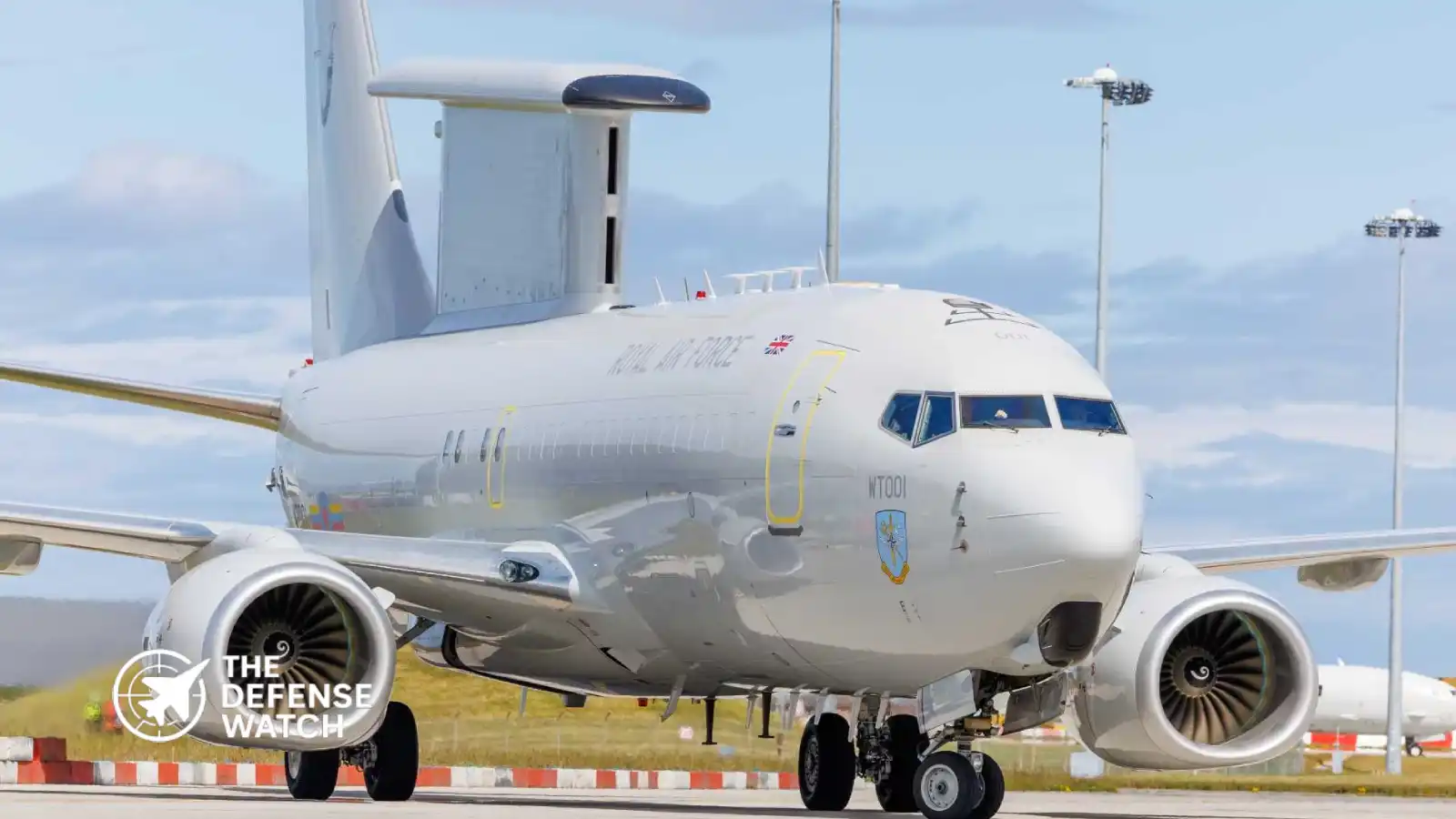
The Royal Air Force’s first E-7 Wedgetail AEW1 aircraft, designated WT001, has landed at RAF Lossiemouth in Scotland. The milestone advances the UK’s transition toward a modern airborne early warning and battle management capability, replacing the retired E-3D Sentry fleet and strengthening NATO air surveillance operations.
RAF E-7 Wedgetail WT001 Arrives At RAF Lossiemouth
The RAF E-7 Wedgetail program reached a major milestone after the first aircraft, WT001, landed at RAF Lossiemouth in Scotland. The aircraft’s arrival marks the beginning of operational integration for the United Kingdom’s next generation airborne early warning and control capability.
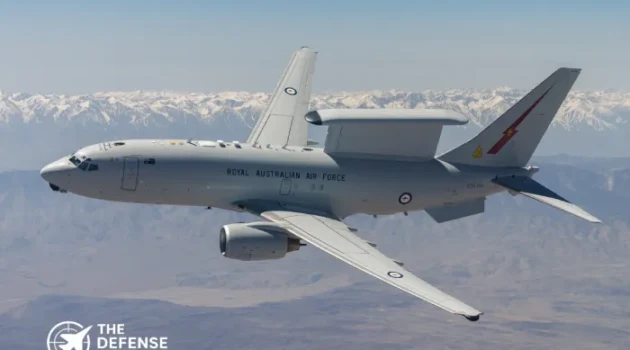
The aircraft completed its transfer following extensive modification and testing work. The E-7 Wedgetail AEW1 is based on the Boeing 737 Next Generation airframe and incorporates Northrop Grumman’s Multi-role Electronically Scanned Array (MESA) radar system.
The RAF E-7 Wedgetail fleet is intended to replace the UK’s retired E-3D Sentry airborne warning aircraft, which had served as Britain’s primary airborne surveillance platform for decades.
Why The E-7 Wedgetail Matters To The RAF
The arrival of the RAF E-7 Wedgetail comes at a time when NATO members are increasing investments in airborne command, surveillance, and electronic warfare capabilities amid heightened security tensions in Europe.
Unlike older mechanically scanned radar systems, the Wedgetail’s electronically scanned radar enables simultaneous airborne and maritime tracking across large operational areas. The platform is designed to provide long-range detection of hostile aircraft, missiles, and surface threats while coordinating friendly forces during complex operations.
The RAF E-7 Wedgetail also strengthens interoperability with allied forces already operating the aircraft, including Australia, South Korea, and Turkey. NATO has increasingly emphasized shared surveillance and command capabilities to support integrated air and missile defense missions across Europe.
From an operational perspective, the platform fills a critical capability gap left after the retirement of the E-3D Sentry fleet in 2021. That retirement created a temporary reduction in sovereign UK airborne early warning coverage, increasing reliance on allied NATO assets.
The RAF E-7 Wedgetail program therefore represents more than a fleet replacement. It is part of a broader British effort to modernize command-and-control infrastructure while supporting high-tempo multinational operations.
RAF Lossiemouth’s Growing Strategic Role
The arrival of WT001 further reinforces the strategic importance of RAF Lossiemouth as one of the UK’s primary airpower hubs.
RAF Lossiemouth already hosts frontline combat aircraft including the Eurofighter Typhoon as well as the RAF’s P-8A Poseidon maritime patrol fleet. The addition of the E-7 Wedgetail expands the base’s role in intelligence, surveillance, reconnaissance, and air defense operations.
The location is strategically positioned to support North Atlantic and northern European operations, areas that have gained increasing attention following expanded Russian military activity in the region.
The concentration of maritime patrol aircraft, fighters, and airborne surveillance systems at Lossiemouth creates a more integrated operational environment for NATO missions involving anti-submarine warfare, air policing, and strategic monitoring.
Program Challenges And Fleet Questions
Despite the milestone, the RAF E-7 Wedgetail program has faced scrutiny over fleet size and procurement decisions.
The UK originally planned to acquire five aircraft before reducing the total to three as part of defense budget adjustments. Analysts have questioned whether a three-aircraft fleet can consistently maintain operational availability during maintenance cycles and high operational demand periods.
That debate remains active as NATO countries expand surveillance operations along Europe’s eastern flank and Arctic approaches.
Still, defense officials argue the E-7 Wedgetail provides a significant leap in capability compared to the retired E-3D fleet. The aircraft offers improved sensor performance, greater reliability, lower maintenance demands, and enhanced digital battle management systems.
The aircraft is also expected to play a central role in future multi-domain operations, linking air, land, maritime, cyber, and space-based assets into a unified operational network.
NATO Airborne Surveillance Modernization Continues
The RAF E-7 Wedgetail program reflects a wider trend among NATO and allied air forces toward modern airborne early warning platforms capable of managing increasingly contested battlespaces.
Modern conflicts have highlighted the importance of persistent airborne surveillance, long-range tracking, and integrated command-and-control systems. Airborne early warning aircraft remain essential for detecting low-flying threats, coordinating intercept missions, and supporting missile defense operations.
As geopolitical competition intensifies, platforms like the E-7 Wedgetail are becoming central to alliance-wide deterrence and rapid response strategies.
The arrival of WT001 at RAF Lossiemouth therefore represents both a national milestone for the UK and a broader signal of NATO’s continuing investment in advanced airborne surveillance infrastructure.