

Executive Summary:
The British Army has conducted a live demonstration integrating drones with armored units to enhance battlefield awareness and combat effectiveness. The exercise highlights a shift toward networked warfare, where unmanned systems support traditional platforms. The effort aims to improve survivability and decision-making in contested environments.
British Army Advances Drone–Armor Integration
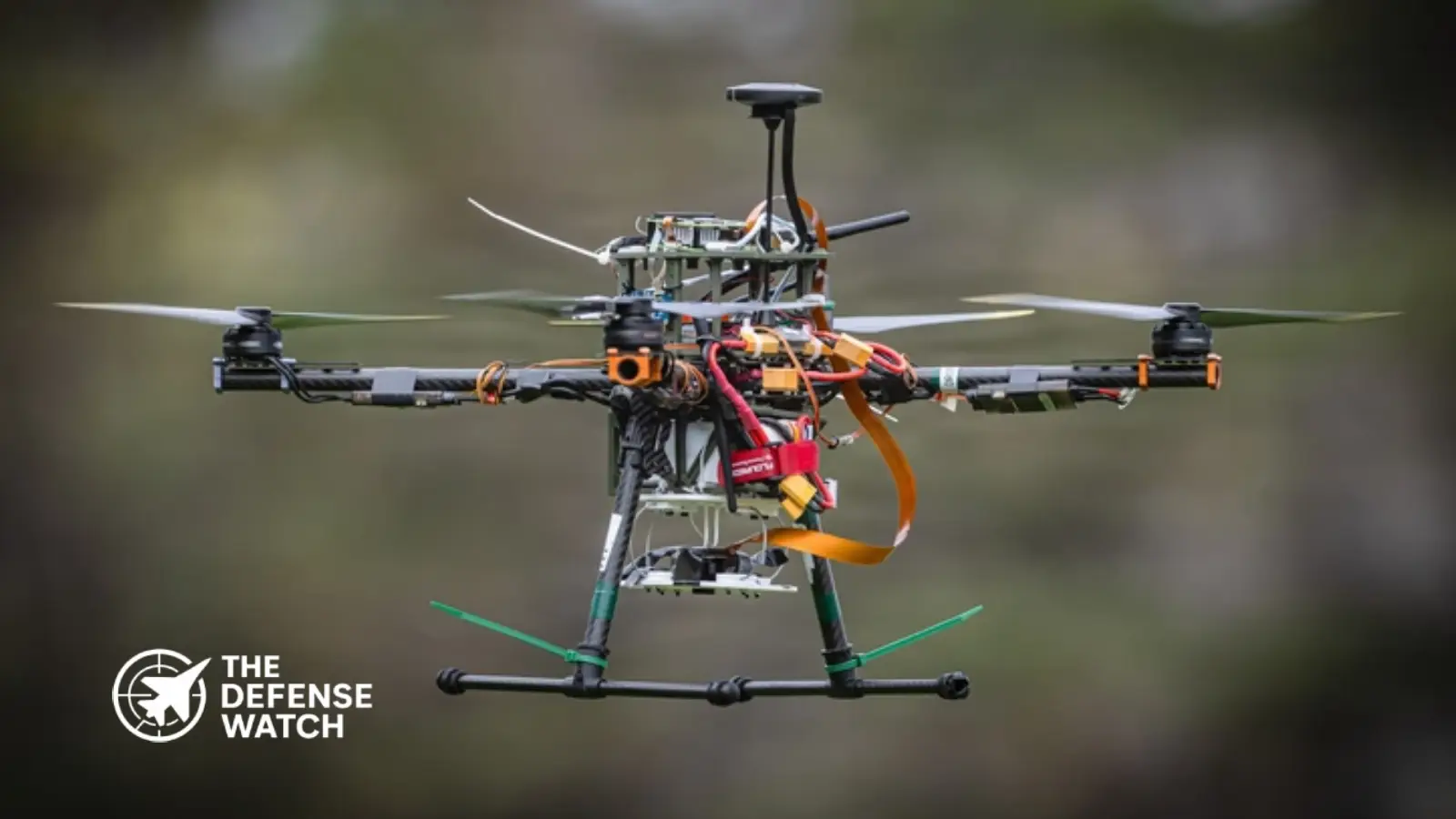
The British Army has demonstrated a combined operational concept that integrates unmanned aerial systems with armored vehicles during a recent field exercise. The trial reflects a broader push toward digitized and network-enabled warfare, where real-time data sharing improves combat performance.
The demonstration featured drones working in coordination with armored platforms to identify targets, relay intelligence, and support maneuver operations. This approach reduces reliance on line-of-sight engagements and enhances situational awareness across the battlefield.
Key Capabilities Demonstrated
Real-Time Battlefield Awareness
Drones provided live surveillance feeds directly to armored crews, allowing faster identification of threats and targets.
Enhanced Target Acquisition
Unmanned systems enabled beyond-line-of-sight targeting, reducing exposure of armored units to enemy fire.
Coordinated Strike Operations
The integration allowed for synchronized movement between reconnaissance drones and ground forces.
Technical Advantages of Integrated Systems
- Improved ISR (Intelligence, Surveillance, Reconnaissance) coverage
- Reduced reaction time to emerging threats
- Increased survivability of armored units
- Ability to operate in contested and urban environments
- Scalable integration with future AI-driven systems
Comparison: Integrated Drone–Armor vs Legacy Armored Operations
| Capability | Integrated Drone–Armor System | Legacy Armored System |
|---|---|---|
| Range | Extended via UAV ISR | Limited to line-of-sight |
| Payload | Modular UAV sensors | Fixed onboard optics |
| Status | Under active development (2026) | Operational but evolving |
| Key Technology | Networked drones, data links | Traditional targeting systems |
Strategic Context: Adapting to Modern Threats
The British Army’s initiative reflects a broader NATO trend toward integrating unmanned systems into conventional forces. Modern battlefields, particularly in regions such as Eastern Europe and the Middle East, have shown the effectiveness of drones in both reconnaissance and strike roles.
Conflicts in recent years have demonstrated that armored units operating without drone support are increasingly vulnerable to precision-guided munitions and loitering munitions. By integrating UAVs, armies can detect threats earlier and respond more effectively.
Implications for Future Warfare
The demonstration signals a transition toward multi-domain operations, where land forces operate in close coordination with aerial and digital assets. The British Army is expected to continue refining these capabilities, potentially incorporating autonomous systems and AI-assisted targeting in future trials.
As military forces adapt to increasingly complex threat environments, the fusion of drones and armored vehicles is likely to become a standard feature of modern land warfare.
