Executive Summary:
NATO has selected Saab’s GlobalEye as its preferred next generation Airborne Early Warning and Control (AEW&C) platform and will begin formal contract negotiations for up to ten aircraft. The decision marks a major modernization effort aimed at replacing the Alliance’s aging airborne surveillance capability with a more advanced multi-domain system capable of tracking air, maritime, and ground threats.
NATO Selects Saab GlobalEye For Future AEW&C Fleet
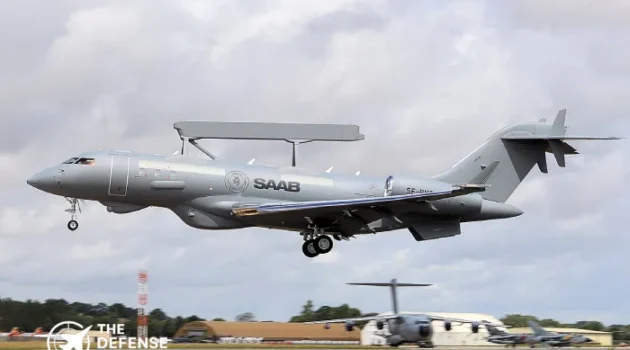
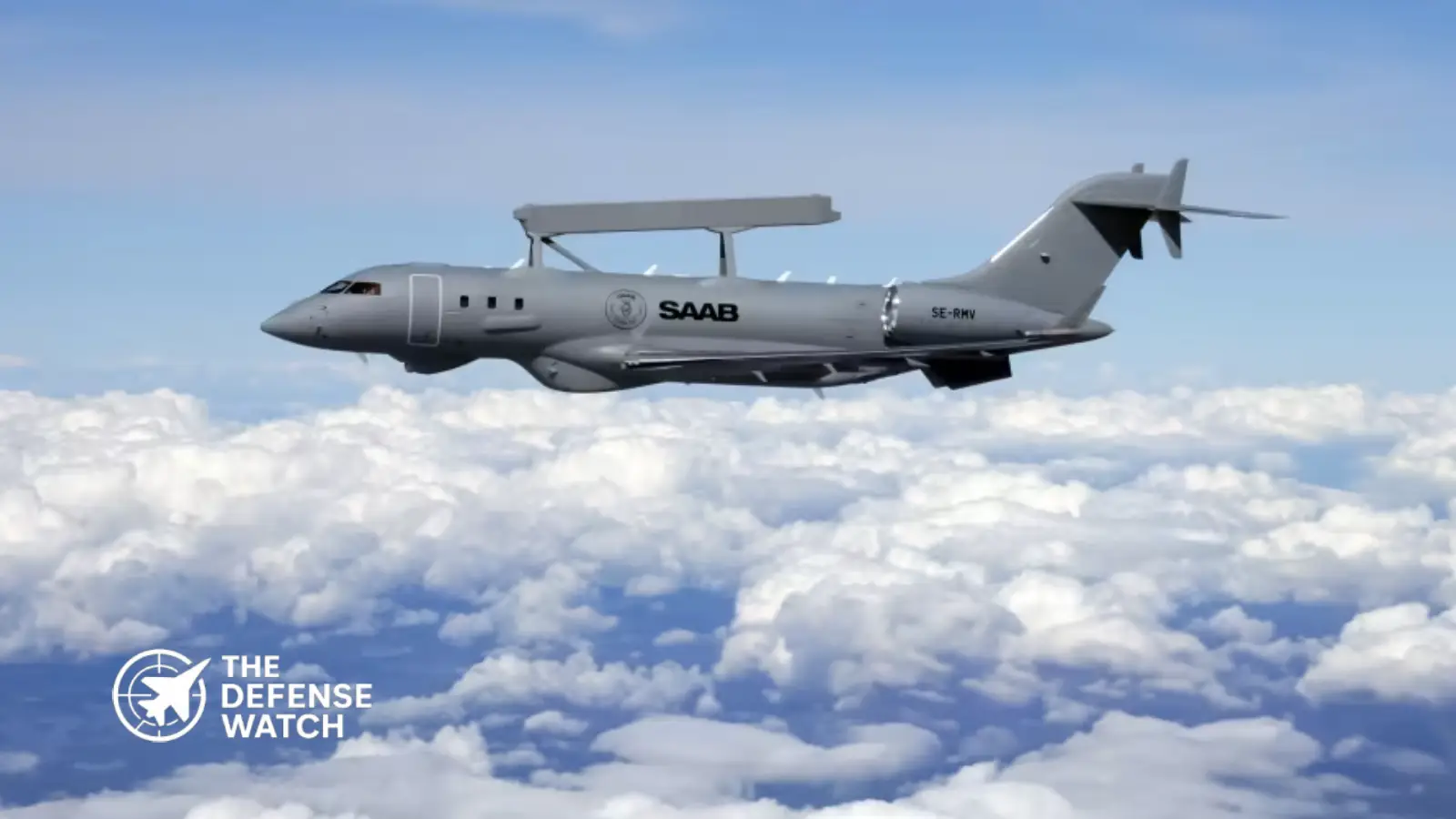
NATO has chosen Saab’s GlobalEye Airborne Early Warning and Control (AEW&C) system as the Alliance’s future airborne surveillance platform, marking one of the most significant modernization decisions for NATO’s command and control architecture in recent years.
The announcement was made by NATO Secretary General Mark Rutte during the NATO Summit in Ankara, Türkiye. According to Saab, NATO will now enter formal negotiations with the NATO Support and Procurement Agency (NSPA) regarding the acquisition of up to ten GlobalEye aircraft.
While Saab emphasized that no contract has yet been signed and no formal order has been placed, the announcement confirms that GlobalEye has been selected as NATO’s preferred solution to replace its current airborne early warning capability.
The procurement forms part of the Alliance’s broader effort to modernize intelligence, surveillance, reconnaissance (ISR), and command and control capabilities in response to an increasingly complex security environment.
GlobalEye Selected To Replace NATO’s Aging Airborne Warning Fleet
NATO’s existing airborne early warning capability has been provided for decades by the Boeing E-3A AWACS fleet. Although repeatedly modernized, those aircraft entered service during the Cold War and face growing maintenance challenges as they age.
GlobalEye represents a generational leap in airborne surveillance technology.
Rather than relying on an aging commercial airframe, Saab integrates its mission system onto the modern Bombardier Global 6500 business jet, providing greater fuel efficiency, lower operating costs, higher availability, and extended endurance.
The aircraft combines multiple sensor systems into a single command and control platform capable of simultaneously monitoring:
- Airspace
- Maritime activity
- Ground movements
This multi-domain capability enables commanders to build a more complete operational picture across large geographic areas.
Advanced Erieye Extended Range Radar
At the center of GlobalEye is Saab’s Erieye Extended Range (ER) active electronically scanned array (AESA) radar.
Unlike traditional mechanically rotating radar systems, the electronically scanned radar provides rapid target updates while maintaining long-range surveillance.
According to Saab, GlobalEye can detect and track:
Capability Operational Benefit Conventional aircraft Long-range air surveillance Low-observable aircraft Improved detection of stealth targets Cruise missiles Early warning against low-altitude threats Ballistic missiles Enhanced missile warning capability Hypersonic missiles Earlier tracking during high-speed engagements Small drones Counter-UAS situational awareness Maritime vessels Surface surveillance across large sea areas The platform is also designed to operate in highly contested electromagnetic environments, where electronic jamming and signal interference can significantly degrade older radar systems.
Integrated Multi-Domain Command And Control
GlobalEye is more than a radar aircraft.
It serves as an airborne command and control node capable of collecting information from multiple sensors and distributing that information to commanders across NATO networks.
The aircraft integrates:
- Erieye Extended Range radar
- Maritime surveillance radar
- Electro-optical and infrared sensors
- Electronic support measures
- Identification Friend or Foe (IFF) systems
- Advanced communications and data links
Together, these systems enable operators to monitor simultaneous air, land, and maritime operations while providing commanders with near real-time situational awareness.
Why NATO’s Decision Matters
Selecting GlobalEye reflects changing operational requirements across Europe.
Since Russia’s full-scale invasion of Ukraine, NATO has significantly expanded airborne surveillance missions along its eastern flank while also increasing maritime monitoring in the Baltic Sea, North Sea, Arctic, Mediterranean, and Black Sea regions.
Modern military operations increasingly involve:
- Long-range cruise missiles
- Small unmanned aerial systems
- Electronic warfare
- Hypersonic weapons
- Multi-domain operations
These threats demand faster sensor updates, improved target discrimination, and stronger resistance to electronic attack than legacy AWACS platforms were originally designed to provide.
GlobalEye addresses many of these emerging operational requirements through its modern sensor suite and digital mission architecture.
Strategic Importance For NATO And The United States
Although GlobalEye is manufactured by Sweden’s Saab, its selection has broader implications for NATO’s collective defense posture, including U.S.-led operations.
Airborne early warning aircraft act as force multipliers by extending radar coverage far beyond ground-based sensors. They enable fighter aircraft, missile defense units, naval forces, and ground commanders to share a common operational picture over large areas.
For the United States and other NATO members, a modernized AEW&C fleet improves interoperability during coalition operations while reducing dependence on increasingly costly legacy aircraft.
The decision also reflects NATO’s emphasis on distributed sensing, resilient command networks, and integrated air and missile defense. As Russia and China continue investing in long-range precision weapons and electronic warfare capabilities, NATO is prioritizing systems capable of maintaining situational awareness in contested environments.
From an industrial perspective, the selection represents a significant milestone for Saab. If negotiations conclude successfully, a fleet of up to ten aircraft would become one of the company’s largest AEW&C programs and further establish GlobalEye as a leading airborne surveillance platform on the international market.
Contract Negotiations Begin
Following the announcement, Saab will enter formal negotiations with the NATO Support and Procurement Agency (NSPA).
The negotiations will determine:
- Final contract value
- Number of aircraft
- Delivery schedule
- Sustainment and logistics support
- Training requirements
- Mission system integration
Saab reiterated that no procurement contract has yet been awarded, and financial details have not been released.
Should negotiations conclude successfully, GlobalEye will become NATO’s next generation airborne early warning and control platform, replacing one of the Alliance’s longest-serving airborne surveillance capabilities with a modern system designed for the evolving threat environment.