

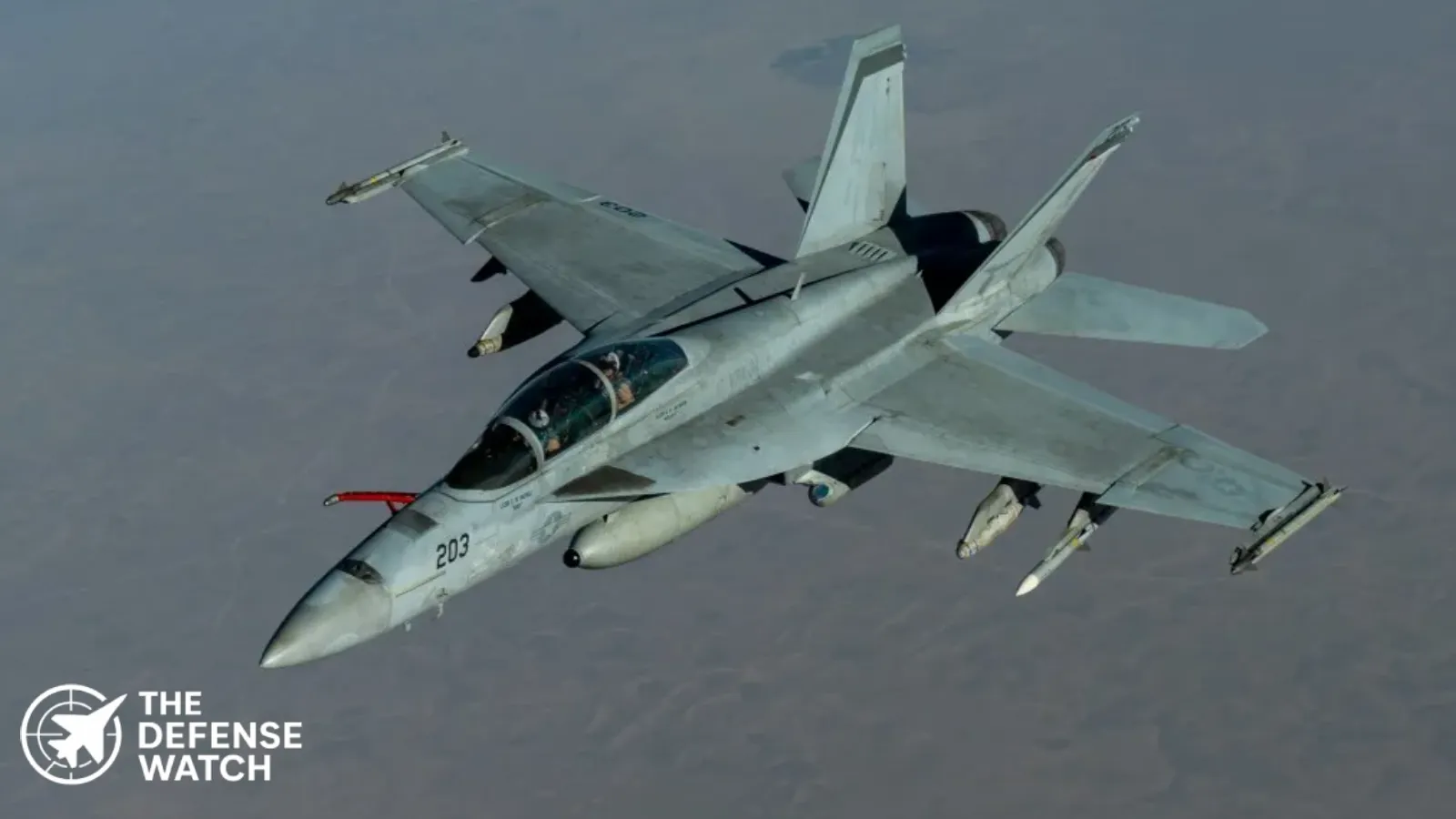
On 5 December 2025 the United States Navy announced it has successfully recovered both an F/A-18F Super Hornet fighter jet and an MH-60R Seahawk helicopter from the seabed of the South China Sea. The two aircraft had crashed within roughly 30 minutes of each other on 26 October while operating from the carrier USS Nimitz. The wrecks were retrieved from about 400 feet depth, says the Navy’s 7th Fleet.
Both aircraft were recovered intact, and all recovered components are being moved to a U.S. military facility in the Indo-Pacific for further analysis.
Background
On 26 October 2025 the South China Sea incident startled naval analysts. At about 2:45 p.m local time a MH-60R Seahawk assigned to the “Battle Cats” of Helicopter Maritime Strike Squadron 73 went down while conducting routine operations from USS Nimitz. Three crew members aboard were rescued by search-and-rescue assets.
Roughly 30 minutes later, at around 3:15 p.m., an F/A-18F Super Hornet from the “Fighting Redcocks” of Strike Fighter Squadron 22 also crashed during routine flight operations from the same carrier. Both pilots ejected safely and were recovered in stable condition.
The cause of the crashes remains under investigation. Among possible contributing factors, contaminated or substandard fuel has been raised, including by a senior U.S. official.
The dual loss was notable: losing two carrier-borne aircraft within half an hour during routine operations is rare for the Navy. The incidents occurred while the aging USS Nimitz — the oldest carrier in active U.S. service — was on its final deployment before decommissioning.
Details of the Recovery Effort
The salvage operation was led by a combined effort: Task Force 73, Task Force 75, the naval salvage and diving command SUPSALV, and the Mobile Diving and Salvage Unit attached to CTG 73.6..
A contracted “vessel of opportunity” equipped with a government-owned, contractor-operated unmanned lifting system carried out the recovery. The Navy did not disclose the vessel’s name.
Earlier, the Navy had deployed the salvage ship USNS Salvor (T-ARS 52) — a Safeguard-class vessel operated by the Military Sealift Command — to the site. Salvor is designed for heavy-lift and deep-sea salvage, with cranes capable of lifting tens to hundreds of tons depending on configuration.
Given the approximate weights — around 33 tons for a Super Hornet at maximum takeoff and about 11.5 tons for a Seahawk — the salvage hardware was more than capable of recovering the airframes.
According to Lt. Cmdr. Christopher Andersen, officer leading the operation, the recovery showcased the integration of diving, salvage and carrier-group capabilities. He praised the broad pool of expertise that made safe retrieval possible.
Strategic Context
The retrieval comes amid growing strategic competition in the South China Sea. For the U.S. Navy, recovery was likely priority number one. Experts note it is routine for the Navy to salvage downed aircraft — especially those carrying sensitive systems — to avoid the risk of foreign recovery. As defense analyst Mark Cancian observed, such operations “are totally normal.”
Still, the back-to-back crashes raise concern internally and abroad. Observers in Beijing have pointed to the accident as evidence of declining operational capability in the U.S. fleet, arguing the incident highlights vulnerabilities in carrier-borne aviation.
With the Nimitz nearing decommissioning, the pressure on maintenance and safety for the remaining service life may become a subject of scrutiny.
What’s Next
The recovered wreckage is now slated for thorough analysis at a U.S. military installation in the Indo-Pacific region. The results may help shed light on what caused two carrier-based aircraft to go down within minutes of each other.
The findings could influence training, maintenance, and operational protocols for carrier air wings — especially during deployments in geopolitical flashpoints such as the South China Sea.
Given regional tensions, the full report may also shape diplomatic messaging and reassure both U.S. allies and rivals about the safety and security of sensitive technology.


4 comments
[…] the US Navy, the partnership fits into broader efforts to field large numbers of affordable autonomous systems […]
[…] US Navy has invested heavily in all three categories, supported by research programs from organizations […]
[…] public aircraft displays, search and rescue demonstrations, and backseat flights aboard F/A-18F Super Hornet two-seat trainers for community […]
[…] system optimized for carrier use. These design elements allow the aircraft to operate alongside Navy F A 18E F Super Hornets and E 2D Advanced Hawkeyes aboard US Navy […]