• Home
  • About
  • Defense Systems
  • Manufacturer
  • Comparisons
  • Compare 
  • Tools
TheDefenseWatch.com
  • Aerospace & Aviation
  • Military & Ordnance
  • Naval & Maritime
  • Cyber & Space Defense
  • Policy & Strategy
  • Global News
  • Tools Library
    • Smart Calculator
    • Drone Flight Time Calculator
    • Drone Range Calculator
    • Counter-Drone Jammer Effective Range Calculator
    • Counter-Battery Radar Detection Calculator
    • Artillery Fire Correction Calculator
    • Thermal Camera Detection Range Calculator
    • Missile Range & Time-of-Flight Calculator
    • Radar Detection Range Calculator
    • FPV Strike Drone Payload vs Range Calculator
    • Loitering Munition Endurance Calculator
    • Sniper Ballistic Drop & Windage Calculator
    • Bullet Drop Calculator
    • U.S. Army Combat Fitness Test (ACFT) Calculator
    • Military Pension Calculator
    • Military Retirement Calculator
    • Military Pension Calculator
    • Large Number Calculator
Font ResizerAa

TheDefenseWatch.com

The Defense Watch | U.S. & Global Defense News, Analysis & Military Updates

Search
  • Home
  • About
  • Defense Systems
  • Manufacturer
  • Comparisons
  • Compare 
  • Tools

Stay Updated

Get the latest update

Subscribe

Explore

  • Drone
  • Fighter Jets & Military Aircraft
  • Hypersonic Weapons
  • Aircraft Carriers
  • Strategic History & Missions
  • Tools Library
Home » U.S. Approves AIM-260A Missiles For Australia To Expand Indo-Pacific Air Combat Power
Global News

U.S. Approves AIM-260A Missiles For Australia To Expand Indo-Pacific Air Combat Power

Samuel Drake | Defense Analyst
Last updated: September 12, 2026 7:20 pm
Samuel Drake | Defense Analyst
Share
2 Min Read
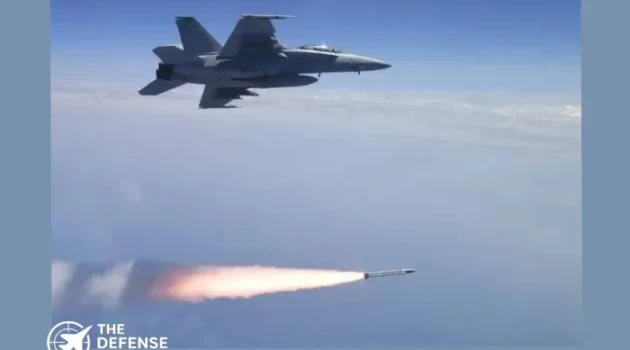
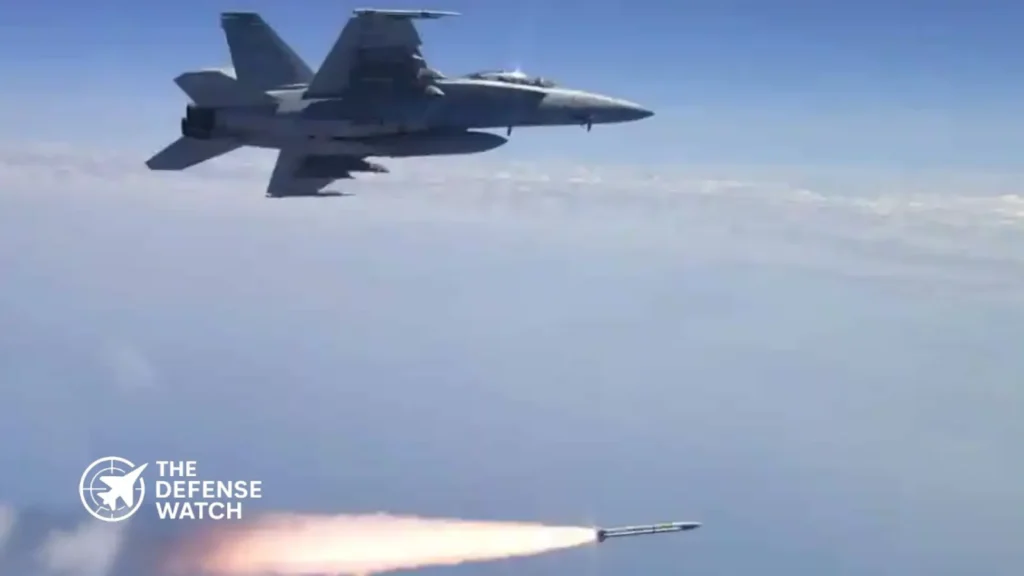
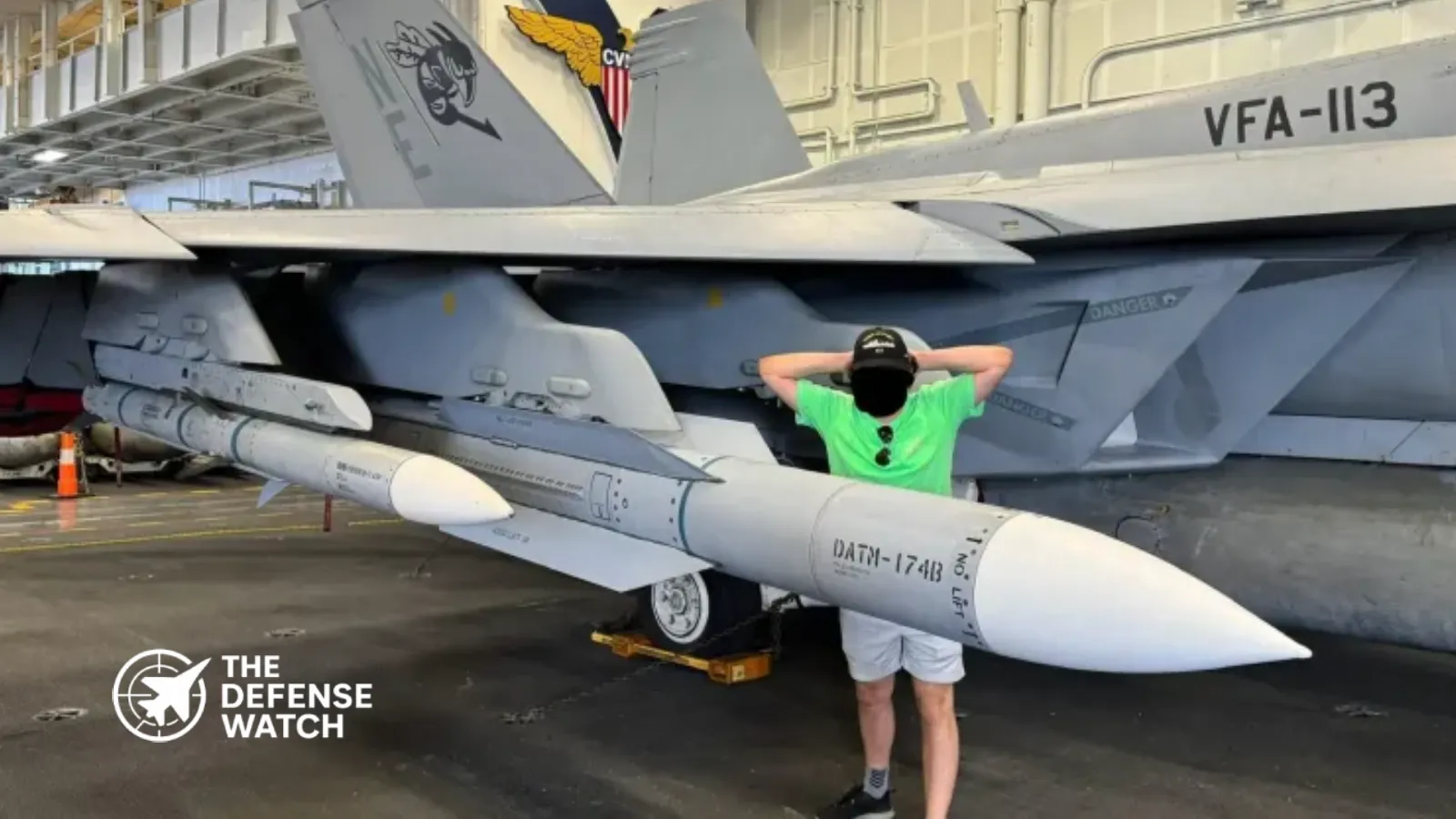
AIM-260A missile Australia
AIM-260A Joint Advanced Tactical Missile
SHARE
Follow The Defense Watch on Google:

U.S. Approves AIM-260A Missile Sale To Strengthen Australia’s Airpower

The AIM-260A missile Australia approval marks a significant step in strengthening allied air combat capability in the Indo-Pacific, as Washington clears the transfer of up to 450 next-generation air-to-air missiles to Canberra.

Contents
U.S. Approves AIM-260A Missile Sale To Strengthen Australia’s AirpowerA Next-Generation Air Combat CapabilityStrategic Context In The Indo-PacificClosing The Capability GapOperational Impact For AustraliaIndustrial And Defense CooperationBroader Implications

According to defense reporting and regional security sources, the approval centers on the AIM-260A Joint Advanced Tactical Missile, a program led by the U.S. Air Force to address emerging capability gaps against near-peer adversaries.

The missile is intended to replace the widely used AIM-120 AMRAAM, offering greater range and improved resistance to jamming in contested environments.

¦ KEY FACTS AT A GLANCE
  • The United States has approved the potential sale of up to 450 AIM-260A long-range air-to-air missiles to Australia.
  • The AIM-260A, also known as the Joint Advanced Tactical Missile, is designed to replace the AIM-120 AMRAAM.
  • The missile offers extended range and improved survivability against advanced electronic warfare environments.
  • The acquisition supports Royal Australian Air Force platforms including F-35A and F/A-18F fighters.
  • The move reflects growing U.S.-Australia defense cooperation amid rising Indo-Pacific tensions.

A Next-Generation Air Combat Capability

The AIM-260A missile Australia package is expected to provide a step change in beyond-visual-range engagement capability for the Royal Australian Air Force.

- Advertisement -

While official specifications remain classified, U.S. defense officials have indicated that the AIM-260A is designed to outperform current air-to-air systems in both range and survivability. Analysts widely assess that the missile was developed in response to advanced Chinese long-range air-to-air systems such as the PL-15.

  • Chinese PL-15 Missile

    Chinese PL-15 Missile

    • Guidance System: Active Radar (AESA) + Inertial Navigation
    • Maximum Speed: Mach 4
    • Launch Compatibility: J-10C, J-16, J-20
    • Warhead Technology: High-Explosive Fragmentation
    • View Details →
    8.0

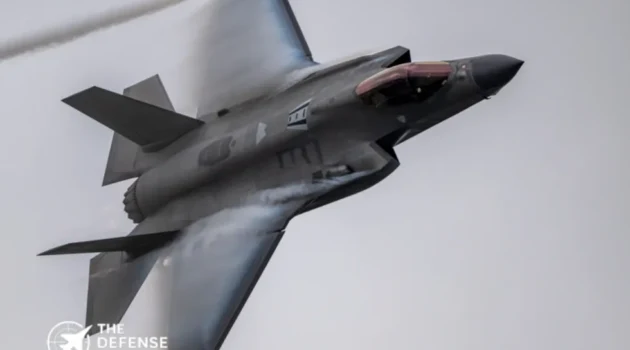
    The integration of the missile with platforms like the F-35A Lightning II and F/A-18F Super Hornet will allow Australian forces to engage threats at longer distances, reducing exposure to enemy air defenses.

    • F-35 Lightning II Fighter Jet

      F-35 Lightning II Fighter Jet

      • Generation: 5th
      • Maximum Speed: Mach 1.6 (1,200 mph / 1,930 km/h)
      • No. of Engines: 1
      • Radar Range: ~150+ km (AN/APG-81 AESA)
      • View Details →
      8.8

      This shift is critical in modern air warfare, where detection and engagement ranges increasingly determine combat outcomes.

      Strategic Context In The Indo-Pacific

      The AIM-260A missile Australia approval comes amid rising strategic competition across the Indo-Pacific region.

      The United States has been accelerating efforts to strengthen allied capabilities as part of a broader deterrence strategy. Australia, as a key partner under frameworks such as AUKUS and long-standing bilateral defense agreements, plays a central role in this posture.

      • AIM-260A JATM Missile

        AIM-260A JATM Missile

        • Guidance System: Active Radar Homing (Advanced)
        • Maximum Speed: Mach 4+ (Estimated)
        • Launch Compatibility: Fighter Jets (F-22, F-35, F-15EX)
        • Warhead Technology: High-Explosive Fragmentation
        • View Details →
        8.3

        From a strategic standpoint, long-range air-to-air missiles are becoming a decisive factor in potential high-end conflict scenarios. Control of the air domain depends not only on stealth and sensors, but also on the ability to strike first at extended distances.

        AIM-260A missile Australia
        AIM-260A Joint Advanced Tactical Missile

        By equipping Australia with the AIM-260A, Washington is effectively extending its own air combat network, enabling greater interoperability and shared operational reach.

        Closing The Capability Gap

        One of the primary drivers behind the AIM-260A missile Australia decision is the need to close a growing capability gap.

        Regional competitors have invested heavily in long-range missile technology, supported by advanced radar systems and electronic warfare capabilities. This has raised concerns within U.S. defense circles about the effectiveness of legacy systems like the AIM-120 in future conflicts.

        The AIM-260A addresses these concerns by offering:

        • Increased engagement range
        • Enhanced resistance to electronic countermeasures
        • Compatibility with fifth-generation aircraft
        • Improved lethality against high-speed and maneuvering targets

        This aligns with Pentagon modernization priorities, which emphasize survivability and lethality in contested environments.

        Operational Impact For Australia

        For Australia, the acquisition significantly enhances its ability to project airpower across vast distances.

        The Royal Australian Air Force operates in one of the largest areas of responsibility in the world, covering expansive maritime and airspace regions. Longer-range missiles reduce the need for forward basing and allow aircraft to operate from safer distances.

        • AIM-260A JATM Missile

          AIM-260A JATM Missile

          • Guidance System: Active Radar Homing (Advanced)
          • Maximum Speed: Mach 4+ (Estimated)
          • Launch Compatibility: Fighter Jets (F-22, F-35, F-15EX)
          • Warhead Technology: High-Explosive Fragmentation
          • View Details →
          8.3

          This also improves Australia’s contribution to coalition operations, particularly in scenarios involving joint U.S. and allied forces.

          In practical terms, the AIM-260A missile Australia deployment will allow Australian pilots to engage adversary aircraft before entering contested zones, increasing survivability and mission success rates.

          Industrial And Defense Cooperation

          The approval further reinforces defense industrial ties between the United States and Australia.

          Although the AIM-260A program remains tightly controlled, the sale highlights Washington’s willingness to share advanced capabilities with trusted allies. This is consistent with recent trends in U.S. defense exports, where interoperability and alliance integration are prioritized.

          The deal also signals confidence in Australia’s role as a long-term security partner in the Indo-Pacific.

          Broader Implications

          Beyond immediate military benefits, the AIM-260A missile Australia decision carries broader geopolitical implications.

          It sends a clear signal about U.S. commitment to maintaining a favorable balance of power in the region. At the same time, it underscores the accelerating pace of military modernization among Indo-Pacific nations.

          As air combat evolves, missiles like the AIM-260A are likely to play a central role in shaping future engagements.

          The focus is no longer just on aircraft performance, but on the entire kill chain, including sensors, data links, and long-range precision weapons.

Enjoying our coverage?

Make The Defense Watch a preferred source on Google to see more of our geopolitical and defense insights when relevant to you.


TAGGED:AIM-260Aair-to-air missilesAustralia defenseIndo-Pacific SecurityUS military sales
Share This Article
Facebook Copy Link Print
BySamuel Drake | Defense Analyst
Follow:
Samuel Drake is a defense analyst at TheDefenseWatch.com covering naval warfare, military ordnance, maritime technology, fleet modernization, and defense procurement. His reporting focuses on documented capabilities, procurement programs, and military technology.
Leave a Comment

Leave a Reply Cancel reply

Your email address will not be published. Required fields are marked *

Search Defense Systems

Latest Defense Systems

  • F-15J Eagle Fighter Jet F-15J Eagle Fighter Jet
  • China’s GJ-21 Stealth Drone China’s GJ-21 Stealth Drone
  • China’s GJ-11 Stealth Drone China’s GJ-11 Stealth Drone
  • F-15EX Eagle Fighter Jet F-15EX Eagle Fighter Jet
  • TRML-4D Radar TRML-4D Radar
  • F-47A Fighter Jet F-47A Fighter Jet
  • China DF-61 Missile China DF-61 Missile
  • B61 Nuclear Bomb B61 Nuclear Bomb
  • Japan E-767 Airborne Japan E-767 Airborne

Recent Compares

  • J-10C vs JF-17 Thunder: Which Fighter Is More Capable? J-10C vs JF-17 Thunder: Which Fighter Is More Capable? View Comparison →
  • Tejas vs Gripen: Key Differences and Capabilities Tejas vs Gripen: Key Differences and Capabilities View Comparison →
  • Tejas vs MiG-21 Bison: How India Replaced Its Iconic Supersonic Fighter Tejas vs MiG-21 Bison: How India Replaced Its Iconic Supersonic Fighter View Comparison →
  • F-35 vs F-16: Stealth, Sensors and Combat Roles F-35 vs F-16: Stealth, Sensors and Combat Roles View Comparison →
  • Tejas Fighter Jet vs F-16 Fighting Falcon: Capability Compared Tejas Fighter Jet vs F-16 Fighting Falcon: Capability Compared View Comparison →
  • Rafale Fighter Jet vs F-16 Fighting Falcon : Which Fighter Has the Edge? Rafale Fighter Jet vs F-16 Fighting Falcon : Which Fighter Has the Edge? View Comparison →
  • Su-57 Fighter Jet vs J-20 Fighter Jet: Stealth and Air Combat Compared Su-57 Fighter Jet vs J-20 Fighter Jet: Stealth and Air Combat Compared View Comparison →
  • Mirage 2000 vs Tejas Mk1A: Legacy Combat Power vs Indigenous Modernization Mirage 2000 vs Tejas Mk1A: Legacy Combat Power vs Indigenous Modernization View Comparison →
  • Rafale Fighter Jet vs F-22 Raptor: Which Air Dominance Fighter Has the Edge? Rafale Fighter Jet vs F-22 Raptor: Which Air Dominance Fighter Has the Edge? View Comparison →
  • Tejas Fighter Jet vs. Rafale Fighter Jet: India’s Indigenous Fighter Meets France’s Proven Multirole Combat Aircraft Tejas Fighter Jet vs. Rafale Fighter Jet: India’s Indigenous Fighter Meets France’s Proven Multirole Combat Aircraft View Comparison →

Recent Posts

  • Boeing B-1B LAM Pylon Clears Design Review, Advancing Hypersonic Weapons Integration
  • Pakistan, Türkiye Explore Deeper Air Force Cooperation in Drones and Electronic Warfare
  • Meta Muse AI Agent Faces Privacy Concerns After Reports of Unauthorized Data Access
  • Trump Nominates Christopher LaNeve for Permanent U.S. Army Chief of Staff
  • Sweden and UK Plan Meteor Missile Support for Ukraine’s Gripen Fighters

You Might Also Like

Egypt Israel border mobilization
Geopolitical & Strategic DoctrinesGlobal NewsPolicy & Strategy

Egypt Deploys Armored Vehicles to Israeli Border as Gaza Tensions Rise — US Closely Monitoring

September 22, 2025
war powers resolution fails in Senate
Global NewsPolicy & Strategy

U.S. Senate Rejects War Powers Resolution, Preserving Trump’s Military Authority on Venezuela

January 15, 2026
Su-57E production India
Asian Defense & Security

India’s HAL Reaches 50 % Readiness for Su-57E Stealth Fighter Production

September 8, 2026
UK Germany mobile artillery deal
Global News

UK Germany $70M Mobile Artillery Deal Strengthens NATO Firepower

September 8, 2026

Logo

Copyright © 2026 TheDefenseWatch.com

Helpful Links

  • Home
  • About Us
  • Privacy Policy
  • Terms of Use / Disclaimer
  • U.S. Privacy Notice – CCPA Compliance

Defense Systems

  • Defense Systems
  • Comparisons 
  • Manufacturer
  • Tactical Calculators

Popuplar

Which 5 Air Forces Possess the Costliest Fighter Jet Fleets in the World
Evolving Strategic Value: Carrier Strike Groups in the Indo-Pacific’s Future Security Architecture
Autonomous Weapon Systems Spark U.S. Ethics Debate Amid Rapid Military AI Integration

We report on developments involving military forces, governments, defense companies, research organizations, and security institutions around the world. 

Welcome Back!

Sign in to your account

Username or Email Address
Password

Lost your password?

Enjoying our coverage?

Make The Defense Watch a preferred source on Google to see more insights.