Executive Summary:
Switzerland’s planned acquisition of the F-35A fighter jet is facing renewed political and financial scrutiny as projected lifecycle costs continue to rise. Critics are questioning whether the aircraft’s operational requirements, sustainment expenses, and interoperability commitments align with Swiss defense needs and long term budget priorities.
Switzerland’s F-35A Acquisition Faces Renewed Scrutiny
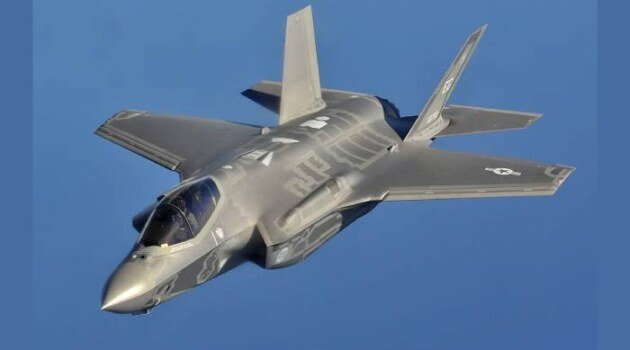
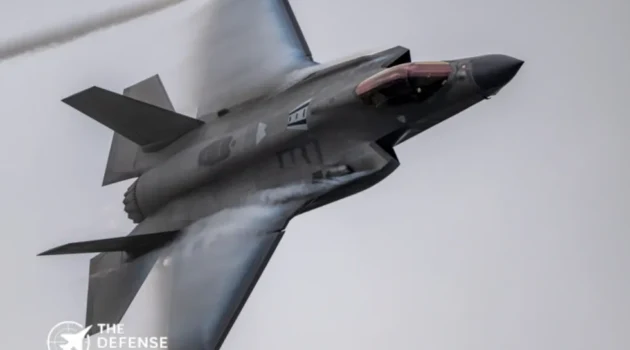
Switzerland’s F-35A fighter aircraft program is under increasing pressure as defense officials, lawmakers, and political groups debate the long term affordability and operational suitability of the stealth fighter for the Swiss Air Force.
The debate follows fresh concerns over escalating procurement and sustainment costs tied to the planned acquisition of the Lockheed Martin F-35A Lightning II. Questions have also emerged regarding maintenance dependency, software sovereignty, infrastructure requirements, and future operating expenses.
The Swiss government selected the F-35A in 2021 to replace the country’s aging fleet of F/A-18 Hornets and F-5 Tiger aircraft. The selection followed a competitive evaluation process involving the Dassault Rafale, Eurofighter Typhoon, and Boeing F/A-18E/F Super Hornet.
Swiss authorities argued at the time that the F-35A offered the best balance of capability, survivability, and projected operating costs. However, critics now claim the overall financial burden may exceed earlier government estimates.
Rising Lifecycle Costs Drive Political Debate
Much of the current controversy centers on projected lifecycle and sustainment expenses rather than the initial acquisition value alone.
Defense analysts and opposition politicians have raised concerns that long term maintenance, software upgrades, logistics support, and infrastructure modernization could significantly increase the overall cost of ownership over the aircraft’s service life.
The F-35 program relies heavily on centralized software management, secure data systems, and international sustainment networks led by the United States. For a non NATO country like Switzerland, this has fueled debate over operational autonomy and strategic dependence.
Swiss officials continue to maintain that the acquisition remains within contractual limits, but political pressure has intensified amid broader European defense spending increases and inflation driven procurement challenges.
The discussion reflects a wider trend affecting multiple F-35 operators worldwide. Several countries operating or evaluating the aircraft have encountered questions regarding sustainment costs, spare parts availability, maintenance complexity, and readiness rates.
Capability Questions Extend Beyond Cost
While the F-35A is widely recognized for its stealth characteristics, sensor fusion, and network centric warfare capabilities, some Swiss critics argue that the aircraft may exceed the operational needs of Switzerland’s air defense mission.
Switzerland’s military posture focuses primarily on territorial defense, air policing, and national sovereignty operations rather than expeditionary warfare. Critics argue that a high end fifth generation fighter optimized for contested battlespace operations may provide capabilities beyond the country’s immediate strategic requirements.
Supporters of the acquisition counter that the future threat environment requires advanced survivability and interoperability features. They argue that the F-35A’s sensor integration and data sharing capabilities could strengthen Swiss air defense effectiveness for decades.
The debate also highlights a broader European discussion regarding the balance between advanced capability and sustainable defense spending.
European Defense Environment Shapes Procurement Decisions
The security environment across Europe has changed dramatically since Switzerland approved the F-35A purchase. Russia’s war in Ukraine, NATO force modernization efforts, and rising regional defense investments have accelerated demand for advanced combat aircraft across the continent.
Several European nations, including Finland, Germany, Poland, and Belgium, have either acquired or expanded F-35 fleets in recent years.
Supporters of Switzerland’s acquisition argue that joining a broader European F-35 user community improves interoperability, training access, logistics coordination, and future upgrade pathways.
At the same time, critics warn that dependence on increasingly expensive Western defense systems could place long term strain on smaller national defense budgets.
This tension between capability and affordability is becoming a defining issue in modern military procurement decisions across Europe.
Swiss Government Continues To Defend The Program
Swiss defense officials continue to defend the F-35A selection process, emphasizing that the aircraft achieved the highest evaluation score during technical and operational assessments.
Authorities also argue that fixed price arrangements for the procurement phase provide a degree of cost certainty despite broader inflation pressures affecting the global defense sector.
Nevertheless, domestic political opposition remains active, and public debate surrounding the aircraft is likely to continue as implementation progresses.
The outcome of the debate may shape future Swiss defense procurement policy, particularly regarding foreign military dependency, industrial participation, and long term modernization priorities.
Strategic Analysis
The controversy surrounding Switzerland’s F-35A acquisition reflects a broader shift in global defense procurement dynamics. Modern combat aircraft increasingly function as integrated digital warfare platforms rather than standalone fighters. That transition introduces new financial and sovereignty considerations for smaller states.
For countries with limited defense budgets and narrowly focused operational missions, the challenge is no longer simply purchasing advanced aircraft. It is sustaining the ecosystem required to operate them effectively over decades.
The Swiss case demonstrates how fifth generation fighter programs can evolve from military procurement decisions into national political debates involving budget priorities, technological dependence, and strategic identity.
As more nations adopt the F-35 platform, scrutiny over sustainment affordability and operational flexibility is likely to intensify.