Executive Summary:
The U.S. Air Force has completed a key ground validation event supporting integration of the AGM-158C Long Range Anti-Ship Missile (LRASM) on the B-1B Lancer at Dyess Air Force Base. The effort verified updated pre-flight procedures, aircraft software, and maintenance processes that will accelerate future maritime strike capability and improve operational readiness across the bomber fleet.
U.S. Air Force Validates B-1B LRASM Integration Procedures
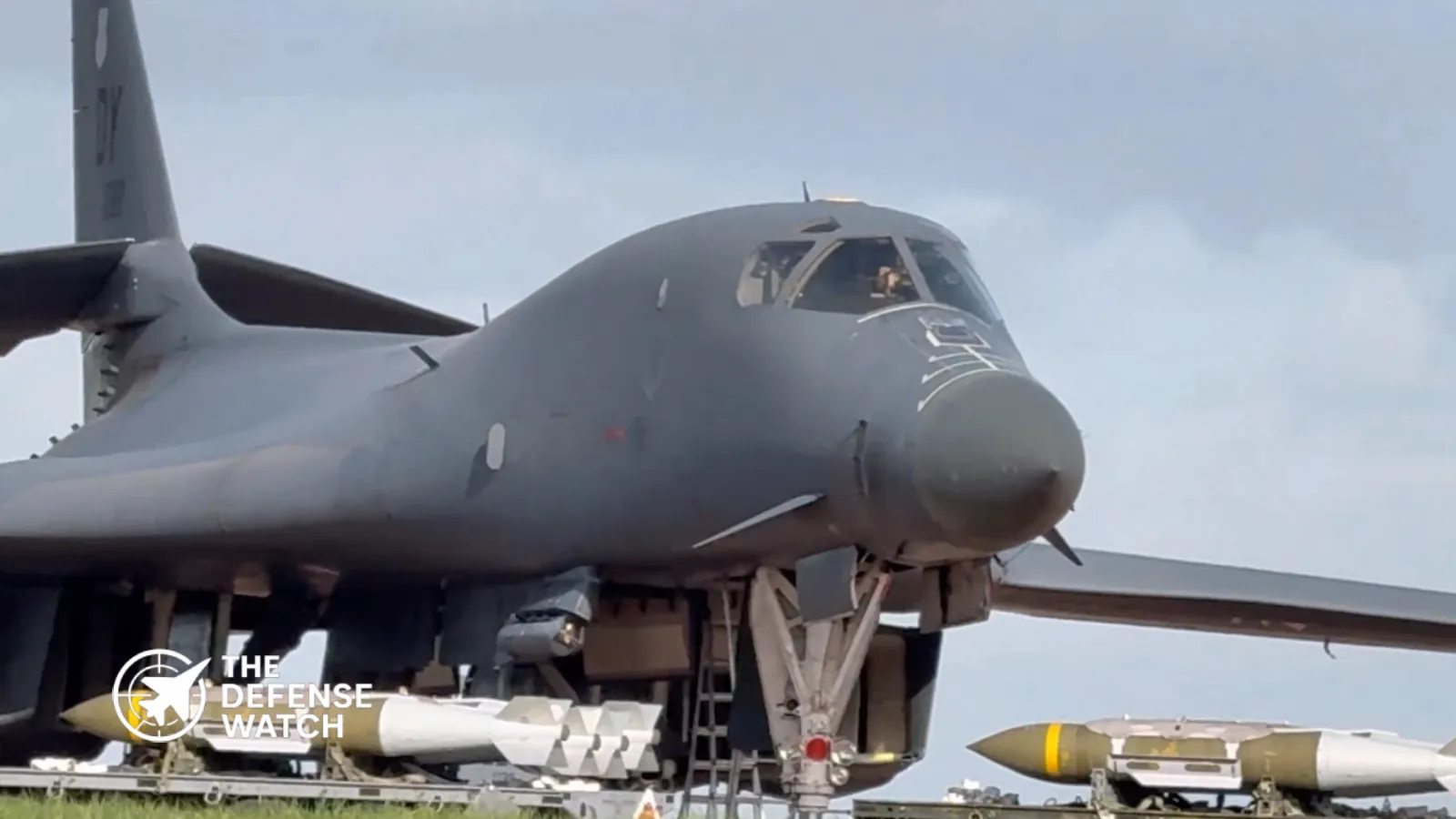
The U.S. Air Force has completed an important milestone in expanding the B-1B Lancer LRASM integration program after conducting a Long Range Anti-Ship Missile (LRASM) Event Zero at Dyess Air Force Base on June 2. According to the U.S. Air Force, the event successfully validated new ground procedures and software updates that will support faster fielding of advanced maritime strike capabilities for the bomber fleet.
The activity was led by the 7th Bomb Wing with participation from maintenance personnel, weapons specialists, evaluators, and aircrews. Rather than serving as a live firing exercise, Event Zero focused on validating critical pre-flight procedures, improving maintenance workflows, and verifying communication between the aircraft and the AGM-158C LRASM using updated hardware and software.
Ground Testing Improves Future Weapons Integration
One of the most notable achievements during the event was the successful connection of a live AGM-158C LRASM to a B-1B Lancer through a locally designed extension cable.
Airmen from the 7th Bomb Wing’s weapons backshop fabricated the specialized cable using U.S. Navy technical specifications. The modification allowed technicians to connect the missile without loading it into the aircraft’s internal weapons bay, simplifying verification work while collecting valuable engineering and operational data.
According to Air Force officials, locally developing the cable reduced dependence on external equipment while enabling more efficient testing. The process also demonstrated the growing technical expertise of maintenance personnel responsible for supporting rapid weapons integration.
Officials stated that the event successfully verified:
Validation Area Operational Benefit Updated aircraft software Supports new weapon compatibility LRASM software verification Improves integration reliability Pre-flight maintenance procedures Reduces preparation time Locally fabricated test equipment Accelerates future validation events Cross-service technical coordination Enhances Air Force and Navy interoperability LRASM Remains Central To Long Range Maritime Strike
The AGM-158C Long Range Anti-Ship Missile has become one of the U.S. military’s premier precision maritime strike weapons.
Derived from the AGM-158 Joint Air-to-Surface Standoff Missile Extended Range (JASSM-ER), LRASM combines low observable characteristics with autonomous target identification, passive sensors, electronic warfare resilience, and long-range precision guidance.
Unlike traditional anti-ship missiles that rely heavily on external targeting information, LRASM is designed to locate, identify, and prioritize hostile vessels even in GPS degraded or electronically contested environments.
Key characteristics include:
- Approximately 1,000-pound penetrating blast fragmentation warhead
- Long-range stand-off engagement capability
- Autonomous target recognition
- Low observable design
- Electronic warfare resistance
- Network-enabled mission capability
These features allow strike aircraft to engage high-value naval targets while remaining outside many enemy air defense envelopes.
Why The B-1B Continues To Play A Critical Role
Although originally designed as a strategic bomber during the Cold War, the B-1B Lancer has evolved into one of the U.S. Air Force’s most capable conventional strike aircraft.
The aircraft offers several advantages for maritime operations:
- High payload capacity
- Long operational range
- Supersonic dash capability
- Large internal weapons bays
- Ability to rapidly deploy across theaters
The B-1B became the first operational platform for the LRASM in 2018, giving U.S. Indo-Pacific planners a bomber capable of carrying multiple advanced anti-ship missiles over extended distances. Since then, the platform has remained central to the Air Force’s maritime strike mission while additional aircraft, including the B-2 Spirit, have begun integrating the weapon.
Strategic Significance Beyond Routine Testing
Although Event Zero was a ground validation exercise, its operational significance extends well beyond maintenance procedures.
Modern weapons integration is increasingly driven by software validation, digital interfaces, cybersecurity assurance, and rapid certification rather than solely by flight testing. Every improvement made during ground verification reduces the time required to field new weapons and minimizes risk before operational deployment.
The locally engineered testing solution also illustrates a broader shift within the Air Force toward empowering operational units to solve technical challenges without waiting for lengthy acquisition processes. This approach supports the Department of Defense’s wider emphasis on accelerating capability delivery in response to rapidly evolving threats.
The event further highlights the close cooperation between the U.S. Air Force and the U.S. Navy’s Precision Strike Weapons Program Office. Since LRASM serves both services, common integration standards help reduce duplication while ensuring compatible software, logistics, and maintenance procedures across multiple launch platforms.
Maritime Strike Becomes Increasingly Important
The timing of the validation reflects the growing emphasis on long-range maritime strike as the United States prepares for potential operations in highly contested regions, particularly across the Indo-Pacific.
Potential adversaries continue investing heavily in integrated air defenses, anti-access and area-denial systems, and increasingly capable surface fleets. Long-range stand-off weapons such as LRASM enable U.S. bombers to engage naval targets without entering the most heavily defended zones.
As the Air Force simultaneously modernizes its bomber force through continued B-21 Raider development while extending the operational relevance of legacy bombers, incremental improvements like LRASM integration ensure existing platforms remain credible contributors to future joint operations.
Ground validation events such as this one rarely attract the attention of live missile tests, yet they represent essential steps in delivering reliable combat capability. By refining procedures before operational use, the Air Force reduces technical risk and shortens the timeline for deploying updated weapons systems to frontline units.