Executive Summary:
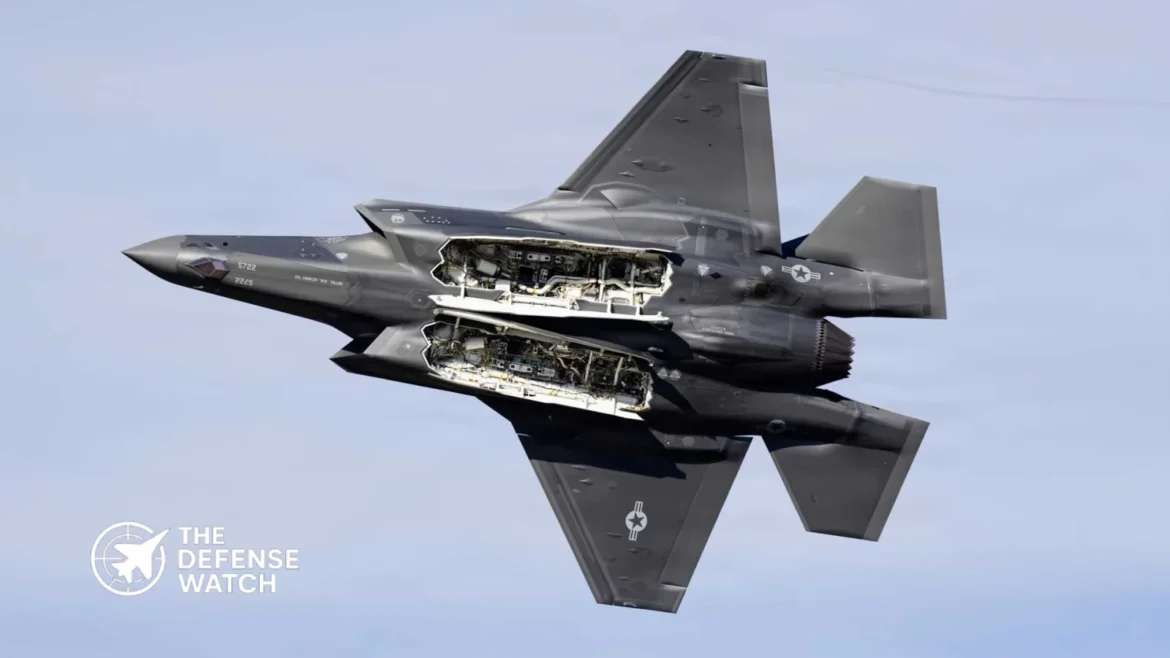
NATO allies are expanding F-35 integration through a multinational weapons training program hosted by the Royal Netherlands Air Force at Leeuwarden Air Base. The initiative brings together multiple F-35 operators to strengthen combat interoperability, improve tactical leadership, and enhance the Alliance’s ability to conduct fifth generation air operations across Northern Europe.
NATO Expands F-35 Integration Through Multinational Weapons Training
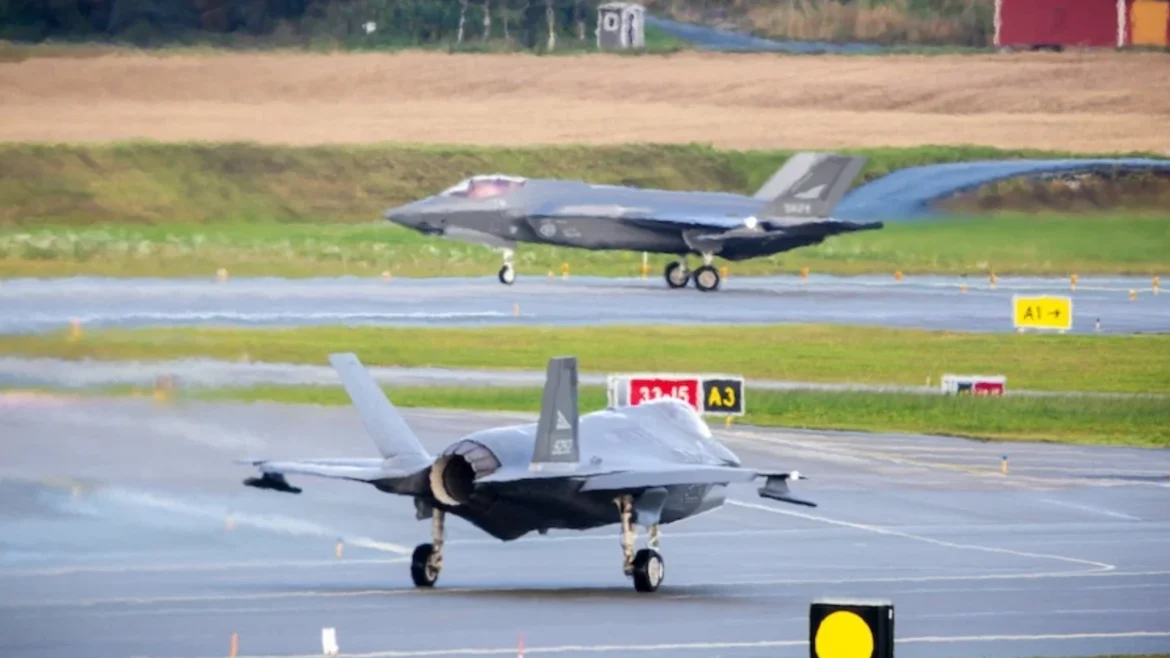
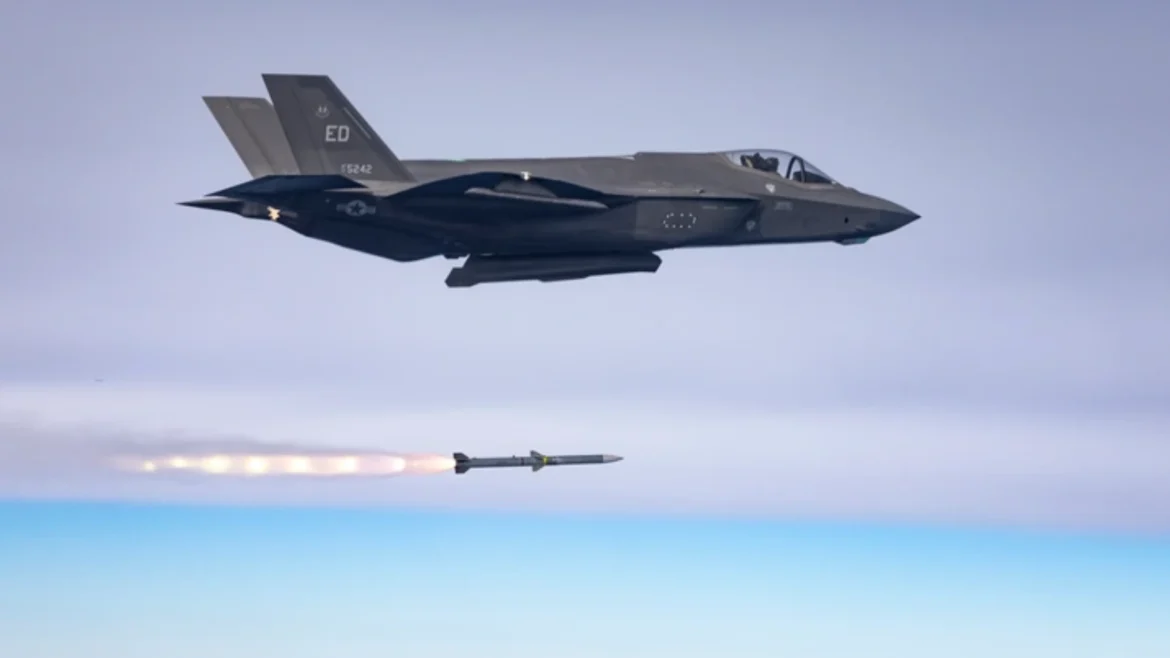
NATO F-35 integration took another step forward as allied air forces gathered in the Netherlands for multinational weapons training aimed at improving operational readiness and interoperability among fifth generation fighter fleets. According to the Dutch Ministry of Defence and NATO reporting, the exercise is centered on the internationally recognized Weapons Instructor Course (WIC), hosted by the Royal Netherlands Air Force’s 323 Air Combat Development Centre at Leeuwarden Air Base.
The training reflects NATO’s broader effort to build a highly integrated F-35 force capable of operating seamlessly across Europe. As more Alliance members transition from legacy F,16 fleets to the F-35 Lightning II, multinational training has become essential for developing common tactics, standardized procedures, and shared operational doctrine.
Multinational F-35 Operators Train Together
The current Weapons Instructor Course includes personnel from Belgium, Denmark, the Netherlands, and Norway. Beyond fighter pilots, the program also involves intelligence specialists, mission planners, and operational support personnel who collectively contribute to modern air combat operations.
Unlike traditional flying exercises, the WIC prepares experienced aircrew and officers to become tactical leaders capable of planning and executing complex multinational operations.
The course emphasizes:
- Advanced air to air and air to ground tactics
- Integrated mission planning
- Weapons employment
- Electronic warfare coordination
- Joint operations with multiple NATO assets
- Leadership development for future combat commanders
Why The Netherlands Plays A Central Role
Leeuwarden Air Base has become one of Europe’s principal centers for advanced F-35 tactical development.
The Royal Netherlands Air Force has extensive experience operating both the F,16 and F-35, making it well positioned to help allied nations transition toward fifth generation operations. Earlier this year, Danish F-35 aircraft deployed to Leeuwarden for the first time, highlighting growing Nordic cooperation as Denmark completes its transition from the F,16.
The Netherlands has increasingly served as a hub for multinational F-35 activities, including cross servicing, maintenance cooperation, and tactical integration with U.S. Air Force units.
Growing Northern European F-35 Network
Northern Europe is rapidly becoming one of NATO’s largest concentrations of F-35 operators.
Countries operating or introducing the aircraft include:
Nation F-35 Status Netherlands Operational Denmark Operational transition underway Norway Operational Finland Fleet acquisition underway Belgium Deliveries continuing Poland Fleet introduction progressing United States Permanently deployed across Europe This concentration enables NATO to build regional networks where aircraft, maintenance personnel, logistics systems, and command structures increasingly operate under common standards.
Operational Benefits Beyond Flying
One of the most significant advantages of multinational F-35 training is that it extends well beyond pilot proficiency.
Modern fifth generation warfare depends on secure data sharing, sensor fusion, distributed targeting, and coordinated mission execution. Standardized training ensures allied pilots interpret battlefield information similarly and respond using common tactical procedures.
The F-35’s ability to collect, process, and distribute targeting data becomes considerably more effective when participating nations follow identical operational methods.
Recent NATO exercises have also demonstrated increasing emphasis on Agile Combat Employment, dispersed basing, and multinational sustainment, allowing aircraft from different nations to operate from allied airfields with shared maintenance support.
Strategic Importance For NATO
The expansion of multinational F-35 integration comes as NATO continues strengthening deterrence across its northern and eastern regions.
Following Finland’s accession to NATO and Sweden’s membership, the Alliance has significantly expanded its northern airpower architecture. Combined with increasing F-35 adoption across Europe, NATO is creating a more interconnected force capable of responding rapidly to emerging regional threats.
Rather than relying solely on national air forces, the Alliance is moving toward integrated multinational formations where aircraft, crews, command systems, and logistics networks operate as a unified combat capability.
This approach reduces operational friction during coalition missions while improving survivability in contested environments.
Analysis: Why This Matters
The importance of this training extends beyond the Netherlands.
Over the next decade, Europe will field one of the world’s largest concentrations of F-35 aircraft. Simply owning the same platform, however, does not automatically create combat interoperability.
Modern air warfare depends on shared mission planning, common digital standards, standardized weapons employment procedures, and synchronized command structures. Programs such as the Weapons Instructor Course provide the institutional framework needed to transform multiple national fleets into a cohesive NATO air combat force.
For the United States, stronger European F-35 integration also reduces operational burden. Better trained allied forces can assume larger regional responsibilities while maintaining compatibility with U.S. Air Force and U.S. Marine Corps operations. This strengthens NATO’s collective deterrence posture without requiring every mission to rely primarily on American assets.
The initiative also supports NATO’s broader modernization efforts focused on integrated air and missile defense, distributed operations, and multinational sustainment, all critical elements for future high intensity conflict.
Executive Summary:
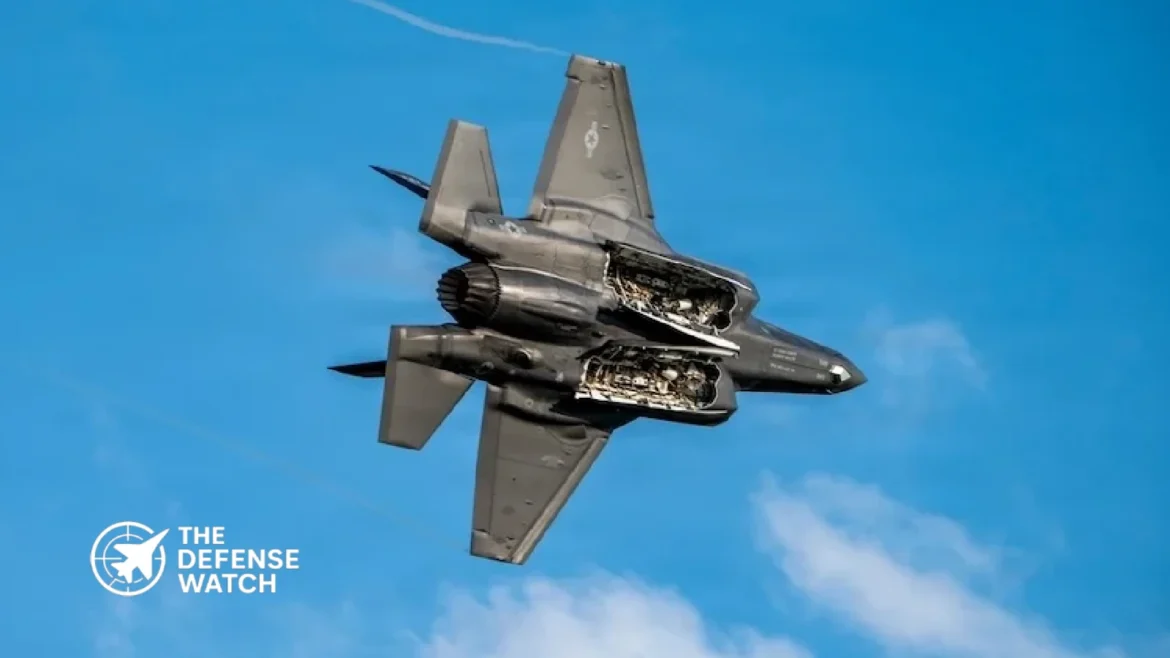
RTX’s Pratt & Whitney Military Engines business has received a $42.1 million contract modification to finalize fiscal 2026 sustainment activities for the F135 propulsion system that powers the F-35 Lightning II. The award supports maintenance, engineering, spare parts, software sustainment, and depot repair for U.S. military services, international F-35 partner nations, and Foreign Military Sales customers through November 2026.
RTX Finalizes F135 Engine Sustainment Contract For The Global F-35 Fleet
RTX’s Pratt & Whitney Military Engines has secured a $42,096,941 contract modification from the U.S. Naval Air Systems Command (NAVAIR) to support sustainment of the F135 propulsion system powering the F-35 Lightning II fleet.
The award definitizes a previously authorized fiscal year 2026 undefinitized contract action and provides funding for worldwide sustainment activities supporting operational F-35 aircraft across the U.S. Air Force, U.S. Navy, U.S. Marine Corps, international F-35 Cooperative Program partners, and Foreign Military Sales (FMS) customers.
The modification was awarded under existing contract N0001926C0112 and was not competed, reflecting Pratt & Whitney’s role as the original manufacturer and sustainment provider for the F135 engine.
Sustainment Covers The Entire F135 Support Enterprise
Rather than purchasing new engines, this contract focuses on keeping the existing global F135 fleet mission ready.
The work includes:
- Global unit-level maintenance
- Depot-level overhaul and repair
- Replenishment spare parts
- Engineering and technical support
- Software sustainment
- Configuration management
- Depot maintenance planning
- Repair of fielded propulsion systems
These activities ensure operators can maintain high aircraft availability while managing one of the world’s largest fifth-generation fighter fleets.
The F135 remains the sole propulsion system for every conventional takeoff, carrier-based, and short takeoff/vertical landing variant of the F-35 Lightning II.
Funding Breakdown
The $42.1 million modification draws funding from multiple U.S. military services as well as international operators.
Funding Source Amount U.S. Air Force Operations & Maintenance $15.15 million U.S. Marine Corps Operations & Maintenance $9.26 million U.S. Navy Operations & Maintenance $3.37 million F-35 Cooperative Program Partners $8.72 million Foreign Military Sales Customers $5.59 million All funding was obligated at the time of award.
Work Spans Multiple Countries
Sustainment activities will be distributed across an extensive international industrial network supporting the worldwide F-35 enterprise.
Location Share of Work East Hartford, Connecticut 40% Oklahoma City, Oklahoma 21% Indianapolis, Indiana 12% West Palm Beach, Florida 6% Windsor Locks, Connecticut 6% Brekstad, Norway 4% Leeuwarden, Netherlands 3% Iwakuni, Japan 3% Williamtown, Australia 2% Cameri, Italy 1% RAF Marham, United Kingdom 1% Fort Worth, Texas 1% Contract performance is expected to conclude in November 2026.
Why F135 Sustainment Matters
Although fighter procurement often receives the most public attention, sustainment represents one of the largest long-term costs across any military aircraft program.
The F-35 fleet continues to expand as additional aircraft enter service across North America, Europe, the Indo-Pacific, and the Middle East. Every new aircraft increases demand for engine maintenance capacity, spare modules, software updates, logistics support, and engineering services.
Unlike procurement funding, sustainment contracts directly influence operational readiness. Aircraft cannot generate sorties without reliable engines, timely repairs, and readily available replacement components.
Depot maintenance also allows engines to receive inspections, component replacements, and performance upgrades before small issues become major failures that reduce fleet availability.
Global Sustainment Supports Coalition Operations
One notable aspect of this contract is its multinational scope.
Beyond supporting U.S. military services, the award includes work for F-35 Cooperative Program partners and Foreign Military Sales operators. This reflects the increasingly integrated sustainment model used across the international F-35 enterprise.
Regional maintenance facilities in Europe, the Indo-Pacific, and North America allow participating nations to perform maintenance closer to operational units while reducing transportation time and improving supply chain resilience.
Facilities in Norway, the Netherlands, Italy, Australia, Japan, and the United Kingdom have become increasingly important as more allied air forces field operational F-35 squadrons.
Strategic Analysis
This contract illustrates an important shift in the F-35 program’s maturity. Earlier phases emphasized aircraft production, flight testing, and capability development. Today’s priorities increasingly center on readiness, lifecycle support, and reducing sustainment costs.
For the Department of Defense, sustaining a growing global fleet requires balancing operational availability with affordability. Investments in engineering support, software maintenance, and depot infrastructure help improve engine reliability while reducing maintenance turnaround times.
The geographic distribution of work also reflects broader U.S. defense strategy. Establishing regional sustainment capabilities strengthens coalition interoperability and reduces dependence on a single maintenance location during crises. This approach supports NATO operations in Europe while simultaneously improving logistics resilience across the Indo-Pacific.
From an industrial perspective, Pratt & Whitney remains central to the F-35 propulsion ecosystem. As the original equipment manufacturer, the company provides specialized engineering expertise, certified repair processes, and software support that cannot easily be replicated elsewhere. Continued sustainment awards ensure technical knowledge remains available as the F-35 fleet grows over the coming decade.
While the contract value is relatively modest compared with major aircraft procurement awards, sustainment contracts such as this one play a critical role in maintaining combat readiness. Reliable engine support ultimately determines how many F-35s are available for training, deterrence missions, and operational deployments on any given day.
Executive Summary:
Patria has begun assembling the first F-35 forward fuselage sections in Finland, marking the country’s entry into Lockheed Martin’s global F-35 manufacturing network. The milestone supports Finland’s F-35 procurement program while expanding European industrial participation in one of the world’s largest defense aviation programs.
Patria Begins F-35 Forward Fuselage Production In Finland
Patria has officially started F-35 forward fuselage production in Finland, reaching a significant milestone in the country’s participation in the global F-35 Lightning II program. The announcement follows the arrival of the first forward fuselage structures at Patria’s production facility, where assembly work has now commenced.
The milestone was confirmed by Patria as part of Finland’s industrial participation package linked to its acquisition of 64 F-35A Lightning II fighter aircraft. The production line will manufacture forward fuselage assemblies for the worldwide F-35 fleet rather than solely for Finnish aircraft, making Finland a long term contributor to the multinational fighter program.
The development represents one of the largest aerospace manufacturing investments in Finland’s history and strengthens the country’s position within NATO’s growing defense industrial base.
Finland Expands Its Role In The Global F-35 Enterprise
Finland selected the F-35A Lightning II in December 2021 under its HX Fighter Program, replacing the Finnish Air Force’s fleet of F/A-18 Hornets.
Beyond acquiring new aircraft, Finland negotiated an extensive industrial participation package intended to develop domestic aerospace capabilities and sustain national defense manufacturing over several decades.
Patria’s responsibility includes assembling forward fuselage sections that will be delivered into Lockheed Martin’s international production system. These structures form the front section of the aircraft and integrate numerous critical systems before final assembly.
Unlike offset agreements focused only on local maintenance, Finland’s participation directly supports worldwide F-35 production, ensuring manufacturing work continues regardless of domestic aircraft deliveries.
What The Forward Fuselage Includes
The forward fuselage is among the most technically demanding sections of the F-35 airframe. It houses several critical systems that require extremely precise manufacturing and quality control.
Key elements integrated within the forward fuselage include:
Component Function Cockpit structure Supports pilot controls and avionics installation Nose landing gear bay Houses the aircraft’s forward landing gear Mission systems interfaces Supports sensors, computing systems, and wiring Structural titanium and composite assemblies Provides strength while minimizing weight Precision attachment points Connects the forward fuselage with the center fuselage during final assembly Manufacturing these assemblies requires advanced machining, automated drilling, precision fastening, composite processing, and strict quality assurance procedures that meet Lockheed Martin’s production standards.
A Strategic Industrial Investment For Finland
The new production capability represents more than aircraft manufacturing.
Finland’s participation ensures its aerospace workforce develops expertise in fifth generation fighter production while creating high value engineering and manufacturing jobs expected to continue well beyond the delivery of Finland’s own aircraft.
The industrial package also supports resilience within NATO’s defense supply chain by distributing manufacturing across multiple allied nations rather than concentrating production in a limited number of facilities.
As geopolitical competition increases, diversified production networks have become increasingly important for maintaining aircraft availability and reducing supply chain vulnerabilities.
Strengthening Europe’s Defense Manufacturing Base
Patria’s production line arrives as European governments significantly increase defense investment following Russia’s invasion of Ukraine and Finland’s accession to NATO in 2023.
The F-35 program has become one of NATO’s most widely adopted fighter platforms, with numerous European operators including:
- Finland
- Norway
- Denmark
- Netherlands
- Belgium
- Poland
- Germany
- Italy
- United Kingdom
- Czech Republic (future operator)
Growing European demand has increased the importance of regional suppliers capable of supporting long term production and sustainment.
Patria’s manufacturing capability contributes directly to this expanding industrial ecosystem.
Analysis: Why This Matters Beyond Finland
The launch of forward fuselage production demonstrates an important evolution in how modern fighter programs are structured.
Rather than relying exclusively on domestic production, fifth generation aircraft increasingly depend on distributed manufacturing across allied nations. This approach improves production resilience while strengthening political and industrial cooperation among participating countries.
For the United States, expanding qualified suppliers within allied nations reduces risk across the broader F-35 enterprise. If manufacturing disruptions affect one production site, work can potentially be redistributed across the international network, improving long term program stability.
For Finland, domestic production delivers strategic advantages beyond economic benefits. Developing advanced aerospace manufacturing capabilities enhances national technological expertise while supporting future maintenance, upgrades, and sustainment activities throughout the aircraft’s service life.
The milestone also reflects a broader trend across NATO, where defense procurement increasingly emphasizes industrial resilience alongside military capability. Governments are seeking procurement models that strengthen both operational readiness and domestic industrial capacity.
As F-35 production continues into the coming decades, suppliers such as Patria are expected to play an increasingly important role in supporting aircraft delivered not only to Finland but to operators around the world.
Long Term Outlook
Patria’s entry into forward fuselage production represents the beginning of a long term manufacturing commitment rather than a short duration offset project.
The global F-35 fleet continues to expand, with more than twenty countries participating in procurement or operating the aircraft. As production remains active for years to come, Finnish manufactured assemblies are expected to become a regular part of Lockheed Martin’s worldwide manufacturing pipeline.
The investment also positions Finland to maintain advanced aerospace expertise that could support future defense aviation programs beyond the current generation of fighter aircraft.
Executive Summary:
South Korea’s KF-21 Boramae rolled off the production line in March 2026, and its first Block I jets are already reaching the ROKAF — but the airframe still carries its missiles externally, with no internal weapons bay until Block III arrives in the next decade. The F-35A remains the only one of the two built around genuine low observability from the ground up. This is where the “semi-stealth” label stops being marketing language and becomes an operational limitation.
F-35A vs. KF-21 Boramae: Inside the Stealth Gap Splitting Asia’s Skies
A jet doesn’t need a radar cross-section rated in square meters to change the balance of power in a region. It just needs to be cheaper, available now, and good enough. That’s the bet South Korea is making with the KF-21 Boramae, and the first production airframe left the Sacheon assembly line in March 2026 to prove it.
The F-35A, by contrast, has spent over a decade answering a different question: what does it cost to make an airframe effectively invisible to enemy radar? The two jets are being marketed as complementary. The numbers say something more complicated.
The Deep Dive: Two Different Definitions of Stealth
The KF-21 Block I, now entering ROKAF service, carries its weapons the old-fashioned way — bolted to four semi-recessed stations under the fuselage and six wing hardpoints. Korea Aerospace Industries calls this “semi-stealth,” and that’s an honest description, not a euphemism.
Semi-recessed carriage shrinks radar return compared to a fully external pylon, but it’s nowhere near an internal bay. The airframe also skips radar-absorbent coatings on Block I and II, deferring that upgrade to the still-distant Block III, sometimes referred to as the KF-21EX.
The F-35A was designed in reverse order. Lockheed Martin built the internal weapons bay and RAM coating into the mold line from day one, which is why the jet can carry AIM-120 AMRAAMs and JDAMs without ever exposing a hardpoint to a hostile radar sweep.

That single design choice cascades through everything else. Internal carriage costs the F-35A payload capacity — it can only haul so much before pilots start bolting weapons externally and sacrificing the stealth they paid for. External carriage costs the KF-21 survivability against modern integrated air defense networks, full stop.
Where the Boramae claws back ground is avionics maturity delivered ahead of schedule. Its domestically built APY-016K AESA radar, fielded by Hanwha Systems, uses roughly 1,000 transmit-receive modules to detect targets out to 150–200 km and track around 20 simultaneously. Combined with an indigenous MUM-T (manned-unmanned teaming) architecture, the jet isn’t trying to out-stealth the F-35 — it’s trying to out-network it in cost-effective numbers.
The program’s pace has genuinely surprised skeptics. Flight testing wrapped in January 2026 after 1,600 accident-free sorties across 42 months, two months ahead of schedule. Air-to-ground weapons testing, originally targeted for 2028, has been pulled forward to the first half of 2027. Forty Block I jets are contracted, with eight delivering in 2026 alone, followed by 80 Block II aircraft with expanded strike capability arriving by 2032.
Data Block: Head-to-Head Metrics
Metric F-35A Lightning II KF-21 Boramae (Block I/II) Generation classification True 5th-generation 4.5-generation, semi-stealth Weapons carriage Internal bay + external hardpoints External / semi-recessed only (internal bay deferred to Block III) Radar-absorbent materials Full airframe RAM coating Not applied until Block III/KF-21EX Primary radar AN/APG-81 AESA APY-016K AESA (~1,000 TR modules, 150–200 km detection) Engine Single Pratt & Whitney F135 (43,000 lbf w/ afterburner) Twin GE F414-GE-400K (indigenous Hanwha engine planned for Block III) Flyaway unit cost (recent lots) ~$82.5 million ~$83 million (Block I) / ~$112 million (Block II) Combat-configured cost ~$95–120 million Comparable once mission systems are added Cost per flight hour ~$34,000–$42,000 Not yet publicly disaggregated; projected lower given simpler airframe Total planned units (initial phases) 2,470+ (multi-nation program) 40 Block I + 80 Block II (120 total through 2032) Weapons bay / MUM-T Bay only; limited teaming autonomy No bay; strong MUM-T/loyal wingman focus Service entry Operational since 2016 Block I entering service 2026 The Insight: Why This Is a Rush Strategy, Not a Stealth Strategy
Competitive gaming has a term for this exact tradeoff: the rush build. In real-time strategy titles, a rush composition sacrifices the late-game power spike for board presence right now — cheaper units, faster production, overwhelming numbers before the opponent’s expensive tech tree finishes.
The KF-21 is South Korea’s rush build. It skips the most expensive, most time-consuming part of fifth-generation design — the internal bay and full-spectrum RAM treatment — to get combat-credible airframes into squadron service years before a from-scratch stealth program could deliver. Block I entered service in 2026. A comparable clean-sheet stealth program elsewhere, like Turkey’s Kaan or the European GCAP effort, isn’t expected to field operational jets until well into the 2030s.
The F-35 is the maxed-out unit that takes longer to reach the field but wins the direct engagement when it arrives. It was never meant to be cheap or fast to produce in year one; the entire program logic bet on economies of scale eventually driving flyaway costs below $80 million; a bet that’s now paying off after years of criticism.
What makes this genuinely interesting from a strategy standpoint isn’t which jet is “better” in isolation. It’s that South Korea isn’t trying to replace its F-35A fleet with the Boramae at all. ROKAF pilots are explicit that the KF-21 shoulders routine air-defense and quick-reaction alert missions, freeing the F-35A for the missions where low observability actually matters — first-look, first-kill strikes against contested, radar-dense airspace.

Finally, South Korea has become a nation that possesses weapons to safeguard peace through its own technology and willpower — not only on land and sea but also in the skies.” — President Lee Jae-myung, at the KF-21 production rollout ceremony, March 25, 2026
What This Means Going Forward
The Boramae isn’t trying to beat the F-35A on stealth, and pretending otherwise misreads the program entirely. It’s trying to make sure South Korea never has to choose between an aircraft it can produce domestically in volume and one it has to wait a decade to import.
Block III, with its planned internal weapons bay, RAM coating, and 16,000-lb-thrust indigenous engine, is where the real fifth-generation claim gets tested — and that airframe is still years from cutting metal. Until then, the F-35A remains the only jet in Korean service built around low observability from the first line drawn on the mold.
For an air force squaring off against China’s J-20, J-35, and a rapidly modernizing North Korean posture, that gap between “semi-stealth today” and “full stealth eventually” isn’t academic. It’s the difference between deterrence on paper and deterrence in the air.
FAQ
Does the KF-21 Boramae have an internal weapons bay?No. Block I and Block II carry weapons externally on semi-recessed fuselage stations and wing hardpoints. An internal bay is planned only for the future Block III/KF-21EX variant.
Is the KF-21 considered a fifth-generation fighter?Officially, no. KAI and DAPA classify Block I/II as 4.5-generation “semi-stealth” aircraft. Full fifth-generation features are reserved for Block III.
How does the KF-21’s cost compare to the F-35A?Recent reporting places Block I units around $83 million and Block II around $112 million, close to the F-35A’s flyaway cost of roughly $82.5 million — though final combat-configured pricing depends on mission systems fitted to each.
When does the KF-21 enter full operational service?Block I aircraft began deliveries in 2026, with initial operational capability targeted before the full 40-jet batch completes by 2028. Block II, adding ground-attack capability, is scheduled through 2032.
Executive Summary:
Britain’s frontline fighter fleet stands at 158 aircraft in mid-2026 — 111 Eurofighter Typhoons and 47 F-35B Lightning IIs — down from a peak Typhoon order of 137 jets as older Tranche 1 airframes get scrapped. The RAF’s next decade hinges on how fast a stalled second F-35 order and the 2035 Tempest program can replace that shrinking number.
Britain’s entire frontline fighter force could fit inside two and a half US Air Force fighter wings. As of mid-2026, the Royal Air Force fields 158 fast jets — 111 Eurofighter Typhoons and 47 F-35B Lightning IIs. That’s the real number behind a question that gets asked constantly and answered inconsistently.
The confusion is understandable. Older figures still circulating online cite 137 Typhoons, which was the total fleet size before the Ministry of Defence began scrapping early-model aircraft in 2025. The current, accurate count is lower — and shrinking further before it grows again.
The Deep Dive: Typhoon and F-35B, By the Numbers
The Typhoon force was built across three procurement “tranches,” each representing a capability jump over the last. The original order totaled 160 aircraft for the UK, of which 137 were ultimately delivered and entered service: 30 Tranche 1, 67 Tranche 2, and 40 Tranche 3 airframes.
That number is now smaller. In September 2025, Defence Minister Maria Eagle told Parliament that 26 of the 30 Tranche 1 Typhoon aircraft have been scrapped as of that July, with the remaining four held back purely for Quick Reaction Alert duty defending the Falkland Islands until 2027. That leaves the RAF’s active Typhoon count at 111: four aging QRA jets, plus 67 Tranche 2 and 40 Tranche 3 aircraft slated to keep flying until 2040.
The F-35B side of the ledger is more straightforward. The UK’s first procurement batch of 48 Lightning IIs finished delivery in March 2026, eight years after the type first arrived at RAF Marham. One aircraft, BK18, was lost off HMS Queen Elizabeth in 2021, leaving an active fleet of 47. Those jets fly with 617 “Dambusters” Squadron, the Royal Navy’s 809 Naval Air Squadron, and the 207 Squadron training unit — all based at Marham.
A second F-35 order remains stuck in procurement limbo. London’s 2025 Strategic Defence Review confirmed plans for 27 more jets — 15 F-35Bs and, notably, 12 F-35As to restore Britain’s air-delivered nuclear strike role for the first time since the Cold War. None of those 27 have been contracted yet; they’re waiting on the long-delayed Defence Investment Plan.
UK Fast Jet Fleet at a Glance — Mid-2026
Metric Eurofighter Typhoon FGR4 F-35B Lightning II Active RAF fleet 111 aircraft 47 aircraft Generation 4.5 (non-stealth) 5th-gen, stealth Unit flyaway cost ~$90M–$120M (tranche-dependent) ~$109M (UK pays ~$115M incl. premiums) Top speed Mach 2.0 Mach 1.6 Flight-hour cost ~$20,000–$25,000 ~$33,000–$38,000 Primary role Air defense, QRA, strike Carrier strike, stealth ISR/strike Squadrons 7 frontline + OCU/OEU 617 Sqn, 809 NAS, 207 Sqn (OCU) Planned retirement 2040 Active into the 2040s/50s (Block 4 upgrades pending) Total UK programme costs put this in perspective. Defence Equipment & Support lists the Typhoon’s approved production and in-service support bill at £31.1 billion, with the UK covering roughly 37% of the four-nation Eurofighter consortium’s shared costs. The F-35B side has already cost the UK over $4 billion just for the first 35 jets, before sustainment.
The Crossover Angle: Why Numbers, Not Just Tech, Win Fights
Competitive shooter teams don’t win on raw aim alone — they win on role balance. An entry player pushes first, gathers information, and creates chaos before the enemy team can react. An anchor holds the position, absorbs the counterattack, and closes out the round with firepower the entry role was never built to carry.
That’s almost exactly how the RAF talks about its own fleet. Pilots nickname the F-35B the “Assassin” and the Typhoon the “Thug.” The F-35B goes in first — stealthy, sensor-fused, mapping the battlespace and taking the first quiet shot. The Typhoon follows with the missile capacity, the cannon, and the raw speed to finish what the F-35B started.
The parallel breaks down at scale, though, and that’s the real lesson. A five-person esports roster can field one entry and one anchor and still field a full team. An air force needs dozens of each role available simultaneously — for homeland QRA, NATO air policing, and two active carrier strike groups — or the doctrine collapses under its own math. Britain’s 158 jets are stretched thin precisely because there’s no bench depth behind them.
A fighter fleet’s real strength isn’t which single jet wins a one-on-one dogfight. It’s whether a country can sustain QRA, NATO commitments, and carrier strike group coverage at the same time, for months, without running out of available airframes.
Where the UK’s Jets Rank Globally
The “best fighter jet in the world” debate in 2026 usually comes down to four aircraft: the F-22 Raptor, F-35 Lightning II, J-20 Mighty Dragon, and Su-57 Felon. The UK operates none of the first and exactly one of the second — and that’s not an accident.
Aircraft Operator Est. Active Units (2026) Generation Export Status F-35 (all variants) US-led coalition, 20+ nations ~1,300 5th, stealth Widely exported F-22 Raptor United States ~185–195 5th, stealth Export banned J-20 Mighty Dragon China ~250–300 5th, stealth Export banned Su-57 Felon Russia ~30 5th (debated stealth) Limited interest Eurofighter Typhoon UK, Germany, Italy, Spain + export 600+ worldwide 4.5, non-stealth Widely exported The F-22 is generally judged the superior pure air-superiority dogfighter, but the United States has never sold a single one abroad. That makes the F-35 the practical ceiling for any US ally, the UK included — and explains why London bet its entire fifth-generation strategy on the Lightning II rather than waiting on a jet it could never legally buy.
China’s J-20 outnumbers Russia’s entire Su-57 program roughly tenfold, a gap that says more about industrial capacity than airframe design. Moscow’s struggles to scale Su-57 production past 30 aircraft despite years of development is the same constraint that shapes the UK’s own Typhoon-to-F-35 transition: building a great jet on paper means little if you can’t build enough of them.
The Takeaway
The UK’s fighter fleet sits at 158 jets today, with 111 Typhoons drawing down toward 2040 and 47 F-35Bs waiting on a stalled second order to bring real fifth-generation depth. The aircraft themselves are credible — the F-35B ranks among the world’s most capable fighters by most 2026 assessments, and the upgraded Typhoon still holds its own in regional air defense.
The open question isn’t capability. It’s whether Britain can field enough airframes to use that capability when it actually matters — across home defense, NATO commitments, and two aircraft carriers, all at once, with no real reserve left to call on.
Romania F-35 Program Moves Forward With New U.S. Contract
The Romania F-35 program took another concrete step forward after Lockheed Martin was awarded a $70.1 million contract modification to support Romania as an F-35 Foreign Military Sales customer.
According to the U.S. Department of Defense contract announcement, the award adds scope for ongoing integration efforts tied to Romania’s planned acquisition of the F-35 Lightning II. The work includes program management, logistics and sustainment planning, and systems engineering support.
- :contentReference[oaicite:0]{index=0} received a $70,107,750 contract modification for Romania’s F-35 program.
- Funding supports program management, logistics, sustainment, and systems engineering.
- Work will be performed at undisclosed locations inside and outside the continental United States.
- Contract performance is scheduled to continue through November 2028.
- The award highlights Romania’s continued move toward fifth-generation airpower.
The contract was issued by Naval Air Systems Command, the U.S. government office that manages major naval aviation acquisition programs, including the F-35.
Why This Romania F-35 Contract Matters
This contract may appear administrative, but it signals something more important. Nations entering the F-35 ecosystem must prepare long before aircraft deliveries begin.
That preparation includes maintenance planning, training pipelines, secure data systems, spare parts forecasting, software support, and integration with national defense structures. Without those steps, receiving aircraft alone would not create an operational capability.
For Romania, this means the Romania F-35 program is progressing from political approval into implementation.
In modern airpower terms, sustainment is often as important as procurement. The F-35 is not simply a fighter purchase. It is a long-term entry into a multinational operating network that depends on software upgrades, logistics coordination, and common standards.
Romania’s Strategic Airpower Shift
Romania has steadily increased defense spending since Russia’s invasion of Ukraine reshaped security planning across Eastern Europe. Located on NATO’s eastern flank and bordering the Black Sea region, Romania faces growing pressure to modernize its air force.
Its current fighter fleet includes upgraded F-16 aircraft, but the move toward the F-35 provides a future path to stealth strike, advanced sensors, and higher survivability in contested airspace.
The Romania F-35 program also aligns Bucharest more closely with other NATO members already operating or ordering the jet, including the United States, Poland, Finland, Germany, Italy, the Netherlands, Norway, Belgium, Denmark, Czechia, Greece, and others.
That common fleet can simplify coalition operations, training, and logistics during future NATO missions.
What Lockheed Martin Is Providing
Under the new contract action, Lockheed Martin will support Romania in several critical areas:
- Program management coordination
- Logistics planning and sustainment readiness
- Systems engineering integration
- Long-term support preparation
- FMS customer onboarding into the F-35 enterprise
These early contracts are often overlooked, yet they form the backbone of operational readiness.
Broader Impact On The F-35 Export Market
The F-35 remains one of the most successful Western defense export programs. Each new customer strengthens production demand and expands the global sustainment base.
Romania’s addition matters because it reinforces Eastern Europe as a major growth region for fifth-generation fighter procurement. Poland already has F-35s on order, Finland selected the aircraft, and other regional states continue modernization planning.
For Washington, expanding allied F-35 fleets also improves interoperability without deploying additional U.S. aircraft permanently overseas.
Outlook Through 2028
The contract runs through November 2028, suggesting multi-year preparation for Romania’s future fleet. Aircraft deliveries typically follow years of infrastructure work, personnel training, and industrial coordination.
That means the Romania F-35 program is entering a serious execution phase rather than remaining a concept announcement.
For NATO planners, that is the key takeaway.
- ► Former US Air Force Major Gerald Brown arrested in Indiana for allegedly training Chinese military pilots without authorization.
- ► Brown, 65, was an F-35 instructor pilot with 24 years of service, including combat and nuclear responsibilities.
- ► Allegedly traveled to China in December 2023 to train pilots under a contract negotiated by convicted Chinese national Stephen Su Bin.
- ► Faces charges similar to former US Marine Corps pilot Daniel Duggan, who is contesting extradition from Australia.
- ► US Justice Department warns that unauthorized military training for foreign powers carries civil and criminal penalties.
Former US F-35 Fighter Pilot Arrested In Alleged China Training Scheme
A former US F-35 fighter pilot has been arrested and charged with illegally training Chinese military aviators, according to the United States Department of Justice.
Federal prosecutors allege that Gerald Brown, a retired US Air Force major and former instructor on the F-35 Lightning II, provided defense services to Chinese pilots without required US government authorization.
Brown, 65, was arrested in Indiana and charged under federal statutes governing the export of defense services. The Justice Department said he conspired to provide training to Chinese military personnel, conduct that requires prior approval under US law.
DOJ And FBI Outline Allegations
In a statement, officials said Brown had a 24 year Air Force career that included combat missions and leadership of sensitive units, including those tied to nuclear weapons delivery systems.
Roman Rozhavsky, assistant director of the Counterintelligence and Espionage Division at the Federal Bureau of Investigation, said the former pilot allegedly trained Chinese aviators to counter US and allied capabilities.
The Justice Department has not publicly detailed the scope, duration, or exact location of the alleged training activities. Court filings are expected to clarify those elements as the case proceeds.
US Attorney Jeanine Ferris Pirro for the District of Columbia stated that individuals who conspire to provide unauthorized defense services to foreign militaries will be prosecuted.
Background And Career
According to the Justice Department, Brown left active duty in 1996 after serving in operational and command roles. After retiring from the Air Force, he worked as a commercial cargo pilot and later as a defense contractor.
In that role, he trained US pilots to operate the F-35 and the Fairchild Republic A-10 Thunderbolt II, two frontline platforms central to US combat airpower.
The F-35 Lightning II remains the cornerstone of US and allied tactical aviation strategy. Any transfer of advanced tactical knowledge related to fifth generation operations raises significant counterintelligence concerns, especially given ongoing US China strategic competition.
Broader Pattern Of Recruitment Concerns
The case comes amid repeated warnings from US and allied governments that China is actively recruiting current and former Western military personnel.
In 2024, the United States, Australia, Canada, New Zealand, and the United Kingdom issued a joint advisory cautioning service members about recruitment efforts linked to the People’s Liberation Army. The notice warned that unauthorized training could expose participants to criminal liability and threaten allied security.
Officials have said the PLA seeks insight into Western tactics, training methods, and operational doctrine to accelerate modernization.
This arrest follows a similar high profile case involving former US Marine Corps aviator Daniel Duggan. Duggan was arrested in Australia in 2022 and faces US charges for allegedly violating the Arms Export Control Act by providing pilot training to Chinese forces.
In December 2024, Australia’s then Attorney General Mark Dreyfus approved Duggan’s extradition to the United States. Duggan has appealed that decision in Australian courts.
Legal And Strategic Implications
The former US F-35 fighter pilot case underscores how Washington is tightening enforcement of export control laws tied to military expertise. Under the Arms Export Control Act and related regulations, providing defense services to foreign military entities without authorization can trigger severe criminal penalties.
From a strategic perspective, the issue extends beyond one individual. Fifth generation fighter operations rely not only on hardware, but also on training, tactics, and integration with space and cyber assets. Even unclassified tactical instruction can help a competitor refine air combat doctrine.
China continues to field advanced aircraft such as the J-20 and is investing heavily in pilot training and force readiness. US officials argue that unauthorized access to Western operational knowledge could narrow qualitative gaps in certain areas.
At the same time, legal standards require prosecutors to prove that services provided met the definition of regulated defense assistance and that no authorization was granted. As with any criminal complaint, the allegations remain unproven unless and until established in court.
What Comes Next
Brown is expected to face initial court proceedings in federal court. The Justice Department has not indicated whether additional individuals or entities are under investigation in connection with the alleged activities.
The former US F-35 fighter pilot case will likely draw close attention from defense policymakers and counterintelligence officials. It also reinforces ongoing US efforts to protect sensitive military expertise amid intensifying competition with China.
For service members and defense contractors, the message from federal authorities is clear. Training or advising foreign military forces without explicit US government approval carries significant legal risk.
■ KEY FACTS AT A GLANCE- ► Germany is weighing an additional order of F-35 Lightning II fighter jets, according to Bloomberg.
- ► Berlin previously ordered 35 F-35A aircraft to replace Tornado jets in the NATO nuclear sharing role.
- ► The F-35 is built by Lockheed Martin and is certified for the B61 nuclear mission within NATO.
- ► Germany is a partner in the FCAS program with France and Spain, aimed at delivering a sixth generation fighter.
- ► An expanded F-35 fleet would deepen Germany’s operational integration with NATO allies already flying the platform.
Germany Weighs Additional F-35 Lightning II Order
Germany is weighing an additional order of the F-35 Lightning II, according to a report by Bloomberg, a move that would further anchor Berlin’s airpower modernization to the United States.
The potential expansion of Germany’s F-35 Lightning II fleet comes as the country’s joint next generation fighter project with France faces growing technical and industrial tensions. While no formal decision has been announced, the deliberations signal that Berlin may seek greater near term certainty in its combat aviation roadmap.
Germany previously committed to acquiring 35 F-35A aircraft in 2022 to replace its aging Tornado fleet in the nuclear sharing role within NATO. The aircraft, built by Lockheed Martin, will be operated by the German Air Force, or Luftwaffe, with deliveries expected later this decade.
An additional order would significantly expand Germany’s reliance on the U.S. built fifth generation platform.
Strategic Context Behind The Move
Germany’s initial F-35 procurement marked a major policy shift following Russia’s invasion of Ukraine in 2022. Under Chancellor Olaf Scholz’s Zeitenwende policy, Berlin launched a 100 billion euro special defense fund aimed at rapidly modernizing its armed forces.
The F-35 Lightning II was selected over alternative options due to its certified role in NATO’s nuclear sharing mission and its advanced stealth and sensor fusion capabilities. The platform remains the only fifth generation aircraft currently certified to carry the U.S. B61 nuclear gravity bomb within the alliance framework.

At the same time, Germany remains a core partner in the Future Combat Air System, or FCAS, alongside France and Spain. The program is led industrially by Dassault Aviation and Airbus Defence and Space. FCAS is intended to deliver a sixth generation fighter and a family of connected systems in the 2040 timeframe.
However, the FCAS program has faced recurring disagreements over workshare, intellectual property rights, and system architecture. German consideration of more F-35 Lightning II aircraft may reflect concern over potential schedule delays or capability gaps before FCAS becomes operational.
Industrial And Political Implications
An expanded F-35 Lightning II order would have broad implications for European defense industrial strategy.
France has consistently argued that European nations should prioritize indigenous platforms to preserve strategic autonomy. A larger German F-35 fleet could deepen friction within the FCAS partnership, especially if Berlin is perceived as shifting long term investment away from the European project.
From a military standpoint, however, additional F-35 aircraft would provide the Luftwaffe with enhanced interoperability across NATO. Several European allies, including the United Kingdom, Italy, the Netherlands, Norway, Denmark, Poland, and Finland, already operate or have ordered the F-35.
Interoperability benefits include shared logistics networks, common software baselines, and integrated data link capabilities. For NATO planners, a larger European F-35 footprint strengthens collective airpower integration.
Operational Considerations
The F-35 Lightning II combines low observable design, advanced electronic warfare systems, and sensor fusion that provides pilots with a comprehensive battlespace picture. Germany’s Tornado fleet, first introduced in the 1980s, lacks these survivability and networking features.

Expanding the F-35 fleet could allow Germany to consolidate roles beyond nuclear sharing, potentially including suppression of enemy air defenses, deep strike, and intelligence, surveillance, and reconnaissance missions.
That said, reliance on a U.S. platform raises questions about supply chain sovereignty, software updates, and long term sustainment costs. The F-35 program operates under a global support framework managed in coordination with the U.S. government and Lockheed Martin.
Berlin would need to balance operational effectiveness with industrial and political considerations inside the European Union.
Broader Geopolitical Signal
Germany’s potential move carries weight beyond procurement numbers.
A larger F-35 Lightning II order would underscore Berlin’s strategic alignment with Washington at a time of heightened transatlantic security cooperation. It would also signal confidence in U.S. security guarantees and in NATO’s collective defense framework.
Conversely, it may intensify debate within Europe over defense industrial autonomy versus transatlantic integration. The outcome of Germany’s internal deliberations will likely influence future investment decisions across the continent.
As of now, German officials have not publicly confirmed a final decision. If approved, the order would further cement the F-35 Lightning II as the backbone of European fifth generation airpower well into the 2030s and beyond.
Denmark Deploys F-35 Lightning II To NATO Arctic Sentry
Denmark has deployed its F-35 Lightning II fighters as its first national contribution to NATO Arctic Sentry, marking a significant step in strengthening Allied air defense and surveillance operations in the High North.
The deployment, confirmed by the Danish Ministry of Defence and reported by Defence Industry Europe, places Royal Danish Air Force fifth-generation aircraft into a coordinated NATO activity focused on deterrence and situational awareness across the Arctic region.
The move comes as NATO increases attention on the Alliance’s northern flank amid rising strategic competition in the Arctic.
First Danish F-35 Contribution To Arctic Operations
This marks the first time Denmark has committed its F-35 Lightning II fleet to a NATO Arctic Sentry mission. The aircraft are operated by the Royal Danish Air Force and are gradually replacing Denmark’s aging F-16 Fighting Falcon fleet.
Denmark selected the F-35A variant in 2016, joining a growing group of NATO nations operating the platform. According to the Danish Ministry of Defence, the F-35 provides enhanced sensor fusion, stealth characteristics, and networked capabilities designed to operate effectively in contested environments.
By deploying the F-35 Lightning II to Arctic Sentry, Denmark signals that its transition to fifth-generation airpower is entering an operational phase within NATO structures.
NATO Arctic Sentry: Reinforcing The High North
NATO Arctic Sentry is an Allied activity focused on air domain awareness, interoperability, and coordinated operations across the Arctic and North Atlantic regions. The initiative supports NATO’s broader deterrence and defense posture, particularly following Finland and Sweden’s accession to NATO, which has reshaped the Alliance’s northern geography.
The Arctic has gained strategic importance due to emerging sea routes, natural resources, and increased military activity. NATO has emphasized that Arctic Sentry is defensive in nature and designed to enhance surveillance and readiness.
By contributing F-35 Lightning II fighters, Denmark adds advanced ISR capabilities and secure data sharing to the mission. The aircraft’s sensors allow pilots to collect and distribute real-time information across NATO networks, strengthening joint operational awareness.
Strategic Importance For Denmark
Denmark occupies a unique position in the Arctic due to the Kingdom’s sovereignty over Greenland and the Faroe Islands. The Arctic is therefore not only a NATO priority but also a core national security interest for Copenhagen.
The deployment of the F-35 Lightning II aligns with Denmark’s broader defense modernization plans and its increased defense spending commitments under NATO guidelines.
Danish defense officials have emphasized that contributing advanced air assets supports collective security and demonstrates burden sharing within the Alliance.
Integration With Allied Air Forces
The F-35 Lightning II is operated by multiple NATO members, including the United States, the United Kingdom, Norway, the Netherlands, Italy, and others. Its standardized data links and mission systems enable seamless interoperability during joint operations.
During Arctic Sentry, Danish F-35s operate alongside other Allied aircraft, enhancing joint training and operational coordination in cold-weather conditions. Arctic environments present unique challenges, including extreme temperatures, remote basing, and limited infrastructure.
Fifth-generation platforms like the F-35 are designed to operate in complex and contested environments. Their ability to fuse radar, infrared, and electronic intelligence data provides NATO commanders with a clearer operational picture.
Broader Arctic Security Context
The Arctic region has seen heightened geopolitical attention in recent years. Russia maintains significant military infrastructure in the High North, while NATO nations have increased exercises and patrols.
Denmark’s F-35 Lightning II deployment under Arctic Sentry reflects a broader trend among NATO members to strengthen air policing and surveillance capabilities in northern latitudes.
NATO has repeatedly stated that its activities are defensive and aimed at maintaining stability and predictability in the region.
Outlook
As Denmark continues to receive and integrate additional F-35 aircraft into its force structure, further participation in NATO missions is expected. The current deployment signals operational confidence in the platform and reinforces Denmark’s role in Allied Arctic security.
The F-35 Lightning II’s integration into Arctic Sentry also underscores NATO’s emphasis on advanced, networked capabilities in safeguarding its northern approaches.
Canada Advances Multi-Billion Dollar F-35 Acquisition
Canada has officially begun making payments for 14 additional F-35 Lightning II fighter jets as part of its comprehensive military aviation modernization program, according to official procurement documents released this week. The payment marks a significant milestone in Canada’s $19 billion commitment to acquire 88 fifth-generation stealth fighters, despite an ongoing fleet review and heightened tensions surrounding cross-border defense procurement.
The Royal Canadian Air Force’s F-35 program continues to advance following the initial delivery of aircraft under the 2022 contract, which represented one of the largest defense acquisitions in Canadian history. Defense analysts view the payment authorization as a clear signal that Ottawa remains committed to the F-35 platform despite political pressures and calls for procurement diversification.
Payment Schedule Advances Despite Comprehensive Review
The Canadian government has authorized initial payments for the 14 additional F-35A aircraft as part of the second production lot under the existing framework agreement with Lockheed Martin. According to procurement officials, the payment follows established protocols within the U.S. Foreign Military Sales program and aligns with Canada’s projected fleet delivery schedule extending through 2032.
The timing of the payment authorization coincides with an ongoing comprehensive review of Canada’s fighter fleet requirements, initiated in response to evolving threats in the Arctic region and changing defense partnership dynamics. Despite the review, government officials have emphasized that contractual obligations for aircraft already ordered will proceed as planned.
Canada’s total F-35 acquisition encompasses 88 aircraft with an estimated program cost of CAD $19 billion over the aircraft’s lifecycle, including associated weapons systems, infrastructure upgrades, and sustainment packages. The Royal Canadian Air Force plans to achieve initial operational capability with the F-35A by 2026, replacing the aging CF-18 Hornet fleet that has served since the 1980s.
Strategic Rationale Behind Continued Procurement
Defense experts point to several strategic factors driving Canada’s continued F-35 investment despite the ongoing fleet review. The aircraft’s advanced capabilities directly address emerging threats in the Arctic region, where increased Russian and Chinese military activity has heightened security concerns among North American Aerospace Defense Command (NORAD) partners.
The F-35A’s sensor fusion technology, low-observable stealth characteristics, and network-centric warfare capabilities provide significant operational advantages in contested airspace. These features align with Canada’s defense priorities outlined in the 2024 Defense Policy Update, which emphasizes maintaining technological superiority and interoperability with allied forces.
“The F-35 represents a generational leap in air combat capability,” stated a senior Royal Canadian Air Force official speaking on background. “The aircraft’s ability to operate in high-threat environments while maintaining situational awareness across multiple domains is essential for defending Canadian sovereignty and fulfilling our NORAD commitments.”
Cross-Border Defense Dynamics And Procurement Concerns
The F-35 payment authorization comes amid broader tensions in U.S.-Canada defense relations, particularly surrounding procurement processes and industrial participation. Canadian defense industry stakeholders have expressed concerns about workshare arrangements and technology transfer limitations within the F-35 program’s international partnership structure.
Canada joined the Joint Strike Fighter program as a Level 3 partner in 1997, contributing approximately $150 million to development costs. This partnership status theoretically provides Canadian aerospace companies access to production contracts and technology sharing opportunities. However, recent trade disagreements and shifting procurement policies have complicated industrial participation expectations.
The ongoing fleet review, announced in late 2025, examines whether Canada should pursue a mixed fleet strategy incorporating different aircraft types or maintain a single-platform approach with the F-35A. Some defense policy analysts have advocated for acquiring a smaller number of F-35s supplemented by less expensive fourth-generation fighters to maximize fleet size within budget constraints.
Industrial Participation And Economic Considerations
Canadian aerospace manufacturers have secured significant contracts through F-35 industrial participation, with companies providing components including landing gear systems, wing structures, and advanced materials. According to government estimates, Canadian industry has received over CAD $2 billion in F-35-related contracts since joining the partnership program.
However, concerns persist about long-term industrial benefits and technology sovereignty, particularly regarding maintenance, repair, and overhaul capabilities. The centralized F-35 sustainment model, which concentrates major maintenance activities at designated regional facilities, has raised questions about Canada’s ability to maintain operational independence during potential conflicts or supply chain disruptions.
Defense procurement specialists note that the payment for additional aircraft represents a calculated decision balancing immediate capability requirements against longer-term strategic autonomy concerns. The Royal Canadian Air Force requires operational fighters to replace retiring CF-18 Hornets on schedule, limiting options for significant program delays or alterations.
Arctic Security And NORAD Integration
The F-35 acquisition directly supports Canada’s Arctic defense strategy and NORAD modernization initiatives. The aircraft’s advanced sensors and communications systems integrate seamlessly with upgraded North Warning System radar installations and other continental defense infrastructure currently under development.
Recent Russian bomber incursions near Canadian Arctic airspace and increased Chinese interest in Arctic shipping routes have elevated the strategic importance of maintaining advanced air superiority capabilities in the region. The F-35A’s range, payload capacity, and environmental operating specifications make it particularly well-suited for Arctic operations where extreme weather conditions and vast distances challenge conventional aircraft.
NORAD officials have emphasized the importance of capability alignment between U.S. and Canadian air forces to maintain effective integrated air defense across North America. The F-35 platform’s commonality with U.S. Air Force and Marine Corps variants facilitates joint training, shared logistics, and coordinated operational planning essential for continental defense missions.
Program Timeline And Delivery Schedule
Under the current acquisition schedule, Canada expects to receive F-35A aircraft at a rate of approximately 10-12 units annually beginning in 2026. The Royal Canadian Air Force has designated CFB Cold Lake in Alberta and CFB Bagotville in Quebec as primary operating bases for the new fighters, with extensive infrastructure modernization projects underway at both locations.
Initial operational capability, defined as having a minimum number of combat-ready aircraft with trained pilots and maintainers, is targeted for 2026. Full operational capability, achieved when all 88 aircraft are delivered and all operational requirements are met, is projected for approximately 2032-2034.
The payment for 14 additional aircraft represents production lots scheduled for delivery in the 2028-2029 timeframe, according to procurement planning documents. This advance payment structure aligns with Lockheed Martin’s production scheduling and allows the manufacturer to secure long-lead components and materials necessary for meeting delivery commitments.
Fleet Review Implications And Future Decisions
The ongoing fleet review, while not halting current procurement activities, could influence future orders beyond the initial 88-aircraft commitment. Some defense analysts have suggested Canada may ultimately require a larger fighter fleet to adequately cover its vast geography and diverse operational requirements, potentially necessitating additional aircraft purchases in future budget cycles.
Alternative scenarios under consideration include reducing the total F-35 acquisition to approximately 60-70 aircraft while supplementing with a different platform optimized for specific mission sets such as Arctic patrol or air policing. However, defense economists caution that operating multiple fighter types substantially increases lifecycle costs and training complexities.
The review process, expected to conclude in mid-2026, will examine threat assessments, technological developments, budgetary constraints, and alliance commitments before making recommendations on potential adjustments to the current acquisition plan. Government officials have stressed that any modifications would respect existing contractual obligations and avoid capability gaps during the CF-18 retirement process.
Budgetary Context And Fiscal Planning
Canada’s defense spending has faced renewed scrutiny following pressure from NATO allies to increase military expenditures toward the alliance’s two-percent GDP target. The F-35 program represents a substantial portion of planned defense capital investments over the next decade, competing with other modernization priorities including naval shipbuilding, ground force equipment renewal, and cyber capabilities development.
The Parliamentary Budget Officer has projected total F-35 program costs at CAD $77 billion over 40 years when including all acquisition, operations, sustainment, and infrastructure expenses. These figures significantly exceed initial government estimates, prompting ongoing debates about affordability and budget allocation priorities.
Defense budget analysts note that the payment authorization for additional aircraft indicates government confidence in securing necessary funding despite fiscal pressures. The multi-year procurement approach spreads costs across multiple budget cycles, making the program more politically sustainable while ensuring capability delivery remains on schedule.
International Context And Allied Procurement
Canada’s F-35 acquisition occurs within a broader context of allied nations modernizing fighter fleets with fifth-generation aircraft. European NATO members including Germany, Finland, and Switzerland have recently committed to F-35 purchases, while existing operators like the United Kingdom, Norway, and the Netherlands continue expanding their fleets.
This multinational procurement trend strengthens the F-35’s industrial base, potentially lowering unit costs through increased production volumes and extended manufacturing runs. Canadian defense officials view participation in this broader allied procurement movement as reinforcing interoperability and shared technological capabilities essential for coalition operations.
However, some defense policy experts question whether Canada’s delayed entry into full-scale F-35 procurement has resulted in missed opportunities for industrial participation and technology transfer compared to earlier adopting nations. The current payment for additional aircraft represents Canada’s effort to maintain its position within the international partnership despite these timing considerations.
Technological Capabilities And Operational Advantages
The F-35A variant selected by Canada incorporates advanced sensor systems, including the AN/APG-81 AESA radar, Distributed Aperture System providing 360-degree situational awareness, and Electro-Optical Targeting System for precision strike capabilities. These integrated systems provide pilots with unprecedented battlefield awareness and targeting precision unavailable in previous-generation fighters.
The aircraft’s stealth characteristics, achieved through careful shaping, specialized coatings, and internal weapons carriage, enable operations in contested airspace where conventional fighters would face unacceptable risk levels. This capability proves particularly valuable for missions requiring penetration of advanced integrated air defense systems or operations in electromagnetic warfare environments.
Network-centric warfare capabilities allow the F-35 to function as an information node, gathering and distributing tactical data across joint force elements. This sensor-to-shooter integration enhances overall force effectiveness beyond the individual aircraft’s direct combat contribution, multiplying the capabilities of legacy platforms operating in coordination with F-35s.
Supply Chain And Sustainment Considerations
The F-35’s global sustainment model, managed through the Autonomic Logistics Information System (ALIS) and its successor ODIN (Operational Data Integrated Network), provides centralized parts management, predictive maintenance, and fleet health monitoring. While offering efficiency advantages, this approach has raised concerns about operational sovereignty and dependency on U.S.-controlled logistics networks.
Canada is negotiating sustainment arrangements ensuring adequate spare parts inventory, maintenance capability, and technical support access to maintain operational availability rates required for defending Canadian airspace and fulfilling international commitments. These sustainment agreements represent a substantial portion of total lifecycle costs and require careful negotiation to balance cost efficiency with operational independence.
The payment for additional aircraft includes associated sustainment packages, ensuring newly delivered fighters have necessary support infrastructure from initial delivery. This integrated approach aims to avoid capability gaps and maintain fleet readiness throughout the operational lifecycle.
Newer Posts