Executive Summary
- The U.S. State Department approved a possible Foreign Military Sale to Saudi Arabia valued at an estimated $24.3 billion, covering 48 F-35 Lightning II aircraft and 49 Pratt & Whitney F135-PW-100 engines. The package remains subject to the U.S. congressional process.
- The proposed transaction includes far more than aircraft and engines. Secure communications, cryptographic equipment, electronic warfare database support, software, training, simulators, spare parts, maintenance and U.S. technical support are also included.
- The potential transfer would introduce a fifth-generation stealth fighter capability into Saudi Arabia’s existing F-15, Eurofighter Typhoon and Tornado fleet, while placing renewed attention on Washington’s long-standing requirement to preserve Israel’s qualitative military edge in the Middle East.
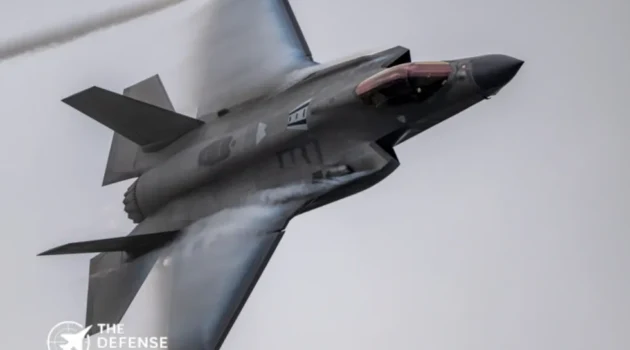
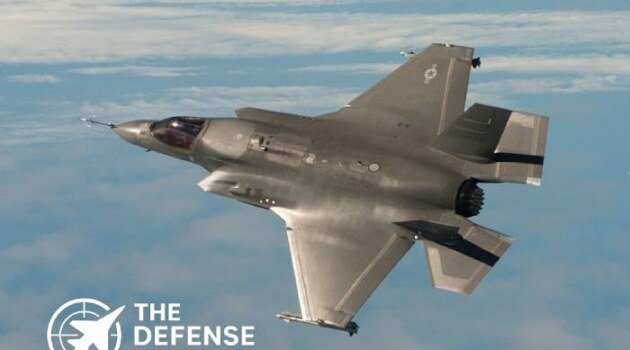
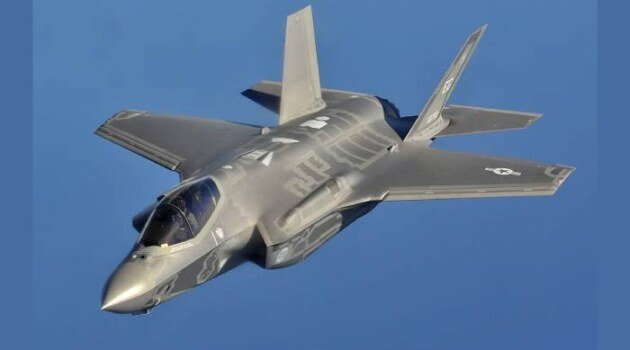
The United States has approved a possible $24.3 billion sale of 48 F-35 Lightning II fighters to Saudi Arabia, marking a major step in Riyadh’s long-running effort to obtain a U.S. fifth-generation combat aircraft. The State Department notified Congress on September 17, 2026, under Transmittal No. 26-69, with the proposed package also including 49 Pratt & Whitney F135-PW-100 engines and extensive equipment, training and sustainment support.
The approval does not mean Saudi Arabia has received the aircraft or that a final purchase contract has been signed. Reuters reported that the proposal still requires congressional approval, leaving the transaction subject to further U.S. government and legislative action.
If completed, the sale would make Saudi Arabia the second country in the Middle East to operate the F-35 after Israel. It would also give the Royal Saudi Air Force access to a combat aircraft built around low-observable design, sensor fusion and networked operations, capabilities that differ materially from the fourth-generation fighters currently forming the core of Saudi air power.
What the $24.3 Billion Package Includes
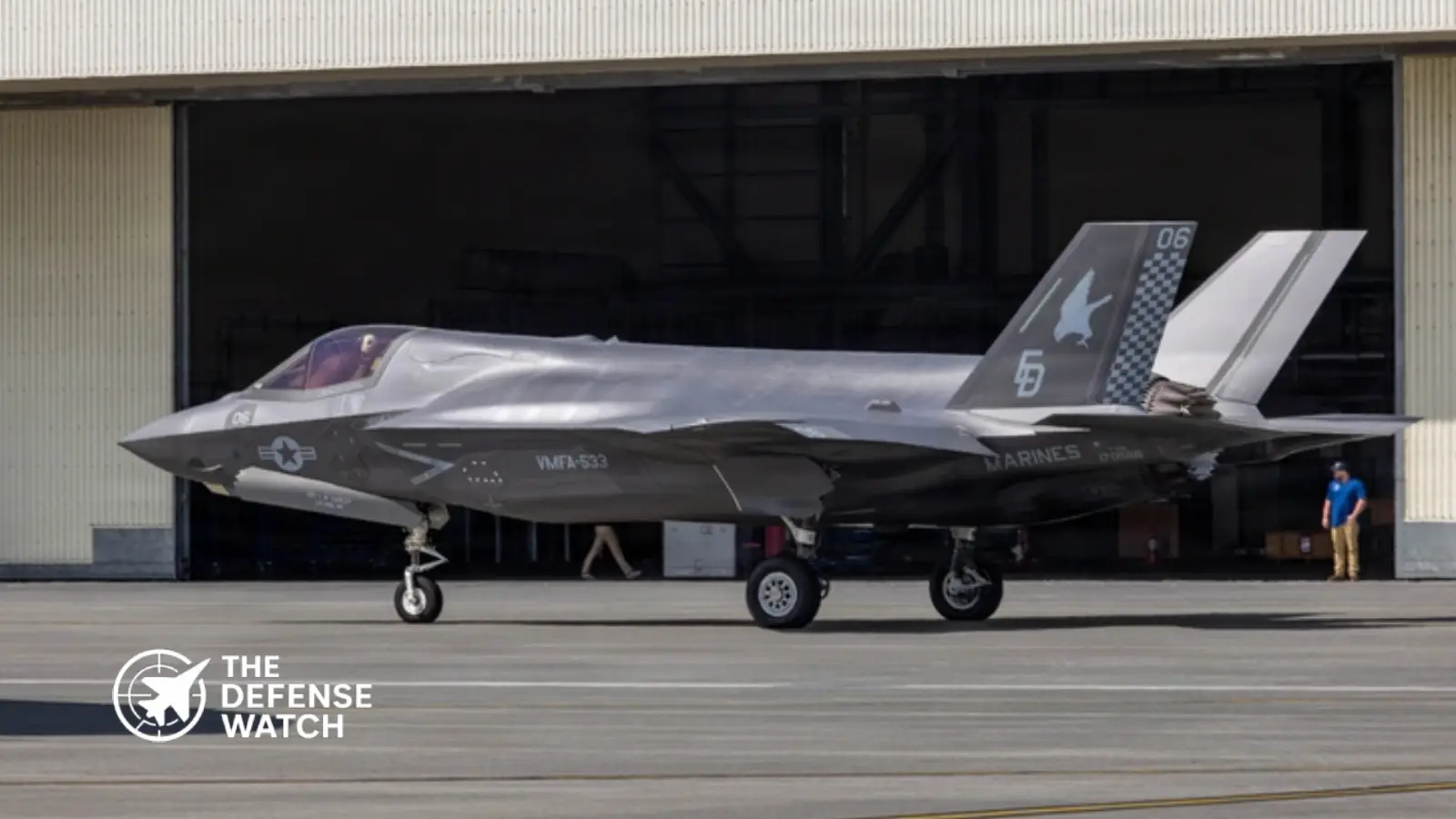
The State Department notification identifies the requested aircraft as conventional takeoff and landing F-35s. That configuration corresponds to the F-35A used by the U.S. Air Force and most international F-35 operators. Janes has identified the Saudi request as involving the F-35A.
Item Proposed quantity or value F-35 Lightning II aircraft 48 F135-PW-100 engines 49 Estimated total package value $24.3 billion Aircraft configuration Conventional takeoff and landing Principal contractors Lockheed Martin Aeronautics, Pratt & Whitney Congressional status Proposed sale under congressional notification The 49 engines include 48 installed engines and one spare, according to the State Department notification. The package also includes secure communications equipment, precision navigation and cryptographic equipment, AN/PYQ-10 simple key loaders, KIV-78 cryptographic appliques and electronic warfare database support.
Other elements include aircraft and munitions support equipment, spare parts, repair and return support, software, technical documentation, training equipment, simulators, transportation, ferry and refueling support, maintenance assistance and U.S. government engineering and logistics services.
This distinction is important when assessing the $24.3 billion figure. It is the estimated value of the proposed Foreign Military Sale package, not the purchase price of 48 aircraft alone.
A Fifth-Generation Addition to Saudi Air Power
Saudi Arabia already operates a large and diverse combat aircraft fleet. Reuters reported that the Royal Saudi Air Force operates Boeing F-15s alongside European Tornado and Typhoon fighters. Janes has reported that the Saudi fighter inventory includes F-15SA aircraft as well as older F-15 variants, Eurofighter Typhoons and Panavia Tornados.
The F-35 would add a different class of capability to that force.
The most significant change would not simply be another fighter airframe. The F-35 is designed around low-observable characteristics, integrated sensors, onboard data processing and secure networking. Lockheed Martin describes the aircraft as a connected fighter intended to combine sensing, information sharing and combat operations across a wider force.
For Saudi Arabia, that could improve the ability to conduct operations in environments where aircraft survivability depends on reducing detection opportunities and sharing information between airborne and surface systems.
The State Department itself describes the proposed sale in terms of stronger homeland defense, improved interoperability with U.S. and allied forces, and enhanced Saudi air-to-air and air-to-ground self-defense capabilities.
The package therefore has an operational dimension beyond fighter numbers. Training, simulators, software, electronic warfare support and secure communications would be necessary to establish and sustain a functioning F-35 fleet.
Why the F-35 Changes the Saudi Fighter Mix
Saudi Arabia’s existing fighter fleet provides substantial capacity, but the F-35 belongs to a different technological generation.
Capability areaExisting Saudi fighter fleetProposed F-35 capability Fighter generation Primarily fourth-generation and upgraded variants Fifth-generation Low observability Varies by aircraft and configuration Core aircraft design feature Sensor integration Advanced on newer aircraft Central design feature Networking Modern systems already in service Deeply integrated into aircraft architecture Air-to-air missions Established capability Enhanced with integrated sensors and networking Air-to-ground missions Established capability Enhanced with low-observable and sensor capabilities Sustainment model Multiple aircraft families Adds another U.S.-managed fighter ecosystem The comparison should not be interpreted as meaning that the F-35 would replace Saudi Arabia’s existing aircraft. A 48-aircraft purchase would instead create a relatively small fifth-generation component within a much larger mixed fleet.
That fleet structure could give Saudi planners different options for assigning aircraft according to mission, threat environment and available support infrastructure.
Israel’s Qualitative Military Edge Becomes a Central Issue
The most consequential policy question surrounding the proposed sale is its relationship to Israel’s qualitative military edge, commonly referred to as QME.
U.S. policy has long required Washington to consider the effect of arms transfers to Middle Eastern states on Israel’s military advantage. The State Department has previously described QME as a major factor in regional defense cooperation and has specifically linked the F-35 to efforts to preserve Israel’s technological advantage.
Israel currently operates the F-35 and has built operational experience with the aircraft over several years. A Saudi F-35 fleet would therefore create another regional operator of the same basic fifth-generation platform. Reuters reported that this could test Washington’s approach to maintaining Israel’s QME.
The State Department’s September 17 notification nevertheless concluded that the proposed sale would not alter the military balance in the region. That is the U.S. government’s stated assessment of the proposed configuration and support package.
The practical question for policymakers is how the United States would maintain the capability gap between Israel and Saudi Arabia while allowing Riyadh access to the F-35 ecosystem. That assessment can involve aircraft configuration, software, weapons integration, electronic warfare capabilities, training, operational restrictions and the broader package of systems available to each country.
The public notification does not provide enough detail to establish how every element of a potential Saudi F-35 configuration would compare with Israel’s F-35I fleet. Claims about specific Saudi avionics, weapons or software limitations should therefore be treated cautiously unless confirmed by U.S. government documentation or a finalized agreement.
Technology Security and Saudi-China Relations
Another issue is protection of sensitive U.S. defense technology.
The F-35 is not simply a conventional fighter aircraft that can be transferred without a wider security framework. Its operational effectiveness depends on software, mission data, secure communications, maintenance systems and a large supporting information architecture.
The proposed Saudi package includes classified and unclassified software delivery and support, technical documentation, electronic warfare database support and secure communications equipment.
That makes technology security an important part of any eventual implementation.
Reuters reported that congressional scrutiny could pose challenges to the transaction and noted existing concerns in Washington about deeper military cooperation with Riyadh.
This issue is particularly relevant because Saudi Arabia has also expanded defense and technology relationships with China. The United States would therefore have to manage not only the transfer of the aircraft themselves but also the security of the broader infrastructure required to operate and maintain them.
The public State Department notification does not disclose classified safeguards or detailed restrictions that could apply to the Saudi fleet. Those elements should not be assumed until formally disclosed.
Industrial and Sustainment Implications
The proposed transaction would also create a substantial long-term sustainment relationship between Saudi Arabia and the U.S. F-35 industrial base.
Lockheed Martin Aeronautics and Pratt & Whitney are identified as the principal contractors. The package includes engine support, maintenance assistance, spare parts, training, simulators, software and engineering services.
For Saudi Arabia, this means the acquisition would extend well beyond aircraft delivery. Building an F-35 capability requires trained personnel, secure facilities, maintenance capacity, mission planning infrastructure and a supply chain able to support the aircraft over its service life.
For the United States, the transaction would deepen an existing defense relationship with one of its largest arms customers. Reuters reported that Washington and Riyadh already agreed in 2025 to a broader defense cooperation package valued at nearly $142 billion.
The F-35 proposal is separate from that earlier package and should not be treated as part of the same $142 billion figure.
Congressional Review Remains a Key Milestone
The State Department’s determination starts the congressional notification process. It does not represent completion of the sale.
Congress has historically played an important role in reviewing major U.S. arms transfers, and the Saudi F-35 proposal is likely to receive particular attention because of its strategic implications.
Congressional records show that lawmakers have already introduced legislation seeking to disapprove proposed U.S. defense sales to Saudi Arabia. For example, S.J. Res. 216 was introduced in the Senate on September 16, 2026, although the publicly available record does not establish that it specifically targets the F-35 package announced the following day.
The distinction matters. The F-35 notification is a new proposed transaction, while congressional actions involving other Saudi defense sales should not automatically be presented as direct action against this specific aircraft package.
What Happens Next
Several steps remain before Saudi Arabia could actually field the aircraft.
First, the proposed sale must pass through the U.S. congressional process. If the transaction proceeds, the United States and Saudi Arabia would then have to negotiate the final terms of the Foreign Military Sale.
The final agreement could determine the actual configuration, quantities, support arrangements, delivery schedule and other details. The State Department notification provides the maximum scope and estimated value of the proposed package, rather than a final delivery contract.
Production capacity and the wider F-35 program schedule would also affect when Saudi Arabia could receive aircraft. The aircraft is already being produced for a growing international customer base, meaning a new Saudi requirement would have to be incorporated into an established global production and sustainment system.
For Riyadh, the strategic value is therefore not limited to acquiring 48 aircraft. The more important development is potential entry into the U.S.-led F-35 ecosystem, with its associated training, software, logistics, networking and sustainment architecture.
For Washington, the decision connects several objectives that can pull in different directions: strengthening Saudi defense capabilities, deepening U.S.-Saudi security cooperation, preserving Israel’s qualitative military edge and protecting sensitive fifth-generation aircraft technology.
Those questions will become more concrete if Congress permits the proposed sale to advance into final negotiations.