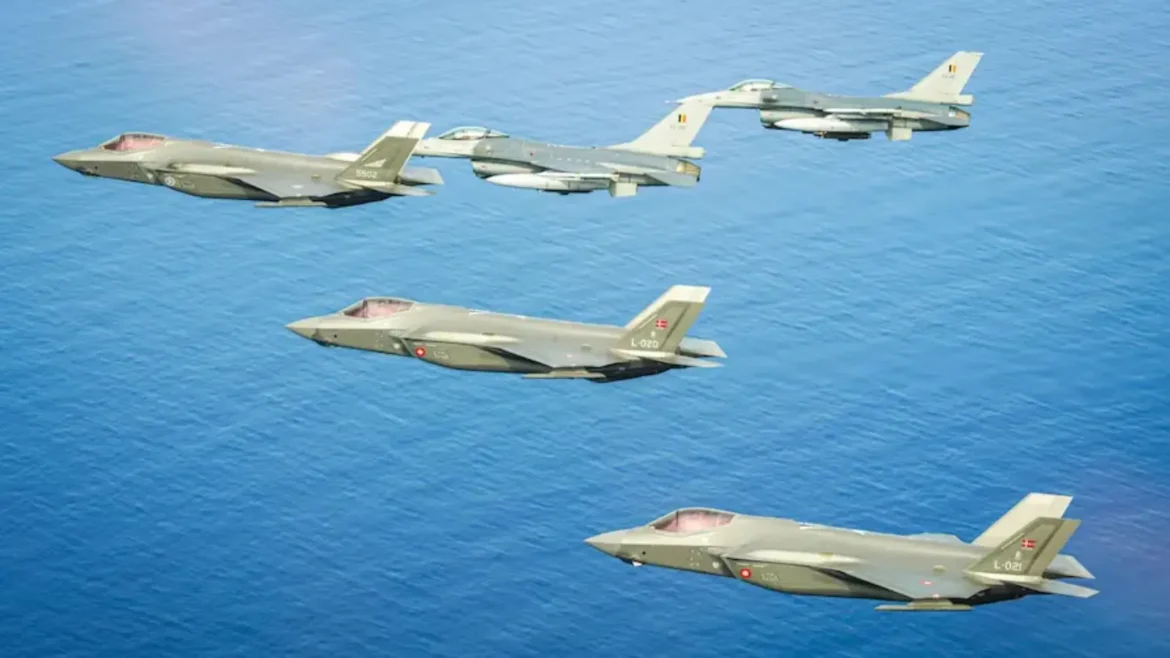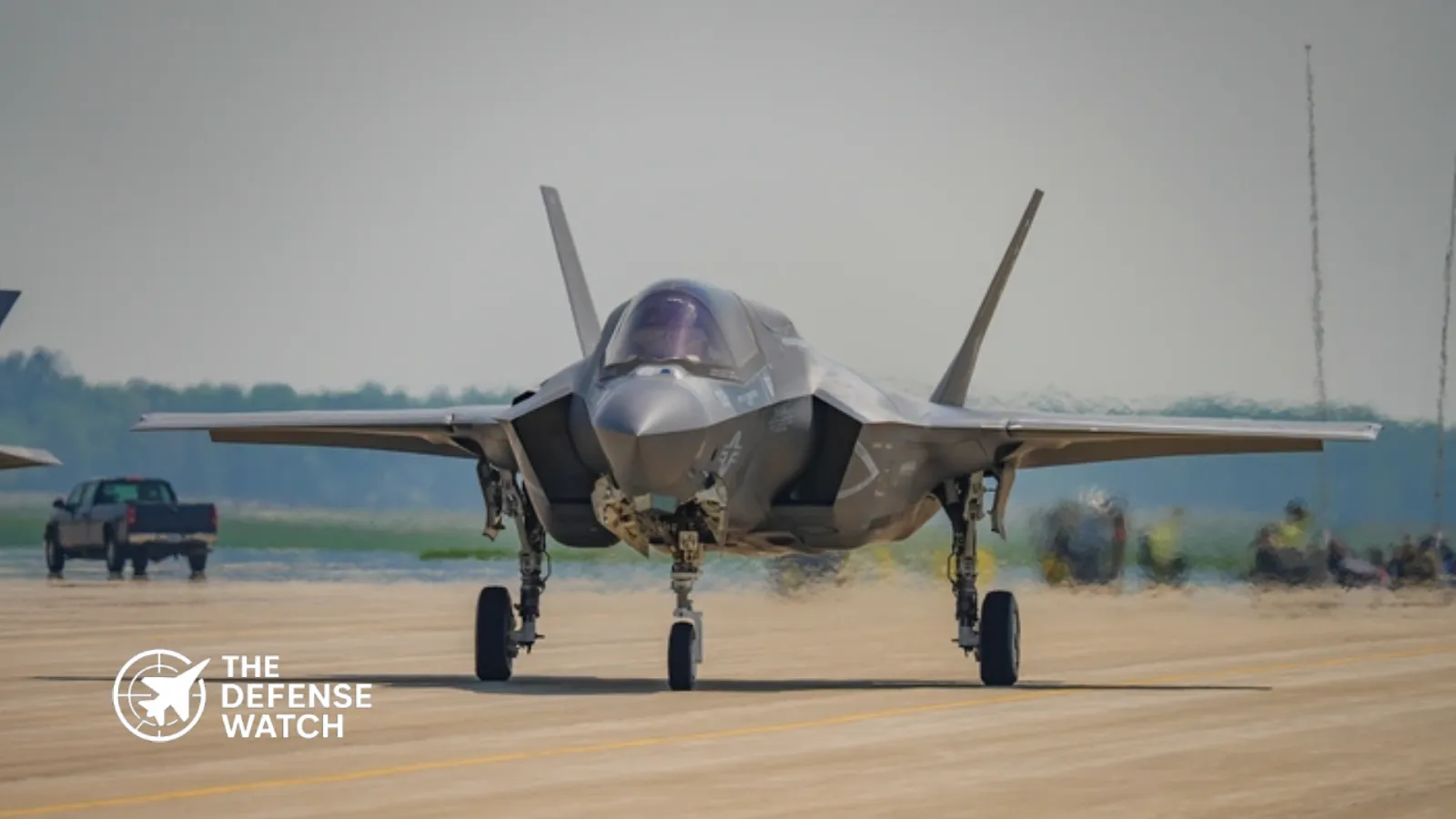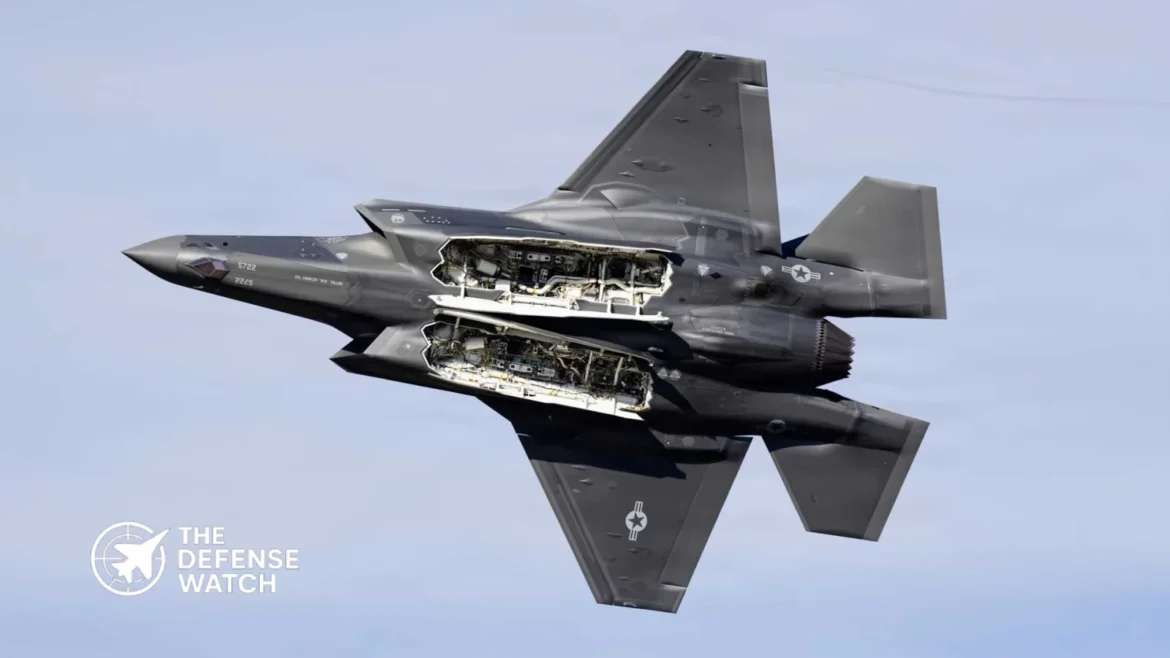
F-35 Six In The Bay Upgrade Targets More Internal Firepower
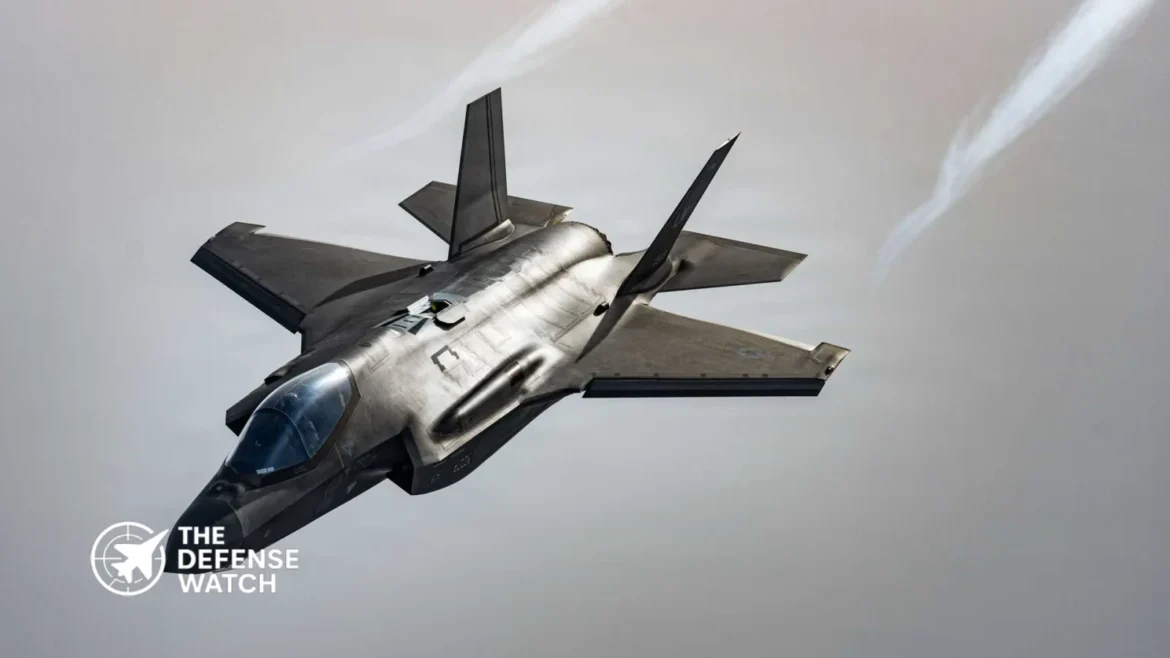
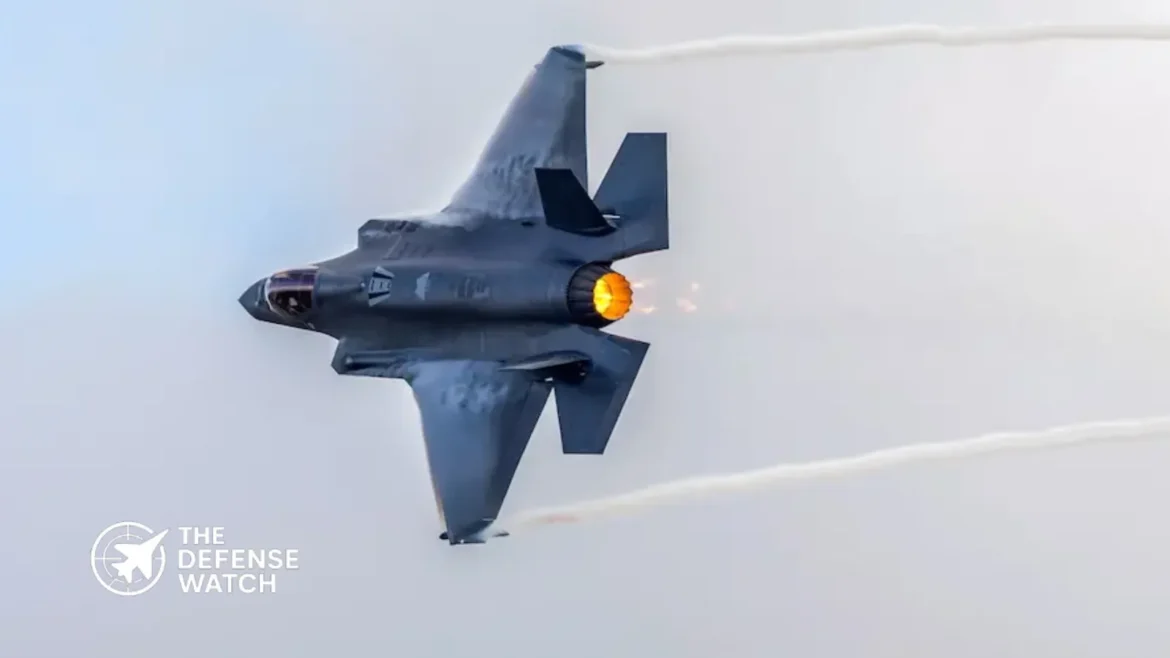
The F-35 six internal missiles upgrade is moving toward a planned September 2030 milestone as the Pentagon seeks to increase the aircraft’s internal missile capacity from four to six while preserving its low observable configuration. The latest F-35 Modernized Selected Acquisition Report identifies the Six in the Bay, or SITB, effort as part of the aircraft’s broader modernization program.
Takeaways
The Pentagon’s Six in the Bay program is intended to increase the F-35’s internal missile capacity from four to six by September 2030, strengthening air combat capacity while retaining internal weapons carriage.
The planned change addresses a basic limitation of stealth fighters. Carrying weapons externally can increase the aircraft’s radar signature, while internal carriage preserves the configuration designed for operations in heavily defended airspace.
For the F-35, the objective is therefore not simply to carry more weapons. It is to increase the number of air combat engagements an aircraft can support without giving up the survivability benefits associated with internal carriage.
From Four Missiles To Six
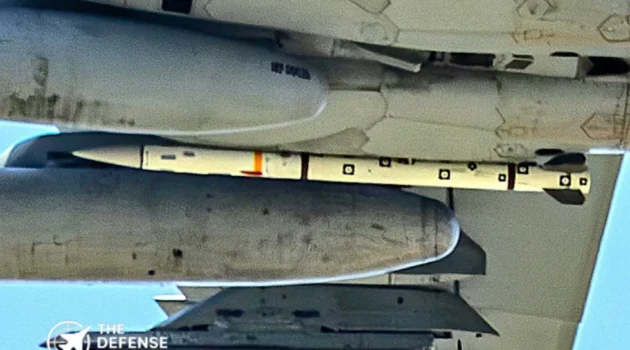
Current F-35 internal air-to-air configurations can accommodate up to four AIM-120-class missiles when the aircraft is configured for an air-to-air mission. The F-35’s two internal weapons bays were designed around a mixture of larger and smaller weapons, giving the aircraft flexibility between air-to-air and air-to-ground missions. U.S. Air Force material has previously described the aircraft as having four internal weapon stations.
The planned Six in the Bay configuration represents a 50 percent increase in internal missile capacity.
| Capability | Current Configuration | Six In The Bay |
|---|---|---|
| Internal missile capacity | Up to 4 | Up to 6 |
| Increase | Baseline | 50 percent |
| External weapons required for additional internal capacity | Not applicable | No |
| Planned milestone | Existing capability | September 2030 |
| Exact missile configuration | Varies by integration | Not publicly specified |
The latest acquisition documentation is important because it confirms the capability increase while avoiding a claim about the exact missile type. The report does not establish that all six weapons will necessarily be AIM-120Ds.
That distinction matters because the F-35 weapons portfolio is changing at the same time.
Sidekick And The F-35 Weapons Bay
The Six in the Bay effort has also been associated with the Sidekick weapons adapter concept. Earlier reporting on the program described Sidekick as a weapons bay adapter designed to allow two additional AIM-120-sized missiles to be carried internally on F-35A and F-35C aircraft.
The F-35B presents a different engineering challenge. Its short takeoff and vertical landing architecture requires a lift fan behind the cockpit, contributing to a smaller internal weapons bay than those of the F-35A and F-35C. Earlier reporting therefore identified Sidekick as an F-35A and F-35C capability rather than an F-35B modification.
The latest acquisition material, however, does not publicly assign SITB to a specific F-35 variant. The safest description is therefore that the Pentagon is developing a six-missile internal carriage capability and that earlier Sidekick work provides important technical context.
Why Internal Capacity Matters
The operational value of Six in the Bay is closely tied to the F-35’s low observable design.
An F-35 carrying additional missiles on external pylons can increase its weapons inventory, but external stores can compromise some of the aircraft’s signature-management advantages. Internal carriage allows the aircraft to maintain a cleaner external configuration.
That creates a tradeoff between magazine depth and survivability that has become increasingly important as air forces prepare for operations against sophisticated integrated air defense and fighter forces.
Six internal missiles do not make the F-35 an air-superiority fighter in the traditional sense. Instead, the upgrade gives the aircraft more opportunities to employ its sensors, network connections and air-to-air weapons before it must return to base, rendezvous with a tanker or operate in a different weapons configuration.
The improvement is particularly significant for distributed operations. A formation of F-35s carrying six internal missiles each would have substantially more collective internal air-to-air capacity than the same number of aircraft limited to four missiles apiece.
For example, a four-aircraft flight would move from a theoretical 16 internally carried air-to-air missiles to 24. That is a 50 percent increase before considering any external weapons.
Six In The Bay Is Only One Part Of Block 4
The missile-capacity increase is being pursued alongside a much wider modernization effort.
The F-35 Block 4 program is designed to introduce new weapons, improved sensors, electronic warfare capabilities and expanded processing capacity. Technology Refresh 3, or TR-3, provides the computing and memory architecture needed to support these capabilities. The Government Accountability Office has identified Block 4 and TR-3 as major components of the F-35 modernization effort.
The Pentagon’s roadmap also includes improvements to the Multifunction Advanced Data Link, Link 16 and infrared sensing capabilities. These changes are significant because the value of additional missiles depends partly on the aircraft’s ability to detect, identify, track and prioritize targets before weapons employment.
In other words, Six in the Bay increases the aircraft’s magazine, while other Block 4 improvements are intended to strengthen the information and engagement chain around that magazine.
AIM-120D Improvements Are Also Planned
The F-35 modernization roadmap separately includes an AIM-120D two-way data link capability. The latest reporting on the acquisition documentation places that capability in the same general modernization timeframe as Six in the Bay.
The two efforts should not be treated as one confirmed upgrade, however. The documentation identifies them as separate capabilities.
That distinction is particularly important for reporting on future F-35 armament. The fact that the aircraft is being prepared for six internal missiles does not, by itself, establish the exact six-weapon loadout that will eventually be certified.
The F-35’s future missile mix could also evolve as newer air-to-air weapons enter development and integration. The U.S. is separately pursuing the AIM-260 Joint Advanced Tactical Missile as a successor to the AIM-120 family, although publicly available information does not establish that Six in the Bay will automatically translate into a six-AIM-260 operational loadout.
Engineering And Certification Remain Key Challenges
Increasing internal weapons capacity requires more than adding two attachment points.
The weapons bay, launcher mechanisms, aircraft structure, software, weapons interfaces and store-separation characteristics all have to work together. Missile release must remain safe across the aircraft’s relevant flight envelope, including high-speed and maneuvering conditions.
The F-35 program has extensive experience with internal weapons separation testing. Earlier Air Force testing evaluated the aerodynamic effects and store separation characteristics of internal and external weapons configurations, including AIM-120 and AIM-9X missiles.
Six in the Bay therefore represents an integration and certification challenge as much as a hardware change.
The program’s wider modernization schedule also carries technical risk. The Government Accountability Office has repeatedly highlighted delays, development challenges and rising F-35 costs, while the Pentagon continues to work through the large number of capabilities associated with Block 4.
Implications For High-End Air Combat
The most important effect of Six in the Bay is the combination of stealth, sensing and magazine depth.
Earlier F-35 employment concepts often emphasized the aircraft’s ability to penetrate defended airspace, collect information and contribute to networked operations. As the air combat environment becomes more dependent on long-range sensing and weapons, the ability to carry enough missiles internally becomes increasingly important.
An aircraft that detects several threats but carries only a small number of internally stored weapons faces a magazine constraint. Six missiles do not eliminate that constraint, but they provide more capacity without requiring an external weapons load.
This also gives commanders another option between two extremes: a highly stealthy internal weapons configuration with limited missile capacity, or a larger external weapons load with a potentially less favorable signature.
The significance extends beyond individual aircraft. F-35s operate as part of larger formations and joint networks, where one aircraft can contribute sensor information to another platform that performs the engagement. More internal weapons allow F-35s performing air-to-air missions to remain armed for longer while continuing to provide sensing and targeting functions.
The F-35 Modernization Timeline
The September 2030 target places Six in the Bay within the broader period in which the F-35 is expected to receive substantial improvements in weapons, sensors, communications and electronic warfare.
That timeline also illustrates how the F-35 is evolving from its original design baseline. The aircraft’s airframe remains largely unchanged, but its combat capability is being expanded through new computing hardware, software, weapons integration and modifications to the internal weapons system.
The Pentagon’s approach reflects the central challenge of maintaining a fifth-generation aircraft against increasingly capable air and missile threats without sacrificing the characteristics that made the F-35 valuable in the first place.
Six in the Bay is consequently a relatively small physical modification with potentially important operational consequences. Increasing internal missile capacity from four to six gives the F-35 more air-to-air weapons while preserving the option to operate without external stores.
The Pentagon’s current documentation confirms the capability target, but the final weapon configuration, variant applicability and detailed implementation remain matters for further testing and certification.
Bottom Line
The F-35 Six in the Bay upgrade is intended to increase internal missile carriage by 50 percent, from four to six weapons, with a September 2030 milestone identified in the latest modernization roadmap.
Its importance goes beyond the additional two missiles. By increasing internal magazine capacity, the program aims to improve the F-35’s persistence and flexibility in high-threat air combat without forcing the aircraft to rely on external weapons for the added capacity.
The upgrade is also part of a much broader Block 4 modernization effort involving computing, sensors, networking, electronic warfare and new weapons. Together, those changes are intended to keep the F-35 relevant as the U.S. Air Force, Navy and Marine Corps prepare for increasingly contested air operations.

U.S. Plans Starshield Satellite Communications For The F-35
The United States plans to equip the F-35 Lightning II with a Starshield-enabled Beyond Line of Sight satellite communications capability by September 2031, according to the FY2027 F-35 Modernized Selected Acquisition Report dated April 21, 2026. The planned upgrade is part of the aircraft’s Block 4 modernization roadmap and is intended initially to move track data through satellite links beyond the range of conventional line of sight tactical communications.
Takeaways
The Pentagon plans to add a Starshield-enabled Beyond Line of Sight satellite communications capability to the F-35 by September 2031, expanding the aircraft’s ability to move track data across geographically dispersed forces.
The capability is designated BLOS Phase 0 SATCOM in the acquisition documentation. It is planned to use the Protected Tactical Waveform and operate across Ku band and Ka band frequencies, according to the reporting on the acquisition report.
The significance is not simply that an F-35 will receive another communications system. The larger change is the extension of the aircraft’s role from a tactical sensor operating within local networks to a forward sensing node capable of contributing information to a geographically dispersed force.
What The Starshield Upgrade Is Designed To Do
Starshield is SpaceX’s government-focused satellite network derived from the company’s Starlink technology and launch architecture. SpaceX describes Starshield as a secure satellite network for government users, with communications, Earth observation and hosted payloads among its primary areas. It also identifies additional high-assurance security measures for government missions.
For the F-35, however, the relevant capability is the communications function rather than Starshield as a complete standalone military architecture.
The initial BLOS Phase 0 capability is focused on transferring track data. That distinction is important because the acquisition reporting does not establish that the F-35 will directly control a distant weapon through Starshield.
Instead, the immediate objective is to extend the movement of sensor information beyond the aircraft’s local tactical network. The F-35 could detect, identify or track an object and make relevant track information available through a longer range communications path to other elements of a joint force.
That creates a potentially important separation between sensing and engagement.
Planned Capability Target Date Intended Function BLOS UHF receiver software September 2026 Receive Integrated Broadcast Service track data BLOS Phase 0 SATCOM September 2031 Transmit track data through satellite communications BLOS Phase 1b September 2031 Add two-way video communications BLOS Phase 2 September 2035 Add voice communications MADL dynamic mesh September 2030 Improve network resilience and connectivity Expanded Link 16 capability September 2031 Increase network participation and message handling The dates above come from the reported F-35 modernization roadmap. The acquisition documentation also distinguishes the 2026 UHF capability from the later SATCOM architecture.
Why Beyond Line Of Sight Communications Matter
Modern long range combat increasingly depends on networks connecting sensors, command nodes and weapons that may be separated by hundreds or thousands of miles.
A fighter may possess the best tactical view of a target without being the aircraft that ultimately engages it. Conversely, a ship, aircraft, ground unit or long range weapon may have the required range but lack the sensor information needed to act.
That is the basic problem a distributed kill chain attempts to solve.
The Space Force has identified data transport as a critical element of long range kill chains. Its broader Protected Tactical SATCOM work is aimed at maintaining communications in environments where adversaries can interfere with satellite and radio links.
Adding BLOS SATCOM to the F-35 therefore addresses an important part of the network rather than adding another weapon to the aircraft.
The F-35 already combines sensors, onboard processing and tactical data links. Its value in a distributed force increasingly depends on how reliably that information can reach other nodes. Lockheed Martin describes the aircraft as a platform designed to gather, process and securely share information across domains, while Block 4 adds further sensor, electronic warfare and weapons capabilities.
The planned SATCOM upgrade extends that networking concept beyond the geographic limits imposed by line of sight.
Protected Tactical Waveform Is A Key Part Of The Architecture
The Protected Tactical Waveform is particularly relevant because a long range communications link is useful only if it can survive the electromagnetic environment of a major conflict.
The U.S. Space Force demonstrated PTW capabilities in 2025, including frequency hopping under variable interference levels, secure voice over internet protocol communications and operation through a commercial satellite. Space Systems Command said the program is intended to provide anti-jam and low probability of intercept communications for tactical users.
That work provides important context for the planned F-35 integration.
The challenge is not simply establishing a satellite connection. A military aircraft operating against a capable opponent may face jamming, interference, detection and attempts to disrupt the broader network. Protected waveforms and resilient satellite architectures are intended to reduce those vulnerabilities.
The Space Force is also developing additional protected tactical satellite capacity. In June 2026, Space Systems Command awarded contracts totaling $437.7 million for the first two Protected Tactical SATCOM Global satellites, designed to provide anti-jam communications and connectivity in denied environments.
F-35 Communications Modernization Extends Beyond Starshield
The planned Starshield capability is only one element of a much larger communications modernization effort.
By September 2030, the F-35 program plans to transition the Multifunction Advanced Data Link from its current manually configured string topology toward a dynamic mesh architecture. The objective is to improve network resilience and reduce connectivity losses.
Link 16 is also scheduled for further upgrades, including increased message handling and the ability to listen to as many as four Link 16 networks simultaneously by September 2031. The roadmap also includes improved electronic warfare coordination.
Taken together, these changes point toward a communications architecture with several layers rather than dependence on a single data link.
That matters because different networks serve different operational purposes. MADL is central to F-35 tactical connectivity, Link 16 provides broad joint and allied interoperability, while BLOS SATCOM provides a longer range communications path.
The combination gives commanders more options for moving information when individual links are unavailable or geographically unsuitable.
The F-35 Is Becoming More Important As A Sensor Node
The planned upgrade also reinforces an established direction in F-35 development.
The aircraft was designed around sensor fusion and information sharing rather than treating the fighter solely as a platform that carries weapons. Its ability to collect information from onboard sensors and distribute useful data has become a central part of its operational value.
Lockheed Martin has also demonstrated concepts in which F-35 information can be passed through other communications nodes to fourth generation aircraft and ground based systems, including scenarios involving HIMARS and MLRS family weapons.
The Starshield integration would extend that basic concept over a much larger geographic area.
An F-35 operating forward could potentially provide track information to a distant command or engagement architecture without requiring the receiving element to be within the fighter’s conventional line of sight communications range.
The acquisition report does not specify which aircraft, ships, ground systems or weapons will receive Phase 0 data. It also does not establish a direct F-35 to weapon engagement pathway through Starshield. Those distinctions are important when assessing what the program has actually announced.
Technical And Operational Challenges Remain
The 2031 target should be viewed as a planned fielding date rather than evidence that the capability is already operational.
The F-35 Block 4 modernization effort involves major changes to software, computing, sensors, electronic warfare equipment, communications and weapons. The acquisition documentation identifies the technical complexity of the modernization effort as a significant risk and calls for expanded laboratory, simulation and flight testing.
Nine new fully instrumented Flight Science Aircraft are planned to support Block 4 development, weapons integration and certification. Technology Refresh 3 provides the additional computing capacity and memory required for future capability inserts.
SATCOM integration also creates aircraft-level engineering challenges.
The system must fit within the F-35’s existing architecture while preserving aircraft performance, electromagnetic compatibility and low observable characteristics. It must also integrate with classified mission systems and broader joint communications networks without creating an unacceptable dependency on any single communications path.
These issues are especially important because the F-35 operates in environments where electromagnetic emissions can affect survivability and where communications systems may themselves become targets.
Strategic Implications For U.S. And Allied Forces
The strategic value of the planned capability lies in network reach.
Large Indo-Pacific operating areas make this particularly relevant to U.S. force planning, but the underlying requirement applies more broadly to any theater where aircraft, ships, ground forces and long range weapons are separated by significant distances.
A distributed force can reduce the need to place every sensor and weapon in the same location. The F-35 can operate forward and collect information, while other platforms positioned farther away can contribute command, sensing or engagement functions.
That approach also fits the broader U.S. move toward joint all domain operations, in which information must move between air, maritime, land, space and cyber elements.
The F-35’s future communications architecture is therefore becoming almost as important as its individual aircraft capabilities. A stealth aircraft with advanced sensors has greater operational value when the information it generates can reach the rest of the force reliably.
A Staged Path Toward A More Connected F-35
The planned modernization schedule shows that the Pentagon is not treating BLOS communications as a single upgrade.
The 2026 UHF receiver capability provides an earlier means of receiving beyond line of sight track information. Phase 0 in 2031 would add satellite based track-data transmission. Phase 1b would expand the system to two-way video, while Phase 2 is planned to add voice communications in 2035.
This staged approach is consistent with the wider development of protected tactical SATCOM across the Department of Defense.
The U.S. Space Force is simultaneously expanding protected satellite communications through government and commercial satellite architectures, including systems designed around the Protected Tactical Waveform.
For the F-35, the result could be a more flexible communications architecture in which the aircraft contributes sensor information through multiple paths depending on the tactical environment.
Bottom Line
The planned Starshield integration represents a significant change in how the F-35 is expected to participate in distributed combat networks.
The initial objective is specific: provide Beyond Line of Sight SATCOM capable of transmitting track data by September 2031. The program does not currently establish that the F-35 will directly control distant weapons through Starshield.
Its importance is instead tied to the broader sensor-to-shooter problem. By connecting the F-35’s sensors to geographically separated forces through a protected satellite communications path, the Pentagon is seeking to make the fighter a more effective node in long range joint kill chains.
That effort will depend on successful integration with MADL, Link 16, Block 4 mission systems and protected tactical SATCOM infrastructure. If the planned milestones are met, the F-35’s role will increasingly extend beyond detecting and engaging targets itself to helping other elements of the joint force act on information collected at the forward edge.
Danish F-35 Precision Strike Training
Danish F-35 pilots have conducted live precision strike training with 500-pound and 2,000-pound laser and GPS-guided bombs at the Oksbøl shooting and training area, according to the Danish Armed Forces. The exercise, reported Aug. 28, involved not only pilots but also weapons specialists and Joint Terminal Attack Controllers, providing training across the full process of a precision airstrike.
Takeaways
Denmark has used live 500-pound and 2,000-pound laser and GPS-guided bombs to train its F-35 force in realistic precision strike operations.
The training is significant because it moves beyond simulated weapons employment and gives Danish personnel practical experience with live munitions, aircraft loading procedures, target coordination and weapon delivery under realistic range conditions.
The Danish Armed Forces said the exercise involved precision attacks against ground targets. The targets were retired and environmentally cleared, allowing live weapons to be used under controlled conditions.
500-Pound and 2,000-Pound Weapons
The exercise used two broad bomb weight classes, 500 pounds and 2,000 pounds. Danish Defence documentation for Oksbøl identifies the Mk 82 500-pound class and Mk 84 2,000-pound class among the aircraft bomb types authorized for range activities, although the latest Danish report does not identify the specific weapon models used in this particular F-35 event.
The latest exercise also involved laser and GPS-guided weapons. These guidance methods give aircrews different options depending on the target, mission conditions and available targeting information.
Laser-guided weapons rely on laser designation to provide terminal guidance toward a designated target. GPS-guided weapons use satellite navigation, normally combined with an inertial navigation system, to guide the weapon toward programmed coordinates.
That distinction matters operationally. GPS-guided weapons are well suited to targets whose locations can be accurately established before the strike, while laser guidance can provide a flexible option when a target can be designated during the engagement.
Training the Entire Strike Chain
One of the most important aspects of the Danish exercise was that the training did not stop with the pilot.
According to the Danish Armed Forces, personnel practiced the complete sequence involved in using live weapons, beginning with bomb assembly and preparation, followed by loading the weapons onto F-35 aircraft and ending with delivery against the designated target.
This type of training is essential for maintaining an operational strike capability. A precision strike depends on more than aircraft performance. Weapons handling, mission planning, targeting, communications, aircrew procedures and post-strike safety all have to work together.
For Denmark, this also provides an opportunity to develop the support infrastructure needed to operate the F-35 as a combat system rather than simply as a fighter aircraft.
The F-35 program depends heavily on the integration of sensors, mission systems, weapons and information networks. Lockheed Martin describes the aircraft’s sensor suite as supporting precision targeting, navigation, threat detection and intelligence, surveillance and reconnaissance functions.

JTACs Add the Ground-to-Air Element
Joint Terminal Attack Controllers were another central part of the Oksbøl training.
JTACs are trained to identify and designate targets and coordinate air support with aircraft crews. During the Danish exercise, target designation could be conducted with laser equipment or through radio communications, according to the Danish Armed Forces.
The inclusion of JTACs makes the exercise particularly relevant to joint operations. In a real combat environment, an F-35 may receive information from multiple sources, including forces operating on the ground, other aircraft and command networks.
Practicing these interactions helps ensure that pilots and ground personnel use common procedures before they are required to operate together in an actual conflict.
The training also highlights an important characteristic of modern airpower. The effectiveness of a fifth-generation fighter is increasingly tied to the wider force around it, including sensors, communications, targeting teams, weapons crews and command structures.
Why Live Weapons Training Matters
The Danish Armed Forces specifically emphasized the value of training with live weapons even when personnel regularly practice weapon employment in simulators. Live weapons introduce practical factors that cannot be completely reproduced in a virtual environment.
Those factors include physical weapon handling, aircraft loading, safety procedures, coordination between maintenance and weapons personnel, and the actual release of a munition against a designated range target.
For an emerging F-35 operator, that experience is part of the broader process of building combat readiness.

Photo: Lockheed Martin. Denmark received its first F-35 fighters in 2023. The Danish Defence says the aircraft reached the point of supporting the national air policing mission in 2025, while its current milestone plan identifies 2027 for full implementation and participation in selected international missions.
The Oksbøl exercise therefore fits into a longer progression from aircraft delivery and pilot conversion toward a more complete operational capability.
Denmark’s Expanding F-35 Force
Denmark is also increasing the size of its planned F-35 fleet.
The Danish government and parliamentary parties agreed in 2025 to acquire another 16 F-35 aircraft, increasing the planned Danish fleet to 43 aircraft. The acquisition is part of Denmark’s wider defense modernization program under its 2024 to 2033 Defence Agreement.
The larger fleet gives Denmark greater capacity to maintain aircraft for training, national readiness, international deployments and other missions at the same time.
It also increases the importance of weapons training. A larger F-35 fleet requires a corresponding ability to generate qualified aircrews, weapons specialists, maintainers and mission-support personnel.
The Broader NATO Context
Denmark’s F-35 development is taking place within a broader NATO effort to integrate fifth-generation aircraft across Europe.
Danish F-35s participated with Norwegian, Italian and U.S. F-35 aircraft during Ramstein Flag 2026, an exercise designed to strengthen fifth-generation fighter integration and demonstrate the ability of allied aircraft to operate across dispersed locations.
Denmark has also participated in international F-35 training activities, including the multinational Weapons Instructor Course in the Netherlands earlier in 2026.
These activities provide a larger operational context for the Oksbøl live weapons event. The objective is not simply to qualify individual pilots to drop bombs. It is to develop an air force capable of integrating its F-35s into multinational operations while maintaining national readiness.
What the Oksbøl Exercise Demonstrates
The most important takeaway from the Danish F-35 precision strike training is the emphasis on complete mission execution.
The exercise combined the aircraft, live precision weapons, weapons personnel, pilots, JTACs and a controlled target environment. That combination provides a more realistic test of the systems and procedures required to conduct an air-to-ground mission.
The exercise also demonstrates that Denmark is continuing to build practical experience with the F-35 rather than relying solely on simulator-based training.
For NATO, that matters because the value of a fifth-generation aircraft depends partly on how effectively it can operate with other forces. Danish participation in multinational F-35 exercises, combined with domestic live weapons training, helps build the procedures and personnel skills required for that role.
The Oksbøl event was therefore a training activity rather than a new weapons announcement. Its importance lies in the operational proficiency being developed around Denmark’s growing F-35 fleet.
Key Facts
Category Details Aircraft F-35 Lightning II Operator Royal Danish Air Force Training location Oksbøl Shooting and Training Area, Denmark Weapons 500-pound and 2,000-pound guided bombs Guidance Laser and GPS guidance Training Live precision strike Ground element Joint Terminal Attack Controllers Targeting Laser designation and radio coordination Training scope Weapon preparation, aircraft loading and delivery Planned Danish F-35 fleet 43 aircraft Bottom Line
Denmark’s latest F-35 exercise at Oksbøl shows the country’s fifth-generation fighter program moving further into practical live weapons employment.
The use of 500-pound and 2,000-pound guided bombs, combined with JTAC coordination and full weapons-handling procedures, provided training across the broader precision strike chain.
As Denmark expands its F-35 fleet to 43 aircraft and continues integrating with other NATO F-35 operators, this type of live training will remain an important part of developing a deployable and interoperable combat capability.
 (adsbygoogle = window.adsbygoogle || []).push({});
Takeaways
The Freedom 250 Grand Prix flyover brought together U.S. stealth fighters and a long-range stealth bomber in a highly visible demonstration of American airpower.
B-2 Spirit Leads Freedom 250 Grand Prix Flyover
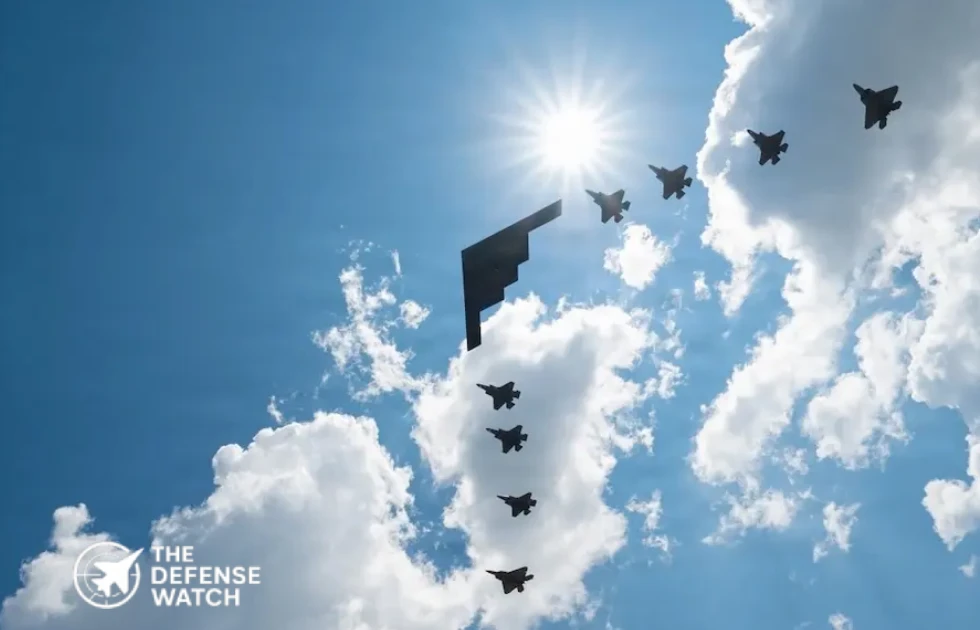
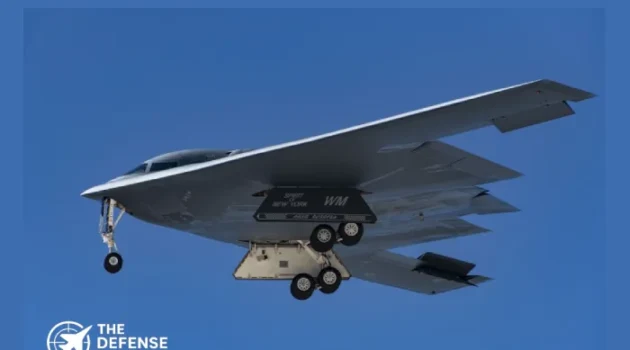
A U.S. Air Force B-2 Spirit joined F-35 Lightning II and F-22 Raptor fighters over Washington, D.C., during the Freedom 250 Grand Prix, providing a public demonstration of the aircraft and capabilities that underpin the United States‘ long-range and fifth-generation airpower. Official Air Force imagery identified a formation consisting of one B-2, two F-35A Lightning II aircraft, two F-22 Raptors and four U.S. Marine Corps F-35B aircraft.
The flyover took place in connection with the IndyCar Freedom 250 Grand Prix, an event held in Washington as part of celebrations marking the 250th anniversary of the United States. The U.S. Air Force described the military participation as a way to connect the armed forces with the American public.
The formation itself was ceremonial rather than a combat mission. Its significance, however, extends beyond the spectacle because the aircraft represent several distinct elements of the U.S. air combat architecture.
- (adsbygoogle = window.adsbygoogle || []).push({});
What the B-2 Brings to the Formation
The B-2 Spirit remains one of the U.S. Air Force’s most specialized long-range combat aircraft. The service describes it as a multirole bomber capable of delivering conventional and nuclear weapons while using low-observable technology to penetrate sophisticated air defenses.
The aircraft’s flying-wing configuration, composite construction and specialized coatings reduce multiple signatures, including radar, infrared, acoustic and electromagnetic signatures. The Air Force states that many details of the B-2’s low-observable technology remain classified.
The B-2 also has the endurance required for intercontinental operations. The Air Force lists an unrefueled range of approximately 6,000 nautical miles and a maximum payload of 60,000 pounds. The aircraft has a two-person crew and four General Electric F118 engines.
B-2 Spirit characteristic U.S. Air Force figure Primary role Multirole heavy bomber Crew 2 Engines 4 × F118-GE-100 Wingspan 172 feet Maximum takeoff weight 336,500 pounds Payload 60,000 pounds Unrefueled range Approximately 6,000 nautical miles Maximum altitude 50,000 feet Speed High subsonic Current Air Force inventory 20 aircraft, including 1 test aircraft These figures are current to the Air Force fact sheet dated May 2026.
(adsbygoogle = window.adsbygoogle || []).push({});F-35 and F-22 Add Different Fighter Capabilities
The inclusion of the F-35 and F-22 is significant because the two fifth-generation fighters were designed around different primary operational priorities.
The F-35A is a multirole fighter built around stealth, sensor fusion and situational awareness. Its sensor architecture includes the Distributed Aperture System and Electro-Optical Targeting System, while its communications and data links allow information to be shared with other aircraft and forces.
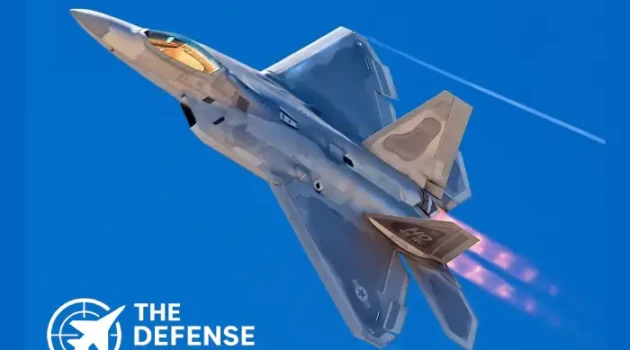
The F-22 Raptor, by contrast, was developed primarily as an air-dominance fighter. The Air Force highlights its combination of stealth, integrated avionics, maneuverability and supercruise, allowing the aircraft to sustain supersonic flight without afterburners under appropriate conditions.
The different designs are complementary. In a high-end operational environment, an F-22’s principal value lies in controlling the air domain and countering airborne threats, while the F-35 can contribute sensing, targeting, information sharing and multirole strike capabilities.
The eight-fighter element seen in the Washington formation therefore represented more than a collection of modern aircraft. It showed the distinct roles assigned to stealth fighters within a broader airpower system.
- atOptions = {
‘key’ : ‘3d48d603f906e3fe9f205be3c4433835’,
‘format’ : ‘iframe’,
‘height’ : 250,
‘width’ : 300,
‘params’ : {}
};
Why the B-2 and Fifth-Generation Fighters Matter Together
The B-2’s long-range penetrating mission and the fighters’ ability to operate in contested airspace address different parts of the same operational problem.
A modern air campaign against a capable opponent requires aircraft to locate threats, establish and maintain air superiority, penetrate defended areas, deliver weapons and exchange information across the force. No single aircraft needs to perform every one of those functions.
The B-2 is particularly important because its value comes from the combination of range, payload and low observability. Its design allows the bomber to conduct missions where a conventional large aircraft could face greater detection and engagement risks. The Air Force describes this penetrating capability as central to the B-2’s role against sophisticated defenses.
The F-35 adds a different advantage. Its sensors and data links are designed to collect and distribute information across the battlespace, making it an important node in joint and coalition operations.
The F-22 contributes another layer through air dominance. Its stealth, supercruise and maneuverability are intended to improve its ability to operate against advanced airborne threats while reducing the opportunities for adversaries to detect and engage it.
This combination illustrates why modern U.S. airpower increasingly depends on aircraft working as a force rather than operating as isolated platforms.
The B-2’s Role in the U.S. Bomber Force
The Washington flyover also comes as the United States continues transitioning its bomber force for future operations.
The Air Force’s 2026 bomber capability information describes the B-2 as a long-range nuclear and conventional stealth bomber, while the B-21 Raider is being developed as the future penetrating strike aircraft that will form the backbone of the bomber force alongside the B-52.
That transition does not make the B-2 irrelevant. The aircraft remains an operationally important part of the existing penetrating bomber fleet, while its design experience provides context for understanding the requirements of the next-generation B-21.
The Air Force currently lists 20 B-2 aircraft in the active inventory, including one test aircraft. That small fleet makes each operational aircraft a high-value national asset, particularly for missions requiring a combination of stealth and long-range strike capacity.
A Public Demonstration With Strategic Context
The Freedom 250 Grand Prix flyover should not be interpreted as an operational deployment or evidence of a specific military mission. It was a public event conducted to commemorate the nation’s 250th anniversary and showcase U.S. military aviation.
Nevertheless, the aircraft selected for the formation carried clear strategic symbolism. The B-2 represented long-range penetrating strike, the F-22 represented air dominance and the F-35 represented networked fifth-generation multirole combat power.
Official U.S. Air Force imagery also documented a separate tri-bomber formation involving a B-1B Lancer, B-2 Spirit and B-52 Stratofortress over Washington on Aug. 23, demonstrating the broader role of Freedom 250 events in showcasing the U.S. bomber force.
Earlier Freedom 250 events likewise featured B-2 and F-35 formations above the National Mall. On June 24, the Air Force documented a B-2 leading four F-35A aircraft over Washington.
Taken together, these appearances provide a public view of the U.S. approach to airpower: long-range bombers, stealth fighters, air-dominance aircraft and other supporting capabilities operating within a larger force structure.
What the Flyover Shows About U.S. Airpower
The most important takeaway from the Freedom 250 formation is not simply the presence of several famous aircraft over Washington. It is the contrast in their designed functions.
The B-2 provides penetrating long-range strike capacity and substantial weapons carriage. The F-22 is designed to establish air dominance in contested environments. The F-35 provides stealthy multirole operations while using advanced sensors and data links to connect information across the force.
That combination reflects a broader U.S. emphasis on integrated air operations. Future combat environments are expected to place greater demands on survivability, information sharing, stand-off weapons, electronic warfare and long-range strike, making coordination between different aircraft types increasingly important.
The Freedom 250 Grand Prix flyover was therefore a ceremonial event, but the platforms involved represented capabilities that remain central to U.S. airpower planning. The B-2 continues to provide a penetrating bomber capability today, while the F-35 and F-22 provide complementary fifth-generation fighter capabilities across the air domain.
Takeaways
Lockheed Martin receives a $29.6 million order for F-35 pilot flight equipment.
1. $29.6 Million F-35 Order
Lockheed Martin Aeronautics has received a $29.6 million firm-fixed-price order for F-35 pilot flight equipment under NAVAIR order N0001926F0236.
2. Supports Lot 18-19 Aircraft
The equipment will support Lot 18 and Lot 19 F-35 aircraft deliveries as well as operational aircraft already entering service.
3. Covers U.S. and International Users
The order supports the Air Force, Marine Corps, Navy, Foreign Military Sales customers and non-U.S. Department of War participants.
4. Work Runs Through July 2029
Work will be performed primarily in London, United Kingdom, with additional work in Greenville, Texas, and Grand Rapids, Michigan, and is scheduled for completion in July 2029.
5. International Funding Is Significant
The award includes $4.04 million in FMS funding and $5.29 million from non-U.S. Department of War participants, highlighting the international scale of the F-35 fleet.
Lockheed Martin Wins $29.6 Million F-35 Pilot Equipment Order
Lockheed Martin has received a $29.6 million U.S. Navy order to procure F-35 pilot flight equipment supporting Lot 18 and Lot 19 aircraft deliveries and operational aircraft across the U.S. military and international F-35 community.
The firm-fixed-price order, N0001926F0236, was issued against basic ordering agreement N0001924G0010. Naval Air Systems Command, Patuxent River, Maryland, is the contracting activity. The order was not competed.
The award provides another example of how F-35 procurement extends beyond the aircraft itself. Pilot equipment is a necessary part of bringing new fighters into operational service and maintaining the equipment needed by pilots already flying the aircraft.
Contract Details And Funding
The $29.6 million award is funded through several procurement accounts, reflecting the multinational customer base supported by the F-35 program.
Contract element Details Contractor Lockheed Martin Aeronautics Co. Award value $29.6 million Contract type Firm-fixed-price Order number N0001926F0236 Basic ordering agreement N0001924G0010 Aircraft supported F-35 Lot 18-19 and operational aircraft Contracting activity Naval Air Systems Command Completion July 2029 Competition Not competed The largest funding share comes from U.S. aircraft procurement accounts. The Air Force contribution is $11.20 million, while Navy aircraft procurement provides approximately $9.07 million.
FMS customers are providing $4.04 million, while non-U.S. Department of War participants account for approximately $5.29 million.
The combined international funding represents about 31.5 percent of the total order. That distribution underscores the extent to which F-35 equipment procurement is tied to a multinational fleet rather than exclusively to U.S. aircraft.
London Accounts For Most Of The Work
The contract has a notably international workshare profile.
Approximately 96.15 percent of the work will be performed in London, United Kingdom. Greenville, Texas, accounts for 3.81 percent, while Grand Rapids, Michigan, represents the remaining 0.04 percent.
The concentration of work in the United Kingdom is consistent with the broader industrial structure of the F-35 program, which relies on partner-country industrial participation alongside U.S. production and support activities.
NAVAIR’s F-35 program overview identifies Lockheed Martin as the F-35 prime contractor and notes the participation of major international and U.S. industrial partners in manufacturing the aircraft.
Why Pilot Equipment Matters To F-35 Readiness
Pilot flight equipment can appear secondary compared with major aircraft components, engines, weapons or sensors. Operationally, however, it is directly connected to the ability to put trained pilots into aircraft and conduct missions safely.
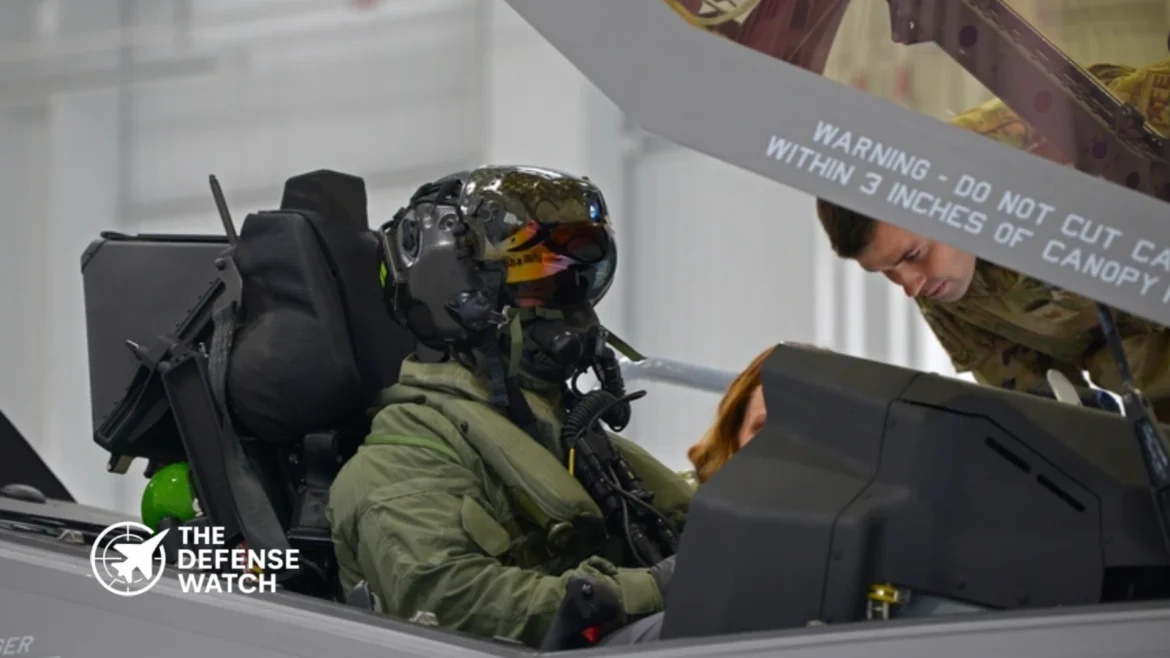
The F-35 is designed around a tightly integrated pilot-machine interface. Its helmet-mounted display system provides flight and tactical information while integrating imagery from the aircraft’s sensors.
The F-35 program’s official technical overview states that the aircraft’s sensor suite includes the AN/APG-81 active electronically scanned array radar, Distributed Aperture System, Electro-Optical Targeting System and electronic warfare capabilities. The helmet-mounted display forms an important part of how that information reaches the pilot.
The Distributed Aperture System uses infrared cameras positioned around the aircraft to generate imagery that can be displayed through the pilot’s helmet. This allows the pilot to access information that would traditionally require separate aircraft displays or visual references.
That makes pilot equipment more than conventional protective clothing. It is part of the operational interface between the pilot and the F-35’s mission systems.

The Helmet Is Part Of The Aircraft’s Sensor Interface
The F-35’s Gen III Helmet Mounted Display System is particularly important to this relationship.
Lockheed Martin’s F-35 partner information identifies Collins Aerospace as the provider of the Gen III Helmet Mounted Display System. The system is designed to provide pilots with information from the aircraft’s sensors while supporting situational awareness during flight.
The system also removes some of the traditional separation between cockpit displays and the pilot’s direct view of the battlespace.
That matters because the F-35 was designed around sensor fusion rather than simply giving the pilot access to individual sensors. Information from radar, electro-optical systems, infrared cameras and electronic warfare systems is processed into a common operational picture.
As a result, maintaining the availability and compatibility of pilot equipment is part of maintaining the aircraft’s intended mission capability.
Lot 18 And Lot 19 Support A Continuing Production Pipeline
The new order is tied specifically to Lot 18 and Lot 19 aircraft deliveries.
F-35 production is organized through successive procurement lots, with equipment and support contracts covering the systems needed to deliver and operate aircraft in each production group. Pilot equipment therefore has to remain synchronized with aircraft deliveries, training pipelines and operational fleet requirements.
The contract also covers operational aircraft, meaning the requirement is not limited to newly delivered fighters.
This distinction is important for a growing fleet. As more F-35s enter service, demand for pilot equipment expands beyond initial aircraft deliveries to include replacements, additional equipment and support for active operational units.
Lockheed Martin’s published F-35 data has previously highlighted the scale of the training and operational enterprise surrounding the aircraft. In June 2024, the company reported more than 2,460 trained maintainers, more than 16,290 trained pilots and more than 860,000 F-35 flight hours at that point in the program.
Those figures illustrate why equipment procurement must scale alongside aircraft production.
International Fleet Growth Increases Equipment Requirements
The award also demonstrates the multinational character of the F-35 fleet.
The order supports FMS customers and non-U.S. participants in addition to U.S. Air Force, Marine Corps and Navy requirements. The F-35 program’s official data lists numerous international operators and program participants, creating a large and geographically distributed user base.
For the United States, this has operational implications beyond aircraft sales.
A common aircraft platform operated by multiple allied countries creates opportunities for shared training, logistics, maintenance knowledge and interoperability. Standardized pilot equipment can contribute to that common operating framework by ensuring personnel operating the same aircraft family use equipment designed around the same cockpit and mission-system architecture.
The multinational structure also places greater importance on supply-chain coordination. Equipment must be available where aircraft and pilots are based, while replacement and support requirements must be managed across different national procurement systems.
Production And Support Extend Into 2029
The contract is scheduled for completion in July 2029, giving Lockheed Martin several years to deliver the equipment associated with the order.
The extended performance period reflects the continuing nature of the F-35 production and sustainment cycle. Aircraft delivered during the period will require trained pilots, operational equipment and support infrastructure to reach and maintain mission readiness.
The order therefore fits into a broader series of F-35 procurement actions involving aircraft equipment, spares, modifications and sustainment.
Recent F-35 procurement activity has included large orders for aircraft spares and other equipment under the same N0001924G0010 basic ordering agreement. For example, a July 2026 order valued at more than $1.6 billion procured initial spares for F-35 production aircraft supporting U.S., FMS and program-partner fleets.
The pattern shows that aircraft procurement is increasingly accompanied by a large supporting ecosystem of components, equipment and sustainment resources.
What The Award Means For F-35 Readiness
The immediate purpose of the $29.6 million order is straightforward: provide pilot flight equipment for aircraft entering delivery pipelines and for operational F-35 fleets.
Its broader significance lies in the relationship between aircraft availability and the personnel and equipment required to use those aircraft.
An F-35 cannot generate operational capacity simply because an airframe has been delivered. Pilots must be trained, equipped and supported, while maintenance personnel, spare parts, software and mission systems must also be available.
The Navy has separately emphasized the importance of F-35 component readiness as part of keeping aircraft available for training and operational missions. NAVAIR has described efforts to establish repair capabilities for an expanding range of F-35 components and to reduce dependence on outside sources for selected maintenance workloads.
The new pilot equipment order fits within that same readiness equation.
For the U.S. services and F-35 international community, ensuring that pilots have the required flight equipment as aircraft deliveries accelerate helps prevent a gap between receiving aircraft and having the personnel and equipment needed to operate them.
Bottom Line
Lockheed Martin’s $29.6 million F-35 pilot flight equipment order is a relatively small contract compared with major aircraft procurement awards, but it addresses a requirement directly connected to operational readiness.
The order supports Lot 18 and Lot 19 aircraft as well as operational F-35 fleets, with funding from U.S. services, FMS customers and non-U.S. Department of War participants.
With most of the work centered in London and completion scheduled for July 2029, the award also highlights the international industrial and operational structure behind the F-35 program.
As F-35 fleets continue to expand, procurement of pilot equipment, spares and other support items will remain an essential part of converting aircraft production into usable combat capability.
Lockheed Martin Corp. and Lockheed Martin Aeronautics Co. have received a $24.128 million modification to expand retrofit and modification support for F-35 Joint Strike Fighter aircraft operated by U.S. services and international customers. The award covers material modification kits, specialized test and tooling equipment, aircraft induction, depot site support and regional depot modification installations.
The modification, designated P00008, was issued by the Naval Air Systems Command (NAVAIR), Patuxent River, Maryland, against order N0001925F2558 under basic ordering agreement N0001924G0010. Work will be performed in Fort Worth, Texas, and is scheduled for completion in October 2028.
Takeaways
Lockheed Martin receives additional funding for F-35 retrofit and depot modification support
1. $24.1 Million F-35 Modification
Lockheed Martin has received a $24.128 million modification covering additional F-35 retrofit and modification requirements.
2. Depot Retrofit Infrastructure
The work includes modification kits, special test and tooling equipment, aircraft induction, depot site support and regional depot installations.
3. U.S. and International Fleet Support
The modification supports F-35 aircraft operated by the Air Force, Marine Corps, Navy, FMS customers and other international participants.
4. International Funding Is Significant
Non-U.S. Department of War participants and FMS customers provide $12.206 million, or about 50.6% of the obligated amount.
5. Work Runs Through October 2028
Work will be performed in Fort Worth, Texas, with completion expected in October 2028, extending the F-35 retrofit support pipeline.
Why the F-35 Retrofit Pipeline Matters
The award is part of the less visible infrastructure required to keep the F-35 fleet technologically relevant as aircraft move through successive modification and modernization cycles. Unlike new aircraft production, retrofit work requires existing airframes to be inducted into maintenance facilities, equipped with the necessary modification hardware, tested and returned to operational units.
That requirement is becoming more important as the F-35 fleet transitions toward newer hardware and software configurations. Lockheed Martin identifies Technology Refresh 3 (TR-3) as the computing and avionics foundation for future Block 4 capabilities. TR-3 provides greater processing capacity, additional memory and an updated architecture intended to support more advanced sensors, electronic warfare capabilities, weapons and data-processing functions.
The broader modernization effort also illustrates why retrofit capacity is strategically important. Block 4 encompasses more than 70 planned capability upgrades across the three F-35 variants, including improved target recognition, electronic warfare capabilities and increased weapons capacity. Existing aircraft therefore require a continuing pathway for hardware and software insertion rather than relying solely on new production aircraft.
This modification does not identify the individual F-35 modifications or aircraft affected. It therefore should not be interpreted as funding for a specific Block 4 capability. Instead, the contract language points to the enabling infrastructure needed to execute a range of retrofit activities across the U.S. and international F-35 enterprise.
Contract Breakdown & Financial Allocation
$24.128 Million Modification
The total modification value is $24,128,282. The funding is divided among U.S. Air Force and Navy aircraft procurement accounts, international participant funding and Foreign Military Sales accounts.
The obligated funding is allocated as follows:
- Fiscal 2024 Air Force aircraft procurement: $30,440, approximately 0.1%
- Fiscal 2024 Navy aircraft procurement: $2,615,826, approximately 10.8%
- Fiscal 2025 Air Force aircraft procurement: $5,450,402, approximately 22.6%
- Fiscal 2026 Air Force aircraft procurement: $1,266,039, approximately 5.2%
- Fiscal 2026 Navy aircraft procurement: $2,559,538, approximately 10.6%
- Non-U.S. Department of War participant funds: $9,096,785, approximately 37.7%
- Foreign Military Sales customer funds: $3,109,252, approximately 12.9%
The international component is notable. Combined non-U.S. Department of War participant and FMS funding totals $12.206 million, representing about 50.6% of the amount obligated at award.
Retrofit Kits and Depot Equipment
The modification provides material modification kits and specialized test and tooling equipment. These items are essential to converting engineering requirements into repeatable depot-level work.
The inclusion of aircraft induction and depot site support indicates that the effort extends beyond the delivery of individual hardware kits. Aircraft must be scheduled, inducted into the modification process, physically altered, inspected and tested before returning to the fleet.
Regional depot modification installations also point to a distributed support model. Such an approach can reduce the need to route every aircraft requiring modification through a single facility and can help align retrofit capacity with the geographic distribution of the expanding F-35 fleet.
Completion in October 2028
All work under the modification is expected to be completed by October 2028. The multi-year schedule reflects the nature of F-35 modification work, which must be coordinated with aircraft availability, depot capacity, configuration management, tooling and customer-specific requirements.
The F-35 program already operates across a large international user base, making standardized retrofit processes increasingly important for maintaining common aircraft configurations and interoperability.
Industry Impact & Acquisition Insight
The contract was not competed, which is consistent with the prime contractor’s central role in F-35 aircraft design, production, modification engineering and configuration management. Lockheed Martin is therefore positioned to provide the engineering and material integration required to modify aircraft whose configuration is controlled within the F-35 program.
The underlying order uses a cost-plus-fixed-fee and firm-fixed-price structure. A firm-fixed-price portion generally places greater cost-performance risk on the contractor because the price is established in advance. A cost-plus-fixed-fee element reimburses allowable costs while providing a predetermined fee, making it more suitable for work where the final effort or technical requirements carry greater uncertainty. The combination allows the government to structure different elements of the modification according to their cost and execution characteristics.
The award also highlights the increasingly global nature of F-35 sustainment and modernization. Lockheed Martin’s 2025 annual report identified continued investment in F-35 upgrades, including Block 4 enhancements, sensors, electronic warfare and data links.
For the F-35 enterprise, retrofit capacity is effectively part of combat capability. Advanced software and hardware provide limited operational value if aircraft cannot be efficiently inducted, modified, tested and returned to units. The Fort Worth award therefore supports an essential layer of the program’s long-term modernization architecture.
Denmark has moved its F-35 program another step toward dispersed operations by making a deployable command and mission-support facility fully operational after its first field deployment in northern Norway.
Executive Summary: Denmark has declared a new deployable F-35 operations facility fully operational after testing it during NATO’s Ramstein Flag 2026 exercise in northern Norway. The containerized facility allows Danish personnel to plan, command and support F-35 missions from forward locations while maintaining secure operational infrastructure. The capability gives Denmark greater flexibility to disperse its fifth-generation fighters beyond their permanent base at Skrydstrup.
Denmark Expands F-35 Forward Operations
Denmark’s F-35 forward operations capability has reached a new milestone following the successful field deployment of a containerized operations facility during Ramstein Flag 2026 in northern Norway.
The Danish Air Force said the facility is now fully operational after meeting the operational requirements established for the capability. The system was deployed away from Denmark’s permanent air bases and used to support F-35 operations during the NATO exercise.
According to Defence Industry Europe, the facility provides the secure infrastructure required for mission planning, command and operational support at forward locations. Its containerized design allows the system to be transported and established where Danish F-35 aircraft are required to operate.
The development is significant because modern air operations increasingly depend on the ability to distribute aircraft, personnel and command functions across multiple locations rather than concentrating combat power at a small number of permanent bases.
Ramstein Flag Provided The First Major Test
The facility was first used during Ramstein Flag 2026, NATO’s large multinational air exercise held from June 8 to 19.
The exercise brought together forces from up to 18 Allied nations across three joint operations areas stretching from northern Norway to southern Spain. NATO reported that more than 200 aircraft and other aerial assets operated from 20 locations, including conventional air bases and highway strips.
Denmark deployed F-35 aircraft to Ørland in Norway alongside Norwegian and Italian F-35s. The exercise also included F-35 operations from Finland and other locations across northern Europe.
The Royal Danish Air Force had already identified the exercise as the first time its F-35 force would participate using a deployable concept that allows operations outside Fighter Wing Skrydstrup. Denmark deployed four F-35 aircraft, with two additional aircraft held in reserve, according to the Danish Armed Forces.
This provided a practical test of more than the aircraft themselves. It also examined the supporting infrastructure needed to plan and manage missions when the normal home-base environment is unavailable.
What The Deployable Facility Adds
The main value of the new facility is not an additional weapon or sensor. It is the ability to move essential operational functions closer to deployed aircraft.
A forward F-35 detachment needs secure communications, mission planning, command functions and other support services. A deployable operations facility provides these functions without requiring the entire operation to depend on a permanent Danish air base.
That distinction matters for dispersed operations.
A modern air force can increase resilience by separating aircraft and support assets across multiple locations. This can make it harder for an adversary to disrupt an entire force with attacks against a limited number of known airfields.
Denmark has not publicly described every technical element of the facility. Defence Industry Europe reported that the containerized system provides a secure and classified environment for mission planning, command and operational support.
The Danish Armed Forces said the Ramstein Flag deployment demonstrated that the system could be moved to a forward location, established and used under demanding conditions.
Why The Capability Matters For NATO
The new capability fits directly into NATO’s growing emphasis on Agile Combat Employment and dispersed air operations.
Ramstein Flag 2026 specifically trained NATO forces to operate from multiple locations while integrating advanced fighters with airborne surveillance, tankers, unmanned systems and other supporting aircraft.
Lockheed Martin, citing Allied Air Command, said the exercise tested integrated air and missile defense, intelligence sharing, counter anti-access and area denial operations, and Agile Combat Employment. More than 120 aircraft were expected to fly simultaneously during parts of the exercise, with more than 150 sorties per day from as many as 20 operating locations.
For Denmark, the deployable F-35 facility gives the country an additional tool for contributing to this operating model.
The Danish Armed Forces said experience gained during Ramstein Flag will be used to further develop the country’s F-35 capability.
Denmark’s F-35 Force Continues To Expand
The deployable facility arrives as Denmark continues to build its F-35 fleet.
Denmark originally ordered 27 F-35A aircraft. In October 2025, the Danish government announced plans to acquire 16 additional aircraft, bringing the planned national fleet to 43 F-35s. The Danish government said deliveries from the original order were expected to continue through 2026, while the F-35 capability is expected to become fully operational in 2027.
The Danish Armed Forces received its first F-35 aircraft in October 2023 and began operating the aircraft from Fighter Wing Skrydstrup. Denmark also declared its F-35 aircraft ready to participate in national air defense interception readiness in 2025.
The larger fleet will eventually give Denmark more capacity to maintain aircraft at home while also supporting deployed operations abroad.
That will be particularly relevant for NATO missions in northern Europe, where Denmark operates alongside Norway, Sweden, Finland and other Allied forces.
A Wider Nordic Operating Model
Ramstein Flag 2026 also demonstrated how the Nordic region is becoming increasingly integrated into NATO air operations.
The Norwegian Armed Forces said the northern part of the exercise was conducted across Finland, Sweden, Norway and Denmark, with Norwegian bases and airspace supporting Allied training and dispersed operations.
NATO separately reported that the exercise used more than 20 operational locations and included Denmark, Norway, Sweden, Finland and Spain as primary host nations.
For Denmark, the ability to deploy F-35 support infrastructure into this network provides greater operational flexibility.
It also supports a broader shift away from relying exclusively on permanent operating bases. Aircraft can still require established runways, fuel, maintenance and weapons support, but a mobile command and operations element can reduce the dependence on a single fixed headquarters.
What Comes Next
The declaration of the facility as fully operational does not mean Denmark has completed development of its dispersed F-35 concept.
Instead, the Norway deployment represents a practical step toward a larger operating model in which Danish F-35s can be supported from locations outside Skrydstrup.
The next stage will likely focus on building experience in moving the system, integrating it with Allied command structures and sustaining operations from different locations. These are important elements of the broader NATO approach to resilient air operations.
Denmark’s F-35 forward operations capability therefore represents more than a new deployable container system. It provides the infrastructure needed to take the country’s fifth-generation fighter force away from its normal operating environment and into a wider Allied network.
The successful Ramstein Flag deployment showed that Denmark can establish and operate this support architecture in a demanding multinational exercise. With the facility now declared operational, the Danish Air Force has another option for distributing its F-35 force when operational requirements call for greater flexibility.
On August 7, 2026, Lockheed Martin outlined a missile-defense architecture that reframes one of its own flagship products. The F-35 Lightning II, long marketed primarily as a fifth-generation stealth fighter, is now being positioned as something closer to a mobile sensor platform — an airborne node capable of feeding tracking and targeting data into a network that spans space-based satellites, command-and-control systems, and interceptor missiles.
The presentation, framed around the phrase “Speed Wins: Modern Defense,” is less about a new piece of hardware than a new way of connecting hardware Lockheed already builds. And that distinction matters, because the company says the technologies involved aren’t conceptual — they’re described as mature and already available to operational forces.
How the Kill Chain Works
The architecture Lockheed describes follows a specific sequence. An overhead persistent infrared satellite first detects a missile launch from space. From there, F-35 aircraft operating in the vicinity of the threat refine that initial track using their own onboard sensors — principally the Distributed Aperture System (DAS), which provides spherical infrared coverage around the aircraft, and the Electro-Optical Targeting System (EOTS), combined with the jet’s advanced onboard data-fusion software.
That refined tracking and targeting information then feeds into the Command and Control, Battle Management and Communications system, or C2BMC — Lockheed’s own system for building a shared operational picture across the missile-defense enterprise. From C2BMC, the data is distributed to the systems responsible for actually intercepting the threat: the Terminal High Altitude Area Defense (THAAD) system and the Next Generation Interceptor (NGI), which is being developed as the backbone of U.S. homeland ballistic-missile defense.
Why “Architecture-Centric” Matters
Lockheed has framed this as a shift from platform-centric warfare to architecture-centric warfare — the idea that an individual platform’s value increasingly comes from what it unlocks for the rest of the force, not just its own specifications. In practical terms, that means the F-35 doesn’t need to fire a shot to contribute meaningfully to a missile-defense engagement. Its stealth, mobility, and sensor suite are reframed as inputs to somebody else’s shot.
That has a specific tactical payoff: launch-on-remote and engage-on-remote operations. Rather than a THAAD battery or an NGI site having to build a complete, independent track using its own organic radar before engaging, it could begin an engagement using tracking data generated by a distant sensor — an F-35 orbiting elsewhere in theater, or a satellite overhead. Shortening that sequence compresses the overall sensor-to-shooter timeline, which matters enormously against fast, maneuvering threats where every second of decision time counts.
What This Solves — and What It Doesn’t
The stated goal is straightforward: reduce the time between detecting a missile launch and actually engaging it, particularly against threats — including emerging hypersonic weapons — where traditional, sensor-isolated defenses may not have enough time to build an independent track before the threat arrives.
But the architecture, as publicly described, remains a high-level vision rather than a fielded, tested system with disclosed performance data. Open questions include the actual operational latency of the data links involved, the classified interface standards required to connect an F-35’s sensor suite to C2BMC in real time, the reliability of track-handoff between platforms, cybersecurity safeguards for a network that touches both a stealth fighter’s sensor data and national missile-defense command systems, and — critically — how the approach performs against sophisticated, maneuvering hypersonic weapons and coordinated electronic warfare, rather than more predictable ballistic threats.
There’s also a resourcing question worth flagging: tasking a multi-role, high-demand, expensive stealth fighter with a persistent sensor-node role is a different mission profile than air superiority or strike, and it raises questions about availability trade-offs if F-35s are increasingly expected to loiter in a tracking role during a live missile-defense scenario.
Comparing the Architecture’s Building Blocks
Element Role in the Architecture Status Overhead persistent infrared satellites Initial launch detection from space Operational F-35 (DAS, EOTS, data fusion) Airborne track refinement and targeting node Concept built on fielded aircraft/sensors C2BMC Fuses inputs into a shared operational picture Operational, Lockheed-built THAAD Terminal-phase intercept Operational Next Generation Interceptor (NGI) Homeland ballistic-missile intercept backbone In development FAQ
What did Lockheed Martin announce on August 7, 2026?Lockheed Martin outlined a missile-defense architecture in which the F-35 Lightning II acts as an airborne tracking and targeting node, feeding data into a network that links space-based sensors, the C2BMC command system, THAAD, and the Next Generation Interceptor.
How does the F-35 contribute to missile defense without firing weapons?The F-35 uses its Distributed Aperture System, Electro-Optical Targeting System, and onboard data-fusion software to detect and refine tracks on missile threats, then passes that tracking and targeting data into C2BMC, which distributes it to interceptor systems like THAAD and NGI.
What is C2BMC?C2BMC stands for Command and Control, Battle Management and Communications — a Lockheed Martin-developed system that fuses data from multiple sensors into a single operational picture and routes tracking and targeting information to the appropriate missile-defense interceptors.
What is “launch-on-remote” or “engage-on-remote” and why does it matter?It refers to an interceptor battery beginning an engagement using tracking data generated by a remote sensor — such as an F-35 or a satellite — rather than waiting to independently build a complete track with its own radar. This can significantly shorten the time between detection and engagement.
Is this a new F-35 capability or a new missile-defense system?Neither, strictly speaking. Lockheed describes the underlying technologies — the F-35’s sensors, C2BMC, THAAD, and NGI — as already mature and operationally available. The announcement is about a new architecture for connecting them, not a new piece of hardware.
The Support-Class Analogy
Strategy-game players will recognize the logic here immediately. A scout or support unit that never fires a shot can still decide the outcome of a fight simply by revealing the map and feeding targeting data to your heavy hitters — vision control wins games as often as raw damage output does. Lockheed’s pitch effectively recasts the F-35 as that support-class unit for national missile defense: its combat value isn’t measured only by what it can shoot down itself, but by how much faster it lets THAAD and NGI batteries react once a threat is airborne. In a domain where intercept windows are measured in seconds, being the unit that calls the shot early can matter as much as being the unit that takes it.
Executive Summary:
NATO allies are expanding F-35 integration through a multinational weapons training program hosted by the Royal Netherlands Air Force at Leeuwarden Air Base. The initiative brings together multiple F-35 operators to strengthen combat interoperability, improve tactical leadership, and enhance the Alliance’s ability to conduct fifth generation air operations across Northern Europe.
NATO Expands F-35 Integration Through Multinational Weapons Training
NATO F-35 integration took another step forward as allied air forces gathered in the Netherlands for multinational weapons training aimed at improving operational readiness and interoperability among fifth generation fighter fleets. According to the Dutch Ministry of Defence and NATO reporting, the exercise is centered on the internationally recognized Weapons Instructor Course (WIC), hosted by the Royal Netherlands Air Force’s 323 Air Combat Development Centre at Leeuwarden Air Base.
The training reflects NATO’s broader effort to build a highly integrated F-35 force capable of operating seamlessly across Europe. As more Alliance members transition from legacy F,16 fleets to the F-35 Lightning II, multinational training has become essential for developing common tactics, standardized procedures, and shared operational doctrine.
Multinational F-35 Operators Train Together
The current Weapons Instructor Course includes personnel from Belgium, Denmark, the Netherlands, and Norway. Beyond fighter pilots, the program also involves intelligence specialists, mission planners, and operational support personnel who collectively contribute to modern air combat operations.
Unlike traditional flying exercises, the WIC prepares experienced aircrew and officers to become tactical leaders capable of planning and executing complex multinational operations.
The course emphasizes:
- Advanced air to air and air to ground tactics
- Integrated mission planning
- Weapons employment
- Electronic warfare coordination
- Joint operations with multiple NATO assets
- Leadership development for future combat commanders
Why The Netherlands Plays A Central Role
Leeuwarden Air Base has become one of Europe’s principal centers for advanced F-35 tactical development.
The Royal Netherlands Air Force has extensive experience operating both the F,16 and F-35, making it well positioned to help allied nations transition toward fifth generation operations. Earlier this year, Danish F-35 aircraft deployed to Leeuwarden for the first time, highlighting growing Nordic cooperation as Denmark completes its transition from the F,16.
The Netherlands has increasingly served as a hub for multinational F-35 activities, including cross servicing, maintenance cooperation, and tactical integration with U.S. Air Force units.
Growing Northern European F-35 Network
Northern Europe is rapidly becoming one of NATO’s largest concentrations of F-35 operators.
Countries operating or introducing the aircraft include:
Nation F-35 Status Netherlands Operational Denmark Operational transition underway Norway Operational Finland Fleet acquisition underway Belgium Deliveries continuing Poland Fleet introduction progressing United States Permanently deployed across Europe This concentration enables NATO to build regional networks where aircraft, maintenance personnel, logistics systems, and command structures increasingly operate under common standards.
Operational Benefits Beyond Flying
One of the most significant advantages of multinational F-35 training is that it extends well beyond pilot proficiency.
Modern fifth generation warfare depends on secure data sharing, sensor fusion, distributed targeting, and coordinated mission execution. Standardized training ensures allied pilots interpret battlefield information similarly and respond using common tactical procedures.
The F-35’s ability to collect, process, and distribute targeting data becomes considerably more effective when participating nations follow identical operational methods.
Recent NATO exercises have also demonstrated increasing emphasis on Agile Combat Employment, dispersed basing, and multinational sustainment, allowing aircraft from different nations to operate from allied airfields with shared maintenance support.
Strategic Importance For NATO
The expansion of multinational F-35 integration comes as NATO continues strengthening deterrence across its northern and eastern regions.
Following Finland’s accession to NATO and Sweden’s membership, the Alliance has significantly expanded its northern airpower architecture. Combined with increasing F-35 adoption across Europe, NATO is creating a more interconnected force capable of responding rapidly to emerging regional threats.
Rather than relying solely on national air forces, the Alliance is moving toward integrated multinational formations where aircraft, crews, command systems, and logistics networks operate as a unified combat capability.
This approach reduces operational friction during coalition missions while improving survivability in contested environments.
Analysis: Why This Matters
The importance of this training extends beyond the Netherlands.
Over the next decade, Europe will field one of the world’s largest concentrations of F-35 aircraft. Simply owning the same platform, however, does not automatically create combat interoperability.
Modern air warfare depends on shared mission planning, common digital standards, standardized weapons employment procedures, and synchronized command structures. Programs such as the Weapons Instructor Course provide the institutional framework needed to transform multiple national fleets into a cohesive NATO air combat force.
For the United States, stronger European F-35 integration also reduces operational burden. Better trained allied forces can assume larger regional responsibilities while maintaining compatibility with U.S. Air Force and U.S. Marine Corps operations. This strengthens NATO’s collective deterrence posture without requiring every mission to rely primarily on American assets.
The initiative also supports NATO’s broader modernization efforts focused on integrated air and missile defense, distributed operations, and multinational sustainment, all critical elements for future high intensity conflict.
Executive Summary:
RTX’s Pratt & Whitney Military Engines business has received a $42.1 million contract modification to finalize fiscal 2026 sustainment activities for the F135 propulsion system that powers the F-35 Lightning II. The award supports maintenance, engineering, spare parts, software sustainment, and depot repair for U.S. military services, international F-35 partner nations, and Foreign Military Sales customers through November 2026.
RTX Finalizes F135 Engine Sustainment Contract For The Global F-35 Fleet
RTX’s Pratt & Whitney Military Engines has secured a $42,096,941 contract modification from the U.S. Naval Air Systems Command (NAVAIR) to support sustainment of the F135 propulsion system powering the F-35 Lightning II fleet.
The award definitizes a previously authorized fiscal year 2026 undefinitized contract action and provides funding for worldwide sustainment activities supporting operational F-35 aircraft across the U.S. Air Force, U.S. Navy, U.S. Marine Corps, international F-35 Cooperative Program partners, and Foreign Military Sales (FMS) customers.
The modification was awarded under existing contract N0001926C0112 and was not competed, reflecting Pratt & Whitney’s role as the original manufacturer and sustainment provider for the F135 engine.
Sustainment Covers The Entire F135 Support Enterprise
Rather than purchasing new engines, this contract focuses on keeping the existing global F135 fleet mission ready.
The work includes:
- Global unit-level maintenance
- Depot-level overhaul and repair
- Replenishment spare parts
- Engineering and technical support
- Software sustainment
- Configuration management
- Depot maintenance planning
- Repair of fielded propulsion systems
These activities ensure operators can maintain high aircraft availability while managing one of the world’s largest fifth-generation fighter fleets.
The F135 remains the sole propulsion system for every conventional takeoff, carrier-based, and short takeoff/vertical landing variant of the F-35 Lightning II.
Funding Breakdown
The $42.1 million modification draws funding from multiple U.S. military services as well as international operators.
Funding Source Amount U.S. Air Force Operations & Maintenance $15.15 million U.S. Marine Corps Operations & Maintenance $9.26 million U.S. Navy Operations & Maintenance $3.37 million F-35 Cooperative Program Partners $8.72 million Foreign Military Sales Customers $5.59 million All funding was obligated at the time of award.
Work Spans Multiple Countries
Sustainment activities will be distributed across an extensive international industrial network supporting the worldwide F-35 enterprise.
Location Share of Work East Hartford, Connecticut 40% Oklahoma City, Oklahoma 21% Indianapolis, Indiana 12% West Palm Beach, Florida 6% Windsor Locks, Connecticut 6% Brekstad, Norway 4% Leeuwarden, Netherlands 3% Iwakuni, Japan 3% Williamtown, Australia 2% Cameri, Italy 1% RAF Marham, United Kingdom 1% Fort Worth, Texas 1% Contract performance is expected to conclude in November 2026.
Why F135 Sustainment Matters
Although fighter procurement often receives the most public attention, sustainment represents one of the largest long-term costs across any military aircraft program.
The F-35 fleet continues to expand as additional aircraft enter service across North America, Europe, the Indo-Pacific, and the Middle East. Every new aircraft increases demand for engine maintenance capacity, spare modules, software updates, logistics support, and engineering services.
Unlike procurement funding, sustainment contracts directly influence operational readiness. Aircraft cannot generate sorties without reliable engines, timely repairs, and readily available replacement components.
Depot maintenance also allows engines to receive inspections, component replacements, and performance upgrades before small issues become major failures that reduce fleet availability.
Global Sustainment Supports Coalition Operations
One notable aspect of this contract is its multinational scope.
Beyond supporting U.S. military services, the award includes work for F-35 Cooperative Program partners and Foreign Military Sales operators. This reflects the increasingly integrated sustainment model used across the international F-35 enterprise.
Regional maintenance facilities in Europe, the Indo-Pacific, and North America allow participating nations to perform maintenance closer to operational units while reducing transportation time and improving supply chain resilience.
Facilities in Norway, the Netherlands, Italy, Australia, Japan, and the United Kingdom have become increasingly important as more allied air forces field operational F-35 squadrons.
Strategic Analysis
This contract illustrates an important shift in the F-35 program’s maturity. Earlier phases emphasized aircraft production, flight testing, and capability development. Today’s priorities increasingly center on readiness, lifecycle support, and reducing sustainment costs.
For the Department of Defense, sustaining a growing global fleet requires balancing operational availability with affordability. Investments in engineering support, software maintenance, and depot infrastructure help improve engine reliability while reducing maintenance turnaround times.
The geographic distribution of work also reflects broader U.S. defense strategy. Establishing regional sustainment capabilities strengthens coalition interoperability and reduces dependence on a single maintenance location during crises. This approach supports NATO operations in Europe while simultaneously improving logistics resilience across the Indo-Pacific.
From an industrial perspective, Pratt & Whitney remains central to the F-35 propulsion ecosystem. As the original equipment manufacturer, the company provides specialized engineering expertise, certified repair processes, and software support that cannot easily be replicated elsewhere. Continued sustainment awards ensure technical knowledge remains available as the F-35 fleet grows over the coming decade.
While the contract value is relatively modest compared with major aircraft procurement awards, sustainment contracts such as this one play a critical role in maintaining combat readiness. Reliable engine support ultimately determines how many F-35s are available for training, deterrence missions, and operational deployments on any given day.
- atOptions = {
‘key’ : ‘3d48d603f906e3fe9f205be3c4433835’,
‘format’ : ‘iframe’,
‘height’ : 250,
‘width’ : 300,
‘params’ : {}
};