

Executive Summary:
Russia is increasingly employing fiber optic cable guided FPV drones to attack Ukrainian electrical substations that were previously protected by electronic warfare and physical barriers. The emerging tactic demonstrates how inexpensive drones continue to evolve faster than many conventional defensive measures, creating new challenges for protecting critical infrastructure.
Russia Fiber Optic FPV Drones Signal A New Phase In Infrastructure Warfare
Russia’s use of fiber optic FPV drones against Ukraine’s electrical infrastructure highlights another evolution in the ongoing drone war. According to Reuters, Russian forces have successfully used small cable guided drones to penetrate heavily protected high voltage substations in Ukraine’s Sumy region, bypassing electronic jamming systems that normally defeat conventional radio controlled drones.
Unlike standard FPV drones that rely on radio links, fiber optic drones remain connected to their operators through a physical spool of ultra thin optical cable. Because control signals travel through the cable instead of wireless frequencies, electronic warfare systems cannot disrupt communications through traditional jamming.
The development reflects the rapid adaptation cycle that has become characteristic of the Russia Ukraine conflict, where both sides continuously modify drone technologies to overcome new battlefield defenses.
How The New Drone Tactic Works
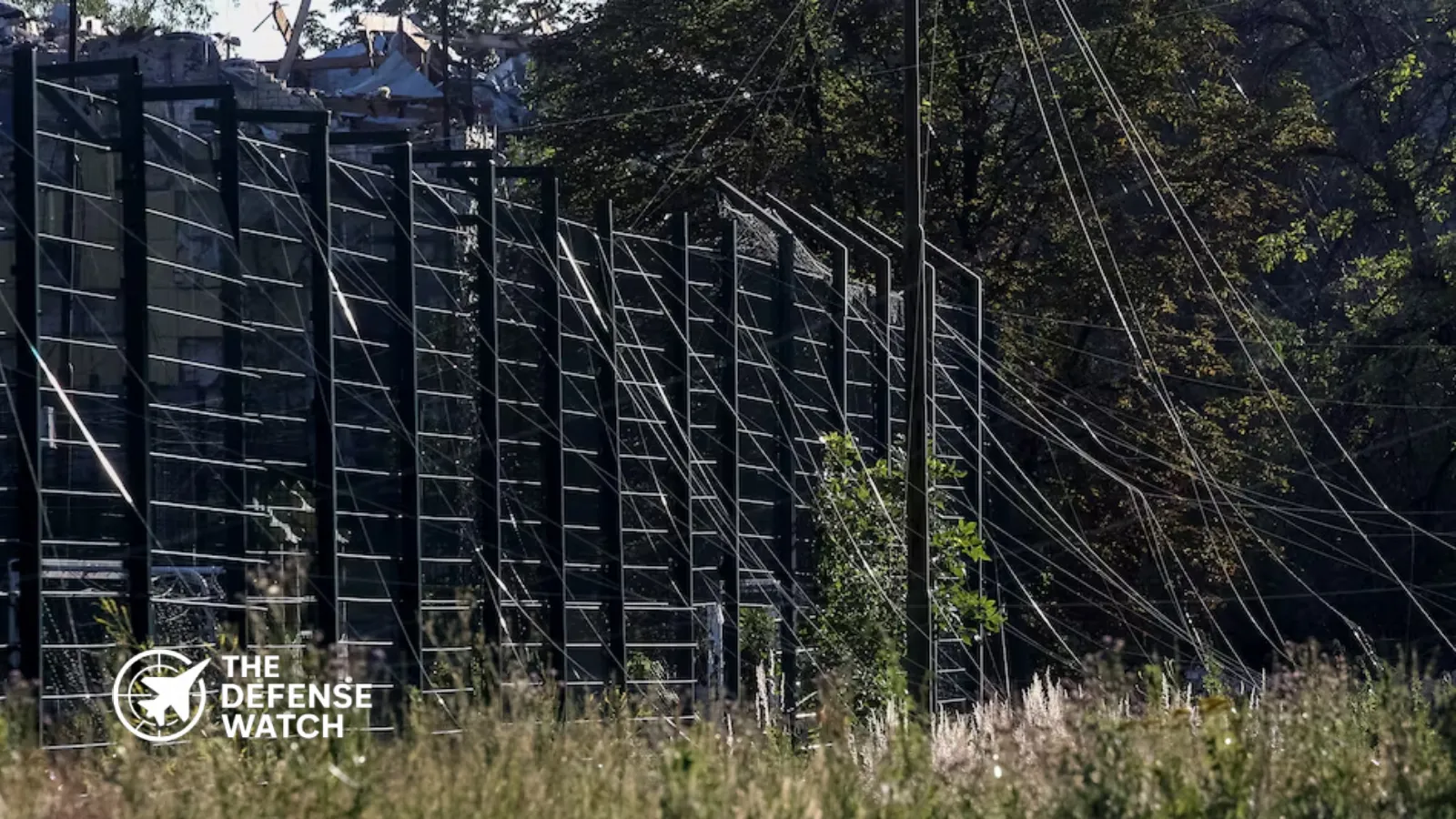
According to Reuters and open source analysis verified by the Centre for Information Resilience (CIR), Russian operators have used these drones to navigate through small openings in reinforced substations, including ventilation shafts and gaps left between protective barriers.
Ukraine has spent years strengthening critical energy facilities with:
- Reinforced concrete protective structures
- Anti drone netting
- Electronic warfare systems
- Physical barriers around transformers
Fiber optic FPV drones reduce the effectiveness of electronic countermeasures because they never transmit radio signals that can be jammed.
Investigators documented attacks on at least four major 330 kilovolt substations as well as several 110 kilovolt facilities. The reported targets included autotransformers valued at approximately $3.5 million each, while the attacking drones reportedly cost only around $2,000.
Cost Imbalance Favors Low Cost Precision Attacks
One of the most significant aspects of this tactic is its economic efficiency.
Destroying or disabling high value electrical equipment with relatively inexpensive drones creates a highly favorable cost exchange ratio. Military analysts have increasingly identified this imbalance as one of the defining characteristics of modern drone warfare.
Rather than attempting to destroy entire power plants, targeting critical transformers and substations can interrupt electricity distribution across large areas while requiring fewer weapons and lower operational costs.
This represents an evolution from earlier Russian campaigns that relied more heavily on cruise missiles and long range strike weapons against Ukraine’s energy infrastructure.
A Continuing Adaptation In The Drone War
The latest attacks also illustrate the broader technological competition underway between Russia and Ukraine.
Only days earlier, Reuters reported that Russia was expanding efforts to jam Ukraine’s Starlink enabled strike drones using increasingly sophisticated electronic warfare systems. Ukraine, meanwhile, has continued developing longer range unmanned systems capable of attacking Russian logistics, fuel storage, and military infrastructure.
The introduction of fiber optic FPV drones suggests Russia is also adapting its own capabilities where electronic warfare has reduced the effectiveness of traditional radio controlled systems.
Rather than replacing larger Shahed type attack drones or missile strikes, these systems appear to complement existing strike packages by engaging hardened infrastructure that had become more resistant to conventional attacks.
Strategic Implications
The growing use of fiber optic drones demonstrates how rapidly unmanned technologies continue to reshape modern conflict.
For military planners, protecting critical infrastructure now requires more than electronic warfare alone. Physical hardening, layered surveillance, rapid detection, and active counter drone measures are becoming increasingly important as autonomous and cable guided systems reduce the effectiveness of traditional jamming techniques.
The attacks also underscore the ongoing contest between offensive drone innovation and defensive adaptation. As both Russia and Ukraine introduce new technologies, infrastructure protection is likely to remain a major operational challenge throughout the conflict.
While the immediate operational impact of individual substation strikes may remain localized, repeated attacks on transmission infrastructure can impose significant pressure on civilian power networks and military logistics over time.
Get real time update about this post category directly on your device, subscribe now.
