Executive Summary:
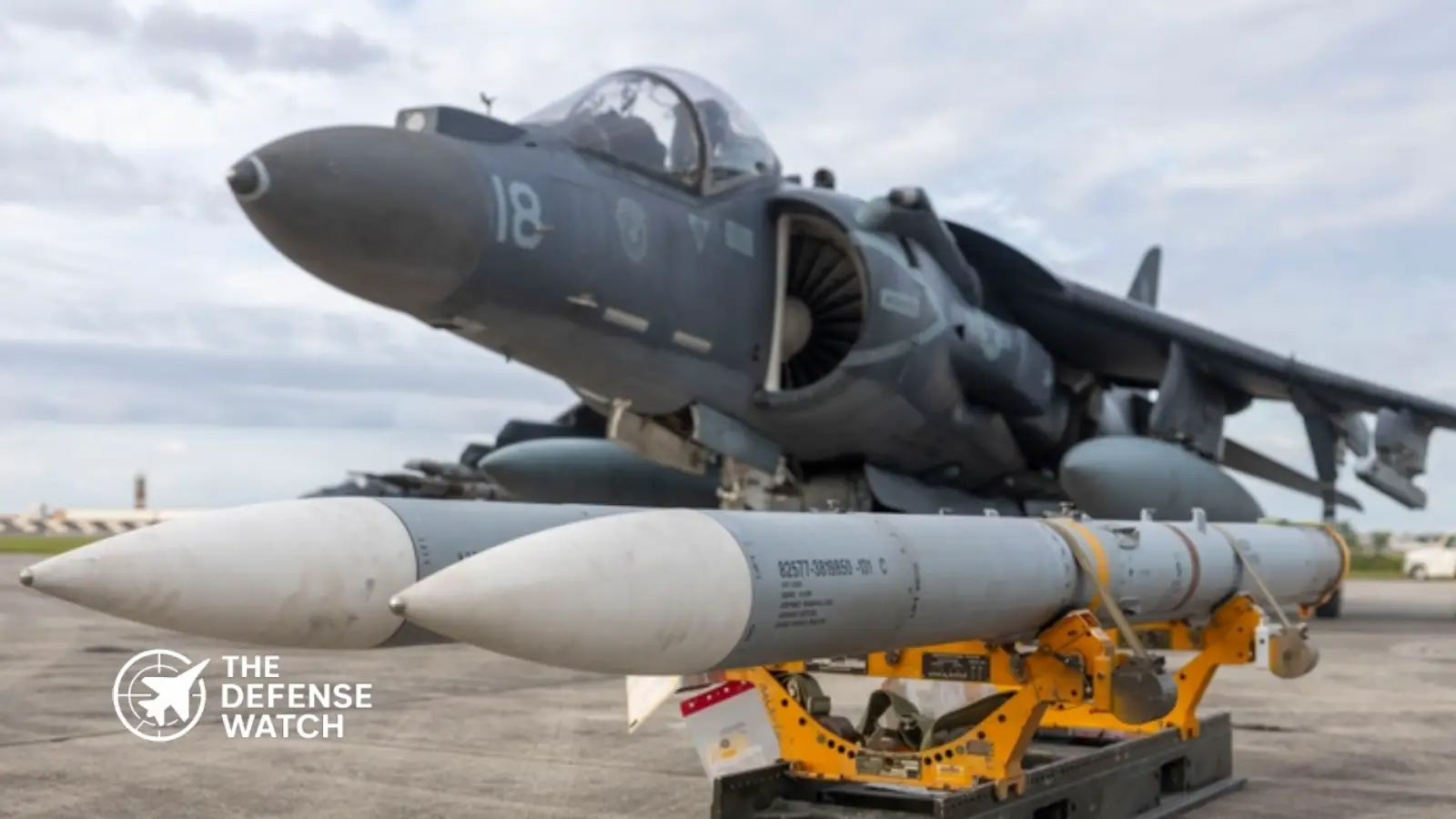
Belgium has emerged as a leading candidate for the co-production of the AIM-120 AMRAAM missile in Europe, reflecting NATO’s push to strengthen regional defense manufacturing. The move aims to reduce reliance on U.S.-based production and improve supply chain resilience amid rising demand. This development underscores growing transatlantic cooperation in advanced air-to-air missile systems.
Belgium Emerges in AMRAAM Co-Production Talks
Belgium is increasingly viewed as a strong contender to host European co-production of the AIM-120 Advanced Medium-Range Air-to-Air Missile (AMRAAM), a cornerstone of NATO’s air combat capability. The initiative comes as alliance members seek to expand production capacity in response to sustained demand driven by geopolitical tensions and ongoing military modernization programs.
The proposed arrangement would involve collaboration with U.S. defense firms, most notably RTX (Raytheon Technologies), the primary manufacturer of the AMRAAM system. Belgium’s advanced industrial base and central geographic position within Europe are seen as key advantages.
Strategic Drivers Behind European Production Expansion
The push for localized missile production reflects several operational and strategic priorities:
- Supply chain resilience amid high operational consumption rates
- Reduced dependency on transatlantic logistics during crisis scenarios
- Faster replenishment cycles for NATO air forces
- Strengthened European defense industrial autonomy
The war in Ukraine and increased NATO readiness levels have accelerated the urgency to expand missile stockpiles, particularly beyond U.S. production lines.
Technical Overview of AIM-120 AMRAAM
The AIM-120 AMRAAM remains one of the most widely deployed beyond-visual-range (BVR) air-to-air missiles globally. Its latest variants incorporate advanced guidance and electronic counter-countermeasure capabilities.
Key Capabilities
- Active radar homing guidance for autonomous terminal engagement
- Fire-and-forget capability, reducing pilot workload
- Compatibility with a wide range of NATO aircraft, including F-16, F-35, and Eurofighter
- Continuous upgrades under the AMRAAM Extended Range (ER) and AIM-120D programs
Comparison: AMRAAM vs Legacy AIM-7 Sparrow
Feature AIM-120 AMRAAM AIM-7 Sparrow Range ~160 km (AIM-120D) ~70 km Payload High-explosive fragmentation High-explosive Status Active service Largely retired Key Technology Active radar homing Semi-active radar Industrial and Economic Implications
Belgium’s potential selection would bring significant economic and technological benefits:
- Integration into high-value NATO defense supply chains
- Job creation in advanced manufacturing and electronics sectors
- Increased defense exports and industrial partnerships
Belgian firms already participate in multinational defense programs, strengthening their candidacy for such a role.
Strategic Context: NATO Readiness and Deterrence
The expansion of AMRAAM production capacity in Europe aligns with NATO’s broader deterrence strategy. With increased air policing missions along the alliance’s eastern flank, maintaining sufficient stocks of advanced air-to-air munitions has become a priority.
The initiative also reflects a shift toward distributed production models, ensuring that critical defense capabilities remain operational even in contested logistics environments.
Outlook
If finalized, Belgium’s role in AMRAAM co-production would mark a significant step in NATO’s effort to balance industrial capacity between North America and Europe. It would also reinforce long-term interoperability and readiness across allied air forces, particularly as demand for precision-guided munitions continues to rise.