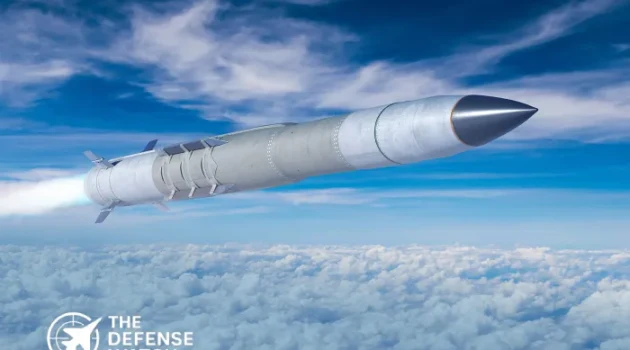
Executive Summary: Lockheed Martin plans to increase annual THAAD interceptor production from 96 to 400 missiles under a seven-year U.S. procurement agreement valued at up to $35 billion. The expansion is being supported by more than $9 billion in Lockheed Martin investments through 2030, including new production facilities and manufacturing upgrades across the United States.
Lockheed Martin Targets 400 THAAD Interceptors Per Year
Lockheed Martin’s THAAD interceptor production expansion is moving from an industrial planning effort into a major multiyear procurement program, with the company targeting annual output of 400 interceptors under a seven-year agreement with the U.S. government.
The Missile Defense Agency awarded Lockheed Martin a seven-year undefinitized contract action in June 2026 with a ceiling value of up to $35 billion. The award followed a framework agreement signed in January that established the goal of increasing THAAD production from 96 interceptors per year to 400.
Lockheed Martin CEO Jim Taiclet highlighted the production target during the company’s second-quarter 2026 earnings call. He said the company was simultaneously increasing THAAD output, expanding PAC-3 MSE production and accelerating Precision Strike Missile production.
The move comes as the United States seeks to rebuild and expand its inventory of critical interceptors while strengthening the industrial base responsible for producing them.
A Major Expansion Of U.S. Missile Production Capacity
The jump from 96 to 400 interceptors represents more than a fourfold increase in nominal annual production capacity.
| THAAD production measure | Current or previous level | Planned level |
|---|---|---|
| Annual interceptor capacity | 96 | 400 |
| Production increase | Baseline | More than 4x |
| Procurement period | N/A | 7 years |
| Contract ceiling | N/A | Up to $35 billion |
| Lockheed Martin investment | N/A | More than $9 billion through 2030 |
| New Troy, Alabama facility | N/A | 87,000 square feet |
| THAAD operational test record | 17 attempts | 17 successful intercepts |
The $35 billion award is particularly important because it gives Lockheed Martin a longer-term demand signal. That allows the company to invest in equipment, facilities, suppliers and skilled workers with greater confidence that increased capacity will be supported by government procurement.
Lockheed Martin has described the June award as one of the first major multiyear procurement actions implemented under the U.S. government’s new approach to accelerating munitions production.
More Than $9 Billion In Industrial Base Investment
The THAAD expansion is part of a broader Lockheed Martin effort to increase U.S. missile and munitions manufacturing capacity.
The company says it plans to invest more than $9 billion through 2030 across more than 20 U.S. facilities. The investment includes new buildings, expanded production areas, manufacturing equipment and workforce development.
One of the most visible projects is the new Munitions Production Center in Troy, Alabama.
Lockheed Martin broke ground on an 87,000-square-foot facility in May. The building will support THAAD interceptor production and future work associated with the Next Generation Interceptor program. The company said the facility will nearly double production space at the Troy location.
Lockheed Martin also has a Munitions Acceleration Center in Camden, Arkansas. The facility is intended to prepare workers and manufacturing processes for higher production of THAAD, PAC-3 and other missile systems, using automation, robotics and digital manufacturing technologies.
The company said its THAAD activities already occupy more than 340,000 square feet across nine U.S. sites and involve nearly 750 U.S.-based suppliers across 42 states.
Why THAAD Production Capacity Matters
THAAD occupies a specific position within the U.S. integrated air and missile defense architecture.
The Missile Defense Agency describes THAAD as a system designed to intercept ballistic missiles during their terminal phase, both inside and outside the atmosphere. The interceptor uses hit-to-kill technology, relying on direct kinetic impact rather than a conventional explosive warhead.
A THAAD battery combines mobile launchers, interceptors, the AN/TPY-2 radar and a fire control and communications architecture. The system can operate as part of a broader network rather than functioning as an isolated missile battery.
The higher production rate therefore has implications beyond the number of missiles manufactured each year.
More interceptors can provide greater magazine depth for deployed batteries, support training and testing requirements, replace expended rounds and provide additional inventory for U.S. forces and foreign military customers.
That capacity becomes particularly important when missile defenses are required to sustain operations over an extended period rather than respond to a limited number of engagements.
THAAD And The Layered Defense Concept
The planned production increase also reinforces the layered structure of U.S. ballistic missile defense.
THAAD is not designed to replace lower-tier systems such as Patriot. Instead, the systems can provide different engagement opportunities within an integrated architecture.
The Missile Defense Agency has already demonstrated THAAD integration with the PAC-3 MSE interceptor. MDA says the THAAD program has completed 17 successful intercepts in 17 flight-test attempts, including tests involving the PAC-3 MSE interceptor.
This layered approach can help distribute engagements between different interceptors and preserve higher-tier weapons for targets that require their specific engagement envelope.
The result is a missile defense architecture based on multiple sensors, command-and-control nodes and interceptor types rather than reliance on a single weapon.
Production Surge Extends Beyond THAAD
The THAAD expansion is occurring alongside increases in other Lockheed Martin missile programs.
The company has said it is working to triple PAC-3 MSE production while also accelerating Precision Strike Missile production.
The U.S. Army awarded Lockheed Martin a $4.7 billion undefinitized contract action in April to support accelerated PAC-3 MSE production. The Army described PAC-3 MSE as a key element of its integrated air and missile defense architecture against tactical ballistic missiles, cruise missiles and aircraft.
The combined effort is significant because missile defense capacity depends on more than launchers and radar systems. A force with advanced sensors and deployed batteries also requires sufficient interceptor inventories to sustain operations.
The Industrial Challenge Behind 400 Interceptors
Reaching 400 THAAD interceptors per year will require more than adding assembly space.
Missile production depends on a network of specialized suppliers, propulsion components, electronics, guidance hardware, materials and test capacity. Increasing final assembly rates without expanding those upstream elements can create bottlenecks elsewhere in the production chain.
That makes Lockheed Martin’s supplier expansion and facility modernization important parts of the production strategy.
The company is also using longer-term procurement commitments to justify private investment in manufacturing capacity. Under the new acquisition model, the government provides a stronger demand signal through multiyear procurement while the contractor invests in the facilities needed to raise production. Lockheed Martin and Department of War officials have described this arrangement as a change from earlier approaches that relied more heavily on government-funded factory expansion.
The approach addresses one of the recurring problems in defense manufacturing: companies are less likely to invest heavily in specialized capacity when future government demand is uncertain.
THAAD Capacity And The Broader U.S. Missile Defense Strategy
The production expansion is taking place within a broader U.S. effort to increase the supply of interceptors and modernize missile defense.
The Missile Defense Agency says seven of eight U.S. Army THAAD batteries procured to date are currently fielded, while the eighth battery remains in production. MDA also reports that 799 operational THAAD interceptors had been delivered to the Army and foreign military customers as of October 1, 2023.
Foreign demand is another factor. The United Arab Emirates operates two THAAD batteries, while Saudi Arabia has contracted for seven batteries. The Saudi program includes seven AN/TPY-2 radars, 44 launchers and 360 interceptors.
That international demand adds another requirement for production planning. U.S. inventory needs must be balanced against deliveries to foreign customers under Foreign Military Sales agreements.
THAAD Modernization Continues Alongside Production Growth
Increasing interceptor output does not mean the weapon system itself has stopped evolving.
MDA is developing THAAD System Build 5.0, which includes mission assurance updates and Configuration 3 hardware. The agency has planned the addition of the new configuration to the Missile Defense System operational capability baseline in 2026.
Lockheed Martin is also supporting development work intended to improve the system against increasingly complex missile threats.
A separate MDA contract awarded in 2025 has a ceiling value of $2.8 billion and supports further THAAD development for an initial five-year period, with options that could extend the effort to 10 years, according to Lockheed Martin.
This means the current industrial expansion is intended to support both larger interceptor inventories and continued evolution of the weapon system.
What The Production Increase Means For U.S. Readiness
The most important effect of the THAAD expansion may be improved magazine depth rather than simply a higher annual production statistic.
A missile defense battery can only engage as many targets as its available interceptors, reload capacity and command-and-control architecture allow. Sustained operations can therefore place significant demands on interceptor inventories even when individual engagements are successful.
Moving toward 400 interceptors annually gives the United States a larger industrial base from which to replenish deployed stocks and support future requirements.
It also gives the Pentagon greater flexibility when managing domestic defense needs, overseas deployments, testing and allied deliveries.
The production increase does not by itself guarantee that 400 interceptors will be immediately available for operational use. Capacity, qualification, supplier performance, testing, workforce growth and delivery schedules all influence how quickly factory output translates into usable inventory.
That distinction is important as the United States shifts from simply developing advanced missile defense systems toward building them at sustained wartime-relevant scale.
A Broader Shift Toward Munitions Mass
The THAAD program illustrates a wider change in U.S. defense acquisition priorities.
For years, the emphasis on highly capable platforms was accompanied by comparatively limited production rates for some precision munitions and interceptors. Current U.S. procurement efforts are placing greater emphasis on magazine depth, manufacturing capacity and the ability to replenish weapons during prolonged operations.
Lockheed Martin’s THAAD, PAC-3 MSE and PrSM production initiatives show how that strategy is being applied across several missile programs.
The $35 billion THAAD procurement agreement and the company’s planned investment of more than $9 billion in manufacturing infrastructure provide a substantial industrial foundation for that effort.
For U.S. missile defense, the key measure over the coming years will be whether this investment produces sustained increases in delivered interceptors while maintaining quality, reliability and affordability.
The move toward 400 THAAD interceptors annually is therefore more than a production target. It is a test of whether the U.S. defense industrial base can convert long-term procurement commitments into significantly greater missile defense capacity.