
B-2 Spirit Demonstrates Precision Strike Capability in Nevada
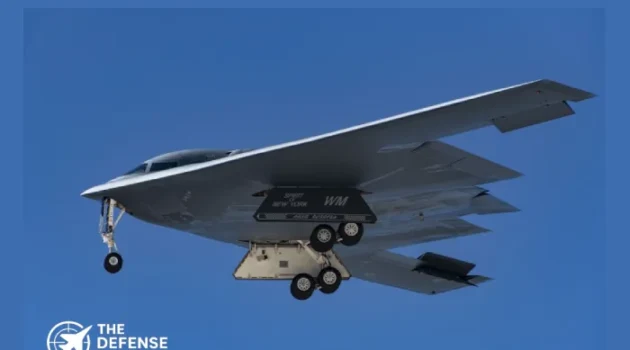
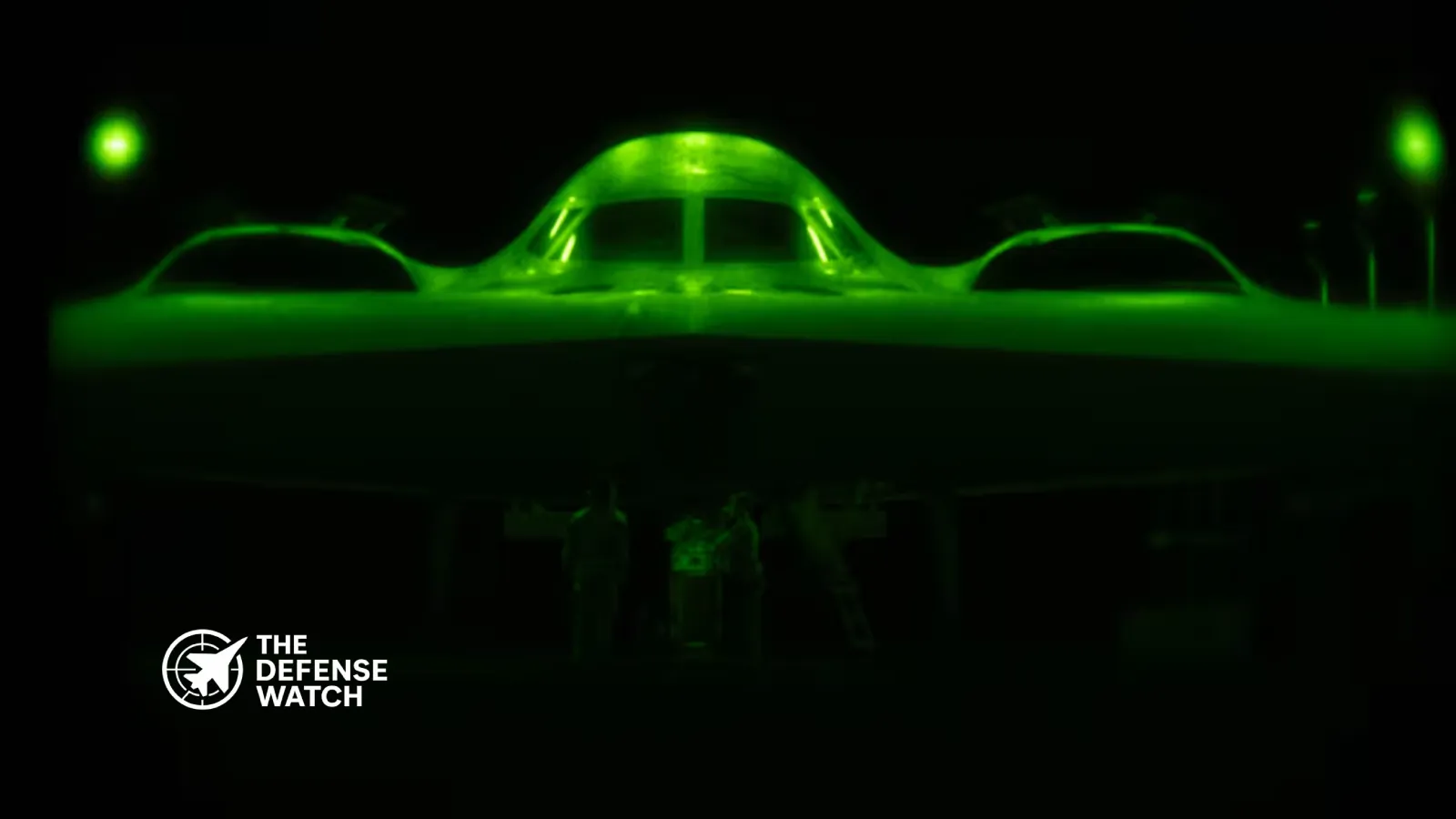
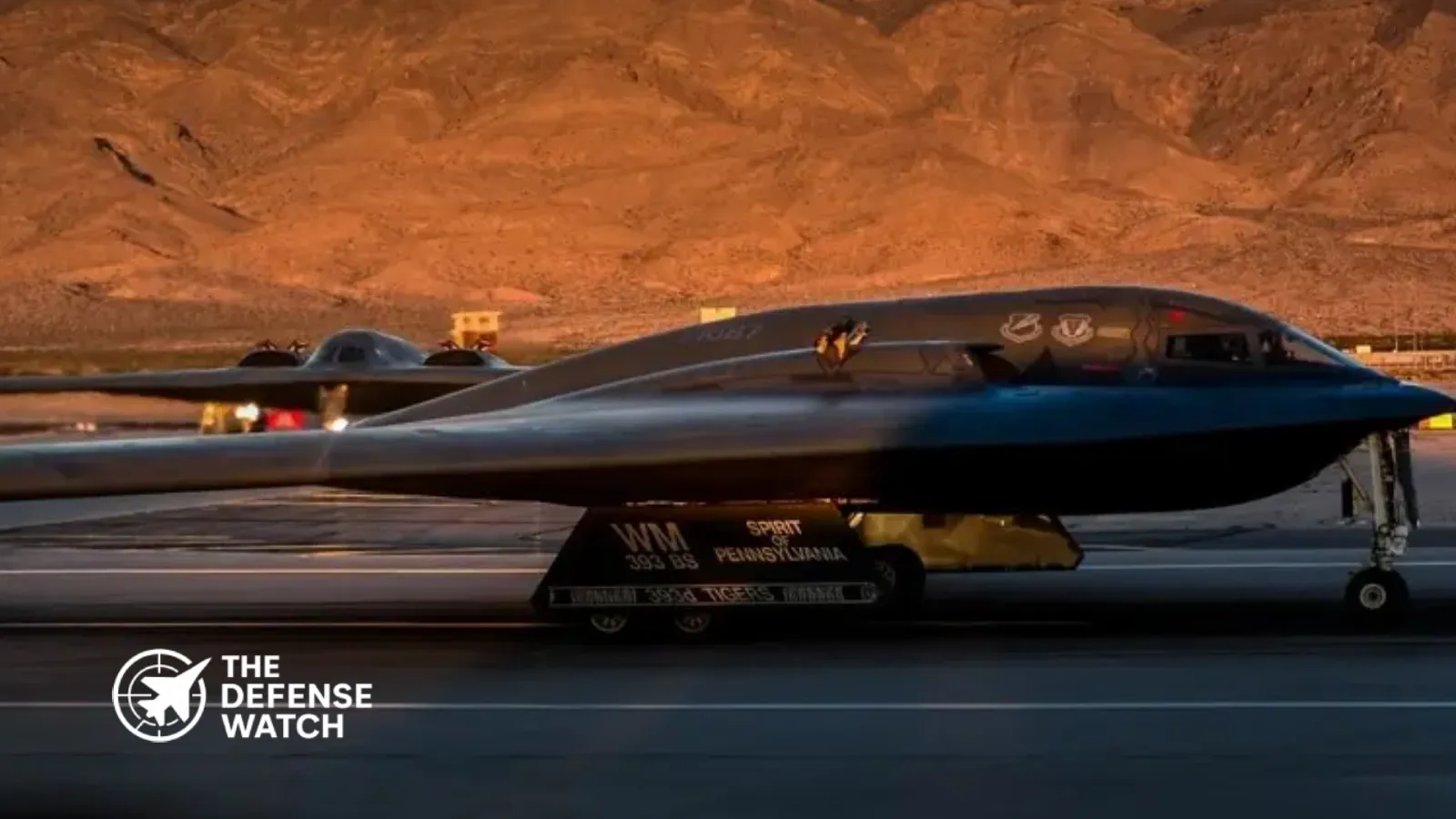
The U.S. Air Force used two B-2 Spirit stealth bombers for live-fire precision strike training at the Nevada Test and Training Range on Aug. 3, 2026, demonstrating the aircraft’s ability to integrate long-range bomber operations with terminal attack and command-and-control elements. The event was documented by Nellis Air Force Base and the Defense Visual Information Distribution Service.
- B-2 Spirit Demonstrates Precision Strike Capability in Nevada
- Takeaways
- What the Training Demonstrates
- Why the Nevada Test and Training Range Matters
- B-2 Spirit: Key Capabilities
- Precision Strike Is More Than Weapon Accuracy
- The B-2’s Role During the B-21 Transition
- What the Training Says About U.S. Strike Readiness
Takeaways
The U.S. Air Force used two B-2 Spirit bombers for live-fire precision strike training at the Nevada Test and Training Range, integrating bomber crews with joint terminal attack controllers.
The aircraft were assigned to the 325th Weapons Squadron at Whiteman Air Force Base, Missouri. Personnel from the 66th Weapons Squadron provided command and control during the training, while joint terminal attack controllers and bomber aircrews worked together during the live-fire event.
The U.S. Air Force described the exercise as an opportunity to demonstrate precision strike capabilities in a realistic training environment. The released video shows B-2 aircraft dropping munitions over the Nevada range, but the publicly released material does not identify the specific weapons used.
What the Training Demonstrates
The significance of the event extends beyond the B-2’s ability to release weapons. Precision strike missions depend on the integration of aircraft, weapons, communications, targeting information and personnel operating at different points in the kill chain.
The presence of the 66th Weapons Squadron is particularly relevant. Official imagery shows Lt. Col. Ridge Flick, commander of the 66th Weapons Squadron and lead joint terminal attack controller, communicating with the two B-2 aircraft during the live-fire training.
That relationship illustrates an important element of modern air operations: the bomber is one component of a larger strike architecture. The ability to execute a precision attack depends not only on aircraft survivability and weapons, but also on accurate target information, command relationships and reliable communications.
The training therefore provides a useful look at how the Air Force practices the coordination required for complex strike operations without revealing sensitive operational tactics.
Why the Nevada Test and Training Range Matters
The Nevada Test and Training Range, operated in support of Nellis Air Force Base, is one of the Air Force’s principal environments for advanced combat training, operational test and evaluation, and tactics development.
Nellis says the range provides more than 15,000 square miles of airspace and 4,700 square miles of restricted land. The Air Force also states that more than 75 percent of its live training munitions are dropped on the range.
This scale allows aircraft and weapons crews to conduct training that would be difficult to reproduce at conventional ranges. The available airspace supports complex scenarios involving multiple aircraft, ground controllers and other operational elements.
For the B-2 community, such training is important because the aircraft is designed for long-range conventional and nuclear missions and is intended to operate against heavily defended targets. The Air Force identifies penetration of sophisticated air defenses as a central feature of the B-2’s low-observable design.
B-2 Spirit: Key Capabilities
The B-2 remains one of the United States’ most specialized long-range strike aircraft. Its design combines a flying-wing configuration, composite materials and other low-observable technologies intended to reduce radar, infrared, acoustic, electromagnetic and visual signatures.
According to the Air Force’s current fact sheet, many details of the B-2’s low-observable technology remain classified. The publicly available specifications provide the following baseline information:
Capability B-2 Spirit Primary role Multi-role heavy bomber Crew Two pilots Engines Four General Electric F118-GE-100 Thrust 17,300 pounds per engine Maximum takeoff weight 336,500 pounds Payload Up to 60,000 pounds Wingspan 172 feet Length 69 feet Ceiling 50,000 feet Unrefueled range Approximately 6,000 nautical miles Speed High subsonic Mission types Conventional and nuclear These specifications explain why the B-2 remains relevant to U.S. long-range strike planning. Its combination of range, payload and low observability allows the aircraft to perform missions that require both substantial weapon capacity and a reduced probability of detection.
Precision Strike Is More Than Weapon Accuracy
The Nevada training event also highlights an important distinction in modern air warfare. A precision weapon is only one part of a precision strike capability.
A successful strike requires the target to be identified and located accurately, the appropriate authority to approve the engagement, the aircraft and weapon to receive reliable information, and the crew to execute the mission under the required rules and constraints.
The integration of the 325th Weapons Squadron and 66th Weapons Squadron therefore matters as much as the visible weapons release. The exercise tested the interaction between the bomber force and personnel responsible for directing and coordinating the strike.
This is particularly important for penetrating aircraft. A B-2’s low observability is intended to improve survivability, but the aircraft still operates as part of a wider command, control, communications, intelligence, surveillance and reconnaissance architecture.
The Nevada range provides a controlled environment where these relationships can be trained repeatedly without requiring an operational combat mission.
The B-2’s Role During the B-21 Transition
The B-2 training also comes as the Air Force prepares to expand the B-21 Raider fleet.
Air Force Global Strike Command’s 2026 bomber fact sheet states that the B-21 is expected to replace the B-1B and B-2, with initial capability planned for 2028. Until the B-21 is fully fielded, the command says it will continue balancing modernization and sustainment of the existing bomber fleet while maintaining readiness.
The Air Force is simultaneously expanding B-21 production capacity. In February 2026, the Department of the Air Force announced an agreement with Northrop Grumman to increase production capacity for the next-generation bomber, using $4.5 billion in previously authorized and appropriated funding.
That transition does not make current B-2 training less important. Instead, it creates a period in which the Air Force must keep the existing penetrating bomber force operational while building the infrastructure, workforce and training system required for the next-generation aircraft.
Whiteman Air Force Base is part of that transition. The Air Force has selected the Missouri installation as the second main operating base for the B-21, alongside its existing role as the home of the B-2 force.
What the Training Says About U.S. Strike Readiness
The most important takeaway from the Nevada event is not the weapons release itself. It is the continued emphasis on realistic, integrated training for a small but highly specialized bomber force.
The Air Force’s publicly released material confirms that two B-2 aircraft conducted live-fire operations, while the 66th Weapons Squadron provided command and control and joint terminal attack controllers worked with the bomber crews.
That combination reflects the broader direction of U.S. airpower, where individual platforms increasingly operate as nodes within a connected force rather than as independent weapons systems.
For the B-2, this remains particularly relevant because its value comes from the combination of penetration, range and weapons capacity. Maintaining proficiency in the entire strike process is essential while the Air Force moves toward a future bomber fleet centered on the B-21 and B-52.
The Aug. 3 training therefore represents a routine but strategically important component of bomber readiness. It demonstrates that the B-2 fleet continues to train for precision strike missions while the Air Force prepares the next generation of penetrating long-range aircraft.