

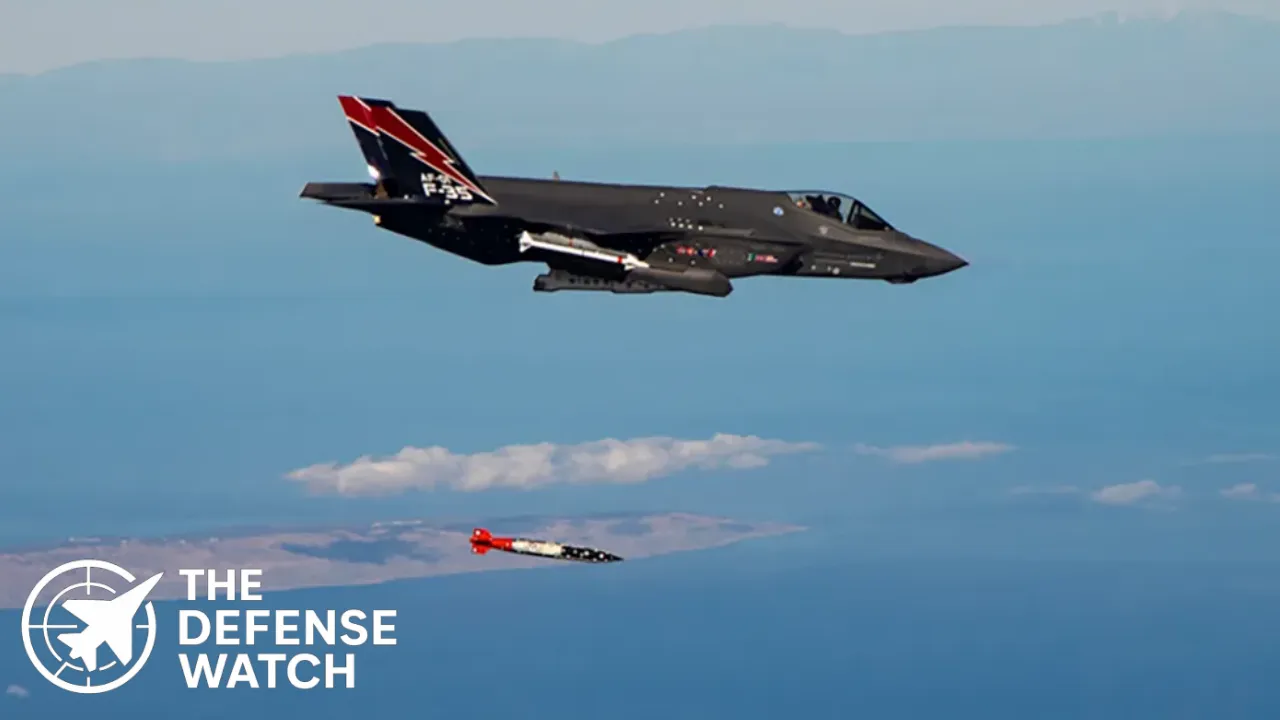
U.S. Tests B61-12 Nuclear Bomb Using F-35A Stealth Jets
The United States recently carried out a successful test of the B61-12 tactical nuclear bomb using an F-35A stealth fighter, demonstrating both the aircraft’s and the weapon’s reliability. Conducted at a test site in Nevada from August 19 to 21, 2025, the trials involved dropping inert, non-nuclear versions of the B61-12 under controlled conditions, according to a statement by Sandia National Laboratories and the National Nuclear Security Administration (NNSA).
These tests mark a critical milestone in evaluating the B61-12’s operational performance. They also included the first-ever thermal preconditioning of a joint test assembly for carriage on the F-35A, validating the weapon’s environmental requirements in real-world conditions.
Enhancing Stockpile Longevity and Nuclear Readiness
The B61-12 program, completed in late 2024, extended the life of the U.S. nuclear aerial stockpile by 20 years. Sandia’s Jeffrey Boyd, surveillance lead for the B61-12 and B61-13 programs, emphasized that the recent flight tests represented “the most B61-12 flight testing surveillance scope in a year to date and the most in a given year for the foreseeable future.”
By successfully integrating the B61-12 with the F-35A, the U.S. Air Force now has a modern dual-capable platform that can deliver both conventional and nuclear payloads. This capability enhances NATO’s deterrence posture, particularly in Europe and the Indo-Pacific region.
F-35A: First Fifth-Generation Nuclear-Capable Fighter
The F-35A is the first fifth-generation aircraft to be certified for nuclear weapon carriage. Certification for the B61-12 was achieved on October 12, 2023, ahead of the planned NATO timeline, with formal authorization announced in March 2024. Unlike the F-22 Raptor, which focuses on air superiority, the F-35A was designed from the start to carry tactical nuclear weapons, making it a versatile deterrent platform.
Currently, the certification applies only to the conventional takeoff and landing version, the F-35A, and excludes the short takeoff/vertical landing F-35B or the carrier-based F-35C. With stealth and nuclear strike capabilities, the F-35A distinguishes itself from other fifth-generation fighters like China’s J-20 or Russia’s Su-57, neither of which is cleared for nuclear operations.
Strategic Implications
This successful test strengthens the U.S. nuclear triad by providing a credible, modernized air-delivered nuclear option. Analysts note that integrating the B61-12 with stealth aircraft like the F-35A enhances survivability and strike flexibility in contested environments. It also signals the U.S. commitment to maintaining tactical nuclear capabilities amidst evolving global security dynamics, particularly in Europe and the Indo-Pacific.
FAQs
A tactical thermonuclear gravity bomb designed for precision and low-yield options, part of the U.S. nuclear stockpile modernization.
The F-35A is the first fifth-generation fighter designed with nuclear strike capability, combining stealth, precision, and survivability.
No, currently only the F-35A conventional takeoff and landing variant is certified for nuclear operations.
It strengthens deterrence by modernizing the U.S. nuclear delivery capability, reassuring allies of reliable tactical strike options.

9 comments
[…] J-20 stealth fighter […]
[…] U.S. Air Force has tested several scramjet designs, […]
[…] demonstration directly feeds into the U.S. Air Force’s Collaborative Combat Aircraft (CCA) strategy, which envisions manned fighters working alongside […]
[…] lifespan through digital upgrades, including helmet-mounted displays for 360-degree awareness. The U.S. Air Force’s 178 active Raptors remain elite, often paired with F-35s for “loyal wingman” tactics that […]
[…] the Thanksgiving-day call, President Trump praised the efforts of the U.S. Air Force’s 7th Bomb Wing and other forces involved in the maritime campaign. He emphasized that the sea lanes were now […]
[…] due to the single-engine nature of the F-16 and the long Atlantic crossing. For that purpose, a U.S. Air Force KC-135 tanker is expected to support the transfer, […]
[…] allow secure, real-time information sharing with US and allied forces. Six inert Mk-82 500-pound bomb bodies for weapons integration testing are also […]
[…] issue centers on Canada’s commitment to buy 88 F-35A stealth fighters to replace its aging CF-18 Hornet fleet. That purchase is a cornerstone of Canada’s role in the […]
[…] The F-22 is the U.S. Air Force’s primary air superiority and stealth fighter […]