Executive Summary:
The 2026 Global Air and Space Chiefs Conference has opened in London, bringing together senior military leaders from allied and partner nations to discuss the future of air and space power. The conference focuses on strengthening international cooperation, integrated air and missile defense, nuclear deterrence, and space operations as security challenges continue to evolve across Europe, the Indo-Pacific, and other strategic regions.
Global Air And Space Chiefs Conference Opens In London
The Global Air and Space Chiefs Conference began in London on July 15, bringing together chiefs of air forces, senior defense officials, space commanders, industry leaders, and academics from more than 50 countries. Hosted by the Royal Air Force under the leadership of Chief of the Air Staff Air Chief Marshal Sir Harv Smyth, the annual event serves as one of the world’s leading forums for discussing the future of military air and space power.
This year’s conference is organized around the theme “Dominating the Skies and Beyond: Agile, Integrated and Ready,” emphasizing coalition readiness and the need for closer integration across air, space, cyber, and missile defense capabilities.
Air, Space And Missile Defense Dominate The Agenda
According to the conference program, discussions focus on three major capability areas:
- Space operations
- Nuclear deterrence
- Integrated Air and Missile Defense (IAMD)
Senior military leaders are expected to examine how allied nations can better synchronize operations across multiple domains while responding to increasingly contested security environments. Topics also include emerging technologies, autonomous systems, industrial resilience, and multinational capability development.
The conference includes keynote addresses from:
| Speaker | Organization |
|---|---|
| Air Chief Marshal Sir Harv Smyth | Royal Air Force |
| General Kenneth S. Wilsbach | U.S. Air Force |
| General Chance Saltzman | U.S. Space Force |
| UK government ministers | UK Ministry of Defence |
The participation of both the U.S. Air Force and U.S. Space Force highlights the growing importance of combined air and space operations within NATO and allied security planning.
UK Highlights Modernization Priorities
The conference comes shortly after the United Kingdom released its updated Defence Investment Plan, which outlines increased investment in combat air capability, autonomous systems, industrial capacity, and long-term modernization.
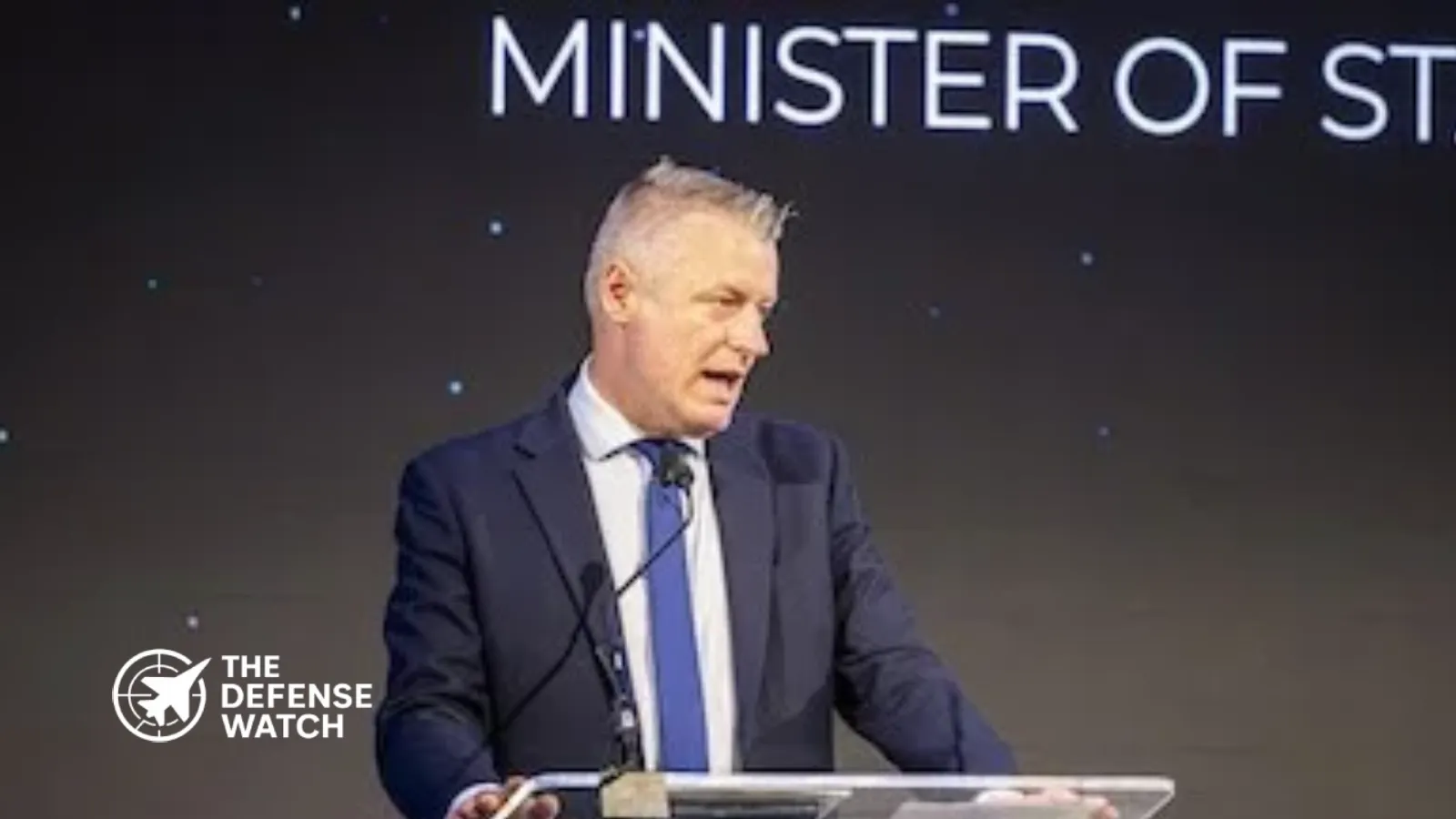
Speaking during the event, UK Minister for Defence Readiness and Industry Luke Pollard emphasized that air power has continuously evolved through innovation and adaptation, arguing that maintaining technological superiority requires sustained investment in future capabilities and stronger cooperation with allies.
The timing reinforces Britain’s effort to position the Royal Air Force as a central contributor to NATO’s future air and space posture while supporting multinational programs such as the Global Combat Air Programme (GCAP).
Why The Conference Matters
Unlike procurement announcements or bilateral defense agreements, the Global Air and Space Chiefs Conference serves as a strategic forum where military leaders exchange operational lessons, identify capability gaps, and shape future cooperation.
Its significance has increased considerably since Russia’s invasion of Ukraine and amid growing competition in the Indo-Pacific. Modern military operations increasingly depend on integrated networks connecting aircraft, satellites, intelligence systems, missile defense assets, and cyber capabilities rather than individual platforms operating independently.
For NATO members, integrated air and missile defense has become a top operational priority as cruise missiles, ballistic missiles, hypersonic weapons, and long-range drones continue to proliferate. The conference provides an opportunity to coordinate approaches before those concepts transition into procurement programs and operational planning.
Space Continues To Become A Core Military Domain
One notable trend reflected in this year’s agenda is the equal emphasis placed on space alongside traditional air power.
Modern military operations rely heavily on satellites for:
- Intelligence collection
- Precision navigation
- Secure communications
- Missile warning
- Targeting support
- Battle damage assessment
As adversaries develop anti-satellite weapons, electronic warfare systems, and cyber capabilities targeting space infrastructure, allied militaries are increasingly integrating space planning into operational decision making.
The participation of senior U.S. Space Force leadership illustrates how space has become an operational domain that must be planned alongside air, land, maritime, and cyber operations.
Operational Implications For Allied Air Forces
The conference also reflects broader changes underway across allied air forces.
Several modernization priorities continue to converge:
- Greater use of autonomous aircraft and collaborative combat drones
- Integrated command and control across NATO networks
- Improved interoperability between allied air forces
- Stronger industrial resilience for sustained operations
- Closer coordination between air and space commands
Rather than focusing solely on next-generation aircraft, many discussions now emphasize how future combat systems will operate as part of connected networks linking crewed fighters, autonomous aircraft, sensors, satellites, and missile defense systems.
For the United States and its allies, this approach supports the broader objective of maintaining operational superiority against increasingly sophisticated peer competitors while strengthening coalition interoperability.
Strategic Outlook
The 2026 Global Air and Space Chiefs Conference demonstrates how allied militaries are expanding cooperation beyond traditional air operations into fully integrated, multi-domain defense planning.
As NATO members accelerate modernization programs and increase defense investment, forums such as this help align operational concepts before they become formal capability requirements or multinational acquisition programs.
While no major procurement decisions are expected from the conference itself, the discussions are likely to influence future doctrine, force design, and collaborative technology development across allied air and space forces in the years ahead.