Executive Summary
- An RAF Hawk T2 crashed near Pencarnisiog on Anglesey, Wales, shortly after departing RAF Valley on September 23, 2026. Both pilots ejected and were taken for medical treatment with injuries described by police as believed to be minor.
- The RAF temporarily paused operations involving both Hawk T1 and T2 aircraft while investigators determine what caused the accident. No wider injuries or damage were reported by North Wales Police.
- The crash affects a key part of Britain’s fast-jet training pipeline. RAF Valley uses the Hawk T2 to prepare pilots for frontline aircraft including the Typhoon and F-35, making aircraft availability and the investigation relevant beyond the individual loss.
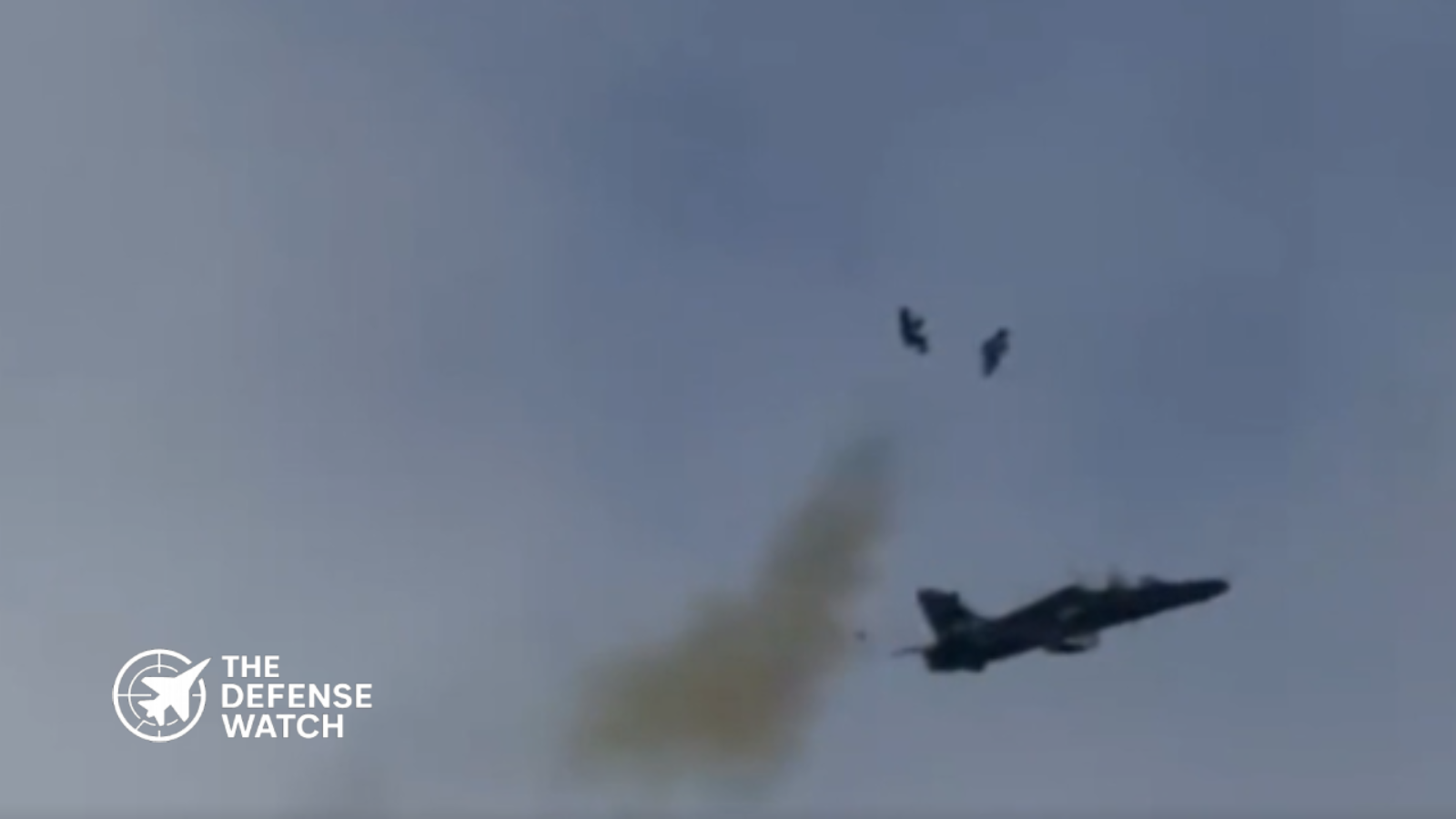
Two Royal Air Force pilots ejected from a Hawk T2 training aircraft shortly after takeoff from RAF Valley on Anglesey on September 23 before the aircraft crashed in the Pencarnisiog area of North Wales. The pilots were taken for medical treatment with injuries believed to be minor, while emergency services responded to the crash site.
The RAF said an investigation is underway and subsequently announced a temporary pause in Hawk T1 and T2 operations as a precaution. North Wales Police reported no wider injuries or damage at the time of its statement.
The incident is significant because the Hawk T2 is not simply a conventional training aircraft. It forms a central part of the UK’s advanced fast-jet training system, providing RAF and Royal Navy pilots with preparation before they transition to operational aircraft.
What Happened Near RAF Valley
The aircraft was operating from RAF Valley, the Anglesey station that houses No. 4 Flying Training School. The Hawk T2 came down near Pencarnisiog shortly after departure.
Video footage circulated after the incident appears to show the aircraft experiencing serious difficulties before the crew ejected. The aircraft subsequently struck the ground and produced a large fire and smoke plume.
Those visual observations do not establish the cause of the accident. The RAF has not released a technical explanation, and investigators will need to establish whether the incident involved the engine, flight controls, aircraft systems, human factors, or another cause.
An eyewitness quoted by the Guardian reported seeing an apparent flame during the aircraft’s initial climb and described subsequent unusual aircraft movements. That account is useful as an indication of what was observed from the ground, but it should not be treated as evidence of the underlying failure until investigators establish the sequence of events.
RAF Pauses Hawk T1 and T2 Operations
The RAF’s decision to temporarily pause Hawk T1 and T2 operations is an important immediate consequence of the accident.
The service said the suspension was a precautionary measure while investigations continue. That does not establish that a fleet-wide technical defect caused the crash. It indicates that the RAF is restricting operations while it assesses the available evidence.
The pause potentially affects more than the individual training sortie involved in the accident. Hawk aircraft support the advanced stages of the UK’s fast-jet training pipeline, so prolonged restrictions could affect training schedules and aircraft availability.
The RAF has not announced how long the pause will last.
Why the Hawk T2 Matters to RAF Pilot Training
RAF Valley is home to No. 4 Flying Training School and operates both Texan T1 and Hawk T2 training aircraft. The Hawk is used during advanced fast-jet training before pilots progress to frontline aircraft.
The RAF describes the Hawk T2 as a two-seat, transonic training aircraft equipped with advanced avionics and synthetic radar. Its training systems are intended to replicate aspects of frontline combat aircraft and allow pilots to practice complex tactical scenarios.
The training pipeline therefore makes Hawk availability an operational issue. A Hawk fleet restriction can affect the number of training sorties available to student pilots, instructor workload, scheduling and the flow of graduates toward operational conversion units.
RAF recruitment information confirms that fast-jet candidates move to Hawk T2 training at RAF Valley after earlier flying instruction, before progressing to operational conversion onto aircraft such as the Typhoon.
Hawk T2’s Training Role
| Area | Hawk T2 role |
|---|---|
| Primary mission | Advanced fast-jet training |
| Crew | Two-seat configuration |
| Training environment | Advanced avionics and synthetic radar |
| Base | RAF Valley, Anglesey |
| Training users | RAF and Royal Navy fast-jet trainees |
| Follow-on aircraft | Includes Typhoon and F-35 |
| Current status after crash | Operations temporarily paused |
The RAF’s own aircraft documentation lists a single Rolls-Royce/Turbomeca Adour Mk.951 turbofan, a maximum speed of 555 knots and a maximum altitude of 42,000 feet. These are published aircraft specifications, not measurements from the aircraft involved in the September 23 accident.
The Ejection System Was Critical to the Outcome
The survival of both crew members highlights the importance of the aircraft’s escape system during a rapidly developing emergency.
The two pilots successfully ejected before the Hawk struck the ground. North Wales Police subsequently said they were being treated for injuries believed to be minor.
However, the successful ejection should not be interpreted as evidence that the aircraft’s safety systems caused or prevented the accident. Investigators will examine the complete sequence, including when the emergency became apparent, when the crew initiated ejection and the aircraft’s condition at the time.
The location of the crash also matters. The aircraft came down close to residential and agricultural areas, but authorities reported no wider injuries or damage.
Operational Impact Could Extend Beyond One Aircraft
The immediate loss is one Hawk T2 airframe, but the larger operational question concerns the duration of the temporary fleet pause.
RAF Valley’s training system is designed around a sequence of aircraft and instructional stages. The Hawk T2 represents the advanced jet component of that pipeline, so any extended interruption could create scheduling pressure.
The RAF has already invested heavily in maintaining and modernizing training infrastructure at Valley. In 2024, the service said investment included £600 million for Hawk engineering support, alongside a £175 million investment in a new Texan training facility.
That investment illustrates the aircraft’s continuing importance to the UK’s pilot-production system.
The RAF has also introduced mixed-reality training technology at Valley in 2026. The service said the upgrades cover 11 training devices used by Hawk T2 and Texan trainees and are intended to allow students to practice some activities in a simulated environment before conducting live sorties.
Such systems can supplement live flying, but they cannot fully replace airborne training on the Hawk. The accident therefore reinforces the importance of maintaining both aircraft availability and alternative training capacity.
Investigation Will Determine Whether There Is a Wider Fleet Issue
At this stage, there is no publicly established evidence that the crash resulted from a systemic Hawk T2 problem.
That distinction is important. The temporary suspension applies to both Hawk T1 and T2 operations, but the RAF has not publicly identified a common technical failure affecting the two variants.
Investigators will need to reconstruct the aircraft’s final minutes using maintenance records, flight data where available, cockpit evidence, air traffic information, wreckage analysis and witness accounts.
The RAF has said it will not comment further while the investigation is underway.
The cause should therefore remain classified as undetermined until investigators release substantive findings.
What Comes Next
The immediate priorities are the recovery of the pilots, preservation and examination of the wreckage, and determination of the accident sequence.
For the RAF, a second priority will be assessing when Hawk operations can safely resume. That decision will depend on the evidence available to investigators and any precautionary measures deemed necessary.
For the broader fast-jet training system, the key issue will be whether the pause remains short or develops into a longer disruption. The longer the Hawk fleet remains unavailable, the greater the potential effect on training throughput and the scheduling of future RAF and Royal Navy fast-jet pilots.
The September 23 crash is therefore more than an isolated aircraft loss. It has temporarily interrupted an aircraft type that sits directly inside the UK’s pipeline for producing pilots for frontline combat aircraft.
No conclusion about the cause should be drawn from the crash footage or eyewitness accounts alone. The investigation remains the authoritative route for establishing what happened.