

Executive Summary:
Vietnam’s Viettel has unveiled a broad range of domestically developed military technologies, including UAVs, radar systems, electronic warfare platforms, and command networks. The showcase highlights Vietnam’s effort to strengthen defense self reliance, modernize its armed forces, and expand its role in the regional defense market.
Viettel Defense Industry Expands With Advanced Military Technologies
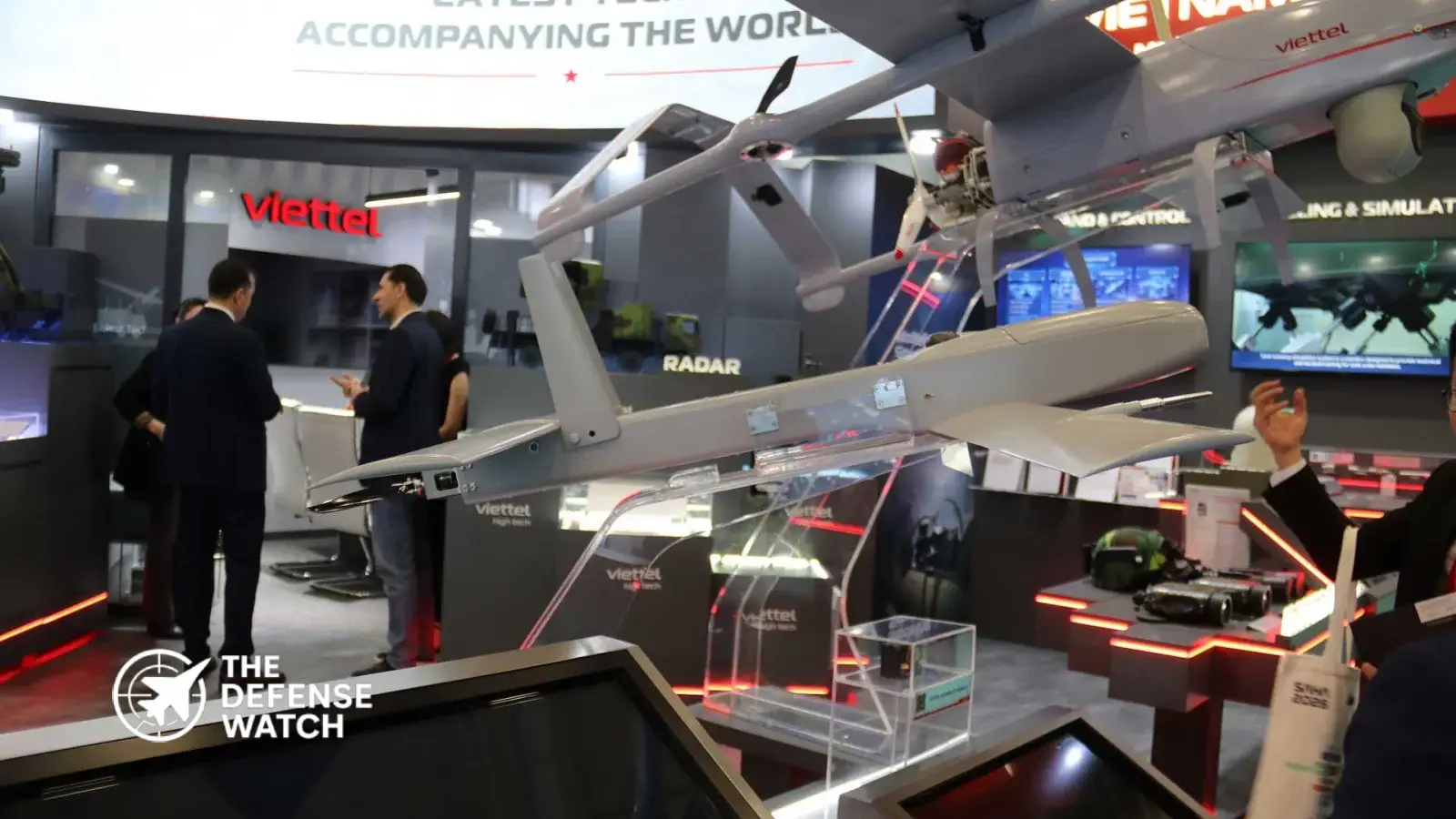
Vietnam’s Viettel defense industry is accelerating its push into advanced military technologies as the state owned telecommunications and defense group showcased a growing portfolio of indigenous systems designed for modern warfare requirements.
Viettel introduced a wide range of products spanning unmanned aerial systems, electronic warfare, radar technologies, communications infrastructure, and battlefield command systems.
The event underscored Vietnam’s broader defense modernization strategy, which increasingly emphasizes domestic production capabilities and reduced dependence on foreign military suppliers. Vietnam has spent the past decade expanding investments in indigenous defense research as regional security competition intensifies across the Indo Pacific.
Focus On Indigenous Defense Production
The Viettel defense industry has become one of the central pillars of Vietnam’s military industrial base. Originally known for telecommunications, Viettel Group has steadily expanded into defense electronics, cyber capabilities, surveillance systems, and autonomous platforms.
Among the systems displayed were tactical and operational UAVs designed for reconnaissance, surveillance, and target acquisition missions. Several platforms appeared optimized for intelligence gathering and battlefield awareness, areas that have become increasingly important following lessons observed in recent conflicts in Eastern Europe and the Middle East.
Vietnam’s investment in drone technologies reflects a wider regional trend as Asian militaries prioritize unmanned systems capable of operating in contested environments at lower operational costs than traditional aircraft.
The company also presented advanced radar systems intended for air surveillance, coastal monitoring, and counter drone operations. These systems are expected to support Vietnam’s layered defense architecture, particularly in maritime areas where Hanoi continues to strengthen monitoring capabilities.
Electronic Warfare And Networked Battlefield Systems
Another major focus of the showcase involved electronic warfare and secure communications technologies. Viettel displayed systems designed to detect, jam, and disrupt hostile signals while protecting friendly communications networks.
Electronic warfare has emerged as a critical domain in modern military operations, especially as armed forces become more reliant on drones, precision guided weapons, and digital command systems. Vietnam’s effort to build domestic expertise in this field indicates a long term strategy aimed at improving operational resilience during high intensity conflict scenarios.
The company also highlighted integrated command and control platforms capable of linking battlefield sensors, reconnaissance assets, and operational headquarters into a unified network. Such systems are increasingly viewed as essential for multi domain operations and rapid decision making.
Vietnamese defense planners appear focused on creating a more network centric military force capable of responding quickly to regional contingencies.
Regional Security Environment Drives Modernization
Vietnam’s defense modernization efforts are unfolding amid growing strategic competition in the South China Sea and broader Indo Pacific region. Hanoi has consistently sought to balance military modernization with a policy of strategic autonomy.
While Vietnam continues defense cooperation with countries including the United States, India, South Korea, and Russia, the expansion of the Viettel defense industry demonstrates a parallel effort to build long term domestic production capacity.
The development of indigenous systems could also help Vietnam avoid supply chain disruptions and export restrictions that often affect internationally sourced military equipment.
In recent years, Vietnam has expanded procurement and development programs involving coastal defense systems, surveillance networks, missile capabilities, and naval modernization initiatives. Indigenous electronics and sensor technologies are expected to play a larger role in supporting those programs.
Potential Export Opportunities
The growing sophistication of Viettel military products may also support Vietnam’s ambitions in the global defense export market. Southeast Asian defense manufacturers are increasingly attempting to compete in lower cost segments of the international arms market, particularly in unmanned systems and military electronics.
Countries seeking affordable surveillance drones, tactical communications systems, and radar technologies could become potential customers for Vietnamese products in the coming years.
However, Vietnam’s defense export sector still faces significant competition from established suppliers in China, Turkey, Israel, South Korea, and Europe. Sustained investment in research, manufacturing quality, and operational testing will likely determine whether Vietnamese systems can achieve broader international adoption.
Strategic Implications For Southeast Asia
The continued expansion of the Viettel defense industry reflects a broader trend across Southeast Asia, where governments are investing heavily in local defense manufacturing capabilities.
For Vietnam, indigenous production provides strategic flexibility while supporting military readiness in an increasingly contested security environment. The emphasis on drones, radar networks, and electronic warfare systems aligns closely with lessons emerging from current global conflicts, where low cost autonomous systems and electronic dominance are reshaping battlefield operations.
Vietnam’s approach also mirrors wider efforts among middle powers to reduce reliance on foreign suppliers while developing technology sectors that can support both civilian and military applications.
As regional security pressures continue to evolve, Vietnam’s defense industry modernization efforts are expected to remain a key component of Hanoi’s long term national security strategy.
