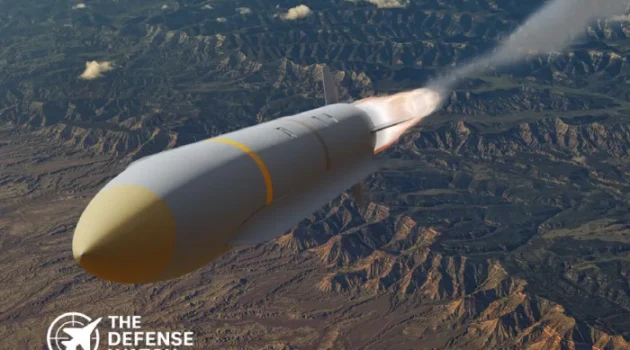
Executive Summary: Northrop Grumman has opened a state-of-the-art 113,000-square-foot Missile Integration Facility (MIF) at the Allegany Ballistics Laboratory in Rocket Center, West Virginia, designed to produce up to 300 advanced strike missiles annually. The facility is the latest component of the company’s $1 billion-plus investment in U.S. manufacturing since 2018, directly supporting the production of the U.S. Navy’s AGM-88G AARGM-ER — a next-generation radar-killing missile critical to suppressing advanced enemy air defenses. The opening comes as global weapons stockpiles face sustained depletion pressure and as Washington races to modernize key strike capabilities before operational timelines slip further.
Key Facts At A Glance
- Facility: Missile Integration Facility (MIF), Allegany Ballistics Laboratory, Rocket Center, WV
- Size: 113,000 square feet (roughly the area of two football fields)
- Production capacity: Up to 300 strike missiles per year; scalable to 600
- Primary product: AGM-88G AARGM-ER anti-radiation guided missile
- Opening date: September 25, 2025
- Northrop Grumman WV investment since 2018: Over $1 billion
- Total new/renovated WV manufacturing space: Over 1 million square feet
- ABL direct employment: More than 1,600 workers
- Total WV jobs supported: Up to 3,000
- WV economic activity generated: Over $1 billion annually
Northrop Grumman Cuts Ribbon On Next-Generation Missile Factory In West Virginia
Northrop Grumman Corporation has inaugurated a major new production center in Rocket Center, West Virginia, marking one of the most significant expansions of the U.S. strike missile manufacturing base in recent years. The new Missile Integration Facility (MIF) — a 113,000-square-foot complex at the Naval Industrial Reserve Ordnance Plant within the Allegany Ballistics Laboratory (ABL) — is designed to produce up to 300 advanced strike missiles per year and consolidate the full production chain under a single roof for the first time.
The September 2025 ribbon-cutting, attended by West Virginia Senator Shelley Moore Capito, Representative Riley Moore, and Northrop Grumman Vice President Frank DeMauro, signals a deliberate push by the defense industry to scale domestic weapons output at a time when U.S. and allied stockpiles are under sustained demand pressure.
“Northrop Grumman is delivering advanced weapons capabilities at scale today,” said DeMauro, VP and general manager of weapons systems. “The cutting-edge Missile Integration Facility expands manufacturing capacity and our team’s ability to deliver for our customers at a critical time.”
What The New Facility Does — And Why It Matters
The MIF is designed around a key principle that has historically slowed missile production: consolidation. Previously, rocket motors and other components manufactured at ABL were shipped to separate locations for final assembly into complete weapons. That logistical gap added lead time, cost, and supply chain vulnerability.
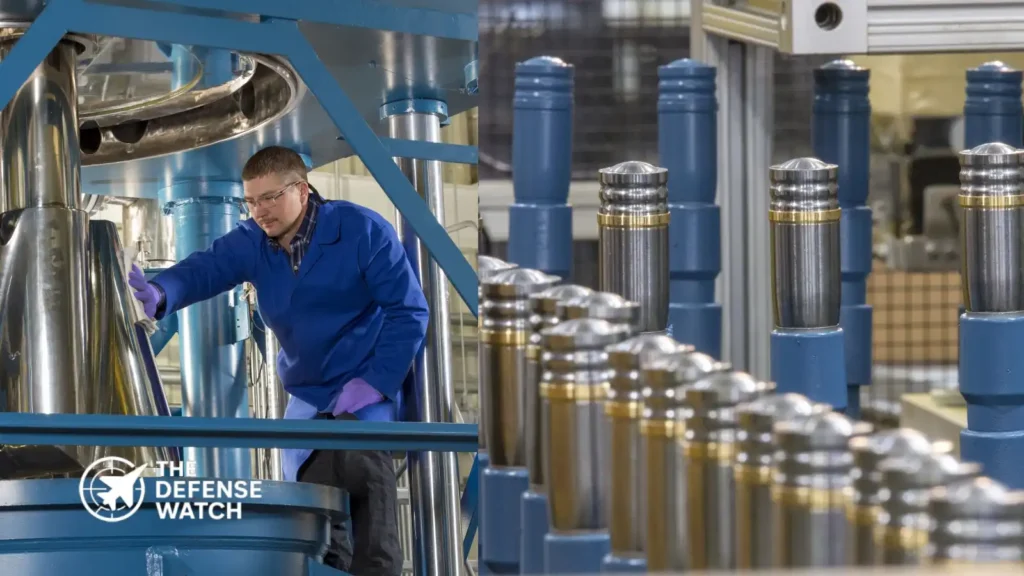
The new facility collapses that process. Rocket motor production, warhead assembly, final missile integration, testing, and shipping now all occur under one roof at ABL — using digital manufacturing technologies and advanced automation to enforce consistent quality controls throughout the production cycle.
The primary platform this facility supports is the AGM-88G Advanced Anti-Radiation Guided Missile — Extended Range (AARGM-ER), a high-speed, extended-range, air-to-ground weapon designed to suppress or destroy enemy Integrated Air Defense Systems (IADS). The AARGM-ER targets radar emitters, command nodes, and surface-to-air missile batteries — giving U.S. and allied strike aircraft a critical edge in contested airspace before threats can even detect them.
“When flying in contested airspace, you want to destroy the threat before the threat detects you,” said Brad Russell, a former Naval Aviator now serving as a Northrop Grumman business development director. “That’s the capability AARGM-ER delivers.”
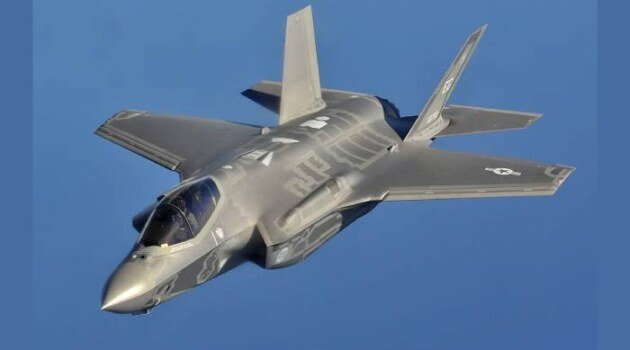
The weapon is designed for integration on the F/A-18E/F Super Hornet, EA-18G Growler, and all three variants of the F-35 Lightning II — making it one of the most broadly compatible anti-radiation missiles in the U.S. inventory.
A $1 Billion Investment In U.S. Weapons Manufacturing
The MIF is not a standalone project. It represents the latest milestone in what Northrop Grumman describes as a $1 billion-plus manufacturing investment at ABL since 2018, encompassing new facilities, renovated production lines, and expanded workforce capabilities.
With the addition of the MIF and a new Plant 4 at the Naval Industrial Reserve Ordnance Plant, Northrop Grumman has brought more than 1 million square feet of new and renovated manufacturing space online in West Virginia over the past seven years.
ABL currently employs more than 1,600 people directly, with the company’s broader activities in West Virginia supporting up to 3,000 additional jobs and generating over $1 billion in regional economic activity. Northrop Grumman is the state’s largest manufacturing industry employer.
The MIF is also designed with scalability in mind. According to company documentation, the facility’s production architecture can accommodate expansion to 600 strike missiles per year — double the initial rated output — giving the U.S. government surge capacity should strategic demands escalate rapidly.
AARGM-ER: A Critical Capability Navigating Real-World Headwinds
The timing of the facility’s opening underscores both the strategic importance of AARGM-ER and the challenges the program has faced in reaching the fleet.
As of May 2026, the U.S. Navy has reaffirmed a September 2026 target for Initial Operational Capability (IOC) on the AGM-88G, though independent watchdogs have flagged continued technical risk. A June 2025 Government Accountability Office (GAO) report cited deficiencies in the rocket motor, structural components, and software performance — alongside supply chain constraints and construction delays at the new production facility — as contributors to a schedule that has already slipped roughly two years from its original 2024 IOC target.
The Pentagon’s Office of the Director of Operational Test and Evaluation (DOT&E) warned in March 2026 that the IOC could potentially slip to the first quarter of FY2027 if unresolved test discrepancies persist. Of three integrated weapon employment tests conducted using F/A-18F aircraft at the China Lake Range in FY2025, only one fully met performance criteria. A successful live-fire event was conducted in January 2026 at the Point Mugu Sea Range — a progress marker the Navy highlighted publicly — but the program continues under close scrutiny.
Complicating matters further, the Navy’s FY2027 budget request allocates only $24 million for AGM-88G procurement — a reduction of roughly $200 million from FY2026 levels — in what officials describe as a “strategic pause” in domestic buying. As of FY2026, the Navy had ordered a total of 435 AARGM-ER rounds, representing approximately $2.43 billion in committed procurement. The service plans to restart domestic purchasing in FY2028, albeit at lower initial rates of around 40 missiles.
Critically, foreign military sales (FMS) procurement continues uninterrupted. Norway announced acquisition of AARGM-ER for its F-35A fleet in March 2026, joining Italy as an international operator. An earlier Honeywell contract valued at $30.8 million covers 1,890 inertial measurement units distributed across U.S. Navy, Air Force, Italian, and additional FMS customers — reflecting sustained allied demand even as the Navy pauses domestic buys.
Broader Industrial Context: Racing Against Stockpile Depletion
The opening of the MIF cannot be evaluated in isolation from the wider strategic context driving U.S. weapons production decisions. Sustained high-intensity conflict in Ukraine and persistent demand for precision munitions from allied partners have accelerated the drawdown of Western weapons inventories at a pace that production lines were not originally designed to match.
The U.S. defense industrial base has come under consistent bipartisan criticism for being too slow, too fragile, and too dependent on single-source suppliers for critical munitions. Northrop Grumman’s West Virginia investment — combining propulsion, warhead, and integration capabilities at a single government-owned, contractor-operated (GOCO) facility — represents one answer to that structural concern.
The Allegany Ballistics Laboratory has been a pillar of U.S. missile propulsion since the 1940s. What has changed is scale, pace, and technological sophistication. The new MIF deploys digital process controls, advanced automation, and integrated test-and-ship workflows that older production lines at ABL did not have. That matters not only for cost and throughput but for the quality assurance demands of a program like AARGM-ER, where defect rates in guidance and propulsion components have directly contributed to test failures.
Meanwhile, the Navy is already looking beyond AARGM-ER. In February 2026, the service issued a market research notice for the Advanced Emission Suppression Missile (AESM) — a longer-range anti-radiation weapon capable of engaging both ground and airborne targets, with forecasted production demand of up to 300 rounds per year and a stated requirement to be the most capable standoff radar-killing weapon in U.S. Naval aviation history. Northrop Grumman’s new West Virginia infrastructure would position the company well to compete for that future contract.
Analysis: Manufacturing Capacity As A Strategic Asset
The MIF opening reflects a broader recognition — increasingly shared by Pentagon planners, Congress, and industry — that production capacity itself is a deterrence asset, not just a logistics concern.
A missile that exists on paper or in small-lot quantities cannot fulfill its deterrent role if adversaries assess they can outlast or outproduce it. For advanced suppression weapons like AARGM-ER, credibility depends on the ability to field sufficient numbers across the fleet — on Super Hornets, Growlers, and eventually F-35s — quickly and in depth.
Northrop Grumman’s $1 billion investment in West Virginia over seven years, capped by the 113,000-square-foot MIF, is a tangible demonstration of commitment to that requirement. Whether the AARGM-ER itself achieves IOC on schedule in September 2026 will depend on resolving the remaining technical challenges — but the production infrastructure to deliver at scale is now in place.
For policymakers, the more pressing question is whether the Navy’s FY2027 “strategic pause” on procurement will delay the full fielding timeline or whether the service can use the interlude to resolve remaining qualification issues and emerge with a clean, fully validated weapon ready for high-rate production in FY2028.
The factory is ready. Now the missile has to meet it.