
- Home
- Defense Systems
- Compare
- BrahMos Missile vs PL-15 Missile: Complete Comparison of Speed, Range, Guidance, and Combat Roles
BrahMos Missile vs PL-15 Missile: Complete Comparison of Speed, Range, Guidance, and Combat Roles
BrahMos Missile vs PL-15: High Level Comparison
1. Executive Summary / Tactical Overview
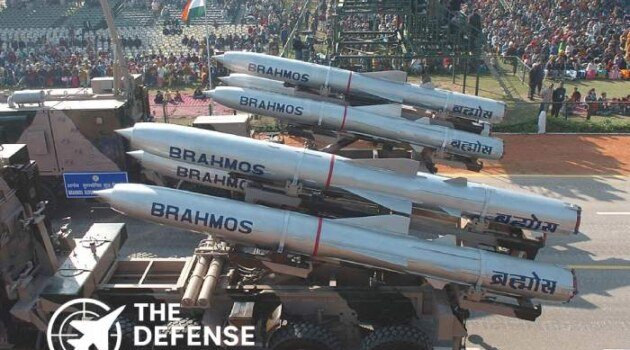
Although both are advanced missiles developed for modern warfare, the BrahMos and PL-15 are designed for completely different missions. BrahMos is a supersonic cruise missile built for precision strikes against ships and land targets, while the PL-15 is a long range beyond visual range (BVR) air to air missile intended to destroy enemy aircraft before they can engage.

Comparing them highlights different aspects of military capability rather than identifying a direct replacement. BrahMos emphasizes speed, destructive power, and strategic strike capability, whereas the PL-15 focuses on long range aerial interception supported by modern fighter aircraft.
2. Technical Specifications Table
| Metric | BrahMos | PL-15 |
|---|---|---|
| Country | India and Russia | China |
| Missile Type | Supersonic Cruise Missile | Beyond Visual Range Air to Air Missile |
| Primary Mission | Anti ship and land attack | Long range air combat |
| Launch Platforms | Ship, Submarine, Aircraft, Mobile Launcher | Fighter Aircraft |
| Speed | Mach 2.8 to 3.0 | Estimated Mach 4 to 5 |
| Range | Up to 800 km (latest variants) | Estimated 200 to 300 km (varies by version) |
| Length | About 8.4 m | About 4 m |
| Weight | Around 3,000 kg | Around 200 to 230 kg |
| Warhead | 200 to 300 kg High Explosive | Fragmentation Blast Warhead |
| Guidance | INS, GPS/GLONASS, Active Radar Seeker | INS, Data Link, Active AESA Radar Seeker |
| Flight Profile | Sea Skimming, High Low Trajectory | High Altitude Intercept |
| Primary Targets | Warships, Strategic Infrastructure | Fighters, Bombers, AEW&C Aircraft |
3. Key Capability Pillars
Speed and Strike Performance
The BrahMos is among the world’s fastest operational cruise missiles, maintaining supersonic speed throughout its flight. This reduces enemy reaction time and increases penetration capability against naval and land based defenses.
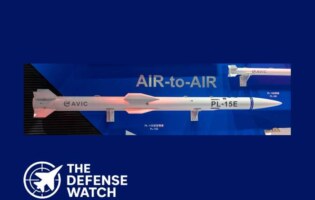
The PL-15 is also extremely fast but is optimized for aerial engagements, allowing it to intercept fast moving aircraft at long distances.
Guidance and Target Acquisition
BrahMos combines inertial navigation with satellite guidance and an active radar seeker during the terminal phase, enabling high precision against fixed and moving surface targets.
PL-15 uses inertial navigation, secure mid course data links, and an active AESA radar seeker to engage maneuvering airborne targets with improved resistance to electronic warfare.
Launch Flexibility
One of BrahMos’ greatest strengths is its versatility. It can be launched from:
- Surface warships
- Land based launchers
- Submarines
- Su-30MKI fighter aircraft
The PL-15 is currently integrated primarily with Chinese combat aircraft including:
- J-20
- J-16
- J-10C
- Other compatible People’s Liberation Army Air Force fighters
Warhead and Destructive Power
BrahMos carries a much larger warhead designed to disable or destroy large naval vessels, hardened facilities, and strategic targets.
The PL-15 carries a comparatively smaller fragmentation warhead intended to destroy aircraft through proximity detonation.
Survivability
BrahMos improves survivability through sustained high speed, sea skimming flight, and terminal maneuvering that complicate interception.
The PL-15 relies on long engagement distances, active radar guidance, and high maneuverability to maximize its probability of kill against airborne targets.
4. Operational Roles
BrahMos
Best suited for:
- Anti ship warfare
- Precision land attack
- Coastal defense
- Strategic deterrence
- Deep strike missions
PL-15
Best suited for:
- Beyond visual range air combat
- Air superiority missions
- Intercepting bombers
- Targeting support aircraft such as AWACS and tankers
- Long range defensive patrols
5. Strengths and Limitations
BrahMos Strengths PL-15 Strengths Very high speed cruise missile Long range air to air engagement Large warhead Modern AESA seeker Multiple launch platforms High maneuverability Proven operational deployment Optimized for network centric warfare Excellent anti ship capability Designed to challenge advanced fighter aircraft BrahMos Limitations PL-15 Limitations Cannot engage aircraft Air launched only Larger and heavier Small warhead Higher production cost Performance figures remain partially undisclosed 6. Strategic Verdict
The BrahMos and PL-15 serve entirely different military purposes, making a direct capability comparison inappropriate. BrahMos is a strategic strike weapon that excels in destroying ships and land based targets at supersonic speed with a powerful warhead. It is one of the most capable operational cruise missiles in service today.
The PL-15, by contrast, is a long range air to air missile designed to give Chinese fighters an advantage in beyond visual range engagements. Its combination of long reach, active radar guidance, and modern seeker technology makes it a significant component of China’s air combat capability.
In short:
- Choose BrahMos for strategic precision strike, naval warfare, and land attack missions.
- Choose PL-15 for long range aerial interception and beyond visual range air superiority operations.
Since these missiles are built for different mission sets, they complement different aspects of military power rather than competing directly against one another.

| |
| Price | |
| Our Rating | |
| Manufacturer | Defence Research and Development Organisation (DRDO) China Aerospace Science & Technology Corp. (CASC) |
| Category | Missiles & Precision Weapons Missiles & Precision Weapons |
1. General Information
| Name / Designation | BrahMos PL-15 |
| Type / Role | Supersonic Cruise Missile Beyond-Visual-Range Air-to-Air Missile |
| Country of Origin | India / Russia China |
| Manufacturer | DRDO & NPO Mashinostroyenia CASIC (China Aerospace Science and Industry Corporation) |
| Service Entry / Year Introduced | 2001 2015 |
| Operational Status | Active Active |
2. Performance & Range
| Range | 290–450 km 200–300 km (Long Range) |
| Speed | Mach 2.8–3.0 Mach 4 |
| Ceiling / Altitude Limit | 15,000 m Over 20,000 m |
| Accuracy (CEP) | <1 meter High precision with radar homing |
| Warhead Type | Conventional / Semi-Armor Piercing High-Explosive Fragmentation |
3. Guidance & Targeting
| Guidance System | INS + GPS/GLONASS Inertial + Active Radar (AESA) |
| Targeting Mode | Fire-and-Forget Fire-and-Forget / Midcourse Update |
| Launch Platform Compatibility | Land, Air, Sea, Submarine Fighter Jet |
| Seeker Type | Active Radar Homing Active Electronically Scanned Array (AESA) |
4. Physical Characteristics
| Length | 8.4 m 4.0 m |
| Diameter | 0.67 m 0.20 m |
| Wingspan | 1.7 m 0.60 m |
| Launch Weight | 3,000 kg ~210 kg |
| Propulsion | Solid-fuel Booster + Ramjet Engine Dual-pulse Solid-fuel Rocket |
5. Warhead & Payload
| Warhead Weight | 200–300 kg ~40 kg |
| Explosive Type | HE / Semi-Armor Piercing High-Explosive Fragmentation |
| Detonation Mechanism | Impact / Proximity Fuse Proximity Fuse |
| Payload Options | Conventional (Nuclear-capable in future variants) Conventional |
6. Operational Use & Capabilities
| Operational Range Type | Medium-Range Long |
| Deployment Platform | Land, Air, Sea, Submarine Air |
| Target Types | Ships, Land Installations, Fortifications Fighter Aircraft, AWACS, Tankers |
| Combat Proven | Yes Limited Information |
| Users / Operators | India, Export to Philippines (approved) China |
|
Disclaimer Note
The information provided on TheDefenseWatch.com is for general informational purposes only. While we strive to ensure the accuracy, completeness, and timeliness of our content regarding defense and aerospace products, technologies, and specifications, we cannot guarantee that all information is 100% accurate or up-to-date due to the evolving nature of military technology and classified data.TheDefenseWatch.com does not warrant the reliability, suitability, or availability of the information for any specific purpose. Users are advised to consult official sources, such as manufacturers, government publications, or defense agencies, for precise and verified data before making decisions based on our content.We are not affiliated with any defense manufacturers, governments, or military organizations mentioned. Opinions, reviews, and ratings reflect expert analysis but are subjective and should not be considered endorsements. TheDefenseWatch.com is not responsible for any errors, omissions, or consequences arising from the use of this website’s content.External links are provided for convenience and do not imply endorsement. TheDefenseWatch.com reserves the right to update or modify content without prior notice. By using this website, you agree to our Privacy & Cookies Policy.
New Arrivals












Popular Comparisons
-
 J-10C vs JF-17 Thunder: Which Fighter Is More Capable?
View Comparison →
-
Tejas vs Gripen: Key Differences and Capabilities
View Comparison →
-
Tejas vs MiG-21 Bison: How India Replaced Its Iconic Supersonic Fighter
View Comparison →
-
F-35 vs F-16: Stealth, Sensors and Combat Roles
View Comparison →
-
Tejas Fighter Jet vs F-16 Fighting Falcon: Capability Compared
View Comparison →
-
Rafale Fighter Jet vs F-16 Fighting Falcon : Which Fighter Has the Edge?
View Comparison →
-
Su-57 Fighter Jet vs J-20 Fighter Jet: Stealth and Air Combat Compared
View Comparison →
-
Mirage 2000 vs Tejas Mk1A: Legacy Combat Power vs Indigenous Modernization
View Comparison →
-
Rafale Fighter Jet vs F-22 Raptor: Which Air Dominance Fighter Has the Edge?
View Comparison →
-
Tejas Fighter Jet vs. Rafale Fighter Jet: India’s Indigenous Fighter Meets France’s Proven Multirole Combat Aircraft
View Comparison →


- General Atomics to Supply Components for U.S. Army and Navy Hypersonic Weapons

- Lockheed Martin Tests Mk21A Reentry Vehicle for Sentinel ICBM
- Lockheed Martin Wins $122.4 Million Trident II Navigation Contract
- Pentagon Prepares Review of Military Legal System and JAG Corps
- U.S. and Colombia Launch Southern Vanguard 2027 Exercise
- CENTCOM Receives 25,000+ Drones and Counter-UAS Systems Under Pentagon Push
- Helsing Transfers Combat Software Ownership to Germany
- NASA Prepares New X-Plane Reveal as Experimental Aircraft Program Expands
- NASA’s Swift Space Telescope Reenters Atmosphere After 22-Year Mission
- Remington 870 in Military Service: Mark 1 to MCS






Fighter Jets
-
 F-100 Super Sabre
-
North American F-86 Sabre
-
Northrop YF-23 Fighter
-
Rafale F5 Fighter
-
SU-57 Felon Stealth Fighter
-
Boeing F/A-XX Fighter
-
JF-17 Thunder Fighter Jet
-
F-47 Fighter Jet
-
MIG-31 Fighter Jet
-
J-10CE Fighter Jet
-
Chengdu J-10 Fighter Jet
-
Chengdu J-10C Fighter Jet
-
Gripen E Fighter Jet
-
Tejas Mk1A Fighter Jet
-
Tejas Mk‑2 Fighter Jet
-
F-16V Viper Block 70 Fighter Jet
-
F-15EX Eagle II Fighter
-
F-15E Strike Eagle Fighter
-
F/A-18E/F Super Hornet Fighter Jet
-
Saab Gripen F Fighter Jet
-
JAS 39E/F Gripen Fighter Jet
-
JAS 39 Gripen Fighter Jet
-
F-35A Lightning II Fighter Jet
-
F/A-18F Super Hornet










Recent Compares
-
J-10C vs JF-17 Thunder: Which Fighter Is More Capable?
View Comparison →
-
Tejas vs Gripen: Key Differences and Capabilities
View Comparison →
-
Tejas vs MiG-21 Bison: How India Replaced Its Iconic Supersonic Fighter
View Comparison →
-
F-35 vs F-16: Stealth, Sensors and Combat Roles
View Comparison →
-
Tejas Fighter Jet vs F-16 Fighting Falcon: Capability Compared
View Comparison →
Latest Defense Systems
10 Compares Defense Systems
-
J-10C vs JF-17 Thunder: Which Fighter Is More Capable?
View Comparison →
-
Tejas vs Gripen: Key Differences and Capabilities
View Comparison →
-
Tejas vs MiG-21 Bison: How India Replaced Its Iconic Supersonic Fighter
View Comparison →
-
F-35 vs F-16: Stealth, Sensors and Combat Roles
View Comparison →
-
Tejas Fighter Jet vs F-16 Fighting Falcon: Capability Compared
View Comparison →
-
Rafale Fighter Jet vs F-16 Fighting Falcon : Which Fighter Has the Edge?
View Comparison →
-
Su-57 Fighter Jet vs J-20 Fighter Jet: Stealth and Air Combat Compared
View Comparison →
-
Mirage 2000 vs Tejas Mk1A: Legacy Combat Power vs Indigenous Modernization
View Comparison →
-
Rafale Fighter Jet vs F-22 Raptor: Which Air Dominance Fighter Has the Edge?
View Comparison →
-
Tejas Fighter Jet vs. Rafale Fighter Jet: India’s Indigenous Fighter Meets France’s Proven Multirole Combat Aircraft
View Comparison →
- General Atomics to Supply Components for U.S. Army and Navy Hypersonic Weapons
- Lockheed Martin Tests Mk21A Reentry Vehicle for Sentinel ICBM
- Lockheed Martin Wins $122.4 Million Trident II Navigation Contract
- Pentagon Prepares Review of Military Legal System and JAG Corps
- U.S. and Colombia Launch Southern Vanguard 2027 Exercise