Executive Summary:
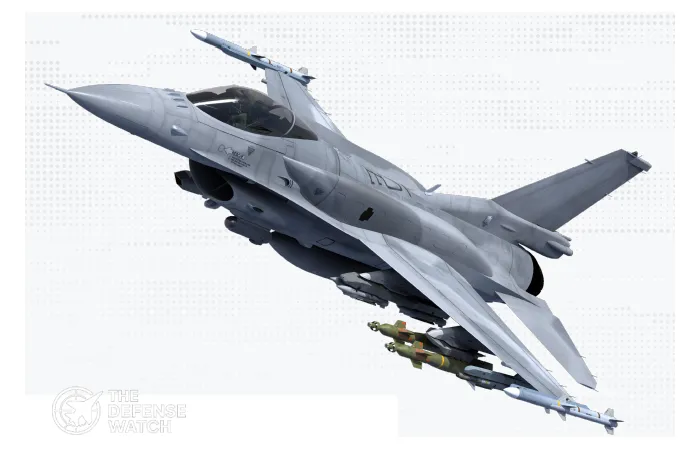
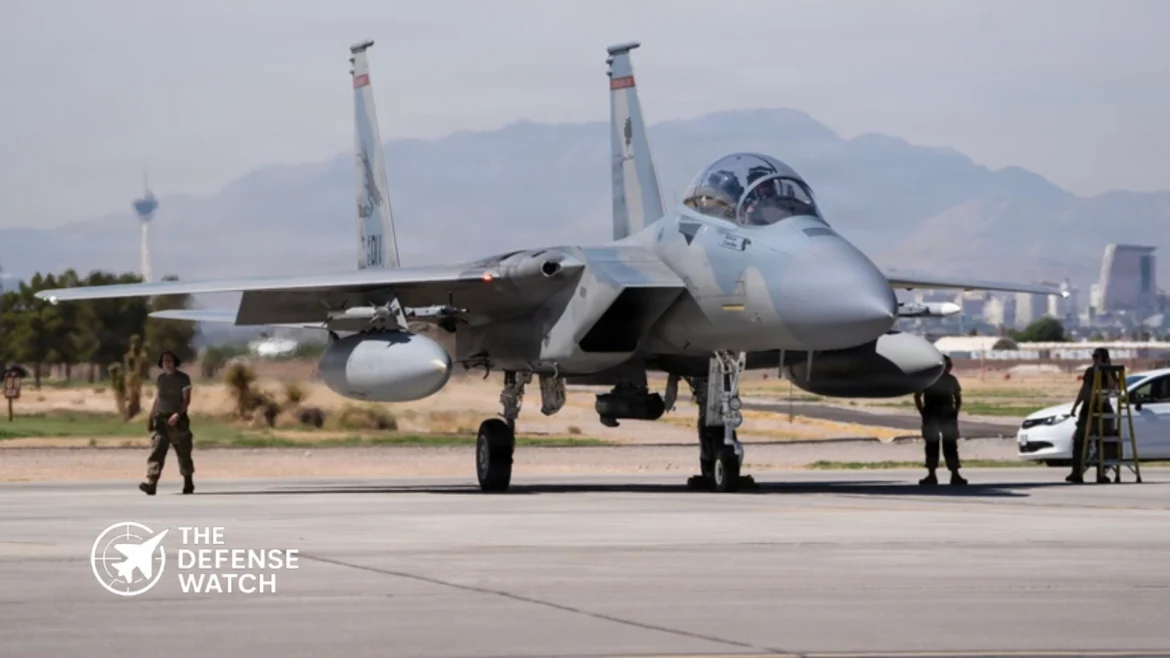
The U.S. Air Force’s first 16 F-15EX Eagle II fighters achieved an average materiel availability rate of 72.4% in fiscal 2026, according to a Department of War acquisition report. The result is 12.4 percentage points above the program’s 60% minimum sustainment threshold but 7.6 points below its 80% objective. The finding comes as the Air Force prepares to expand the planned F-15EX fleet to 268 aircraft, making sustainment performance increasingly important as production scales.
F-15EX Eagle II Availability Reaches 72.4%
The F-15EX Eagle II availability rate for the first 16 aircraft averaged 72.4% in fiscal 2026, according to an acquisition report cited in a Sept. 14 report by Defence Industry Europe. The reported performance applies to aircraft EX1 through EX16 and reflects demonstrated performance through Feb. 24, 2026.
The 72.4% figure clears the program’s minimum materiel availability threshold of 60%. However, it remains below the Air Force’s 80% objective established under the program’s acquisition baseline. The acquisition assessment characterized the result as slightly below the objective and reported no formal performance deviation.
That distinction matters. A threshold represents the minimum acceptable performance level, while an objective establishes the level the program is intended to achieve. The early F-15EX fleet therefore met its formal minimum requirement but has not yet demonstrated the higher availability level the Air Force ultimately wants.
Availability Gap Is 7.6 Percentage Points
The reported figures put the early F-15EX fleet in a relatively clear position:
| F-15EX Sustainment Measure | Reported Result |
|---|---|
| Average materiel availability | 72.4% |
| Program threshold | 60% |
| Program objective | 80% |
| Margin above threshold | 12.4 percentage points |
| Gap to objective | 7.6 percentage points |
| Aircraft covered | EX1 through EX16 |
| Performance date | Feb. 24, 2026 |
The most important point is that 72.4% should not be interpreted as a failure of the aircraft to meet its acquisition requirement. The reported rate is above the established threshold.
The more significant issue is whether the Air Force can improve availability as the fleet grows from a small initial population into a much larger operational force.
Why F-15EX Sustainment Matters
Materiel availability measures whether an aircraft is available for its intended mission rather than simply counting how many aircraft have been delivered.
For a fighter fleet, that distinction is important. An aircraft can be physically present in the inventory but unavailable because it is undergoing scheduled maintenance, awaiting parts, receiving repairs or otherwise unavailable for operational use.
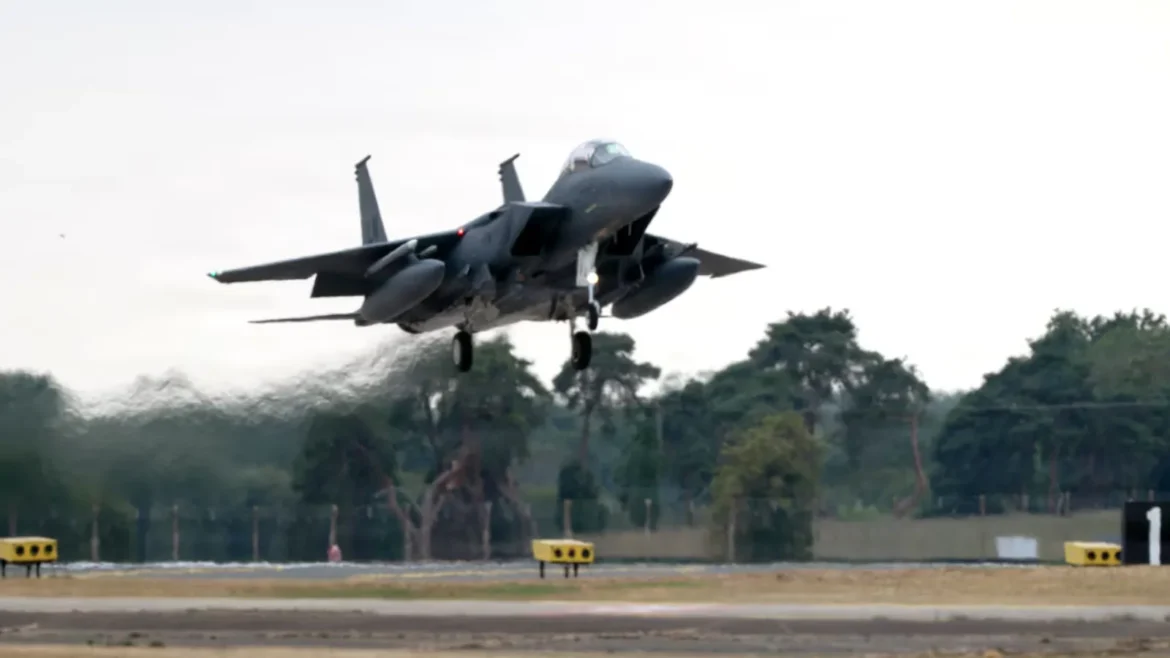
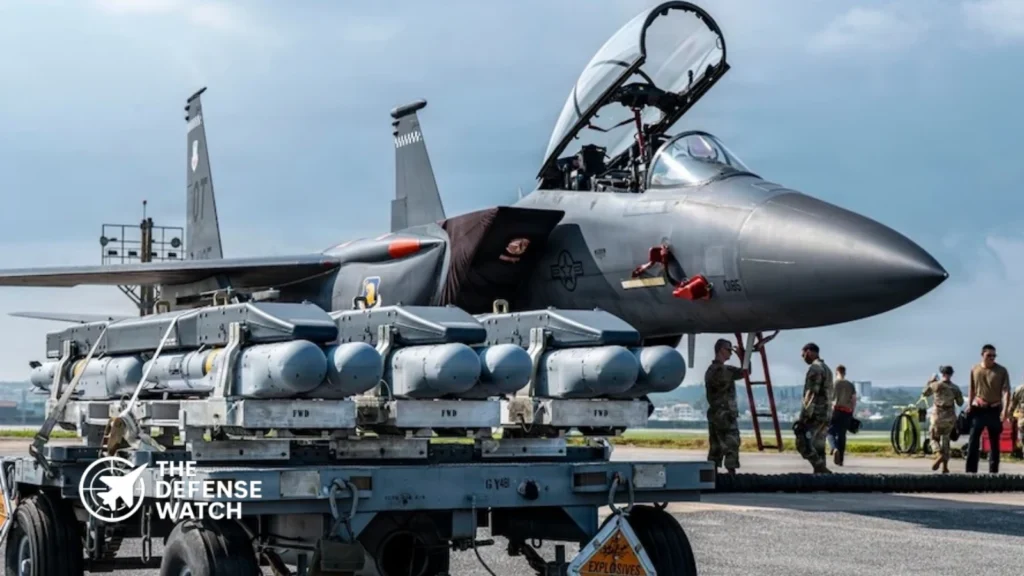
The Air Force is now relying on the F-15EX for more than a limited replacement program. The aircraft was initially intended to replace aging F-15C and F-15D fighters, while also complementing fifth-generation aircraft in missions where its payload, range and weapons capacity provide useful additional capacity. The Air Force says the aircraft is designed around a digital backbone, open architecture and advanced electronic warfare capabilities.
That makes sustainment performance increasingly important as procurement expands.
Air Force Plans a Much Larger F-15EX Fleet
The availability result comes at a significant point in the program’s development.
The Air Force has substantially expanded its planned F-15EX procurement. A fiscal 2027 acquisition report identifies a planned fleet of 268 aircraft, a major increase from earlier procurement plans. Defence Industry Europe reported that 18 aircraft had been delivered as of April 14, 2026.
The expansion means that sustainment performance demonstrated by the first aircraft will become increasingly important.
A small early fleet can produce different maintenance dynamics from a mature fleet. As more aircraft enter operational units, the Air Force gains a larger pool of maintainers, spare parts, technical experience and maintenance data. At the same time, the larger fleet creates a much greater demand for engines, components, depot capacity and trained personnel.
The challenge will be converting a 72.4% early availability result into a consistently higher rate across a much larger operational population.
F-15EX Has Already Passed Major Operational Milestones
The availability result should also be viewed alongside the aircraft’s broader acquisition progress.
The F-15EX completed initial operational test and evaluation and live-fire testing in November 2023. The program subsequently achieved full-rate production approval in June 2024 and initial operational capability in July 2024, according to the acquisition reporting cited by Defence Industry Europe.
The Air Force has described the aircraft as a replacement for aging F-15C/D fighters and as a complementary platform to fifth-generation aircraft.
The service’s operational testing has included air-superiority missions and defensive and offensive counter-air missions. Testing also established a basic air-to-ground capability.
This is important because availability is only one part of combat capability. A modern fighter must combine mission effectiveness with the ability to generate sorties repeatedly.
Maintenance Is the Largest Sustainment Cost
The acquisition assessment also highlights the financial importance of maintaining the F-15EX fleet.
Annual operating and support costs are estimated at approximately $13.1 million per aircraft in constant fiscal 2020 dollars. Maintenance accounts for the largest portion at about $7.2 million per aircraft, followed by unit operations at roughly $3 million and unit-level manpower at approximately $1.9 million.
F-15EX Operating and Support Cost Annual Estimate Per Aircraft Total operating and support $13.1 million Maintenance $7.2 million Unit operations $3.0 million Unit-level manpower $1.9 million Other sustainment and improvements Remaining balance The maintenance figure is particularly relevant to the availability issue because improvements in reliability, parts availability and maintenance turnaround can directly influence the number of aircraft available for operations.
Production Growth Adds Another Sustainment Test
The Air Force’s F-15EX program is also dealing with production expansion and industrial-base challenges.
The Air Force previously reported that deliveries resumed after a strike at Boeing’s St. Louis facility disrupted production between August and November 2025. Aircraft 14, 15 and 16 were subsequently delivered to Portland Air National Guard Base.
The production issue is separate from the 72.4% availability figure, but both point to the same broader challenge: scaling a fighter program requires more than producing airframes.
The Air Force needs a supporting industrial system capable of supplying engines, avionics, electronic warfare equipment, structural components and other parts at the rate required by an expanding fleet.
F-15EX Is Becoming More Important in the Indo-Pacific
The availability question is particularly relevant as the F-15EX moves toward a larger role in the Indo-Pacific.
The Air Force has been preparing the aircraft for permanent deployment to Kadena Air Base, Japan. In September 2026, the first F-15EX designated for Kadena departed Boeing’s St. Louis facility for Portland, where it was scheduled to receive additional preparation before moving to Japan.
The Air Force has also used F-15EX deployments to Kadena to familiarize local personnel with the aircraft and validate maintenance, logistics and combat-generation procedures.
This gives the availability metric greater operational significance. Forward-based fighters must be supported in environments where maintenance capacity, spare parts and transportation can be more constrained than at U.S. bases.
For the Indo-Pacific, where distances between operating locations can be considerable, aircraft availability directly affects the number of sorties a force can generate over time.
What 72.4% Means for the Program
The current result does not indicate that the F-15EX program has failed its sustainment requirement. It indicates that the early fleet has cleared the minimum threshold while still leaving room to improve toward the 80% objective.
The key question is therefore not whether the first 16 aircraft reached 80%. They did not.
The more important question is whether the Air Force can improve availability as the fleet matures and expands.
That will depend on several factors, including maintenance turnaround times, spare-parts availability, supply-chain performance, technical workforce capacity and the maturity of the aircraft’s support infrastructure.
The program’s future scale makes those factors more important than the performance of a 16-aircraft sample alone.
F-15EX Expansion Raises the Stakes
The Air Force’s decision to expand the planned F-15EX fleet makes sustainment a central issue for the program.
The aircraft offers the service a large, modern weapons platform that can complement F-35 and F-22 aircraft rather than performing exactly the same role. The Air Force has specifically described the F-15EX as a complementary platform for fifth-generation fighters, while its large weapons capacity provides additional options for long-range fires and air operations.
But a fighter’s value depends on its ability to generate sorties when required.
For that reason, the 72.4% availability figure is best understood as an early sustainment indicator rather than a verdict on the aircraft. Clearing the 60% threshold is a positive program result, while the 7.6 percentage-point gap to the 80% objective identifies an area the Air Force will need to monitor closely as procurement accelerates.
The next stages of the F-15EX program will therefore test not only Boeing’s ability to deliver aircraft, but also the Air Force’s ability to sustain a rapidly expanding fleet at the readiness levels expected from a front-line fighter force.
Bottom Line
The first 16 F-15EX Eagle II fighters recorded a 72.4% average materiel availability rate in fiscal 2026, exceeding the program’s 60% threshold but falling short of the 80% objective. The result does not represent a formal program failure, but it provides an important early measure of the aircraft’s sustainment performance.
With the Air Force now planning for a fleet of 268 F-15EX aircraft, improving availability will become increasingly important. The aircraft is moving from an initial fielding phase toward a much larger operational role, including planned deployment to Japan.
For the F-15EX program, the central sustainment test is now clear: maintain and improve availability while the fleet expands substantially in size and geographic scope.
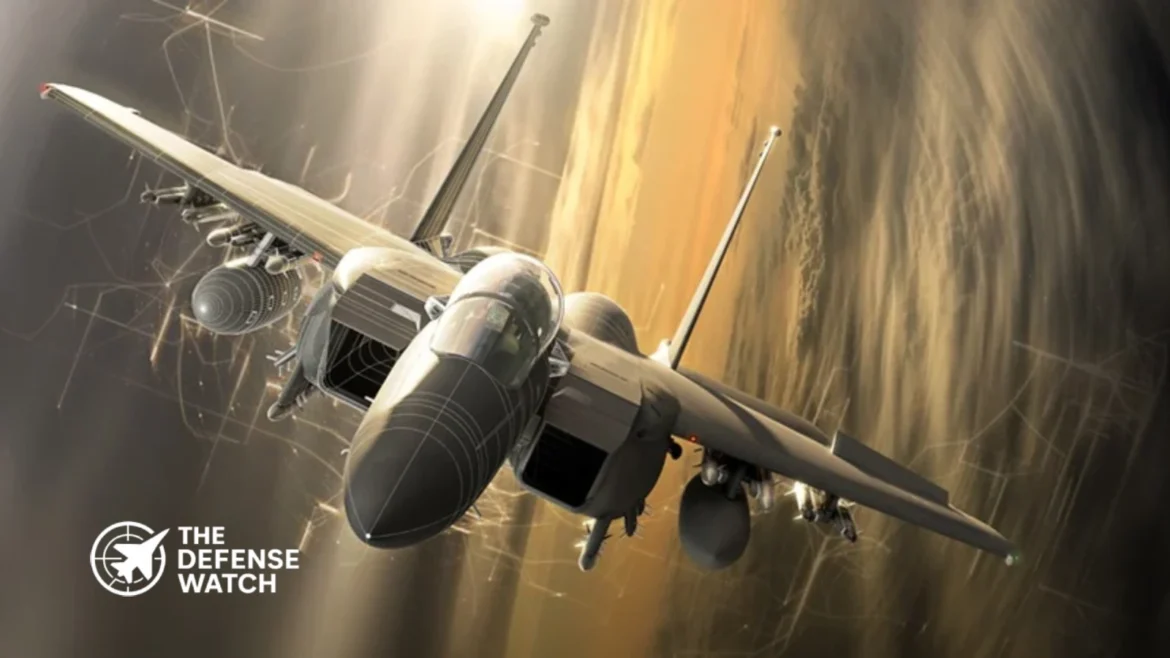
Executive Summary:
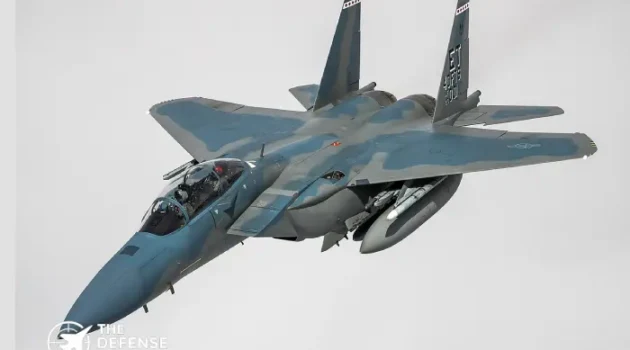
The U.S. Air Force is preparing for a major technical refresh of the F-15EX Eagle II as it extends the fighter’s planned production from eight to 12 lots and more than doubles the planned fleet to 267 aircraft. A new Pentagon acquisition report warns that the longer production timeline could make the aircraft’s radar, mission computer, electronic warfare suite and engines obsolete before the final jets are delivered. The service plans to manage the problem through future Operational Flight Program releases and phased integration of upgraded subsystems between 2031 and 2035. At the same time, current F-15EX production faces shortages involving displays, GE F110 engines and ejection-system components, while Boeing’s 2025 St. Louis strike has created delivery delays.
F-15EX Technical Refresh Becomes a Program Priority
The F-15EX technical refresh is emerging as one of the central engineering challenges created by the U.S. Air Force’s decision to expand the Eagle II fleet.
The Air Force originally structured the F-15EX acquisition around eight production lots. The revised plan extends procurement to 12 lots, creating a substantially longer production window and increasing the possibility that key components will reach the end of their manufacturing life before the program is complete.
The Pentagon’s selected acquisition report identifies four major areas that could require replacement or redesign:
| System | Future Concern | Planned Approach |
|---|---|---|
| Radar | Component obsolescence | New-generation radar integration |
| Mission computer | Hardware and technology obsolescence | Updated mission computing |
| Electronic warfare suite | Evolving threats and component availability | New EW architecture |
| Engines | Manufacturing and supply risks | Future engine replacement or redesign |
The report describes the required work as a major technical refresh and warns that replacing these systems would constitute a significant redesign effort.
Why the F-15EX Needs a Longer-Term Upgrade Path
The issue is not that the current F-15EX configuration is considered inadequate.
The Eagle II already incorporates an AN/APG-82 AESA radar, digital fly-by-wire flight controls, an advanced mission system and the Eagle Passive Active Warning Survivability System, or EPAWSS. Boeing describes the aircraft as an open-mission-system platform designed to accommodate future upgrades.
The problem is the length of the production program.
A fighter assembled in the early 2030s will encounter a different technology and supply environment from one built in the 2020s. Electronics suppliers may discontinue older processors, displays or components, while radar and electronic warfare technologies will continue to evolve.
This creates a familiar defense acquisition problem: keeping a production line open can eventually require redesigning the aircraft around components that remain available.
The Pentagon therefore intends to integrate major subsystem changes through future Operational Flight Program releases scheduled between 2031 and 2035. According to the acquisition report, this approach is intended to allow testing and fielding without creating a production-line gap.
Radar Upgrade Could Shape the Future F-15EX
Radar is one of the most important areas identified for future modernization.
The current F-15EX uses the Raytheon AN/APG-82 AESA radar, which provides electronically scanned air-to-air and air-to-ground sensing. The system is already part of the aircraft’s broader sensor and weapons architecture.
Raytheon has also publicly discussed the APG-82(V)X, an enhanced version incorporating gallium nitride technology intended to increase radar effectiveness without requiring additional aircraft power. The company says the system is designed to improve detection, tracking and multifunction operation, including electronic warfare functions.
The Pentagon report does not establish that the APG-82(V)X will become the selected future F-15EX radar.
That distinction matters. The acquisition report identifies the need for a future radar refresh, but it does not publicly identify a final replacement configuration. Any specific future radar selection should therefore be treated as an open requirement rather than an awarded upgrade.
Mission Computing Is Equally Important
The F-15EX’s mission computer is another potential obsolescence point.
Modern fighters increasingly depend on software-defined mission systems to combine radar, electronic warfare, communications, navigation and weapons information. For the F-15EX, maintaining the computing architecture is particularly important because the aircraft is intended to operate alongside fifth-generation fighters and future collaborative combat aircraft.
Boeing says the Eagle II uses an open mission systems architecture that supports future software and hardware upgrades. The company has also highlighted the aircraft’s networking capabilities and its ability to support manned-unmanned operations.
The Air Force’s approach of incorporating future hardware through Operational Flight Program releases is therefore significant.
Rather than treating the F-15EX as a fixed configuration, the service is effectively planning for the aircraft to evolve during production.
Electronic Warfare Will Remain a Core Requirement
The electronic warfare system presents another long-term modernization challenge.
The F-15EX was designed around the EPAWSS survivability suite, which provides integrated threat warning, electronic protection and electronic attack capabilities. Air Force testing has demonstrated the importance of integrating radar, electronic warfare and mission systems in realistic contested environments.
The Air Force has previously described EPAWSS as a system intended to improve the aircraft’s ability to operate against advanced air-defense and electronic threats.
For future production aircraft, however, the requirement is not simply to preserve today’s electronic warfare capability.
Threat emitters, radar modes and electronic attack techniques change over time. A production aircraft entering service in the early 2030s will need an electronic warfare architecture capable of receiving updates throughout its operational life.
That makes software architecture, processing capacity and access to replacement hardware as important as the individual electronic warfare sensors themselves.
Engine Supply Is Already a Production Risk
The engine issue is more immediate.
The F-15EX uses two General Electric F110 engines per aircraft, and the Pentagon’s FY2027 budget documentation specifically identifies engine procurement as part of the aircraft’s recurring production cost.
The latest acquisition reporting also identifies GE F110 engines among components affected by supply-chain pressure. Other shortages include large-area displays, low-profile heads-up displays and Collins Aerospace cartridges associated with the aircraft’s ejection system.
This illustrates the difference between an aircraft’s technical modernization requirement and its immediate production problem.
The long-term concern is whether current components remain viable through later production lots. The near-term concern is whether suppliers can provide enough components to maintain the required aircraft delivery rate.
Both problems must be managed simultaneously.
Boeing Production Delays Add Pressure
The F-15EX expansion comes while the existing production schedule is already under pressure.
A strike at Boeing’s St. Louis facility from August through November 2025 disrupted production. According to the Pentagon acquisition report, the disruption created delays that cannot be fully recovered.
Lot 3 provides a clear example.
Boeing’s contract required delivery of all 12 Lot 3 aircraft in early 2026. The Pentagon now expects only six of those aircraft to be delivered by the end of 2026.
Lot 4 has also slipped, with deliveries previously expected in 2026 now forecast to begin in 2028. The program needs Boeing to reach a production rate of approximately two F-15EX aircraft per month to meet its delivery requirements.
The first F-15EX intended for permanent deployment at Kadena Air Base in Japan departed Boeing’s St. Louis facility in August 2026, but the aircraft is now expected to arrive at Kadena during fiscal 2027.
F-15EX Expansion Has Strategic Implications
The Air Force’s decision to increase the planned F-15EX fleet from 129 to 267 aircraft represents a major change in the service’s future fighter mix.
The additional aircraft are intended not only to complete existing F-15EX units but also to begin replacing aging F-15E Strike Eagles. The Air Force has said it needs a mix of F-15EX and F-35A capabilities rather than relying exclusively on one fighter type.
The F-15EX provides a different force structure option from the F-35A.
Its large weapons capacity, long range and substantial aircraft size make it particularly useful as a capacity platform operating alongside lower-observable aircraft. Boeing also emphasizes its ability to carry large weapons loads and operate within networked formations.
The planned deployment of F-15EX aircraft to Kadena is particularly important for the Indo-Pacific. The Air Force has described the aircraft as providing additional capacity for long-range fires, sensors and electronic warfare while complementing fifth-generation fighters.
What the Technical Refresh Means for Future Lots
The key point is that the F-15EX modernization plan is not simply an equipment upgrade.
It is a production-management strategy designed to keep an existing fourth-generation-derived fighter relevant as its manufacturing program extends into the 2030s.
The approach can be summarized as follows:
- Continue producing the current configuration while maintaining the production line.
- Identify components approaching obsolescence or facing diminishing manufacturing sources.
- Develop replacement radar, computing, electronic warfare and propulsion solutions.
- Test those systems through future Operational Flight Program releases.
- Introduce the upgraded systems into later production aircraft without creating a prolonged production gap.
This approach reduces the risk of abruptly stopping production for a complete redesign. It also allows the Air Force to spread engineering and testing work over several years.
The challenge is cost and integration risk. The Pentagon has not yet completed a detailed cost assessment for the additional aircraft and associated redesign work. Officials have begun a rapid cost-estimation process to support future budget planning.
F-15EX Program at a Glance
| Item | Current Plan |
|---|---|
| Aircraft | F-15EX Eagle II |
| Manufacturer | Boeing |
| Planned fleet | 267 aircraft |
| Previous planned fleet | 129 aircraft |
| Production strategy | 12 lots |
| Current radar | AN/APG-82 AESA |
| Electronic warfare | EPAWSS |
| Engine | Two GE F110 engines |
| Future modernization | Radar, mission computer, EW suite and engines |
| Planned upgrade window | 2031 to 2035 |
| Key overseas location | Kadena Air Base, Japan |
| Primary role | Air superiority, counter-air and high-capacity weapons carriage |
Current program and budget information from the Air Force, Pentagon and Boeing supports the basic configuration and acquisition figures above.
The Bottom Line
The F-15EX expansion gives the U.S. Air Force a much larger capacity fighter fleet, but it also creates a long-term technology management problem.
Keeping production open through 12 lots means the aircraft cannot remain frozen in its current configuration. Radar electronics, mission computing, electronic warfare equipment and engines will have to evolve as components become obsolete and new technologies become available.
The Air Force’s planned 2031 to 2035 upgrade pathway provides a way to introduce those changes without shutting down the production line. The harder challenge will be controlling redesign costs, maintaining supplier capacity and avoiding additional delivery delays while the service simultaneously expands the fleet.
For U.S. airpower planning, the F-15EX is therefore becoming more than a replacement for aging Eagles. Its future value will depend on whether the Air Force can maintain the aircraft’s open, upgradeable architecture while sustaining production through a period of rapid change in radar, electronic warfare, computing and propulsion technology.
Key Facts at a Glance
| Specification | F-22 Raptor |
|---|---|
| Manufacturer | Lockheed Martin, Boeing |
| Generation | 5th generation |
| Primary Mission | Air dominance, air superiority, multirole combat |
| Maximum Speed | Mach 2 class |
| Supercruise | Above Mach 1.5 without afterburner |
| Combat Radius | Approximately 410 nautical miles, depending on mission configuration |
| Ceiling | Above 50,000 ft |
| Engines | 2 × Pratt & Whitney F119-PW-100 |
| Thrust | Approximately 35,000 lb class per engine |
| Radar | AN/APG-77 AESA |
| Electronic Warfare | AN/ALR-94 integrated electronic support system |
| Primary Air-to-Air Weapons | AIM-120 AMRAAM, AIM-9 Sidewinder |
| Internal Cannon | M61A2 20 mm |
| Production | 195 aircraft delivered |
| Current Inventory | About 184 aircraft in the U.S. Air Force fleet |
Executive Summary
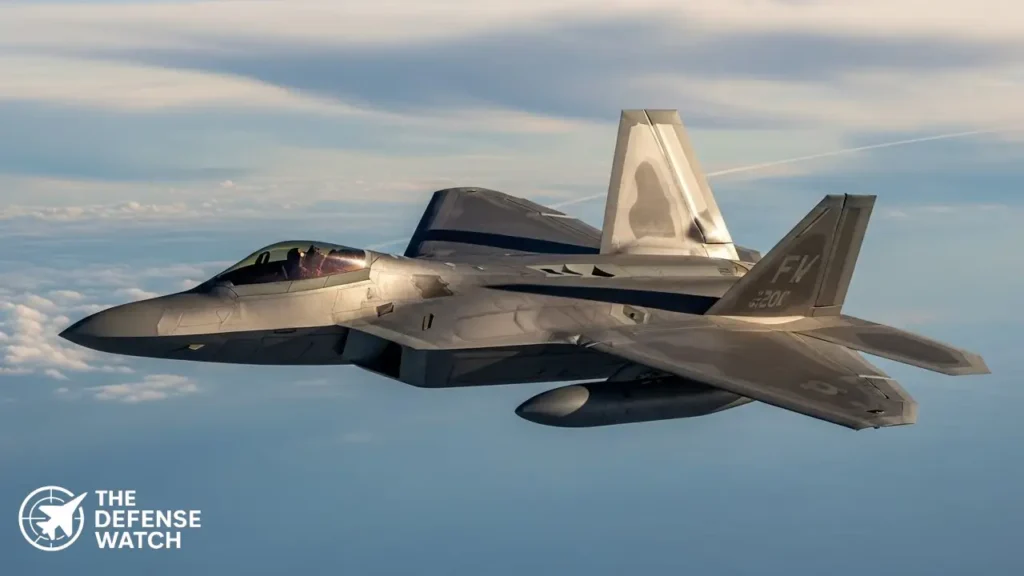
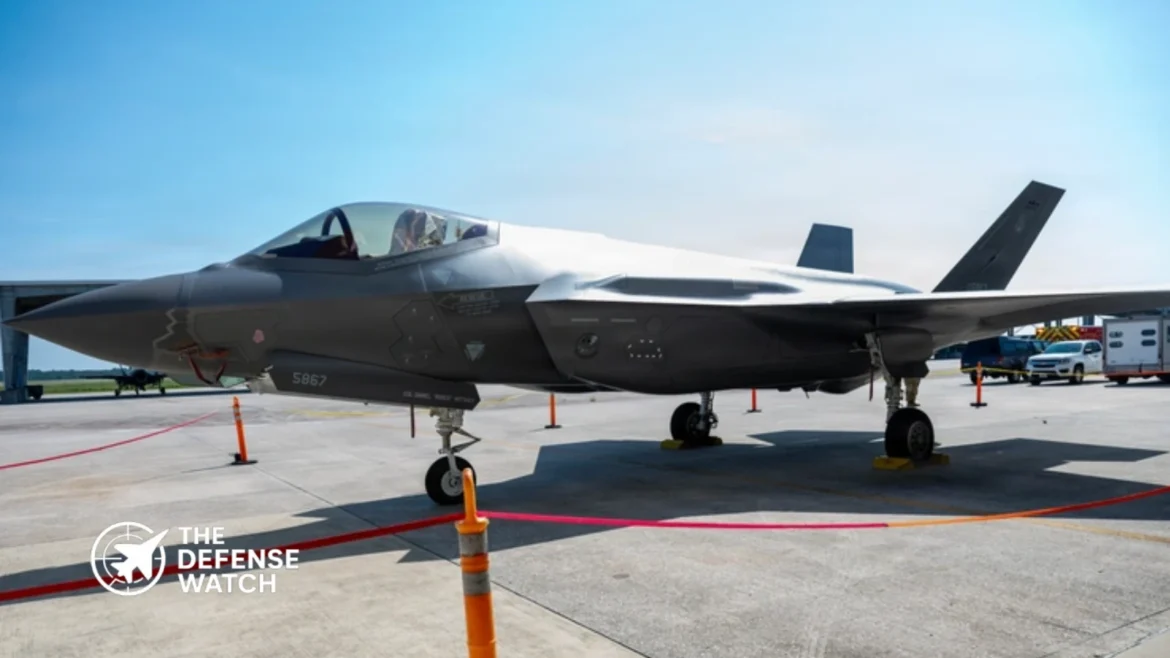
The F-22 Raptor remains one of the most capable air-superiority fighters ever fielded by the United States. Designed around stealth, supercruise, advanced sensors, high maneuverability and internal weapons carriage, the aircraft was built to establish air dominance against sophisticated fighter and air-defense threats.
The central question behind searches such as how many F-22s does the U.S. have has a relatively clear answer, although inventory figures can vary according to accounting year and aircraft status. The U.S. Air Force has about 184 F-22s in its fleet in 2026, while 195 aircraft were produced and delivered during the program. Nine aircraft were used as test aircraft, according to Lockheed Martin’s production history, leaving the operational fleet smaller than the total production figure.
The F-22 has also been used in combat, beginning with strikes against ISIS targets in Syria in 2014. Despite combat deployments, no F-22 has been confirmed shot down in combat.

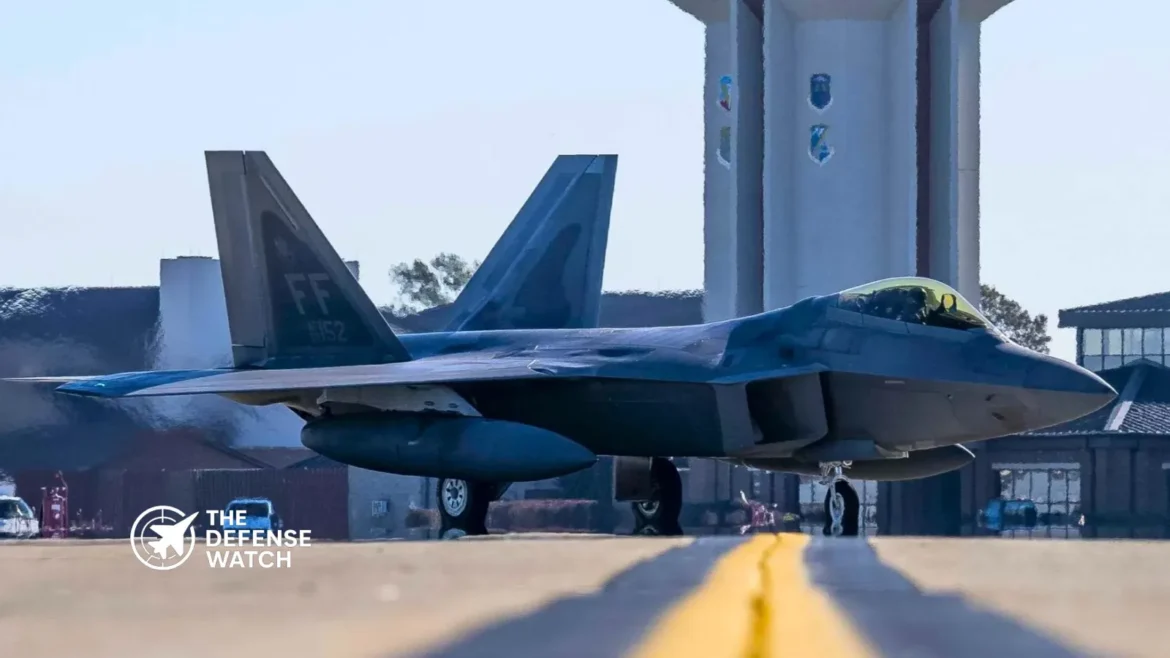
Image: U.S. Air Force. How Many F-22s Does the U.S. Have?
For the question how many f-22s does the us have, the most useful current figure is approximately 184 aircraft.
Air & Space Forces Magazine’s 2026 weapons-platform data lists the F-22 inventory at 184 aircraft. A June 2026 congressional development was particularly significant because the House Armed Services Committee approved an amendment that would keep all 184 Raptors in service until at least the end of fiscal 2032.
This figure should not be confused with the number originally manufactured.
The F-22 production program ended in 2011, with the final aircraft delivered to the Air Force in May 2012. Lockheed Martin states that 195 F-22s were delivered, including aircraft used for testing.
Therefore:
Question Answer How many F-22s were built? 195 How many F-22s does the U.S. have? About 184 in the 2026 inventory How many F-22s are operationally combat coded? Fewer than the total inventory because some aircraft are assigned to test, training or other roles How many F-22s have been shot down? No confirmed combat losses The difference between production and current inventory reflects aircraft attrition, testing, accidents and fleet accounting rather than exports. The F-22 has never been offered as a conventional foreign military sales fighter.
How Many F-22s Were Built?
The answer to how many f 22s were built is 195 aircraft.
Production began after years of development and testing, with the first F-22 flight taking place in 1997. The Air Force declared the aircraft operational in December 2005. The final Raptor was delivered on May 2, 2012.
Of the 195 aircraft delivered, Lockheed Martin identified 187 as operational fleet aircraft and eight as test aircraft at the time of final delivery.
The relatively small production run is strategically important. Unlike the F-35, which was designed for large-scale international production and operation, the F-22 was developed primarily as a high-end U.S. air-superiority platform.
How Many F-22s Are There?
The question how many f-22s are there can produce different answers depending on whether the question concerns aircraft ever produced, current inventory or combat-capable aircraft.
The most useful distinction is:
195 F-22s were produced and delivered, while about 184 remain in the U.S. Air Force inventory in 2026.
Not every aircraft in the inventory should be treated as immediately available for combat. Maintenance, modernization, training, testing and aircraft availability affect the number that can be generated for operational missions at any particular time.
The fleet also includes different modernization configurations. Earlier Block 20 aircraft have significantly less combat capability than the more heavily upgraded Block 30 and Block 35 Raptors.
F-22s Airframe and Stealth Design
The F-22s design combines stealth with aerodynamic performance rather than treating low observability as a separate feature.
Its airframe uses carefully aligned edges, internal weapon bays, shielded engine faces and extensive radar-absorbent materials to reduce radar returns. The exact radar cross section of the Raptor is classified, so publicly available numerical RCS claims should be treated cautiously.
The internal weapons arrangement is particularly important. Keeping missiles and bombs inside the fuselage reduces external stores that would otherwise increase radar signature and aerodynamic drag.
The aircraft also uses serrated or carefully shaped access panels and doors, while its engine exhaust and inlet design contribute to its low-observable characteristics.
Avionics and Sensor Fusion
The F-22’s core advantage is not simply its radar.
The AN/APG-77 AESA radar provides long-range detection and tracking while supporting low-probability-of-intercept operations. The aircraft also incorporates the AN/ALR-94 electronic support system, which provides passive detection and characterization of electromagnetic emissions.
Together with the aircraft’s mission computers and other sensors, these systems create a highly integrated tactical picture for the pilot.
The original F-22 configuration did not include a conventional internal IRST sensor comparable to systems developed for some newer fighters. However, current modernization efforts are adding new infrared sensing capabilities. In 2026, the Air Force is continuing development and testing of infrared search and track targeting systems, alongside defensive infrared missile-warning improvements.
F-22s Propulsion and Performance
The F-22 is powered by two Pratt & Whitney F119-PW-100 afterburning turbofan engines, each producing approximately 35,000 pounds of thrust in the thrust class identified by the Air Force.
The engines incorporate two-dimensional thrust-vectoring nozzles, allowing the aircraft to control pitch through exhaust-vectoring authority in addition to aerodynamic control surfaces.
The aircraft is rated at Mach 2 class speed and can supercruise at speeds above Mach 1.5 without afterburners. Supercruise allows the Raptor to maintain supersonic flight with lower fuel consumption and a smaller infrared signature than sustained afterburner operation.
How Many F-22s Have Been Shot Down?
The answer to how many f 22s have been shot down is zero confirmed combat losses.
The F-22 has conducted combat operations. Its first combat use came in September 2014, when Raptors participated in U.S.-led strikes against ISIS targets in Syria. F-22s later supported operations in the region, including protection missions during the April 2018 strikes against Syrian chemical-weapons facilities.
In February 2023, an F-22 also gained a highly publicized air-to-air kill when it fired an AIM-9X against a Chinese high-altitude surveillance balloon off the South Carolina coast. That was not a fighter-versus-fighter engagement, but it demonstrated the aircraft’s ability to conduct an unusual high-altitude intercept.
No F-22 has been confirmed destroyed by an enemy aircraft or surface-to-air missile in combat.
Modernization and Strategic Outlook
The F-22 is now entering a different phase of its service life. The aircraft remains strategically important, but the fleet is aging and the Air Force is simultaneously developing the F-47 and next-generation air-dominance architecture.
Current modernization includes Increment 3.2B, sensor enhancements, improved electronic warfare capabilities, infrared defensive systems, Link 16 networking and new range-extension concepts. Low-drag external fuel tanks and pylons are also being tested to increase range while limiting the impact on the aircraft’s aerodynamic and stealth characteristics.
The Air Force previously sought to retire 32 older Block 20 aircraft, but congressional opposition has repeatedly complicated that plan. In June 2026, the House Armed Services Committee moved to prohibit F-22 retirements through fiscal 2032, potentially preserving the entire 184-aircraft fleet for longer than earlier Air Force planning anticipated.
Unlike some modern fighters, the F-22 has no international customer roadmap. U.S. law and policy have prevented its export, making international F-22 operators nonexistent.
Conclusion
The F-22s Raptor remains a uniquely important U.S. air-superiority asset despite its relatively small fleet.
The clearest answers to the major questions are straightforward: 195 F-22s were built, about 184 remain in the U.S. Air Force inventory, and no F-22 has been confirmed shot down in combat. The aircraft has nevertheless seen real combat, including operations over Syria and the 2023 high-altitude balloon intercept.
Its combination of stealth, supercruise, thrust vectoring, AESA radar, electronic warfare and internal weapons carriage continues to give the F-22 a powerful role in contested airspace.
The central challenge is now fleet age. The Air Force is investing in upgrades while preparing for the next generation of air dominance. The result is a fighter that remains highly relevant, but one whose long-term future depends on modernization decisions, fleet availability and the arrival of its successor.

B-2 Spirit Demonstrates Precision Strike Capability in Nevada
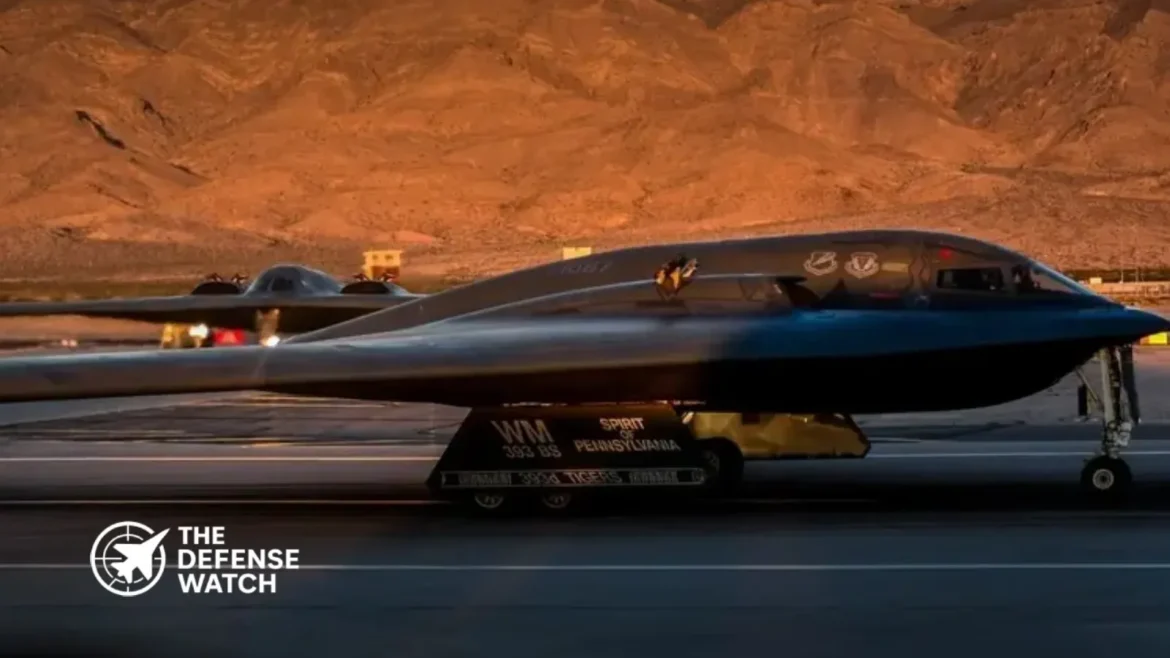
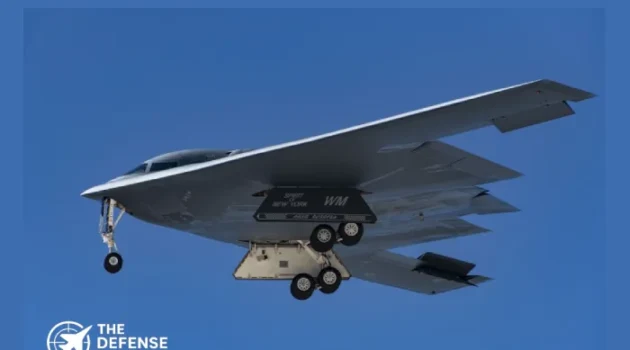
The U.S. Air Force used two B-2 Spirit stealth bombers for live-fire precision strike training at the Nevada Test and Training Range on Aug. 3, 2026, demonstrating the aircraft’s ability to integrate long-range bomber operations with terminal attack and command-and-control elements. The event was documented by Nellis Air Force Base and the Defense Visual Information Distribution Service.
Takeaways
The U.S. Air Force used two B-2 Spirit bombers for live-fire precision strike training at the Nevada Test and Training Range, integrating bomber crews with joint terminal attack controllers.
The aircraft were assigned to the 325th Weapons Squadron at Whiteman Air Force Base, Missouri. Personnel from the 66th Weapons Squadron provided command and control during the training, while joint terminal attack controllers and bomber aircrews worked together during the live-fire event.
The U.S. Air Force described the exercise as an opportunity to demonstrate precision strike capabilities in a realistic training environment. The released video shows B-2 aircraft dropping munitions over the Nevada range, but the publicly released material does not identify the specific weapons used.
What the Training Demonstrates
The significance of the event extends beyond the B-2’s ability to release weapons. Precision strike missions depend on the integration of aircraft, weapons, communications, targeting information and personnel operating at different points in the kill chain.
The presence of the 66th Weapons Squadron is particularly relevant. Official imagery shows Lt. Col. Ridge Flick, commander of the 66th Weapons Squadron and lead joint terminal attack controller, communicating with the two B-2 aircraft during the live-fire training.
That relationship illustrates an important element of modern air operations: the bomber is one component of a larger strike architecture. The ability to execute a precision attack depends not only on aircraft survivability and weapons, but also on accurate target information, command relationships and reliable communications.
The training therefore provides a useful look at how the Air Force practices the coordination required for complex strike operations without revealing sensitive operational tactics.
Why the Nevada Test and Training Range Matters
The Nevada Test and Training Range, operated in support of Nellis Air Force Base, is one of the Air Force’s principal environments for advanced combat training, operational test and evaluation, and tactics development.
Nellis says the range provides more than 15,000 square miles of airspace and 4,700 square miles of restricted land. The Air Force also states that more than 75 percent of its live training munitions are dropped on the range.
This scale allows aircraft and weapons crews to conduct training that would be difficult to reproduce at conventional ranges. The available airspace supports complex scenarios involving multiple aircraft, ground controllers and other operational elements.
For the B-2 community, such training is important because the aircraft is designed for long-range conventional and nuclear missions and is intended to operate against heavily defended targets. The Air Force identifies penetration of sophisticated air defenses as a central feature of the B-2’s low-observable design.
B-2 Spirit: Key Capabilities
The B-2 remains one of the United States’ most specialized long-range strike aircraft. Its design combines a flying-wing configuration, composite materials and other low-observable technologies intended to reduce radar, infrared, acoustic, electromagnetic and visual signatures.
According to the Air Force’s current fact sheet, many details of the B-2’s low-observable technology remain classified. The publicly available specifications provide the following baseline information:
Capability B-2 Spirit Primary role Multi-role heavy bomber Crew Two pilots Engines Four General Electric F118-GE-100 Thrust 17,300 pounds per engine Maximum takeoff weight 336,500 pounds Payload Up to 60,000 pounds Wingspan 172 feet Length 69 feet Ceiling 50,000 feet Unrefueled range Approximately 6,000 nautical miles Speed High subsonic Mission types Conventional and nuclear These specifications explain why the B-2 remains relevant to U.S. long-range strike planning. Its combination of range, payload and low observability allows the aircraft to perform missions that require both substantial weapon capacity and a reduced probability of detection.
Precision Strike Is More Than Weapon Accuracy
The Nevada training event also highlights an important distinction in modern air warfare. A precision weapon is only one part of a precision strike capability.
A successful strike requires the target to be identified and located accurately, the appropriate authority to approve the engagement, the aircraft and weapon to receive reliable information, and the crew to execute the mission under the required rules and constraints.
The integration of the 325th Weapons Squadron and 66th Weapons Squadron therefore matters as much as the visible weapons release. The exercise tested the interaction between the bomber force and personnel responsible for directing and coordinating the strike.
This is particularly important for penetrating aircraft. A B-2’s low observability is intended to improve survivability, but the aircraft still operates as part of a wider command, control, communications, intelligence, surveillance and reconnaissance architecture.
The Nevada range provides a controlled environment where these relationships can be trained repeatedly without requiring an operational combat mission.
The B-2’s Role During the B-21 Transition
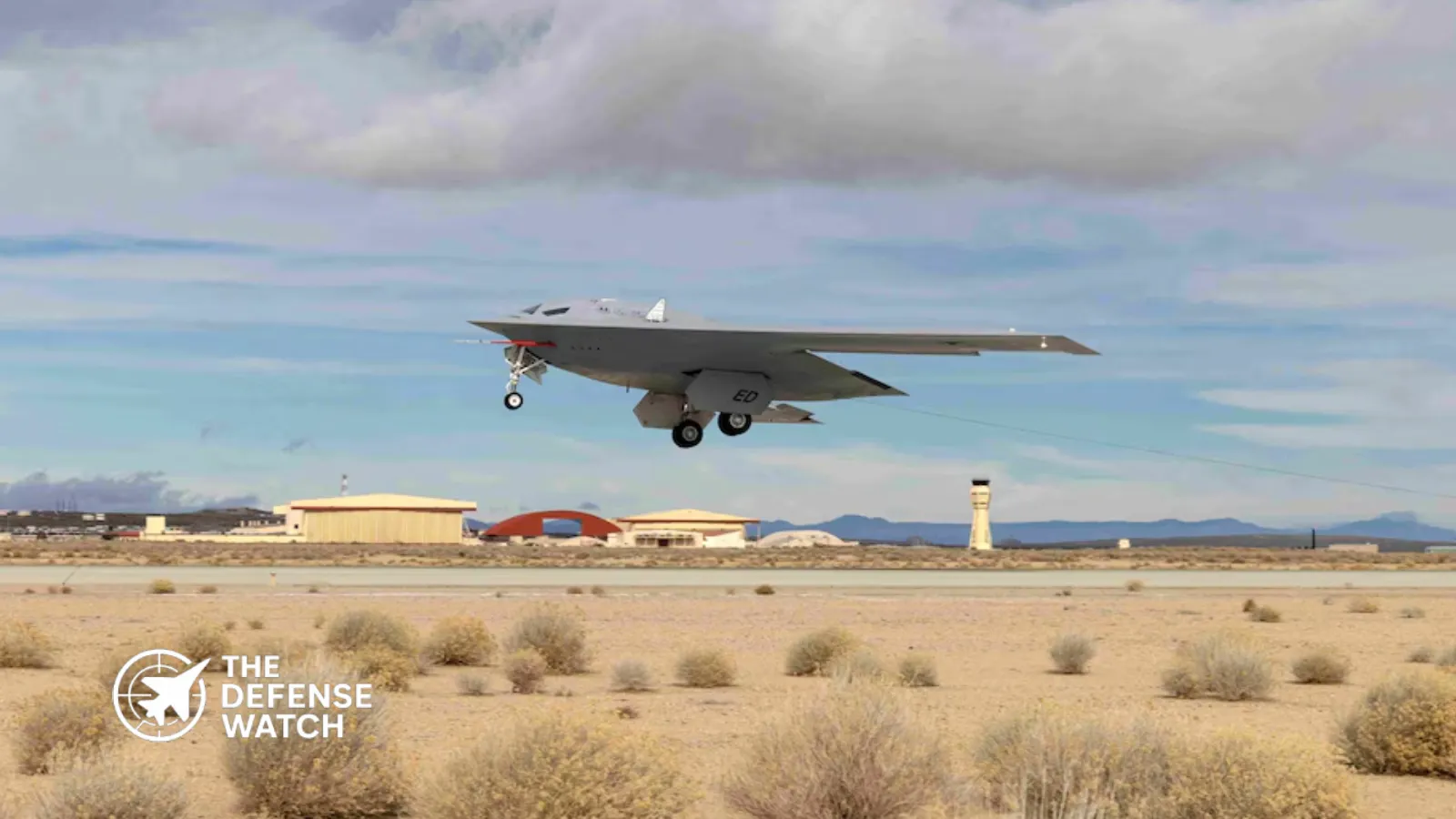
The B-2 training also comes as the Air Force prepares to expand the B-21 Raider fleet.
Air Force Global Strike Command’s 2026 bomber fact sheet states that the B-21 is expected to replace the B-1B and B-2, with initial capability planned for 2028. Until the B-21 is fully fielded, the command says it will continue balancing modernization and sustainment of the existing bomber fleet while maintaining readiness.
The Air Force is simultaneously expanding B-21 production capacity. In February 2026, the Department of the Air Force announced an agreement with Northrop Grumman to increase production capacity for the next-generation bomber, using $4.5 billion in previously authorized and appropriated funding.
That transition does not make current B-2 training less important. Instead, it creates a period in which the Air Force must keep the existing penetrating bomber force operational while building the infrastructure, workforce and training system required for the next-generation aircraft.
Whiteman Air Force Base is part of that transition. The Air Force has selected the Missouri installation as the second main operating base for the B-21, alongside its existing role as the home of the B-2 force.
What the Training Says About U.S. Strike Readiness
The most important takeaway from the Nevada event is not the weapons release itself. It is the continued emphasis on realistic, integrated training for a small but highly specialized bomber force.
The Air Force’s publicly released material confirms that two B-2 aircraft conducted live-fire operations, while the 66th Weapons Squadron provided command and control and joint terminal attack controllers worked with the bomber crews.
That combination reflects the broader direction of U.S. airpower, where individual platforms increasingly operate as nodes within a connected force rather than as independent weapons systems.
For the B-2, this remains particularly relevant because its value comes from the combination of penetration, range and weapons capacity. Maintaining proficiency in the entire strike process is essential while the Air Force moves toward a future bomber fleet centered on the B-21 and B-52.
The Aug. 3 training therefore represents a routine but strategically important component of bomber readiness. It demonstrates that the B-2 fleet continues to train for precision strike missions while the Air Force prepares the next generation of penetrating long-range aircraft.
Takeaways
Key facts from the F-15 Eagle Crest contract
1. $131.23 Billion Contract Ceiling
The Air Force awarded Boeing an indefinite-delivery/indefinite-quantity contract with a maximum ceiling of $131.23 billion for F-15-related work.
2. No Aircraft Were Ordered at Award
The contract establishes a framework for future orders. The award notice did not include an order for a specific number of F-15 aircraft.
3. Work Extends Through 2037
The contract covers production, modernization, upgrades, retrofits, sustainment and organic depot maintenance capabilities through August 2037.
4. Seven Foreign Customers Are Listed
The contract involves Foreign Military Sales cases involving Japan, Israel, Saudi Arabia, South Korea, Singapore, Indonesia and Poland.
The U.S. Air Force has awarded Boeing a $131.23 billion ceiling indefinite-delivery/indefinite-quantity contract covering production, modernization, upgrades, retrofits and sustainment of the F-15 fighter family. The contract also establishes organic depot maintenance capabilities and supports both U.S. and foreign customers.
According to the U.S. Department of War contract announcement dated Aug. 24, 2026, the award was made to Boeing through a sole-source acquisition for the F-15 Eagle Crest program. The work will be performed in St. Louis, Missouri, and is expected to continue through August 2037.
The size of the contract ceiling is significant, but it should not be interpreted as $131.23 billion already committed to Boeing. The IDIQ structure provides the government with a framework under which future orders can be placed over time. Only $343,740 in fiscal 2026 research, development, test and evaluation funding was obligated when the contract was awarded.
What the Contract Covers
The F-15 Eagle Crest contract brings several categories of F-15 work under one acquisition framework.
The official notice lists:
- Aircraft production
- Systems integration
- Modernization
- Upgrades
- Retrofits
- Sustainment
- Establishment of organic depot maintenance capabilities
The work supports the Air Force, Air National Guard and other Department of War customers. The contract also incorporates Foreign Military Sales requirements for seven countries.
The ordering period is expected to run through Aug. 24, 2031, with an option allowing the period to be extended to Aug. 24, 2036. The overall contract is expected to be completed by August 2037.
Importantly, the Aug. 24 award did not include an order for a specific number of F-15 aircraft. Future production or modernization requirements can therefore be placed through subsequent orders under the contract.
Technical and Operational Context
The F-15 family remains an important part of U.S. tactical aviation, while the F-15EX Eagle II represents the current production version being acquired by the Air Force.
Air Force budget documents describe the F-15EX as a multirole fighter based on the two-seat F-15QA configuration and equipped with U.S.-specific capabilities. The aircraft incorporates systems including the Eagle Passive Active Warning Survivability System, or EPAWSS, and an open mission systems architecture.
The Air Force’s fiscal 2027 procurement documentation lists F-15EX missions including defensive and offensive counter-air operations, homeland defense and operations in highly contested environments. The documents also indicate that F-15EX procurement and modernization activities extend into the early 2030s.
The new Eagle Crest framework is broader than simply buying new F-15EX aircraft. Its inclusion of modernization, retrofit and sustainment work allows the government to address different requirements across the aircraft’s lifecycle.
Why the Award Matters
One important feature of the contract is its support for organic depot maintenance.
Under this approach, Air Force depots will gain the capability to conduct heavy maintenance and overhaul work on F-15 aircraft rather than depending exclusively on the original equipment manufacturer. Boeing will perform the contracted work in St. Louis, while the Air Force Life Cycle Management Center at Wright-Patterson Air Force Base, Ohio, serves as the contracting activity.
From an acquisition perspective, consolidating production, modernization, sustainment and depot-support activities into a long-term framework can give the service greater flexibility when requirements change. However, the contract ceiling itself does not establish how much of that potential value will ultimately be ordered.
The F-15EX program is also moving into a period of expanded procurement. Air Force fiscal 2027 budget documents show that the program’s overall procurement quantity can reach 268 aircraft when additional reconciliation-funded aircraft are included.
The aircraft is also being prepared for expanded operational use. In June 2026, F-15EX aircraft from the 85th Test and Evaluation Squadron deployed to Kadena Air Base, Japan, for integration and familiarization activities ahead of the aircraft’s longer-term role there.
Contract Breakdown
Contract Value
The maximum contract ceiling is $131.23 billion.
That figure represents the potential value of orders that can be placed under the IDIQ contract. It is not an immediate $131.23 billion expenditure or obligation.
Only $343,740 in fiscal 2026 RDT&E funding was obligated at the time of award.
Contractor
Boeing Co., St. Louis, Missouri, received the award through a sole-source acquisition.
Contract Type
The award is an indefinite-delivery/indefinite-quantity contract, commonly known as an IDIQ.
An IDIQ contract establishes the framework for future government orders without requiring the government to purchase the entire potential contract value when the framework is established.
Work Locations
The official contract notice identifies St. Louis, Missouri, as the work location.
Performance Period
The contract is expected to be completed by August 2037.
The ordering period is expected to end Aug. 24, 2031, with an option to extend the ordering period through Aug. 24, 2036.
Funding
The initial obligation consists of $343,740 in fiscal 2026 RDT&E funding.
The announcement did not identify a corresponding aircraft production order at the time of award.
Options or Follow-On Work
The contract allows orders to be placed through Aug. 24, 2031, with an option to extend the ordering period to Aug. 24, 2036.
Future aircraft production, upgrades, modernization, sustainment and other work would be ordered under the contract as requirements are established and funded.
Industry and Acquisition Implications
The award gives the Air Force a long-term contracting mechanism for maintaining and developing the F-15 fleet while supporting continued production of the F-15EX.
The foreign military sales component is also notable. The contract identifies Japan, Israel, Saudi Arabia, South Korea, Singapore, Indonesia and Poland as participating foreign customers.
Several of these countries already operate F-15 aircraft, while Indonesia and Poland are not current F-15 operators. The contract notice does not specify the individual quantities or configurations associated with each country’s FMS requirements.
Israel is already purchasing new F-15 aircraft from Boeing’s St. Louis production line. The fiscal 2027 F-15EX Selected Acquisition Report cited by Defense News identified a December 2025 agreement covering 25 F-15IA aircraft, with an option for another 25.
The broader production environment also remains relevant to the U.S. program. Air Force documentation reported that a 2025 strike at Boeing’s St. Louis facility interrupted F-15EX production, while subsequent Air Force reporting described efforts to resume deliveries and recover from the disruption.
What Happens Next
The next steps will come through individual orders placed against the Eagle Crest contract.
The Aug. 24 contract announcement does not specify the number of new aircraft to be purchased under the award, nor does it provide a detailed schedule for future production or modernization orders. Those details will become clearer as the Air Force places funded orders against the contract.
The long-term framework is expected to support F-15 production and sustainment through 2037, while the ordering authority can remain available until 2031 or, if exercised, 2036.
For the F-15EX program specifically, Air Force procurement documents show continued aircraft acquisition and modernization funding into the early 2030s, while operational units are preparing for the aircraft’s expanded role, including at Kadena in Japan.

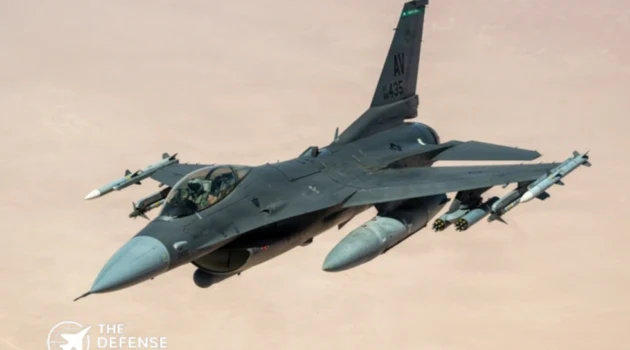
Lockheed Martin Corp., Fort Worth, Texas, has received a $31.29 million indefinite-delivery/indefinite-quantity contract from the U.S. Air Force for contractor engineering and technical services, extending engineering support to a network of foreign F-16 operators through June 30, 2029. The Air Force Life Cycle Management Center at Wright-Patterson Air Force Base, Ohio, is the contracting activity.
Takeaways
Lockheed Martin receives multiyear engineering support award for F-16 operators
1. $31.3 Million IDIQ Contract
Lockheed Martin has received a $31.29 million indefinite-delivery/indefinite-quantity contract for contractor engineering and technical services supporting F-16-related requirements.
2. Support Runs Through June 2029
The award is scheduled to continue through June 30, 2029, providing engineering assistance while participating operators develop greater organic technical capability.
3. 11 Foreign Locations
Work will be performed at Hill Air Force Base and in Argentina, Bahrain, Chile, Egypt, Indonesia, Jordan, Morocco, Oman, Taiwan, Thailand and Turkey.
4. FMS Support Spans 10 Countries
The contract identifies Foreign Military Sales support for Bahrain, Chile, Egypt, Indonesia, Jordan, Morocco, Oman, Taiwan, Thailand and Turkey.
5. Initial Funding Is Less Than 1%
$297,008 in FMS funding is obligated at award, equal to about 0.95% of the contract’s $31.29 million ceiling, leaving most potential value for future task orders.
The award will support work at Hill Air Force Base and in Argentina, Bahrain, Chile, Egypt, Indonesia, Jordan, Morocco, Oman, Taiwan, Thailand and Turkey. The contract includes Foreign Military Sales support for 10 of those countries. The award is a sole-source acquisition, and $297,008 in FMS funds is being obligated initially.
Engineering Support Sustains a Global F-16 Fleet
Although the award announcement does not explicitly identify the aircraft in its description, the structure of the requirement closely matches the Air Force’s established Contractor Engineering and Technical Services model for the F-16 Fighting Falcon. Previous Air Force awards under the same CETS framework have provided engineering support for F-16 operators, including Bahrain and other international customers.
The purpose of this type of support is broader than conventional aircraft maintenance. Contractor engineers can provide technical advice, configuration assistance, engineering analysis and other specialized expertise needed to keep aircraft and associated systems operational. This becomes particularly important for foreign operators managing aircraft configurations that can differ by production block, modernization package, weapons integration and national requirements.
The arrangement also reflects a common sustainment challenge for mature combat aircraft. As operators develop their own engineering organizations, the original equipment manufacturer can provide technical reach-back while national personnel build the expertise needed to assume more responsibility. The contract language specifically states that Lockheed Martin will provide advisory engineering and technical services until organic engineering capability is developed.
That model has precedent in the F-16 fleet. A 2023 Air Force award to Lockheed Martin for F-16 engineering support similarly focused on raising the technical skills of personnel responsible for operating and maintaining Lockheed Martin equipment and systems toward self-sufficiency.
The requirement is strategically relevant because the F-16 remains one of the world’s most widely operated Western combat aircraft. Its multinational fleet creates a continuing demand for engineering support as operators introduce upgrades, manage aging components and integrate new weapons, avionics and mission systems.
Contract Breakdown & Financial Allocation
$31.29 Million IDIQ Ceiling
- Contract value: $31,291,904
- Contract type: Indefinite-delivery/indefinite-quantity
- Contractor: Lockheed Martin Corp., Fort Worth, Texas
- Contracting activity: Air Force Life Cycle Management Center, Wright-Patterson AFB, Ohio
- Acquisition method: Sole source
- Completion date: June 30, 2029
- Initial obligation: $297,008 in FMS funds
An IDIQ contract establishes a framework under which the government can issue individual orders for qualifying work during the contract period. The $31.29 million figure therefore represents the contract’s stated potential value, rather than money that has already been obligated.
The initial $297,008 obligation represents approximately 0.95% of the total contract value. Future obligations will depend on individual requirements and orders issued under the contract.
Global Work Locations
The announced places of performance include:
- United States: Hill Air Force Base
- South America: Argentina, Chile
- Middle East: Bahrain, Egypt, Jordan, Morocco, Oman
- Asia-Pacific: Indonesia, Taiwan, Thailand
- Eastern Mediterranean: Turkey
By location count, one of the 12 listed work locations is in the United States and 11 are overseas. That equates to approximately 8.3% domestic and 91.7% overseas locations by count, although the contract does not provide a corresponding percentage breakdown of funding or labor.
Foreign Military Sales Coverage
The FMS portion covers:
- Bahrain
- Chile
- Egypt
- Indonesia
- Jordan
- Morocco
- Oman
- Taiwan
- Thailand
- Turkey
Argentina is listed as a place of performance but is not identified in the announcement as an FMS customer under this award.
The geographic spread is consistent with the global nature of the F-16 sustainment enterprise. Previous Air Force F-16 engineering awards have covered many of the same operators and have included technical support, configuration management and sustainment activities.
Industry Impact & Acquisition Insight
The sole-source structure reflects Lockheed Martin’s position as the F-16’s original equipment manufacturer and the technical authority for much of the aircraft’s design data, configuration knowledge and engineering baseline. That does not mean every future sustainment activity must remain contractor-led. Instead, the stated objective of transitioning toward organic engineering capability indicates a model in which OEM expertise fills technical gaps while customer organizations develop greater independence.
The approach also separates engineering support from aircraft procurement. Rather than purchasing new aircraft, the award helps maintain the technical foundation needed to operate existing and upgraded fleets. This is increasingly important as F-16 operators combine legacy airframes with modernized avionics, sensors, weapons and mission computers.
The Air Force has used similar F-16 engineering arrangements for years. In March 2024, Lockheed Martin received a $33.79 million IDIQ order for F-16 CORE Sustainment covering engineering and technical services, support and sustainment, configuration management and programmatic support. That earlier award involved FMS customers across Europe, the Middle East and Asia.
The new contract therefore represents another layer of long-term sustainment infrastructure around the global F-16 fleet. Its multiyear structure gives the Air Force a mechanism to respond to technical requirements as they arise while supporting foreign operators that continue to depend on Lockheed Martin engineering expertise.
U.S. Air Force Awards $920 Million Contract For Next-Generation Aerospace Ground Equipment
The U.S. Air Force has awarded a multiple-award indefinite-delivery, indefinite-quantity contract with a ceiling of $920 million to 24 companies for next-generation aerospace and ground equipment and vehicles. The award is being managed by the Air Force Materiel Command’s Air Force Life Cycle Management Center, Support Equipment and Vehicles organization at Robins Air Force Base, Georgia, with work expected to continue through 2036.
Takeaways
U.S. Air Force expands access to next-generation aerospace and ground support equipment
1. $920 Million Contract Ceiling
The U.S. Air Force has established a $920 million ceiling for modern aerospace and ground support equipment and vehicles under a multiple-award IDIQ contract.
2. 24 Companies Selected
Twenty-four contractors, including Lockheed Martin, Booz Allen and Oshkosh, received awards under the competitive acquisition, which attracted 66 offers.
3. Equipment Supports Aircraft Generation
The program is intended to modernize the equipment used to generate and sustain aircraft sorties, spanning aerospace ground equipment, vehicles and related support capabilities.
4. Work Runs Through 2036
The contract has an expected completion date in 2036, providing the Air Force with a long-term vehicle for acquiring and modernizing support equipment.
5. Supports Agile Combat Operations
The award aligns with Air Force efforts to improve combat support and aircraft generation capacity as distributed operations place greater demands on mobile, adaptable ground equipment.
The award includes Aero Specialties, ATAP, ATEC, Aviation Ground Equipment, Booz Allen, Chase Defense, Coherent Technical, CVI, Defense Engineering Services, DEVAL, ES3, GS Engineering, HDT, Intuitive, Knight Aerospace, Lockheed Martin, MCT Industries, Newton Corp., Oshkosh, P2 Mission Solutions, PCI Aviation, Suntest Systems, TLD and Torch Technologies.
The competitive acquisition drew 66 offers, giving the Air Force a broad industrial base from which to place future orders. The initial award obligates only $15,000 in fiscal 2026 research, development, test and evaluation funding, meaning the $920 million figure represents the contract ceiling rather than money committed to the contractors at award.
Why Aerospace Ground Equipment Matters To Airpower
Aerospace ground equipment is often less visible than aircraft, weapons and sensors, but it is fundamental to sortie generation. Aircraft require specialized equipment for towing, power generation, maintenance, servicing, loading, handling and other activities before they can return to flight.
The Air Force’s Support Equipment and Vehicles organization identifies its mission as acquiring and sustaining war-ready support equipment and vehicles. Its portfolio includes vehicles, materiel handling equipment and expeditionary airfield resources.
That role becomes more important as the Air Force prepares for operations in which aircraft may need to operate from dispersed or austere locations. A modern fighter, bomber, tanker, transport aircraft or unmanned system cannot generate combat power simply because the aircraft itself is available. The supporting equipment has to move with the force, operate reliably and be compatible with the aircraft and maintenance architecture.
The broader acquisition effort behind this award is the Next Generation Aerospace Ground Equipment, or NGAGE, program. The Air Force solicitation describes a 10-year multiple-award IDIQ designed to modernize and acquire aerospace ground equipment for the warfighter. The program is intended to cover both commercial and non-commercial requirements and to maintain a diverse industrial base of large and small businesses.
The NGAGE objectives also emphasize innovative and multi-capable equipment, digital engineering and Model-Based Systems Engineering. That approach is significant because it moves ground equipment away from being treated solely as a collection of individual support items and toward a more adaptable support architecture.
Contract Breakdown & Financial Allocation
$920 Million Ceiling
- Contract ceiling: $920 million
- Contract type: Indefinite-delivery, indefinite-quantity, multiple-award contract
- Expected completion: 2036
- Competition: 66 offers received
- Initial obligation: $15,000 in FY2026 RDT&E funding
- Contracting activity: Air Force Materiel Command, Air Force Life Cycle Management Center, Support Equipment and Vehicles, Robins Air Force Base, Georgia
An IDIQ contract does not mean that the government immediately spends the full ceiling. Instead, it establishes a contracting vehicle through which individual delivery orders or task orders can be placed as specific requirements emerge.
This structure gives the Air Force a pool of prequalified suppliers rather than requiring a completely new competition for every future requirement. The NGAGE solicitation called for a two-year base period followed by four two-year options, producing a potential 10-year ordering period.
24 Awardees
The awardee base covers a wide range of industrial capabilities:
- Aerospace equipment: Aero Specialties, Aviation Ground Equipment, TLD and PCI Aviation
- Engineering and technical services: ATEC, Coherent Technical, Defense Engineering Services, DEVAL, GS Engineering and Torch Technologies
- Defense and systems integration: Lockheed Martin, Knight Aerospace, Intuitive and HDT
- Vehicles and specialized equipment: Oshkosh and MCT Industries
- Technical and mission support: Booz Allen, Chase Defense, ES3, P2 Mission Solutions and others
The presence of both large defense companies and specialized smaller firms is consistent with the Air Force’s stated objective of maintaining a diverse awardee base capable of addressing commercial and non-commercial requirements.
Geographic Work Allocation
The contract announcement states that performance will occur at various locations. It does not provide a dollar allocation by state or contractor.
Accordingly, no reliable percentage of the $920 million ceiling can be assigned to Idaho, Alabama, Texas, Florida or other states based on the award announcement alone. The listed locations are contractor headquarters or principal locations associated with the awards, not necessarily the eventual distribution of contract obligations.
Initial Funding
The Air Force is obligating $15,000 in FY2026 RDT&E funds at award.
That amount is only about 0.0016% of the $920 million ceiling, underscoring the distinction between an IDIQ ceiling and actual obligations. Future orders can carry their own funding based on the equipment, development, integration or support requirement being procured.
No foreign military sales funding stream is identified in the award information provided.
Industry Impact & Acquisition Insight
The acquisition gives the Air Force a long-duration mechanism for refreshing equipment that directly affects aircraft availability and sortie generation. AFLCMC is responsible for life-cycle management across Air Force weapon systems and supporting capabilities, while its Combat Readiness organization specifically oversees Support Equipment and Vehicles.
The multiple-award structure also distributes future opportunities across a competitive industrial base. Rather than committing the entire ceiling to one supplier, the Air Force can select among 24 awardees as individual requirements arise. That can shorten procurement timelines, encourage competition at the order level and give the service access to specialized capabilities.
The strategic value is particularly relevant to distributed operations. Air Force planning increasingly requires support systems that can function across multiple locations instead of relying exclusively on large, fixed installations. Ground equipment that can be rapidly transported, adapted and integrated with different aircraft and mission sets can therefore become an important part of operational resilience.
The acquisition also illustrates why sustainment modernization extends beyond aircraft upgrades. Advanced aircraft can still face sortie-generation constraints if the supporting power, handling, maintenance, servicing and transportation equipment remains outdated or difficult to deploy. AFLCMC’s Support Equipment and Vehicles organization has explicitly framed its mission around providing common support equipment and vehicles to the warfighter.
Executive Summary:
The U.S. Air Force has expanded operational testing of its Collaborative Combat Aircraft (CCA) program at Creech Air Force Base, Nevada, marking another step toward fielding autonomous combat aircraft alongside crewed fighters. The exercise focused on developing operational tactics, maintenance procedures, and command and control concepts needed before the aircraft enters frontline service.
U.S. Air Force Expands Collaborative Combat Aircraft Operational Testing
The U.S. Air Force Collaborative Combat Aircraft (CCA) program has entered another important phase as the service conducts operational flight testing at Creech Air Force Base, Nevada, moving the autonomous aircraft closer to routine military use.
According to the U.S. Air Force Warfare Center, the recent exercise was designed to evaluate how semi-autonomous aircraft can operate within realistic expeditionary conditions while refining the tactics, techniques, and procedures that will eventually support operational deployment.
Unlike earlier developmental flights that primarily evaluated airworthiness and autonomous flight performance, the Creech activities emphasize how CCAs will integrate into day-to-day Air Force operations.
Building The Foundations For Human Machine Teaming
The testing is being conducted by the Collaborative Combat Aircraft Experimental Operations Unit, which is responsible for translating technical capabilities into operational doctrine.
During the exercise, Air Force personnel evaluated how autonomous aircraft can be supported, armed, maintained, and commanded alongside conventional fighter forces.
Officials said the objective is not simply to prove the aircraft can fly autonomously but to determine how pilots, maintainers, intelligence specialists, and command centers will employ the aircraft during future combat operations.
Air Force Chief of Staff Gen. Ken Wilsbach has repeatedly described affordable autonomous aircraft as a critical component of future air superiority, particularly in highly contested environments where additional combat mass and survivability are essential.
Operational Testing Follows Rapid Program Progress
The Creech testing follows an unusually fast development timeline.
During the past year, the Department of the Air Force has steadily advanced the CCA program through several major milestones:
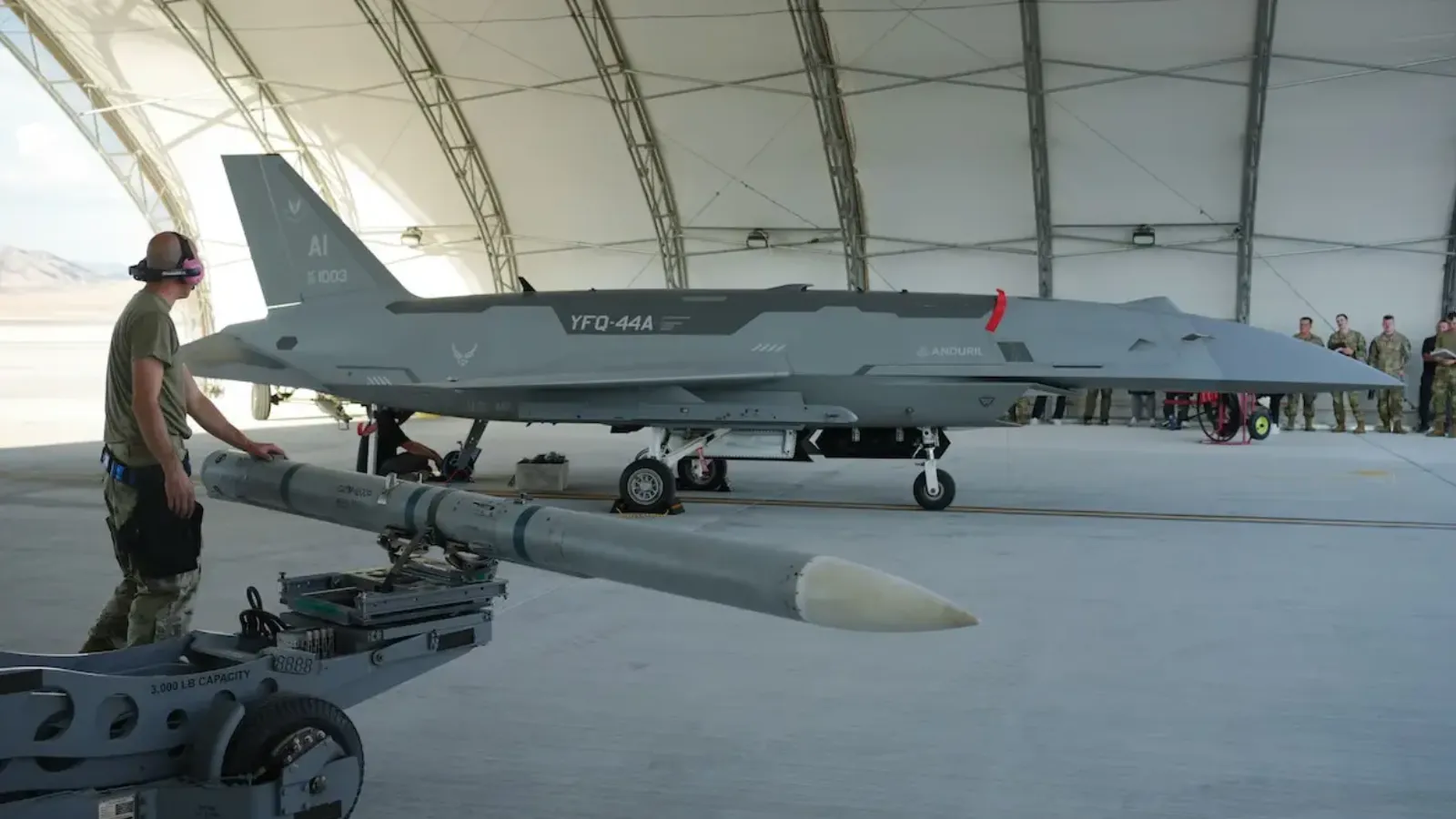
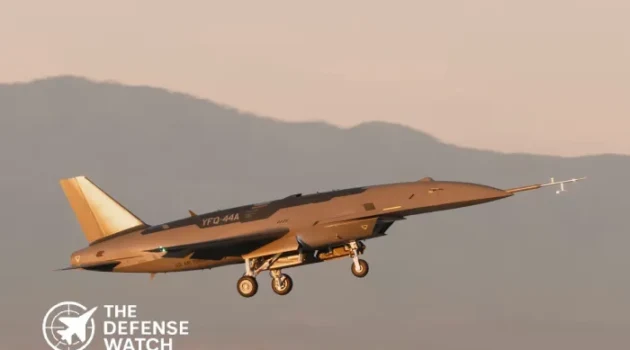
The latest operational testing comes only weeks after the Air Force successfully conducted its first live AIM-120 missile launch from a YFQ-44A aircraft over the Mojave Desert. That demonstration verified the aircraft’s ability to safely employ weapons while maintaining human authorization for weapons release.
Why Creech Air Force Base Matters
Creech Air Force Base has become one of the Air Force’s principal centers for remotely piloted aircraft operations.
Its existing infrastructure, experienced operators, and expertise in remotely operated missions make it a logical location to develop concepts for Collaborative Combat Aircraft.
Rather than focusing solely on aircraft performance, the recent exercise examined broader operational questions, including:
- Aircraft generation and turnaround procedures
- Weapons loading operations
- Mission planning workflows
- Command and control integration
- Agile Combat Employment support
- Logistics and maintenance under expeditionary conditions
These factors ultimately determine whether an advanced platform can be deployed effectively during combat operations.
Open Architecture Remains A Core Design Principle
One distinguishing feature of the CCA program is the Air Force’s decision to separate autonomy software from aircraft manufacturing.
Instead of locking operators into proprietary software tied to a single manufacturer, the Department of the Air Force is implementing the government-owned Autonomy Government Reference Architecture (A-GRA).
This modular approach allows different autonomy software developers to compete while enabling future upgrades without redesigning the aircraft itself. Officials believe the strategy will shorten upgrade cycles, reduce costs, and encourage greater innovation across the defense industrial base.
Strategic Importance For Future Air Combat
The Collaborative Combat Aircraft program represents one of the most significant changes in U.S. tactical aviation since the introduction of fifth-generation fighters.
Instead of replacing aircraft such as the F-35A or future Next Generation Air Dominance platforms, CCAs are intended to expand combat capacity by operating as force multipliers.
Potential missions include:
- Air-to-air missile carriage
- Electronic warfare
- Intelligence, surveillance and reconnaissance
- Decoy operations
- Long-range strike support
- Escort missions for crewed fighters
By assigning higher-risk missions to autonomous aircraft, commanders can preserve expensive crewed platforms while increasing the number of combat assets available during large-scale operations.
This concept is particularly relevant in the Indo-Pacific, where long engagement distances and sophisticated integrated air defense systems demand larger, more distributed air forces.
Challenges Still Ahead
Although recent progress has been rapid, several hurdles remain before the aircraft enter operational service.
Among the remaining priorities are:
- Expanding autonomous mission complexity
- Verifying secure communications in contested environments
- Integrating CCAs with multiple fighter platforms
- Refining operator training requirements
- Establishing long-term sustainment concepts
- Scaling production for operational units
The Air Force has consistently emphasized that human operators will remain responsible for weapon release decisions, ensuring compliance with existing command authorities and rules of engagement.
Industry Competition Continues
The CCA program also remains one of the Pentagon’s largest autonomous aviation initiatives.
General Atomics and Anduril have emerged as the initial production partners following competitive prototype development, while several companies continue developing autonomy software under separate contracts. The broader objective is to field more than 150 Collaborative Combat Aircraft by the end of the decade, with significantly larger procurement planned thereafter.
Outlook
The operational testing underway at Creech Air Force Base marks an important transition from technology demonstration to practical military employment.
While flight testing, weapons integration, and software development remain ongoing, the Air Force is increasingly focused on how autonomous aircraft will function within operational squadrons rather than whether the technology itself is viable.
As testing expands through 2026, the lessons learned at Creech will help shape future doctrine for crewed-uncrewed teaming, influencing how the Air Force integrates autonomous combat aircraft into its next generation of air operations.
The U.S. Army Corps of Engineers (USACE), Omaha District, has awarded Hensel Phelps Construction Co., of Greeley, Colorado, a $120.21 million firm-fixed-price contract to execute facilities sustainment, restoration, and modernization (FSRM) projects across the U.S. Air Force Academy (USAFA) in Colorado Springs.
According to the Department of Defense contract announcement, the project will improve critical infrastructure supporting the Academy’s academic, operational, and military training missions. The work is scheduled for completion by July 31, 2028, with funding provided through Fiscal Year 2026 Operations and Maintenance, Defense-Wide appropriations. The contract was awarded following a competitive solicitation that received four bids through an online procurement process.
¦ Key Takeaways- Hensel Phelps secured a $120.21 million firm-fixed-price contract to modernize facilities at the U.S. Air Force Academy.
- The contract covers facilities sustainment, restoration, and modernization work through July 2028.
- The U.S. Army Corps of Engineers, Omaha District, awarded the project following a competitive four-bid procurement.
- Funding comes from FY2026 Defense-Wide Operations and Maintenance appropriations obligated at contract award.
- The modernization effort supports long-term readiness of one of the U.S. Air Force’s premier officer commissioning institutions.
Deep Technical & Strategic Context Analysis
The award falls under the Department of Defense’s Facilities Sustainment, Restoration, and Modernization (FSRM) program, one of the Pentagon’s primary mechanisms for maintaining operational military infrastructure. Unlike military construction (MILCON) projects that often deliver entirely new facilities, FSRM funding focuses on extending the service life of existing buildings and infrastructure through structural repairs, utility upgrades, energy improvements, safety enhancements, and modernization of mission-critical facilities.
A firm-fixed-price contract places the majority of cost risk on the contractor. The government agrees to pay a predetermined amount regardless of actual project costs, incentivizing efficient execution while providing predictable budgeting for the Department of Defense. This contract type is commonly used for mature construction requirements where project scope is well defined.
For the U.S. Air Force Academy, infrastructure modernization has strategic implications beyond campus maintenance. USAFA educates and commissions hundreds of Air Force and Space Force officers annually while supporting advanced research, cyber education, engineering laboratories, flight training, and military leadership development. As the Department of the Air Force continues to emphasize great power competition, resilient infrastructure has become an increasingly important component of military readiness, ensuring uninterrupted education, training, and research activities that directly support future operational capability.
Contract Breakdown & Details
Contract Overview
- Contractor: Hensel Phelps Construction Co.
- Headquarters: Greeley, Colorado
- Contract Value: $120,209,500
- Contract Type: Firm-Fixed-Price
- Program: Facilities Sustainment, Restoration and Modernization (FSRM)
- Awarding Agency: U.S. Army Corps of Engineers, Omaha District
- Contract Number: W9128F-26-C-A044
Scope of Work
The contract supports modernization activities across the U.S. Air Force Academy, including:
- Facility sustainment to preserve operational infrastructure.
- Restoration projects addressing aging or degraded facilities.
- Modernization efforts improving mission effectiveness and building performance.
- Infrastructure upgrades supporting long-term operational readiness.
While the Department of Defense did not identify specific buildings included in the award, FSRM contracts typically encompass administrative facilities, academic buildings, utilities, training infrastructure, mechanical systems, and other installation support assets.
Funding
- Funding Source: FY2026 Operations and Maintenance, Defense-Wide
- Funds Obligated at Award: $120,209,500
- Funding Agency: Department of Defense
Procurement Details
- Solicitation Method: Internet-based competitive procurement
- Number of Bids Received: Four
- Awarding Contracting Activity: U.S. Army Corps of Engineers, Omaha District
Work Location
- Primary Performance Location: U.S. Air Force Academy, Colorado Springs, Colorado
- Estimated Completion Date: July 31, 2028
Geographic Work Breakdown
The Department of Defense announcement identifies 100 percent of contract performance at the U.S. Air Force Academy, Colorado Springs, Colorado.
Location Share of Work U.S. Air Force Academy, Colorado 100% Multi-Agency Funding Breakdown
Funding Source Amount FY2026 Operations & Maintenance, Defense-Wide $120,209,500 Strategic Significance
The award reflects the Pentagon’s continued emphasis on modernizing military infrastructure alongside investments in next-generation aircraft, weapons, and digital capabilities. Aging facilities can directly affect training throughput, research capacity, and installation resilience. By investing more than $120 million in infrastructure at the Air Force Academy, the Department of Defense is strengthening the physical foundation that supports future Air Force and Space Force leadership while ensuring the Academy remains capable of supporting evolving operational and educational requirements through the coming decades.
atOptions = { ‘key’ : ‘3d48d603f906e3fe9f205be3c4433835’, ‘format’ : ‘iframe’, ‘height’ : 250, ‘width’ : 300, ‘params’ : {} };Executive Summary:
The U.S. Air Force is formalizing a two pilot crew concept for the B 21 Raider as the next generation stealth bomber progresses toward operational service. The decision reflects the aircraft’s central role in future conventional and nuclear long range strike missions while supporting a faster transition from testing to combat readiness.
U.S. Air Force Defines B 21 Raider Crew Concept Ahead Of Operational Service
The B 21 Raider program has reached another important milestone as the U.S. Air Force establishes a standard two pilot crew for its next generation stealth bomber. The move comes as the service continues developmental and operational testing while preparing the aircraft to become the backbone of America’s future long range strike capability.
According to Air Force officials, the B 21 will be operated by two qualified pilots rather than a larger crew. The approach mirrors the operational model used by the B 2 Spirit while taking advantage of the Raider’s highly automated mission systems, advanced avionics, and digital architecture.
The Air Force has emphasized that introducing operational personnel into flight testing earlier than previous aircraft programs will help accelerate the bomber’s transition into frontline service.
Early Operational Testing Changes The Development Process
A significant milestone occurred when an operational test pilot flew alongside a developmental test pilot during a B 21 flight at Edwards Air Force Base.
Traditionally, developmental testing and operational testing occur sequentially. For the Raider, however, both communities are working together much earlier in the program, allowing operational feedback to influence testing before production expands. Air Force officials describe the approach as a major change in modern military aircraft acquisition.
The Raider Combined Test Force continues evaluating aircraft performance, mission systems, survivability, and combat suitability while additional test aircraft enter the program. Earlier this year, the program also completed aerial refueling milestones that demonstrated increasing maturity of the aircraft’s systems.
(adsbygoogle = window.adsbygoogle || []).push({});Why A Two Pilot Crew Matters
Although the B 21 incorporates advanced automation and digital mission management, the Air Force has retained two pilots for several operational reasons.
These include:
- Managing complex long duration global strike missions.
- Supporting conventional and nuclear mission requirements.
- Reducing pilot workload during contested operations.
- Improving mission resilience during extended flights.
- Providing redundancy during strategic deterrence missions.
Unlike legacy bombers that relied on larger crews, many navigation, communications, and systems management tasks are now handled through integrated software and highly automated onboard systems. This enables the aircraft to accomplish complex missions with fewer personnel while maintaining operational flexibility.
B 21 Raider Program Status
Program Element Current Status Manufacturer Northrop Grumman Crew Two pilots Role Nuclear and conventional stealth bomber Flight Testing Ongoing Planned Fleet At least 100 aircraft First Operational Base Ellsworth Air Force Base Primary Mission Long range penetrating strike Source: U.S. Air Force and Air & Space Forces Magazine.
(adsbygoogle = window.adsbygoogle || []).push({});Strategic Importance For U.S. Long Range Strike
The two pilot crew announcement is more than a personnel decision. It represents another step toward fielding the Air Force’s future strategic bomber force.
The Raider is expected to gradually replace both the B 1B Lancer and B 2 Spirit while operating alongside the modernized B 52J. Together, these aircraft will provide a layered bomber force capable of conducting conventional precision strike, nuclear deterrence, maritime strike, and long endurance global operations.
The Air Force also intends for the B 21 to operate within a broader family of systems that includes advanced weapons, intelligence networks, electronic warfare capabilities, and future collaborative platforms. Its open systems architecture is designed to allow software driven upgrades throughout the aircraft’s service life, reducing the time required to integrate new capabilities.
Analysis: Preparing The Human Element Of Future Air Warfare
While much attention surrounding the Raider focuses on stealth technology and advanced weapons, defining its crew structure is equally important.
A standardized two pilot concept simplifies training pipelines, operational planning, and long term sustainment. It also reflects confidence that digital automation has matured enough to reduce crew size without sacrificing mission effectiveness.
From an operational perspective, combining developmental and operational testing earlier than previous programs could shorten the timeline between testing and combat deployment. This approach also allows future crews to influence aircraft tactics, procedures, and mission planning before the bomber reaches full operational capability.
For the United States, where long range strike remains a cornerstone of both conventional military power and nuclear deterrence, the human component of the Raider program is becoming as important as its technical performance. As strategic competition with China and Russia continues, preparing qualified crews now ensures the Air Force can rapidly generate combat capable bomber units once production accelerates.
Newer Posts