

Executive Summary
- The Alaskan NORAD Region has deployed F-16 Fighting Falcons from Eielson Air Force Base to 5 Wing Goose Bay in Newfoundland and Labrador, Canada, for Operation Arctic Vanguard 26-4.2, running Sept. 13-26, 2026.
- The operation is moving beyond a simple fighter deployment. NORAD personnel and aircraft are scheduled to forward deploy into Greenland while operating with Canadian, Danish and other NATO partners under austere Arctic conditions.
- The deployment tests a key homeland-defense requirement: whether combat aircraft can be moved, supported and employed across the enormous geographic distances separating Alaska, Canada and Greenland while maintaining multinational command and control.
The Alaskan NORAD Region has deployed U.S. Air Force F-16 Fighting Falcons from Eielson Air Force Base, Alaska, to Goose Bay, Newfoundland and Labrador, Canada, as part of Operation Arctic Vanguard 26-4.2, a NORAD operation running from Sept. 13 through Sept. 26, 2026. The aircraft are operating alongside the Canadian NORAD Region before planned forward operations in Greenland with Denmark and other NATO partners.
The deployment links Alaska, northeastern Canada and Greenland into a single operational sequence. For NORAD, the significance is less about the F-16 platform itself than about demonstrating that combat aviation forces can move across the Arctic, operate from locations with limited infrastructure and integrate with allied forces over a geographically dispersed battlespace.
From Alaska to Canada and Greenland
The movement begins at Eielson Air Force Base, home to F-16 units operating under the Alaskan NORAD Region. The aircraft were sent to Goose Bay as an intermediate operating location before the planned Greenland phase of Arctic Vanguard.
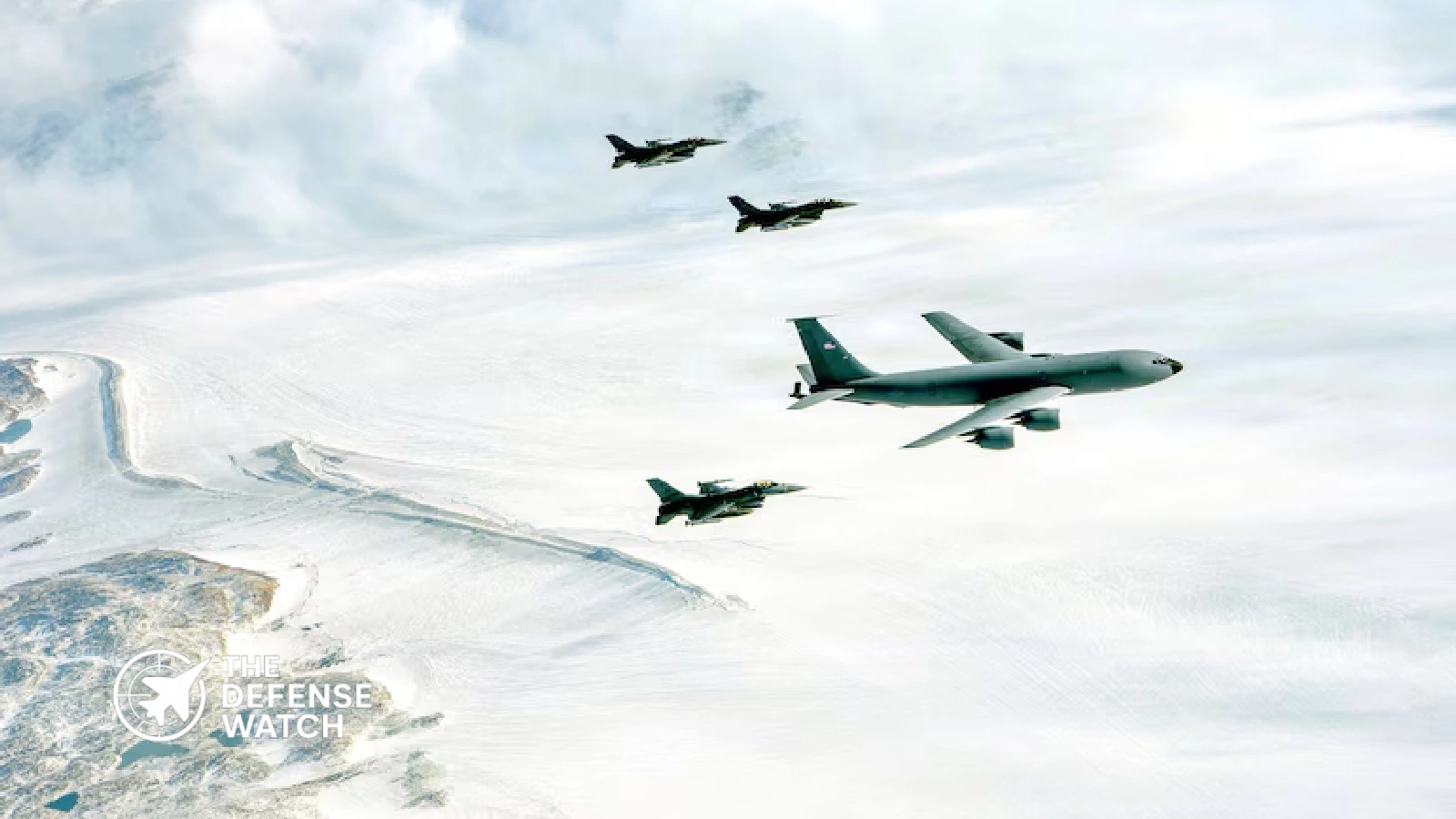
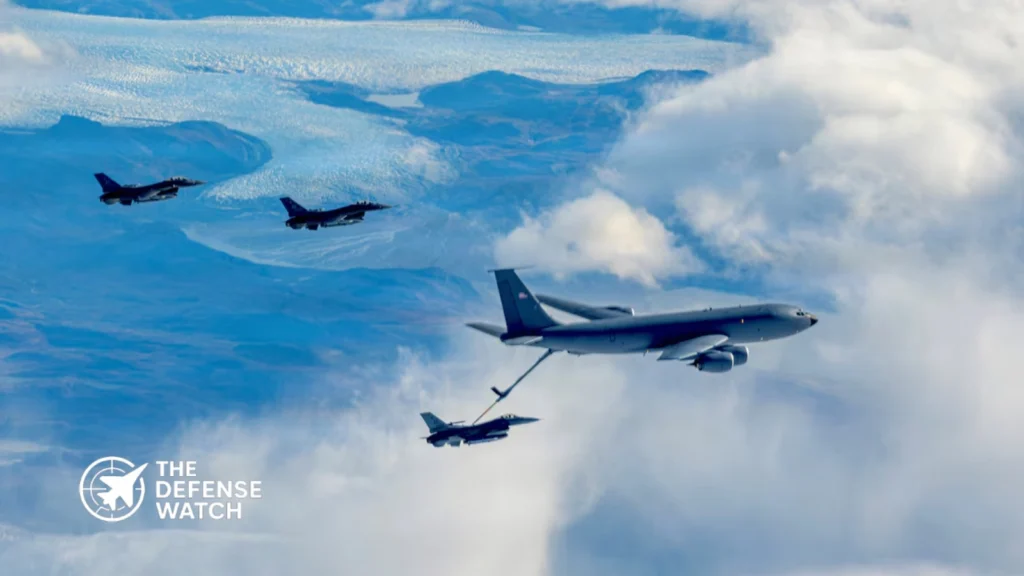
DVIDS imagery from the operation shows F-16s at 5 Wing Goose Bay and identifies personnel from the 18th Fighter Interceptor Squadron participating in the operation. The imagery also documents F-16 and KC-135 operations over Greenland on Sept. 16.
The route matters operationally. Alaska provides the initial launch point, Canada supplies a critical geographic bridge, and Greenland provides a forward position close to the North Atlantic and Arctic approaches.
The U.S. Department of Defense has not publicly disclosed the number of F-16s involved, their specific weapons configurations, planned sortie rates or detailed operating locations in Greenland. Those figures should not be inferred from imagery or from the broader description of the exercise.
Why Forward Arctic Operations Matter
Arctic air defense presents a different operating problem from conventional fighter deployments in more densely developed regions.
Large distances separate bases, sensors, maintenance facilities and potential operating areas. Weather can restrict flight operations and logistics, while limited infrastructure reduces the number of locations from which combat aircraft can routinely operate.
That makes mobility and sustainment central to Arctic air defense.
The Arctic Vanguard deployment is therefore testing more than fighter movement. It is examining whether the broader system surrounding the fighter can function when aircraft are separated from their normal support infrastructure.
That includes airlift, aerial refueling, maintenance, communications, command and control, personnel movement and coordination between national military organizations.
The U.S. and Canada have been placing greater emphasis on this type of Arctic readiness. NORAD and U.S. Northern Command’s Arctic Edge 2026 exercise earlier this year included forces from the United States, Canada and Denmark and was designed to improve readiness and multinational interoperability across Alaska and Greenland.
F-16s as a Mobile Arctic Air-Defense Asset
The F-16 Fighting Falcon is not a new-generation fighter, but its role in Arctic Vanguard demonstrates why fourth-generation aircraft remain relevant to homeland air defense.
The aircraft provides a mature multirole combat capability that can perform air-defense missions while operating as part of a larger network of airborne and ground-based sensors, command systems and tanker support.
The operational question in the Arctic is consequently not whether the F-16 is technologically newer than fifth-generation aircraft. It is whether available combat aircraft can be positioned quickly enough and supported effectively enough to respond across large areas.
Arctic Vanguard provides an opportunity to test that question under realistic geographic conditions.
The public information released so far does not establish that the exercise is intended to evaluate a specific F-16 weapon, radar configuration or electronic warfare system. The available evidence instead points to mobility, forward basing, interoperability and air-defense readiness as the central themes.
Canadian Support Extends the Northern Defense Network
The deployment also illustrates the importance of Canada within North American air defense.
The F-16s moved from Alaska into eastern Canada before the Greenland phase. That makes Canadian territory and infrastructure an operational link between the U.S. Pacific-facing Arctic posture and the North Atlantic side of the continental defense network.
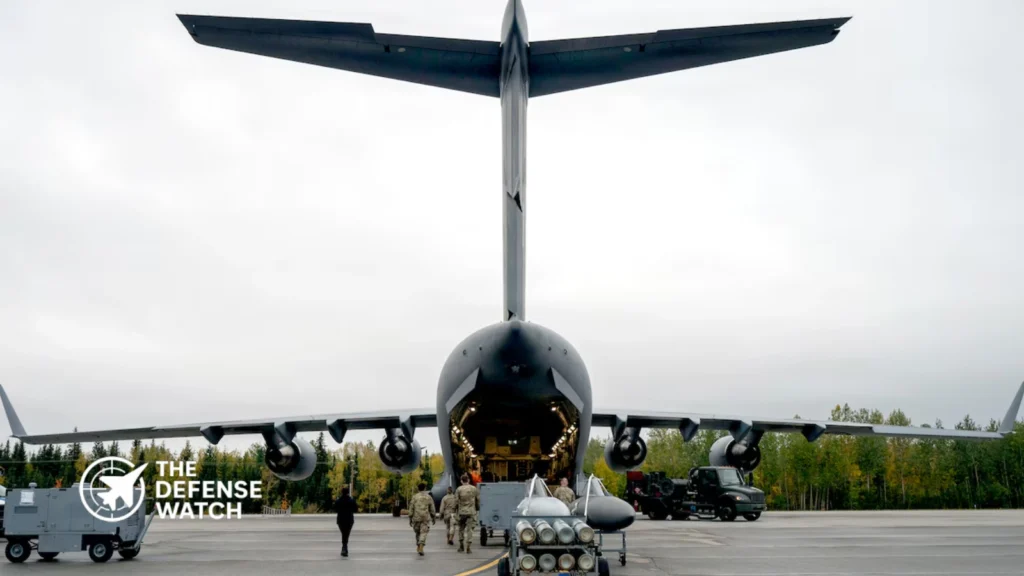
The U.S. release states that the Alaskan NORAD Region is operating directly alongside the Canadian NORAD Region during Arctic Vanguard. Royal Canadian Air Force strategic airlift is also supporting the movement.
This arrangement provides an example of how NORAD can use national military resources within a binational command structure rather than treating Alaska, Canada and Greenland as separate operational areas.
For a geographically dispersed defense mission, that integration can be as important as the individual combat aircraft.
Greenland Adds a Forward Operating Dimension
The planned Greenland phase introduces another layer to the operation.
Greenland is strategically positioned between North America and Europe and sits close to important Arctic and North Atlantic approaches. Its geography makes it relevant to air and maritime surveillance, aerospace warning and the movement of forces between North America and Europe.
Arctic Vanguard is not the first NORAD or USNORTHCOM activity involving Greenland. Arctic Edge 2026 included U.S., Canadian and Danish forces operating in Greenland from Feb. 23 through March 13. That exercise included Arctic survival and mobility training as well as broader homeland-defense activities.
The recurring nature of these activities is significant. Rather than relying exclusively on occasional large exercises, NORAD and USNORTHCOM are increasingly describing Arctic operations as a continuing requirement involving training, forward presence, capability development and multinational coordination.
Nordic Bridge Connects Arctic Operations With NATO
Arctic Vanguard is also tied to the Nordic Bridge concept developed by NORAD and USNORTHCOM.
The concept is intended to better align U.S. Arctic activities with NATO allies, individual nations and regional partners. In practical terms, this means creating more consistent coordination between military exercises, operations, training and investment decisions across the Arctic and northern European security environment.
Recent USNORTHCOM activity supports that broader direction.
In August, NORAD and USNORTHCOM commander Gen. Gregory Guillot hosted Denmark’s Chief of Defence, Gen. Michael Hyldgaard, during a visit to Alaska. The discussions included Arctic air defense, interoperability and the defense of Greenland. Guillot also described the Nordic Bridge concept as a mechanism for linking U.S. and NATO partners in defending the Northern Approaches and Arctic.
Norway has also been involved in discussions with NORAD and USNORTHCOM about Arctic and High North cooperation.
Arctic Vanguard therefore fits into a wider pattern of allied coordination rather than representing an isolated fighter movement.
What the Deployment Actually Tests
The most important capability being examined is the ability to generate combat power away from established home bases.
| Operational Area | What Arctic Vanguard Demonstrates |
|---|---|
| Fighter mobility | Movement of F-16s from Alaska through Canada toward Greenland |
| Forward basing | Operation from Goose Bay and planned austere Arctic locations |
| Allied integration | Coordination with Canada, Denmark and NATO partners |
| Logistics | Support for aircraft operating far from their home station |
| Refueling | Integration of tanker support during Arctic operations |
| Command and control | Cooperation between regional NORAD organizations |
| Arctic readiness | Operations in severe weather and infrastructure-limited locations |
The operation should not, however, be treated as proof that a permanent Arctic fighter presence has been established. It is a temporary operation running through Sept. 26, and the public release does not provide sufficient information to determine how frequently comparable fighter deployments will occur after the exercise.
That distinction matters because an exercise can demonstrate that a capability is possible without establishing that the same capability can be maintained continuously.
The Sustainment Challenge
The largest constraint on Arctic combat aviation may not be the fighter itself.
F-16 operations require fuel, maintenance personnel, spare parts, ground equipment, communications infrastructure and transportation support. Moving the aircraft is only the first step. Maintaining a useful sortie rate from a remote location requires a support architecture capable of operating in the same environment.
That is why the inclusion of Canadian strategic airlift and tanker operations is important.
The operation provides an opportunity to examine the complete deployment chain rather than only the tactical movement of fighters. If aircraft can be moved rapidly but cannot be sustained at useful operational tempo, geographic access alone provides limited military value.
Conversely, improving the ability to disperse aircraft across multiple northern locations can make the defense network less dependent on a small number of major bases.
Arctic Vanguard Builds on a Broader NORAD Shift
NORAD and USNORTHCOM have increasingly focused on Arctic readiness, including command and control, infrastructure, multinational interoperability and the ability to operate under difficult conditions.
In July 2026, NORAD and USNORTHCOM convened senior leaders to establish a framework for prioritizing binational Arctic military capabilities. The initiative followed the VISTA AURORA tabletop exercise and was intended to translate operational findings into future capability requirements.
That work provides important context for Arctic Vanguard.
The fighter deployment represents the operational side of the same problem. Commanders can identify Arctic capability requirements at headquarters, but those requirements ultimately have to be tested by forces operating in the region.
Implications for North American Air Defense
Arctic Vanguard does not by itself change the balance of military power in the Arctic. Its immediate purpose is more practical: to test whether existing forces can be moved and integrated across a difficult operating environment.
For NORAD, the value comes from reducing the gap between having combat aircraft available in Alaska and being able to employ them farther across the northern approaches when required.
The deployment also reinforces the importance of multinational access. Canada provides the geographic connection between Alaska and the North Atlantic, while Denmark is a key partner for operations involving Greenland.
The broader lesson is that Arctic defense is increasingly being treated as a networked mission rather than a collection of isolated national activities.
What Comes Next
The next phase of Arctic Vanguard will provide a clearer indication of how NORAD forces operate from Greenland under austere conditions.
Particular areas to watch include the duration of fighter operations at forward locations, the scale of allied participation, the role of tanker and airlift support, command-and-control arrangements, and whether lessons from the operation translate into future infrastructure or force-posture decisions.
Those details will help determine whether exercises such as Arctic Vanguard are primarily readiness events or part of a longer-term shift toward more persistent and distributed Arctic operations.
For now, the deployment demonstrates a specific capability: U.S. F-16s based in Alaska can be moved through Canada and into a multinational Arctic operating framework involving Greenland, Denmark and NATO partners.
That ability to reposition combat airpower across the northern approaches is increasingly central to the way NORAD and USNORTHCOM are approaching Arctic defense.
