
Executive Summary:
U.S. Marines have conducted urban raid training focused on preparing small units for high-intensity combat in dense, complex environments. The drills emphasize rapid movement, close-quarters engagement, and coordinated assaults under realistic battlefield conditions. The exercise reflects a broader shift toward distributed operations and urban warfare readiness.
U.S. Marines Urban Raid Training for High-Intensity Combat Operations
U.S. Marines are intensifying urban raid training to improve readiness for high-intensity combat operations in dense city environments. The drills are designed to test how small units move, clear structures, and coordinate under pressure in conditions that mirror modern battlefield challenges.
The training reflects a growing focus inside the Marine Corps on operating in complex terrain where visibility is limited, threats emerge from multiple directions, and speed of decision making is critical.
Urban Combat Focus in Modern Marine Training
The latest exercise centers on close-quarters battle skills and coordinated team movement through built-up environments. Marines rehearse room clearing, building entry, and rapid target identification under simulated combat stress.
According to U.S. Marine Corps training doctrine and recent exercise reporting, these drills are part of a wider push to improve combat effectiveness in urban terrain where traditional formations are less effective and small-unit leadership becomes central.
The focus on urban raid training comes as global military planners increasingly expect future conflicts to involve populated areas, requiring forces to balance speed, precision, and restraint in dynamic environments.
High-Intensity Combat Preparation and Tactical Adaptation
The Marine Corps is adapting its training to reflect high-intensity combat conditions where threats may include drones, indirect fire, and well-prepared defensive positions inside urban structures.
Exercises emphasize:
- Rapid insertion and movement through confined spaces
- Coordinated entry teams and fire discipline
- Communication under disrupted conditions
- Decision making under time pressure
These elements are intended to build resilience in units expected to operate in contested environments where situational awareness can degrade quickly.
Distributed Operations and Small Unit Emphasis
A key element of the training is the shift toward distributed operations. Instead of relying on large formations, Marines increasingly train in smaller, more flexible units capable of independent action.
This approach supports broader Marine Corps modernization concepts such as Expeditionary Advanced Base Operations and distributed maritime operations, which prioritize mobility and survivability across dispersed locations.
The urban raid framework fits into this model by preparing units to operate independently in complex terrain while maintaining coordination with larger task forces.
Strategic Context and Global Relevance
Urban warfare training is not limited to counterterrorism scenarios. Military analysts note that potential peer or near-peer conflicts could involve heavily urbanized environments where conventional maneuver warfare is constrained.
Recent U.S. and NATO training patterns show increased emphasis on:
- Urban assault coordination with allies
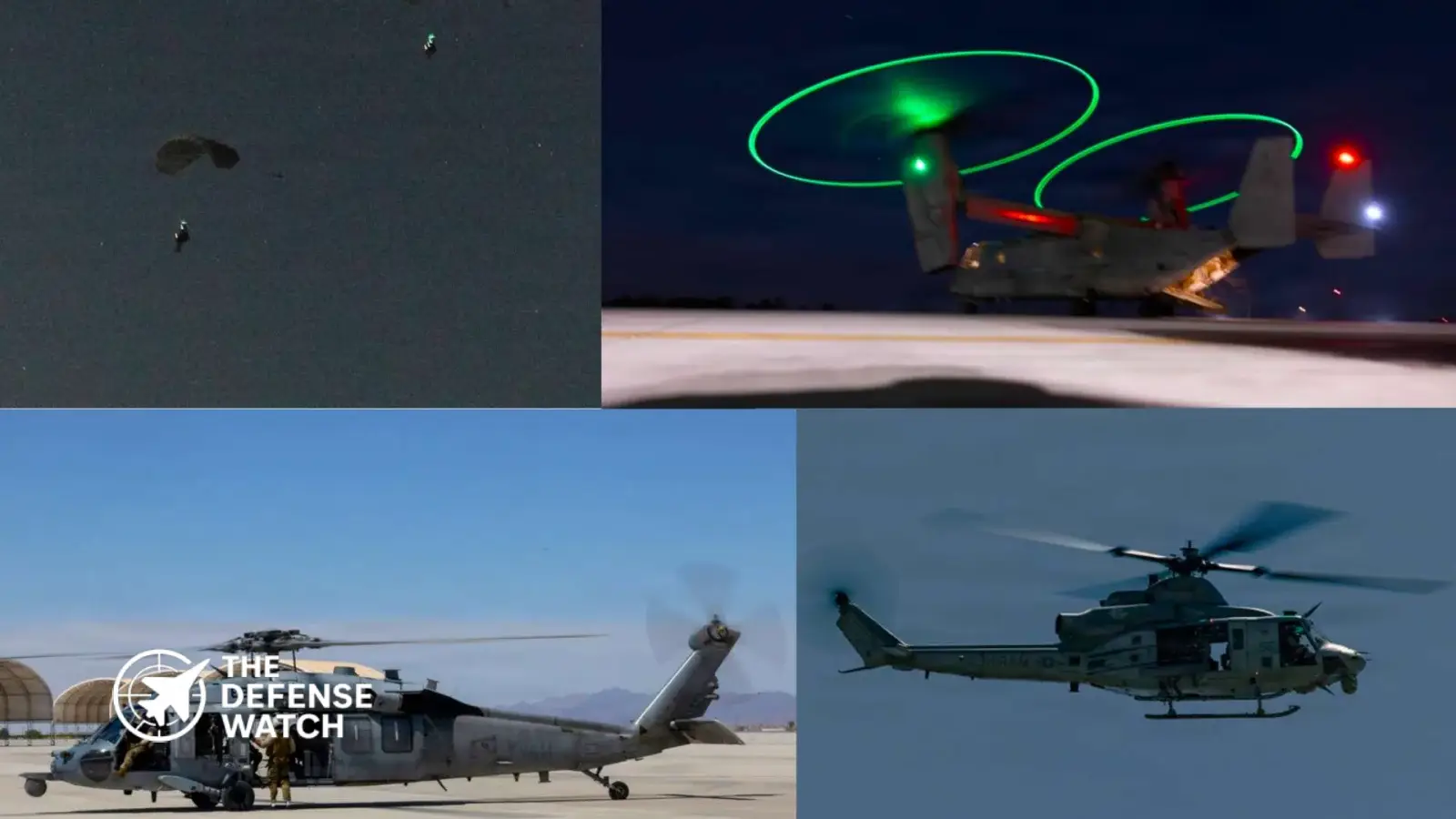
- Integration of aviation and ground elements
- Rapid evacuation and casualty response drills
- Multi-domain awareness in dense terrain
These developments reflect a broader recognition that future combat environments may be fast moving, fragmented, and heavily reliant on small-unit execution.
Operational Impact
The continued focus on urban raid training highlights a shift in readiness priorities. The Marine Corps is building capability for environments where control of terrain depends less on large-scale advances and more on localized tactical success.
In practical terms, this means Marines are preparing for scenarios where buildings, streets, and tight urban corridors become primary combat zones rather than secondary terrain.