

Executive Summary:
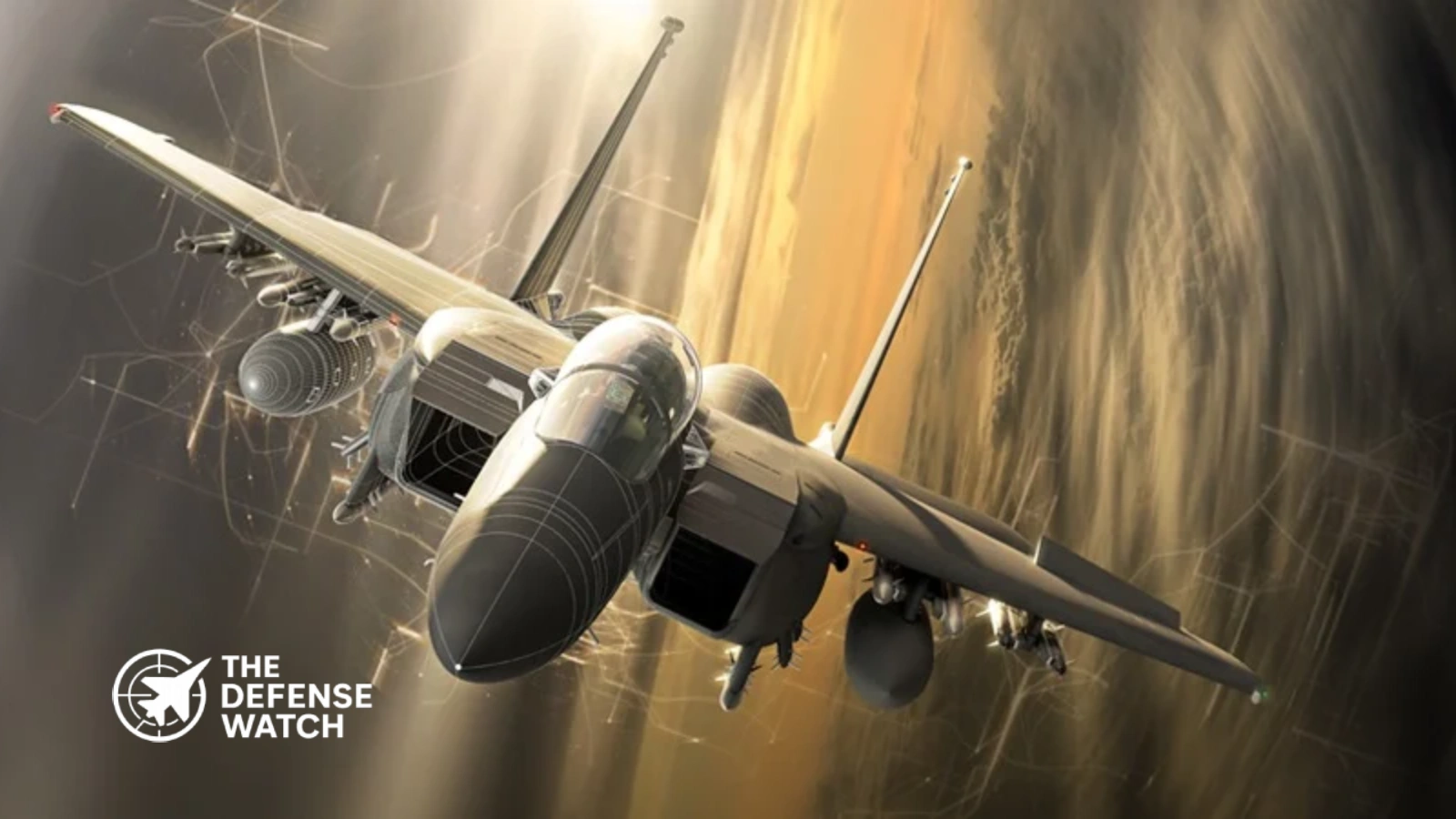
The U.S. Air Force is preparing for a major technical refresh of the F-15EX Eagle II as it extends the fighter’s planned production from eight to 12 lots and more than doubles the planned fleet to 267 aircraft. A new Pentagon acquisition report warns that the longer production timeline could make the aircraft’s radar, mission computer, electronic warfare suite and engines obsolete before the final jets are delivered. The service plans to manage the problem through future Operational Flight Program releases and phased integration of upgraded subsystems between 2031 and 2035. At the same time, current F-15EX production faces shortages involving displays, GE F110 engines and ejection-system components, while Boeing’s 2025 St. Louis strike has created delivery delays.
F-15EX Technical Refresh Becomes a Program Priority
The F-15EX technical refresh is emerging as one of the central engineering challenges created by the U.S. Air Force’s decision to expand the Eagle II fleet.
The Air Force originally structured the F-15EX acquisition around eight production lots. The revised plan extends procurement to 12 lots, creating a substantially longer production window and increasing the possibility that key components will reach the end of their manufacturing life before the program is complete.
The Pentagon’s selected acquisition report identifies four major areas that could require replacement or redesign:
| System | Future Concern | Planned Approach |
|---|---|---|
| Radar | Component obsolescence | New-generation radar integration |
| Mission computer | Hardware and technology obsolescence | Updated mission computing |
| Electronic warfare suite | Evolving threats and component availability | New EW architecture |
| Engines | Manufacturing and supply risks | Future engine replacement or redesign |
The report describes the required work as a major technical refresh and warns that replacing these systems would constitute a significant redesign effort.
Why the F-15EX Needs a Longer-Term Upgrade Path
The issue is not that the current F-15EX configuration is considered inadequate.
The Eagle II already incorporates an AN/APG-82 AESA radar, digital fly-by-wire flight controls, an advanced mission system and the Eagle Passive Active Warning Survivability System, or EPAWSS. Boeing describes the aircraft as an open-mission-system platform designed to accommodate future upgrades.
The problem is the length of the production program.
A fighter assembled in the early 2030s will encounter a different technology and supply environment from one built in the 2020s. Electronics suppliers may discontinue older processors, displays or components, while radar and electronic warfare technologies will continue to evolve.
This creates a familiar defense acquisition problem: keeping a production line open can eventually require redesigning the aircraft around components that remain available.
The Pentagon therefore intends to integrate major subsystem changes through future Operational Flight Program releases scheduled between 2031 and 2035. According to the acquisition report, this approach is intended to allow testing and fielding without creating a production-line gap.
Radar Upgrade Could Shape the Future F-15EX
Radar is one of the most important areas identified for future modernization.
The current F-15EX uses the Raytheon AN/APG-82 AESA radar, which provides electronically scanned air-to-air and air-to-ground sensing. The system is already part of the aircraft’s broader sensor and weapons architecture.
Raytheon has also publicly discussed the APG-82(V)X, an enhanced version incorporating gallium nitride technology intended to increase radar effectiveness without requiring additional aircraft power. The company says the system is designed to improve detection, tracking and multifunction operation, including electronic warfare functions.
The Pentagon report does not establish that the APG-82(V)X will become the selected future F-15EX radar.
That distinction matters. The acquisition report identifies the need for a future radar refresh, but it does not publicly identify a final replacement configuration. Any specific future radar selection should therefore be treated as an open requirement rather than an awarded upgrade.
Mission Computing Is Equally Important
The F-15EX’s mission computer is another potential obsolescence point.
Modern fighters increasingly depend on software-defined mission systems to combine radar, electronic warfare, communications, navigation and weapons information. For the F-15EX, maintaining the computing architecture is particularly important because the aircraft is intended to operate alongside fifth-generation fighters and future collaborative combat aircraft.
Boeing says the Eagle II uses an open mission systems architecture that supports future software and hardware upgrades. The company has also highlighted the aircraft’s networking capabilities and its ability to support manned-unmanned operations.
The Air Force’s approach of incorporating future hardware through Operational Flight Program releases is therefore significant.
Rather than treating the F-15EX as a fixed configuration, the service is effectively planning for the aircraft to evolve during production.
Electronic Warfare Will Remain a Core Requirement
The electronic warfare system presents another long-term modernization challenge.
The F-15EX was designed around the EPAWSS survivability suite, which provides integrated threat warning, electronic protection and electronic attack capabilities. Air Force testing has demonstrated the importance of integrating radar, electronic warfare and mission systems in realistic contested environments.
The Air Force has previously described EPAWSS as a system intended to improve the aircraft’s ability to operate against advanced air-defense and electronic threats.
For future production aircraft, however, the requirement is not simply to preserve today’s electronic warfare capability.
Threat emitters, radar modes and electronic attack techniques change over time. A production aircraft entering service in the early 2030s will need an electronic warfare architecture capable of receiving updates throughout its operational life.
That makes software architecture, processing capacity and access to replacement hardware as important as the individual electronic warfare sensors themselves.
Engine Supply Is Already a Production Risk
The engine issue is more immediate.
The F-15EX uses two General Electric F110 engines per aircraft, and the Pentagon’s FY2027 budget documentation specifically identifies engine procurement as part of the aircraft’s recurring production cost.
The latest acquisition reporting also identifies GE F110 engines among components affected by supply-chain pressure. Other shortages include large-area displays, low-profile heads-up displays and Collins Aerospace cartridges associated with the aircraft’s ejection system.
This illustrates the difference between an aircraft’s technical modernization requirement and its immediate production problem.
The long-term concern is whether current components remain viable through later production lots. The near-term concern is whether suppliers can provide enough components to maintain the required aircraft delivery rate.
Both problems must be managed simultaneously.
Boeing Production Delays Add Pressure
The F-15EX expansion comes while the existing production schedule is already under pressure.
A strike at Boeing’s St. Louis facility from August through November 2025 disrupted production. According to the Pentagon acquisition report, the disruption created delays that cannot be fully recovered.
Lot 3 provides a clear example.
Boeing’s contract required delivery of all 12 Lot 3 aircraft in early 2026. The Pentagon now expects only six of those aircraft to be delivered by the end of 2026.
Lot 4 has also slipped, with deliveries previously expected in 2026 now forecast to begin in 2028. The program needs Boeing to reach a production rate of approximately two F-15EX aircraft per month to meet its delivery requirements.
The first F-15EX intended for permanent deployment at Kadena Air Base in Japan departed Boeing’s St. Louis facility in August 2026, but the aircraft is now expected to arrive at Kadena during fiscal 2027.
F-15EX Expansion Has Strategic Implications
The Air Force’s decision to increase the planned F-15EX fleet from 129 to 267 aircraft represents a major change in the service’s future fighter mix.
The additional aircraft are intended not only to complete existing F-15EX units but also to begin replacing aging F-15E Strike Eagles. The Air Force has said it needs a mix of F-15EX and F-35A capabilities rather than relying exclusively on one fighter type.
The F-15EX provides a different force structure option from the F-35A.
Its large weapons capacity, long range and substantial aircraft size make it particularly useful as a capacity platform operating alongside lower-observable aircraft. Boeing also emphasizes its ability to carry large weapons loads and operate within networked formations.
The planned deployment of F-15EX aircraft to Kadena is particularly important for the Indo-Pacific. The Air Force has described the aircraft as providing additional capacity for long-range fires, sensors and electronic warfare while complementing fifth-generation fighters.
What the Technical Refresh Means for Future Lots
The key point is that the F-15EX modernization plan is not simply an equipment upgrade.
It is a production-management strategy designed to keep an existing fourth-generation-derived fighter relevant as its manufacturing program extends into the 2030s.
The approach can be summarized as follows:
- Continue producing the current configuration while maintaining the production line.
- Identify components approaching obsolescence or facing diminishing manufacturing sources.
- Develop replacement radar, computing, electronic warfare and propulsion solutions.
- Test those systems through future Operational Flight Program releases.
- Introduce the upgraded systems into later production aircraft without creating a prolonged production gap.
This approach reduces the risk of abruptly stopping production for a complete redesign. It also allows the Air Force to spread engineering and testing work over several years.
The challenge is cost and integration risk. The Pentagon has not yet completed a detailed cost assessment for the additional aircraft and associated redesign work. Officials have begun a rapid cost-estimation process to support future budget planning.
F-15EX Program at a Glance
| Item | Current Plan |
|---|---|
| Aircraft | F-15EX Eagle II |
| Manufacturer | Boeing |
| Planned fleet | 267 aircraft |
| Previous planned fleet | 129 aircraft |
| Production strategy | 12 lots |
| Current radar | AN/APG-82 AESA |
| Electronic warfare | EPAWSS |
| Engine | Two GE F110 engines |
| Future modernization | Radar, mission computer, EW suite and engines |
| Planned upgrade window | 2031 to 2035 |
| Key overseas location | Kadena Air Base, Japan |
| Primary role | Air superiority, counter-air and high-capacity weapons carriage |
Current program and budget information from the Air Force, Pentagon and Boeing supports the basic configuration and acquisition figures above.
The Bottom Line
The F-15EX expansion gives the U.S. Air Force a much larger capacity fighter fleet, but it also creates a long-term technology management problem.
Keeping production open through 12 lots means the aircraft cannot remain frozen in its current configuration. Radar electronics, mission computing, electronic warfare equipment and engines will have to evolve as components become obsolete and new technologies become available.
The Air Force’s planned 2031 to 2035 upgrade pathway provides a way to introduce those changes without shutting down the production line. The harder challenge will be controlling redesign costs, maintaining supplier capacity and avoiding additional delivery delays while the service simultaneously expands the fleet.
For U.S. airpower planning, the F-15EX is therefore becoming more than a replacement for aging Eagles. Its future value will depend on whether the Air Force can maintain the aircraft’s open, upgradeable architecture while sustaining production through a period of rapid change in radar, electronic warfare, computing and propulsion technology.
