Executive Summary: The U.S. Air Force is preparing to formally study alternatives to the B-52 Stratofortress as a long-range strike platform, even as the first of 76 B-52Hs begins a major overhaul this year. Documents tied to the fiscal year 2027 budget request confirm plans for a “Heavy Bomber Analysis of Alternatives,” signaling that the service is already thinking well beyond the current modernization cycle. The move reflects growing urgency around long-range strike capacity as peer adversary threats intensify.
U.S. Air Force Eyes Post-B-52 Future With New Heavy Bomber Study
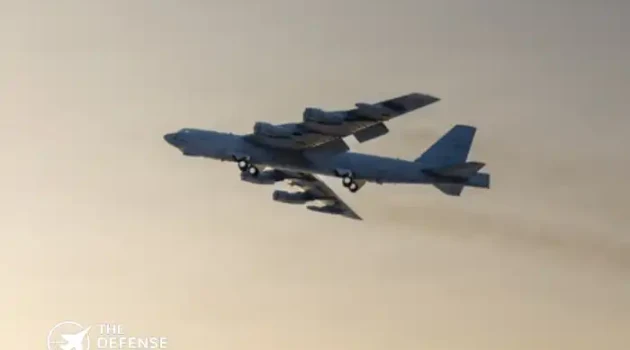
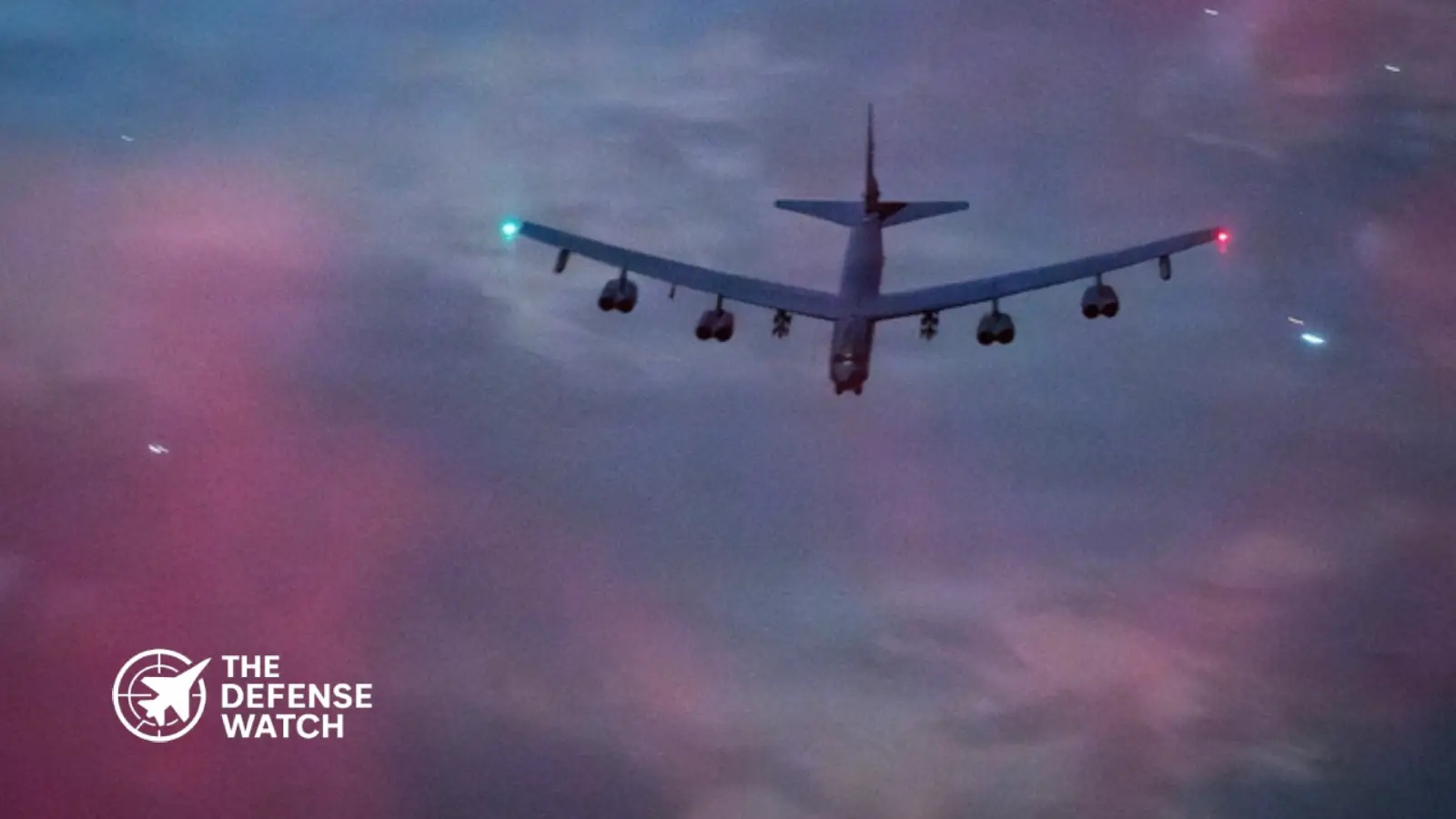
The U.S. Air Force is preparing to formally launch a Heavy Bomber Analysis of Alternatives, signaling that long-range strike planners are already looking past the B-52 Stratofortress — even as one of the most ambitious upgrades in the aircraft’s 70-year history is only just beginning.
Documents released alongside the fiscal year 2027 budget request outline plans for a “Heavy Bomber Analysis of Alternatives” to consider what long-range strike capabilities the Air Force might need in the future. Options on the table include new mission requirements for an upgraded B-52, an entirely new aircraft, or a combination of both.
The study represents a strategic pivot point. The Air Force is investing heavily to keep the B-52 relevant through the 2050s — while simultaneously acknowledging that a platform first designed during the Cold War may not meet the full spectrum of future threat requirements on its own.
B-52J Upgrade: Buying Time, Not a Permanent Solution
The first of 76 B-52Hs will begin the overhaul process this year, gaining new Rolls-Royce engines to improve reliability and efficiency, a new glass cockpit, new landing gear, improved radar, and other major modifications — work to be done by Boeing in San Antonio, Texas.
The upgraded aircraft, designated the B-52J, is expected to remain in service into the 2050s. The Air Force spent $3.9 million in 2025 to conduct a classified proof-of-concept demonstration on the B-52 and is seeking $1 million to begin the new analysis of alternatives in 2027.
That relatively modest budget request belies its strategic significance. A formal Analysis of Alternatives (AoA) is a foundational step in U.S. defense acquisition — the precursor to requirements development, industry solicitation, and eventually, program of record status.
Bomber Fleet Reshaping: B-1 and B-2 Out, B-21 In
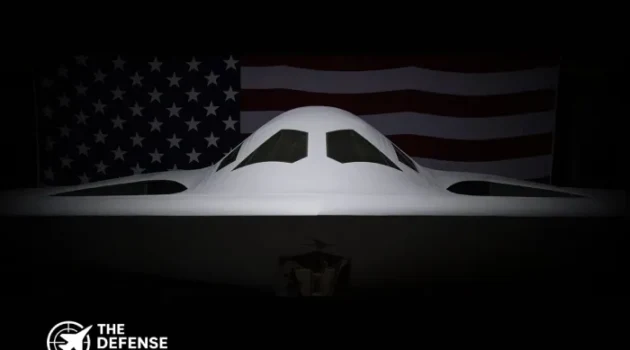
Air Force bomber plans call for adding at least 100 B-21 Raiders and retaining the B-52Js, while retiring the B-1B Lancer and B-2A Spirit bombers in the 2030s.
The looming B-1 retirement in particular is driving urgency around this analysis. The B-1 can carry up to 75,000 pounds of conventional weapons — more than any other bomber — and is the fastest in the fleet, capable of exceeding 900 miles per hour, or Mach 1.2. The B-52, by comparison, can carry up to 70,000 pounds but tops out at around 650 miles per hour.
Retiring the B-1 will eliminate a payload-heavy, high-speed conventional strike option that the B-21 Raider, optimized for stealth penetration, may not fully replicate. Filling that capability gap is at the heart of the new study.
What the Analysis Will Actually Examine
Mark Gunzinger, a retired Air Force colonel, former deputy undersecretary of defense, and B-52 pilot, offered detailed insight into what the study is likely to evaluate.
The alternatives to be considered will likely include a new stand-off bomber, additional modifications for the Stratofortress, a new aircraft designed to carry a large number of cruise missiles, and the option to build dozens more B-21 Raiders.
Gunzinger framed the effort as broader than a simple aircraft replacement program.
“I think it might be better characterized as saying, they’re taking a look at the stand-off strike mission area itself, and what’s the best solution for the distant future,” Gunzinger said.
Key performance attributes under consideration include stealth capability, speed, payload capacity, stand-off range, electronic warfare integration, and self-defense systems. The analysis will also weigh the continued utility of stand-off weapons — long-range missiles that allow aircraft to strike from outside contested airspace — as a substitute for platform survivability.
Penetrating Strike vs. Stand-Off: A Doctrine Question
The Air Force’s future bomber posture hinges on a doctrinal question that has no easy answer: Is it better to invest in aircraft that penetrate deep into enemy airspace, or platforms that strike from safe distances using long-range weapons?
Stand-off attack means aircraft remain outside enemy airspace, releasing weapons that penetrate contested zones; the B-21 is designed to evade radar and strike well-protected or hardened targets deep inside adversary territory.
Gunzinger argues that both approaches remain essential, and that an all-B-21 force could be strategically limiting. “Both are needed,” he said. “It really gets down to, what’s the ultimate mix you want?”
This is not merely theoretical. U.S. Indo-Pacific Command chief Adm. Samuel Paparo told lawmakers in April that he favors a B-21 fleet of 200 bombers — double the current planned buy of at least 100. Operations Midnight Hammer and Epic Fury, recent strikes against Iranian targets, demonstrated the real-world premium placed on penetrating, precision heavy bombers capable of global reach.
The B-52: Old Airframe, Viable Future
Despite its age, the B-52 airframe itself remains structurally sound, according to experts. “While the aircraft is old, the airframe is still relatively young in terms of flight hours and the stresses it’s absorbed over the years,” Gunzinger said. “So it’s a perfectly viable airframe.”
That assessment helps explain why the Air Force is pursuing the B-52J upgrade in parallel with a longer-term replacement study rather than moving straight to a clean-sheet design. The B-52J buys time — and operational capacity — while the service defines what the post-B-52 era actually looks like.
The B-21’s modular, open-systems architecture will enable the Air Force to upgrade the aircraft as future technology comes online, and a larger B-21 fleet remains firmly in the conversation. However, Gunzinger noted that visual evidence suggests the B-21 will have a smaller payload capacity than the B-52 — a significant operational trade-off when the mission demands high-volume conventional strike capability.
Analysis: Why This Study Matters Now
The timing of the Heavy Bomber Analysis of Alternatives is no coincidence. The United States faces a more complex threat environment than at any point since the Cold War. China’s rapidly expanding anti-access/area-denial (A2/AD) network, Russia’s continued nuclear posturing, and North Korea’s ballistic missile advances all demand that U.S. long-range strike remain credible, flexible, and survivable.
The B-21 Raider addresses the penetrating strike requirement. The B-52J addresses near-term stand-off capacity. But neither, on its own, may be sufficient across the full spectrum of future conflict scenarios. A purpose-built stand-off platform capable of carrying large numbers of cruise missiles — a concept sometimes described as a “missile truck” — could fill a critical niche, particularly in the Pacific theater where distances are vast and targets are dispersed.
What the Air Force is really doing with this study is stress-testing its own assumptions. In a fiscally constrained environment, deciding what to build — and what to forgo — will define American air power for decades to come.
Key Facts at a Glance
- Program: Heavy Bomber Analysis of Alternatives (AoA)
- Budget Year: FY2027 ($1 million requested to begin)
- Prior Investment: $3.9 million for classified B-52 proof-of-concept demonstration (FY2025)
- B-52J Upgrade: 76 aircraft; new Rolls-Royce engines, glass cockpit, landing gear, radar; Boeing, San Antonio
- Service Life Extended To: 2050s
- B-1B/B-2A: Planned retirement in the 2030s
- B-21 Raider: At least 100 planned; 200 recommended by INDOPACOM commander
- Primary Contractor (B-52J): Boeing / Rolls-Royce