

US approves bomb sale to Canada
The United States Department of State and the Defense Security Cooperation Agency (DSCA) formally cleared a proposed Foreign Military Sale (FMS) of air-strike weapons and related support to Canada. The package, valued at up to $2.68 billion, was announced to Congress on that date.
The clearance marks one of the largest munitions deals granted to Canada under the US export framework in recent years.
Why it matters: context of the weapons sale
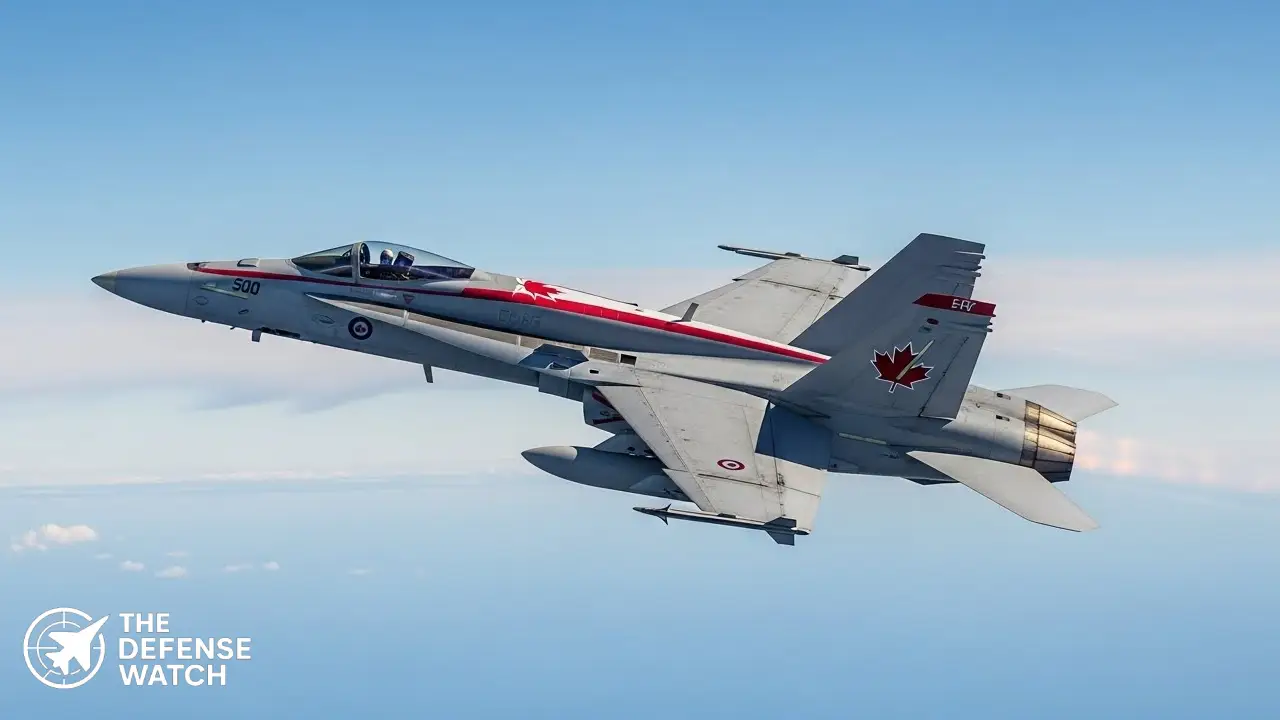
Canada is in the middle of a major defense modernization push, seeking to upgrade its air-ground strike capabilities and ensure better interoperability with allied forces. Under the plan, the received munitions are expected to support both the current fleet of McDonnell Douglas CF-18 Hornet fighters and future platforms such as Lockheed Martin F-35A jets.
For the US, approving such a package to a NATO ally reinforces strategic ties, supports alliance readiness, and channels revenue through major defense manufacturers.
What Canada will receive: weapons & equipment included
According to the DSCA notification, the sale covers a broad array of precision-guided and general-purpose munitions along with support systems.
Key items in the package:
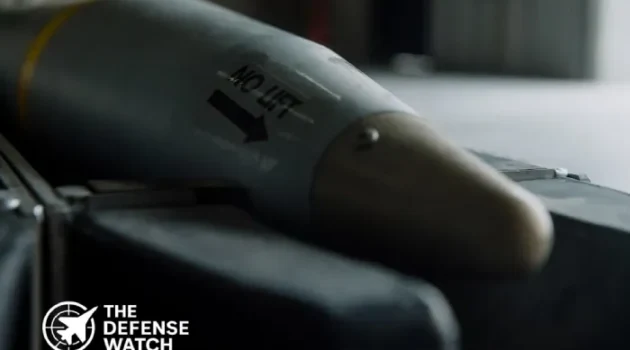
- Up to 3,108 GBU-39 Small Diameter Bomb (SDB‑I) — lightweight glide bombs suited for precision strikes while allowing multiple weapons per sortie.
- Up to 2,004 GBU-53/B Small Diameter Bomb (SDB‑II) “StormBreaker” bombs — advanced multi-mode munitions capable of engaging moving targets in adverse conditions.
- Thousands of general-purpose bombs: up to 3,414 500-lb BLU-111 bomb units, 220 2,000-lb BLU-117 bomb bombs, plus additional inert MK-82 bombs for training and testing.
- 146 I-2000 penetrator warhead units designed for hardened or buried targets.
- Guidance kits such as thousands of KMU-572 JDAM guidance kit units and other variants (KMU-556, KMU-557), which convert unguided bombs into GPS-guided munitions.
- Practice bombs, test vehicles, fuzes, laser target detectors, spare parts, software support, technical documentation, logistics support, training aids and services necessary for integration, maintenance, and operation.
The deal includes not only the munitions but also support and logistics infrastructure — ensuring Canada can integrate, train, and sustain the weapons without needing permanent U.S. personnel deployed.
The contract has designated Boeing and RTX Corporation (formerly Raytheon) as the principal contractors.
Strategic rationale: strengthening NATO ally and deterrence posture
The DSCA statement frames the sale as consistent with U.S. foreign policy and national security goals, aiming to enhance a NATO ally’s military capability.
For Canada, the purchase raises its strike capacity substantially — enabling precise air-to-ground operations using modern guided munitions. It also improves interoperability with U.S. and allied air forces, which is critical for joint missions or continental defense operations such as under North American Aerospace Defense Command (NORAD).
Analysts view the package as a clear signal of continued U.S. support for Canadian defense modernization despite occasional diplomatic friction.
What still remains: sale not final, oversight and future conditions
While the U.S. approval triggers the formal FMS process, the actual sale still requires final agreement with Canada and Congressional oversight. The total value could vary depending on final contract terms, budget authority, and confirmed quantities.
So far there is no publicly announced offset agreement — meaning Canada has not yet secured promises for industrial cooperation or reciprocal benefits. That could be negotiated later directly between Canada and the contractors.
Implementation will proceed only after final contract signature and confirmation that Canada’s defense procurement and logistical infrastructure can absorb the new weapons.
What’s next: implications for Canada’s air force and NATO posture
If finalized, the sale would represent a major leap in Canada’s air-ground strike capabilities. It would give the Royal Canadian Air Force a modern arsenal of guided bombs and kits, enhancing mission flexibility — from strike operations to deterrence — across a variety of theaters.
For U.S.-Canada defense cooperation and NATO interoperability, this adds to shared logistics and operational cohesion. For Canada, this could shape future procurement decisions, including how it arms new platforms like the F-35.
Over the coming months, attention will turn to Canada’s final procurement choices, and whether Ottawa seeks additional support systems, offset agreements, or complementary defense purchases.

9 comments
[…] ISIS lost territorial control in Syria years ago but continues to operate as an insurgent network. Cells remain active in the Syrian desert and along key transit corridors. These areas allow fighters to move, recruit, and stage attacks against both Syrian and foreign forces. […]
[…] U.S. government notified Congress of the pending sale as required under the Foreign Military Sales process. Officials said the sale supports U.S. foreign policy and national security interests […]
[…] production lines and sustainment expertise for proven weapons systems, especially as demand for precision munitions continues to […]
[…] Ukraine has increasingly deployed realistic aircraft decoys at airfields to draw fire away from operational platforms. With F 16 fighters now entering Ukrainian service, these decoys are intended to complicate Russian targeting and force Moscow to expend expensive precision munitions. […]
[…] acquisition also has clear NATO implications. Poland sits at the center of alliance efforts to reinforce deterrence in Central and […]
[…] expansion addresses sustained growth in global demand for precision munitions as U.S. forces and allied militaries increase stockpile requirements. The Tomahawk missile system has been flight-tested over 550 times […]
[…] to the CENTCOM statement, about 50 precision munitions were used in the Jan. 27 to Feb. 2 operations. Fixed-wing aircraft, rotary-wing aircraft and […]
[…] Royal Canadian Air Force’s technical assessment underscored the F-35’s advantages in stealth, sensor fusion, network-centric […]
[…] including associated weapons systems, infrastructure upgrades, and sustainment packages. The Royal Canadian Air Force plans to achieve initial operational capability with the F-35A by 2026, replacing the aging CF-18 […]