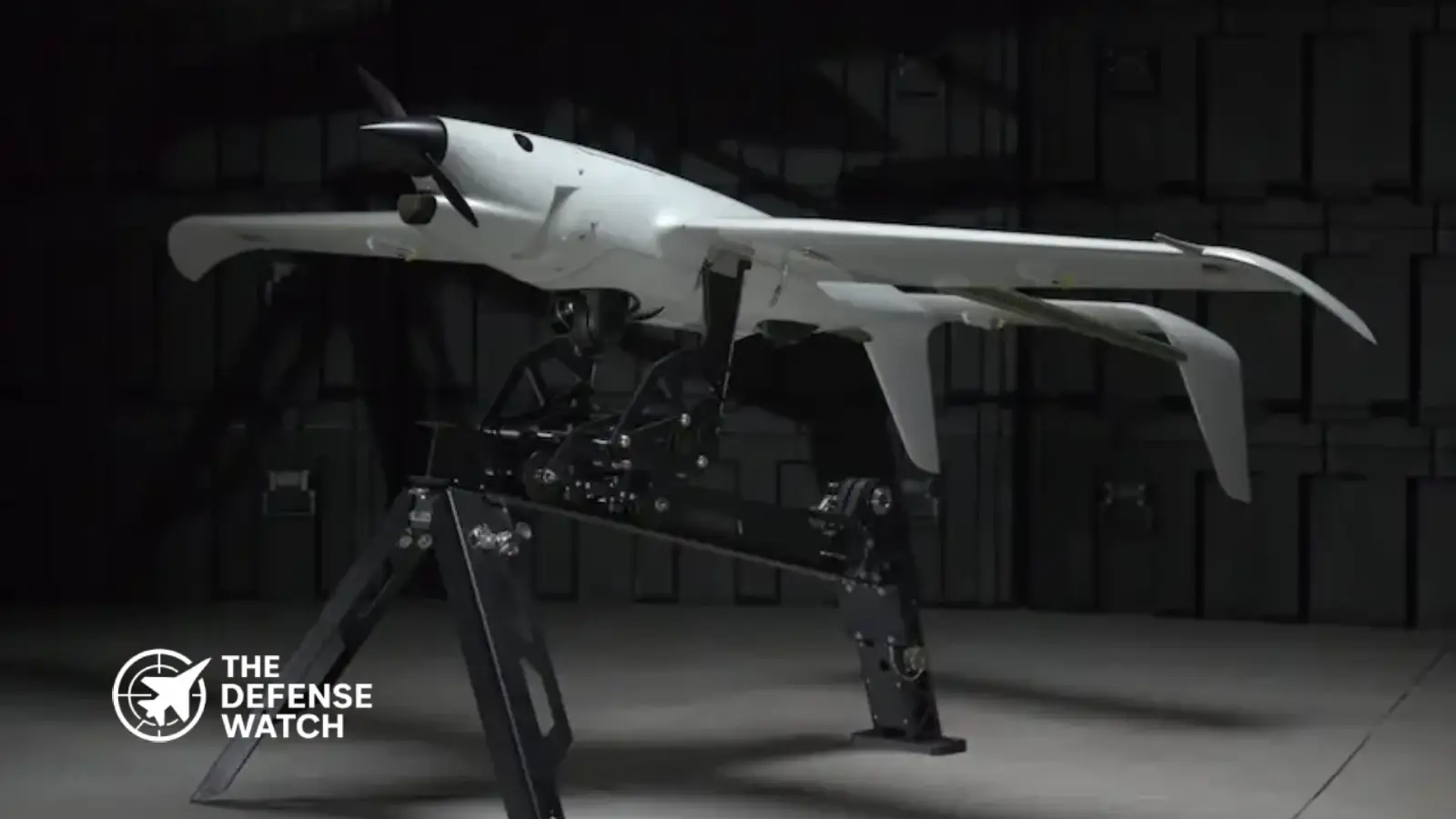
Executive Summary:
Ukrainian drone manufacturer Skyeton has introduced a new anti-interceptor capability aimed at protecting ISR drones operating in contested airspace. The upgrade is intended to improve survivability against hostile aerial interception attempts, reflecting the growing electronic and kinetic threats facing reconnaissance UAVs in modern warfare.
Skyeton Introduces New ISR Drone Protection Capability
Ukrainian drone maker Skyeton has announced a new anti-interceptor capability designed to improve the survivability of intelligence, surveillance, and reconnaissance (ISR) drones operating in contested airspace.
The system is intended to counter the growing threat posed by interceptor drones and other aerial counter-UAV measures increasingly deployed on the modern battlefield.
The capability is being integrated into Skyeton’s ISR drone ecosystem, including the company’s Raybird unmanned aerial system, which has been widely used for long-endurance reconnaissance missions during the war in Ukraine.
Growing Threat To ISR Drones
The announcement highlights how drone warfare continues to evolve beyond traditional electronic warfare and ground-based air defense threats. ISR platforms are now facing increasing risks from dedicated interceptor drones designed specifically to track and destroy reconnaissance UAVs.
This shift has forced UAV manufacturers and military operators to focus more heavily on survivability measures rather than solely endurance, range, or payload capacity.
Skyeton’s anti-interceptor capability appears aimed at addressing that operational challenge directly. While the company has not publicly disclosed the full technical details of the system, the capability is reportedly designed to help ISR drones evade or disrupt hostile intercept attempts during missions in heavily defended airspace.
The development reflects broader battlefield lessons emerging from the conflict in Ukraine, where both sides have rapidly adapted drone tactics, electronic warfare systems, and counter-UAV technologies.
Raybird ISR Drone Remains Central To Ukrainian Operations
Skyeton’s Raybird platform has become one of Ukraine’s better-known ISR drones due to its endurance and operational flexibility. The aircraft is designed for long-duration reconnaissance and battlefield monitoring missions, providing intelligence support for military operations.
The system has previously been promoted for its ability to remain airborne for extended periods while conducting surveillance in high-risk environments.
Adding anti-interceptor functionality could significantly expand operational survivability for such ISR platforms, particularly in areas where hostile forces increasingly rely on layered drone defense tactics.
The move also underscores a wider trend across the global UAV market, where drone manufacturers are prioritizing resilience against electronic warfare, GPS denial, and aerial interception systems.
Counter-UAV Competition Intensifies
The rapid development cycle seen in Ukraine has accelerated innovation across both UAV and counter-UAV technologies. Reconnaissance drones that once operated with relative freedom are now increasingly vulnerable to electronic attack, kinetic interceptors, and autonomous counter-drone systems.
As a result, survivability upgrades are becoming a key competitive factor for ISR platforms worldwide.
Military planners are closely watching developments from the Ukrainian battlefield because they provide real-world insight into how drones perform under continuous electronic and kinetic pressure. Technologies proven in Ukraine are increasingly influencing procurement decisions in Europe, NATO countries, and other regions seeking lessons for future high-intensity conflicts.
Skyeton’s latest announcement signals that Ukrainian defense technology firms continue adapting quickly to changing operational realities despite ongoing wartime pressures.
Strategic Significance Beyond Ukraine
The introduction of anti-interceptor capability also reflects the growing importance of persistent ISR operations in modern warfare. Intelligence collection drones are now central to artillery targeting, battlefield awareness, force coordination, and long-range strike support.
Any improvement in UAV survivability can directly affect operational tempo and battlefield intelligence quality.
For NATO and allied defense observers, Ukraine’s drone innovation cycle continues to serve as a real-time laboratory for future air warfare concepts. The speed at which Ukrainian firms are iterating ISR and counter-interceptor technologies is drawing increasing international attention.
The capability may also strengthen Skyeton’s position in export markets as countries seek UAV systems capable of surviving in heavily contested electromagnetic and aerial threat environments.
Analysis: ISR Survivability Is Becoming The Next UAV Arms Race
The emergence of dedicated interceptor drones marks a major evolution in aerial warfare. Early phases of the Ukraine conflict demonstrated the value of affordable ISR drones, but the battlefield has since become saturated with layered counter-UAV systems.
That reality is changing procurement priorities.
Modern ISR drones are no longer judged only by flight endurance or sensor quality. Survivability against electronic attack and aerial interception is rapidly becoming just as important.
Skyeton’s anti-interceptor capability reflects this transition. Even limited survivability improvements can extend mission duration, preserve intelligence collection continuity, and reduce UAV attrition rates during sustained operations.
The development also suggests that future drone conflicts may increasingly resemble an aerial contest between autonomous reconnaissance platforms and dedicated hunter-killer interceptor systems.
As drone warfare matures, the competition between ISR survivability technologies and counter-UAV interceptors is likely to intensify across both state and non-state military actors.